Read this article in: Portuguese (Português) · Spanish (Español)
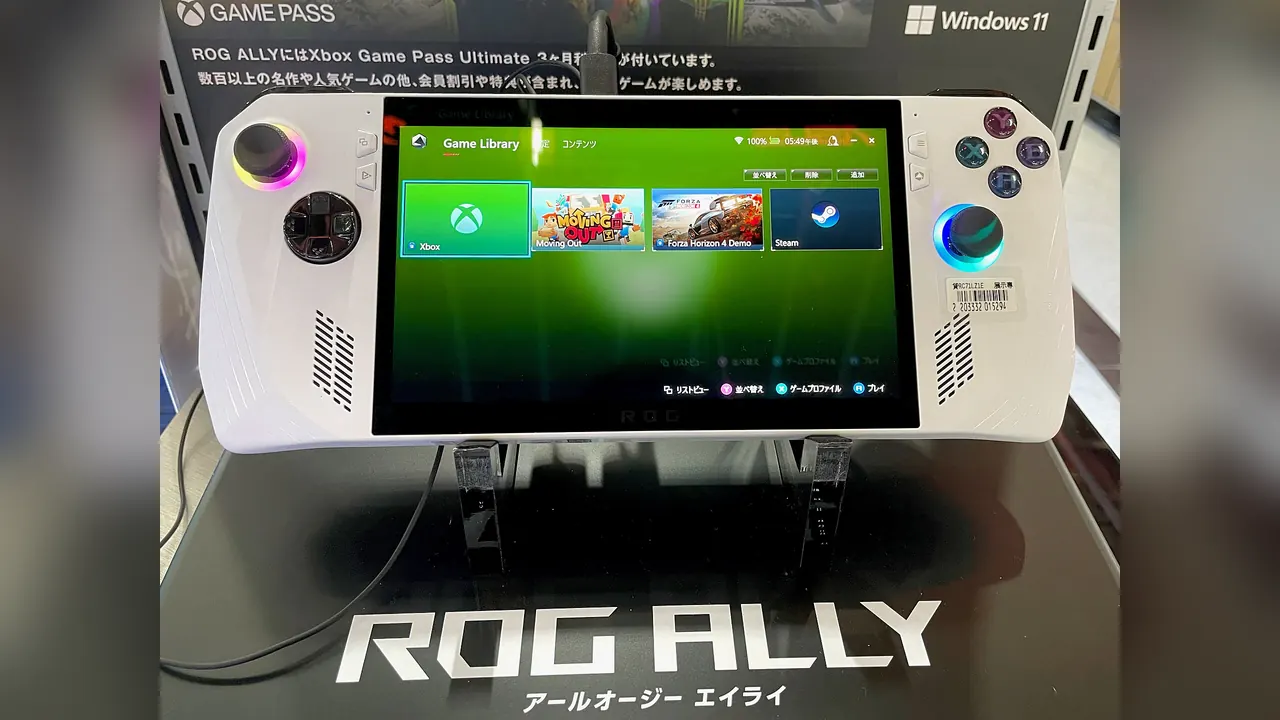
The development of the ASUS ROG Ally X handheld console is the result of a long journey of innovation from Asus, which aims to solidify its niche in the competitive handheld gaming market. Although the ROG Ally line was launched on June 13, 2023, the concept of a portable gaming console capable of running full operating systems, such as Windows 11, dates back to 2018. The Ally X model, released on July 22, 2024, represents a significant evolution, featuring, for example, a 1 TB NVMe M.2 2280 storage and robust connectivity via Wi-Fi Tri-band 2.4, 5 & 6 Ghz 6E. This advancement demonstrates the brand’s continuous effort to refine hardware and performance, keeping the focus on a top-tier experience for the modern gamer.
The relevance of the ROG Ally X and its predecessors is proven by its technical evolution and market context. The device’s development was notably accelerated after the announcement of the Valve Steam Deck in 2021, forcing Asus to rapidly improve its offerings. The ROG Ally series models use AMD Ryzen Z1 and Z1 Extreme processors, based on the RDNA 3 architecture, and operate with high-speed memory systems, such as the 24 GB LPDDR5X-7500 in the Ally X. Furthermore, the hardware was designed for a complete ecosystem, offering a 7-inch IPS LCD screen, FHD (1920 × 1080) resolution, and a 120 Hz refresh rate—elements crucial for competing with category leaders.
In this article, we will dive deep into the story behind the success of the ROG Ally X. We will cover everything from its Origin and the portable gaming market context to the details of its Architecture and cutting-edge processing engineering. We will explore the software ecosystem and user experience, detailing Windows 11 and the use of Armoury Crate. Finally, we will provide a complete comparison of the Launch, technical specifications, and the leap to the Ally X, culminating in an analysis of its Critical reception, controversies, and industry legacy, ensuring a complete overview for any enthusiast.
Key Highlights
- Features a 1 TB NVMe M.2 2280 SSD, with expansion capability via microSD/SDXC card.
- Equipped with 24 GB of LPDDR5X-7500 RAM, ensuring a bandwidth of 120.0 GB/s.
- The battery has been upgraded to 80 Wh, supporting 140W GaN charging for extended endurance.
- 7-inch IPS LCD screen, 1920×1080, with 120 Hz and support for FreeSync Premium and Dolby Vision.
- Advanced connectivity includes Wi-Fi Tri-band 6E and a USB-C port with DisplayPort 1.4 alt-modes.
ASUS ROG Ally X Specifications Sheet
| Manufacturer | Asus |
|---|---|
| Developer | Asus |
| Category | Handheld gaming console |
| Operating System | Windows 11 |
| Display | 7 inches, 1920 × 1080 FHD Touchscreen IPS LCD @ 120 Hz, 16:9, 500 nits (SDR) with VRR FreeSync Premium & Dolby Vision |
| CPU | AMD Ryzen Z1; AMD Ryzen Z1 Extreme |
| Memory (Ally X) | 24 GB LPDDR5X-7500, Quad-channel 32-bit (128-bit), 120.0 GB/s |
| Storage (Ally X) | 1 TB NVMe M.2 2280 SSD (expandable) |
| Launch Price (Ally X) | US$ 799.99 |
| Battery (Ally X) | 80 Wh Lithium-ion 4S1P, 4-cell |
| Weight (Ally X) | 678 grams (1.495 lb) |
The Origin and Context of the Handheld Gaming Market
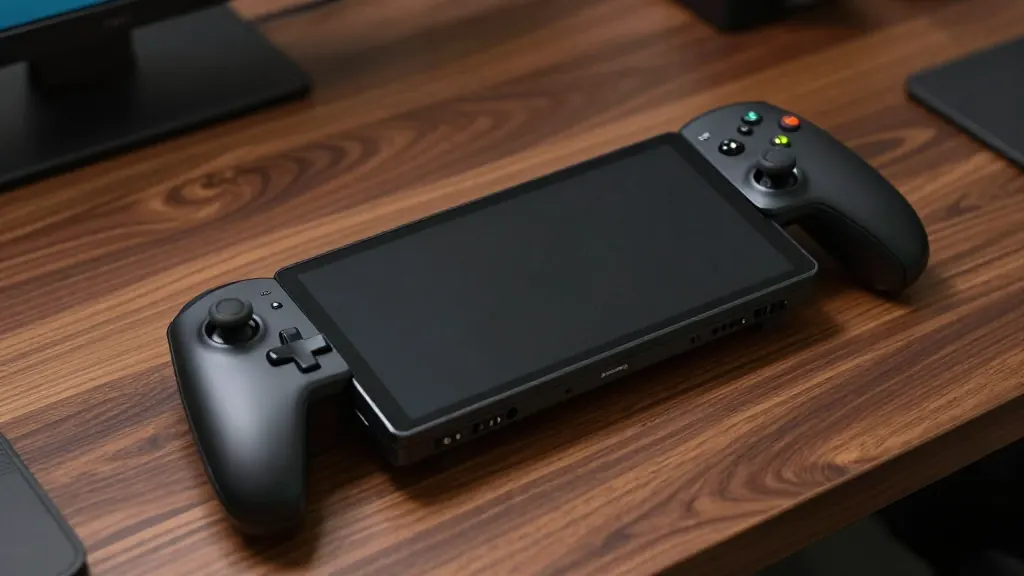
The ambition to transform the concept of gaming into mobile devices led ASUS to begin developing a handheld console as early as 2018. The objective was clear: to compete directly with existing portable gaming computers in the market, such as the GPD Win 2. Although development went through periods of slowdown, the global competitive landscape of electronic gaming was in constant flux, awaiting a catalyst to redefine the niche.
The Awakening of the Portable Market
The decisive moment for the revival of interest in high-performance handheld consoles came with Valve’s announcement of the Steam Deck in 2021. This launch not only reignited public interest in devices running full operating systems but also set a new standard of expectation for the industry. Media and enthusiast attention massively shifted toward high-processing-power portability.
In response to this market acceleration, ASUS intensified its plans. The ROG Ally device was officially announced on April 1, 2023, a date that initially led many to believe it was an April Fool’s joke, but whose legitimacy was quickly confirmed. On June 11, 2023, ASUS unveiled the ROG Ally, which was set to be a complete device running Windows 11. The announcement detailed two models: one equipped with the Ryzen Z1 processor for US$ 599, and a more powerful one, the Ryzen Z1 Extreme, for US$ 699. The Z1 Extreme model launched on June 13, 2023, establishing the brand’s strategy: to offer a top-tier Windows 11 device to compete directly with market leaders.
Evolution and the Connected Future
The development cycle did not stop there. In a move of continuous improvement, ASUS presented the ROG Ally X at Computex 2024. This model represented a significant leap in performance and capability, incorporating crucial upgrades such as 1 TB NVMe M.2 2280 storage, 24 GB of LPDDR5X-7500 RAM, and an optimized battery. Its launch price was set at US$ 799.
Looking to the future, ASUS’s innovation trajectory was confirmed at the Xbox Games Showcase 2025. It was at this event that the company and Microsoft announced the Xbox versions of the ROG Ally and the ROG Ally X. These new models, dubbed “ROG Xbox Ally” and “ROG Xbox Ally X,” marked the first portable console with Xbox branding. They came equipped with Ryzen Z2 AI Extreme and A processors, and new exclusive features, such as trigger paddles (for the X model only) and grips inspired by the Xbox wireless controller. To better understand this evolution, it’s worth checking out the development history of the ROG Ally. This history demonstrates ASUS’s continuous commitment to keeping the ROG Ally at the forefront of the portable gaming experience.
🕒 Timeline: The Evolution of the ASUS ROG Portable Concept
- 2018 — ASUS begins developing a portable console aimed at competing with devices like the GPD Win 2.
- 2021 — Valve releases the Steam Deck, reigniting public interest in high-performance portability.
- April 1, 2023 — ASUS makes the formal announcement of the ROG Ally.
- June 11, 2023 — ASUS unveils the ROG Ally, a complete device running Windows 11, with Z1 and Z1 Extreme models.
- June 13, 2023 — The launch of the ROG Ally Z1 Extreme model, establishing the brand’s high-end strategy.
- Computex 2024 — Presentation of the ROG Ally X, an enhanced model featuring upgrades like 1 TB NVMe M.2 and 24 GB of RAM.
- Xbox Games Showcase 2025 — Announcement of the Xbox versions of the ROG Ally and ROG Ally X, featuring Ryzen Z2 AI Extreme and A processors.
Cutting-Edge Processing Architecture and Engineering
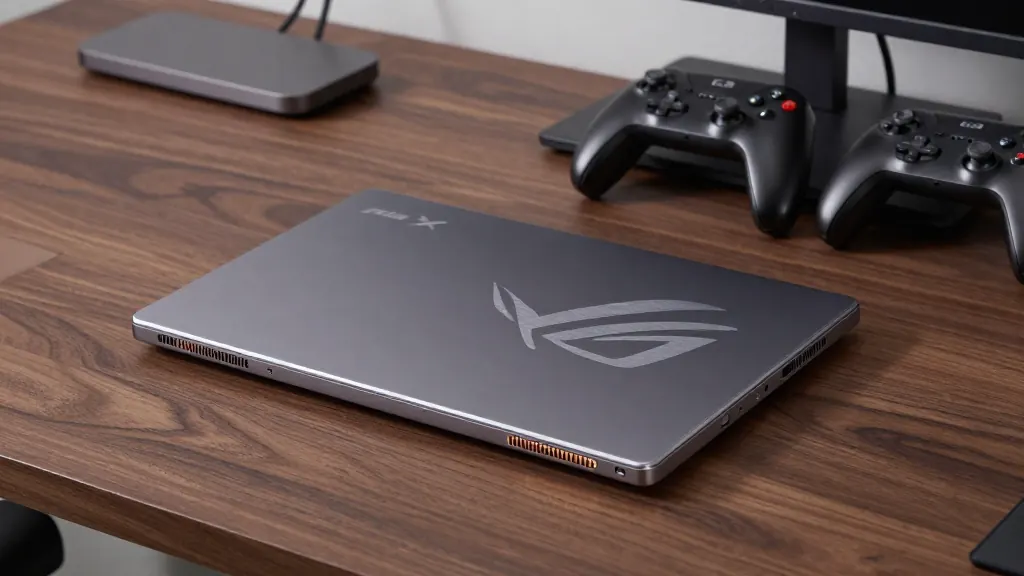
The beating heart of the ASUS ROG Ally X and its predecessors is a sophisticated AMD Accelerated Processing Unit (APU), based on Zen 4 and RDNA 3 architectures. This combination of central and graphics processing in a single chip represents the pinnacle of portable computing. The engineering behind these devices is not limited to simply putting in a powerful processor, but rather optimizing the interaction between the CPU and GPU to ensure a fluid, high-performance gaming experience in a handheld format. This architecture allows the device to execute complex tasks, such as rendering high-definition graphics and managing the Windows 11 operating system, all in a compact package.
The performance leap between models
The technical evolution is most evident when comparing the released models. The original ROG Ally, launched on June 13, 2023, utilized the AMD Ryzen Z1 processor. This chip is configured with a six-core, twelve-thread setup, and its GPU features four compute units (CUs), achieving an estimated performance of up to 2.56 TFLOPS. Subsequently, the model with the Z1 Extreme, released on September 18, 2023, represented a significant leap. It boasts an eight-core, sixteen-thread setup, and its GPU is equipped with twelve CUs, raising the processing power to about 8.29 TFLOPS. This increase in firepower is crucial for running modern titles at higher resolutions and frame rates.
The third iteration, the ROG Ally X, launched on July 22, 2024, solidifies this advancement. To maximize performance, the Ally X was enhanced with high-speed memory and greater power capacity. While previous models operated with LPDDR5 memory and 65 W power supplies, the Ally X incorporates 24 GB of LPDDR5X at 7500 MHz, with an impressive bandwidth of 120.0 GB/s. Furthermore, the power system was redesigned to accept a 140 W GaN adapter, an engineering differentiator that allows sustained top-tier processing for longer periods and with greater stability.
Cooling Engineering and Optimization
The most complex engineering challenge in any high-performance portable console is thermal and power management. The drastic increase in processing power, such as the jump from 2.56 TFLOPS to 8.29 TFLOPS, demands extremely efficient cooling systems. Asus engineers had to develop solutions that allowed the system to operate within acceptable temperature limits without compromising the device’s weight or size. Optimizing power consumption, as evidenced by the transition from a 40 Wh battery to an 80 Wh one in the Ally X, is fundamental to ensuring the user has enough autonomy to play for extended periods. In summary, the Ally X is not just a power boost, but a complete re-engineering focused on efficiency and peak performance.
📊 Performance and Key Specifications Comparison of ROG Ally Models
| Model | Processor/GPU | RAM Memory | Maximum Power Output |
|---|---|---|---|
| ROG Ally (Original) | AMD Ryzen Z1 (4 CUs, up to 2.56 TFLOPS) | 16 GB LPDDR5 | 65 W |
| ROG Ally (Z1 Extreme) | AMD Ryzen Z1 Extreme (12 CUs, up to 8.29 TFLOPS) | 16 GB LPDDR5 | 65 W |
| ROG Ally X | Upgraded (Chip not specified, but greater power) | 24 GB LPDDR5X | 140 W GaN |
Software Ecosystem and User Experience
The software ecosystem is the component that transforms the ROG Ally X’s powerful hardware into a cohesive and optimized gaming experience. Out of the box, the device comes integrated with Windows 11 Home, which already represents a leap forward from previous portable consoles. However, the true heart of performance management is the proprietary utility developed by Asus: Armoury Crate SE. This program is not just a launcher, but a vital control center that allows the user fine-grained and granular control over the system’s performance.
Performance Control with Armoury Crate SE
The main function of Armoury Crate SE is to allow the user to configure power consumption, known as Thermal Design Power (TDP), through various pre-set profiles. Furthermore, it offers direct control over crucial gaming parameters: the user can change the refresh rate, screen resolution, limit the frame rate, and adjust the processor core frequencies. This fine-tuning capability is essential because it ensures that the user can balance peak performance with the device’s thermal and energy management. To enhance the experience, Armoury Crate also acts as a unified launcher, compiling game libraries from various sources, such as Steam, Epic Games Store, GOG, Ubisoft Connect, and EA App. An important usability feature is that, due to touch interactions in Windows 11, the software allows the user to emulate mouse usage via the left joystick, optimizing navigation.
The operating system’s flexibility is another highlight of the ecosystem. Although it comes with Windows 11 Home and even a three-month subscription to Xbox Game Pass, the ROG Ally X is built to be adaptable. Advanced users can opt to replace it with Windows 11 with alternative Linux distributions, such as Bazzite. This migration is particularly appealing to performance enthusiasts because Linux offers native and optimized support for gaming platforms like Steam, Proton, and Flatpak, in addition to performance tweaks specific to handheld PCs. Indeed, reviews have shown that replacing Windows 11 with SteamOS can consistently improve performance in various titles, demonstrating the user’s ability to customize the gaming environment.
Connectivity and Ecosystem Expansion
Beyond the operating system, the physical connectivity elevates the Ally X’s potential for a broader gaming environment. The device features a robust USB-C port that not only provides power connection via Power Delivery 3.0 but also supports advanced features like USB 3.2 Gen 2 and DisplayPort 1.4 alt-modes. This functionality is crucial because it allows the user to connect the console to external monitors, keyboards, and mice efficiently, transforming it into a powerful hybrid gaming mini-PC. This combination of a flexible operating system, professional-grade performance control, and cutting-edge external connectivity solidifies the ROG Ally X not just as a console, but as a true portable entertainment hub.
📌 Key Components of the ROG Ally X Ecosystem
- Windows 11 Home: The base operating system that ensures the gaming experience.
- Armoury Crate SE: Control center for fine-tuning performance and power.
- Unified Launcher: Compiles games from various sources (Steam, Epic, GOG, etc.).
- USB-C Connectivity: Supports Power Delivery 3.0 and DisplayPort 1.4 alt-modes.
- OS Flexibility: Allows migration to Linux (e.g., Bazzite) for advanced optimizations.
Launch, Technical Specifications, and the Leap to the Ally X
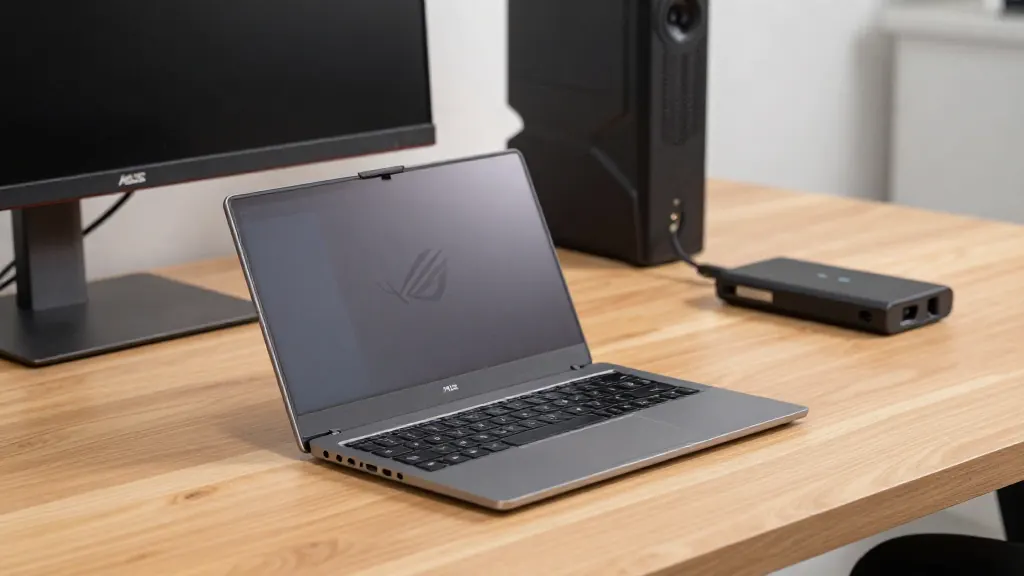
The ASUS ROG Ally device’s journey is marked by accelerated technical evolution, reflecting the growing ambition to consolidate high-performance portable gaming. If you want to better understand this trajectory, check out the history of the ROG Ally’s development. The development cycle began with the initial launch on June 13, 2023, presenting the model with the AMD Ryzen Z1 Extreme processor. Shortly after, on September 18, 2023, the market received a variation of the ROG Ally equipped with the AMD Ryzen Z1 processor. This sequence of launches demonstrated ASUS’s commitment to refining the experience in different market niches, always keeping Windows 11 as the base operating system.
The Technological Leap to the Ally X
The third generation, the ROG Ally X, represents a significant leap in terms of performance and battery life, launching on July 22, 2024. This model was designed to raise the bar for energy consumption and processing capability. The immediate highlight is the exponential increase in battery capacity, which now reaches 80 Wh, and compatibility with a 140W GaN charger. To support this power, the internal storage has been expanded to 1 TB NVMe M.2 2280, while also maintaining the possibility of expansion via microSD/SDHC/SDXC card.
The technical specifications of the Ally X are a testament to advanced engineering. The processing core is powered by 24 GB of LPDDR5X-7500 memory, a notable upgrade over previous models, ensuring a bandwidth of 120.0 GB/s. In terms of display, the console retains a 7-inch IPS LCD screen with a 1920 × 1080 FHD resolution and a 120 Hz refresh rate. This screen is enhanced with support for FreeSync Premium and Dolby Vision, ensuring a rich and fluid visual experience.
Cutting-Edge Components and Connectivity
The gaming experience on the Ally X is enhanced by robust connectivity and multi-functional controls. In terms of communication, the device supports Wi-Fi Tri-band 2.4, 5, and 6 GHz 6E, ensuring low-latency connections on modern networks. The input interface is extremely rich, going beyond traditional analog controls. The ROG Ally X features two analog sticks, two shoulder buttons (LB, RB), two analog triggers (LT, RT), and four grip buttons (M1, M2), in addition to a D-pad and A/B/X/Y buttons. This distribution of inputs allows the user to have physical control over a vast range of in-game actions.
Complementing the performance, the Ally X utilizes a USB-C port with support for USB 3.2 Gen 2 and DisplayPort 1.4 alt-modes, allowing the console to function not only as a portable device but also to connect to monitors or TVs, extending its usage ecosystem. The combination of specifications—an 80 Wh battery, 140W charging, and 1 TB of storage—positions the ROG Ally X as a reference console in the handheld gaming market, capable of delivering high performance without compromising usability during long gaming sessions.
📊 Battery and Charging Power Comparison
Critical Reception, Controversies, and Industry Legacy
The journey of the ASUS ROG Ally, and its subsequent iterations, has not been without turbulence. The initial reception of the product was notably mixed, reflecting the tension between cutting-edge hardware potential and the engineering challenges of a new form factor. To better understand this trajectory, it is worth checking the console’s development history. Critics like Tony Polanco of Tom’s Guide described the console as “solid, but imperfect,” praising the display and ergonomics while pointing out critical flaws in performance and, most significantly, battery life.
The software experience also sparked debate. While Sean Hollister of The Verge acknowledged the device’s impressive performance, he criticized the choice of Windows 11 as the operating system, calling it “largely awkward” for a portable form factor. Richard Leadbetter, writing for Eurogamer, reinforced the idea that “several issues conspire to give the impression that the ROG Ally is not yet fully polished,” suggesting that the operating system could be a difficult hurdle to overcome.
Technical Challenges and Controversies
A recurring point of criticism was battery life. The figures reported by testers illustrated this variability: Hollister reported only 53 minutes playing The Last of Us Part I on the 25W TDP profile, while Kevin Purdy of Ars Technica measured 88 minutes with The Witcher 3: Wild Hunt on the lower 15W profile. This discrepancy heightened the perception that the battery life was “quite poor,” although the 65W fast-charging capability was cited as a practical counterpoint.
Beyond usage aspects, the launch was permeated by service and design controversies. Initially, reports surfaced regarding overheating and the failure of microSD cards or the reader itself, a design flaw where the reader was positioned above the cooling system. ASUS acknowledged the issue in July 2023, extending the warranty and offering a refund for the market value of damaged cards in May 2024.
A particularly notable incident occurred in May 2024, when the tech channel Gamers Nexus sent the device in for warranty repair due to a faulty joystick. ASUS initially denied the repair, claiming the issue was user-caused. Later, the company demanded a repair fee of US$191.47 because of a “minor mark” on the casing, threatening to return the equipment in a “disassembled” state. After intense community pressure, ASUS ultimately honored the original warranty and apologized for the poor service.
The Legacy and Future of Portable Gaming
Despite initial usability issues and support controversies, the trajectory of the ROG Ally is a testament to accelerated engineering. Every iteration, such as the ROG Ally X, launched on July 22, 2024, represents an effort to refine the balance between power and efficiency. The device’s legacy is forcing the industry to raise the standard for PC handheld consoles. It has cemented the viability of high-performance AMD Ryzen APUs in a handheld format, compelling competitors to refine not only the hardware but also the user experience, thermal management, and the robustness of after-sales support. The focus on operating system flexibility and robust connectivity has transformed the Ally from a flawed product into an ambitious benchmark for the category.
Glossary
- APU: Accelerated Processing Unit; a chip that integrates CPU and GPU into a single component.
- TFLOPS: A measure of graphics processing power (Tera Floating Point Operations Per Second), indicating computational capacity.
- LPDDR5X: A type of very high-speed, low-power RAM, ideal for portable devices.
- GaN: Gallium Nitride, a semiconductor material used in high-efficiency, low-heat dissipation chargers.
- FreeSync Premium: A screen synchronization technology that matches the refresh rate to the graphics card, eliminating visual tearing.
Frequently Asked Questions
What is the main performance difference between the ROG Ally and the ROG Ally X?
The Ally X represents a significant leap in capacity and efficiency. It has been upgraded with 24 GB of LPDDR5X-7500 RAM and 1 TB of internal storage. Furthermore, the battery has increased to 80 Wh, and the charging support has been raised to 140W, ensuring greater stability and gaming endurance.
Is the ROG Ally X truly a video game console or a portable PC?
It is a high-performance hybrid device. Although optimized for the portable gaming experience, it runs on the Windows 11 operating system. This foundation allows it to handle complex PC tasks while also offering the features of a dedicated console.
What operating systems can I use on the ROG Ally X besides Windows 11?
Besides Windows 11 Home, the device is highly adaptable. Advanced users can port it to alternative Linux distributions, such as Bazzite. This flexibility is ideal for enthusiasts looking to optimize performance on gaming platforms like Steam and Proton.
Can the ROG Ally X run graphically demanding PC games?
Yes, it is designed to run modern and demanding titles. Thanks to its AMD Accelerated Processing Unit (APU) and enhanced power system (140W), it maintains the necessary power to render high-definition graphics and high frame rates.
What is the importance of the cooling system and battery in the development of this console?
They are vital for sustained performance. Increased processing power requires extremely efficient cooling systems to operate within thermal limits. The battery, in turn, ensures autonomy, allowing the user to maintain peak performance for long periods without compromising the gaming experience.
Conclusion
The trajectory of the ASUS ROG Ally X is a fascinating study of how technological ambition can redefine a market niche. Development, which began in 2018, found its definitive catalyst with the announcement of the Steam Deck in 2021. ASUS knew how to capitalize on this awakening by presenting the ROG Ally in 2023, solidifying a cutting-edge strategy with the Windows 11 system. From the initial Ryzen Z1 to the robust upgrade of the Ally X, which incorporated 24 GB of LPDDR5X at 7500 MHz and a 140 W GaN adapter, each iteration represents a leap in engineering, especially in thermal and power management.
The device’s power, which is sustained by a sophisticated AMD Accelerated Processing Unit (APU), lies not only in its components but in the synergy between hardware and software. The Armoury Crate SE utility allows the user granular control over power consumption (TDP), refresh rate, and resolution, transforming the Ally X into a highly customizable machine. Looking ahead, the announcement of the Xbox versions in 2025 signals the brand’s commitment to keeping the device at the forefront, expanding the portable gaming ecosystem. It is clear that the ROG Ally is not just a console, but a constantly evolving platform.
With the portable gaming market becoming increasingly competitive and sophisticated, ASUS’s ability to innovate continuously, from the Z1 processors to the future Z2 AI Extreme, reinforces the role of the ROG Ally as a pioneer. Thus, by analyzing the hardware evolution and the control offered by the operating system, it is clear that the portable gaming experience will never be the same; it is time to explore the full potential of this device and discover which title will take advantage of its processing power.