Read this article in: Portuguese (Português) · Spanish (Español)
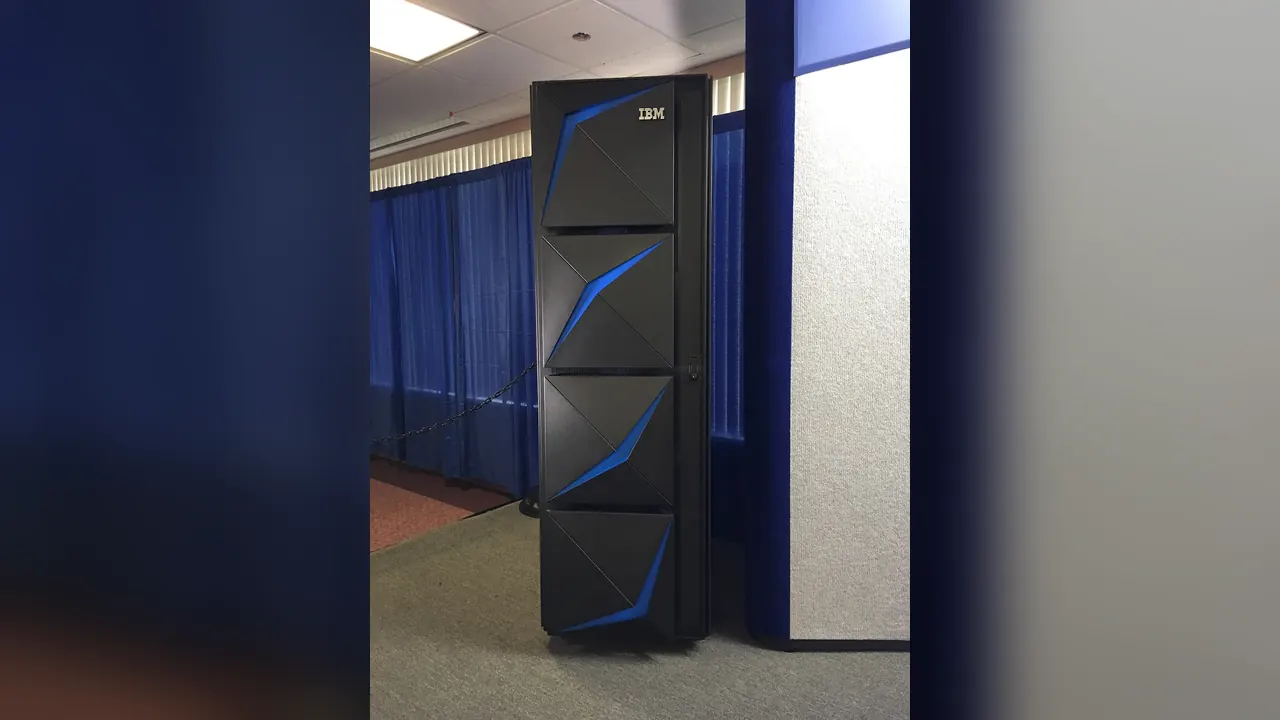
The IBM z16 represents the latest advancement in the IBM Z mainframe family, a robust and highly scalable system launched on April 5, 2022. This model is based on the Telum processor, a cutting-edge architecture developed to meet modern processing demands, featuring dedicated instructions for artificial intelligence (AI) and neural networks. The z16 not only maintains the Z line’s legacy of reliability and high availability but also incorporates advanced virtualization and parallel processing capabilities, ensuring that critical mission-critical operations—hence the ‘z’ origin from zero downtime—are executed with maximum efficiency and security. It is designed to process complex workloads in environments that demand unparalleled stability.
The relevance of the IBM z16 is intrinsically linked to the continuous evolution of the Z platform. The IBM Z family, which includes models like the z17, announced at Hot Chips 2024, and the z16 itself, demonstrates a cycle of constant innovation adaptable to emerging technologies. The system is a prime example of how mainframe computing evolves, maintaining the reliability that has made it a pillar for finance and government for decades. This longevity and upgradeability, coupled with features like the use of advanced processors such as Telum, ensures that institutions can migrate their most critical workloads without compromising performance or availability.
In this technical guide, we dive into the complete specifications of the z16. We will deeply cover the Telum Processor Architecture and the detailed operation of z/Architecture, which govern its performance. We will analyze the hardware specifications, including core capacity, memory, and cache, and explore advanced features such as AI, virtualization, and the mechanisms that ensure system high availability. Furthermore, we will provide a comparison with previous generations and discuss ideal use cases so you understand exactly where and how the z16 can transform your IT infrastructure.
Key Highlights
- It is a system designed for mission-critical environments, making it ideal for sectors such as finance and government.
- The z/Architecture has been updated to natively support AI and neural network processing.
- The Telum processor powers the system, ensuring high performance and efficiency for complex workloads.
- It offers zero downtime through hot failovers, automatically transferring operations without interruption.
- It features full backward compatibility, allowing legacy applications to operate without modifications.
Overview of the IBM z16 and Market Positioning
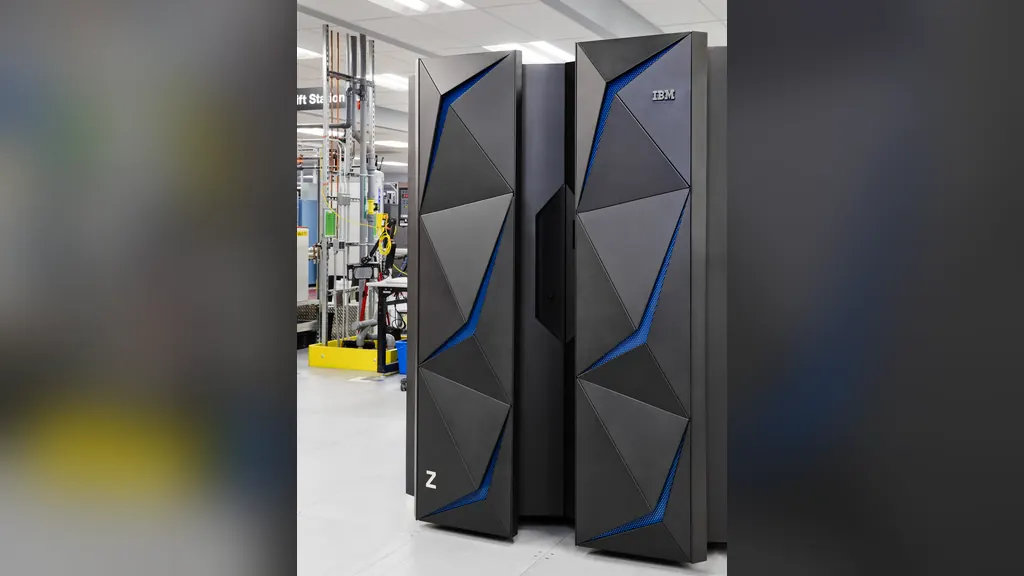
The IBM z16 is not just a hardware upgrade; it represents the latest and most significant advancement in the mainframe computing paradigm, redefining what is possible in mission-critical environments. This robust system was announced and launched on April 5, 2022, solidifying its role as the high-performance pillar in the IBM Z family. For organizations whose operations cannot tolerate interruptions, the z16 is designed from the ground up to deliver unmatched levels of availability and scalability, meeting the most rigorous demands of the financial, government, and healthcare markets.
The Technological Evolution Behind the z16
The strength of the z16 lies in its advanced architecture and the Telum processor. Technically speaking, the system is a reflection of the continuous evolution of the IBM Z platform, which is globally recognized for its reliability. A crucial highlight is the update to the z/Architecture instruction set. To better understand this evolution, it is useful to consult a guide on IBM POWER7: complete specifications and architecture. The inclusion of support for Artificial Intelligence (AI) and neural networks, detailed in the fourteenth edition of the z/Architecture Principles of Operation and subsequent editions, is not merely a feature addition. It signals a fundamental capability to process modern and complex workloads that require advanced reasoning and parallel data processing, elements essential for digital transformation.
This synergy between the power of the Telum processor and the architectural evolution ensures that the z16 is positioned to meet the computational challenges of the 21st century. Compared to previous generations, the focus remains on resilience and massive processing capability, ensuring the system operates with maximum efficiency and, crucially, with zero downtime. The mainframe architecture, intrinsically linked to the IBM Z, was built to be the backbone of systems that must remain continuously active.
Positioning in the Mission-Critical Market
The market positioning of the z16 is diametrically opposed to solutions that accept maintenance windows or periods of unavailability. It is the ideal system for environments where failure is not an option. Whether in banking transactions that must be processed in real time, or in critical infrastructure control systems, the z16 offers not just processing power, but a guarantee of operational continuity. It allows financial and government institutions to maintain the highest level of compliance and service, supporting the growing complexity of applications that integrate AI and real-time data processing.
In summary, the z16 is more than an upgrade; it is a leap in capability that ensures the world’s most sensitive and high-value operations can continue uninterrupted. It raises the standard of robustness, solidifying the IBM Z mainframe as the preferred platform for the planet’s most critical workloads.
📌 Key Advantages of the IBM z16
- Unmatched availability for mission-critical environments.
- Advanced support for modern and complex workloads.
- Native integration with Artificial Intelligence (AI) processing.
- Architecture designed for continuous operation (zero downtime).
Telum Processor and z/Architecture
The strength of the IBM z16 lies in a powerful synergy between its latest-generation processor, Telum, and the historical robustness of the z/Architecture. To better understand this evolution, it is useful to consult the specifications of the IBM POWER4, which illustrates the architectural depth of the platform. This processor is not just a speed increase; it is the engine of an architecture designed from the outset to support mission-critical environments. The z/Architecture, in turn, is a set of operational principles that ensure that, regardless of the workload complexity—whether transactional, batch, or real-time data analysis—the system maintains maximum availability. The continuous development of this architecture is what allows the z16 not only to execute critical operations but also to absorb the computational demands of the 21st century.
The “z” Philosophy of Zero Downtime
The name “z” in families like zSeries, zEnterprise, and System z is not accidental; it symbolizes zero downtime. This philosophy is implemented in cutting-edge hardware, which is built with spare components capable of performing hot failovers. This means that, in the event of a failure in any component, the system automatically transfers operation to a spare component without perceptible interruption. This level of resilience is fundamental for sectors that cannot tolerate maintenance windows or downtime, such as financial and government services. Furthermore, the architecture is known for its ability to maintain full backward compatibility.
📘 z/Architecture
It is the set of operational principles that ensures maximum system availability, regardless of the workload type (transactional, batch, or data analysis).
This longevity is one of the pillars of the mainframe. The IBM Z family of systems are direct and linear descendants tracing back to the System/360, launched in 1964, and the System/370 of the 1970s. This heritage ensures that many applications written for these older generations can continue operating without modifications on the latest z16. This compatibility attribute not only saves development time and resources but also ensures the operational continuity of invaluable legacy systems.
Evolving for Modern Workloads
To keep pace with market evolution, z/Architecture has incorporated advanced features in a planned manner. The architecture is designed to be modular and evolutionary, supporting new workloads without compromising its historical stability. A clear example of this evolution is the support for specific instructions for Artificial Intelligence and neural networks. These capabilities are detailed in the fourteenth edition (and later editions) of the z/Architecture Principles of Operation. This native support allows the z16 to run modern AI and data processing workloads efficiently, integrating these functionalities while maintaining the level of reliability that defines the mainframe. This ability to adapt to new technologies while honoring decades of stable operation positions the system uniquely in the mission-critical computing market IBM Z.
Hardware Specifications: Cores, Memory, and Cache
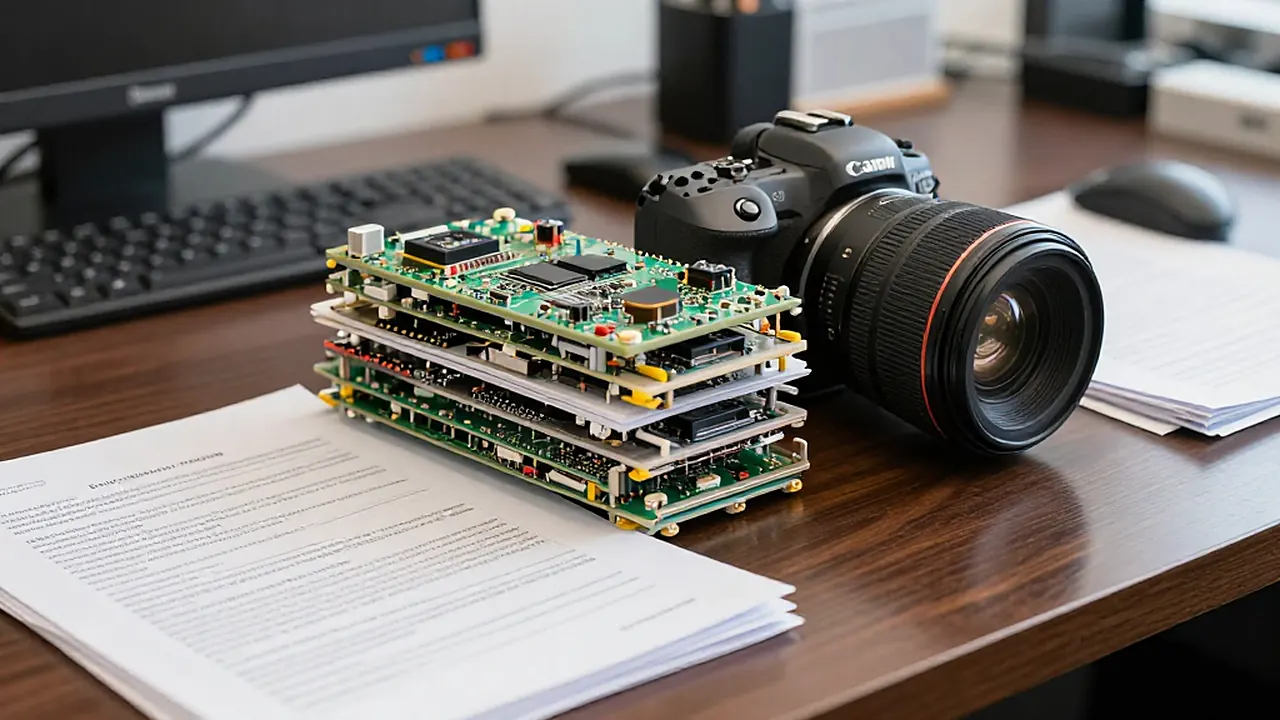
The technical heart of the IBM z16 lies in its intrinsically modular architecture, an attribute that defines the mainframe’s scalability and adaptability. To understand this complexity, it is essential to grasp the concept of the Processor Book. This component is not merely a circuit board; it is a physical and highly sophisticated module that consolidates processors, memory, and Input/Output (I/O) connections into a single cohesive unit. This modularity is the pillar upon which the system is built, allowing the customer to add capacity as their demand grows, without the need to redesign or halt operations. For a more detailed overview of advanced processing architectures, one should consult IBM processor specifications. In more recent models, such as the z196, this integration is even more advanced, featuring a multi-chip module welded directly onto the Processor Book, maximizing density and efficiency.
The Complexity of z/Architecture Cores
The processing power of the z16 is based on z/Architecture cores, multi-core CISC (Complex Instruction Set Computing) processors, and out-of-order execution. The architecture was developed to be extremely robust and specific for mission-critical environments. The system is designed to be a processing ecosystem that integrates different functions into a single chassis. Instead of relying on a single type of CPU, the z16 orchestrates several types of specialized cores, each optimized for a specific task. These cores include:
- Central Processor (CP): The main processing core.
- Integrated Facility for Linux (IFL): Dedicated to Linux functions.
- z Application Assist Processor (zAAP): Assists z application processing.
- z10 Integrated Information Processor (zIIP): For integrated information processing.
- Internal Coupling Facility (ICF) processor: Responsible for internal coupling functions.
- System Assist Processor (SAP): Auxiliary system core.
This variety of cores allows the system to distribute heterogeneous workloads, ensuring that each function utilizes the most efficient hardware for the task. The total core capacity is determined by the model’s nomenclature; for example, the H20 model can be configured with up to 20 orderable cores for direct customer use, in addition to support cores and system I/O processors.
Scalability and Thermal Management (TDP)
The expandability of the z16 is a direct testament to its modular architecture. In terms of performance, the ability to add cores and memory is achieved through the Processor Book logic, ensuring that the system can grow in a linear and predictable manner. In a high-power engineering context like the mainframe, TDP (Thermal Design Power) is a critical parameter. It refers not only to electrical consumption but to the maximum rate of heat the system is designed to dissipate in a given operating environment. Maintaining peak performance and stability in a system with high processing density, such as the z16, requires rigorous thermal management, making TDP a fundamental indicator of the system’s efficiency and cooling capacity.
In summary, the z16 represents an engineering synergy that combines the physical modularity of the Processor Book with a sophisticated orchestration of specialized cores. It is this combination that guarantees not only immense processing power but also the ability to scale and maintain thermal stability and functionality, which are essential characteristics for the world’s most sensitive and high value-added operations.
Advanced Features: AI, Virtualization, and High Availability
The modernity of the IBM z16 lies not just in its raw capacity increase, but in how it orchestrates and accelerates increasingly complex and demanding workloads. The mainframe is designed to be an adaptable processing engine, capable of embracing the demands of the 21st century, especially in areas like Artificial Intelligence (AI) and neural network processing. This capability is supported by native support for advanced instructions, detailed in the 14th edition of the z/Architecture Principles of Operation. By incorporating these instructions, the z16 ensures that both legacy systems and new applications can run AI algorithms efficiently, maintaining the reliability and high criticality of performance.
Virtualization and Workload Isolation
One of the pillars of the z16’s flexibility and resilience is its advanced virtualization system. By default, virtualization is a requirement on the IBM Z system. The first layer of virtualization is provided by the Processor Resource and System Manager (PR/SM), which allows for the deployment of one or more Logical Partitions (LPARs). These LPARs can be considered “bare metal” virtual servers because the PR/SM allows for the dedication of CPUs to individual partitions. For even greater isolation, the z/VM hypervisor can run as a second layer of virtualization within the LPARs, enabling the creation of a large number of virtual machines (VMs), provided that the CPU, memory, and I/O resources are properly configured.
The z16’s virtualization system is remarkably dynamic. The PR/SM and hardware allow computing resources to be changed non-disruptively to meet workload demands. CPU, memory, and even I/O ports (such as IP and SAN) can be added and dynamically assigned to LPARs. To ensure maximum utilization and precise isolation, the Channel Subsystem manages these virtualized resources, allowing each LPAR to determine its level of I/O “sharing” or isolation. In terms of security, the PR/SM holds Common Criteria Evaluation Assurance Level (EAL) 5+ certification, and z/VM has achieved Common Criteria EAL4+ certification.
Physical and Operational Resilience
Ensuring operational continuity is intrinsic to the mainframe’s “zero downtime” concept. Beyond logical robustness, the z16 also incorporates advanced cooling features to support high-density environments. Models like the zEC12 and z196 support external liquid cooling. This option allows customers to acquire the mainframe with a water-cooled heat exchanger, meeting operational needs in locations with cooling infrastructure restrictions.
In summary, the z16 combines multi-core processing capability with a layered virtualization architecture and an adaptable physical design. The convergence of AI support, PR/SM granularity, and liquid cooling resilience positions the z16 as a high-availability processing platform, capable of supporting the world’s most critical and uninterrupted operations.
Comparison with Previous Generations and Competitors
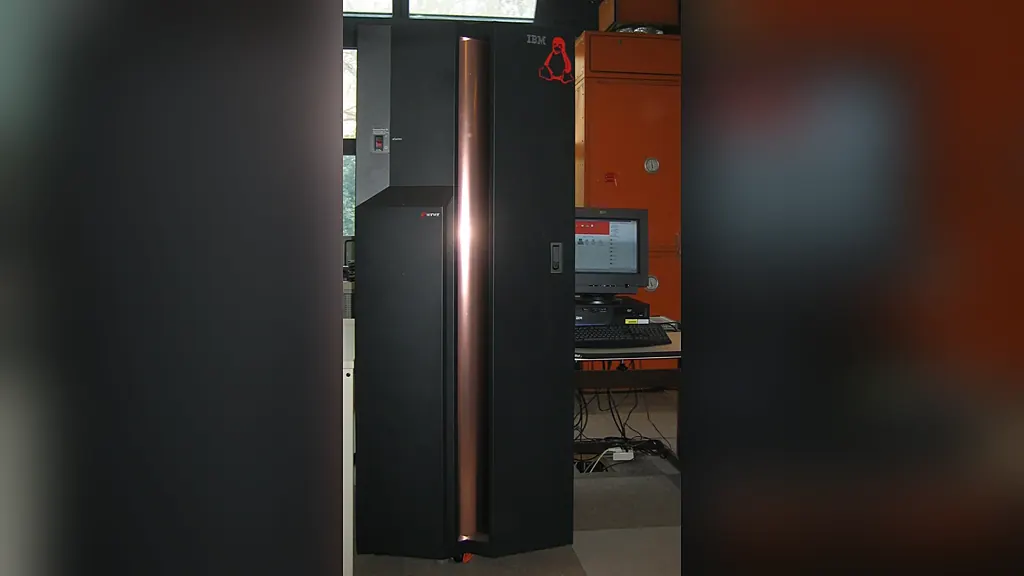
The IBM z16 should not be viewed merely as a speed increase over its predecessors; it represents a deep architectural evolution, a paradigm shift that redefines the limits of data processing in critical enterprise environments. To understand the value of the z16, it is essential to contextualize it relative to its history and compare it not only with previous generations of the IBM Z family but also with other computing architectures, such as x86. This analysis reveals that the focus of IBM Z is on the orchestration of specialized resources, not just raw clock speed increases.
The Evolution of Previous Generations
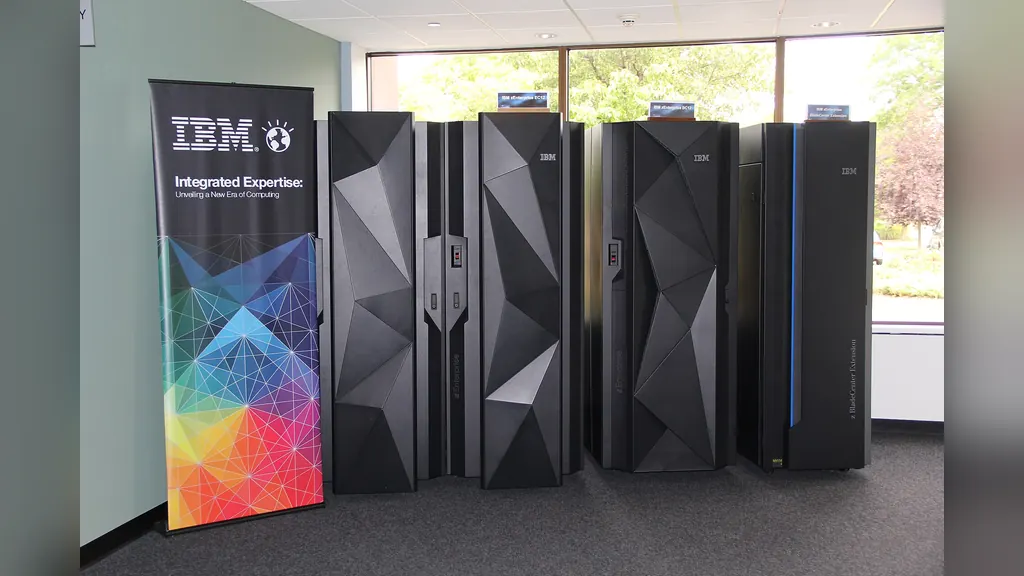
The progression from the z14 to the z15 demonstrates the platform’s continuous capacity for innovation. The z14, for example, launched in distinct phases—with the dual-rack model in July 2017 and the single-rack model in April 2018—established a robust foundation. It was based on a 10-core, 5.2 GHz processor, capable of supporting up to 240 Processing Units (PU) cores, with redundant memory capacity of up to 32 TB and support for Virtual Flash Memory (VFM). The z14 platform was already recognized for its rich hardware-assisted encryption features, including support for AES, DES, TDES, SHA, and random number generators.
The arrival of the z15, introduced on September 12, 2019, maintained and refined this trajectory, solidifying the platform as a leader in resilience and security. The z16, in turn, inherits this legacy but directs it toward the computational challenges of the 21st century: Big Data and Artificial Intelligence. Its modernity lies in how it orchestrates and accelerates increasingly complex and demanding workloads, using its modular architecture to allocate resources in a surgical manner.
Architectural Differences and Market Context
When comparing the z16 with competing architectures, such as x86, the differentiator is not just processing power, but the operational model. While x86 systems are extremely powerful for general-purpose tasks, the IBM Z mainframe was historically designed for massive transactions and critical data processing, where operational continuity and data security are non-negotiable requirements. The z16 maintains this focus, combining multi-core capability with a layered virtualization system that ensures uninterrupted operation.
This combination of specialized processing, where different cores—such as the Central Processor (CP), the Integrated Facility for Linux (IFL), and the z Application Assist Processor (zAAP)—work together, allows the z16 to execute heterogeneous workloads more efficiently and securely than many single-purpose systems. In short, the evolution of the z16 solidifies the mainframe as the ideal engine for institutions that need to process massive volumes of data, running AI and Big Data tasks with the maximum guarantee of resilience and security that the market demands.
📊 Evolution and Architectural Focus: IBM Z vs. Competitors
| Platform | Primary Focus | Operational Differentiator |
|---|---|---|
| IBM Z (General) | Massive transactions and critical data | Unwavering operational continuity and security |
| IBM z14 | Robust processing base | Support for assisted cryptography (AES, DES, TDES, SHA) |
| IBM z15 | Refinement and leadership in resilience | Maintenance and advancement of security trajectory |
| IBM z16 | Big Data and Artificial Intelligence | Orchestration and acceleration of complex workloads (modular) |
| x86 Architectures | General-purpose tasks | High processing power for general tasks |
Ideal applications and use cases for the z16
The IBM z16 should not be viewed merely as a raw processing advancement, but rather as a fundamental platform for mission-critical systems. Its market value is intrinsically linked to guaranteeing operational continuity, or “zero downtime,” which defines the most demanding environments in the corporate world. For those evaluating an investment in IT infrastructure, the z16 represents a complex service or leasing solution in hardware and software, designed to support workloads that cannot afford interruptions, even momentary ones.
Use Cases and Strategic Sectors
The z16’s robust architecture and orchestration capability make it the ideal engine for sectors that depend on real-time transactions and massive data processing. Key beneficiaries include:
🧪 The Focus Is Not Just Speed, But Continuity
Rather than focusing solely on raw processing, the z16 should be seen as the pillar for systems requiring 24/7 operation. It guarantees operational continuity, the “zero downtime” concept, which is essential for sectors like finance, which process millions of transactions without interruption.
- Banking and Financial Services: These are classic examples of environments that demand unmatched stability. The z16 supports the continuous processing of millions of financial transactions, ensuring that system availability is the most critical factor of all.
- Telecommunications: Network management and large-scale communication require constant processing and high resilience, characteristics that the z16 delivers natively.
- Government Sector: Governments use the platform for civil registry systems, benefit processing, and managing large population databases, where data security and integrity are paramount.
- Big Data Processors: The ability to process heterogeneous and complex workloads, combining multi-core processing with advanced features, allows the z16 to power unprecedented analysis and insights at scale.
The z16’s differentiator, therefore, lies in its ability to offer scale and stability that go beyond a mere focus on speed. It is built to be the pillar of systems that operate 24 hours a day, 7 days a week, 365 days a year.
Adaptability as a Pillar of Support
To support this diversity of sectors and workloads, the z16 maintains a vast ecosystem of operating systems, ensuring it does not become obsolete. The platform supports leading operating systems, such as z/OS, z/VM, z/VSE, and z/TPF. Furthermore, its flexibility is proven by support for open-source operating systems, such as Red Hat Enterprise Linux 6 and SUSE Linux Enterprise Server 11, in addition to including support for Microsoft Windows Server 2008 via x86 blades.
This variety of support is not just a technical detail; it is a guarantee that the investment in z16 is resilient and future-proof. The customer is not just buying processing power, but the certainty that their IT infrastructure can evolve and adapt to any regulatory or technological demand, maintaining maximum security, maximum scale, and, above all, maximum operational stability.
Glossary
- z/Architecture: The set of operational principles that defines the mainframe platform, ensuring reliability and compatibility for decades.
- Hot failovers: A redundancy mechanism that automatically transfers operation to a standby component without perceptible interruption.
- LPAR: Logical Partition; it allows virtualizing the mainframe into isolated and dedicated virtual servers.
- Processor Book: A sophisticated physical module that consolidates processors, memory, and I/O connections into a single modular unit.
- TDP: Thermal Design Power; the parameter that indicates the maximum rate of heat the system is designed to dissipate.
Frequently Asked Questions
What does ‘zero downtime’ mean on a mainframe like the z16?
It means the system is built with total redundancy, eliminating the possibility of interruptions. In the event of a failure in any component, the system automatically transfers operation to a standby component without any loss of service or perceptible downtime.
Is the z16 faster than a latest-generation x86 server for all applications?
The z16 is optimized for mission-critical environments where reliability and operational continuity are paramount. Its strength lies in orchestrating multiple specialized cores and ensuring massive, constant processing, which is essential for real-time financial and governmental transactions.
What operating systems does the IBM z16 support today?
The z16 is designed to be an adaptable processing ecosystem, supporting diverse workloads. It maintains compatibility with legacy systems and is capable of running advanced virtual environments, ensuring that the most critical operations can continue uninterrupted.
What is LPAR, and how does it ensure application isolation on the z16?
LPAR (Logical Partition) is a form of virtualization that divides the mainframe into ‘bare metal’ virtual servers. It ensures application isolation by allowing CPUs and resources to be dedicated to individual partitions, maximizing the security and stability of each workload.
Does the z16’s Telum processor truly accelerate Artificial Intelligence processing?
Yes. Telum is the engine of an architecture designed to support modern workloads. In synergy with z/Architecture, it processes advanced instructions for AI and neural networks, allowing complex algorithms to run with the high reliability of the mainframe.
Conclusion
The IBM z16 transcends the definition of a simple hardware upgrade; it sets a new standard of excellence for mission-critical environments. Its strength lies in the perfect synergy between the Telum processor and the historical robustness of z/Architecture. The system not only processes complex workloads but also guarantees operational continuity through a zero-downtime philosophy, founded on redundant components and hot failovers. For sectors like finance and government, where failure is not an option, the z16 offers unmatched availability assurance, solidifying the mainframe as the pillar for systems that must always be active.
The true revolution of the z16, however, lies in its ability to evolve without losing its heritage. By maintaining total backward compatibility since the System/360 (1964), it ensures that invaluable legacy systems continue to operate with minimal modifications. Simultaneously, the architecture embraces the future, incorporating native support for Artificial Intelligence and neural networks, as detailed in later editions of the z/Architecture Principles of Operation. This modularity allows the z16 to be the engine that supports both real-time banking transactions and the most advanced data processing of the 21st century.
In summary, the z16 is more than just a speed boost; it’s a leap in capability that raises the bar for resilience and complexity. It positions the IBM Z mainframe as the preferred platform for the planet’s most sensitive and high-value operations. To understand how this architecture can transform your organization’s backbone, it is crucial to analyze how legacy infrastructure can be simultaneously modernized and protected against disruptions.