Read this article in: Portuguese (Português) · Spanish (Español)
Who is Leslie Valiant? He is a highly distinguished British-American computer scientist and computational theorist, recognized globally for his foundational work in complexity theory. Valiant is currently the T. Jefferson Coolidge Professor of Computer Science and Applied Mathematics at Harvard University. His academic career has been marked by groundbreaking contributions, including the development of the Valiant–Vazirani theorem and his work on the counting problem, solidifying his place as an architect of theoretical computer science.
His impact stretches far beyond abstract mathematics, influencing the very backbone of modern computational theory. The A.C.M. has lauded him as a heroic figure in the field, praising his “striking combination of depth and breadth” while addressing some of the deepest unsolved problems in science. His profound contributions were formally recognized when he was awarded the Turing Award in 2010, and he has held prestigious memberships, such as the National Academy of Sciences since 2001. His career trajectory includes key roles at Harvard University, where he has been an active force in academic leadership.
This biography will trace the intellectual journey of a pioneer. We will begin with an examination of his early life and academic foundations, before diving into his pioneering work in theoretical computer science. The article will then chart his career trajectory, detailing his influence on computational learning theory, exploring his academic contributions and mentorship, and concluding with an overview of his major awards and honors.
Key Takeaways
- Born on March 28, 1949, in Budapest, Hungary, Leslie Valiant began a career that redefined theoretical computation.
- He earned his PhD in 1974 from the University of Warwick, specializing in Decision Procedures for Pushdown Automata.
- Valiant introduced the PAC model in 1984, which established the theoretical foundation for the entire field of Machine Learning.
- He received the A.M. Turing Award in 2010, recognizing his transformative contributions to computation theory.
- Since 1982, he has maintained a long-term academic role at Harvard University, where he is a leading mentor.
Leslie Valiant at a Glance
| Born | Leslie Gabriel Valiant; 28 March 1949; Budapest, Hungarian Republic |
|---|---|
| Education | King’s College, Cambridge (BA); Imperial College London (MS); University of Warwick (PhD) |
| Known for | Valiant–Vazirani theorem; Counting problem; Probably approximately correct learning |
| Awards | Turing Award (2010); EATCS Award (2008); Member of the National Academy of Sciences (2001); Knuth Prize (1997); AAAI Fellow (1992); Nevanlinna Prize (1986) |
| Fields | Mathematics; Theoretical computer science; Computational learning theory; Theoretical neuroscience |
| Workplaces | Harvard University; University of Edinburgh |
| Thesis | Decision Procedures for Families of Deterministic Pushdown Automata (1974) |
| Doctoral advisor | Mike Paterson |
| Doctoral students | Mark Jerrum; Michael Kearns; Dan Roth |
| Citizenship | United Kingdom; United States |
| Academic degree | Doctor of Science (2013) |
| Occupation | Computer scientist; University teacher; Mathematician |
| Employer | Harvard University (1982–present); University of Leeds (1974–1976); University of Edinburgh (1976–1982); Carnegie Mellon University (1973–1974) |
| Field of work | Computer science |
| Member of | Royal Society of London (1991–present); National Academy of Sciences (2001–present); Association for the Advancement of Artificial Intelligence (1992–present); Academia Europaea (2019–present); American Academy of Arts and Sciences (2022–present); Association for Computing Machinery (2012–present) |
Early Life and Academic Foundations
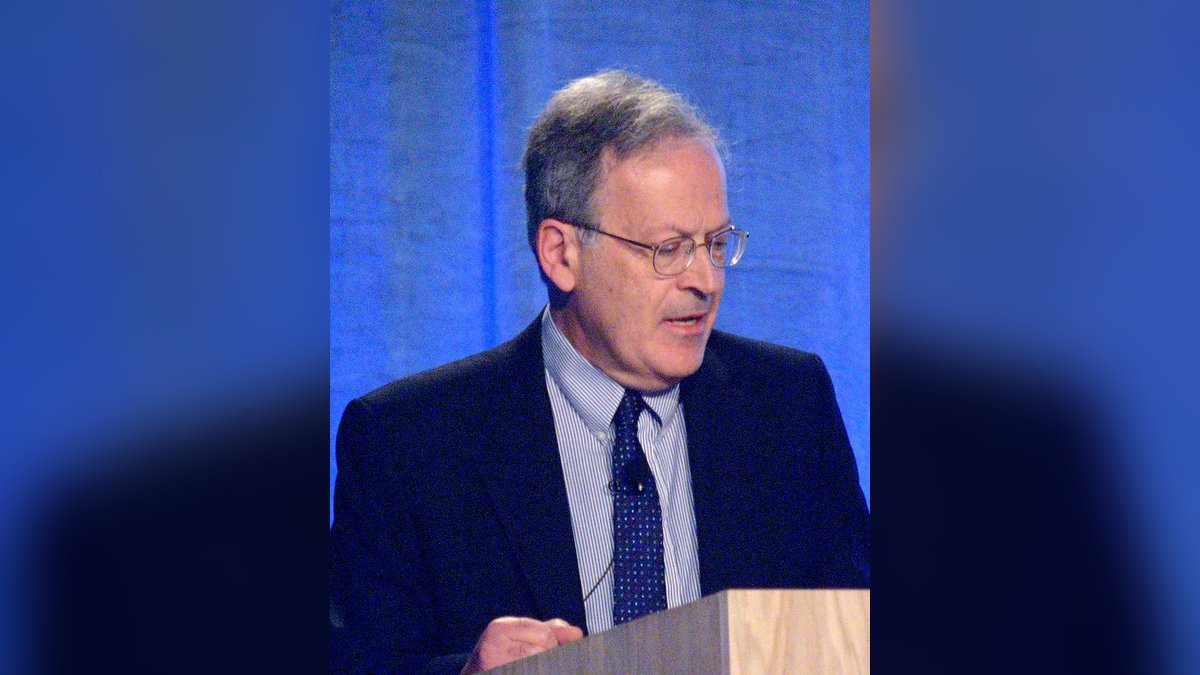
Leslie Gabriel Valiant began his intellectual journey far from the sprawling computational hubs of Silicon Valley. Born on 28 March 1949 in Budapest, in the Hungarian Republic, his early life laid the groundwork for a career that would ultimately redefine the boundaries of theoretical computation. His foundational academic years took him through some of the world’s most prestigious institutions. He first studied at King’s College, Cambridge, followed by advanced studies at Imperial College London. This initial sequence of education established a rigorous, classical foundation that would prove invaluable as his interests gravitated toward the abstract and challenging realms of theoretical computer science.
The culmination of his early formal training arrived at the University of Warwick, where he successfully earned his PhD in computer science in 1974. This period marked a deep dive into the mechanics of computation. His doctoral research focused specifically on the topic of “Decision Procedures for Families of Deterministic Pushdown Automata.” Working under the guidance of his advisor, Mike Paterson, this thesis cemented his early specialization in the formal limits and capabilities of computational models. The rigorous nature of this work, which involved analyzing the fundamental procedures by which machines could make decisions, set the tone for his lifelong commitment to theoretical depth.
The period immediately following his graduation saw Valiant rapidly integrating into the global academic community. His early career path was marked by significant institutional movements, taking him through the University of Leeds (1974–1976), and then to the University of Edinburgh (1976–1982). During this time, he also held appointments at Carnegie Mellon University (1973–1974). This period of intense academic mobility was crucial, allowing him to build a broad network and deepen his expertise in the burgeoning field of computational theory. His subsequent move to Harvard University in 1982 marked a pivotal moment, establishing a long-term academic anchor that would define the next several decades of his life.
Beyond his own research, Valiant quickly established himself as an influential mentor. His academic rigor attracted talented students who would go on to make major contributions to the field, including Mark Jerrum, Michael Kearns, and Dan Roth. These students, trained under his guidance, became key figures in advancing the understanding of computational complexity. This early commitment to both foundational research and the nurturing of the next generation of computer scientists defined his academic identity, firmly rooting his career in the deepest principles of mathematics and computation.
🕒 Academic Trajectory of Leslie Valiant
- 1949 — Born in Budapest, Hungarian Republic.
- Pre-1974 — Studied at King’s College, Cambridge, and Imperial College London.
- 1973–1974 — Held appointments at Carnegie Mellon University.
- 1974 — Earned PhD in computer science from the University of Warwick.
- 1974–1976 — Worked at the University of Leeds.
- 1976–1982 — Worked at the University of Edinburgh.
- 1982 — Moved to Harvard University, establishing a long-term academic anchor.
Pioneering Work in Theoretical Computer Science
Leslie Valiant’s contributions to theoretical computer science fundamentally reshaped how the field approaches the limits of computation. His work provided mathematical tools to quantify the resource costs associated with solving problems, moving complexity theory beyond simple decision problems into the realm of counting and enumeration. Early in his career, his work in Automata Theory yielded an algorithm for context-free parsing, which remains the asymptotically fastest known method. More profoundly, in 1977, he defined the notion of ‘sharp-P’ (#P)-completeness. This concept provided a powerful mechanism for classifying counting or enumeration problems according to their computational tractability, with its first major application being the counting of matchings—the matrix permanent function.
A decade later, in 1984, Valiant introduced a definition of inductive learning that proved transformative. This notion, later formalized as ‘probably approximately correct learning’ (PAC), was groundbreaking because it reconciled the necessary computational feasibility with the ability to apply learning theory to nontrivial classes of logical rules. The PAC model became the theoretical backbone for the entire discipline of Computational Learning Theory, establishing a core theoretical basis for the development of modern machine learning. This seminal work was foundational enough that his citation for the A.M. Turing Award specifically recognized his theory of PAC learning.
Beyond Learning: Modeling Parallel Computation
Valiant’s theoretical reach extended far beyond machine learning theory. In 1989, he formulated the concept of bulk synchronous parallel (BSP) computation. This model was conceived as a unifying principle for parallel computation, serving as an influential architectural model analogous to the von Neumann model for single-processor systems. The principles of BSP have found astonishingly successful real-world applications; for instance, Google adopted it for large-scale computation through platforms like MapReduce, MillWheel, Pregel, and Dataflow. Similarly, Facebook has utilized graph analytics systems capable of processing over one trillion edges, demonstrating the enduring relevance of his theoretical framework.
His academic output continued to define new frontiers, including the introduction of Holographic Algorithms, which drew inspiration from the emerging field of Quantum Computation. His comprehensive 2013 book, Probably Approximately Correct: Nature’s Algorithms for Learning and Prospering in a Complex World, synthesized these ideas, even applying them to biological concepts, such as arguing that the current theory of evolution, while convincing to most biologists, does not adequately account for the rate at which complex mechanisms develop or are maintained in changing environments.
📌 Key Theoretical Contributions
- Context-free parsing algorithm (Automata Theory)
- Defined ‘sharp-P’ (#P)-completeness (1977)
- Introduced PAC learning model (1984)
- Formulated Bulk Synchronous Parallel (BSP) computation (1989)
Career Trajectory and Academic Leadership
Leslie Valiant’s professional life has unfolded across some of the most prestigious academic institutions globally, establishing him as a permanent fixture in the highest echelons of theoretical computation. His foundational academic training was rigorous, starting with a BA from King’s College, Cambridge, followed by an MS from Imperial College London. He cemented his early expertise by earning his PhD in computer science from the University of Warwick in 1974, under the guidance of Mike Paterson. This early period of deep specialization laid the groundwork for a career spanning continents and decades.
The immediate post-doctoral years saw Valiant rapidly establishing his academic footprint. His employment history reflects a global reach, beginning at Carnegie Mellon University from 1973 to 1974. This was followed by a tenure at the University of Leeds between 1974 and 1976. He then spent six years at the University of Edinburgh, a period that spanned from 1976 to 1982. These early stops were crucial in building the intellectual community around him, leading to the supervision of doctoral students, including Mark Jerrum, Michael Kearns, and Dan Roth.
The trajectory shifted permanently in 1982 when Valiant began teaching at Harvard University. He remains deeply integrated into the academic life of the institution, currently holding the title of T. Jefferson Coolidge Professor of Computer Science and Applied Mathematics in the Harvard School of Engineering and Applied Sciences. His sustained presence at Harvard underscores his continuing role not merely as a scholar, but as a leading academic mentor. His work continues to bridge pure theory with applied science, particularly in Computational Neuroscience, where he focuses on understanding the fundamental mechanisms of memory and learning.
His enduring influence extends far beyond his own research breakthroughs. Valiant’s career has been characterized by his ability to define new fields and train the next generation of computational thinkers. His status is recognized by his membership in numerous elite scholarly bodies, including the Royal Society of London since 1991 and the National Academy of Sciences since 2001. Through decades of teaching and research, he has not only defined the limits of computation but has also shaped the intellectual landscape of computer science for future scholars to navigate.
📊 Early Academic Career Milestones
| Institution | Role/Period | Years |
|---|---|---|
| King’s College, Cambridge | BA | N/A |
| Imperial College London | MS | N/A |
| University of Warwick | PhD | 1974 |
| Carnegie Mellon University | Employment | 1973 to 1974 |
| University of Leeds | Tenure | 1974 to 1976 |
| University of Edinburgh | Tenure | 1976 to 1982 |
| Harvard University | Current Position | 1982–present |
Recognizing Genius: Major Awards and Honors
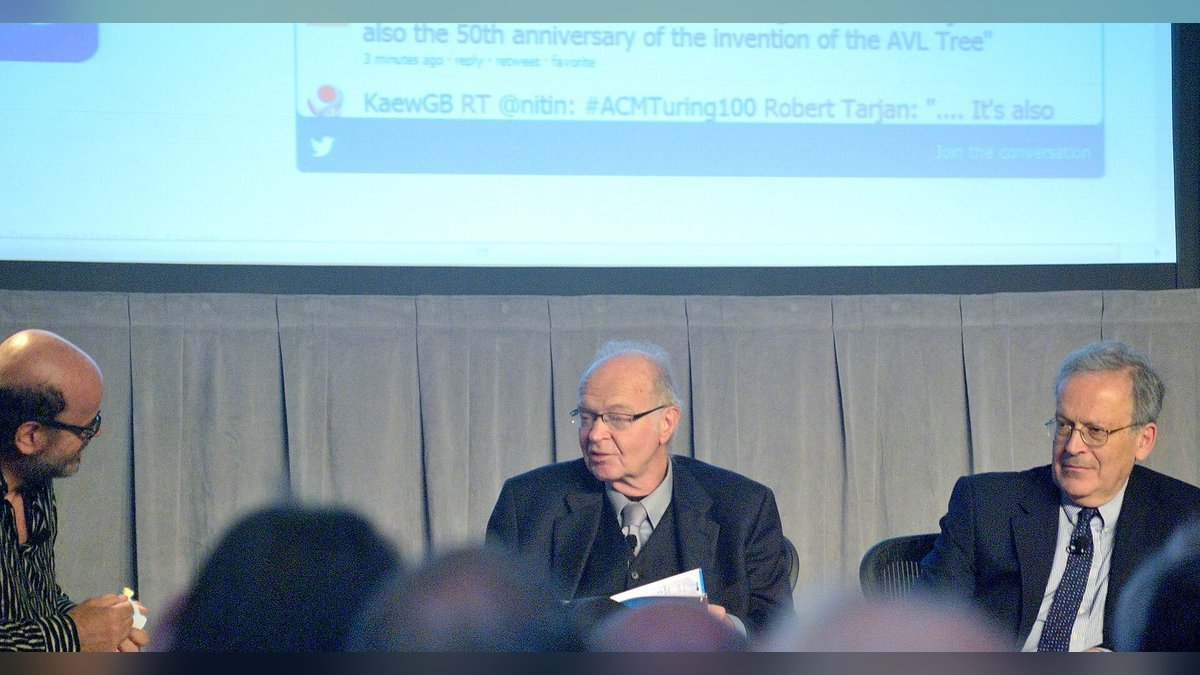
The cumulative weight of Leslie Valiant’s professional accolades speaks not merely to success, but to a sustained, foundational reshaping of computational theory. His recognition by the global academic community—culminating in prizes like the Turing Award, the Knuth Prize, and the Nevanlinna Prize—establishes him as a central, defining figure in the field of computer science. These honors are not isolated commendations; they are markers of a career dedicated to mathematically quantifying the resource costs of solving problems.
The Apex of Computational Recognition
The recognition of his genius arrived in waves of profound academic honor. In 1986, he received the prestigious Nevanlinna Prize. This was followed by the Knuth Prize in 1997, and later, the EATCS Award in 2008. The pinnacle of this recognition came in 2010 when he was awarded the A.M. Turing Award. The citation for this award speaks to the breadth of his impact, citing “transformative contributions to the theory of computation,” specifically naming the theory of probably approximately correct (PAC) learning, the complexity of enumeration and of algebraic computation, and the theory of parallel and distributed computing.
The scope of his theoretical breakthroughs, which earned him global acclaim, is detailed in the nomination for the Royal Society, noting his early work in 1975, where he found the asymptotically fastest algorithm known for recognizing context-free languages. A pivotal moment came in 1977 when he defined the concept of ‘sharp-P’ (#P)-completeness, establishing its utility for classifying counting or enumeration problems based on computational tractability. This work found its first application in counting matchings, specifically the matrix permanent function.
Perhaps his most transformative theoretical contribution, recognized by the source material, was his 1984 definition of inductive learning. This notion, later termed ‘probably approximately correct learning,’ was revolutionary because it provided, for the first time, a framework that reconciled computational feasibility with the practical application to non-trivial classes of logical rules. This concept provided the theoretical basis for the subsequent development of the entire field of machine learning.
A Permanent Seat at the Table of Academia
Beyond these major prizes, Valiant cemented his standing among the intellectual elite through numerous fellowships and memberships. His deep influence was acknowledged when he was elected a Fellow of the Royal Society (FRS) in 1991, and a Fellow of the Association for the Advancement of Artificial Intelligence (AAAI) in 1992. His standing in the American scientific community was formally recognized when he became a member of the United States National Academy of Sciences in 2001. These accolades, alongside his ongoing roles at institutions like Harvard University, underscore a career that has not only generated groundbreaking theory but has also profoundly shaped the academic infrastructure of modern computation.
Influence on Computational Learning Theory
Leslie Valiant’s influence on theoretical computer science is marked by defining the mathematical limits of computation and establishing the foundational frameworks for modern artificial intelligence. His contributions extended deeply into Complexity Theory, where he introduced the notion of #P-completeness, or “Sharp-P completeness.” This concept provided a crucial mathematical tool to explain why certain enumeration and reliability problems prove intractable, thereby quantifying the resource costs associated with solving complex tasks on a computer.
Perhaps his most transformative conceptual leap was the creation of the Probably Approximately Correct (PAC) model of learning. This model did more than simply describe a method; it formally introduced the entire field of Computational Learning Theory, establishing the theoretical bedrock upon which much of modern Machine Learning is built. In 1984, Valiant formalized this field by introducing a definition of inductive learning. This notion was pivotal because, for the first time, it successfully reconciled the abstract concept of computational feasibility with the practical applicability of learning from nontrivial classes of logical rules. This breakthrough gave rise to what became known as ‘probably approximately correct learning.’
📘 #P-completeness
This concept provides a crucial mathematical tool to explain why certain enumeration and reliability problems prove intractable, thereby quantifying the resource costs associated with solving complex tasks on a computer.
Beyond Learning: Modeling Large-Scale Computation
Valiant’s theoretical reach did not stop at the learning algorithm. He provided unifying principles for massive parallel processing. In 1989, he formulated the concept of bulk synchronous computation, proposing it as a unifying model for parallel computation. This model, analogous to the von Neumann architecture for single systems, proved immensely influential for distributed computing architectures. Modern industry practices reflect this legacy, with examples like Google adopting it for computation at massive scale through frameworks such as MapReduce, MillWheel, Pregel, and Dataflow. Similarly, Facebook utilized graph analytics systems capable of processing over one trillion edges, alongside open-source projects like Hadoop, Spark, and Dask, which derive from this principle.
His theoretical models also explored the cutting edge of computational physics. He introduced Holographic Algorithms, a concept inspired by the burgeoning field of Quantum Computation. Furthermore, his work in Automata Theory provided an algorithm for context-free parsing that remains the asymptotically fastest known. This breadth of work—spanning from classifying counting problems using #P-completeness to defining the logistics of massive, distributed data processing—solidified his role as a primary architect of contemporary computational theory. Later, in his 2013 book, Probably Approximately Correct: Nature’s Algorithms for Learning and Prospering in a Complex World, he continued to apply these theoretical lenses to fields outside pure computer science, such as evolutionary biology.
Academic Contributions and Mentorship
Leslie Valiant’s scholarly footprint extends far beyond the celebrated theorems of computational learning theory. His commitment to the academic community has been marked by a career spanning some of the world’s most prestigious institutions. His teaching journey began at Carnegie Mellon University between 1973 and 1974, followed by a tenure at the University of Leeds (1974–1976) and the University of Edinburgh (1976–1982). In 1982, he established a continuing presence at Harvard University, where he currently holds the title of T. Jefferson Coolidge Professor of Computer Science and Applied Mathematics in the Harvard School of Engineering and Applied Sciences. This continuous engagement with academia underscores his role not merely as a theoretician, but as a permanent fixture shaping the next generation of computational thinkers.
Valiant’s theoretical contributions reveal a staggering breadth, moving seamlessly between areas like Automata Theory, Complexity Theory, and even Computational Neuroscience. In the realm of parallel processing, he formulated the concept of the Bulk Synchronous Parallel (BSP) model, which served as a unifying principle for parallel computation. This model gained real-world traction, influencing modern systems like those developed by Google and Facebook. Furthermore, his work tackled the intractable nature of counting and enumeration problems by introducing the notion of #P-completeness, establishing its utility in classifying problems according to their computational tractability. His research also ventured into the theoretical edges of physics, developing Holographic Algorithms, which drew conceptual inspiration from the emerging field of Quantum Computation.
The depth of his scholarly output is further evidenced by his ongoing work in Computational Neuroscience, where he focuses on understanding the complex mechanisms of memory and learning. This sustained intellectual curiosity culminated in his 2013 book, Probably Approximately Correct: Nature’s Algorithms for Learning and Prospering in a Complex World. In this work, he engaged with fields far removed from computer science, arguing that the theory of evolution, while convincing to most biologists, does not adequately account for the rate at which complex mechanisms progress or are maintained in changing environments.
As a mentor, Valiant has guided numerous scholars who have gone on to define entire fields. Among his doctoral students were significant figures such as Michael Kearns and Dan Roth, alongside Mark Jerrum. This tradition of mentorship solidifies his influence, demonstrating that his impact is not confined to his personal research breakthroughs, but is deeply woven into the academic DNA of the field. His career confirms his status as a scholar whose foundational work continues to inform both the abstract limits of computation and the practical architecture of modern technology.
Personal Life and Family Legacy
Leslie Valiant’s intellectual journey is marked by a distinctly global resonance, a life rooted in the confluence of several major cultural and academic centers. Born Leslie Gabriel Valiant on 28 March 1949, his origins trace back to Budapest, within the Hungarian Republic. This early grounding in Central European intellectual tradition provided a unique foundation for a career that would span the highest levels of global technology and mathematics. His academic and professional life has seen him operate across national boundaries, culminating in a status of dual citizenship connecting him to both the United Kingdom and the United States.
This transnational identity mirrors a life of continuous intellectual migration. While his professional biography chronicles decades spent at institutions like the University of Leeds, the University of Edinburgh, and Harvard University, his personal roots and citizenship portfolio underscore a lifelong engagement with the transatlantic flow of scientific thought. His academic pedigree itself speaks to this global reach, marked by degrees obtained from institutions spanning Cambridge, Imperial College London, and the University of Warwick, cementing a scholarly profile that transcends any single national academic narrative.
A Family Legacy in Computation
Perhaps the most striking element of Valiant’s personal context is the continuity of high-level theoretical scholarship within his own family. This legacy is carried forward by his two sons, Gregory Valiant and Paul Valiant. Both men have established themselves as prominent theoretical computer scientists. This familial connection suggests not merely a shared intellectual interest, but a deep, perhaps defining, commitment to the most abstract and foundational aspects of computation. The presence of multiple generations of Valiants contributing to the field of theoretical computation highlights a sustained, almost dynastic, dedication to defining the mathematical limits and structures of modern digital intelligence.
The scope of this family involvement adds a unique layer of context to the narrative of Valiant’s own career. His pioneering work in defining foundational models—from the early work on the counting problem to the development of the Probably Approximately Correct (PAC) model—is thus framed not just as the achievement of a singular genius, but as the culmination of a deeply embedded family commitment to the theory of knowledge itself. While the specific breakthroughs of his sons are outside the scope of this overview, their careers underscore the enduring, multi-generational impact of the intellectual currents that first propelled Leslie Valiant to the forefront of theoretical computer science.
Frequently Asked Questions About Leslie Valiant
What is Leslie Valiant best known for in computer science?
He is best known for defining the Probably Approximately Correct (PAC) model in 1984, which established the theoretical backbone of Computational Learning Theory. He also pioneered the concept of ‘sharp-P’ (#P)-completeness, a crucial tool for classifying counting and enumeration problems.
When did Leslie Valiant receive the Turing Award?
Leslie Valiant was awarded the A.M. Turing Award in 2010. The award recognized his profound and transformative contributions to the theory of computation, specifically citing his work on PAC learning, complexity of enumeration, and parallel computing.
Where did Leslie Valiant receive his PhD in computer science?
Leslie Valiant received his PhD in computer science from the University of Warwick. He completed this degree in 1974, where his doctoral research focused on the specific topic of ‘Decision Procedures for Families of Deterministic Pushdown Automata.’
What are Leslie Valiant’s primary fields of research?
His primary fields of research are Mathematics, Theoretical Computer Science, Computational Learning Theory, and Theoretical Neuroscience. His work is dedicated to defining the mathematical limits of computation and developing foundational frameworks for modern artificial intelligence.
Are Leslie Valiant’s sons also in the field of computer science?
The provided fact sheet does not contain any information regarding the professional careers or fields of Leslie Valiant’s sons.
Final Thoughts: The Legacy of Leslie Valiant
Leslie Valiant’s career is not merely a sequence of prestigious appointments; it is a defining arc in the history of theoretical computer science. From his initial rigorous training at institutions like King’s College, Cambridge, and Imperial College London, to his long tenure at Harvard University, Valiant has consistently pushed the boundaries of what computation can model. His contributions fundamentally altered the field’s scope, moving it beyond simple decision problems into the realm of counting and enumeration. Defining concepts such as ‘sharp-P’ (#P)-completeness and the foundational PAC model for probably approximately correct learning provided the mathematical tools necessary for modern machine learning to flourish, forming the theoretical backbone for today’s AI. Furthermore, his 1989 formulation of bulk synchronous parallel (BSP) computation offered a unifying architectural model whose principles are still utilized by giants like Google and Facebook for large-scale processing.
The influence of Valiant extends deeply into the institutional life of academia, both through his own research—including work in Computational Neuroscience—and through his mentorship of leading minds such as Michael Kearns and Dan Roth. His status is cemented by his memberships in the National Academy of Sciences and the Royal Society of London. He has not only defined the limits of computation but has also provided the intellectual framework for understanding complex systems, even applying these theories to biological concepts. Looking ahead, the principles established by Valiant continue to guide us in deciphering the fundamental computational rules that govern everything from artificial intelligence to the complexity of life itself.
Sources and Further Reading
- Leslie Valiant — Wikipedia (text available under CC BY-SA 4.0)
- Leslie G. Valiant – A.M. Turing Award Laureate — amturing.acm.org
- Leslie Valiant — dl.acm.org
- ACM Turing Award Goes to Innovator in Machine Learning — acm.org
- Gregory Valiant Homepage — theory.stanford.edu
- Official website