Read this article in: Portuguese (Português) · Spanish (Español)
Victoria 3 is a grand strategy title that immerses the player in a complex historical setting, and its creation is the result of the work of Paradox Development Studio, the developer, and Paradox Interactive, the publisher. With a deep focus on politics and economics, the game is not limited to merely simulating battles, but rather the social dynamics and the power of nations. The project features director Martin “Wiz” Anward and designer Mikael Andersson, and is built upon the Clausewitz Engine, ensuring robust gameplay across various platforms, including Windows, macOS, and Linux.
The significance of Victoria 3 is proven both by its historical scope and its development journey. The game covers a vast period of world history, spanning from 1836 to 1936, and allows the player to control over 100 nations. Furthermore, the journey to its release on October 25, 2022, was marked by a unique engagement phenomenon: the game was initially viewed as an online “meme” by the fanbase, which only increased anticipation for the project’s epic conclusion.
To understand all this complexity, this senior article will guide the reader through every nuance of Victoria 3. We will analyze who created the title, the origin of the idea, and the inspiration drawn from the Victorian era. We will cover the development, from its meme status to the epic reality of the gameplay, detailing the depth of geopolitical strategy. Finally, we will address the launch, critical reception, and legacy of this powerful grand strategy series.
Key Points
- It is a grand strategy game, available in single-player and multiplayer.
- The simulated historical period spans from 1836 to 1936, covering modernization.
- The main focus is on political, social, and economic management, not just combat.
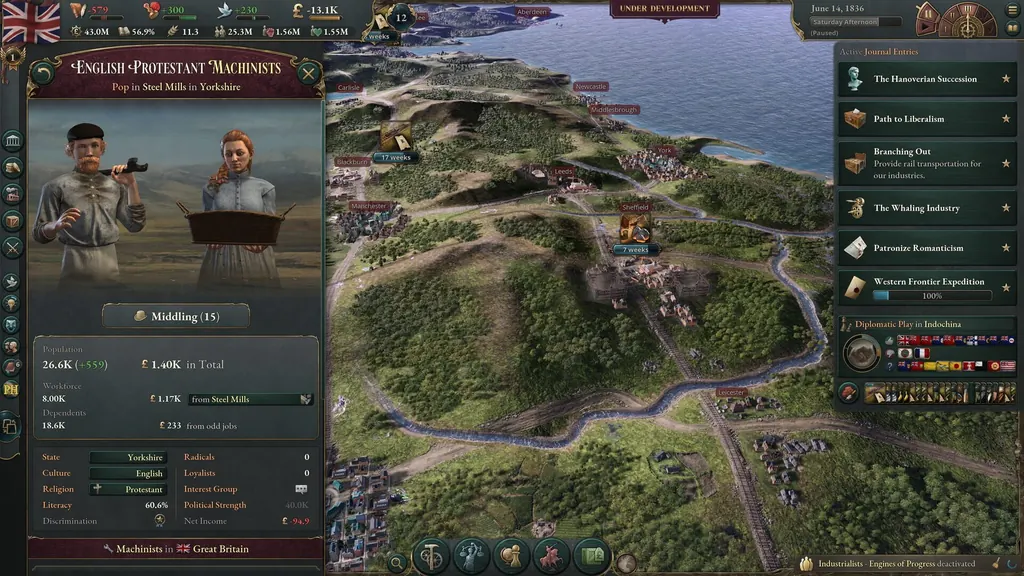
- The core gameplay revolves around managing population groups (‘pops’) and ideologies.
- Developed by Paradox Development Studio, the game was released on October 25, 2022.
Victoria 3 in summary
| Developer | Paradox Development Studio |
|---|---|
| Publisher | Paradox Interactive |
| Director | Martin “Wiz” Anward |
| Designer | Mikael Andersson |
| Engine | Clausewitz Engine |
| Platforms | Windows; macOS; Linux |
| Release | October 25, 2022 |
| Genre | Grand strategy |
| Modes | Single-player, multiplayer |
Who created Victoria 3? The team behind the grand strategy
Creating a large-scale title like Victoria 3 is not the work of a single individual, but rather the result of a complex collaboration among visionary studios, developers, and designers. To understand the machinery behind this geopolitical experience, it is essential to recognize the entities responsible for its conception and production: Paradox Development Studio, as the developer, and Paradox Interactive, which acts as the publisher. This robust corporate structure is the foundation that allowed an idea to be transformed into a final product of great historical appeal.
The Team Behind the Vision
At the core of this project are key figures who guided the game’s development. Martin “Wiz” Anward took on the role of development director, overseeing the project from its early stages through to release. Meanwhile, Mikael Andersson was responsible for the game’s design, contributing significantly to the strategic architecture that defines the genre. It is interesting to note that, much like in other areas of technology, developing complex platforms requires great vision; for example, learning more about who created Xamarin and its history can be enlightening. The combined work of these professionals was essential in shaping the political and economic simulation system that characterizes the series. It is this combination of leadership and specialized design that gives Victoria 3 its depth and complexity.
The Development Lifecycle
The journey to release was marked by an intense development cycle and, ironically, a period of intense community anticipation. The game was officially announced on May 21, 2021. Even before this formal announcement, the Paradox player community developed the title to the status of a “meme,” a phenomenon that underscores how eager the public was for its arrival. The anticipation was so great that, in April 2022, a beta version of the game leaked online, confirming the palpable progress of the project. Finally, after this trajectory of hype and development, Victoria 3 was released on October 25, 2022.
Technically, the game was built on the Clausewitz Engine, an engine that supports the complexity of geopolitical interactions. This technical robustness allowed the title to be released on multiple platforms, including Windows, macOS, and Linux. In terms of gameplay, it is firmly established in the grand strategy genre and offers both single-player and multiplayer modes, ensuring the experience is adaptable to different gaming contexts.
In summary, the success of Victoria 3 is a testament to the capability of Paradox Development Studio and its team—led by Anward and Andersson—to transform an ambitious vision into a polished product, capable of engaging the player in an epic-scale historical simulation.
🕒 Victoria 3 Development Timeline
- May 21, 2021 — The game was officially announced to the community.
- April 2022 — A beta version of the game leaked online, confirming the project’s progress.
- October 25, 2022 — Victoria 3 was officially launched.
The Origin of the Idea and the Victorian Period as Inspiration

The universe of Victoria 3 is not just a strategy game; it is a time machine that transports the player to a monumental period of world history. The central inspiration for the title indeed lies in the Victorian Era, but the game’s scope transcends this period, covering a vast span from 1836 to 1936. This temporal breadth allows the player not only to witness Victorian events but also to explore the development of civilizations through a complete cycle of modernization, from steam power to the challenges of the 20th century, and to understand how languages like Lua and software development shaped progress.
Focus on Social and Economic Complexity
The grandeur of the historical setting translates into a management challenge of unprecedented proportions. The player has the freedom to control one of more than 100 countries existing during this period. However, the true heart of the gameplay is not the battlefield, but the social and political fabric of the nation. The game focuses on politics, demographics, and economic development, requiring the player to act as a social manager, and not merely a general.
The main focus is on managing population groups, or “pops.” These groups represent various social segments with distinct ideologies and interests, such as the Devout, Industrialists, and Rural Folk. The mechanic requires the controlled leader not only to manage resources but also to constantly work to attract and appease these factions, whose ideologies and interests will shape the country’s destiny. This structure reflects a view of history that sees political affinity as deeply linked to economic status, a concept that, as designer Mikael Andersson pointed out, simulates Historical Materialism.
The Evolution of Diplomacy and the Decline of War
To reinforce the focus on politics and internal development, the gameplay system has been thoroughly revised compared to its predecessors. One of the most notable aspects is the Diplomatic Actions system. Instead of relying solely on military might, leaders are encouraged to negotiate. By presenting a demand to a target country—whether for land concessions or market access—the player initiates a complex negotiation. This exchange of demands activates a timer, at which point both sides can mobilize troops and seek potential allies, either through obligations or rewards. If you are interested in how cache technologies revolutionized development, check out the history of Redis. The intention behind this system, as explained by Mikael Andersson, is precisely to decrease the emphasis on war, making diplomacy equally functional and intriguing.
In summary, Victoria 3 is a national modernization simulator. Although the player can interact with over 100 nations, the primary mission is to guide the controlled state through industrialization—by building factories and mines, researching advanced technologies, and implementing liberal laws, such as Free Trade. It is an invitation for players to dive into the whirlwind of ideologies, social conflicts, and economic advancements that defined the 19th and early 20th centuries.
📌 Victoria 3’s Focus: More Than Battles
- Managing population groups (pops) with distinct ideologies.
- Attracting and appeasing factions to shape the national destiny.
- Economic development and industrialization (mines, factories).
- Political progression through laws and social reforms.
The Development: From Meme to Epic Reality
The journey of Victoria 3 to become a playable reality was marked by an intense development cycle, but also by an almost legendary period of anticipation within the fan community. Even before any formal announcement, the title was synonymous with a cultural phenomenon within the Paradox universe. The player base began treating the game’s development as a true “meme.” This perception arose because the community constantly asked questions about the release, and the official response often seemed evasive. Many players started joking that the game would never be released, or that any official mention of the number “three” was an omen that the title was coming. This period of speculation and inside jokes only increased the mystery and anticipation surrounding the project.
The Announcement and the Start of Anticipation
The accumulated anticipation finally found an official turning point. The game was formally announced on May 21, 2021, during the PDXCON: Remixed event. This moment marked the beginning of formal development and channeled the community’s energy toward a concrete purpose. The project, which solidified into a work of great strategy, was led by key figures such as Martin “Wiz” Anward, who served as development director, and Mikael Andersson, lead designer. The visibility of these names and the official announcement were crucial in giving substance to an idea that, until then, existed only in the realm of speculation and fan fun.
📘 Clausewitz Engine
It is the powerful technical engine responsible for supporting the complexity of the geopolitical and economic interactions that define the game’s gameplay.
The game’s technical development, covering the historical period from 1836 to 1936, was sustained by the powerful engine called the Clausewitz Engine. This engine is responsible for supporting the complexity of the geopolitical and economic interactions that define the gameplay. The progression was rapid and intense. In April 2022, the community got a glimpse of the actual gameplay when a beta version of the game leaked online. This event further intensified the buzz, leading players to prepare for an experience of national modernization and managing population groups (“pops”) on an unprecedented scale.
Finally, after months of polishing and adjustments, Victoria 3 was officially released to the public on October 25, 2022. The transition from an inside joke theme to a finished and robust product is a testament to the dedication of Paradox Development Studio and the entire team. The development not only delivered a game but a complex time machine, challenging players to balance military power with the delicacy of internal politics, proving that the ambition of transforming a historical vision into a national modernization simulator is, in fact, epic.
Gameplay and the Depth of Geopolitical Strategy
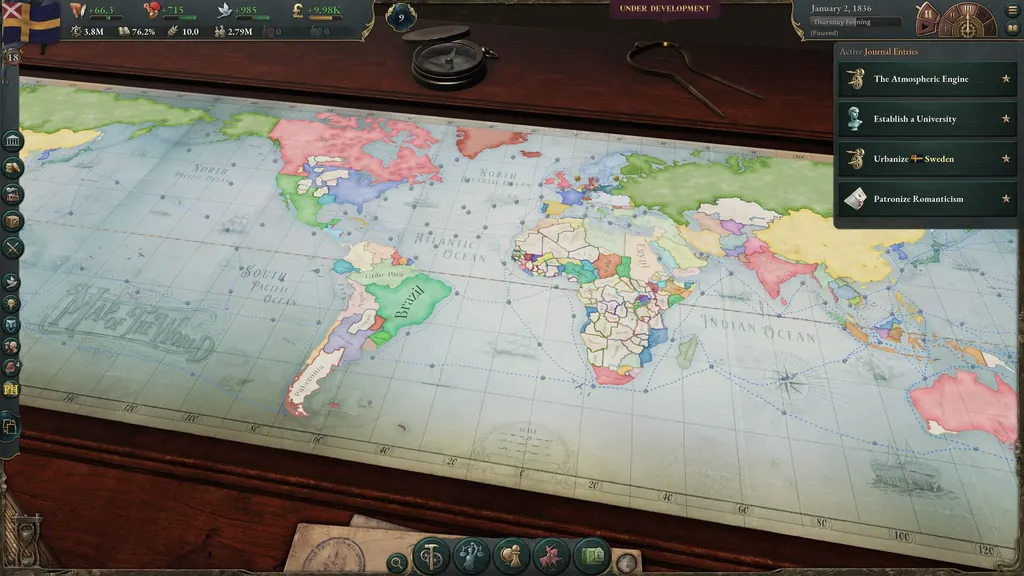
Gameplay and the Depth of Geopolitical Strategy
Victoria 3 is not just a conflict simulator; it is a complex national modernization simulator that demands from the player a deep command of politics, economics, and demographics. The core gameplay is structured around the monumental historical period of 1836 to 1936, allowing the player to take control of one of more than 100 countries existing during that period. The true strategic challenge, however, lies in managing the social and political fabric of the nation, and not just in accumulating troops.
💡 Tip
Remember that the game’s focus is diplomacy. Use the Diplomatic Actions system to negotiate and prevent war from being the only option, as the counter-demand power is crucial.
Managing population groups (pops)
The heart of the game is managing population groups, or “pops.” These are not mere numbers; they represent large blocs of people with distinct interests and ideologies. Success in the nation depends on the player’s ability to attract, appease, and sometimes manipulate these groups. The system reflects a Marxist view of history, where political affiliation is intrinsically based on economic status. Whether it’s the Devout, the Industrialists, or the Rural Peasants, each faction has specific demands, and ignoring their interests can lead to internal instability and social collapse.
To drive development, the player must modernize the country, a process that combines economic and political mechanics. This involves building mines and factories, increasing construction capacity, and mastering the global market. Simultaneously, technological advancement and the implementation of liberal laws, such as Free Trade, are crucial for transforming the country into an industrial power. In short, the game requires the national leader to balance the need for economic growth with the maintenance of social cohesion.
Politics Above War: Diplomatic Plays
Although history is a vast backdrop, the game’s focus was intentionally shifted from war to diplomacy. The Diplomatic Plays system, an evolution of the crisis system from predecessors, makes negotiation the primary geopolitical driver. When a country wishes to force another to concede territory or open markets, it must present a detailed demand. However, power is not unilateral: the target country has the opportunity to counter-demand concessions from the aggressor. After this exchange of demands, a timer begins counting, giving both sides time to mobilize troops and attract potential allies, offering obligations or rewards.
If no diplomatic resolution is reached before time runs out, war will be declared. This mechanism, as explained by designer Mikael Andersson, aims to decrease the emphasis on military force, making diplomacy equally functional and interesting. It is worth noting that decentralized nations, which represent regions without central government, cannot be the target of these diplomatic plays and can only be absorbed through colonization.
Release, Reception, and the Legacy of the Series
The journey of Victoria 3 to become a commercial product was marked by an almost legendary anticipation within the fan community. Before the official announcement, the title was often treated as a “meme” within the Paradox player base, due to the constant and persistent questioning of its release. This anticipation, accompanied by jokes about the game never coming out, built a mystery that finally reached its climax. After months of intense development and technical polishing, the game was officially released to the public on October 25, 2022.
The release solidified the title in the grand strategy gaming scene, available on major computing platforms: Windows, macOS, and Linux. Critical reception was generally quite positive. According to the review aggregator Metacritic, Victoria 3 received scores rated as “generally favorable.” However, the journalistic coverage was vast and varied, reflecting the complexity of its scope. While some critics praised the depth and realism of its economic systems—highlighting the ability to simulate deficits and reserves, allowing for strategies that mirror the global economy—others pointed out more delicate aspects. For instance, the war system, while present, was called out by some outlets as being “very delicate and confusing” in its mechanics.
Reception and Legacy of the Series
Specialized critics highlighted both the game’s strengths and its challenges. While outlets like PCGamesN praised the enhanced colonization system, which allows colonized regions to undergo a process of independence and be played as sovereign nations, Eurogamer emphasized the “absolutely absorbing” nature of the economic simulation, which requires the player to map production chains and prices. However, this same depth generated criticism, such as that mentioned by Kotaku, which felt that the economic micromanagement could become tedious over prolonged sessions.
Despite debates over the gameplay focus—which was intentionally directed toward politics and national modernization rather than military conflict—the success of Victoria 3 is a testament to Paradox Development Studio’s ability to enhance its franchise model. The title not only maintains the spirit of its predecessors but also positions itself as a direct and significantly advanced sequel to Victoria II (2010). It thus manages not only to continue a historical lineage but also to consolidate and elevate the series’ legacy, challenging players to become masters of diplomacy and modernization in a constantly fluctuating geopolitical landscape.
Glossary
- Grand strategy: A game genre that simulates the management of large nations and large-scale geopolitical development.
- Clausewitz Engine: The game’s technical engine, responsible for supporting the complexity of geopolitical and economic interactions.
- Historical Materialism: A concept that simulates the view that a nation’s political sentiment is deeply tied to its economic status.
Frequently Asked Questions
Is Victoria 3 hard to learn? What is the learning curve?
The learning curve is steep due to its depth. The game requires the player to act as a social manager, balancing politics, demographics, and economics. Although the system is complex, the focus on mechanics like managing population groups and diplomatic negotiations guides the player through epic-scale modernization challenges.
What is the difference between Victoria 3 and Victoria II?
The most recent iterations, such as Victoria 3, have refined the gameplay focus. There is a much greater emphasis on diplomacy and internal politics. The system has been revised to decrease reliance on military force, encouraging leaders to resolve conflicts through complex negotiations and social adjustments.
What historical period is the game set in exactly?
The game covers a vast and monumental period, spanning from 1836 to 1936. This allows the player not only to experience the Victorian Era but also to follow the complete development cycle of a nation, from steam power to the challenges of the 20th century.
Is the game focused on war or on politics and economics?
The main focus is undeniably on politics and economics. While conflict is a possibility, the system was designed so that diplomacy and internal management are the geopolitical engines. The challenge is to guide the state through industrialization, balancing economic growth with social cohesion.
Where can I buy Victoria 3 and on which platforms does it run?
The game is published by Paradox Interactive and can be purchased on PC platforms. It was built to run on multiple operating systems, including Windows, macOS, and Linux, ensuring accessibility for a wide base of strategy gamers.
Conclusion
The development of Victoria 3 is, therefore, a testament to the capability of Paradox Development Studio and its team—led by Martin Anward and Mikael Andersson—to transform an ambitious historical vision into an epic-scale product. Released after a cycle of intense anticipation, the title is not just a strategy simulator, but a time machine spanning the monumental period from 1836 to 1936. This scope allows the player to go beyond the mere Victorian Era, following the complete modernization cycle of a civilization.
The true complexity of the game lies in its non-military, but deeply social and political focus. Instead of concentrating solely on the battlefield, the player is challenged to act as a social manager, administering the political fabric of a country. The central mechanic revolves around “pops” (popular groups), requiring the leader not only to build factories and mines but also to navigate the complex dynamics of ideologies and interests of factions like the Devout and Industrialists. The emphasis on diplomacy and negotiation, over constant warfare, reinforces this view that a nation’s destiny is shaped first by consensus and internal development.
Victoria 3 invites players to dive into the whirlwind of capitalism and socialism, in an unprecedented management challenge that demands mastery of politics, economics, and demographics. It’s an invitation not just to play a game, but to become an active historian, shaping the destiny of a nation on an unprecedented journey of modernization. Let the complexity of the 19th century and the power of ideas be your next challenge.