Read this article in: Portuguese (Português) · Spanish (Español)
If you’re looking for the definitive guide to the 50 best Atari 2600 games, you’ve come to the right place. The Atari 2600, originally released in 1977, was more than just a console; it was the catalyst for a golden age of home entertainment. This comprehensive guide dives into the history of one of the most influential video game systems, compiling an immortal selection of titles that defined genres and captivated millions of players worldwide. Get ready to revisit the magic and nostalgia of the classics that shaped our relationship with electronic games.
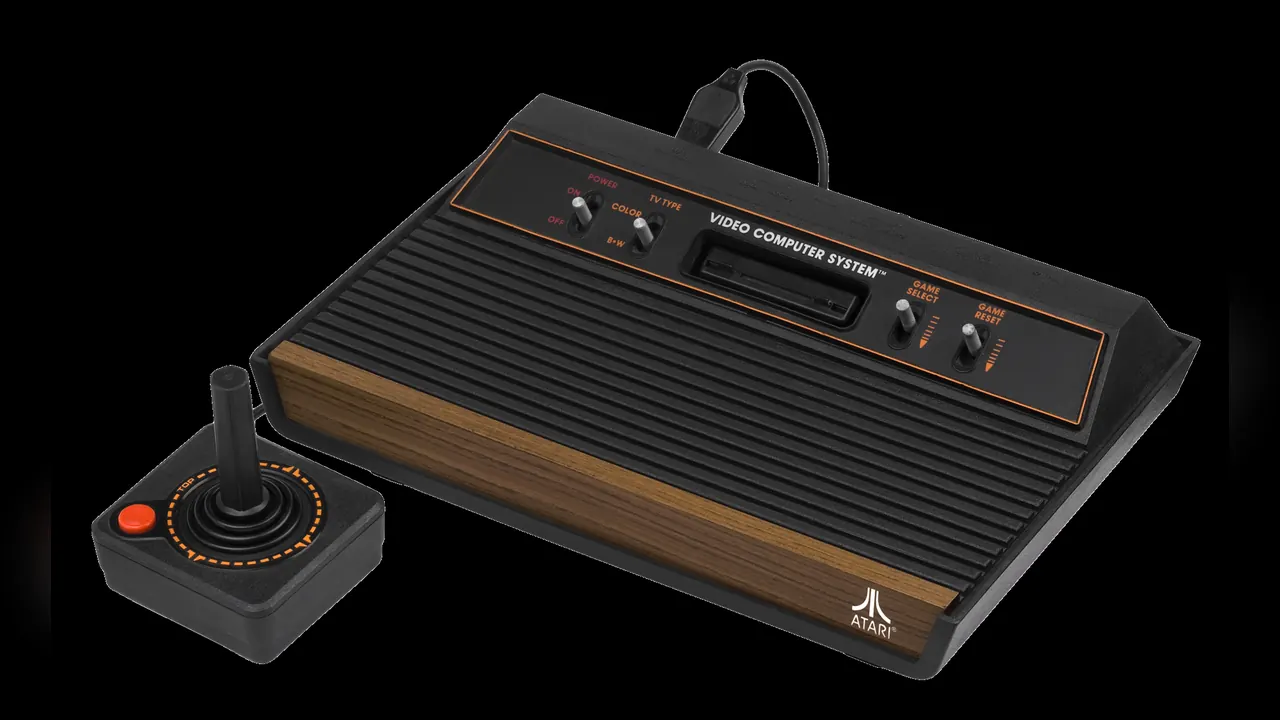
The relevance of the Atari 2600 goes beyond a simple list of games. Released in 1977, it popularized the use of interchangeable ROM cartridges, a revolutionary format that allowed the system to adapt and evolve over time. The success was monumental, with units sold reaching as high as 30 million. Furthermore, the platform was fundamental to third-party development, giving rise to iconic companies like Activision in 1979, which proved the potential of a robust development ecosystem.
In this article, we will take a trip through time using three essential sections. First, we will explore The Time Machine: Atari 2600 Context and Technology, understanding how the console emerged. Next, we will cover The Revolutionary Catalog: Genres and the Golden Age of Gaming, presenting the diversity of titles. Finally, we will detail Selection Criteria: Why These 50 Titles Are Immortal, ensuring you understand the historical and artistic value behind every chosen classic.
Key Points
- Released in September 1977, the system used the MOS 6507 processor and only 128 bytes of RAM.
- The implementation of ROM cartridges was crucial, allowing multiple games to run without redesigning the hardware.
- The console sold a total of 30 million units and was discontinued in 1992.
- Activision pioneered the model of third-party game development in 1979.
- The success of titles like Space Invaders solidified the ‘killer app’ model in the home market.
Atari 2600 in summary
| Alternate Name | Atari Video Computer System (1977–1982) |
|---|---|
| Manufacturer | Atari, Inc. |
| Type | Home video game console |
| Generation | Second |
| Release (Brazil) | September 1983 |
| Discontinued | 1992 |
| Units Sold | 30 million |
| Media | ROM Cartridge |
| CPU | MOS Technology 6507 @ 1.19 MHz |
| Memory | 128 bytes RAM |
| Controls | Joystick; paddles; driving; keypad; Trak-Ball |
| Best Seller | Pac-Man |
The Time Machine: Atari 2600 Context and Technology
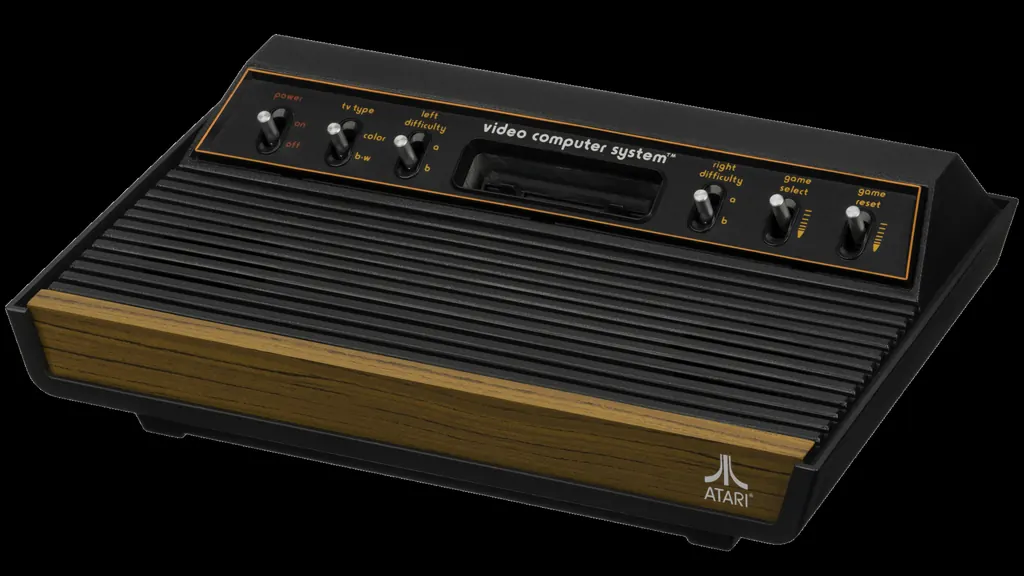
The history of video games is marked by a crucial transition: the movement from arcade games to the comfort of the living room. Initially, home systems were limited. As records show, the first consoles were dedicated units, designed to run only a single game. This model, while functional, presented an imminent risk of obsolescence, given that the cost of developing each new console was extremely high, potentially exceeding US$100,000 at the time—a scenario that contrasts with the vast collection of titles found in guides like the best Atari 5200 games.
The revolution came with microprocessor architecture. In 1974, Atari, amidst growing competition in the arcade market, realized it needed a more flexible system. The solution lay in programmable microprocessors. In September 1975, MOS Technology released the 6502 chip, a component that would change the course of the industry. After technical negotiations, the development team opted for the 6507 chip, a lower-cost version, along with the RIOT chip. This component, acquired for a negotiated price of US$12 per pair, allowed engineers to transform the console into an open platform.
The Engineering Behind Portability
The result of this technical effort was the Atari Video Computer System, released in North America in September 1977. This console was not just an appliance; it was an ecosystem. The implementation of ROM cartridges was the masterstroke, as it gave the system the ability to run multiple games without needing to redesign the physical hardware. Processing power was provided by the MOS 6507 CPU, and the system operated with limited memory of only 128 bytes of RAM.
This memory limitation and the lack of a framebuffer (frame memory) presented unique technical challenges. Programmers, therefore, had to be extremely creative, developing optimization techniques so that the game could “race the beam,” synchronizing graphics generation with the scanning of the cathode ray tube (CRT). These restrictions were not flaws, but rather catalysts for genius, forcing developers to squeeze maximum performance out of the hardware. The console, which was discontinued in 1992, not only popularized microprocessor hardware in the home but also established the business model that dominates the video game industry to this day.
The Revolutionary Catalog: Genres and the Golden Age of Gaming
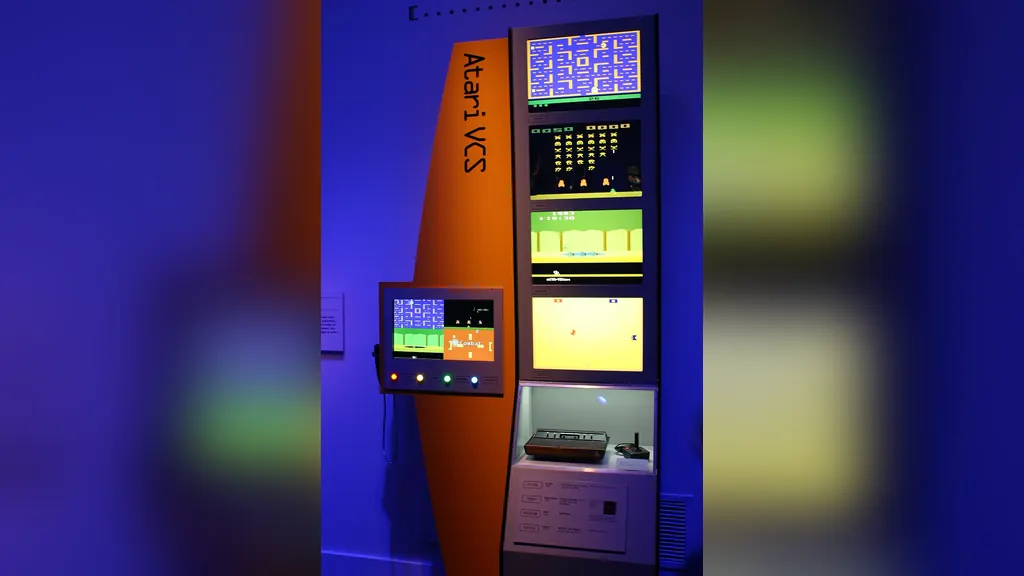
The Atari 2600’s journey was marked by an explosion of creativity that transcended mere arcade replication. While in its early years, the console relied on launch titles like ememAir-Sea Battle, ememBlackjack, and ememIndy 500, the diversity quickly took hold. The system was not limited to being a mere game receiver; it became a laboratory for experimentation. In 1980, the arrival of ememAdventure marked a milestone, considered the first home action-adventure game. The console’s ability to receive and adapt successful titles, such as ememBreakout (an arcade port released in 1978), proved its potential across various genres, and for those interested in more machines from the era, checking out the best games for the Atari 7800 is worthwhile.
Technical Evolution and Sales Successes
The true engine of growth, however, came with high-quality titles that set new standards. Space Invaders, a Taito port released in 1980, was a sales phenomenon, selling a million copies and surpassing 6 million cartridges by 1983, solidifying its status as the so-called “killer app” that boosted the market. Technologically, the console also matured: while launch games used 2K ROMs, titles like Asteroids (1981) pioneered the use of bank switching technology, utilizing 8K of data in two 4K segments. This technical progression allowed the catalog to advance, reaching 16K cartridges (like Dig Dug and Crystal Castles ) and, in later releases, up to 32K, such as Fatal Run in 1990.
The Flourishing of the Third-Party Ecosystem
Initially, software development was restricted to Atari, Inc. However, the landscape changed drastically with the emergence of independent companies. In 1979, Activision, founded by Crane, Whitehead, and Miller, kicked off the development of third-party games. Starting in 1980, Activision began releasing successful titles like Kaboom! (1981) and Pitfall! (1982), which sold up to four million copies. The success of these developers not only proved the viability of an open market but also established the licensing model that remains fundamental to this day.
The impact of this ecosystem was monumental. In 1982, twenty-six companies were producing or had announced plans to produce software for the 2600, including U.S. Games and Telesys. Third-party games accounted for half of the system’s sales in 1982. Furthermore, game art also became professionalized: while Cliff Spohn was responsible for visually dynamic and engaging cover art, artists like Ralph McQuarrie, known for his work on the Star Wars series, were also hired, raising the standard of marketing and visual appeal of the catalog.
Selection Criteria: Why These 50 Titles Are Immortal

The curation of this list of 50 titles was not based merely on commercial popularity or sales figures. For a game to be considered “immortal” in this guide, it had to transcend time, demonstrating a rare combination of technical genius, cultural influence, and the ability to provide an intrinsically timeless enjoyment. If you want to explore more about the classics of this platform, check out our guide to the 50 best games for the Atari 5200. This guide was built to be a deep dive into what the Atari 2600 truly represented: a laboratory of innovation.
Triumph Over Technical Limitations
The biggest selection criterion lies in how developers overcame the system’s architectural restrictions. Released in 1977, the Atari 2600 operated with modest resources, such as a MOS Technology 6507 processor running at 1.19 MHz and only 128 bytes of RAM. In a scenario where memory was scarce, development masters were forced to create ingenious solutions. The games featured here are testaments to this mastery, utilizing advanced techniques like Bankswitch—a method that allowed the use of 2 kB and 4 kB of memory to support up to 16 kB. The system’s maximum capacity was 4 kB, but the creativity of the programmers, as seen in the 64 kB Megaboy cartridge, proved that the limits were often just suggestions.
Beyond memory management, graphical innovation was crucial. The console, initially designed for Pong-style games, managed to go far beyond. Although the system could process only five types of objects—two sprites (Player0 and Player1) and three simple one-bit objects (Missile 0, Missile 1, and Ball)—it was precisely this limitation that fueled creativity. The immortal titles are those that not only used the available resources but explored the hardware’s “secrets.” Many pioneering games were programmed by exploiting documented system flaws or “bugs,” such as the famous starfield in Cosmic Ark, proving the depth of technical understanding that characterized the era.
Cultural Influence and Timeless Gameplay
In terms of gameplay, the selected titles are those that defined genres and established standards that resonate to this day. They represent the transition from a mere arcade clone to complex experiences, such as the most primitive RPGs, exemplified by DragonStomper, which used the StarPath Supercharger with 128 kB of ROM. The ability of a game to be played in different contexts, from joystick to keyboard, and yet maintain its appeal, attests to its timeless quality. This guide, therefore, is not just a catalog; it is a recognition of the human talent that, even with limited hardware, managed to build a playable library that has withstood the test of time and modern emulation.
The 40 Best Games for Atari 2600
1. Space Invaders
Year: 1980 | Developer: Atari | Genre: Shooter/Action
Released in March 1980, Space Invaders set a standard for shooting gameplay that influenced generations of video games. The player must defend their base from a horde of aliens moving in coordinated patterns, progressively increasing the difficulty. The game is a landmark for its constant tension and the challenge of managing the attack’s rhythm. It stands out for its sense of claustrophobia and addictive gameplay, making it a timeless classic for the Atari 2600 platform.
2. Asteroids
Year: 1981 | Developer: Atari | Genre: Shooter/Action
Asteroids, from August 1981, is a space action icon. Players pilot a spaceship to destroy asteroids and enemy craft in a universe of physics and precision. What makes the game excellent is the physical control and the need to master 360-degree movement. Unlike linear games, Asteroids requires the player to make tactical decisions about positioning and using momentum. Its dynamic gameplay and survival challenge make it one of the most memorable titles of its time.
3. Pitfall!
Year: 1982 | Developer: Activision | Genre: Platform
Pitfall!, released in September 1982, is considered a watershed moment in the platformer genre. The game transports the player to a dangerous jungle, requiring them to avoid traps and navigate a complex map. The major distinguishing feature is the ‘pitfall’ mechanic, which introduced the idea of immediate danger and environmental exploration. Developed by Activision, it not only challenged the player’s skill but also established narrative depth and a sense of adventure for the Atari platform.
4. Centipede
Year: 1983 | Developer: GCC | Genre: Shooter/Action
Centipede, from March 1983, features distinct and challenging gameplay. The objective is to eliminate hundreds of creatures crawling across the scene. What elevates it is the segmented attack mechanic: the player must identify and hit specific parts of the worms to inflict damage. The game demands more than just reflexes; it requires tactical planning to deal with varied movement patterns. Its progressive challenge structure and colorful visuals make it a level design landmark for the Atari 2600.
5. Donkey Kong
Year: 1982 | Developer: Imaginative Systems Software | Genre: Platform
Released in July 1982, Donkey Kong is a classic that popularized the figure of the hero in peril. The game puts the player in a rescue mission, facing the challenges set by Donkey Kong. What sets it apart is the combination of platforming with combat elements and environmental hazards, such as barrels and moving platforms. Its progression through increasingly complex levels and the need for spatial reasoning established it as one of the best action games of its time, defining the platform genre for the console.
6. Breakout Breakaway IV Sears
Year: 1978 | Developer: Atari | Genre: Block Breaker/Arcade
Considered one of the pioneering titles, Breakout Breakaway IV Sears, from October 1978, is a block-breaking masterpiece. The gameplay involves bouncing balls to destroy structures across various levels. The game is a perfect example of how simplicity can generate depth. It stands out for its variety of block patterns and its increasing difficulty curve, keeping the player engaged in a race against time. It was an immediate success that solidified the block-breaking genre in the home video game scene.
7. Frogger
Year: 1982 | Developer: Parker Bros. | Genre: Adventure/Survival
Frogger, from August 1982, is a survival game that demands timing and patience. The objective is to guide the frog across a dangerous environment, crossing busy roads and rivers full of predators. What makes it unique is the constant tension created by the need for perfect coordination between movement and timing. It transforms a simple crossing into a risk management challenge. This title is an excellent example of how simple mechanics can generate an engaging and highly strategic gameplay experience.
8. Galaxian
Year: 1983 | Developer: GCC | Genre: Shooter/Action
Released in April 1983, Galaxian is a vibrant evolution of the shooting genre. Players must destroy formations of aliens that move in geometric patterns. What makes it superior is the wave-attack system and how the enemies group together, demanding tactical focus beyond mere shooting. The game elevates the intensity and visual challenge, being a design milestone that surpassed previous shooting models. Its intense gameplay established it as one of the most iconic and addictive titles on the platform.
9. Missile Command
Year: 1981 | Developer: Atari | Genre: Strategy/Defense
Missile Command, from April 1981, is a high-tension strategic defense title. The player must guide missiles to intercept waves of meteors and enemy spacecraft approaching a base. The game stands out for its resource management and time pressure, forcing the player to think strategically about the distribution of their attacks. It is not just a shooting game, but a test of planning and anticipation. Its engaging gameplay and sense of urgency make it a timeless strategy classic on the Atari 2600.
10. Q*bert
Year: 1983 | Developer: Parker Bros. | Genre: Platformer/Puzzle
Q*bert, from July 1983, is a colorful and fun game that mixes platforming with puzzle elements. The player must help Q*bert escape a dangerous maze by collecting items and avoiding enemies. What makes it special is its vibrant visual design and the mechanics of jumping and movement patterns. It requires the player not only to react but also to plan routes and use the environment to their advantage. Q*bert is a brilliant example of how combining puzzle and action can result in a fun and addictive gaming experience.
11. Adventure
Year: 1980 | Developer: Atari | Genre: Adventure
Considered a milestone in video game history, Adventure was one of the first titles to incorporate RPG elements and exploration into a simple text and graphics format. Developed by Atari and designed by Warren Robinett, the game plunges the player into a medieval mystery, requiring them to solve enigmas and navigate a fantasy world. What elevates it as a pioneer is the sense of discovery and the immersive narrative, which surpassed the technical limitations of the time. It established the adventure genre on the console, becoming a watershed moment for the development of interactive games.
12. Defender
Year: 1982 | Developer: Atari | Genre: Shooter/Action
Defender, designed by Bob Polaro, is one of the most intense on-screen action examples the Atari 2600 ever offered. The game places the player in a spaceship, forcing them to defend Earth from hordes of aliens in a side-scrolling scenario. Its gameplay is notoriously challenging, demanding constant precision and strategy to survive the enemy waves. The title stands out for its fluidity and the complexity of its attack patterns, setting a standard for shoot ’em ups that influenced generations of developers and cementing the console as a high-adrenaline entertainment machine.
13. Pole Position
Year: 1983 | Developer: GCC | Genre: Racing
Pole Position revolutionized the racing experience on home consoles. With a track and vehicle design that simulated the thrill of Formula 1 circuits, the game was a massive success. Designed by Doug Macrae and John Allred, it transported the player into the driver’s seat, demanding precise control and timing. Pole Position’s major selling point was its attempt to convincingly simulate speed and competition on limited hardware. It not only popularized the racing genre but also raised player expectations for realism and challenge in sports games.
14. Commando
Year: 1988 | Developer: Imagineering | Genre: Shooter/Action
Commando, created by Mike Reidel and published by Activision, is a military action classic that kept the player in a frantic pace. The game places the protagonist in an intense combat mission where he must eliminate threats in successive waves. What makes Commando one of the best is the feeling of power and the varied arsenal available, which allowed the player to adapt their strategy. The fluid gameplay and the progressively more difficult level design ensured that the title was a shooting spectacle on the Atari 2600, keeping the adrenaline high until the last shot.
15. Joust
Year: 1983 | Developer: GCC | Genre: Combat/Action
Joust, designed by Mike Feinstein and Kevin Osborn, is a unique combat game that deviates from traditional shooting patterns. It casts the player as a knight who must compete in a jousting tournament. The core mechanic involves not only attacking but also using the environment and timing to knock rivals out of the air. What sets Joust apart is its combination of platforming and aerial combat elements, making the experience dynamic and unpredictable. It is a creative title that knew how to utilize the console to create a physical and strategic challenge, fun for both the player and the observer.
16. Ms. Pac-Man
Year: 1983 | Developer: GCC | Genre: Maze/Action
Ms. Pac-Man, with its iconic characters, is a refined evolution of the original success, designed by Mike Horowitz and Josh Littlefield. The game maintains the addictive maze formula, where the objective is to consume dots and eliminate ghosts. Its popularity lies in the polish and charm added by the new character, which made it a cultural phenomenon. The game is a perfect example of how to enhance an already established concept. The gameplay is intuitive, highly addictive, and the ghost design, which varied in pursuit patterns, guaranteed a constant and balanced challenge.
17. River Raid
Year: 1982 | Developer: Activision | Genre: Action/Flight
River Raid, by Carol Shaw, is an aerial action game that places the player in a combat mission over a river. The title demands precision and planning, as the player must shoot enemy targets while navigating a winding and dangerous environment. Developed by Activision, it stands out for its fluid gameplay and constant sense of movement. Unlike mere shooting games, River Raid requires the player to manage both their path and their firepower simultaneously. It is a title that elevates aerial combat on the Atari 2600, offering a constant and visually rich challenge.
18. Lunar Lander
Year: 2005 | Genre: Simulation/Landing
This title is a reinterpretation of the classic arcade game, known for its rigorous physics and precision challenge. The player must guide a spacecraft to land at a specific location on the lunar surface, managing fuel and descent vectors. What makes Lunar Lander a success is its conceptual simplicity combined with physical complexity. There is no room for error; the landing demands constant calculation and adjustment. The simulation experience is highly satisfying, rewarding the player with a sense of mastery upon mastering the physics and gravity of the lunar environment.
19. Space War Space Combat Sears
Year: 1978 | Developer: Atari | Genre: Shooter/Space Combat
Space War Space Combat Sears is one of the pioneering titles of the space combat genre on the Atari 2600. Designed by Ian Shepard, it transports the player to the epicenter of a galactic battle, where survival depends on aim and positioning. This game is fundamental for establishing the on-screen shooting gameplay that would define the console. It stands out for its incessant action and the feeling of high-tech combat, even with graphical limitations. Space War is not just a game, but a milestone that defined the shooter genre, proving the narrative and challenge potential of the hardware.
20. E.T. the Extra-Terrestrial
Year: 1982 | Developer: Atari | Genre: Adventure/Simulation
E.T. the Extra-Terrestrial is a movie game that attempted to translate cinematic magic into the video game format. Developed by Atari and designed by Howard Scott Warshaw, it places the player in a rescue adventure, interacting with elements from the film. What makes it noteworthy is its ambitious attempt to create an immersive and emotional experience. Although it received mixed reviews, the game is a historical example of a successful tie-in. It marked the attempt to merge the visual entertainment of cinema with the interactivity of the console, creating an important cultural memory on the Atari 2600.
21. King Kong
Year: 1982 | Developer: Software Electronics | Genre: Action/Platform
This title captivated players by bringing the iconic King Kong to the Atari 2600 platform. Released in July 1982, the game allowed users to live Kong’s adventure in a challenging setting. The game’s highlight lies in its ability to translate a cinematic narrative into a video game format while maintaining tension and exploration. Although Tigervision was the publisher, the title was a landmark at the time, setting an action gameplay standard that influenced countless successors, proving that the Atari was capable of delivering epic experiences.
22. Air Raiders Bogey Blaster
Year: 1983 | Developer: APh | Genre: Shoot ’em up
Air Raiders Bogey Blaster, released in February 1983, is a vibrant example of the shooter genre on the Atari 2600. Developed by APh and designed by Larry Zwick, the game challenges players to maneuver their ships in intense aerial combat. What makes this title notable is the precision of its gameplay and the fast pace it maintains. It represents the peak of aerial combat games for the machine, demanding quick reflexes and constant strategy. It is a classic that even today demonstrates the hardware’s ability to process real-time action, making it a landmark for genre enthusiasts.
23. Star Raiders
Year: 1982 | Developer: Atari | Genre: Shoot ’em up
Star Raiders, released in September 1982, is one of the cornerstones of space shooter games and a turning point in video game history. Developed by Atari itself and designed by Carla Meninsky, the game transports the player to a universe of galactic battles. Its great asset is the sense of depth and scale it manages to convey on the limited screen of the Atari 2600. The game not only taught players how to shoot but also how to think tactically about movement paths and positioning. It is an essential title that solidified the genre and raised the standard of challenge for the platform.
24. Cosmic Swarm
Year: 1982 | Developer: CommaVid | Genre: Shoot ’em up
Cosmic Swarm, released in May 1982, is a title that encapsulates the adrenaline of 1980s space shooter games. Developed by CommaVid and designed by John Bronstein, the game places the player at the center of a swarm of battles against cosmic threats. What stands out about this game is its addictive gameplay and level design, which forced the player to quickly adapt to varied attack patterns. During a golden period for the Atari 2600, Cosmic Swarm maintained quality and complexity, serving as a reference for those seeking intense and challenging space action.
25. Thunderground
Year: 1983 | Developer: Sega | Genre: Action/Shoot ’em up
Thunderground, released in September 1983, is a title that demonstrates the growing competition in the console market, with Sega bringing its brand to the Atari 2600. This action shooter places the player in dynamic scenarios, demanding sharp aim and reflexes. Its appeal lies in the combination of colorful graphics and an engaging soundtrack, elements that elevated the gaming experience. It was a title that challenged market leaders, proving that the platform was a stage for innovation. It is a robust example of how action games could be sophisticated and highly competitive.
26. Crossbow
Year: 1988 | Developer: Imagineering | Genre: Action/Puzzle
Crossbow, released in May 1988, is a title that showcases the longevity and adaptability of the Atari 2600. Developed by Imagineering and designed by Dan Kitchen, the game mixes action elements with puzzle mechanics. What makes Crossbow special is its creative approach, forcing the player to think beyond mere reflexes. It introduced a shooting and aiming system that required planning and strategic precision. In a late period for the platform, the game maintained quality, proving that the Atari was a console capable of sustaining niche, yet deeply engaging, titles.
27. Pharaoh’s Curse
Genre: Adventure
Pharaoh’s Curse is a title that remains in the collectors’ memory because it is a game that never reached the hands of players. Published by TechnoVision, this game was scheduled for the fourth quarter of 1983 but was ultimately canceled. Although it was never released, its existence is a historical landmark, representing the potential of an epic adventure game for the platform. It is studied for its promise of immersion and rich narrative, characteristics that defined the RPG and adventure genres at the time. Its ‘almost released’ history makes it a fascinating piece for analyzing the history of video game development.
28. Jungle Hunt
Year: 1983 | Developer: GCC | Genre: Action/Adventure
Released in July 1983, Jungle Hunt is an action-adventure title that transports the player to the heart of a mysterious jungle. Developed by GCC and designed by Mike Feinstein and John Allred, the game stands out for its dense atmosphere and survival challenges. What makes it a classic is its gameplay, which balances exploration and tactical combat. Instead of just shooting, the player must navigate a complex environment, facing natural dangers and exotic creatures. It is a perfect example of how the Atari 2600 could simulate rich and dangerous environments, keeping the player constantly on alert.
29. RealSports Football
Year: 1982 | Developer: Atari | Genre: Sports
RealSports Football, released in December 1982, was one of the pioneers in bringing the excitement of soccer to the Atari console. Developed by Atari and designed by Rob Zdybel, the game is revered for its ability to simulate the dynamics and strategy of a soccer match. Its merit lies in going beyond the mere repetition of plays; it required virtual positioning and cooperation. For its time, it was a leap in quality for sports games, becoming one of the best-selling titles and a benchmark for any sports simulation game on the platform. A true milestone for the genre.
30. RealSports Basketball
Year: 1983 | Developer: Joe Gaucher | Genre: Sports
RealSports Basketball, although released by Retrodesign AtGames, is an iconic sports genre title for the Atari 2600. Developed by Joe Gaucher and copyrighted in 1983, it is praised for its gameplay that captures the energy and tactics of real basketball. The game doesn’t just simulate shooting; it also simulates movement and defense on the court, which are crucial elements for immersion. Its highlight is being one of the most complete and competitive sports titles on the platform. It is a testament to the Atari’s potential to replicate the excitement of team sports, making it a favorite among sports simulation fans.
31. Dungeon II: Solstice
Year: 2019 | Developer: David Weavil | Genre: RPG
Dungeon II: Solstice offers deep immersion in a classic dungeon environment, maintaining the essence of exploration RPGs. Although its most recent release in 2019 places it in a modern context, it perfectly captures the challenge and mystery that made dungeon games so addictive in the golden age of the Atari. The title stands out for the complexity of its levels and the feeling of discovery in every corner. It is a robust tribute that invites the player to get lost in labyrinths of challenges and confrontations, serving as an example of how the genre formula withstands time.
32. Star Trek: Strategic Operations Simulator
Year: 1983 | Developer: Sega | Genre: Strategy
For Star Trek fans, this strategic operations simulator was an unmissable experience. Released in 1983, it allowed players to take control of combat tactics and mission planning in a rich and complex universe. What sets it apart is the tactical depth that went beyond direct combat, requiring resource management and strategic positioning. It not only celebrates the franchise but also elevates the simulation genre on the platform, proving that players sought narratives and challenges mirroring the grandeur of science fiction space exploration.
33. Burning Desire Jungle Fever
Year: 1983 | Developer: JHM Ltd. | Genre: Adventure
Jungle Fever, released in 1983, transports the player to the heart of a wild and action-packed adventure. The game stood out for its vibrant setting and the constant sense of danger in the jungle. It mixed elements of exploration and combat, requiring the player to overcome obstacles and enigmas in an exotic setting. Mystique PlayAround ensured the experience was immersive, keeping the player on edge. It is a title that successfully capitalized on the visual appeal and suspense of the adventure genre, making it a landmark in the tropical gaming of its time.
34. G.I. Joe: Cobra Strike Action Man: Action Force PAL
Year: 1983 | Developer: Parker Bros. | Genre: Military Action
In 1983, this title captured the spirit of military action that was the hallmark of the G.I. Joe line. Developed by Parker Bros., the game placed players at the center of a tactical conflict against Cobra. What makes it notable is its ability to simulate large-scale confrontations, demanding team planning and coordination. The military theme, combined with the franchise’s popularity, ensured a high level of engagement. It represents the peak of team action games on the platform, being a landmark of intense gameplay and visual appeal.
35. The Earth Dies Screaming
Year: 1983 | Developer: Sirius Software | Genre: Survival
The Earth Dies Screaming, released in 1983, plunges the player into a high-tension apocalyptic scenario. This survival game was distinguished by setting the action in a collapsing world, forcing players to deal with environmental threats and relentless enemies. Fox Video Games managed to create a constant challenge, where every step was calculated. The title is a prime example of how to use science fiction to create a highly difficult game, keeping the player in a perpetual state of alert and survival.
36. Super Cobra
Year: 1983 | Developer: Roklan Software | Genre: Comic Shooter
With a design team that included Mike Brodie, Bob Curtiss, and Paul Crowley, Super Cobra, released in September 1983, is an action icon on the platform. The game is a frantic shooter that puts the player at war against Cobra threats. What sets it apart is the fast gameplay and challenging level design. Parker Brothers managed to channel the adrenaline of the action genre, creating an addictive game that demanded sharp reflexes. It is a classic example of how simple, yet intense, shooting games could dominate the market and thrill players.
37. Communist Mutants from Space (cassette)
Year: 1982 | Developer: Starpath | Genre: Sci-Fi/Action
This title, released in August 1982, transports players to a dystopian science fiction setting where communist mutants pose a threat. Developed by Starpath, the game is a vibrant example of how the platform embraced themes of social and spatial conflict. The game stands out for its blend of futuristic combat and survival elements in a chaotic environment. It captivated audiences with a high-stakes narrative and intense gameplay, marking a milestone in the exploration of political and biological themes in the video game universe.
38. Cosmic Creeps
Year: 1982 | Developer: Telesys | Genre: Sci-Fi Adventure
Released in November 1982, Cosmic Creeps is a space adventure journey that explores the mysteries of the cosmos. Developed by Telesys, the game captivates the player with its atmosphere of cosmic mystery and alien dangers. It stands out for its vast setting and the need for critical thinking to unravel the universe’s secrets. Cosmic Creeps is an example of how the platform could go beyond combat, offering a rich narrative experience. It is a title that appeals to the player’s curiosity, making them explore and uncover the unknown in a fascinating galactic setting.
39. Checkers
Year: 1980 | Developer: Activision | Genre: Strategy
Checkers, released in 1980, is one of the cornerstones of strategy games on the platform. Developed by Activision, it masterfully brought a classic board game to the electronic format. What makes it one of the best is the strategic depth it demands, presenting a pure intellectual challenge. Activision didn’t just digitize the game; it refined it, making it a perfect test of reasoning. It is a didactic example of how the platform could be used to maintain and popularize timeless strategy games, appealing to players of all ages.
40. Othello
Year: 1981 | Developer: Atari | Genre: Strategy
Othello, released in 1981, is an elegant and challenging tribute to the classic board game. Developed by Atari, it solidified the platform’s ability to host deep, pure strategy games. The game stands out for its impeccable logic and the beauty of its moves, which require more than reflexes—they demand tactical planning. This title is crucial because it proved that the Atari 2600 was capable of supporting complex intellectual experiences. It is a milestone that raised the bar for strategy games, serving as a mental challenge for any gaming enthusiast.
Glossary
- MOS Technology 6507: The console’s central processing unit (CPU), responsible for executing instructions and making the system function.
- RAM: Random Access Memory; it was the temporary workspace the console used to process game data.
- Bank Switching: An advanced technique used to expand memory usage, allowing the console to support more data than its native capacity.
- Sprite: A graphic element used in games, representing moving objects like characters or bullets on the screen.
Frequently Asked Questions
Is the Atari 2600 compatible with modern consoles?
Although the original hardware was a specialized system, the gameplay and legacy of the Atari 2600 are kept alive through emulators and adapters. This allows enthusiasts to experience classic gaming on more modern platforms.
What was the best-selling game for the Atari 2600?
According to records, the best-selling game was Pac-Man. This title was a massive success, contributing significantly to the console’s success and popularity in its golden age.
What is the difference between the Atari 2600 and the Atari 5200?
The Atari 5200 was the successor to the Atari 2600. Although the material does not detail the technical specifications, the fact that it was a successor indicates an evolution in Atari’s product line, maintaining the tradition of home video game consoles.
How did Atari 2600 game cartridges work?
The ROM cartridges were the revolutionary element of the system. They gave the console the flexibility to run a vast library of games without needing to redesign the physical hardware for each title, setting a new industry standard.
Why is the Atari 2600 considered a milestone in video game history?
It is a milestone because it popularized microprocessor hardware in the home and established the modern business model. By allowing third-party software development, the console created a gaming ecosystem that still dominates the industry today.
Conclusion
The journey of the Atari 2600 transcends the simple history of a console; it is a fascinating study of how necessity forges genius. Released in 1977, the system operated with monumental technical limitations—such as only 128 bytes of RAM and a MOS 6507 processor—which, far from being flaws, became catalysts for innovation. The 50 titles in this guide are witnesses to this mastery, proving that hardware limitations were often just a programming challenge.
The true triumph of the Atari 2600 lies in its ecosystem. The business model, initially restricted to Atari, was revolutionized by pioneers like Activision, who not only established the third-party market but also set the standard that software could be an autonomous engine for growth. The ability to adapt and overcome limitations, whether through bank switching or the ingenuity of programmers who made the game “run with the beam,” transformed the console into a cultural laboratory. It not only popularized video games in the home but established the business model that sustains the industry to this day.
Understanding these classics means understanding that a game’s value lies not just in how perfect it is, but in how it challenged and expanded the boundaries of what was possible. By revisiting these titles, you aren’t just playing; you are participating in a historical dialogue that proves human creativity will always find a way to overcome the most restrictive silicon. Dive into this guide and rediscover the timeless power of video game innovation.