Read this article in: Portuguese (Português) · Spanish (Español)
Ray tracing technology is becoming a standard in modern PC gaming. However, many visually stunning titles released in earlier eras never received official support for this advanced feature. Faced with this situation, an independent developer known as Skynizz released the Universal Ray Tracing Injector (URTI). This open-source mod, built on ReShade, promises to revolutionize graphic modding by injecting genuinely ray-traced reflections into games that use the DirectX 12 API, even without native support for the effect.
What is the Universal Ray Tracing Injector (URTI)?
To understand the importance of URTI, it is helpful to revisit the technical context. DirectX is a set of Application Programming Interfaces (APIs) from Microsoft responsible for managing multimedia tasks, especially in gaming and video programming, on Windows platforms. While the concept of ray tracing is powerful, it requires specific APIs, such as DirectX Raytracing (DXR). URTI is an add-on designed to bypass the lack of this support in older games.
📘 DirectX
It is a set of Microsoft APIs that manages multimedia tasks, especially in gaming and video programming, on Windows platforms.
Basically, URTI acts as an injector that utilizes Microsoft’s DirectX Raytracing (DXR) version 1.1 API. Its main goal is to provide hardware-accelerated reflections in games running on DirectX 12, without the need to modify the game’s original files or shaders. The most notable demonstration of its potential occurred in a recent Reddit post, using the acclaimed Rockstar Games title Red Dead Redemption 2.

How does URTI manage to simulate ray-traced reflections?
URTI’s ability to create such realistic reflections lies in its highly sophisticated technical approach. Unlike conventional ReShade effects, which usually operate only with visible screen-space information, URTI performs a real-time three-dimensional reconstruction of the game’s geometry. To do this, it “replays” the game’s draw calls, capturing the geometry at every moment.
According to the developer, this advanced technique allows it to reproduce an impressive percentage—approximately 97.5%—of the depth buffer from Red Dead Redemption 2. This captured geometry is crucial because it is used to build the acceleration structures necessary for ray tracing. This enables URTI to calculate reflections from objects that would otherwise not be visible in the current frame.
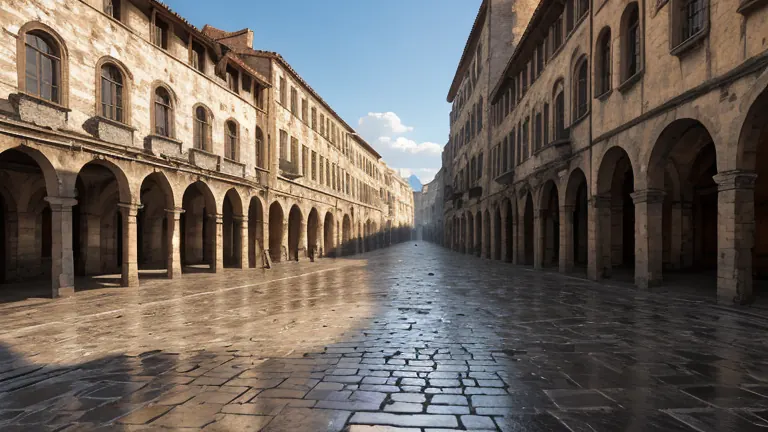
Furthermore, the mod utilizes a world-space radiance cache system, inspired by NVIDIA’s Spatially Hashed Radiance Cache (SHaRC). This cache helps to approximate the appearance of objects that are obscured or out of the camera’s view. To determine which surfaces reflect, URTI extracts material information from the game’s G-buffer, locating areas such as polished floors, windows, wet streets, and puddles.
It is important to mention that the add-on also supports HDR composition and was developed to account for frames generated when the NVIDIA DLSS Frame Generation feature is active, increasing its compatibility with modern graphics ecosystems.
📌 How Does URTI Achieve Realistic Reflections?
- It reconstructs the game’s 3D geometry in real time, unlike screen effects.
- It reproduces draw calls to capture the geometry.
- It uses a world-space radiance cache, inspired by NVIDIA’s SHaRC.
- It extracts material information from the G-buffer to identify reflective surfaces.
What is the difference between URTI and other RT mods?
It is common for users to confuse URTI with other robust graphics modifications, such as Reality Redemption 2. Both bring ray tracing to classic games, but they have distinct focuses and scopes.
Reality Redemption 2, created by BadassBaboon, is a mod that brings a broader set of ray tracing effects to the game. It includes not only reflections but also global illumination with up to three light bounces, ambient occlusion, and shadows. On the other hand, URTI has a more focused scope: it is primarily dedicated only to ray-traced reflections. Crucially, it was designed to operate independently of any specific game engine.
However, URTI’s flexibility makes it more of a reflection “injector.” Although its code contains an experimental implementation of ray-traced ambient occlusion, this feature remains disabled by default due to potential visual artifacts and performance considerations. Finally, the developer emphasizes that URTI is not yet a universal “plug and play” solution; currently, Red Dead Redemption 2 is the only officially tested title, and other games require individual configuration profiles.
Limitations and the Future of Graphic Modding with URTI
For those who wish to test URTI’s potential, the developer makes the add-on available for download on GitHub. However, usage requires specific technical prerequisites: you must have ReShade version 6.8 with add-on support and a graphics card compatible with DXR 1.1.
The mod creator also issues an important technical warning: the use of URTI must be restricted exclusively to single-player games. Although the mod represents a fascinating advancement for the PC graphics modding community, broad compatibility with various games still needs to be tested and validated.
Despite current limitations, URTI is an intriguing milestone. It suggests a promising future where countless classic games that were never released with official ray tracing support can benefit from hardware-accelerated reflections, democratizing access to cutting-edge graphical technologies in the modding environment.