

Read this article in: Portuguese (Português) · Spanish (Español)
Google Stadia was an ambitious cloud gaming service, developed and operated by Google itself. Launched to the public on November 19, 2019, the concept of playing high-performance titles without needing powerful home hardware revolutionized how digital entertainment was consumed. The service allowed users to stream video games from Google data centers, accessible through various devices, such as Chrome browsers and Android TV devices. The platform promised to bring a high-fidelity gaming experience anywhere, making content access a notable technological differentiator.
The relevance of the project is marked by an intense and ambitious life cycle. The service made its public debut in 2019, showcasing impressive capabilities, such as streaming video up to 4K resolution and 60 frames per second (60 FPS). However, the same life cycle that made it notable was its turning point, culminating in its official discontinuation on January 18, 2023. During this period, Stadia not only competed with giants like Sony’s PlayStation Now but also positioned itself in the growing market of cloud game streaming services, requiring the integration of a complex ecosystem ranging from custom hardware to integration with YouTube.
To understand the entire trajectory of this technological phenomenon, this article dives deep into its history. We will cover the project’s genesis, from initial rumors to its development as Project Stream. We will explore the concept of cloud gaming and the problem it aimed to solve, detail the technical architecture and how game streaming works, analyze the launch and market competition, and finally, take stock of the decline and lasting legacy of the cloud gaming service.
Key Points
- Launched on November 19, 2019, and discontinued on January 18, 2023, the service revolutionized game access.
- Stadia operated via streaming, processing games in remote data centers and transmitting the video to the user.
- The platform was highly accessible, working on Chrome browsers and being truly cross-platform.
- It offered different service tiers: a free tier (1080p) and a Pro plan (up to 4K, $10/month).
- It used powerful hardware (AMD Vega GPU) to render games in high fidelity, up to 4K and 60fps.
Google Stadia in summary
| Developer | |
|---|---|
| Type | Cloud gaming service |
| Launch | November 19, 2019 |
| Discontinuation | January 18, 2023 |
| Platforms | Cross-platform |
The Genesis of the Project: From Rumors to Project Stream
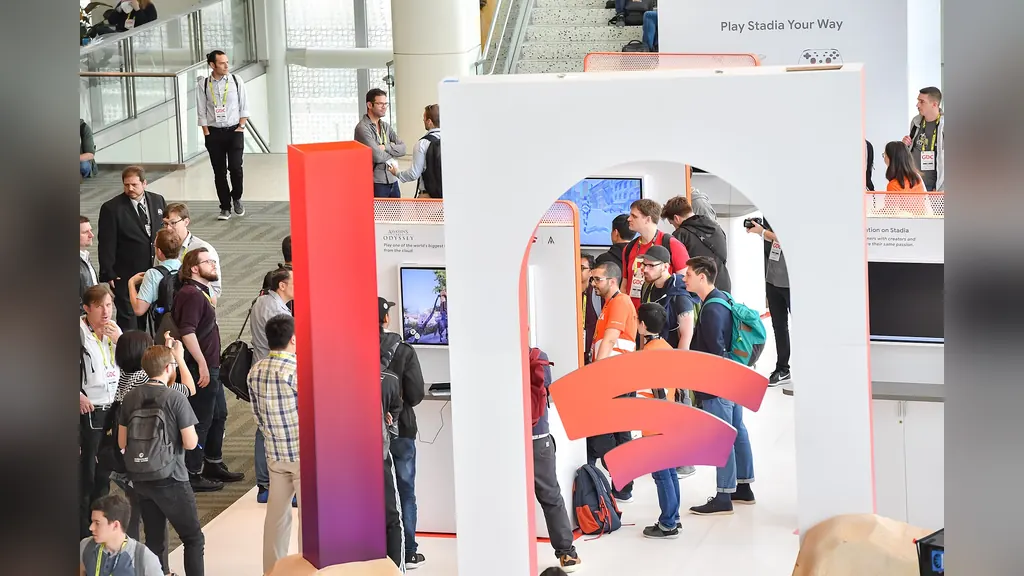
Google’s interest in cloud gaming was not a sudden development in the tech landscape. On the contrary, it was fueled by persistent rumors pointing to an internal project called Project Yeti, with speculation surfacing as early as 2016. Although the company’s main focus was elsewhere, signs that the tech giant was mapping out the potential of video games began to become more concrete. Understanding the evolution of streaming is particularly fundamental, as seen with the Shield TV and its impact on streaming. In 2018, the movement gained visible momentum: Google hired game industry executive Phil Harrison and was seen recruiting developers at major industry events, signaling a serious and strategic investment in game content.
The Birth of Project Stream
The first official sign of Google’s interest in video game products was Project Stream, announced in October 2018. This service was crucial because it established a technical differentiator that set it apart from previous services like OnLive, GeForce Now, and PlayStation Now. Project Stream’s major advantage was its ability to run directly in any desktop Chrome browser, eliminating the need to install additional software or rely on dedicated gaming platforms. Technically, the service utilized AMD Radeon graphics hardware. Internal tests, including proof-of-concept demonstrations, were conducted using games like Doom, showing that the concept worked realistically over the public internet.
For early users, the excitement was immediate. Following the announcement, Google opened invites for beta testers with access to the title Assassin’s Creed Odyssey. Interested players simply had to request access, and those who could prove a minimum internet speed could run the game in their Chrome browsers. This model not only democratized access but also allowed the service to offer titles in 4K quality, something previously limited to devices like the Chromecast Ultra.
Institutionalizing the Project
Project Stream was formally announced in March 2019 during the Game Developers Conference (GDC). This event marked the transition from a technical rumor to a robust corporate product. To support this ambition, Google established the Stadia Games and Entertainment division, led by industry veteran Jade Raymond. The physical structure of the project began to consolidate quickly: the first studio opened in Montreal on October 24, 2019. Expansion continued in March 2020 with the opening of a second studio in Playa Vista, Los Angeles, under the leadership of Shannon Studstill.
The content strategy was equally ambitious. In 2020, the partnership with Unity Technologies and the “Stadia Makers” program demonstrated a commitment to supporting the independent developer (indie) community. The benefits offered included assistance from the Unity3D engine, free development hardware, and funding. Furthermore, the platform attracted major industry players, such as Electronic Arts (EA), which committed to launching five titles in two years, and renowned developers like Harmonix, Splash Damage, and Supermassive Games. All of this solidified the groundwork for what would be a revolution in cloud gaming streaming.
🕒 Google’s Evolving Interest in Cloud Gaming
- Since 2016 — Persistent rumors pointed to an internal project called Project Yeti.
- 2018 — Google hires Phil Harrison and begins recruiting developers, signaling serious investment.
- October 2018 — Official announcement of Project Stream, enabling execution on any Chrome browser.
- March 2019 — Formalization of Project Stream at GDC, creating the Stadia Games and Entertainment division.
- October 24, 2019 — Opening of the division’s first studio in Montreal.
- March 2020 — Opening of the second studio in Playa Vista, Los Angeles.
The concept of cloud gaming and the problem it solved
The traditional model of digital gaming has always been intrinsically linked to physical limitations. To play AAA titles, consumers were forced to invest in powerful hardware—whether a next-gen console or a high-performance PC. In addition to the high initial cost, the player needed vast storage space to download games that often weighed dozens of gigabytes. This need for heavy installation and the high processing power required by the local device represented the main bottleneck of the gaming experience, limiting access to top-tier titles to a niche of consumers with high purchasing power and robust infrastructure.
The solution of cloud game streaming
The concept of cloud gaming, and particularly the Stadia service, emerged as a game-changer, proposing the decoupling of the gaming experience from the user’s physical hardware. The premise was revolutionary: instead of downloading and running the game locally, the game would be processed in Google’s powerful remote data centers, and the content would be streamed to the user’s device as a video feed. This approach transformed gaming into a streaming experience, similar to watching a video, but with the interactivity of a game. The focus shifted from the processing power of the console or PC to the quality and stability of the internet connection.
This paradigm shift not only eliminated the barrier of massive downloads but also ensured a truly cross-platform nature. Since gaming occurred remotely, access to entertainment became universal, depending only on a stable connection and a compatible device, whether running Chromium or a dedicated app. Google, with its vast global data center network, believed it was in a unique position to overcome latency challenges and offer a fluid gaming experience—something previous projects, like OnLive or PlayStation Now, had failed to consolidate.
To further refine this experience, Stadia worked on technical optimization and user experience. The streaming technology not only allowed for the execution of demanding titles but also enabled advanced features. For example, the service was capable of allowing players to cooperate in real time with picture-in-picture. In terms of capacity, where game servers like Grid were limited to 16 players, the Stadia version supported up to 40. The system was also designed to minimize apparent lag, developing proprietary controllers that connected via Wi-Fi directly to the Google data center, and exploring user input prediction methods to ensure an almost instantaneous response.
To support this ecosystem of universal access, Stadia offered different service tiers. Initially, there was the free tier, with resolution limited to 1080p. For users desiring the highest quality, there was the Pro plan, costing approximately US$10 monthly and offering higher streaming rates, up to 4K, in addition to access to a game library. This service structure reinforced the promise that the processing power of a next-generation console would be available, affordably and without geographical limits, directly in the data stream.
📌 Advantages of Cloud Game Streaming Model
- Decouples the gaming experience from the user’s physical hardware.
- Eliminates the barrier of massive downloads of heavy games.
- Ensures a truly cross-platform nature.
- Allows universal access with just a stable connection.
- Supports advanced features like Picture-in-Picture.
Technical architecture and how game streaming works
Google Stadia was not just a gaming service; it was an ambitious demonstration of systems engineering, designed to decouple the gaming experience from the physical limitations of local hardware. The service’s technical architecture was built upon a robust foundation of Google’s massive servers, where graphic and computational processing occurred remotely. In terms of software, Stadia ran on Linux servers and utilized the Vulkan graphics API. This technological choice was strategic because Vulkan, being an open-source graphics API, allowed the service access to open tools and drivers, such as LLVM and the DirectX Shader Compiler, ensuring performance and compatibility across different platforms.
The Power Behind Streaming
To sustain this cutting-edge experience, Stadia used extremely powerful custom hardware. On one hand, the central processing was guaranteed by an Intel x86 processor, with a 2.7 GHz clock, equipped with AVX2 and a combined L2+L3 cache of 9.5 megabytes. Complementing this raw power, the service featured a custom GPU based on the AMD Vega architecture. This graphics card was equipped with HBM2 memory, 56 processing units, and a capacity of 10.7 teraFLOPS. The system was supported by 16 GB of RAM, with a bandwidth of up to 484 GB/s shared between the CPU and GPU. This combination of top-tier specifications was the engine that allowed games to be rendered in high fidelity, capable of streaming 4K images at 60 frames per second (60fps) and supporting HDR.
📘 Cloud Gaming
It is the concept of running games on remote servers, streaming the data feed to the user, eliminating the need for powerful local hardware.
The result of this complex orchestration of hardware and software was the promise of a universal gaming experience. The requirement to play was no longer owning a next-gen console or a powerful computer; it was simply a stable internet connection. This decoupling from local equipment was the core of the cloud gaming concept. Beyond being a purely streaming service, Stadia focused heavily on adaptability. The platform expanded beyond the desktop, being announced as a Progressive Web App (PWA) for iOS devices, which ran in browsers like Chrome or Safari. This flexibility was crucial, allowing, for example, the service to be embedded in smart TVs, such as LG models, in a demonstration at the 2021 Consumer Electronics Show.
In summary, Stadia represented a paradigm shift where processing power resided on Google’s servers, and the user only received the optimized data stream. This architecture not only eliminated the barrier of massive downloads but also established a new standard of access, where the only equipment needed to enjoy AAA titles was a device with an internet connection.
Launch, Ecosystem, and Market Competition
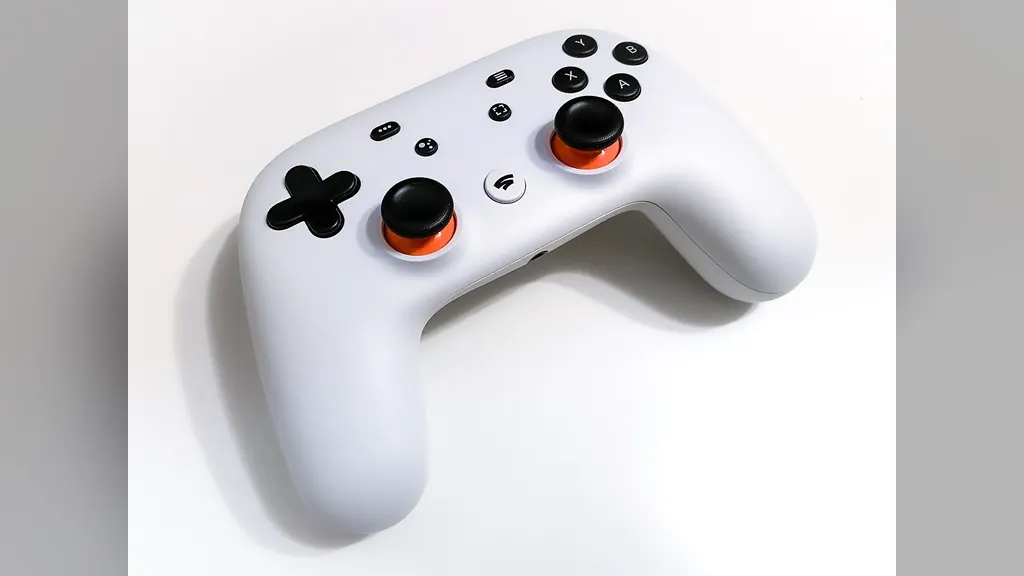
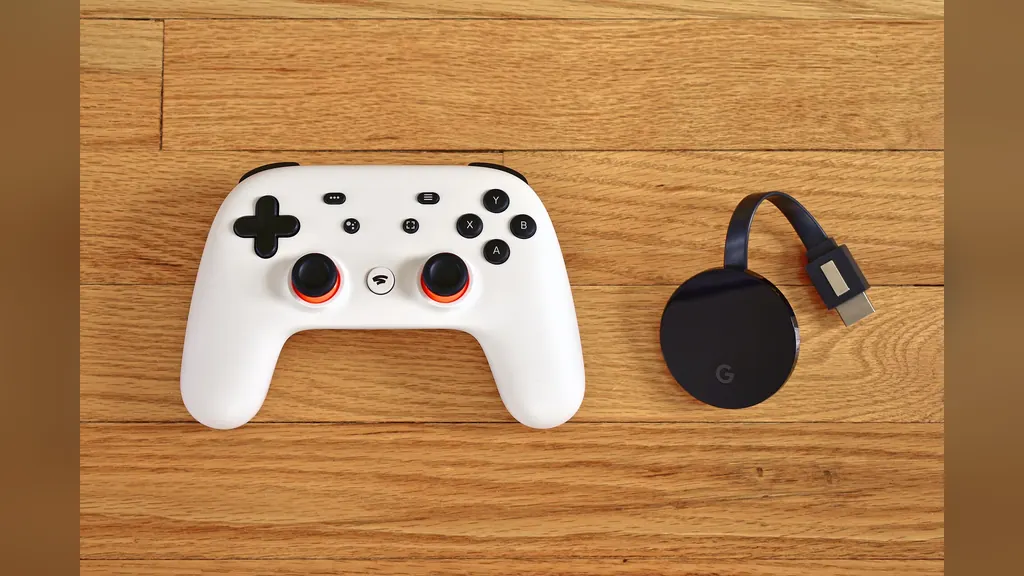
Google Stadia made its official launch on November 19, 2019. From the beginning, the service’s ambition was palpable, not only in its technology but also in its geographic reach. Initially, Stadia was available in 14 countries: Belgium, Canada, Denmark, Finland, France, Germany, Ireland, Italy, Netherlands, Norway, Spain, Sweden, the United Kingdom, and the United States. For the most avid enthusiasts, the platform offered exclusive launch editions. The “Founder’s Edition” allowed for pre-sale at US$129 and included a Chromecast Ultra, a limited-edition “Midnight Blue” controller, three months of Pro service, plus three months to gift a friend, in addition to a founder’s badge. After the pre-sales sold out, the “Premiere Edition” was launched for US$129, which contained a Chromecast Ultra and a “Clearly White” controller, accompanied by three months of Pro subscription.
The evolution of the ecosystem was marked by rapid expansion of access and functionality. Initially, the service was restricted to the Pro subscription level. However, the adoption strategy was progressively opened. In February 2020, Stadia expanded its availability, moving beyond just Google Pixel devices to include phone models like the Samsung Galaxy, Razer Phone, and ASUS ROG Phone. In March 2020, Google began using promotions as a growth engine, sending promotional emails to Chromecast Ultra owners with three months of free Stadia Pro. Starting the following month, during the COVID-19 pandemic, Google launched a free version of the service in eligible countries, guaranteeing access to anyone with a valid Google account.
Accessibility only increased. In June 2020, Stadia became available on OnePlus phone series (5, 6, and 7), and access was released on other Android devices with Android 6 or higher, even if initially as an “experimental” feature. The experience was also adapted for touchscreens, allowing for haptic controls as an alternative to dedicated hardware. Expansion to the television sector was a significant milestone: in 2021, Stadia was launched on most Android TV devices, including the Chromecast with Google TV and the Nvidia Shield TV.
Positioning in the Cloud Gaming Market
The Stadia business model was supported by different service tiers, ranging from a paid Pro subscription to free access during promotional periods. This universal access ecosystem did not materialize in a vacuum. The launch of Stadia occurred amid growing interest in cloud gaming, a market that was already beginning to be contested by tech giants. Direct competitors, such as Xbox Cloud Gaming, Nvidia GeForce Now, and PlayStation Now, represented established powers, each with its own focus and user base. Therefore, understanding the evolution of cloud computing is fundamental, especially when analyzing how Oracle Cloud revolutionized IT itself. Stadia, consequently, not only had to prove its technical capability—using powerful custom hardware—but also needed to build a value narrative that justified its existence and the user’s investment in an extremely competitive market, where every competitor already held a significant niche of players.
The Decline and Legacy of the Cloud Gaming Service
The Decline and Legacy of the Cloud Gaming Service
The Google Stadia journey, despite its technological ambition, was not without difficulties. Even after its 2019 launch, the service faced constant criticism and mixed reception. The game library, although growing—reaching over 130 titles by the end of 2020—and the promise of universal access were not enough to guarantee the expected user traction. The turning point came in 2021, when Google shut down Stadia Games and Entertainment on February 1, 2021. This initial retraction was driven by the need for a level of investment that Google did not consider sustainable for AAA game development, despite the millions spent on major titles and hiring talent.
The decline culminated in official shutdown announcements. On September 29, 2022, Google announced the end of Stadia’s operations, citing a lack of user traction. The operational shutdown was gradual, with the final discontinuation occurring on January 18, 2023. To minimize the impact, Google provided refunds for all purchases made in hardware and games through the Google and Stadia stores. However, the technology behind the service was not completely abandoned; although Google later ended the white-label business (B2B) service in March 2023, the knowledge gained remained valuable.
The Impact on the Ecosystem and Players
The shutdown of Stadia created a complex transition process for developers and players. Due to its exclusive nature, many planned titles never reached the public. However, the ecosystem attempted to mitigate the loss. Studios like Ubisoft allowed players to transfer their purchased games to their own platforms, such as Ubisoft Connect. Similarly, Bethesda Softworks confirmed that players of Elder Scrolls Online could transfer their accounts to other platforms. This forced movement of assets highlighted the fragility of digital ownership models and the difficulty of maintaining user loyalty in a closed cloud service.
Despite the dramatic end, Stadia’s legacy is more technical than commercial. The experience was not a total failure of technology, but rather a failure of the business model. The knowledge gained about cloud game streaming was absorbed and paved the way for future integrations. Shortly after the shutdown announcement, Google began integrating the technology into other products. The launch of new Chromebooks, for example, came pre-installed with direct and functional support for competing services, such as GeForce Now, Xbox Cloud Gaming, Amazon Luna, and other cloud streaming games. Stadia, therefore, not only demonstrated the viability of the cloud gaming concept but also forced Google to become a service aggregator, solidifying the idea that the future of gaming was, in fact, detached from local hardware.
Glossary
- Cloud gaming: A gaming model where processing occurs on remote servers and the content is streamed to the user via video streaming.
- Project Stream: The initial name for Google’s game streaming service, which established the ability to run in Chrome browsers.
- PWA: Progressive Web App, a type of website that behaves like a native application and can be used in browsers like Chrome or Safari.
- HBM2: High Bandwidth Memory, used to feed the GPU with extremely fast processing data.
Frequently Asked Questions
What is Google Stadia and how did it work?
Google Stadia was a cloud gaming service that allowed users to play high-performance titles without needing powerful local hardware. It worked by processing the game on Google’s powerful remote servers and streaming the content as a video feed to your device, whether it was a PC or a web browser.
Why was Google Stadia discontinued in 2023?
Although the service was discontinued in 2023, the cloud gaming market is extremely competitive. Discontinuation generally reflects changes in the company’s business strategy or the need to reallocate resources to new projects, rather than being a reflection solely of the technology itself.
Was Stadia better than playing on a traditional console?
The major differentiator was convenience and universality. While a console requires a high initial investment and limits gaming to its hardware, Stadia eliminated the barrier of massive downloads and local processing power, requiring only a stable internet connection.
Was the Google Stadia compatible with all types of controllers?
The service was designed to optimize the gaming experience with controllers connected via Wi-Fi directly to the data center. Although the focus was on wireless connectivity to ensure low latency, the system was built to support gameplay on various devices compatible with the Google ecosystem.
What does ‘cloud gaming’ mean?
Cloud gaming is the technology that allows a game’s graphical and computational processing to occur on high-capacity remote servers. Instead of the game being downloaded and run on your device, it is streamed to you as an interactive video feed, making the game accessible anywhere with internet.
Conclusion
The journey of Google Stadia represents much more than the launch of a gaming service; it is a case study on how technology can redefine entertainment consumption. The project was born out of the need to overcome the historical hardware bottleneck, where access to AAA titles was restricted by the processing power of expensive consoles or high-performance PCs. The solution proposed by Google was revolutionary: decoupling the gaming experience from physical limitations, transforming processing into remote data centers and streaming the interactive video feed directly to the Chrome browser.
From the initial rumors of Project Yeti to the service’s institutionalization in 2019, Stadia demonstrated colossal technical ambition. By utilizing cloud streaming, the platform promised to democratize access, requiring only a stable connection and a compatible device, rather than a massive initial investment in equipment. This ability to offer 4K quality titles, with support for advanced features in a cross-platform manner, solidified the service as an ambitious demonstration of systems engineering. It proved that the power of a next-generation console could be delivered as a data service, accessible globally.
Thus, Stadia established itself as a crucial milestone in the debate over the future of video games. It not only pointed the way toward cloud game streaming but also forced the industry to face a paradigm where the internet, and not the local processor, would be the defining element of the experience. Analyzing the history of Stadia is understanding that, even when a project does not reach its commercial peak, it leaves a fundamental technical legacy, paving the way for cloud computing to become the new standard for entertainment consumption.


