
Read this article in: Portuguese (Português) · Spanish (Español)
For those seeking the complete specifications of the Broadcom BCM2711, it is essential to understand that this chip represents a high-performance System-on-a-Chip (SoC) component, designed to meet complex demands in markets ranging from networking to advanced data processing. The BCM2711 is a robust solution that integrates multiple functionalities into a single package, allowing for the optimization of performance and energy efficiency across various electronic devices. Its architectural features and market positioning make it a technological pillar for systems requiring stability, fast processing, and high I/O capacity, solidifying its importance in the modern hardware ecosystem.
The relevance of the BCM2711 cannot be separated from the trajectory of Broadcom, a semiconductor industry giant. The company’s own history is marked by strategic mergers and acquisitions, such as the 2022 acquisition of VMware, a deal valued at US$ 69 billion. Founded in 1961, Broadcom has established itself as a global force, recording revenue of US$ 63.89 billion in 2025. This capacity to innovate and adapt, while maintaining a focus on cutting-edge solutions, ensures that its products, like the BCM2711, remain at the technological forefront, supporting everything from the data center sector to software infrastructure development.
In this article, we have prepared a definitive guide to unravel every detail of the BCM2711. We will cover everything from the BCM2711 Overview: architecture and market positioning, to the SoC Architecture and manufacturing process. We will analyze the detailed Technical Specifications—including cores, memory, and interfaces—and evaluate the Performance and features in practical use scenarios. Furthermore, we will provide a Comparison with previous generations and competitors and explore the Development and software optimization Ecosystem, ensuring you have a complete and in-depth understanding of this crucial component.
Key Highlights
- The BCM2711 is a high-performance System-on-a-Chip (SoC), optimized for embedded projects and mini-computers.
- Its main strength lies in the combination of low power consumption with high I/O capacity, making it ideal for IoT.
- Broadcom has a vast history of innovation since 1961, dominating semiconductor sectors.
- Broadcom’s portfolio includes NICs, AI accelerators (XPU), and enterprise security solutions.
- The processing power is specialized, delegating complex tasks to dedicated accelerator modules.
BCM2711 Overview: architecture and market positioning
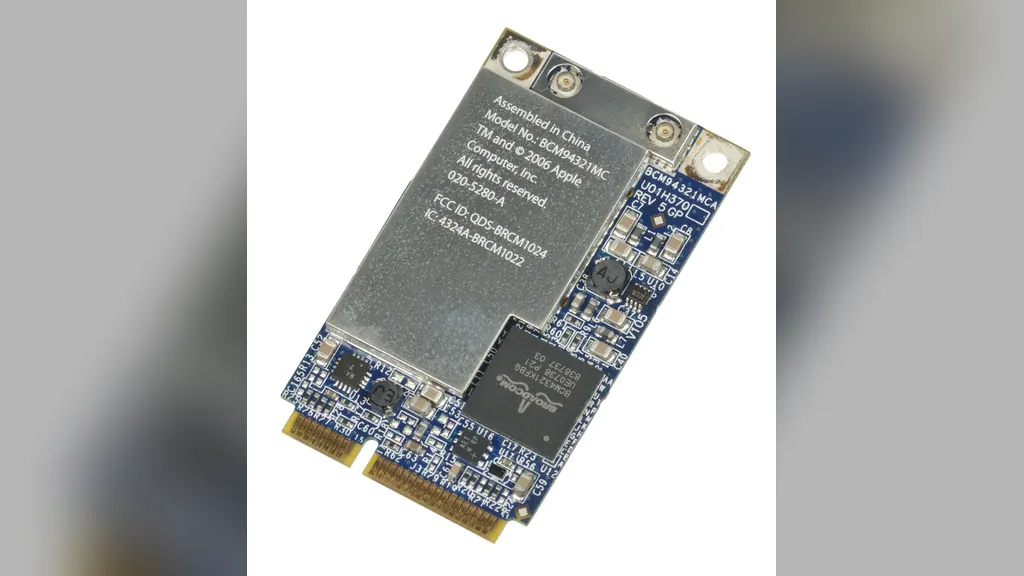
The Broadcom BCM2711 establishes itself as a high-performance System-on-a-Chip (SoC), specifically designed to meet the growing demand for embedded projects and mini-computers. Its primary function is to orchestrate data processing characterized by low power consumption and extremely high efficiency. In a market that increasingly demands miniaturization without sacrificing processing power, the BCM2711 represents a robust and optimized solution. If more advanced video processing needs to be analyzed, it is useful to know about the Broadcom VideoCore VII for video. Even though it is an older architecture component, its relevance in the current landscape is sustained by its I/O capabilities and power optimization, making it ideal for applications ranging from industrial automation to the development of Internet of Things (IoT) devices.
To fully understand the positioning of the BCM2711, it is essential to contextualize it within Broadcom’s history of innovation. The company’s trajectory reflects the evolution of the semiconductor industry itself. Broadcom, whose origins date back to 1961 as HP Associates, has undergone several corporate transformations—including the Agilent Semiconductor Products Group and Avago Technologies phases—to consolidate itself as a global leader. This long and complex history of adaptation and acquisition of technical know-how has allowed Broadcom to dominate sectors ranging from the data center to residential connectivity. Today, the company is not just a hardware provider, but an architecture of complete solutions.
Technological Scope and Market Leadership
Broadcom’s domain covers an impressive technological spectrum that goes far beyond small embedded devices. The company is recognized for its cutting-edge technologies in networking and high-performance computing. For example, its solutions include the development of Network Interface Controllers (NICs) used by giants like Apple and Hewlett Packard Enterprise, and switch chips like the Tomahawk series, which supports speeds of up to 102.4 Tbps on a single chip (Tomahawk 6). Furthermore, Broadcom invests heavily in specialized computing areas, such as AI accelerators (XPU), and in long-distance communication systems, such as Jericho4, which is crucial for Artificial Intelligence computing.
This ability to operate at opposite extremes—from processing extremely high-density hyperscale cloud networks (such as 400GbE and 200GbE) to the energy efficiency of an IoT SoC—attests to the rigor and depth of its engineering core. The BCM2711, therefore, is not just a chip; it is a product that benefits from a mature development ecosystem, which includes not only advanced hardware but also a portfolio of enterprise software and security solutions, such as Symantec Enterprise Security. This combination of historical experience and technological cutting edge ensures that the BCM2711 maintains its prominent position in projects requiring reliability, low power consumption, and high I/O capacity.
📌 Key Features of the BCM2711 and Broadcom Ecosystem
- High-performance SoC, ideal for embedded projects and mini-computers.
- Offers low power consumption and high processing efficiency.
- Varied applications: industrial automation and IoT devices.
- Broadcom dominates from NICs to ultra-high-capacity switches (e.g., Tomahawk 6).
- The ecosystem includes enterprise software and security solutions (e.g., Symantec).
SoC Architecture and Manufacturing Process
The architecture of a System-on-a-Chip (SoC) like the BCM2711 is not merely an aggregation of components, but rather a deeply integrated system that orchestrates multiple processing functions on a single physical circuit. Essentially, the SoC represents the pinnacle of semiconductor engineering, merging central processing, high-speed communication interfaces, and control modules onto one platform. This integration is crucial for optimizing performance and, most importantly, energy efficiency, a fundamental characteristic for embedded devices.
Processing and Acceleration Architecture
The processing power of the BCM2711, like that of other high-performance Broadcom devices, is characterized by its ability to be highly specialized. While a modern SoC contains a central CPU (usually based on ARM Cortex A-series architectures, for example), its true strength lies in the dedicated accelerator modules. Broadcom, due to its semiconductor experience, is recognized for developing solutions that go beyond general-purpose processing. We see this in products like XPU accelerators, custom chips developed in collaboration with major hyperscale cloud clients, such as Google and Meta Platforms. In these cases, the SoC not only executes tasks but is also designed to accelerate specialized workloads, such as those for Artificial Intelligence (AI), as exemplified by the Google Tensor Processing Unit (TPU) and Meta Training and Inference Accelerator (MTIA) chips.
📘 SoC
System-on-a-Chip is a physical circuit that integrates multiple processing functions, such as a central CPU, communication interfaces, and control modules, onto a single chip.
This modular and accelerating approach ensures that instead of the main processor spending cycles resolving specific tasks (such as radio signal processing or data packet routing), these processes are delegated to dedicated blocks, like I/O controllers and network accelerators. This specialization is what allows for the handling of extreme speeds, such as those offered by the Tomahawk series, which supports data routing and switching at 400GbE, 200GbE, and 100GbE levels, reaching up to 102.4 Tbps in the latest technologies.
Manufacturing Process and Energy Efficiency
The performance of an SoC is intrinsically linked to the manufacturing process, measured in nanometers (nm). The manufacturing process defines how small and dense transistors can be, which directly impacts energy efficiency and heat generation (TDP). As Broadcom and the industry advance, chips need to operate with ever-increasing densities and ever-decreasing power consumption. The ability to control heat and consumption is a competitive advantage because it allows the SoC to operate in energy-constrained environments, such as embedded mini-computers.
Therefore, the BCM2711, by fitting into this context of high performance and growing demand for efficiency, must incorporate a design that not only maximizes transistor density—allowing for the integration of multiple cores and I/O modules—but also optimizes power consumption, ensuring that processing power is delivered in a sustainable and efficient manner, even in scenarios of continuous and prolonged use.
Detailed Technical Specifications: Cores, Memory, and Interfaces
| Product Name | Broadcom BCM2711 |
|---|---|
| Type | Public |
| Sector | Semiconductor; Enterprise software; Computer hardware |
| Foundation | 1961 |
| Headquarters | Stanford Research Park, Palo Alto, California, U.S. |
| President and CEO | Hock Tan |
| Revenue (2025) | US$ 63.89 billion |
| Operating Income (2025) | US$25.48 billion |
| Net Income (2025) | US$23.13 billion |
Detailed Technical Specifications: Cores, Memory, and Interfaces
Understanding the technical specifications of a System-on-a-Chip (SoC) like the BCM2711 requires looking beyond mere lists of numbers. It involves understanding how the integration of different subsystems—processing cores, memory systems, and communication interfaces—orchestrates the device’s overall performance. The SoC is not just the sum of its parts, but a deeply integrated system that maximizes energy efficiency and processing power.
Processing and Memory Architecture
In terms of cores, the BCM2711 is designed to be a high-performance processor, capable of executing various tasks in embedded environments. While the exact core and maximum clock specifications are model-specific, the concept of a modern SoC involves the ability to process both general tasks and specialized functions. The supported memory, such as LPDDR, is vital because it determines the bandwidth and speed at which data can be accessed by the cores. The maximum RAM capacity, in turn, defines the volume of data the system can handle simultaneously without memory bottlenecks.
Interfaces and the Meaning of Throughput
The technical heart of an SoC lies in its interfaces. These communication ports determine how quickly the device can interact with the outside world, whether through networks, storage, or peripherals. In a professional context, it is crucial to understand what protocols like Ethernet or USB mean.
For example, in high-capacity networks, Broadcom develops technologies like the Tomahawk and Jericho series, which demonstrate the processing power of network interfaces. The Tomahawk 3, for instance, supports data routing and switching in 400GbE, 200GbE, and 100GbE standards. A figure like “400 Gbps” (Gigabits per second) is not just a number; it represents massive data transfer rates, essential for powering hyperscale data center and cloud computing networks.
Communication interfaces, such as I2C and SPI, are protocols that enable low-level communication with sensors and peripherals. While Ethernet handles high-speed data traffic between networks, SPI and I2C are responsible for orchestrating internal communication, ensuring that smaller components, such as temperature sensors or memory modules, exchange data in a synchronized and efficient manner. The integration of these elements allows the BCM2711, much like Broadcom’s flagship chips, to operate in diverse areas, from home connectivity to complex signal processing in artificial intelligence systems.
📊 Comparative Overview of Communication Interfaces in SoCs
| Interface | Primary Function | Scope of Use |
|---|---|---|
| Ethernet | High-speed data traffic between networks | High-capacity networks |
| SPI and I2C | Orchestrating low-level communication | Internal sensors and peripherals |
| Tomahawk 3 | High-speed data routing and switching | Data centers and cloud computing |
Performance and features in practical use scenarios
Analyzing the performance of a System-on-a-Chip (SoC) like the BCM2711 requires looking beyond mere core and interface specifications. In practical use cases, processing power is measured by the ability to handle specific workloads, whether in hyperscale cloud computing environments or in Internet of Things (IoT) embedded devices. The Broadcom ecosystem, to which the BCM2711 belongs, demonstrates an ability to operate at opposite extremes—from the efficiency of embedded devices to the processing of high-density data networks.
Networking and Data Center Performance
To understand the breadth of Broadcom’s performance, it is essential to analyze its solutions for the data center market. Chips like the Tomahawk 3 and its successors demonstrate high-density switching and routing power in the 400GbE, 200GbE, and 100GbE standards, which are essential for hyperscale cloud networking. For example, one variant of the Tomahawk 3 can provide up to 12.8 Tbit/s of total bandwidth per chip, featuring 256 integrated SerDes interfaces, supporting up to 32 ports of 400 Gbit/s. Subsequent generations maintain this trend of exponential growth: the Tomahawk 4 reached 25.6 Tbit/s, and the Tomahawk 5 achieves a maximum speed of 51.2 Tbit/s. The latest technology, Tomahawk 6, raises the bar with a single-chip Ethernet switch of 102.4 Tbps, highlighting the criticality of these components in applications such as Artificial Intelligence (AI) and massive data processing.
🧪 Broadcom Performance Scope: From Edge to Data Center
Broadcom’s portfolio spans performance extremes. In hyperscale networks, chips like the Tomahawk 6 reach 102.4 Tbps. In specialized computing (AI), technologies such as XPU are used to optimize specific tasks. The BCM2711, while focused on embedded systems, fits into this vast ecosystem that ranges from basic processing to the most complex network infrastructure.
Specialized Computing and Edge Computing
In specialized computing scenarios, the focus shifts to optimizing specific tasks, which Broadcom addresses with its XPU technologies. This term refers to custom ASIC chips developed in collaboration with major hyperscale clients, such as Google and Meta Platforms, and are designed for AI workloads. Notable examples include the Google Tensor Processing Unit (TPU) chips and the Meta Training and Inference Accelerator (MTIA). These solutions demonstrate how processing power can be highly specialized, going beyond general-purpose processing, and are crucial for the operation of cutting-edge systems (edge computing).
Although the BCM2711 is an SoC designed for embedded systems, the performance context is supported across its entire product line. Broadcom’s portfolio ranges from networking components (such as the Jericho2 chips, which offer up to 10 Tbit/s of switching capacity per device, and the Jericho4, designed to connect data centers over more than 60 miles) to security software, like Symantec Enterprise Security. This vast array of technologies—including Ethernet switches, NICs, and software solutions—ensures that the company can provide comprehensive support, from the most basic processing core to the most complex network infrastructure, thus meeting the diverse market needs, which span from home storage and connectivity to global-scale AI processing.
Comparison with Previous Generations and Competitors

Comparing a System-on-a-Chip (SoC) like the BCM2711 to previous generations and competitors is not merely a technical analysis of datasheets; it is a strategic positioning over time. The semiconductor market is characterized by dizzying technological acceleration, where every new successor model seeks to surpass the performance and power consumption limits of its predecessor. When analyzing the BCM2711, it is crucial to understand that it represents a balance point between the maturity of an established design and the growing demand for more advanced features.
The Technological Choice Dilemma
In embedded systems, the decision between using an older SoC and a more modern one presents a classic dilemma: maximum performance versus cost and availability. Successor models, like the latest ones from the Broadcom line, bring notable gains in efficiency and features, reflecting the constant advancement in miniaturization and transistor density. However, using an older SoC presents crucial advantages. The cost of legacy components, when available, can be significantly lower, and the learning curve for software development on more mature platforms can be smoother. Nevertheless, this cost saving comes with performance and feature limitations inherent to its manufacturing process and core architecture.
This trajectory of technological evolution mirrors Broadcom’s own corporate history. Over its long journey, the company has undergone massive transformations, absorbing and integrating technologies from different eras. For instance, what is now consolidated as Broadcom Limited has roots in companies like HP Associates, founded in 1961, passing through phases such as Agilent Semiconductor Products Group (1999–2005) and Avago Technologies (2005–2016). This longevity and the constant acquisition of know-how—such as the acquisition of LSI Corporation in December 2013—demonstrate deep expertise across various semiconductor areas, from data center storage chips to broadband and Wi-Fi solutions.
Thus, the BCM2711 fits into this context of maturity and specialization. While newer models and competitors may offer superior processing power, optimized for today’s standards, the BCM2711 maintains a vital application niche. It is ideal for projects where the reliability of the established development ecosystem and cost optimization are more critical than chasing cutting-edge performance, making it a robust choice for specific, budget-sensitive embedded applications.
Development Ecosystem and Software Optimization
Developing applications for a high-complexity System-on-a-Chip (SoC) like the BCM2711 requires more than just hardware; it demands a robust, optimized, and well-documented software ecosystem. For developers looking to harness the processing power of the BCM2711 in embedded systems, the development architecture is the starting point. Historically, support for Broadcom platforms has been heavily focused on Linux-based environments, which offer the essential low-level control and flexibility for critical networking and IoT applications. If one needs to analyze more recent models, consulting the guide on Broadcom BCM2712: full specifications is useful. Although support for other operating systems may vary depending on the use case, Linux remains the pillar of development for optimizing performance and ensuring maximum compatibility with the SoC’s advanced features.
Development Languages and Tools
In terms of programming languages, the ideal choice depends on the application layer. For developing low-level drivers, performance optimizations, and direct hardware interaction, C++ is the recommended language because it allows granular control over memory and processor resources. On the other hand, for creating high-level applications, business logic, and rapid prototyping, Python is widely used due to its gentler learning curve and vast library support. The success of development in embedded systems therefore depends on the combination of these languages, utilizing specific libraries and drivers provided by Broadcom to ensure efficient communication between the software and the SoC’s physical interfaces.
Broadcom’s depth of software support reflects its trajectory in the industry. The company has not limited itself to hardware, expanding significantly into the corporate world. This expansion is notable through the acquisition of infrastructure software giants, such as CA Technologies, on November 5, 2018, and the enterprise security unit of Symantec Corporation on August 9, 2019. Such moves demonstrate Broadcom’s commitment to providing complete software solutions for critical infrastructures. This enterprise software experience is crucial for embedded development, as it ensures that developers find not just technical specifications, but a mature support ecosystem, as detailed in the guide on Broadcom BCM2837 complete specifications.
The Importance of Support and Documentation
For development on platforms like the BCM2711 to be efficient and free of bottlenecks, Broadcom’s technical documentation and support are non-negotiable elements. Reference manuals, Application Notes, and Software Development Kits (SDKs) are vital tools. They not only detail the operation of every hardware register but also guide the developer on best optimization practices, allowing the written code to achieve the SoC’s maximum performance. In summary, the development ecosystem is a tripod: the power of the BCM2711 hardware, the versatility of the software (Linux, Python, C++), and Broadcom’s continuous and robust support.
Glossary
- System-on-a-Chip (SoC): An integrated circuit that combines multiple components (CPU, memory, I/O) onto a single physical chip.
- NIC: Network Interface Controller; a component that allows a device to connect to a computer network.
- XPU: A type of custom ASIC chip designed to accelerate specific workloads, such as Artificial Intelligence.
- LPDDR: A type of low-power memory, vital for ensuring efficiency in embedded devices.
- Tbps: A unit of measurement for data transfer rate, representing Terabits per second (high network speed).
- IoT: Internet of Things; refers to the network of physical objects connected to the internet, such as sensors and smart devices.
Frequently Asked Questions
What is the main difference in use between the BCM2711 and newer Broadcom models?
The BCM2711 is valued for its robustness and power efficiency in embedded environments. Newer models, such as the Tomahawk series, are designed for ultra-high-density processing in hyperscale data centers. While the BCM2711 focuses on end-device efficiency, the latest chips are optimized for massive throughput in edge networks.
Is the BCM2711 efficient for Internet of Things (IoT) and Edge Computing projects?
Yes, it is highly suitable. The BCM2711 was specifically designed to orchestrate data processing with low power consumption and high efficiency. This characteristic makes it a robust solution for applications requiring miniaturization and reliable processing, such as industrial automation and IoT devices.
Which operating systems are compatible with the BCM2711, and which is best for beginners?
Information regarding operating system compatibility is not detailed. However, in embedded projects, the choice of OS depends on the specific application. Generally, lightweight and optimized operating systems, such as embedded Linux distributions, are preferred for offering granular control over power consumption and hardware resources.
How can I optimize the power consumption of the BCM2711 in an embedded project?
To optimize consumption, it is crucial to take advantage of the SoC’s integrated architecture. This means utilizing specialized processing by delegating specific tasks to dedicated accelerator modules, rather than relying solely on the central CPU. This specialization ensures that processing power is delivered sustainably and efficiently, minimizing power consumption.
Does the BCM2711 support modern network connections, such as Wi-Fi 6 or 10 Gigabit Ethernet?
The BCM2711 is part of an ecosystem that includes solutions for networking and connectivity. Although Broadcom develops SoCs for Wi-Fi and Ethernet, to confirm support for specific and modern standards, such as Wi-Fi 6 or 10 Gigabit Ethernet, it is essential to consult the technical datasheet for the exact BCM2711 model.
Conclusion
The Broadcom BCM2711 thus stands as a notable example of how semiconductor engineering achieves a balance between extremely high performance and energy efficiency. In a market of embedded devices and IoT that demands miniaturization without compromising processing power, this System-on-a-Chip (SoC) offers a robust and optimized solution. Its ability to orchestrate multiple functions on a single physical circuit is fundamental, ensuring that data processing occurs with low power consumption, even in applications requiring continuous and prolonged use.
The relevance of the BCM2711, however, goes beyond the isolated component. It is a product that benefits from a vast technological ecosystem. Broadcom, with its historical trajectory and dominance in semiconductors, operates at opposite ends—from AI accelerators (XPU) and ultra-high-density networking solutions, such as the Tomahawk series, which supports up to 102.4 Tbps, to the efficiency demanded by the BCM2711. This combination of data center experience and edge computing vanguard solidifies the SoC not merely as hardware, but as part of a complete solutions architecture.
Understanding the BCM2711 is, therefore, understanding the synergy between specialization and integration. It is this ability to merge processing cores, I/O modules, and dedicated accelerators that defines modern performance. To explore the maximum potential of your project, it is essential to investigate how the integration of these diverse technological layers can be adapted to the specific needs of your application.