Read this article in: Portuguese (Português) · Spanish (Español)
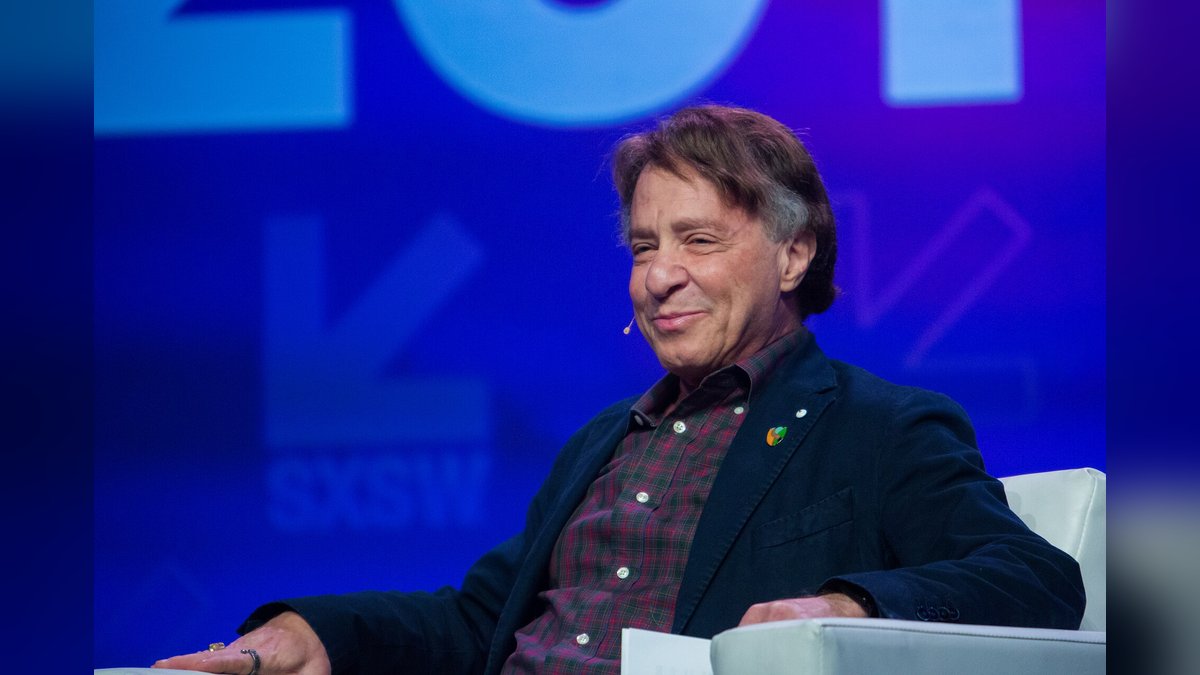
Who is Ray Kurzweil? He is an American computer scientist, author, and futurist, born Raymond Kurzweil on February 12, 1948. Kurzweil is best known for his predictions regarding the technological singularity, the concept that technological growth will lead to a point where machine intelligence surpasses human intelligence. His extensive work spans multiple technical fields, including optical character recognition (OCR), speech recognition, and text-to-speech synthesis. As an inventor, entrepreneur, and writer, his body of work often centers on transhumanism and the accelerating pace of technological change.
Kurzweil’s impact on the technology world is marked by his influential theories and pioneering work in various systems. He co-founded Kurzweil Music Systems in 1982 and later founded organizations such as Singularity University in 2010. His most famous concepts include “The Law of Accelerating Returns” and his seminal book, The Singularity Is Near (2005). His expertise has been recognized with numerous accolades, including the Grace Murray Hopper Award in 1978 and the National Medal of Technology and Innovation in 1999.
This biography will trace Kurzweil’s intellectual journey, exploring his early education at institutions like the Massachusetts Institute of Technology. We will examine his pioneering contributions to AI and speech synthesis, delve into the core tenets of the Law of Accelerating Returns, and explore his optimistic vision of transhumanism. Finally, we will cover his global influence, his companies, and the enduring legacy of his predictions.
Key Takeaways
- He is an American computer scientist and futurist, born on February 12, 1948, and earned his B.Sc. from MIT in 1970.
- Kurzweil co-founded Kurzweil Music Systems in 1982 and founded Kurzweil Educational Systems in 1996.
- He formalized the ‘Law of Accelerating Returns,’ arguing that technological progress increases exponentially over time.
- His major works include *The Age of Spiritual Machines* (1999) and *The Singularity Is Near* (2005).
- He was hired by Google in December 2012 to focus specifically on bringing natural language understanding to the company.
Ray Kurzweil at a Glance
| Born | Raymond Kurzweil; February 12, 1948; New York City, New York, U.S. |
|---|---|
| Education | Massachusetts Institute of Technology (BS) |
| Employer | |
| Known for | Co-founder of Kurzweil Music Systems; The Age of Spiritual Machines (1999); The Singularity Is Near (2005); The Law of Accelerating Returns |
| Children | 2, including Amy |
| Awards | Grace Murray Hopper Award (1978); National Medal of Technology (1999) |
| Citizenship | United States |
| Occupation | Inventor; Computer scientist; Entrepreneur; Writer; Science fiction writer; Scientist |
| Field of work | Futures studies; Computer programming; Optical character recognition; Speech synthesis; Speech recognition |
| Notable work | predictions made by Ray Kurzweil |
| Member of | American Academy of Arts and Sciences; Association for Computing Machinery (1994–present) |
From Queens to MIT: Early Education and Influences

Ray Kurzweil was born on February 12, 1948, in New York City, and spent his formative years growing up in Queens. His background was rooted in a unique blend of artistic and academic pursuits. Born to parents who were secular Jewish immigrants from Austria just before the onset of World War II, his upbringing exposed him to the diversity of Unitarian Universalism. His father, Fredric, was a professional concert pianist, conductor, and music educator, while his mother, Hannah, was a visual artist. This environment, where the household reportedly always discussed the future and technology, laid an early foundation for his deep engagement with creative and technical fields.
Even before formal studies in computing, Kurzweil displayed an intense, hands-on curiosity. As a boy, he amassed an inventory of parts from various construction toys and old electronic gadgets. His early intellectual appetites included an avid consumption of science fiction, prompting him to read the entire Tom Swift Jr. series between the ages of eight, nine, and ten. His aptitude for engineering manifested early; by age seven or eight, he had constructed a robotic puppet theater and a robotic game. His serious involvement with computation began by age 12, in 1960, a time when only a dozen computers existed within New York City. He leveraged this nascent technological landscape to build statistical programs and computing devices for the predecessor of Head Start.
The Academic Crucible
Kurzweil’s interest in technology was guided by family connections and early academic success. While attending Martin Van Buren High School, his uncle, who was an engineer at Bell Labs, taught him the fundamentals of computer science. This foundation proved potent: in 1963, at the age of 15, he wrote his first computer program. His genius for pattern recognition soon became evident when he created software capable of analyzing the works of classical composers and subsequently synthesizing original songs in similar styles. These early achievements garnered significant public attention; in 1965, he appeared on the CBS television program I’ve Got a Secret, performing a piece composed by a computer he had built. This culminated in him winning first prize at the International Science Fair. Further cementing his early reputation, his submission to the Westinghouse Talent Search resulted in him being named a national winner, an honor recognized by President Lyndon B. Johnson during a White House ceremony. These experiences solidified in Kurzweil the potent belief that nearly any problem was solvable through technological means.
His academic path led him to Massachusetts Institute of Technology (MIT), where his intellectual curiosity attracted the attention of leading minds. During his high school years, he corresponded with the renowned computer scientist Marvin Minsky and was invited to visit him at MIT. He also paid homage to Frank Rosenblatt, a psychologist at Cornell. Kurzweil enrolled at MIT, where he studied with Minsky, ultimately earning a B.Sc. degree in computer science and literature in 1970. Demonstrating an immediate and voracious grasp of the subject matter, he took every computer programming course offered by the institute during his first year and a half. By 1968, during his second year at MIT, he capitalized on his knowledge, designing the Select College Consulting Program—a system that compared thousands of college criteria against student questionnaire answers. This venture proved commercially viable, leading to its sale to Harcourt, Brace & World for $100,000 plus royalties.
Pioneering Work in AI, OCR, and Speech Synthesis

Kurzweil’s early professional trajectory was profoundly shaped by a relentless focus on pattern recognition—a capability he sought to apply not only to abstract computational problems but also to the tangible needs of people with disabilities. This commitment led to the founding of Kurzweil Educational Systems (KESI) in 1996. KESI was specifically designed to develop computer technologies utilizing pattern recognition to assist individuals with conditions such as blindness, dyslexia, and attention-deficit hyperactivity disorder (ADHD) within educational settings.
The system’s early products set foundational benchmarks for assistive technology. Among them was the Kurzweil 1000 text-to-speech converter software program, which allowed a computer to vocalize electronic and scanned text for visually impaired users. Complementing this was the Kurzweil 3000 program, a multifaceted electronic learning system engineered to boost skills in reading, writing, and general study. While KESI faced corporate turbulence, selling initially to Lernout & Hauspie before the company’s legal and bankruptcy issues, Kurzweil and his employees managed to buy the company back, eventually seeing it sold to Cambium Learning Group, Inc.
Advancements in Speech and Optical Recognition
The breakthroughs in accessibility were continually refined. In 2005, Kurzweil introduced the “Kurzweil-National Federation of the Blind Reader” (K-NFB Reader). This device represented a significant leap in portability and capability compared to the older Kurzweil Reading Machine, which required a large flatbed scanner. The K-NFB Reader was a pocket-sized unit combining a digital camera and computer, allowing blind individuals to read written text aloud by simply scanning images.
Beyond educational tools, Kurzweil’s work expanded into the foundational areas of language processing and finance. During the 1990s, he also founded the Medical Learning Company. His predictive theories, outlined in his 1999 book The Age of Spiritual Machines, suggested that computers would eventually surpass human abilities in making profitable investment decisions. This conviction led him to establish “FatKat” (Financial Accelerating Transactions from Kurzweil Adaptive Technologies) in 1999, a hedge fund that began trading in 2006. The ultimate goal of FatKat’s A.I. investment software was to enhance its ability to recognize intricate patterns within “currency fluctuations and stock-ownership trends.”
The culmination of his life’s work in language understanding was cemented in the early 21st century. In December 2012, Google hired Kurzweil on a full-time basis, a move personally orchestrated by co-founder Larry Page. Their agreed-upon job description was remarkably concise: “to bring natural language understanding to Google.” This focus on natural language processing earned him recognition, including a Technical Grammy Award on February 8, 2015, specifically for his invention of the Kurzweil K250.
🕒 Key Milestones in Kurzweil’s Work
- 1996 — Founded Kurzweil Educational Systems (KESI) to develop assistive technologies.
- 1999 — Published The Age of Spiritual Machines, predicting AI’s ability in finance.
- 1999 — Established FatKat, a hedge fund utilizing AI investment software.
- 2005 — Introduced the K-NFB Reader, a portable device for reading scanned text.
- 2012 — Google hired Kurzweil to focus on bringing natural language understanding to the company.
- 2015 — Received a Technical Grammy Award for inventing the Kurzweil K250.
The Law of Accelerating Returns and Early Predictions

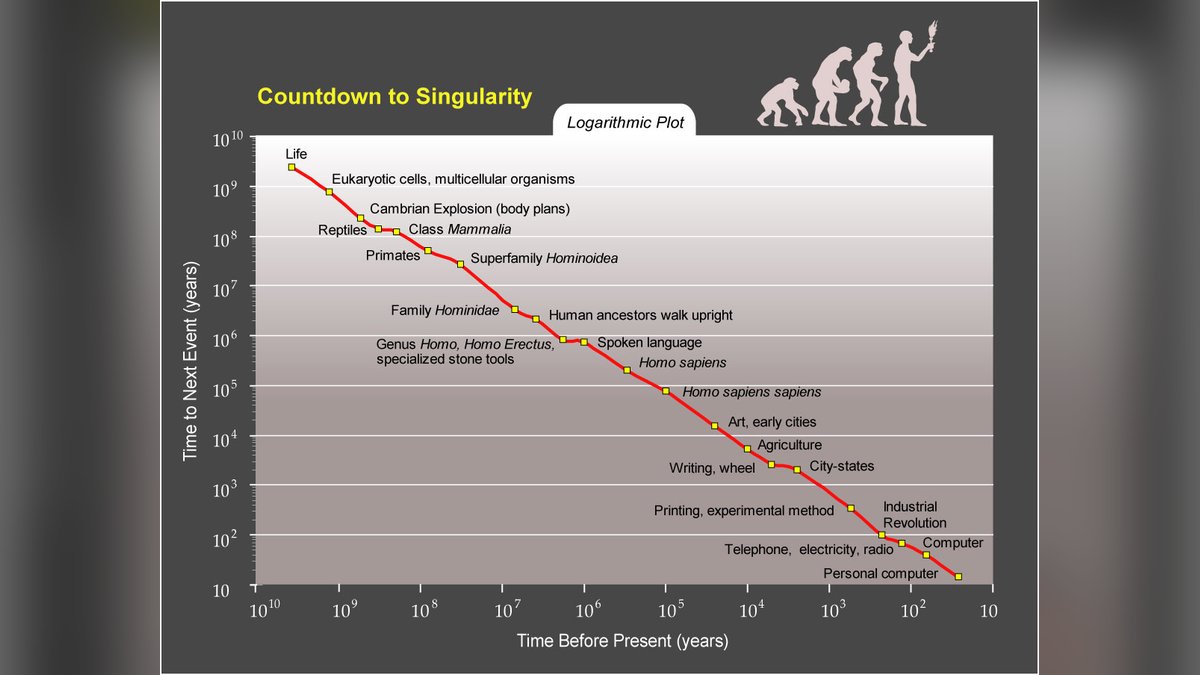
The intellectual foundation of Ray Kurzweil’s futurist vision rests upon a radical premise: that technological advancement does not progress linearly, but rather accelerates exponentially. This central idea, known as “The Law of Accelerating Returns,” posits that the rate of change across a wide array of evolutionary systems—including the growth of technology—tends to increase over time. This framework provided a profound intellectual shift from traditional models of progress, suggesting that the speed at which humanity changes its technological capabilities is itself growing faster.
The Mathematics of Progress
Kurzweil first began detailing his theories on the future of artificial intelligence in 1990 with his book, The Age of Intelligent Machines, which analyzed the history of computer AI and offered forecasts for future development. Building on this foundational work, he further elucidated his theories of technological evolution in The Age of Spiritual Machines, published in 1999. It was within this volume that he formally proposed “The Law of Accelerating Returns.” This theory was not merely an extension of existing technological trends; it was a comprehensive model arguing that the pace of change in fields ranging from biology to computation is constantly increasing. Kurzweil’s 2001 essay, “The Law of Accelerating Returns,” served to extend the principles of Moore’s law to a much broader spectrum of technologies, directly leading him to advocate for John von Neumann’s concept of a technological singularity.
This belief system culminated in a series of influential works designed to map humanity’s inevitable convergence with machine intelligence. In 2005, The Singularity Is Near was released, a work that subsequently garnered cinematic attention. Kurzweil’s theoretical understanding of how advanced intelligence functions was further detailed in his 2012 book, How to Create a Mind. Here, he introduced his Pattern Recognition Theory of Mind, a theory arguing that the neocortex operates as a hierarchical system of pattern recognizers, and further suggesting that replicating this architecture in machines could lead to artificial superintelligence. These predictions were consistently updated, culminating in his latest publication, The Singularity Is Nearer: When We Merge with AI, released in 2024.
These books and theories transformed Kurzweil from a pioneering computer scientist into a prominent global futurist. By framing technological progress through the lens of exponential return, he established a rigorous, if highly speculative, roadmap for the future, suggesting that the accelerating pace of innovation—from computer architecture to biological systems—would lead humanity to a merging point with artificial intelligence.
📌 Key Works and Theories
- The Age of Intelligent Machines (1990): Early AI forecasts.
- The Age of Spiritual Machines (1999): Formal proposal of the Law of Accelerating Returns.
- The Singularity Is Near (2005): Popularized the concept of the technological singularity.
- How to Create a Mind (2012): Introduced Pattern Recognition Theory of Mind.
- The Singularity Is Nearer: When We Merge with AI (2024): Latest predictions on AI merging.
The Singularity and Transhumanism: Redefining the Future

For Kurzweil, the ultimate trajectory of human civilization is not merely an improvement but an exponential metamorphosis. He frames this coming epoch through the lens of transhumanism, viewing the human body not as a fixed biological unit, but as a system of thousands of distinct “programs” waiting to be optimized. This profound shift suggests that humanity’s future involves an inevitable convergence with machine intelligence, resulting in a hybrid consciousness. In his writings, such as Transcendent Man, he envisioned a state where “We humans are going to start linking with each other and become a metaconnection; we will all be connected and omnipresent, plugged into a global network that is connected to billions of people and filled with data.” This convergence is the central pillar of the Singularity concept—a point where technological growth becomes uncontrollable and irreversible.
The Biological and Technological Merger
The merging of biology and technology is central to this vision, promising radical enhancements far beyond simple medicine. Kurzweil’s predictions touch upon the core mechanisms of life itself. He detailed that radical life extension must inevitably lead to radical life enhancement. In his 1999 book, The Age of Spiritual Machines, he made specific claims regarding these future capacities. He was confident that within 10 years, people would have the option to spend time in 3D virtual environments that appear nearly indistinguishable from reality, though he noted these would not yet interact directly with the nervous system. More dramatically, he predicted that within 20 years, millions of nanobots—devices the size of blood cells—would circulate within the body, capable of fighting disease and significantly improving cognitive functions and memory.
📘 Singularity
The Singularity is a theoretical point where technological growth becomes uncontrollable and irreversible, leading to massive changes in human civilization.
These predictions regarding biological engineering were not limited to health. While working with the Army Science Board in 2006, Kurzweil confronted the dual-use nature of biotechnology, recognizing that the same tools used to eliminate cancer could be used to weaponize pathogens. Despite stressing the extreme potential dangers of technologies like nanotechnology, he argued that progress is unstoppable and that regulation must instead focus on ensuring that “defensive technologies” maintain a lead over “destructive technologies.”
Pacing the Singularity
These advancements are mapped out against a rapidly accelerating timeline. Kurzweil predicted that machine intelligence would achieve a critical milestone, passing the Turing test by 2029. Furthermore, he presented sweeping global predictions, including the notion that solar power could scale up to meet all of humanity’s energy needs within 20 years, requiring only the capture of 1 part in 10,000 of the energy that strikes Earth. The institutionalization of these ideas was marked by high-profile events: Kurzweil was the first speaker at the Singularity Summit at Stanford University on May 13, 2006. In 2009, he, Google, and the NASA Ames Research Center announced the creation of the Singularity University training center, which aims to educate leaders who can guide these exponentially advancing tools toward addressing humanity’s grand challenges.
Building the Future: Companies and Global Influence
Kurzweil’s vision of exponential technological growth quickly translated into a series of entrepreneurial ventures designed to commercialize and disseminate his ideas. This practical application began early, with the co-founding of Kurzweil Music Systems in 1982. His capacity to translate complex computational concepts into marketable products led him to establish other entities, including Kurzweil Educational Systems in 1996 and FatKat in 1999. These organizations provided the initial commercial proving ground for his theories, demonstrating a sustained interest not just in prediction, but in the building and scaling of technology-driven systems.
Institutionalizing the Future
As his stature grew, Kurzweil’s influence expanded into advisory and academic roles, solidifying his position as a global thought leader. His involvement with organizations dedicated to advanced intelligence included joining the advisory board of the Machine Intelligence Research Institute in 2004 and, in 2005, joining the scientific advisory board of the Lifeboat Foundation. His presence became a fixture on the international stage; on May 13, 2006, he delivered the first address at the Singularity Summit at Stanford University in Palo Alto, California, and later served as the keynote speaker at the Research, Innovation, Start-up and Employment (RISE) international conference in Seoul in 2013.
The culmination of this institutional effort came with the founding of Singularity University in 2010. This initiative was a major collaborative undertaking, announced in 2009 by Kurzweil, Google, and the NASA Ames Research Center. The university’s stated mission is ambitious: to “assemble, educate and inspire a cadre of leaders who strive to understand and facilitate the development of exponentially advancing technologies and apply, focus and guide these tools to address humanity’s grand challenges.” Building upon the framework of Vernor Vinge’s Singularity concept, the institution offered its first nine-week graduate program to 40 students in 2009.
Today, Kurzweil maintains a visible connection to the cutting edge of industry through his employment at Google. His career trajectory—from the early creation of pattern-recognition software to founding multiple corporations and spearheading global educational initiatives—underscores a unique ability to bridge the gap between radical futurism and tangible, real-world technological implementation. His ongoing work confirms his role not merely as an observer of technological change, but as a profound architect of the next technological epoch.
Beyond Technology: Philosophy and Social Policy

For a mind that views technological history through the lens of inevitable exponential growth, the questions of human purpose and metaphysical reality often take center stage. Kurzweil’s philosophical inquiries rarely stop at the mechanics of computation; they delve into the very nature of consciousness. On the subject of the soul, he maintains an agnostic stance, treating the concept as something beyond current scientific measurement. When addressing the possibility of divine intelligence, he offers a highly pragmatic assessment, stating: “Does God exist? I would say ‘Not yet.'” This framing suggests a rigorous commitment to empirical evidence, preferring the demonstrable trajectory of scientific progress over unproven doctrine.
This focus on the empirical future naturally leads to deep concerns regarding social stability. As the technological advance promises an abundance of virtually free resources, Kurzweil pivots his attention from machine intelligence to human economic structure. He is a leading advocate for Universal Basic Income (UBI), arguing that the societal shift brought about by advanced technology will eventually enable every citizen to live well without the necessity of traditional labor. For Kurzweil, the primary impediment to implementing UBI is not one of logistical feasibility, but rather the emergence of political will. In a 2018 TED Talk, he painted a timeline for this global shift, predicting that the developed world would achieve UBI in the early 2030s, with worldwide adoption following by the end of the same decade. He cautions that even with economic security provided, the fundamental challenge humanity will face is one of meaning and purpose.
The Human Context
While his predictions span decades and continents, Kurzweil’s intellectual life is grounded in his personal relationships. He married Sonya Rosenwald Kurzweil in 1975. Sonya, a trained psychologist in private practice located in Newton, Massachusetts, maintains active professional ties to academia and caregiving. Her research interests and publications focus heavily on psychotherapy practice, and she holds faculty appointments at both Harvard Medical School and William James College, where she teaches graduate education in psychology. Furthermore, she serves as an active overseer at the Boston Children’s Museum. The balance between his sweeping, global futurism and the intimate, deeply human focus of his wife’s work—which involves women, children, parents, and families—provides a quiet counterpoint to his grand theories of metamorphosis.
The structure of his life is further defined by his family. He and Sonya are parents to two children: a daughter, Amy, who works as a cartoonist, and a son, Ethan, who has built a career as a venture capitalist. These personal anchors provide the lived reality against which his theory of the accelerating, epochal shift of civilization must be measured.
📊 Kurzweil’s Focus Areas
| Area of Inquiry | Key Concept | Stance/Advocacy |
|---|---|---|
| Technology/Future | Exponential Growth | Inevitable trajectory of scientific progress |
| Metaphysics | Divine Intelligence | Pragmatic assessment: ‘Not yet.’ |
| Social Policy | Universal Basic Income (UBI) | Necessary due to technological abundance; requires political will |
| Personal Life | Family Anchors | Provides a counterpoint to grand theories of metamorphosis |
Awards, Recognition, and Enduring Legacy
The sheer volume of accolades bestowed upon Ray Kurzweil serves as a physical testament to his enduring influence across disparate fields—from computer science and linguistics to philosophy and bioengineering. His recognition has been remarkably consistent, marked by repeated honors that acknowledge not just specific inventions, but the underlying trajectory of accelerating technological change itself. Early successes established his bona fides, such as first place at the 1965 International Science Fair for inventing the classical music synthesizing computer. This foundational recognition paved the way for seminal professional awards, including the 1978 Grace Murray Hopper Award from the Association for Computing Machinery, which he received for his invention of the Kurzweil Reading Machine.
The pattern of recognition continued throughout the late 20th century, establishing him as a perennial “Inventor of the Year.” He garnered such honors from institutions like the Massachusetts Institute of Technology (1998) and the Boston Museum of Science (1988). These accolades were often tied to his mission of aiding people with disabilities, a theme that resonated deeply with the awarding bodies. This focus culminated in the 1999 National Medal of Technology, the highest honor the President of the United States can bestow, which President Bill Clinton presented to him specifically in recognition of his development of computer-based technologies to help people with disabilities. Further cementing his status, he was inducted into the National Inventors Hall of Fame in 2002 for the very same Kurzweil Reading Machine.
Beyond awards for invention, his standing as a global thought leader has been solidified by honors recognizing his foresight. He received the 2009 Arthur C. Clarke Lifetime Achievement Award for his contributions as an inventor and futurist in computer-based technologies. His intellectual stature was further acknowledged by the 2011 appointment as a Senior Fellow of the Design Futures Council, and later, the 2013 Silicon Valley Visionary Award from SVForum. His intellectual breadth is also reflected in the 20 honorary doctorates he has received across institutions like Rensselaer Polytechnic Institute and Hofstra University, alongside honors from three U.S. presidents: Clinton, Reagan, and Johnson.
These cumulative honors—spanning the Dickson Prize in Science (1995), the Lemelson-MIT Prize (2001), and the American Academy of Achievement’s Golden Plate Award (2000)—do more than simply quantify success. They define a unique intellectual legacy: the role of the scientist who doesn’t just build technology, but who relentlessly maps the inevitable, exponential future. From his work on speech synthesis to his seminal writings on the accelerating returns of progress, Kurzweil’s life work has cemented his position not merely as a computer scientist, but as a central, defining voice in modern futurism.
Frequently Asked Questions About Ray Kurzweil
What is the technological singularity, according to Ray Kurzweil?
The Singularity is the point where technological growth becomes uncontrollable and irreversible, leading to humanity’s inevitable convergence with machine intelligence. Kurzweil views this as an exponential metamorphosis, resulting in a hybrid consciousness that merges biology and technology.
What is the Law of Accelerating Returns?
This law posits that the rate of change across various evolutionary systems, including technology, increases over time. Kurzweil argues that the speed of technological progress itself is constantly growing faster, extending principles like Moore’s law to a broader spectrum.
What is Ray Kurzweil’s primary field of expertise?
His expertise spans computer science, futurism, and transhumanism. He specializes in fields like optical character recognition (OCR), speech synthesis, and speech recognition technology, focusing on how these advancements will fundamentally change human life.
Did Ray Kurzweil found any companies?
Yes, he founded or co-founded several companies, including Kurzweil Music Systems (1982) and Kurzweil Educational Systems (1996). He also established FatKat (1999) and Singularity University (2010).
What is Kurzweil’s prediction regarding human life extension?
He predicts that radical life extension will lead to radical life enhancement, moving beyond simple medicine. Specifically, he predicted that within 20 years, millions of nanobots would circulate in the body, capable of fighting disease and improving cognitive functions.
Final Thoughts: The Legacy of Ray Kurzweil
Ray Kurzweil’s career is defined by a relentless curiosity and a profound ability to synthesize disparate technological fields into a cohesive vision for the future. From his early success in building statistical programs for a predecessor of Head Start to his foundational work in assistive technology, Kurzweil established a pattern of pioneering innovation. His commitment to solving human problems through computation is evident in his development of the Kurzweil 1000 text-to-speech converter and the portable K-NFB Reader, which allowed blind individuals to read written text aloud by scanning images. Later, his focus expanded into financial modeling with the founding of FatKat, and finally, his expertise in natural language understanding brought him to Google in December 2012, where his goal was to bring natural language understanding to the company.
At the core of his enduring influence is the concept of The Law of Accelerating Returns, a theory that posits technological advancement accelerates over time. This framework, detailed in works such as The Age of Spiritual Machines (1999), moves beyond linear progression to suggest that the speed of change itself is constantly increasing. Kurzweil has been recognized for his contributions, receiving the National Medal of Technology in 1999 and the Grace Murray Hopper Award in 1978. His body of work, spanning from his early computer programs to his later predictions regarding the Singularity, has fundamentally shaped how the public and academic communities view the trajectory of human progress.
The legacy of Ray Kurzweil is not merely a catalog of inventions, but a continuous narrative of anticipating the next technological horizon. He has continually pushed the boundaries of what is possible, from speech synthesis to artificial intelligence. As the confluence of these accelerating fields continues, the core questions Kurzweil has raised about humanity’s relationship with its own intelligence remain paramount for the decades to come.
Sources and Further Reading
- Ray Kurzweil — Wikipedia (text available under CC BY-SA 4.0)
- On TV, Ray Kurzweil tells me how to build a brain — scientificamerican.com
- LERNOUT & HAUSPIE TO BUY KURZWEIL APPLIED INTELLIGENCE – The New York Times — nytimes.com
- The Smartest (or the Nuttiest) Futurist on Earth — fortune.com
- Google Hires Famed Futurist Ray Kurzweil — blogs.wsj.com
- Official website