Read this article in: Portuguese (Português) · Spanish (Español)
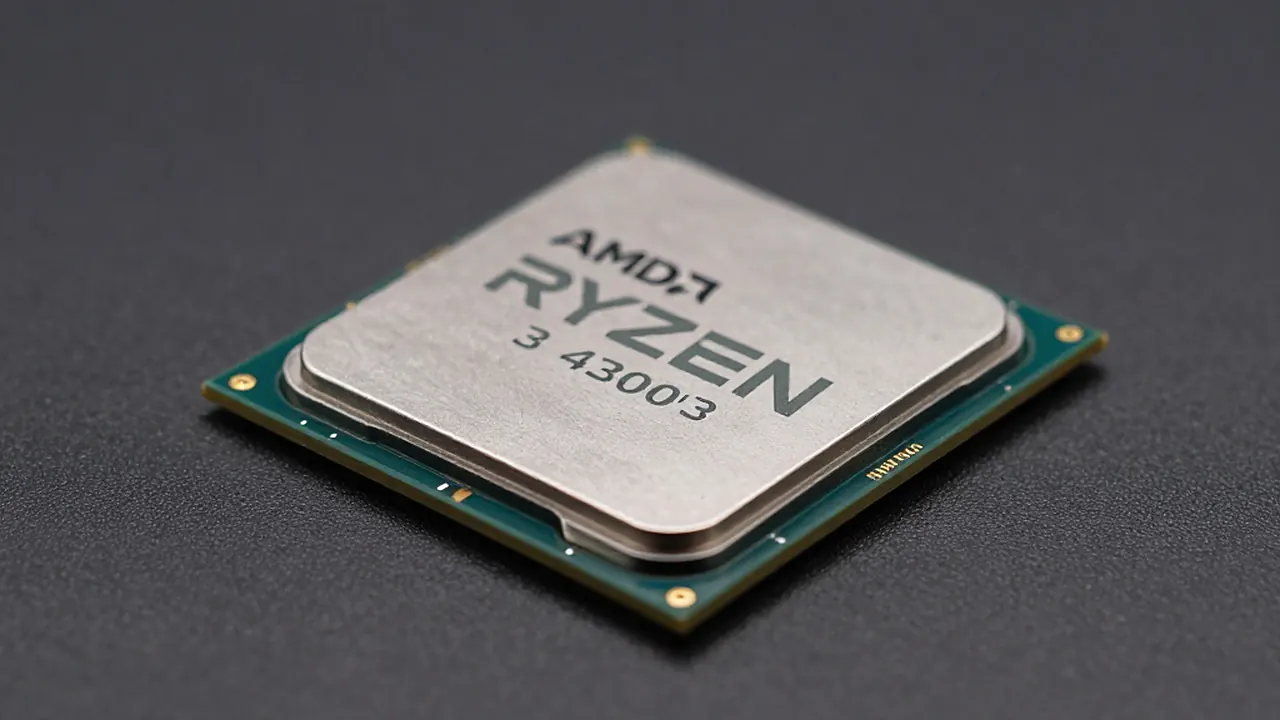
The AMD Ryzen 3 4300G is a processor that stands out in the market by combining excellent CPU performance with a robust integrated GPU (iGPU), making it a classic example of an APU (Accelerated Processing Unit). This model is equipped with 4 cores and 8 threads, operating at clock speeds ranging from a base frequency of 3.8 GHz to 4.0 GHz in boost. Support for a total of 4 MB of L3 cache and a 65W TDP ensures that it is efficient in various applications. With a processing power of 1305.6 GFLOPS and a 384:24:12 6 CU integrated GPU, it offers a complete solution for computers that need performance without the need for a dedicated graphics card.
The relevance of the Ryzen 3 4300G lies precisely in this combination of components, allowing it to serve both home users and enthusiasts looking for a performance upgrade without investing in additional hardware. It is part of the Zen/GCN5 architecture processor family, making it a model that solidified the concept of the APU in the entry-level and mid-range segments. The fact that it maintains a good balance between processing cores and integrated graphics power (iGPU) makes it a timeless choice. Furthermore, the availability of detailed specifications, such as the up to 4.0 GHz clock and 4 MB L3 cache, confirms its position as a key component in modern and affordable computing systems.
In this article, we will dive into all the complete specifications of the AMD Ryzen 3 4300G. We will cover everything from an overview of its market positioning to an in-depth analysis of its architecture and the power of its integrated graphics. You will find a detailed analysis of the technical numbers, a guide on performance in productivity tasks and gaming, and finally, a useful comparison with newer generations and competitors, as well as an essential compatibility guide for anyone planning an upgrade on the AM4 platform.
Key Points
- It is an APU (Accelerated Processing Unit) that integrates a CPU and a robust GPU, ideal for low-cost builds.
- It has 4 cores and 8 threads, operating with a total of 4 MB of L3 cache.
- It operates at a base frequency of 3.8 GHz and can reach up to 4.0 GHz in boost mode.
- It requires DDR4-2933 memory in Dual-Channel mode to ensure maximum possible performance.
- It is excellent for productivity and light gaming (eSports), but it is not ideal for heavy AAA titles.
AMD Ryzen 3 4300G Overview: Positioning and Features

The AMD Ryzen 3 4300G is an emblematic example of an Accelerated Processing Unit (APU), belonging to the 2000 series and the Raven Ridge family. Its market positioning was strategic: it was created to be the ideal solution for building low-cost computers, without compromising performance in daily tasks and light gaming. Unlike traditional processors, the 4300G integrates a powerful entry-level processor with a robust integrated video card, known as Radeon Graphics, which largely eliminates the need to purchase a dedicated graphics card (GPU) right away; for those seeking more power, it is worth checking the specifications of professional workstations.
Technical Features of the APU
The great strength of the 4300G lies precisely in this combination of components on a single chip. In terms of specifications, it is a 4-core, 8-thread processor, operating with a 65W TDP. In terms of performance, it has a base frequency of 3.8 GHz and can reach up to 4.0 GHz in boost mode. To ensure the user understands the system’s robustness, it is useful to note that the model features 4 MB of L3 cache and is built on the GlobalFoundries 14LP manufacturing process.
Beyond central performance, the APU architecture also defines the usage ecosystem. The 2000 series processors are designed to operate on the AM4 socket and feature a set of resources optimized for power consumption and data communication. To support maximum performance, the system is designed to use DDR4-2933 memory in dual-channel mode. Furthermore, the 4300G guarantees access to 16 PCIe 3.0 lanes, four of which are reserved for communication with the chipset, ensuring platform stability.
A Complete Package to Get Started
The Ryzen 3 4300G offers unbeatable value for the beginner user or for someone looking for an efficient upgrade without spending on expensive peripheral components. The inclusion of the fifth-generation GCN (Graphics Core Next) integrated GPU allows the user to run productivity tasks, advanced browsing, and even light games at standard resolutions, without the complexity or cost of a dedicated card. This integration makes the 4300G a didactic and practical choice, demonstrating the power of the APU architecture in democratizing access to home processing power.
📌 Key Features Summary of the Ryzen 3 4300G
- APU Architecture: Integrates processor and video card (Radeon Graphics) on a single chip.
- Processing: 4 cores and 8 threads, with a base frequency of 3.8 GHz and up to 4.0 GHz (boost).
- Memory and Cache: Features 4 MB of L3 cache and requires DDR4-2933 memory in dual-channel.
- Connectivity: Guarantees access to 16 PCIe 3.0 lanes, optimizing communication with the chipset.
- Positioning: Ideal for low-cost builds, without initially requiring a dedicated graphics card.
Architecture and the Power of Integrated Graphics (iGPU)
A processor’s architecture isn’t defined by the central processing unit (CPU) alone; it’s a complete ecosystem. This is where the concept of the APU (Accelerated Processing Unit) comes into play. The AMD Ryzen 3 4300G is a perfect example of this technology because it isn’t just a processor; it’s a chip that cohesively integrates central processing and the graphics unit. This combination is what gives the 4300G its standalone processing power, making it extremely versatile for various applications, from everyday tasks to more demanding games.
The Zen and GCN 5th Marriage
The 4300G’s power lies precisely in its hybrid composition. It uses the Zen architecture for the CPU cores and the GCN 5th (Graphics Core Next) generation for the integrated graphics processing unit (iGPU). This physical integration allows the two components to work in synergy, eliminating the need for dedicated graphics cards. In terms of graphics processing, the 4300G is optimized for system memory usage, which deserves special attention. The system’s RAM is used as the primary data source for the integrated graphics, and it is crucial that it operates in dual-channel mode to ensure maximum possible performance.
📘 APU
APU stands for Accelerated Processing Unit. It is a chip that cohesively integrates the central processing unit (CPU) and the graphics unit (iGPU) into a single component.
In terms of internal specifications, the chip features a 512 KB L2 cache per core and a 96 KB L1 cache (divided into 32 KB data and 64 KB instructions) per core. This cache structure, combined with the manufacturing architecture, gives the processor a robust foundation for multitasking. The 2000 series models, like the 4300G, use the AM4 socket and have a TDP (Thermal Design Power) of 65W, a figure that defines the energy consumption and the type of cooling required for the system.
It is important to note that the APU ecosystem also defines memory support. Processors in this line support DDR4-2933 operating in dual-channel mode, an essential feature that maximizes bandwidth for the iGPU. In summary, the Ryzen 3 4300G offers a high-value package because it not only delivers good CPU performance but also solves the initial need of a user who requires robust graphics without having to buy expensive peripheral components, ensuring a powerful and efficient starting point on the AM4 socket.
Detailed Analysis of Technical Specifications

| Brand and Model | Ryzen 3 4300G |
|---|---|
| Cores / Threads | 4 (8) |
| GPU | 4 (8) |
| TDP | 65 W |
| Release Date | 3.8 |
| MSRP | 4.0 |
| L3 Cache (total) | 4 MB |
| Core Configuration [i] | 1 × 4 |
| Model | Ryzen 3 4300G |
| Clock (GHz) | 1.7 |
| Configuration [ii] | 384:24:12 6 CU |
| Processing Power [iii] (GFLOPS) | 1305.6 |
| Base Clock | 3.8 |
| Boost Clock | 4.0 |
A detailed analysis of the AMD Ryzen 3 4300G’s technical specifications reveals a carefully balanced component package. At its core, the chip operates with a configuration of 4 Cores and 8 Threads. In terms of speed, it boasts a base clock of 3.8 GHz, with the capability to reach up to 4.0 GHz in boost mode. If you are looking for even greater processing power for professional environments, it is worth checking out the buying guide for professional workstations. To optimize data access, the processor features a total L3 cache of 4 MB, a crucial resource that reduces latency and increases overall system efficiency. These clock and cache figures form the foundation of its central processing power.
Breaking Down the Graphics Unit and Processing
Complementing the CPU’s strength, the Ryzen 3 4300G integrates a robust Integrated Graphics Processing Unit (iGPU), identified by the 384:24:12 configuration with 6 Compute Units (CU). This iGPU ensures that the processor remains functional in systems without a dedicated graphics card, making it the defining factor of the model’s APU (Accelerated Processing Unit) role. The combination of CPU cores and the built-in graphics capability is what gives the 4300G its complete performance profile.
To gauge the chip’s real-world performance, it is essential to understand the metrics for power and raw strength. The TDP (Thermal Design Power), or Thermal Design Power, is 65 W. This value indicates the maximum amount of heat the cooling system must be able to dissipate under full load, making it a vital parameter for cooler selection and the computer’s operational stability. It defines the thermal limit at which the processor will operate efficiently.
Another essential technical indicator is processing power, measured in GFLOPS (Giga Floating-Point Operations Per Second). The Ryzen 3 4300G achieves a processing power of 1305.6 GFLOPS. This number quantifies the ability to perform complex mathematical operations per second, serving as a direct indicator of the chip’s raw strength in tasks requiring intensive calculations, whether in rendering, video processing, or gaming. In summary, the combination of 4 Cores, 8 Threads, a 4 MB L3 cache, and 1305.6 GFLOPS of power, all operating within a 65 W thermal profile, solidifies the 4300G as a component with excellent cost-to-performance.
📊 Key Specifications Summary for the Ryzen 3 4300G
| Specification | Value |
|---|---|
| Processing Architecture | 4 Cores and 8 Threads |
| Base / Boost Clock | 3.8 GHz / 4.0 GHz |
| L3 Cache | 4 MB |
| Graphics Unit (iGPU) | 384:24:12 with 6 CU |
| TDP (Thermal Power) | 65 W |
| Processing Power (GFLOPS) | 1305.6 GFLOPS |
Gaming and Productivity Performance
The true value of a processor like the AMD Ryzen 3 4300G is not measured solely by clock speeds or cache units, but by its practical, day-to-day performance. This processor, featuring a 4-core, 8-thread configuration and a 6 Compute Unit (CU) based integrated GPU (iGPU), was designed to offer an excellent balance between raw power and energy efficiency, especially in home and professional use scenarios. To gauge its potential, it is crucial to understand that the final performance is an ecosystem that depends largely on the installed RAM and how it is configured in the system.
Performance in Productivity Tasks
In the realm of productivity, the Ryzen 3 4300G proves to be a robust and highly efficient choice. It handles everyday tasks with ease, such as browsing multiple browser tabs, streaming high-definition video, and running office suites. Its central processing capability ensures the user has a smooth and responsive experience, even when switching between different applications. However, it is imperative that the user knows that performance in any task requiring high data bandwidth will be directly impacted by the memory. Using RAM in Dual-Channel mode with the appropriate speed, such as DDR4-2933, is a determining factor that significantly boosts the user experience, ensuring that the iGPU and the processor can operate at their maximum capacity.
Gaming Performance
When it comes to gaming, the 4300G positions itself as a very competent entry-level solution. It is perfectly suited for eSports titles that do not demand ultra-realistic graphics, such as League of Legends (LoL) or Counter-Strike:GO (CS:GO), allowing for an enjoyable experience at entry-level graphics settings. However, and this is a key point, it was not designed to compete with dedicated processors in modern AAA games. More demanding titles, which require advanced graphics processing power and a constant flow of data, tend to expose the limits of the APU and iGPU architecture. Therefore, the user should have realistic expectations, prioritizing gameplay and stability over maximum graphical fidelity.
In summary, the Ryzen 3 4300G is a versatile processor. It excels in productivity thanks to its efficiency and the processing power of its 4 cores and 8 threads. For gaming, it is an excellent starting point for the casual gamer. In any scenario, the golden rule of performance is clear: to get the most out of the processor, installing RAM in Dual-Channel configuration is not just recommended, it is absolutely vital.
✅ Advantages
- Excellent balance between raw power and energy efficiency for home and professional use.
- Handles everyday tasks with ease, such as navigating multiple tabs and office suites.
- It is a competent entry-level solution for eSports (LoL, CS:GO) on entry-level configurations.
❌ Disadvantages
- It was not designed to compete with dedicated processors in modern AAA gaming.
- More demanding titles tend to expose the limits of the APU architecture and the iGPU.
- Performance in high-bandwidth tasks is directly impacted by the RAM.
Comparison with Newer Generations and Competitors
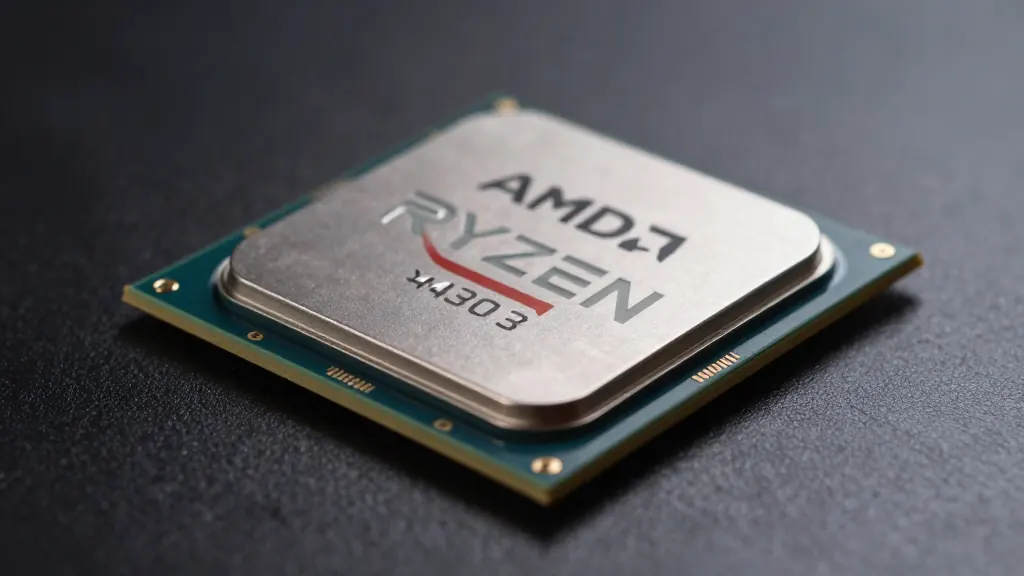
The trajectory of the AMD Ryzen 3 4300G must be viewed within a context of constant technological evolution. When comparing it to more recent generations, such as the Ryzen 3000 and 4000 series, it is crucial to understand that the 4300G represents a balance point between solid performance and cost-effectiveness, especially for those building or upgrading an AM4 platform economically. Although newer processors have advanced in efficiency and speed metrics, the 4300G maintains its relevance thanks to the stability and integrated graphics power of its time.
The Evolution of the AM4 Platform
The differences between generations are marked by significant technical advancements. For example, in terms of memory support, while 2000-series CPUs (like the Pinnacle Ridge architecture) supported DDR4-2933 in dual-channel mode, newer APUs, such as those in the 4000 series (based on Renoir), increased support to DDR4-3200. This memory frequency improvement, while seemingly small, directly impacts overall system performance, especially in tasks that rely on fast communication between the CPU and memory.
Regarding the integrated graphics (iGPU), the technological leap is noticeable. The 4300G, with its robust Graphics Processing Unit (iGPU) architecture, was a watershed moment. However, subsequent generations incorporated significant improvements, such as the integration of fifth-generation GCN GPUs, which bring graphical optimizations and greater efficiency in visual tasks. Although both processor groups support a number of 24 PCIe 3.0 lanes, the data flow optimization and energy efficiency of the latest models are highlights.
The Cost-Benefit Appeal of the 4300G
It is essential to recognize that despite newer generations offering better energy efficiency and advanced features, the AMD Ryzen 3 4300G remains an extremely attractive option. For the user seeking reliable performance in productivity tasks or entry-level gaming, without investing in more expensive platforms or top-tier peripheral components, the 4300G offers a balanced solution.
In summary, the 4300G doesn’t compete with the raw power and efficiency of the latest processors, but rather with value. It ensures that the user can enjoy the power of a processor with capable integrated graphics while staying on the AM4 platform, a tested ecosystem with vast component availability. Thus, it is positioned not as an obsolete product, but as a pillar of value and accessibility in the computer market.
AM4 Compatibility and Upgrade Guide
To get the most performance out of the AMD Ryzen 3 4300G and ensure a smooth, bottleneck-free user experience, it is crucial to understand that the processor is part of an ecosystem. The first pillar of this ecosystem is the motherboard, which must be compatible with the AM4 socket. Choosing the correct one not only ensures the chip functions but also defines the performance limits and future upgrade possibilities. If you want to understand the limits of high-performance processors, it is worth checking out the AMD Ryzen Threadripper 1900X: complete specifications. Beyond socket compatibility, the RAM component is vital, as speed and configuration directly impact overall performance, especially in tasks requiring high data bandwidth.
Ideal Memory and Motherboard
In terms of memory, the ideal standard for the AM4 platform is DDR4 operating in dual-channel mode. Although the processor is robust, the RAM needs to be sized correctly. Newer generations of the AM4 platform, such as the Ryzen 5000 series (based on Zen 3), are optimized to support DDR4-3200 in dual-channel configuration, which maximizes communication between the modules and the processor. It is important to note that using a memory kit in dual-channel configuration is more beneficial than simply installing high-capacity modules in a single channel.
Performance Upgrade Planning
The Ryzen 3 4300G is an excellent entry point, but AMD’s technological trajectory suggests that if the budget allows, the most recommended path for a significant performance gain is upgrading to more powerful processors, such as the Ryzen 3000 models or, preferably, the Ryzen 5000 series. These upgrades, however, require careful planning, as newer generations bring improvements in connectivity and efficiency.
When considering an upgrade, it is useful to observe the technical differences between generations. For example, the Ryzen 5000 series, in addition to retaining the AM4 socket, offers support for 24 PCIe 4.0 lanes, a notable advancement over previous generations. The Ryzen 3000 series (based on Zen+/GCN5) also uses the AM4 socket and is compatible with DDR4, but it is important for the user to be aware of the specific characteristics of each line when sizing the motherboard and RAM.
In summary, your system’s peak performance will be determined by the synergy between the motherboard and the RAM. While the Ryzen 3 4300G is a versatile and efficient processor, planning an upgrade to a more recent architecture, if the budget allows, will ensure greater processing power and access to more modern technologies, such as PCIe 4.0, while maintaining the stability and reliability of the AM4 platform.
Glossary
- APU (Accelerated Processing Unit): A processor that integrates the central processing unit (CPU) and the graphics unit (GPU) onto a single chip.
- TDP (Thermal Design Power): Thermal Design Power; indicates the maximum heat that the cooling system must be able to dissipate.
- Dual-Channel: A RAM configuration that doubles the data bandwidth, boosting graphics performance.
- AM4: The platform’s standard socket, defining the type of memory and components compatible with the processor.
- GCN 5th: The graphics architecture used in the processor’s integrated graphics unit (iGPU).
- GFLOPS: A unit of measure that quantifies the capacity to perform complex mathematical operations per second.
Frequently Asked Questions
Is the Ryzen 3 4300G good for gaming in 2024?
It is a very competent entry-level solution for casual gaming and eSports titles, such as League of Legends or CS:GO, on low settings. However, it is essential to have realistic expectations, as it was not designed to compete with dedicated processors in modern AAA games that demand advanced graphics.
What is the difference between an APU and a traditional processor?
The main difference is that an APU (Accelerated Processing Unit) integrates the central processing unit (CPU) and the graphics unit (GPU) onto the same chip. This eliminates the initial need to buy a dedicated graphics card, making it extremely versatile and ideal for building low-cost systems.
Do I need a dedicated graphics card if I use the 4300G?
It is not mandatory to have a dedicated graphics card to start. The 4300G already has a robust integrated graphics unit (iGPU), which makes it functional for everyday tasks. However, if you are aiming for maximum performance in more demanding games, a dedicated card will be indispensable.
What is the best RAM frequency for the 4300G?
It is absolutely vital that the RAM operates in Dual-Channel mode. The processor is optimized to support DDR4-2933, and ensuring this channel and frequency configuration is crucial, as memory is the main factor boosting the performance of the iGPU and the system as a whole.
Is it worth buying the 4300G used, or is it better to save up for a newer model?
The 4300G offers an excellent balance between solid performance and cost-effectiveness, especially for AM4 platforms. However, if the budget allows, newer models may present significant advancements, such as greater memory frequency support, which can directly impact the overall performance of your system.
Conclusion
Analyzing the specifications of the AMD Ryzen 3 4300G confirms its role as a high cost-performance component in the market. Its strength lies not only in its numbers—4 cores, 8 threads, 4 MB of L3 cache, and up to a 4.0 GHz boost clock—but in the APU architecture. This cohesive integration between the Zen cores and the 5th generation GCN graphics unit is what ensures robust and self-sufficient performance, solving the initial need for a system without a dedicated graphics card.
With a 65W TDP, the 4300G offers a powerful starting point on the AM4 socket, ideal for productivity tasks, advanced browsing, and light gaming, without the complexity of adding expensive components. It is crucial to remember that peak performance is achieved when the system uses DDR4-2933 memory operating in dual-channel mode, optimizing bandwidth for the iGPU. In summary, the processor delivers a complete package that balances central processing power with embedded graphics capability.
Thus, the Ryzen 3 4300G establishes itself as an excellent starting model, demonstrating the power of the APU architecture to democratize access to efficient systems. If you are looking for a balance between performance and economy, this is the choice that guarantees a stable system ready for various daily applications. Analyzing the combination of specifications and practical use is the next step to building your ideal machine.