Read this article in: Portuguese (Português) · Spanish (Español)
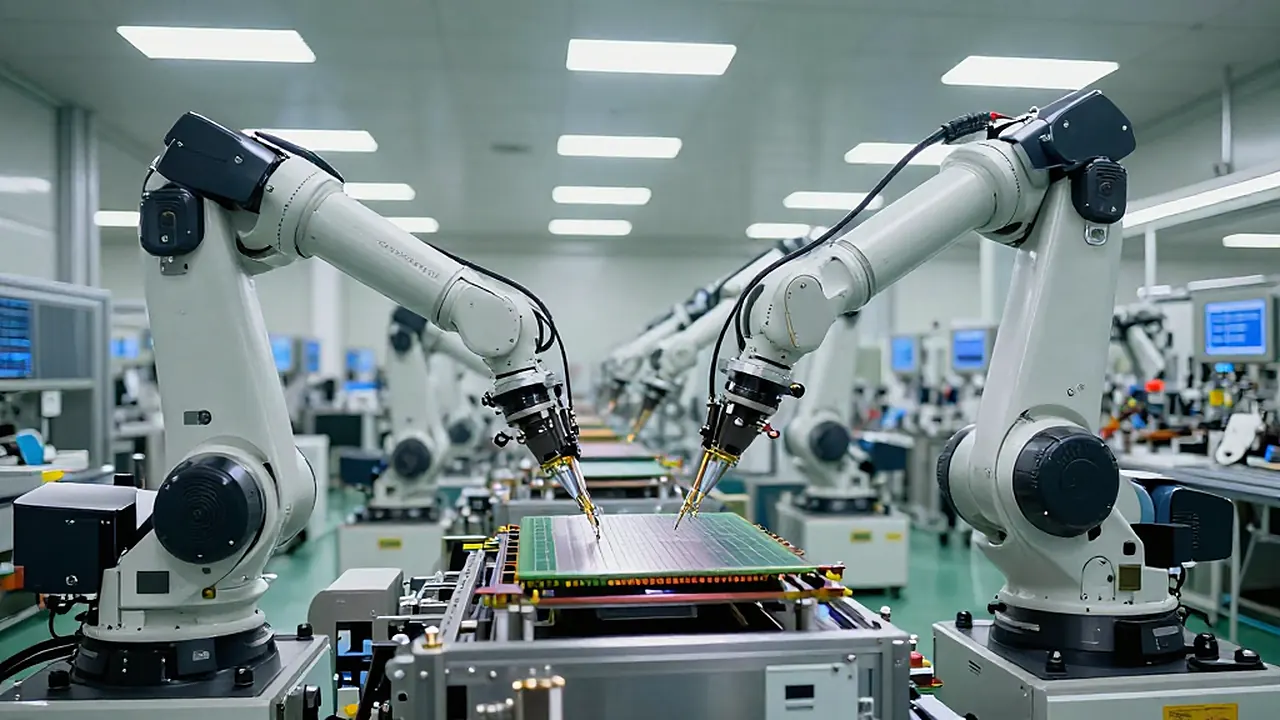
The Korean tech giant, Samsung, is redefining the future of semiconductor manufacturing by charting an ambitious plan for total automation. The company has set a timeline aiming to integrate advanced robotics into every stage of its chip fabrication plants by 2028. This initiative is not limited to the manufacturing process alone; it covers everything from equipment maintenance to the full operation of production lines, marking a significant leap in industrial capability and operational efficiency.
Samsung’s Plan: Robots in Chip Factories by 2028
According to reports from the Korean media, Samsung has shown a deep interest in incorporating robots into its chip manufacturing process. To realize this vision, the company established a new dedicated robotics team within its Device Solutions (DS) division. This team is led by Lee Seok-won, executive vice president of smart equipment technology.
Samsung’s official plan stipulates that robotics will be deeply integrated into semiconductor fabrication facilities by 2028. This strategic move positions Samsung at the forefront of the Fourth Industrial Revolution, seeking to raise the standard of automation in a traditionally complex and high-precision sector.
Implementation Details: Beyond Fabrication, Maintenance, and Production
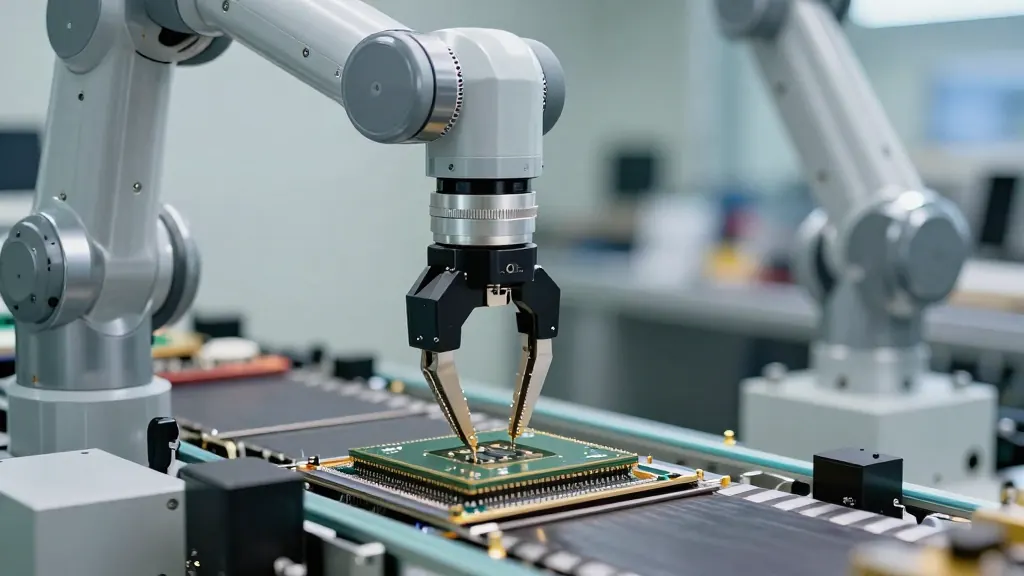
The scope of automation proposed by Samsung is vast and multifaceted. The idea is not just to place robots on the production lines, but to utilize them in various critical functions of the chip ecosystem. Among the robotic products the company plans to employ, unmanned vehicles, autonomous robots, and high-precision robotic arms stand out.
However, the use of robotics goes far beyond simple manufacturing. As detailed in the report, robots will be applied to equipment maintenance processes and the entire operation of production lines. Historically, robotics is already used in various phases of the chip life cycle, such as wafer handling, probe assembly, testing, transportation, and inspection.
A crucial point highlighted by industry experts is that Samsung’s plan differs from previous initiatives. While robotics in past projects was limited to research divisions, it has now been separated and established independently. If Samsung can fully automate the pre- and post-fabrication stages, it will represent an unprecedented achievement in the semiconductor industry.
📌 Robotics Applications in the Chip Life Cycle
- Wafer Handling
- Probe Assembly
- Testing
- Transportation
- Inspection
Market Context: Initiatives from Giants and the Technological Frontier
Samsung’s interest in this advanced automation comes at a time of intense technological competition. The decision to automate is influenced by the moves of other industry giants, such as the American company Boston Dynamics.
Recently, Boston Dynamics announced a partnership with chip manufacturer GlobalFoundries. Through this collaboration, robots will be implemented throughout the GlobalFoundries manufacturing network. Most notably, GlobalFoundries will become the first semiconductor company to test humanoid robots in its operations, utilizing Boston Dynamics’ Atlas robot.
To understand the scale of these players, it is relevant to note the context of each. Samsung Group is a South Korean multinational conglomerate, and the country’s largest chaebol. GlobalFoundries Inc., on the other hand, is a semiconductor development and manufacturing company, established from the spin-off of AMD’s manufacturing line in 2009. Meanwhile, Boston Dynamics is an American engineering and robotics company, founded in 1992 as a spin-off of the Massachusetts Institute of Technology (MIT).
📊 Profile of the Involved Tech Giants
| Company | Nature/Description | Key Detail |
|---|---|---|
| Samsung Group | South Korean multinational conglomerate | Country’s largest chaebol |
| GlobalFoundries Inc. | Semiconductor development and manufacturing | Created from the spin-off of AMD’s manufacturing line in 2009 |
| Boston Dynamics | American engineering and robotics company | Founded in 1992 as a spin-off from MIT |
The Industry Leap: A Milestone in End-to-End Automation
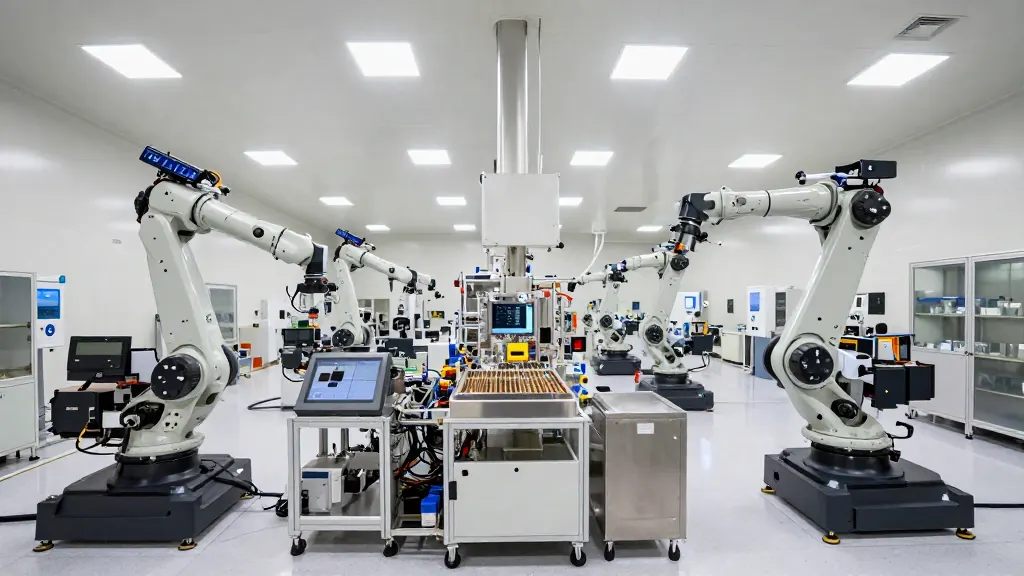
The convergence of advanced robotics technology with the complexity of chip manufacturing is not just an incremental improvement; it is a structural transformation for the industry. By integrating autonomous robots at every stage—from initial wafer handling to final component testing—Samsung is proposing an unprecedented production model.
This end-to-end approach suggests an exponential increase in precision, speed, and operational consistency, minimizing human intervention in critical processes. The success of this robotic integration will not only solidify Samsung’s technological leadership in the Asian market but will also set a new global standard for efficiency and safety in semiconductor fabs.
The total automation of chip production lines, as proposed by Samsung, solidifies the semiconductor sector as a battleground for technological innovation, where the robot is no longer a mere aid, but the central engine of the next generation of computing.