Read this article in: Portuguese (Português) · Spanish (Español)
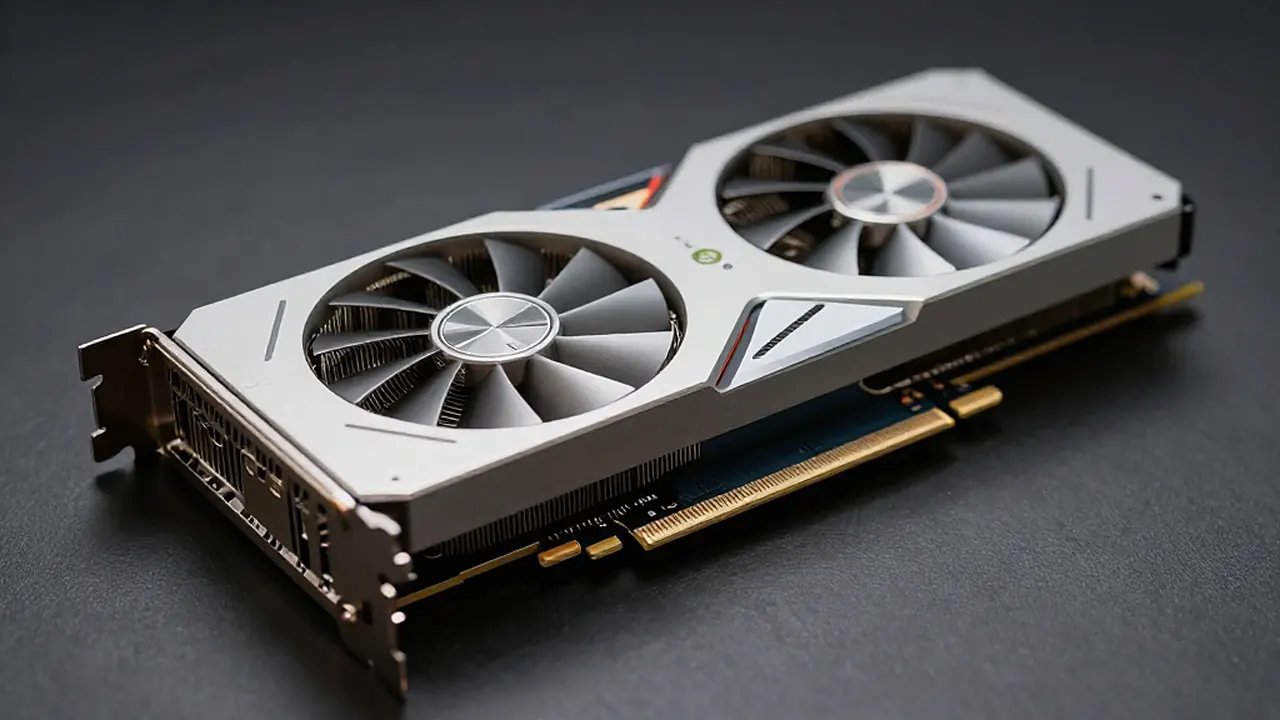
The NVIDIA GeForce GTX 960 was a graphics card that marked an era of accessible performance, serving as a fundamental component for many mid-range PC setups. For those seeking complete specifications, it is important to know that this GPU belongs to the Kepler architecture, a system known for balancing power and efficiency. It is characterized by its dedicated cores and graphics processing capability, which, upon release, positioned it as an excellent option for those looking to elevate the level of gaming and professional applications without investing in flagship models. Essentially, this is a guide to a robust piece of hardware that still generates a lot of interest in the enthusiast and repair markets.
The relevance of the GTX 960 is proven by its role during a period of intense competition in the graphics card market. It was launched at a crucial time for the industry, representing a significant leap over previous generations, such as those based on the Fermi architecture. The fact that it was a flagship card in its category for years, and is still today a subject of study and comparison, attests to its robustness and the level of technical detail it offers. Understanding Kepler means diving into a key moment in the history of graphics processing, where the balance between cost and performance was the major differentiator.
In this definitive guide, we will demystify every detail of this card. You will find an overview of its context and market positioning; a deep dive into the Kepler architecture, understanding its fundamentals; and, of course, the detailed technical specifications, covering cores, memory, and power consumption. Furthermore, we will trace its practical performance in gaming and productivity, provide a comparison with competitors and previous generations, and finally, indicate the ideal place for the GTX 960 in the current market, whether for nostalgic use or for smart upgrades.
Key Points
- Belonging to the Kepler architecture, the card represented a performance leap, improving both efficiency and graphics processing power.
- It was strategically positioned to serve the mid-to-high performance segment, focusing on Full HD (1080p) visual experiences.
- Its differentiator was versatility, supporting not only gaming but also parallel processing for AI and scientific calculations.
- It utilized the 28nm process, allowing for high transistor density while maintaining controlled power consumption.
- The combination of robust CUDA cores and high-speed GDDR5 memory optimized performance for demanding tasks.
NVIDIA GeForce GTX 960 Overview: Context and Positioning

NVIDIA has always been one of the fundamental pillars of the graphics processing market, and the GeForce line is the emblem of this dominance. The GTX 960 model is not just an isolated component, but the pinnacle of a product line that accompanied the exponential evolution of computer graphics. It belongs to the Kepler architecture, a significant leap in NVIDIA’s technology, which marked the transition to a more robust and efficient performance level compared to previous generations; it is interesting to note how older models, such as the performance guide for the GTX 465, were also important milestones in its trajectory.
Launch Context and Market Positioning
The GTX 960 was launched during a period of intense maturity and competition in the hardware sector. The card was strategically positioned in the mid-to-high performance segment. This meant it was not aimed at the casual consumer, but rather at the enthusiast gamer or professional who demanded an ideal balance between raw processing power and cost-effectiveness. Its main goal was to meet the growing demand for immersive visual experiences at Full HD (1080p) resolutions.
📘 Full HD (1080p)
It was the resolution standard that, at the time of the GTX 960’s launch, was considered the ‘gold standard’ for consuming high-quality content in games.
At that time, 1080p was the gold standard for consuming high-quality content in games. The GTX 960 was designed to be the ideal workhorse for this scenario. It delivered the necessary power to run AAA (Triple A) titles with playable frame rates and rich visuals, without requiring the extreme investment of top-of-the-line cards, making high performance more accessible to a broader audience of PC builders.
Therefore, understanding the context of the GTX 960 is understanding how NVIDIA managed to democratize access to high performance. It represented a convergence point: where the Kepler architecture met the market’s need for a machine capable of delivering advanced graphics at 1080p, solidifying itself as a reference component for mid-to-high performance PC setups. This historical positioning is crucial for evaluating its role in any computer build.
Architecture and Manufacturing Process: Understanding Kepler
The Kepler architecture represents a significant leap in NVIDIA’s graphics processing history, marking a fundamental shift in focus. While previous generations were highly optimized for real-time graphics processing (rasterization), Kepler was designed to be a more versatile platform. It not only enhanced performance in visual tasks but, crucially, expanded its capability for general-purpose parallel processing (GPGPU). This paradigm shift allowed the card to be used not only in gaming but also in scientific applications, cryptocurrency mining, and artificial intelligence workflows, setting a new standard for flexibility in consumer hardware.
The 28nm Manufacturing Process
The efficiency and transistor density of any GPU are directly impacted by the lithography process used in its manufacturing. In the case of the GTX 960, the component was built using the 28-nanometer (28nm) process. This number should not be interpreted merely as a physical size, but rather as an indicator of the scale and complexity of the design. Utilizing the 28nm node allowed NVIDIA to place a growing number of processing units (CUDA Cores) into an ever-smaller physical space without compromising performance. This miniaturization, when executed well, results in greater energy efficiency and allows the card to deliver high processing power within reasonable power consumption limits for a mid-range PC system.
This synergy between architecture and process is vital for understanding performance. The Kepler architecture, with its multi-core design, requires the refinement of the 28nm process to be fully utilized. What truly defines processing power is not just the clock speed, but the number and capacity for parallel processing that the design can support.
Graphics Processing Versus Parallel Computing
It is essential to distinguish how the Kepler architecture approaches different types of tasks. In purely graphical scenarios, the card executes millions of calculations simultaneously to render textures, models, and visual effects, ensuring the fluidity required for 1080p standard. However, Kepler’s major advantage lies in its ability to transition to parallel computing. When a developer uses the card to solve scientific problems—such as climate simulations or machine learning calculations—they are tapping into parallel processing power, where thousands of independent calculations are run at the same time. It is this dual nature, optimized by the 28nm process, that established the GTX 960 as a high-performance machine, capable of handling both visual entertainment and advanced productivity tasks.
📌 The Versatility of the Kepler Architecture
- Graphics Processing (Rasterization): Ideal for rendering textures and visual models in games.
- Parallel Computing (GPGPU): Enables simultaneous calculations for scientific applications and AI.
- Process Optimization: The 28nm node allowed for a high density of CUDA Cores in a reduced space.
- Dual Nature: Combines visual power with advanced processing capability.
Detailed Technical Specifications: Cores, memory, and power consumption

Diving into the technical specifications of the NVIDIA GeForce GTX 960, we enter the heart of what defines graphic processing power. These numbers are not mere data; they represent the raw capacity and efficiency with which the card was designed to execute complex tasks, from real-time rendering to scientific calculations. For those seeking more details on previous models, it is worth checking out the definitive performance guide for the GTX 560 Ti. Understanding these components is crucial for any user looking to optimize their mid-range PC setup.
CUDA Cores: The parallel processing engine
The most notable feature of the GTX 960 is its set of CUDA cores (Compute Unified Device Architecture). In simple terms, CUDA cores are specialized processing units that allow the video card to execute thousands of calculations simultaneously, which is the pillar of modern graphic processing. The higher the number of cores, the greater the card’s capacity to perform parallel calculations. The GTX 960, built on the Kepler architecture, features a significant number of these cores, optimizing the workflow for games and professional applications that demand massive data processing.
Memory and Bandwidth
Memory is the card’s workspace. The GTX 960 uses GDDR5 memory. It is vital to understand that this is not the same standard RAM type found in computer sticks; GDDR5 is a highly specialized memory, designed specifically to handle the extremely high data transfer rate required by graphics. The combination of a specific memory capacity with high bandwidth ensures that game and application data reaches the CUDA cores at maximum speed, minimizing performance bottlenecks.
Power Consumption and Kepler Architecture
Another fundamental parameter is the TDP (Thermal Design Power). This value indicates the maximum power consumption the card must dissipate under full load. It is a direct indicator of energy efficiency and the ease of system cooling. The Kepler architecture, which underpins the GTX 960, was a significant advancement because it allowed NVIDIA to increase transistor density and processing power without drastically compromising energy efficiency. This synergy between an advanced architectural design and controlled power consumption positioned the card as a powerful and stable solution for its time.
In summary, the combination of robust CUDA cores, the use of high-speed GDDR5 memory, and a well-managed TDP means that every technical specification of the GTX 960 tells a story of optimized performance. These details transform the graphics card into a sophisticated component, capable of supporting rich visual experiences and demanding productivity tasks.
📊 Key Components Summary for the GTX 960
| Component | Primary Function | Technical Detail |
|---|---|---|
| CUDA Cores | Parallel processing engine | Allows for the simultaneous execution of thousands of calculations |
| Memory | Card’s workspace | GDDR5 (High-throughput specialized memory) |
| TDP | Power consumption | Indicates maximum power draw under full load |
Gaming and Productivity Performance: Practical Use
The true measure of a graphics card, however, lies not just in its datasheet specifications, but in its performance in practical use scenarios. Analyzing the behavior of the GeForce GTX 960 in games and professional applications helps understand how the Kepler architecture translated into end-user experience. The goal of this section is to demystify raw power, showing how that power was applied in the daily routine of a PC setup, whether in an open-world game or a video editing workstation.
Gaming Performance
In the gaming world, the main performance focus of the GTX 960 was solidifying the experience at Full HD, or 1080p. At that time, running modern titles at 1080p with a stable frame rate, close to 60 frames per second (FPS), was the expected standard of excellence for consumers. The card was designed to be the engine behind immersive visual experiences, allowing players to explore complex digital worlds without drastically compromising fluidity. The role of the Kepler architecture, in this context, was precisely to ensure that the graphics processing could handle the growing demands of textures and visual effects without significant bottlenecks, maintaining smooth gameplay even in the most demanding scenarios.
🧪 How did the GTX 960 perform in practice?
In games, the focus was on maintaining fluidity at 1080p, aiming for a stable 60 FPS. For professional tasks, the power of the CUDA cores was used to accelerate complex calculations, such as 3D rendering or video editing, drastically reducing wait times.
Productivity and Professional Applications
Beyond entertainment, the GTX 960 proved to be a robust tool for productivity tasks that rely on parallel processing. Applications like video editing and 3D rendering are processes that greatly benefit from the accumulation of CUDA cores (Compute Unified Device Architecture). Unlike gaming use, where the focus is on real-time frame rate, professional use demands that the hardware execute complex calculations in parallel, whether rendering high-definition video frames or calculating lighting and physics in 3D models. The card’s ability to leverage these multiple cores made it a valuable component for content creators and engineers, drastically accelerating workflow and reducing wait times associated with heavy rendering processes.
In summary, the practical performance of the NVIDIA GeForce GTX 960 demonstrates a remarkable transition capability. In games, it maintained a focus on the ideal 1080p, ensuring fluid and visually rich gameplay. In the professional field, the power of its CUDA cores allowed the card to act as a powerful accelerator, transforming rendering and editing tasks that would be time-consuming into significantly faster processes. This versatility and the optimization of the Kepler architecture for different types of workloads established the GTX 960 as an extremely well-balanced graphics card for the mid-to-high-end consumer of its time.
Performance Comparison: GTX 960 vs. Competitors and Previous Generations

Performance Comparison: GTX 960 vs. Competitors and Previous Generations
Evolution Compared to Past Generations
To understand the performance leap of the NVIDIA GeForce GTX 960, it is crucial to place it in historical perspective. Comparing the model to cards like the GTX 700 series reveals not just an increase in specifications, but a fundamental shift in processing efficiency. While previous generations established solid foundations for Full HD, the GTX 960 raised the bar for demanding performance. If you want to better understand the evolution in mobile graphics cards, you can check out the guide on the NVIDIA GeForce GTX 970M: complete specifications. The architectural leap, which took it from models like the GTX 760, was not just linear; it was an advancement in how CUDA cores could be optimized for modern workloads. In practical terms, the user felt improved power management combined with superior firepower, allowing high-fidelity gaming performance to be maintained with greater stability and lower relative consumption compared to the power delivered.
Market Positioning and Direct Competition
At its peak relevance, the GTX 960 established itself as an extremely competitive mid-to-high-performance graphics card. It was designed to compete directly with the models from rival generations from other manufacturers. The objective was clear: to offer a performance package that allowed consumers to enter the high-performance segment without the cost of top-of-the-line cards. This market comparison was vital, as it forced NVIDIA to maintain a perfect balance between cost-effectiveness and raw capability. The GTX 960 succeeded in occupying this niche with great success, proving that it was capable of delivering a smooth gaming experience at 1080p, surpassing, in many scenarios, what was expected from slightly older cards or smaller competitors.
The GTX 960’s performance was notably robust in use scenarios that demanded intense parallel processing. While gaming focus has always been the main sales driver, its processing power ensured that it was not relegated solely to entertainment. Its ability to maintain high frame rates in AAA titles of the time, while being energy-efficient, solidified its standing in the market. It therefore represented a power balance point: a significant performance leap compared to previous generations, while remaining highly competitive against the main rivals of its time, making it a highly desirable and functional upgrade option for most users seeking the “gold standard” of Full HD.
The GTX 960 in the Current Market: Recommendations and Upgrades
The GTX 960 in the Current Market: Recommendations and Upgrades
The Card’s Modern Applicability
When we arrive at the current hardware market scenario, it is imperative to demystify the idea that any graphics processing component becomes instantly obsolete. The NVIDIA GeForce GTX 960, despite its age, maintains surprising relevance in specific use niches. Its performance, which was robust in the context of Full HD years ago, still allows for a functional experience for users with more contained demands. Today, it is positioned not as a flagship card for the most demanding titles, but rather as an excellent cost-benefit solution for tasks that do not require maximum graphical power.
For casual users, the GTX 960 is still an excellent option for high-resolution media consumption and for office machines that require graphics acceleration. In work environments involving data visualization software, editing documents with graphic elements, or even some lighter engineering applications, the card offers solid support. Where the focus is on stability and the ability to run the operating system and productivity applications without significant visual bottlenecks, the 960 performs its role efficiently, especially when compared to the risk of investing in much weaker entry-level models.
When Considering an Upgrade
However, graphics performance is a spectrum, and it is crucial for the user to understand its limits. The time to consider upgrading to a more recent card becomes inevitable when the goal is high performance in modern games. AAA games released in recent years, which are optimized for more advanced processing architectures and require features like Ray Tracing or high frame rates above 60 frames per second at 1080p, will certainly expose the limitations of Kepler. In these scenarios, the performance difference between the GTX 960 and contemporary cards is striking, making an investment in a more current model a necessity for those seeking a top-tier experience.
In summary, the GTX 960 is a smart transitional card. It is ideal for keeping the machine functional and agile for everyday tasks and older or less demanding games. However, if the goal is to participate in the latest generation of gaming ecosystems or perform professional rendering of high complexity, the technological and energy efficiency leap of the most recent generations fully justifies migrating to more modern hardware. Thus, the 960 remains relevant, but it is never the final destination for the enthusiast or professional who demands the highest level of performance.
Glossary
- Kepler Architecture: This is NVIDIA’s design generation that improved efficiency and expanded the focus to general-purpose parallel processing (GPGPU).
- CUDA Cores: These are specialized processing units that allow the card to execute thousands of calculations simultaneously, forming the pillar of graphics processing.
- GDDR5: A highly specialized type of memory designed to handle the extremely high data transfer rate required by video graphics.
- TDP (Thermal Design Power): Indicates the maximum power consumption the card must dissipate under full load, serving as an indicator of efficiency and cooling.
- GPGPU: Stands for General-Purpose computing on Graphics Processing Units. It allows the card to be used not only for gaming but also for scientific calculations and AI.
Frequently Asked Questions
Is the GTX 960 still good for gaming in 2024?
For modern games and AAA titles, performance might be limited, but it is still capable of running older titles or eSports games with optimized settings. Its focus should be on rich visual experiences at 1080p, but don’t expect maximum frame rates in the latest titles.
What is the power consumption of the NVIDIA GTX 960, and does it require a powerful power supply?
Power consumption is indicated by the TDP, which is a guide for dissipation under maximum load. Although it was an efficient component for its time, it is crucial that the power supply is of good quality and has enough power to support the card along with the rest of your PC components.
What games can the GTX 960 run well at Full HD?
The card is excellent for games that require stability at 1080p. It excelled in titles that valued real-time graphics processing, allowing for smooth gameplay in complex scenarios without compromising visual immersion.
What is the performance difference between the GTX 960 and the GTX 1060?
The GTX 1060 belongs to a later generation, which means it has architectural improvements and greater energy efficiency. The 1060 is expected to offer a noticeable performance leap, especially in terms of optimization and parallel processing power.
Is it better to buy a used GTX 960 or save up for a newer card?
If your budget is tight and you only need a basic upgrade, a used card can be an option. However, if you are looking for longevity and modern performance, saving up for a more recent and efficient model generally guarantees a much more robust user experience with better support.
Conclusion
The NVIDIA GeForce GTX 960 transcends the definition of just a graphics card; it is a milestone in how high graphic performance became accessible. Strategically positioned for the mid-to-high performance segment, it represented the perfect balance between raw processing power and cost-effectiveness, making it the choice machine for the enthusiast gamer seeking immersive visual experiences in Full HD (1080p). Its success lies in its ability to deliver advanced graphics without requiring the extreme investment of top-tier cards, thus democratizing access to cutting-edge computing power.
This performance was enabled by the Kepler architecture, a fundamental leap that, thanks to the 28-nanometer manufacturing process, expanded the card’s focus. More than just rendering graphics, the GTX 960 utilized Kepler’s dual nature to excel in General-Purpose GPU computing (GPGPU). With its robust set of CUDA cores and high-bandwidth GDDR5 memory, it not only ensured fluidity in games but also boosted scientific and artificial intelligence applications. The synergy between the multi-tasking design and the 28nm miniaturization established it as a benchmark component.
Understanding the GTX 960 means grasping how consumer hardware has evolved into a versatile processing ecosystem. Analyzing its specifications is essential for any PC builder looking to optimize a mid-range setup. To master the hardware world, the next step is to compare this architecture with the latest advancements, mapping the continuous evolution of processing power.