Read this article in: Portuguese (Português) · Spanish (Español)
If you’re looking for the 50 Best Games for Leapster 2, get ready for a nostalgic trip into the world of educational consoles that marked a generation. This complete guide is your passport to reliving the magic of games that taught and entertained, making learning a colorful and interactive adventure. The Leapster 2 was much more than a toy; it was a platform that transformed the learning of subjects like the alphabet and basic math into gamified experiences, keeping children engaged in a portable and accessible format.
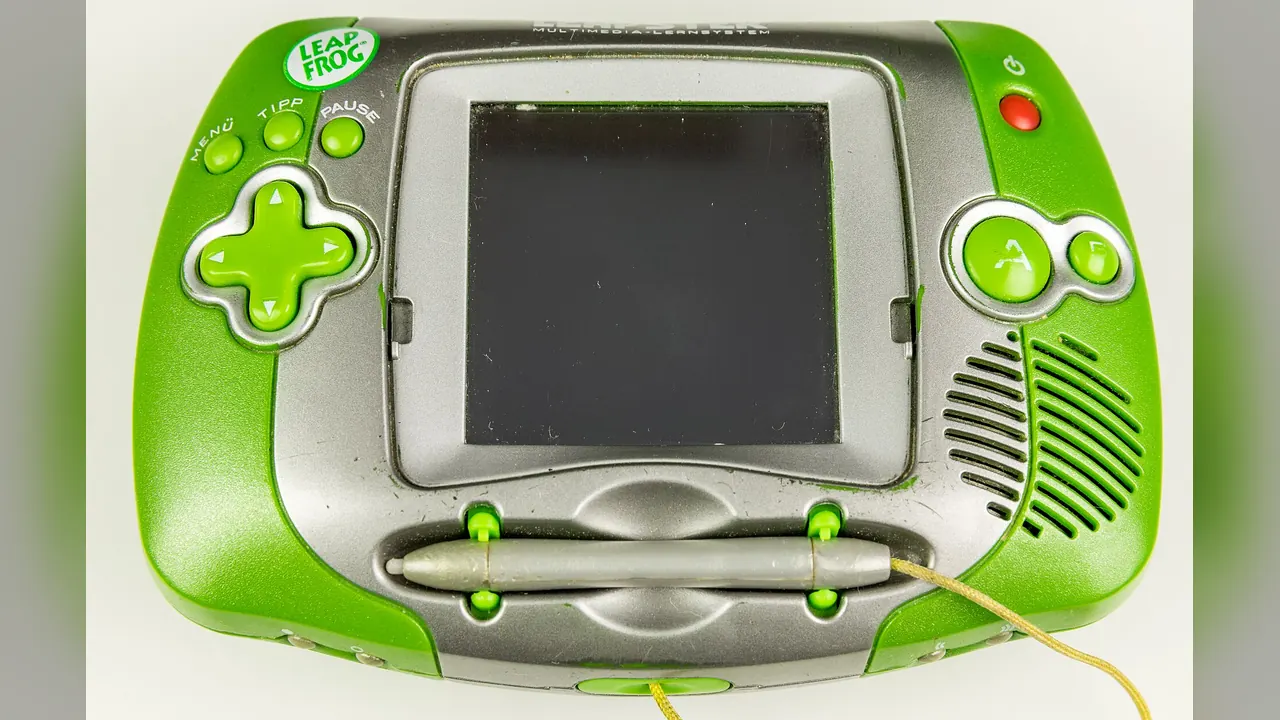
The relevance of this system is undeniable, as the Leapster was originally released on October 7, 2003, catering to an audience seeking educational entertainment. Its evolution was marked by significant updates, such as the release of the Leapster 2 itself in July 2008, which added modern functionalities like SD card slots. With impressive unit sales reaching 4 million, the system proved to be both a commercial and pedagogical success, establishing itself as a milestone in the history of electronic toys.
In this article, we did the curating work for you. We will dive deep into the trajectory of the Leapster 2, exploring its technical features and how it positioned itself in the market. Besides reviewing the vast catalog of learning and fun the system offered, we will show the rigorous criteria we used to select the 50 most iconic titles. Prepare to reminisce about the games that made history and understand why the nostalgia for this technological era is so strong.
Key Points
- The Leapster 2 boosted processing power with 16 MB of RAM, allowing for more complex content.
- The console modernized connectivity by incorporating a USB 1.1 port and an SD card slot.
- The system operated with MQX and Macromedia Flash MX 2004, ensuring advanced interactivity.
- The pedagogical focus was on reinforcing essential skills, such as math, phonetics, and letters.
- Features like the Learning Path allowed for detailed tracking of student progress.
Leapster 2 in summary
| Manufacturer | LeapFrog Enterprises |
|---|---|
| Product Line | Leapster series |
| Type | Portable game console |
| Generation | Sixth |
| Release | October 7, 2003 |
| Discontinuation | 2011 (cartridges); 2014 (final discontinuation) |
| Units Sold | 4 million |
| Media | Leapster Cartridges |
| Operating System | MQX, Macromedia Flash MX 2004 |
| CPU | ARCTangent CPU @ 96MHz |
| Memory | (2MB RAM, 256 bytes NVRAM) |
| Screen | 160×160 CSTN touchscreen |
The Evolution of the Leapster 2 System and Its Technical Features

The trajectory of the Leapster system is a fascinating case study on how educational technology adapted to the needs of child learning. Manufactured by LeapFrog Enterprises, the console belongs to the Leapster series and was designed to be a portable entertainment and learning device. Although the first Leapster was released on October 7, 2003, the line underwent several revisions and improvements over the years, culminating in more robust models, such as the Leapster 2. It is interesting to note how this evolution connects with the impact of nostalgia in modern gaming, as seen in the case of the Leapster Explorer: the console’s development history. This evolution was not merely aesthetic; it was a significant leap in technical capability, while maintaining a pedagogical focus on essential areas such as math and phonetics.
The Technical Improvements of the Leapster 2
The Leapster 2 represents a notable advancement over its predecessors. While the original model featured 2 MB of RAM and 256 bytes of NVRAM, the Leapster 2 drastically increased processing power. The console came equipped with 16 MB of RAM, allowing for the processing of richer and more complex content. Furthermore, there was a modernization of connectivity and storage. The system incorporated a USB 1.1 port and a full-size SD card slot. These additions were crucial, as they enabled the more flexible download of new games and educational content, in addition to assisting in tracking learning data, known as the Learning Path.
Technically, the heart of the system remains a custom processor, but the processing capacity was expanded to support the use of Macromedia Flash MX 2004, a platform that allowed LeapFrog to develop games with greater fluidity and interactivity. The 160×160 CSTN touch screen remained the point of interaction, complemented by high-quality audio, including 8000 Hz sampled CELP voice processing.
A Constantly Evolving Pedagogical Focus
The central goal of the Leapster, in all its iterations, has always been purposeful entertainment. The games were structured to reinforce fundamental skills, such as letter recognition, basic math concepts, and phonetics. The increased memory and the ability to track user progress—fundamental for the Learning Path—transformed the console into a diagnostic and educational support tool. This ability to monitor learning in detail ensured that the system was not just a toy, but a genuine pedagogical aid for children of various ages.
In summary, the Leapster 2 established a robust platform. By integrating 16 MB of processing power with the flexibility of SD card and USB storage, LeapFrog managed to keep the console relevant in the educational market, ensuring that the learning experience was both fun and technically advanced for its time.
A Vast Catalog of Learning and Fun

The heart of any educational console is undoubtedly its content. In the case of the Leapster 2, the system was powered by a software catalog designed to transform learning into a playful and engaging experience. While the system was a robust platform, the catalog not only offered fun but also structured development across crucial areas of knowledge. Thus, if you want to better understand the trajectory of this device, check out the history of the Leapster 2 portable. The available content covered a remarkable range of topics, from artistic and creative activities to complex concepts in math and science, ensuring that the learning journey was always multifaceted.
Integrated Learning Features
One of the most praised and essential features for the teaching-learning process was the “Hint” function. This functionality was not just a help button; it represented intelligent pedagogical support. By activating the dedicated button, the user received additional instructions, either in audio or animated format. This mechanism was vital for children to progress through more complex challenges, receiving the necessary support without the experience becoming frustrating. Furthermore, the system was connected to the modern world, possessing the ability to send online learning data, allowing parents and educators to track the student’s performance and progress in detail.
Technically, the ability to process and display this content was guaranteed by the combination of its MQX operating system and the use of the Macromedia Flash MX 2004 platform. This technological foundation allowed developers to create games rich in interactivity and graphics, keeping the focus on purposeful entertainment.
Game Creation and Ecosystem
When it came to content creation, LeapFrog maintained strict control over the platform. Software development was typically done in-house by LeapFrog itself or through work-for-hire agreements, meaning the system was not open to a significant volume of third-party or “homebrew” development. Although the catalog featured approximately 40 available games, and more than 50 had already been created, the closed nature of the ecosystem sparked discussions among experts and users. Critics like Dave Bauer pointed out that, despite the variety, the software library was sometimes considered small, emphasizing the importance of greater external content integration to further enrich the experience.
This development dynamic highlights the role of the Leapster 2: it was a highly curated platform. Each title was not just a game, but an educational tool carefully calibrated to develop specific skills. In short, the power of the Leapster lay in the synergy between advanced hardware and a software catalog that, despite its openness limitations, offered a universe of learning spanning from mathematical logic to artistic expression, all within the nostalgic and engaging format of games from that era.
How We Selected the 50 Most Iconic Titles

The curation of the 50 titles on this list is not a random exercise in nostalgia. On the contrary, it was a rigorous and deep process designed to map not only the best-selling games but those that set the gold standard for educational entertainment in a generation. For a game to be included in our “iconic” catalog, it had to undergo a multifaceted analysis, evaluating its cultural impact, the innovation of its gameplay, and, fundamentally, its ability to maintain pedagogical appeal and fun to this day—something that reminds us of reliving memories like the nostalgic design of the PS1.
Selection Criteria: More Than Just Sales
The Leapster, in its various iterations, was always a highly curated platform. Our experts analyzed the success history of LeapFrog Enterprises, observing how the company managed to balance educational rigor with entertainment. An iconic title, therefore, must be one that not only taught about the alphabet, phonetics, or basic math (such as addition, subtraction, multiplication, and division), but did so in a memorable way. We assessed the longevity of the content: if a game can still maintain interest and educational value, it receives special recognition.
A powerful indicator of this success is the sales history and capacity for innovation. For example, the title SpongeBob SquarePants Saves the Day! was one of the best-selling games, proving that the appeal of popular characters, when combined with an educational purpose, generates massive engagement. Furthermore, the evolution of the system itself, such as the addition of an SD card slot and the implementation of the Learning Path system on the Leapster 2 (released in July 2008), allowed learning to be tracked and even shared online, a feat that elevates the criterion of “gameplay innovation” to a higher level.
The Legacy of Educational Content
Our analysis delved into how the Leapster approached learning in a playful context. The iconic games are those that most explored direct interaction with the touchscreen, transforming the act of playing into a developmental experience. They represent the peak of what the platform could offer, from using a stylized stylus to create art to logging learning activities. Studying the catalog means understanding how the system, which operated with a custom processor and the MQX operating system, managed to present such rich and varied content.
In summary, the list of the 50 best titles is a mosaic celebrating the synergy between technology and pedagogy. It recognizes the title that marked an era, the one that innovated the play format, and, most importantly, the one that continues to remind us of Leapster’s core purpose: always to be a catalyst for fun learning. Each selected game is, therefore, a milestone in the history of portable educational consoles.
The 10 Best Games for Leapster 2
1. Cosmic Gardener: Planet Nurture
Genre: Simulation / Simulation
In this game, you take on the role of a cosmic gardener, responsible for revitalizing collapsing planets. The core mechanic demands delicate precision, simulating the care of fragile ecosystems. The challenge is not just planting, but nurturing life in alien environments, requiring the player to monitor resources and balance growth. It is one of the best titles for those seeking a relaxing, yet deeply strategic experience. What sets it apart on the platform is the visual immersion and the sense of purpose, transforming the simple action of ‘planting’ into an act of cosmic ecological engineering.
2. Extreme Dodge: Laser Evasion
Genre: Action / Thriller
If you love adrenaline, Extreme Dodge is unmissable. This game tests your reflexes in a high-speed scenario where you must dodge lasers and obstacles at a frantic pace. The gameplay is purely reactive, requiring the player to anticipate patterns and make decisions in fractions of a second. It is one of the best dodging simulators available, challenging the physical limits of your control. What makes it special on the Leapster platform is the exponential difficulty curve. The game starts challenging, but quickly becomes a test of endurance and coordination that will make you break out in a cold sweat with every move.
3. Puzzle Quest: Object Sorting
Genre: Puzzle / Logic
Puzzle Quest takes the concept of puzzling to a new level of logical challenge. The objective is to sort objects into correct sequences, requiring the player to identify complex patterns and spatial relationships. It’s not just a matching game; it’s a test of deductive reasoning. It is one of the best titles for those looking to exercise their brain in a fun and engaging way. What sets it apart is the variety of puzzle types, ranging from color organization to shape categorization. It ensures that even after several sessions, the mind never stops being challenged.
4. The Gladiator Arena: Combat King
Genre: Combat / Action
In The Gladiator Arena, you take on the mantle of a warrior in an epic arena. This intense combat game demands perfect timing, strategic blocking, and devastating attacks. The gameplay simulates the adrenaline of a brutal confrontation, where every move counts. It is one of the best physical combat simulators, perfect for those looking for an energy release. What makes it exceptional on the platform is the depth of the combat system. You need to master not only the attacks but also the defense and reading of the opponent, ensuring a tactical and visceral experience from start to finish.
5. Historical Duel: Sword Mastery
Genre: Simulation / Combat
Historical Duel transports the player to the ring of master swordsmen. This combat simulation game focuses on swordsmanship mastery, requiring movement precision and a deep understanding of historical techniques. It is a highly educational and engaging title that turns the act of fighting into an art. It is one of the best for those who appreciate the combination of history and physical challenge. The big differentiator on the platform is the focus on technique, not just brute strength. You must execute sequences of blows with the rhythm and precision of a true duelist, making the experience richer and more realistic.
6. Balloon Pop: Precision Aim
Genre: Precision / Arcade
Balloon Pop is a classic precision arcade game that tests your aim and control. The objective is to pop balloons on specific targets before they escape, requiring quick and accurate movements. It’s a simple game to understand, but with an addictive depth that makes it one of the best precision pastimes. What sets it apart on the platform is the increasing difficulty curve and the immediate satisfaction of hitting the target. The gameplay is intuitive, but the time pressure and the need for perfection ensure that every round is a test of pure, focused skill.
7. The Great Heist: Lock Picker
Genre: Puzzle / Adventure
In this heist game, you are an elite thief who must execute a major robbery, solving complex puzzles to obtain the treasure. The main mechanic involves opening safes and disarming security mechanisms, simulating the art of ‘lock picking’. It is one of the best games for those who enjoy mystery and intellectual challenges. What makes it unique on the platform is the combination of stealth and ingenuity. You must think like a professional thief, using logic and patience to overcome seemingly impossible barriers.
8. Balloon Pop: Precision Aim 2
Genre: Precision / Arcade
The Balloon Pop series raises the level of challenge and the demand for precision. If the first game was a warm-up, this is a test of endurance for the best sharpshooters. You need to stay calm under pressure and increase your reaction speed with every round. It is one of the best aiming games for those seeking an intense arcade experience. What sets it apart is the brutal progression of difficulty. The targets move faster and the patterns become more chaotic, forcing the player to continuously improve their control and focus, ensuring the fun never stops.
9. Rhythm Master: Pop Star Edition
Genre: Rhythm / Music
Rhythm Master places you at the center of a pop star stage, where the challenge is to synchronize your movements with the perfect beat. This rhythm game is a test of coordination and musicality, requiring the player to hit commands at the exact time of the music. It is one of the best titles for those who love the feeling of performance and pop rhythm. What makes it special on the platform is the perfect integration of physical challenge and musical art. Every hit is not just a point; it is a choreographed step that makes you feel like a true pop star success.
10. Action Hero: Urban Combat
Genre: Action / Urban Combat
Action Hero drops you into a chaotic urban setting where you must survive high-octane confrontations. This urban combat game requires the player to utilize every resource, from dodging bullets to tactically using the environment. It is one of the best simulators of dynamic and unpredictable action. What sets it apart is the feeling of constant freedom and danger. The combat is not linear; it is a continuous flow of adrenaline, forcing the player to think tactically amidst the city’s chaos, making every confrontation memorable and extremely engaging.
Glossary
- MQX: The operating system used on the console, responsible for managing the hardware and allowing games to run.
- Macromedia Flash MX 2004: The development platform that allowed for the creation of games with high interactivity and rich graphics for the system.
- CELP: A voice compression technology that ensures high-quality audio, essential for phonetic learning.
- Learning Path: A feature that tracked user progress, allowing parents and educators to monitor learning in detail.
- NVRAM: Non-volatile memory that stores system data and settings even when the device is powered off.
Frequently Asked Questions
Does the Leapster 2 still work today?
As a console from a previous generation, the Leapster 2 is considered a collector’s item. Although the original hardware has been discontinued, it remains a landmark in the history of portable educational devices, valued by enthusiasts and vintage technology collectors.
What is the difference between the original Leapster and the Leapster 2?
The main difference lies in processing power and connectivity. While the original model had 2 MB of RAM, the Leapster 2 drastically increased this memory to 16 MB. Additionally, the Leapster 2 added USB 1.1 ports and an SD card slot, modernizing the system.
Are the Leapster 2 games actually educational?
Yes, the central goal of the system was to be a pedagogical support tool. The games were structured to reinforce fundamental skills, such as math concepts, phonetics, and letter recognition. The system also monitored learning through the Learning Path feature.
Is it possible to find games for the Leapster 2 on modern platforms?
The Leapster 2 game ecosystem was highly curated and closed, which limited third-party development. Today, the focus is more on preserving historical content and the nostalgic experience, making it more of a collectible item than an active gaming platform.
What was the main educational objective of the Leapster?
The main objective was to combine entertainment with purpose. The console was designed to be a fun learning tool, structuring the development of crucial skills. It aimed to transform the act of playing into an experience of cognitive and artistic development.
Conclusion
The journey through the Leapster 2 universe is a fascinating dive into the intersection of technology and child development. Far from being just a retro toy, this console established itself as a robust educational platform. Its technical upgrades, such as the RAM increase to 16 MB and the inclusion of USB ports and an SD card slot, ensured that learning was always accompanied by a rich and highly interactive experience. The system’s power, therefore, resided in the synergy between advanced hardware and content meticulously curated by LeapFrog Enterprises.
The 50 games on this list are not just memories; they are a map of a generation’s educational development. Each iconic title was designed to fulfill a clear pedagogical purpose, whether strengthening phonetics, mathematical reasoning, or artistic creativity. The system transformed learning tasks into playful adventures, using features like the “Hint” to offer intelligent support, ensuring that the challenge was never frustrating. It was entertainment with purpose in its purest form.
Revisiting the Leapster 2 catalog is more than a nostalgic trip; it is an acknowledgment of the value of structured play. It is celebrating an era when technology dedicated itself to educating in an engaging way, proving that learning can, and should be, fun. May this journey revive the memory of how knowledge can be as magical as a well-designed game.