Read this article in: Portuguese (Português) · Spanish (Español)
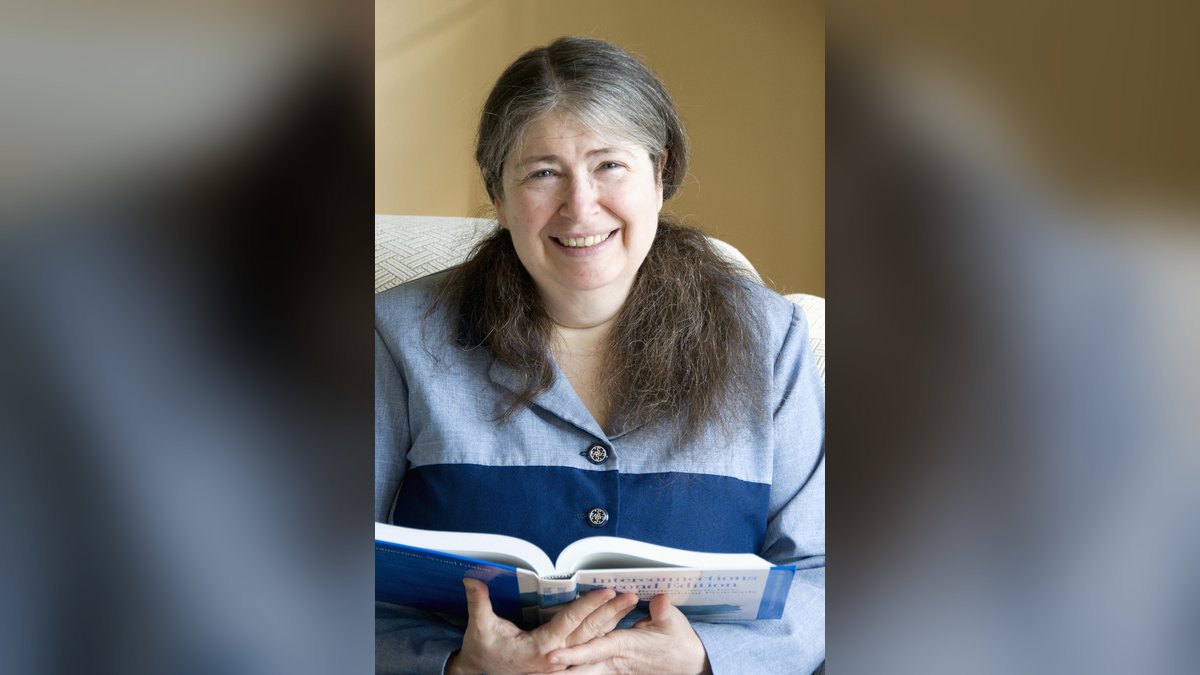
Who is Radia Perlman? She is an American computer programmer and network engineer, a major figure in assembling the foundational networks that enable what we now call the Internet. Perlman is best known for inventing the Spanning Tree Protocol (STP), an innovation crucial to the operation of network bridges while she was working at Digital Equipment Corporation. Her groundbreaking work has profoundly impacted how complex networks self-organize and efficiently move data across vast distances.
Perlman’s contributions span multiple critical areas of network design and standardization. Her innovations were vital in making link-state routing protocols more robust, scalable, and manageable. For instance, she is credited with inventing the Spanning Tree Protocol at Digital Equipment Corporation, and later, she developed the TRILL protocol to improve upon spanning trees, allowing Ethernet to utilize bandwidth optimally. Her influence was recognized globally, leading to her election to the National Academy of Engineering in 2019, and she has received honors including the Internet Hall of Fame in 2014.
This article traces the remarkable career of a pioneer whose work defined modern connectivity. We will explore her early life and education at MIT, follow her pioneering network development at BBN and DEC, examine the invention of the Spanning Tree Protocol (STP), and look at her continued impact through the design of core network protocols and modern industry leadership.
Key Takeaways
- Born in 1951, Perlman attended MIT and earned degrees in Mathematics and Computer Science by 1988.
- She is most famous for inventing the Spanning Tree Protocol (STP) while working at Digital Equipment Corporation (DEC) in 1984.
- Her work defined core networking standards, including the IS-IS protocol and the DECnet IV and V protocols.
- Perlman was recognized with the Internet Hall of Fame (2014) and the National Inventors Hall of Fame (2016).
- Her career spanned major tech firms like BBN, Sun Microsystems, and Intel, specializing in network security.
Radia Perlman at a Glance
| Born | December 18, 1951; Portsmouth, Virginia, US |
|---|---|
| Education | MIT |
| Known for | Network and security protocols; computer books |
| Awards | Internet Hall of Fame; National Inventors Hall of Fame |
| Fields | Computer Science |
| Workplaces | Digital Equipment Corporation; Sun Microsystems; Intel |
| Thesis | Network layer protocols with Byzantine robustness (1988) |
| Doctoral advisor | David D. Clark |
| Citizenship | United States |
| Occupation | Computer scientist; Telecommunications engineer; Mathematician; Software developer |
| Employer | Massachusetts Institute of Technology; BBN Technologies; Sun Microsystems; Dell EMC |
| Field of work | Computer science; Software engineering; Network security |
| Notable work | Spanning Tree Protocol; computer literacy |
| Member of | Association for Computing Machinery (2016–present); National Academy of Engineering (2015–present) |
Early Life and Education at MIT
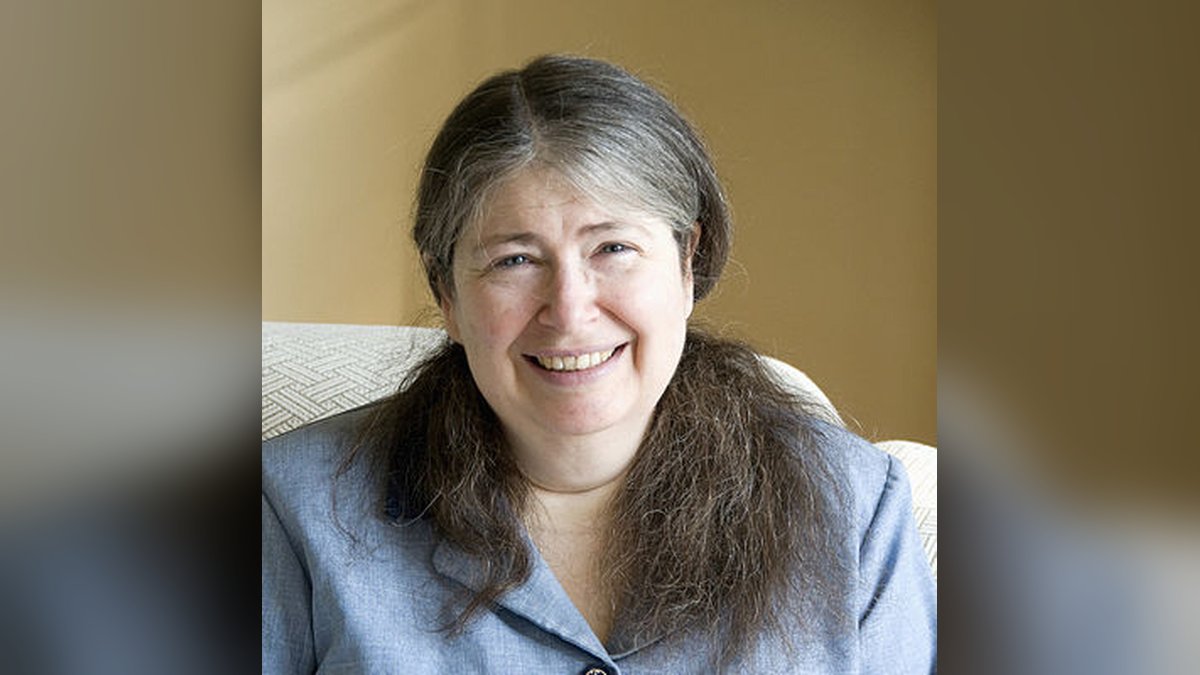
Radia Perlman was born in 1951 in Portsmouth, Virginia. She grew up in Loch Arbour, New Jersey, and was raised in a household where both parents worked as engineers for the US government. Her father worked on radar systems, and her mother, who was trained as a mathematician, worked as a computer programmer. During her formative years, Perlman found that mathematics and science were “effortless and fascinating,” though she was a perfectionist who excelled in other academic areas as well. While she enjoyed playing the piano and the French horn, she did not identify with the stereotype of the “engineer,” noting that she was not a hands-on person and never thought of taking anything apart.
Despite being the top science and math student at her high school, the subject that ultimately redirected her career was a high school programming class. She was the only woman in that class, and later reflected on her initial reluctance, assuming she would either get electrocuted or break something if she attempted to work with hardware. She graduated from Ocean Township High School in 1969.
Her academic journey continued to the Massachusetts Institute of Technology (MIT), where she first encountered programming while taking a physics class. This early exposure led to her first paid professional experience in 1971. She worked part-time as a programmer for the LOGO Lab at the then-MIT Artificial Intelligence Laboratory, where her duties included programming system software such as debuggers. Working under the supervision of Seymour Papert, she helped develop TORTIS, a child-friendly version of the educational robotics language LOGO. In research conducted between 1974 and 1976, young children—some as young as three and a half years old—used a LOGO educational robot called a Turtle. Perlman was described as a pioneer in teaching computer programming to young children.
Following this educational work, she conceived of a new programming language designed to teach even younger children, utilizing specialized input devices. This project was eventually abandoned because she felt that, as the only woman in the environment, she needed to be taken seriously as a “scientist,” and the focus on young children felt embarrassing. However, an MIT Media project later tracked her down, informing her that others had begun a new field called tangible user interface using the remnants of her early concept.
As she progressed through her studies at MIT, Perlman obtained degrees in both Mathematics and Computer Science, earning her degrees in 1988. To pursue her doctoral research, she joined the MIT group at BBN Technologies, where she became involved in designing network protocols. Her doctoral thesis, which focused on routing in environments prone to malicious network failures, formed the basis for much of the work that would later define the field of network security and reliability.
🕒 Key Academic and Professional Milestones
- 1969 — Graduated from Ocean Township High School.
- 1971 — Began first paid professional experience working part-time as a programmer for the LOGO Lab at MIT.
- 1974-1976 — Conducted research using a LOGO educational robot called a Turtle, pioneering early educational programming.
- 1988 — Earned degrees in both Mathematics and Computer Science from MIT.
- Post-1988 — Joined the MIT group at BBN Technologies, focusing on designing network protocols for her doctoral thesis.
Pioneering Network Development at BBN and DEC
After completing her academic work, Perlman began her professional career at Bolt, Beranek, and Newman (BBN), a government contractor specializing in software for network equipment. It was during this tenure that she made a significant impression on a manager at Digital Equipment Corporation (DEC), leading to an offer that brought her to the firm in 1980. It was within the complex environment of DEC that Perlman began tackling some of the most fundamental challenges of early network design. Her early work established her reputation for solving problems with elegant, robust software solutions.
Taming the Network Loops: The Spanning Tree Protocol
The necessity for a reliable, fault-tolerant network became immediately apparent. By 1984, while serving as a consulting engineer at DEC, Perlman was tasked with developing a straightforward protocol to enable network bridges to locate loops within a local area network (LAN). Building bridged networks was inherently difficult because redundant paths—where more than one connection led to the same destination—could cause a catastrophic failure. These loops could result in the flooding of Ethernet frames, preventing them from reaching their intended destination.
Perlman’s solution, the Spanning Tree Protocol (STP), utilized a key fact about network hardware: that bridges possessed unique 48-bit MAC addresses. She devised a protocol allowing bridges within the LAN to communicate with one another. The algorithm designated a single root bridge, and every other bridge mapped the network to determine the shortest path to that root, effectively deactivating all other redundant paths. This process ensures that the network maintains a single, active path between any pair of nodes, providing automatic backup paths should an active link fail. STP remains fundamental to the operation of network bridges in many smaller networks.
Pioneering Core Network Protocols
Perlman’s contributions extended far beyond bridging. She served as the principal designer for critical protocols, including the DECnet IV and V protocols, and IS-IS, which is noted as the OSI equivalent of OSPF. At DEC, she also played a pivotal role in overseeing the transition of the network’s routing methods, moving the system from distance vector to link-state routing protocols. Link-state protocols offered a crucial advantage: the ability to adapt to changes in the network topology much faster. Furthermore, while working on the DECnet project, Perlman helped improve the “intermediate-system to intermediate-system” routing protocol, resulting in the robust IS-IS, which was capable of routing not only the Internet Protocol (IP) but also AppleTalk and the Internetwork Packet Exchange (IPX) protocol.
📌 Key Network Protocols Developed or Improved
- Spanning Tree Protocol (STP): Prevents network loops in LANs.
- DECnet IV and V protocols: Critical early network protocols.
- IS-IS: A robust link-state routing protocol.
- Link-state routing: Offers faster adaptation to topology changes.
The Invention of the Spanning Tree Protocol (STP)
The challenge of building robust, large-scale local area networks (LANs) was formidable, particularly when relying on network bridges. Before the invention of the Spanning Tree Protocol, expanding bridged networks was fraught with peril. The basic issue was the loop: if more than one path existed between two points in the network, a bridge could inadvertently forward a data frame in multiple directions. This redundancy, while desirable in theory, was disastrous in practice, causing Ethernet frames to fail to reach their destination or, worse, flooding the entire network until it collapsed.
It was during her tenure as a consulting engineer at DEC in 1984 that Radia Perlman was tasked with developing a solution. She needed a straightforward protocol capable of enabling network bridges to reliably locate these destructive loops. Crucially, this protocol could not be memory-intensive; it had to operate using a constant amount of memory on the network devices, regardless of how vast the underlying network might become. Perlman addressed the problem by building a communication mechanism between the bridges within the LAN, leveraging the fact that these bridges possessed unique 48-bit MAC addresses.
📘 Root Bridge
The Root Bridge is a single designated bridge within the network that all other bridges communicate with to map the network topology and determine the single, shortest path back to it.
The Logic of the Root Bridge
The resulting algorithm was ingenious in its simplicity and power. It mandated that all bridges within the network communicate with one another to designate a single root bridge. Once this root was established, every other bridge could map the network topology and determine the single, shortest path back to that root bridge. This process allowed the protocol to systematically deactivate all other redundant paths, effectively pruning the network down to a singular, stable tree structure. This conceptual framework provided the necessary stability for modern networking.
While the protocol proved revolutionary, Perlman herself harbored concerns. She noted that the Spanning Tree Protocol could take approximately a minute to react when changes occurred in the network topology—a window of time during which a loop could potentially bring down the entire system. Despite this acknowledged delay, the protocol was eventually standardized as 802.1d by the Institute of Electrical and Electronics Engineers (IEEE). Perlman stated that the benefits of the protocol were so substantial that users “don’t have to worry about topology” when changing the way a LAN is connected. Although she later criticized some changes made during the standardization process, the introduction of this protocol fundamentally solved the problem of network instability, cementing its role as a cornerstone of modern connectivity.
Designing Core Network Protocols (DECnet and IS-IS)
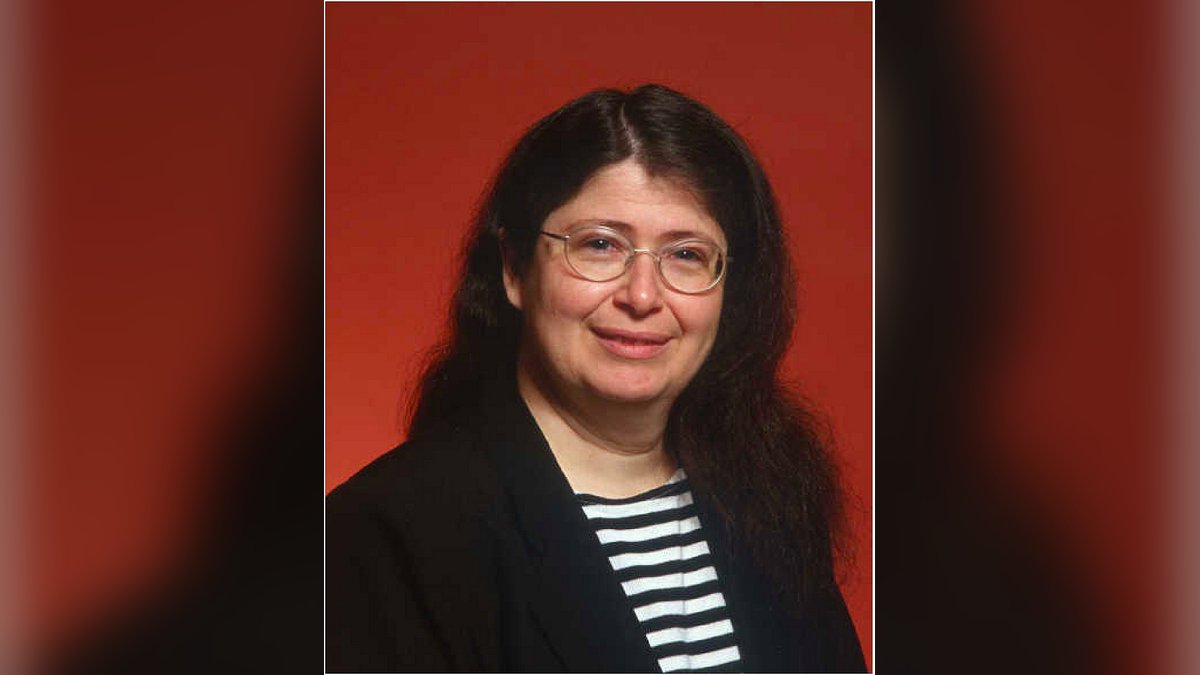
If the Spanning Tree Protocol defined the robust local area network, it was the design of core routing protocols that defined the global internet. Perlman’s work expanded far beyond bridging, tackling the monumental challenge of building reliable, large-scale networks. She served as the principal designer of the DECnet IV and DECnet V protocols, establishing foundational elements for corporate connectivity. This expertise continued with her major contributions to the Connectionless Network Protocol (CLNP), addressing the complex needs of data transfer across diverse computing environments.
At Digital Equipment Corporation (DEC), Perlman was instrumental in guiding the industry through a critical architectural shift: the evolution from distance vector to link-state routing protocols. This transition was vital because link-state methods offered the crucial advantage of adapting to changes in network topology much faster than their predecessors. Working within this framework, Perlman helped improve the “intermediate-system to intermediate-system” routing protocol, resulting in the development of IS-IS. This protocol stands as the OSI equivalent of OSPF and was crucial because it allowed the network to route multiple major protocols simultaneously, including the Internet Protocol (IP), AppleTalk, and the Internetwork Packet Exchange (IPX) protocol. Furthermore, her research on fault-tolerant broadcasting of routing information provided the foundation relied upon by the Open Shortest Path First (OSPF) protocol.
Standardization and Global Routing
Perlman’s influence extended into the global standardization bodies. In collaboration with Yakov Rekhter, she developed the OSI Inter-Domain Routing Protocol (IDRP), which is the OSI equivalent of BGP. This work underscored her role not merely as an inventor, but as a key architect in defining how interconnected, massive networks would function reliably. Later, when standardizing her work on TRILL—a combined bridging and routing protocol intended to supersede STP—Perlman even included a version 2 of the poem “Algorhyme.”
Following her tenure at DEC, Perlman continued to push the boundaries of network design. When she worked as a network engineer for Sun Microsystems (now Oracle), she specialized further in network and security protocols, accumulating more than 50 patents. Her career trajectory demonstrates a consistent pattern: identifying a systemic weakness in network architecture and providing an elegant, resilient protocol solution that became an industry standard.
📊 Key Network Protocols Developed or Improved by Perlman
| Protocol | Function/Significance | Related Standard/Equivalent |
|---|---|---|
| DECnet IV and DECnet V | Established foundational elements for corporate connectivity. | N/A |
| CLNP | Addressed complex needs of data transfer across diverse computing environments. | N/A |
| IS-IS | Improved intermediate-system to intermediate-system routing; allowed routing multiple major protocols simultaneously. | OSI equivalent of OSPF |
| IDRP | Developed with Yakov Rekhter; defines how interconnected, massive networks function reliably. | OSI equivalent of BGP |
| TRILL | A combined bridging and routing protocol intended to supersede STP. | N/A |
Modern Innovations and Industry Leadership
Throughout her career, Radia Perlman has consistently extended her influence far beyond the foundational protocols that first established modern local area networks. Her expertise has remained critically relevant in the evolution of global routing standards. She was the principal designer of the DECnet IV and V protocols and contributed significantly to the Connectionless Network Protocol (CLNP). Furthermore, she was responsible for the design of IS-IS, which serves as the OSI equivalent of the Open Shortest Path First (OSPF) protocol. Her collaborative efforts with Yakov Rekhter were pivotal in developing global routing standards, including the OSI Inter-Domain Routing Protocol (IDRP), the OSI equivalent of BGP.
The advanced nature of her work at Digital Equipment Corporation (DEC) saw her overseeing the critical architectural shift from distance vector to link-state routing protocols. This transition was vital because link-state protocols offered the advantage of adapting to changes in network topology more rapidly. While DEC’s link-state protocol was only second to the advanced research of the Advanced Research Projects Agency Network (ARPANET), Perlman’s ongoing refinement of routing mechanisms proved essential. Specifically, she helped improve the “intermediate-system to intermediate-system” routing protocol, IS-IS, enabling it to successfully route not only the Internet Protocol (IP) but also the AppleTalk and the Internetwork Packet Exchange (IPX) protocols. Moreover, her research into fault-tolerant broadcasting of routing information formed a basis for the OSPF protocol.
Modern Protocols and Industry Leadership
In subsequent roles, Perlman continued to shape the industry’s technological trajectory. When she worked as a network engineer for Sun Microsystems (now Oracle), she specialized deeply in network and security protocols. During her tenure at Oracle, she amassed an impressive collection of more than 50 patents. Her ongoing dedication to advancing connectivity is evident in her work standardizing TRILL. This protocol is a combined bridging and routing solution proposed to supersede the older Spanning Tree Protocol (STP). When standardizing this work, she even included a Version 2 of the poem “Algorhyme,” a nod to her co-authorship with Ray Perlner on the text Network Security: Private Communication in a Public World.
Her influence remains a continuous force, extending to major firms like Dell EMC. Perlman’s body of work—spanning from the early development of complex routing standards to modern, robust solutions like TRILL—solidifies her status as a guiding intellectual force. Her continued involvement ensures that the protocols underpinning global data transfer remain resilient, efficient, and capable of handling the complexities of modern, massive-scale connectivity.
Recognition and Enduring Impact on Computer Science
Radia Perlman’s influence on computer science extends far beyond the foundational protocols she helped pioneer; it represents a continuous force that has shaped the very architecture of global connectivity. From her seminal work defining robust local area networks to guiding the industry through critical architectural shifts in core routing, her contributions established the bedrock upon which the modern internet operates. Her work is characterized by an ingenious simplicity paired with profound power, enabling large-scale, fault-tolerant communication systems that were previously considered insurmountable challenges for engineers.
A Legacy of Recognition
The depth and breadth of Perlman’s impact have been reflected in an extraordinary accumulation of accolades from the highest echelons of technology and academia. She is recognized not merely as a contributor, but as a defining figure in the field. Her professional achievements have garnered multiple prestigious honors, including the Internet Hall of Fame induction in 2014 and the National Inventors Hall of Fame induction in 2016. Her specialized expertise in network routing and security protocols earned her the designation of IEEE Fellow in 2008.
The industry’s recognition of her pioneering spirit is documented through a remarkable list of awards. She received the USENIX Lifetime Achievement Award in 2006, and in 2003, she was named Inventor of the year by the Silicon Valley Intellectual Property Law Association. Furthermore, her commitment to innovation was highlighted by the first recipient of the Anita Borg Institute Women of Vision Award for Innovation in 2005. Her ongoing relevance was noted by Data Communications magazine, which named her one of the 20 most influential people in the industry in both the 20th anniversary issue (January 15, 1992) and the 25th anniversary issue (January 15, 1997)—a distinction unmatched by any other individual.
Her standing within the academic and professional communities is equally profound. She has been named a Fellow of the Association for Computing Machinery, a distinction she achieved in the class of 2016. Moreover, her intellectual authority is evidenced by her membership in the National Academy of Engineering, a role she has held since 2015. These honors, alongside the SIGCOMM Award in 2010 and the Honorary Doctorate from the Royal Institute of Technology on June 28, 2000, solidify her status as a foundational architect of modern digital infrastructure.
Frequently Asked Questions About Radia Perlman
What is Radia Perlman most famous for inventing?
She is most famous for inventing the Spanning Tree Protocol (STP). Developed while at Digital Equipment Corporation, STP is fundamental to network bridges. It prevents catastrophic failures by ensuring that in a Local Area Network (LAN), only a single, active path remains between any two nodes.
What companies has Radia Perlman worked for throughout her career?
Her career included roles at Digital Equipment Corporation (DEC), Bolt, Beranek, and Newman (BBN), Sun Microsystems, Intel, and Dell EMC. She also worked at Massachusetts Institute of Technology (MIT), contributing to network and security protocols across these organizations.
When was Radia Perlman born and what is her nationality?
Radia Joy Perlman was born on December 18, 1951. She is an American citizen. She is recognized as a major figure in assembling the technology that enabled the modern Internet, making significant contributions to network design.
What is the significance of the Spanning Tree Protocol (STP)?
STP is crucial for reliable network operation because it solves the problem of network loops. It ensures that in a Local Area Network (LAN) with redundant paths, only a single, active path remains between any two nodes. This prevents data frame flooding, which could otherwise cause the entire network to collapse.
Has Radia Perlman received any major industry awards?
Yes, she has received several major honors. She was elected to the Internet Hall of Fame in 2014 and the National Inventors Hall of Fame in 2016. She also received lifetime achievement awards from USENIX in 2006 and from the Association for Computing Machinery’s SIGCOMM in 2010.
Final Thoughts: The Legacy of Radia Perlman
Radia Perlman’s career trajectory illustrates a rare synthesis of theoretical mathematics and practical engineering, culminating in foundational protocols that underpin nearly every modern digital interaction. From her early work in teaching computer programming to young children to her advanced research at BBN Technologies, her commitment remained rooted in building robust, reliable systems. Her most visible triumph, the Spanning Tree Protocol, solved the critical problem of network loops in local area networks by designating a single root bridge and systematically deactivating redundant paths, a stability mechanism that remains fundamental to network bridge operation. Later, her principal designs for core protocols, including IS-IS, advanced the field by facilitating the shift to link-state routing, allowing networks to adapt to changes in topology with increasing speed.
Perlman’s influence extends across multiple domains, evidenced by her service as a designer for DECnet and her continued involvement in advancing network security and reliability. She has been honored with recognition such as the Internet Hall of Fame and the National Inventors Hall of Fame. Her work establishes a legacy not merely of invention, but of architectural thinking—of creating elegant, resilient structures capable of supporting exponential growth in data exchange. If the internet is a vast, interconnected web, Perlman provided many of the crucial structural supports that keep it from collapsing into chaos.
Her enduring impact solidifies her position as a pioneer whose protocols remain integral to the functioning of computer science and telecommunications engineering today, ensuring that the next generation of connected devices can communicate seamlessly, reliably, and at scale.
Sources and Further Reading
- Radia Perlman — Wikipedia (text available under CC BY-SA 4.0)
- Radia Perlman Spanning Tree Protocol — lemelson.mit.edu
- Radia Perlman: Don’t Call Me the Mother of the Internet — theatlantic.com
- Dr. Radia J. Perlman — nae.edu
- 10.1.1.99.8166 — citeseerx.ist.psu.edu