Read this article in: Portuguese (Português) · Spanish (Español)
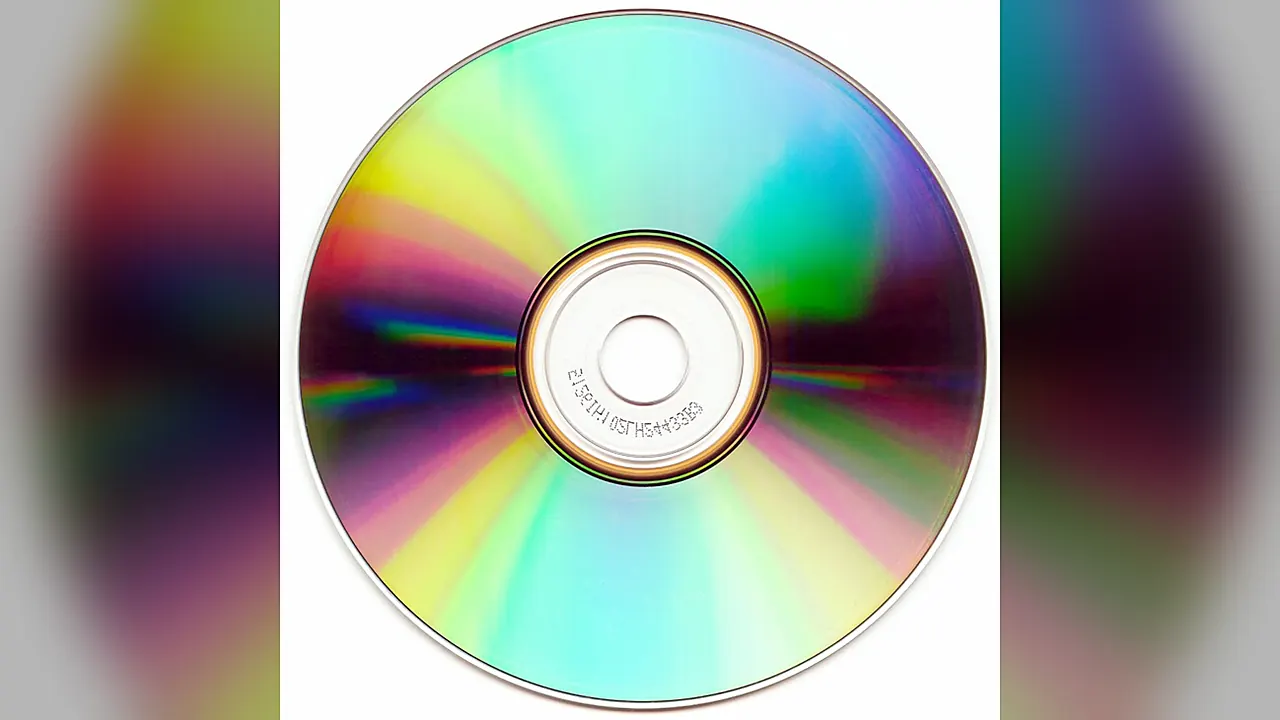
The CD (Compact Disc) is a revolutionary optical data storage format, and its development was the result of a partnership between technology giants: Philips and Sony. These two names were responsible for co-creating the standard that would forever change how audio and data were consumed. First released in Japan in October 1982, the CD quickly established itself as the successor to the LaserDisc, promising unprecedented digital audio quality. Initially focused on audio storage, it quickly demonstrated a versatility that went far beyond music albums.
The relevance of the CD is undeniable and is marked by concrete impact data. With a standard diameter of 120 mm, it was designed to store up to approximately 650 MiB of data. In a short time, the format became a sales phenomenon: around 1991, the CD surpassed vinyl records and cassette tapes in sales in the United States. Its dominance was so profound that, around the year 2000, CDs accounted for an impressive 92.3% of the music market in the US, solidifying its position as the primary physical format of the album era.
In this article, we will dive into the complete history of this optical disc that redefined pop culture and information storage. We will explore everything from the Birth of the CD: pioneers and timeline, to how it revolutionized audio storage. We will also analyze the physical architecture and operation of the format, investigate its evolution to data and multimedia (such as the CD-ROM), and finally, discuss the CD’s dominance and its legacy in the digital age, tracing the path to current streaming formats.
Key Points
- Developed by Philips and Sony, the CD emerged to overcome the wear and noise limitations of analog formats.
- The Red Book standard established 16-bit PCM encoding at 44.1 kHz, ensuring high digital sound fidelity.
- The standardized physical dimensions are 120 mm in diameter and 1.2 mm in thickness.
- Audio capacity ranges between 74 and 99 minutes, making it a robust and durable medium.
- The format is extremely versatile, expanding to data (CD-ROM), graphics (CD+G), and advanced formats (DVD).
CD in Summary
| Media Type | Optical disc |
|---|---|
| Capacity | 650 – 870 MiB data; 74 – 99 minutes audio |
| Read Mechanism | 780 nm laser diode |
| Write Mechanism | 780 nm laser diode |
| Standard | Rainbow Books |
| Developer | Philips; Sony |
| Dimensions | Diameter: 120 mm (4.7 in); Thickness: 1.2 mm (0.047 in) |
| Use | Audio storage; Computer data storage |
| Extension of | LaserDisc |
| Extension to | CD-RW; DVD; Super Audio CD |
| Release | JP: October 1982; NA/EU: March 1983 |
Birth of the CD: pioneers and timeline

The advent of the Compact Disc (CD) was not an isolated event, but rather the peak of an intense and strategic technological partnership. Faced with the inherent limitations of predominant analog formats—the physical wear of vinyl and the magnetic degradation of cassette tapes—the audio industry felt an urgent need for a superior, durable, and high-fidelity storage medium. It was in this context of seeking a sonic revolution that giants like Philips and Sony joined forces to develop an optical disc that promised to transform the music experience and data storage.
The Birth of the Digital Standard
The theoretical milestone for this new format was established as early as 1980, when the creators themselves, Sony and Philips, documented the logical format for digital audio. This official standard was named Red Book CD-DA (Compact Disc Digital Audio), referencing the color of its technical document cover. The Red Book established the crucial technical specifications that defined the CD as we know it. The format is based on a two-channel PCM (Pulse Code Modulation) encoding, with a resolution of 16 bits and a sampling rate of 44.1 kHz per channel. This digital architecture guaranteed a standardized sound quality that significantly surpassed the noise and quality loss of previous formats.
Despite the foundation being high-fidelity audio, the pioneers foresaw the disc’s potential for expansion. The standard was designed to be a versatile medium, extending from the previous format, the LaserDisc, and paving the way for future evolutions such as CD-RW, DVD, and Super Audio CD. The physical dimensions of the disc were set at a diameter of 120 mm and a thickness of 1.2 mm, ensuring the portability and durability required for a new market standard.
Timeline and Release
The development and commercialization of the format followed a rigorous schedule. The CD was launched in Japan in October 1982, and its release for the North American and European regions occurred in March 1983. The initial success was immediate, positioning the optical disc as the definitive replacement for analog recording methods. In addition to standard audio, the Red Book also anticipated functional extensions, such as CD-Text, which allowed for the storage of textual information (like album or artist name) directly on the disc, and Compact Disc + Graphics (CD+G), which added graphic data, initially used to display lyrics in karaoke machines.
In summary, the CD represented a quantum leap in storage technology. It wasn’t just an improvement in sound quality, but the creation of an open and robust standard capable of carrying multimedia data and information, solidifying itself as one of the most influential media formats in the history of digital technology—an advancement that makes us reflect on the next leaps, such as the future of quantum computers.
🕒 CD Timeline: From Concept to Release
- 1980 — Sony and Philips document the logical format for digital audio, establishing the Red Book CD-DA standard.
- October 1982 — CD release in Japan.
- March 1983 — CD release in North America and Europe.
How the optical disc revolutionized audio storage
Before the Compact Disc (CD), high-fidelity audio was an engineering challenge. Formats like vinyl, despite their rich history and characteristic sound, had inherent limitations in physical recording, being susceptible to noise, wear, and degradation over time. Similarly, magnetic tapes, while more portable, tended to suffer from background noise and gradual loss of sound quality. The major revolutionary leap that the CD provided was the migration from analog to digital audio, largely solving the problem of durability and sound fidelity.
The leap to lossless digital audio
The key to this revolution was the ability to store sound in uncompressed digital format. While previous formats were limited by the physics of the medium, the CD, by employing high sampling rates, ensured stable playback quality. The prototypes and the commercial standard defined rigorous technical parameters, such as a sampling rate of 44.1 kHz and a resolution of 16 bits. These numbers represent the gold standard in digital audio, capturing sonic details with unprecedented precision for the consumer. This technology allowed audio to be replicated in its original digital form, minimizing the losses and wear that were hallmarks of analog media.
In practical terms, this transition meant a substantial increase in the capacity and stability of the musical experience. The optical disc, with its dimensions of 120 mm in diameter and 1.2 mm thick, began to offer audio capacity ranging from 74 to 99 minutes, depending on the content—a considerable increase compared to the limits imposed by previous formats. This high capacity, combined with the durability of the optical medium, quickly established the CD as the benchmark standard for high-fidelity music consumption.
In summary, the CD was not just a new casing; it was a paradigm shift. It transformed audio storage from a process susceptible to physical degradation into a robust and highly accurate digital archive. This combination of fidelity, durability, and capacity revolutionized not only the phonograph industry but also the way pop culture consumed and preserved music on a global scale.
📊 Audio Storage Medium Comparison
| Medium | Audio Nature | Main Limitations |
|---|---|---|
| Vinyl | Analog | Susceptible to noise, wear, and degradation |
| Magnetic Tapes | Analog | Tendency toward background noise and gradual quality loss |
| CD (Optical Disc) | Digital | High fidelity and durability, minimizing losses |
The physical architecture and function of the format
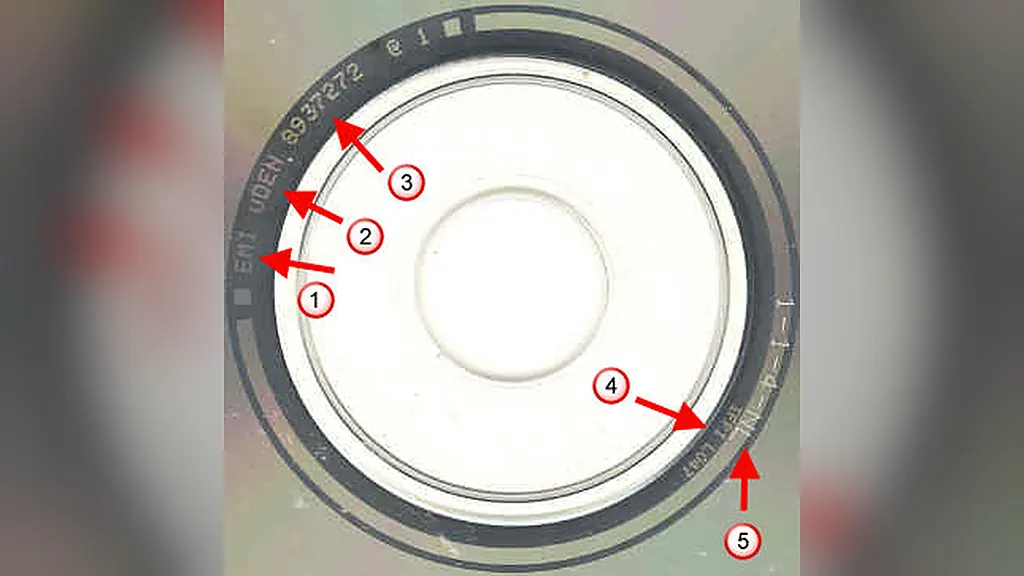
The Compact Disc (CD) is a notable example of optical engineering, configured as an optical disc (optical disc) made of polycarbonate, measuring 1.2 millimeters thick and 120 mm in diameter. Its physical structure is complex and multi-layered, composed of a central core, a data programming area (where the data resides), and an outer ring. To ensure reading and durability, a thin reflective layer, made of aluminum or, more rarely, gold, is applied to the surface. This metallic layer is, in turn, protected by a lacquer film where the label is printed.
The physical storage of data
Digital data on the CD is not recorded as physical grooves, but rather as tiny indentations called pits (wells), etched into a spiral track. The flat areas between these pits are called lands. This spiral of information is meticulously molded onto the top layer of the polycarbonate. A fundamental characteristic of the format is how the recording unfolds: the data starts at the center of the disc and spirals outward. This spiral arrangement allows the disc’s rotational speed to gradually decrease during playback, from beginning to end.
📘 Pits and Lands
Digital data is not recorded as physical grooves, but rather as tiny indentations called pits and the flat areas between them, called lands. This combination of indentations and flat areas forms the information spiral on the disc.
How the disc is read
The reading mechanism is highly precise. The CD is read by a semiconductor laser with a wavelength of 780 nm, which is focused on the disc’s surface. When the laser strikes the surface, it detects height variations between the pits and the lands. The reading principle is based on light interference: the laser reflects light back to the sensor. The height difference between the pit and the land causes a deviation in how the light is reflected, generating a modulated electrical signal that the player can decode. For this reading to occur continuously, the CD player spins the disc at a constant scanning speed, generally between 1.2 and 1.4 m/s.
Encoding and Capacity
It is important to note that the pits and lands do not directly represent binary bits (0s and 1s). Instead, a complex encoding, such as inverted non-return-to-zero encoding, is used. The encoding techniques, defined in the standard known as the Red Book, are responsible for transforming the physical variations into a usable data signal. This technical sophistication allows a standard CD-ROM to store a data capacity ranging between 650 MiB and 870 MiB, which, in audio terms, equates to approximately 74 to 99 minutes of music. This encoding and laser reading system established a robust standard, proving the format’s ability to withstand variations and contaminants on the reading surface.
Beyond Audio: The Evolution to Data and Multimedia

Although the Compact Disc (CD) was born as a revolutionary vehicle for digital audio, its genius lies precisely in its ability to transcend music. The format’s evolution proved that it was, above all, a powerful data storage medium. This expansion was catalyzed by the CD-ROM standard. In the early years, the CD was dedicated exclusively to sound, but the release of the Yellow Book standard, established by Sony and Philips in 1988, allowed the disc to be adapted to carry computer data without altering its original physical format. This was a technical milestone that not only maintained consumer familiarity but also ensured the disc could be read by CD-ROM drives.
Versatility Beyond Audio
The ability to store data was quickly explored. The CD-ROM is a non-volatile medium that, in its time, offered storage capacities comparable to many personal computer hard drives. In addition to general file storage, the format was adapted for specialized multimedia functions. The CD-Text standard, for example, extended the Red Book specification to allow for the storage of additional textual information, such as album and artist names, using the introduction area or the R to W subcode channels. Similarly, the Compact Disc + Graphics (CD+G) format used the R to W channels to incorporate graphic data, most notably for displaying karaoke lyrics. An enhanced version, the CD+Extended Graphics (CD+EG or CD+XG), improved this functionality, allowing for the display of both text and video.
In terms of data engineering, the Yellow Book standard defined the physical structure of the disc and its sectors. For example, in a Mode 1 CD-ROM sector, 2,048 bytes were available for data, while the other 304 bytes were dedicated to crucial synchronization, detection, and error correction functions. Concurrently, the format became more flexible: recordable (CD-R) and rewritable (CD-RW) discs were developed, extending the lifespan of the medium. These adaptations ensured that the CD could be used not only for reading but also for writing and rewriting information.
Audio and Data Advancements
The expansion of the CD was not limited to data. In the field of high-fidelity audio, the format also evolved. In 1999, Sony and Philips launched the Super Audio CD (SACD), a read-only audio disc designed to offer digital playback with fidelity superior to the conventional CD. The SACD, following the Scarlet Book standard, was notable for its ability to create hybrid discs. These discs combined the SACD audio layer with a standard CD-DA layer, ensuring backward compatibility and allowing the most advanced content to be accessible on common CD players.
In summary, the CD proved to be an extraordinarily adaptable medium. It was extended from the LaserDisc to advanced formats like the DVD and the SACD itself, confirming its status not merely as a container for music, but as a paradigm of multimedia optical data storage; it is worth remembering, for example, the evolution of formats, such as how the DVD changed cinema.
📌 CD Versatility: Beyond Sound
- CD-ROM: Allowed for loading computer data without changing the physical format.
- CD-Text: Added the capacity to store extra textual information.
- CD+Graphics (CD+G): Incorporated graphic data, visible in karaoke.
- CD+Extended Graphics (CD+EG): Improved display, supporting text and video.
- CD-R and CD-RW: Developed recordable and rewritable discs, increasing lifespan.
The CD’s Dominance and Its Legacy in the Digital Age
The CD’s Dominance and Its Legacy in the Digital Age
The Compact Disc (CD) didn’t just arrive to replace previous formats; it established a new gold standard for the music experience, becoming the dominant format of pop culture for decades. Its peak popularity occurred between the late 1980s and the early 1990s, a period when the technology reached the height of its global acceptance and adoption. During this time, the CD was not just a high-fidelity audio medium, but a symbol of modernity and sonic sophistication. The sound stability, ease of playback, and ability to store large amounts of data solidified it as the preferred vehicle for music consumption, cementing the physical album format as the main pillar of the industry.
The Peak of Physical Consumption
The commercial trajectory of the CD was impressive. It reached unprecedented sales success levels, establishing itself as the best-selling medium in various markets. In a milestone illustrating its power, in 2000, the CD still represented a massive share of the American market, with estimated sales success at 92.3%. This figure not only attests to the format’s popularity but also to the resilience of the physical album-based industry. For listeners of the time, owning a CD meant guaranteeing a complete auditory experience, where the entire album was consumed in the intended order by the artists—a concept that shaped how music was valued and collected, a panorama that contrasts with more recent formats, such as understanding the myths and truths of the OGG format.
However, the life cycle of any dominant technology is marked by inevitable transformations. The peak of success was gradually confronted by the emergence of new distribution technologies. The turning point came with the rise of compressed digital formats, notably the MP3. Although the CD remained a product of very high quality, the MP3, and later streaming, challenged the physical necessity and the concept of ownership. Suddenly, access to vast musical archives no longer depended on a physical object, but rather on an internet connection.
The impact of streaming and digital downloading forced a complete redefinition of the music business model. CDs, once synonymous with novelty and mass consumption, saw their role as the “primary vehicle” drastically diminish. Nevertheless, the CD’s legacy persists in a fundamental way. Even with the convenience of streaming, the CD remained the format that defined the era of the physical album. It not only allowed for evolution into multimedia formats—as demonstrated by specifications like the Green Book, which defined interactive formats for CD-i players—but also established the standard of quality and the aesthetic of the album that, even today, continues to be celebrated by collectors and music enthusiasts.
Glossary
- Red Book CD-DA: The technical standard that established the specifications for digital audio, defining the quality and encoding of the CD.
- PCM (Pulse Code Modulation): A digital encoding method that converts an analog audio signal into binary data for storage.
- Pits and Lands: These are the tiny depressions (pits) and flat areas (lands) on the disc surface where digital data is physically stored.
- CD-RW: A recordable and rewritable disc version, which allows for erasing and recording information in multiple sessions.
Frequently Asked Questions
What is the functional difference between CD-R, CD-RW, and CD-ROM?
The main difference lies in the recording capability. The CD-ROM is a read-only disc, containing fixed data. The CD-R (Recordable), on the other hand, allows data to be recorded once. The CD-RW (Rewritable) is the most flexible, as it allows information to be erased and recorded multiple times, making it ideal for backups and testing.
Is the CD still used today, or has it been completely replaced by streaming?
Although streaming has transformed music consumption, the CD maintains relevance. It is still widely used in high-fidelity audio niches and, crucially, as a robust and reliable medium for storing multimedia data, retaining its technical and collectible value.
What is the maximum data capacity of a standard CD?
A standard CD has a data storage capacity that ranges between 650 MiB and 870 MiB. This capacity was established by the Red Book standard and is sufficient to store a significant amount of textual information and media files.
What is the Red Book standard, and why is it important for digital audio?
The Red Book is the fundamental technical standard that defined the specifications for CD digital audio. It is crucial because it established PCM encoding, 16-bit resolution, and a sampling rate of 44.1 kHz, ensuring standardized sound quality superior to previous analog formats.
Is the CD compatible with all types of music players?
Compatibility depends on the type of content. Standard audio players work well with digital audio. However, if the disc contains data (like a CD-ROM), you will need a drive that supports data mode. The technology is robust, but the player must be compatible with the specific disc format.
Conclusion
The Compact Disc transcended the function of a mere music carrier; it represented a true quantum leap in the history of information technology. By migrating audio from the physical, wear-prone domain of vinyl and magnetic tapes to digital, the CD established a new paradigm of fidelity and durability. The adoption of rigorous parameters, such as the 44.1 kHz sampling rate and 16-bit resolution, guaranteed standardized and unprecedented sound quality, transforming music consumption from a vulnerable process into a robust and highly precise archive. It was this combination of optical engineering—read by a 780 nm laser on a 120 mm diameter disc—that solidified the format.
More than a playback mechanism, the CD was an engine of innovation. The Red Book standard not only defined digital audio but also anticipated multimedia expansion, incorporating features like CD-Text and CD+G, paving the way for DVDs and complex data storage. The collaboration between giants like Sony and Philips not only solved the challenge of analog degradation but also created an open and extremely versatile media model. The success of the CD, launched in 1982, proves that the true power of a technological format lies in its capacity for adaptive architecture.
Thus, the CD is not merely a physical polycarbonate object, but a landmark that redefined the relationship between art and its medium of transmission. By understanding the depth of this revolution, you prepare to analyze how technological standards shape, and continue to shape, our digital culture.