
Read this article in: Portuguese (Português) · Spanish (Español)
When discussing high-performance hardware pioneering, the NVIDIA TITAN represents a historical milestone in the evolution of Graphics Processing Units (GPUs). This line of video cards was developed by NVIDIA and branched into various generations of powerful models, such as the GTX Titan (released in 2013), the GTX Titan Black (2014), the Titan X (2015), and later, the Titan RTX (2018). The TITAN was not just a component of brute force; it symbolized the transition of GPUs from mere graphics accelerators to true computing platforms, paving the way for advanced applications in artificial intelligence and supercomputing that define the current market.
The relevance of the TITAN transcends its lifecycle; it is intrinsically linked to NVIDIA’s trajectory of dominance in the semiconductor sector. The evolution of these cards, which covered the period from 2013 to 2018, is a reflection of the company’s own transformation. Since its founding in 1993, and with the development of technologies like CUDA, NVIDIA not only maintained its leadership status but expanded its scope. In a phase of exponential growth, in an exercise concluded in 2026, the company already reported a revenue of US$ 215.9 billion and employed approximately 42,000 people, confirming the monumental impact of its innovations.
In this article, we will delve deep into the TITAN’s legacy. We will cover everything from an overview of its positioning and history to a detailed analysis of its architecture and technical specifications. In addition to reviewing the performance and applications of the hardware in professional computing, we will conduct a meticulous comparison between the different generations, showing how the TITAN paved the way for the cutting-edge systems that today power Artificial Intelligence and the global high-performance market.
Key Points
- The TITAN line (2013-2018) was a milestone of elite GPUs, establishing a performance standard beyond recreational use.
- The TITAN was fundamental to High-Performance Computing (HPC) and the first applications of Artificial Intelligence (AI).
- Its strength lies in massive parallel processing, enabled by the CUDA platform, which executes calculations simultaneously.
- The DGX-1 system demonstrated this efficiency, reducing model training time from six days to only two hours.
- The TITAN’s legacy paved the way for supercomputing and the modern AI ecosystem, as seen in DGX platforms.
Overview of the NVIDIA TITAN: Positioning and History
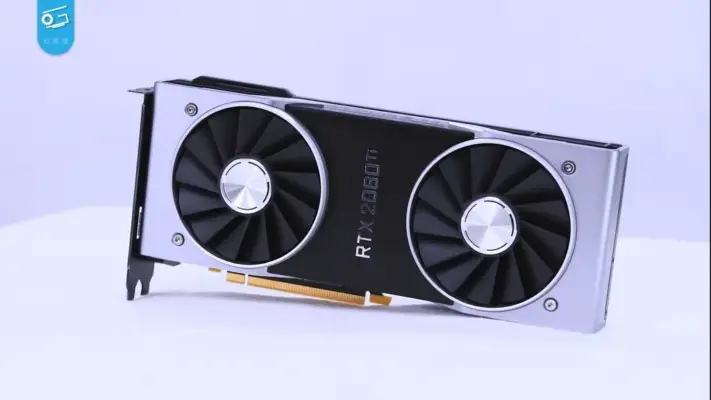
The NVIDIA TITAN line represents a fundamental chapter in the history of cutting-edge hardware, establishing a performance standard that transcended mere recreational use. Between 2013 and 2018, TITAN models—including variants like the GTX Titan, Titan X, and the professional Titan V—established themselves in the market as elite graphics processing units (GPUs). Its positioning was clear: it wasn’t just an upgrade for gaming enthusiasts, but a high-capacity work tool, designed to tackle the growing challenges of high-performance computing (HPC) and early artificial intelligence (AI) applications.
The Technological Evolution Behind TITAN
The TITAN’s lifecycle coincided with an intense and accelerated architectural evolution at NVIDIA. The line’s models were built on robust foundations, leveraging advances such as the Kepler, Pascal, Volta, and Turing architectures. This progression not only boosted raw performance but also diversified the scope of application. While previous years had already introduced technologies like SLI, which allowed for the use of multiple GPUs, the TITAN took this parallel processing capability to an unprecedented level of demand. The hardware therefore needed to be able to fluidly switch between the most complex graphical requirements and the intensive mathematical calculations demanded by science and engineering.
The role of the TITAN was to be the convergence point between high-end consumer use and the professional environment. The inclusion of models like the Titan V signaled this duality, dedicating processing power to specific workloads in data centers and supercomputing—areas that would become crucial to the future of AI. For the high-end consumer, the TITAN meant access to the most advanced processing power available at the time, ensuring the equipment was ready for complex simulations and real-time rendering demands.
In summary, the TITAN line was not just a series of graphics cards; it was an indicator of NVIDIA’s maturity in expanding the concept of the GPU. It demonstrated, during a critical period of technological development (2013-2018), that graphical processing power could be a central engine, not only for entertainment but also for scientific research, data modeling, and what would become the modern artificial intelligence ecosystem. Thus, the TITAN established itself as a power landmark, paving the way for the supercomputing systems and data centers that define computing in the 21st century.
In-Depth Architecture and Technical Specifications

| Company Type | Publicly Traded Company |
|---|---|
| Headquarters | Santa Clara, California, United States |
| Founding Date | April 5, 1993 |
| Primary Activities | Semiconductors; Artificial intelligence; Hardware; Computing platforms |
| Products (GPUs) | GeForce, RTX, and Quadro |
| Products (CPUs/Units) | Grace; BlueField; Tegra and Drive; DGX; CUDA |
| Services/Platforms | GeForce Now; Omniverse; DGX Cloud; Nvidia AI Enterprise |
| Assets (2026) | US$ 206.8 billion |
| Revenue (2026) | US$ 215.9 billion |
| Profit (2026) | US$ 120.1 billion |
The true power behind NVIDIA TITAN cards lies in their ability to perform massive parallel processing. Simply put, while a traditional processor executes tasks sequentially (one step after another), GPUs, and the ecosystem they create, are designed to perform thousands of calculations simultaneously. This concept is enabled by the CUDA platform, which allows complex linear algebra operations to be distributed across a vast number of processing cores. These calculations are the engine behind advanced machine learning and data analysis algorithms. The combination of deep neural networks with NVIDIA GPUs began accelerating artificial intelligence experiments remarkably starting in 2009, with researchers like Andrew Ng demonstrating that processing could be about a hundred times faster than previous systems.
The Complexity Behind Memory and Cores
To understand the technical depth, it is crucial to analyze how the hardware manages its components. A historical example, the GeForce GTX 970, vividly illustrates this complexity. The card did not have uniform memory; it was divided into segments. The processing unit used two GDDR5 controllers, sharing read and write paths. The card utilized a faster segment, which operated with a 224-bit bus, and a smaller segment, of 0.5 GB, which used only a 32-bit bus. This segmentation meant that accessing the second segment was seven times slower than the first, a detail that demonstrates how performance was highly dependent on the memory access architecture.
This hardware optimization is what enables the concept of supercomputing. In a concrete example of NVIDIA’s legacy, the DGX-1 system, presented in April 2016, is a supercomputer equipped with eight GPUs and integrated programs for deep learning. This system not only represents raw power but also radical efficiency: the company stated that, in certain model training tasks, the equipment could reduce processing time from six days to just two hours. This performance leap is a direct result of parallel processing capability and sophisticated management of large volumes of data.
In summary, when we talk about technical specifications, we are talking about a complex orchestration: the distribution of linear algebra operations across thousands of cores (CUDA), the management of segmented memories with different access rates (GDDR5/GDDR6), and the ability to scale this power to complete systems, such as those made available for Google Cloud and for training deep learning models. It is this synergy of architecture and software that set the industry performance standard.
Performance and Applications in Professional Computing
The true strength of the hardware represented by the TITAN line and its successors does not lie merely in its ability to generate cutting-edge graphics, but rather in its architecture inherently geared toward massive parallel processing. Over time, NVIDIA pioneered demonstrating that Graphics Processing Units (GPUs) were, essentially, computational accelerators. The focus decisively shifted from the domain of video games to the most demanding fields of professional computing, such as Artificial Intelligence (AI), scientific simulation, and high-fidelity rendering.
The Enabling Role of CUDA
The catalyst for this movement was the creation of specialized programming interfaces, with CUDA being the most prominent example. CUDA allowed developers to utilize the parallel processing power of the GPU’s thousands of cores for tasks that went far beyond simple image display. This flexibility made the GPU a universal platform for data processing. The relevance of this concept was widely discussed at events like the GPU Technology Conference (GTC), which began in 2009 and, over the years, expanded its programming to cover deep learning, autonomous vehicles, and high-performance computing (HPC) applications.
This expansion of applications is evident in the diversity of NVIDIA’s product lines. While GeForce GPUs remain in the consumer market, the company developed specific lines for professional niches. RTX cards assumed the role of graphics processors for professional visualization, replacing models like Quadro, while units such as Tesla were designed for general use in scientific and corporate environments. Complementing this ecosystem, dedicated platforms emerged, such as DGX, an enterprise platform fully optimized for deep learning.
Convergence with Cutting-Edge Computing
The ability to process large volumes of data in parallel has transformed the corporate and scientific markets. For the AI sector, for example, NVIDIA not only provides hardware (such as Grace central processors for servers) but also a complete set of tools. The BlueField platforms, in turn, incorporated data processing units, showing how the company positioned itself as a provider of integrated solutions, not just components. In critical areas, such as automotive, the hardware and software from the Drive line, including Driveworks, are used for computational platforms for autonomous driving with deep learning.
This development trajectory allowed NVIDIA to consolidate its presence in various sectors: from metaverse development with the Omniverse platform, to advanced physics calculations, such as the Newton engine, developed in collaboration with DeepMind and Disney Research. The scale of this operation is colossal; in a move of future vision, the company projected that the data center area’s revenue could reach one trillion dollars in 2028, demonstrating that the legacy of TITAN is the foundation for an era of supercomputing and artificial intelligence on a global scale.
Comparison of Generations and Hardware Evolution
The trajectory of the NVIDIA TITAN line is not just a sales report; it is a detailed map of the evolution of parallel processing power. To understand the magnitude of TITAN, it is essential to contrast it with the architectures that came before and, especially, those that succeeded it. TITAN, based on the Maxwell architecture, established cutting-edge performance that, for a time, defined the market standard. However, hardware history shows an incessant curve of evolution, where each new generation not only maintained the level of excellence but redefined it in terms of efficiency and functionality.
The Leap from Maxwell to Pascal
The first major milestone of this evolution occurred in May 2016, with the launch of the GTX 1080 and 1070, the first GPUs of the GeForce 10 series, built on the Pascal microarchitecture. This launch was technically significant because NVIDIA itself stated that these models surpassed the performance of the Titan X, which used the Maxwell architecture. The new cards were manufactured in 16 nm and came equipped with memories such as GDDR5X and GDDR5. In addition to the raw increase in power, the Pascal architecture introduced advanced features such as simultaneous multi-projection, essential for virtual reality applications and multiple monitors, consolidating the hardware not just as a graphic component, but as a versatile computing platform.
The Escalation to Ampere and the Age of AI
The evolution didn’t stop with Pascal. The subsequent leap was to the Ampere architecture, announced in May 2020. This transition marked a fundamental shift in NVIDIA’s focus: cutting-edge graphics processing became intrinsically linked to artificial intelligence and cloud computing. The launch of the A100 accelerator, based on Ampere, and later, the GeForce 30 series, exemplify this change. Ampere didn’t just increase raw power; it optimized the ability to process large volumes of data in parallel, which is crucial for developing advanced AI models.
This scaling trend continued with products like the RTX A6000, which utilized the Ampere architecture and signaled the transition from the Quadro brand to the RTX nomenclature in workstations. In summary, TITAN represents a historical moment of consumer dominance, but NVIDIA’s most powerful legacy lies in its ability to jump from one generation to the next, incorporating new functionalities—such as specialization for AI and efficiency in data centers. Modern hardware is, therefore, a complex orchestration that uses parallel processing power to fuel the growth of advanced computing, a concept that surpassed the original scope of consumer graphics cards.
The Impact of TITAN on the NVIDIA and AI Ecosystem
The trajectory of the NVIDIA TITAN line, while a narrative of cutting-edge hardware, is actually a detailed map of the evolution of parallel processing power and NVIDIA’s dominance in artificial intelligence ecosystems. Its successors and the TITAN series itself did not just represent a peak in graphical capability; they signaled NVIDIA’s maturity in transforming the GPU from a mere visual accelerator into a supercomputing engine. Since its IPO on January 22, 1999, when the company launched the GeForce 256, NVIDIA knew that its future was not just in rendering graphics, but in processing data at scale.
The Catalyst for Parallel Processing
The major turning point came with the ability to orchestrate linear algebra operations across thousands of cores. This concept of massive and parallel processing was not just an architectural advance, but the pillar of a new business model. The acquisition of Ageia, developer of the PhysX engine, in February 2008, and the development of technologies like the nForce platform (2001) demonstrated the company’s growing interest in applications beyond entertainment. However, it was the development of CUDA that solidified this vision. The combination of deep neural networks with NVIDIA GPUs, accelerated starting in 2009, allowed artificial intelligence experiments to reach drastically superior speeds. Andrew Ng’s work, for example, demonstrated that processing could be about a hundred times faster than previous systems.
This synergy between hardware and software uniquely positioned NVIDIA in the market. The focus on parallel processing allowed the company not only to keep pace but to set the agenda in areas like scientific computing. This strategic move led to the creation of product lines focused on Data Centers, such as the Tesla family, specifically aimed at scientific computing, and later, advanced artificial intelligence calculation.
Consolidating Global Dominance
This strategic evolution culminated in the market leadership position that NVIDIA holds today. The computational power that TITAN represented in its time was a precursor to the corporate giant the company has become. The most recent figures reflect this transition from a niche hardware player to a global technology powerhouse. The latest financial data shows that, for the 2026 fiscal year, NVIDIA projects a revenue of US$ 215.9 billion and assets of US$ 206.8 billion. This scale is not accidental; it is the direct result of its ability to provide processing infrastructure for the most advanced AI applications.
NVIDIA’s trajectory is not measured solely by graphics cards (such as the Kepler, Pascal, Volta, and Turing architectures, presented between 2012 and 2018). It is measured by its ability to scale processing power. The peak of this success is visible in the market value: on June 18, the company surpassed other giants, reaching over $3.3 trillion. This value is not just a reflection of hardware sales, but of market confidence in its CUDA platform, which is the invisible engine behind the artificial intelligence revolution and modern Data Centers.
Frequently Asked Questions
Is the NVIDIA TITAN still good for gaming in 2024?
The article positions the TITAN as a historical milestone (2013-2018), serving as a cutting-edge performance engine. However, the text details that architectural evolution, such as Pascal and Ampere, redefined the market standard by focusing on capabilities that go beyond pure graphical performance.
What is the difference between the TITAN architecture and modern RTX series cards?
TITAN was a pillar of graphical performance. RTX cards, in turn, represent an evolution where graphics processing is intrinsically linked to Artificial Intelligence and cloud computing. The Ampere architecture (of the RTX) optimized the parallel processing of large volumes of data for advanced AI.
What does the term ‘parallel processing’ mean in the context of TITAN?
It means that, instead of performing tasks sequentially, the TITAN and GPUs are designed to execute thousands of mathematical calculations simultaneously. This massive parallel processing power is what allows for the acceleration of complex algorithms, such as those used in machine learning and scientific simulations.
Is the TITAN compatible with modern operating systems (Windows 11)?
The article focuses on the architectural evolution and processing power of the TITAN, detailing its role in HPC and AI. There is no information in the provided text regarding the specific compatibility of TITAN hardware with modern operating systems like Windows 11.
What is the best use today for an NVIDIA TITAN card (gaming, mining, or professional work)?
The text highlights that the role of the TITAN transcended entertainment, being designed as a high-capacity work tool. Its strength was directed toward the professional environment, being essential for High-Performance Computing (HPC) and early Artificial Intelligence applications.
Conclusion
The trajectory of the NVIDIA TITAN line, between 2013 and 2018, transcends the mere specification of video cards; it marks the inflection point where graphic processing power consolidated itself as an essential engine for modern computing. The TITAN models were not just a performance peak for high-end consumer use, but rather a clear indicator of NVIDIA’s maturity in transforming the GPU into a universal platform. This transition was orchestrated by the ability to perform massive parallel processing, a concept enabled by CUDA, which allowed complex linear algebra tasks—the core of AI and scientific simulation—to be executed on thousands of cores simultaneously.
The TITAN’s legacy, therefore, lies in its dual function: being a high-end consumer device and, simultaneously, a calculation accelerator for supercomputing. The complexity of its architectures, which required managing segmented memories and scaling for systems like the DGX-1, paved the way for current data centers. The TITAN undeniably demonstrated that the strength of the GPU is not just in rendering graphics, but in processing data at scale, accelerating deep learning algorithms in performance leaps that redefined the limits of research and engineering.
Recognizing the TITAN as a historical milestone means understanding that parallel processing power became the pillar of the 21st century. Analyzing this evolution is not merely an exercise in technological memory, but an invitation for the reader to understand that cutting-edge hardware is, today, synonymous with the capacity to process the future.