Read this article in: Portuguese (Português) · Spanish (Español)
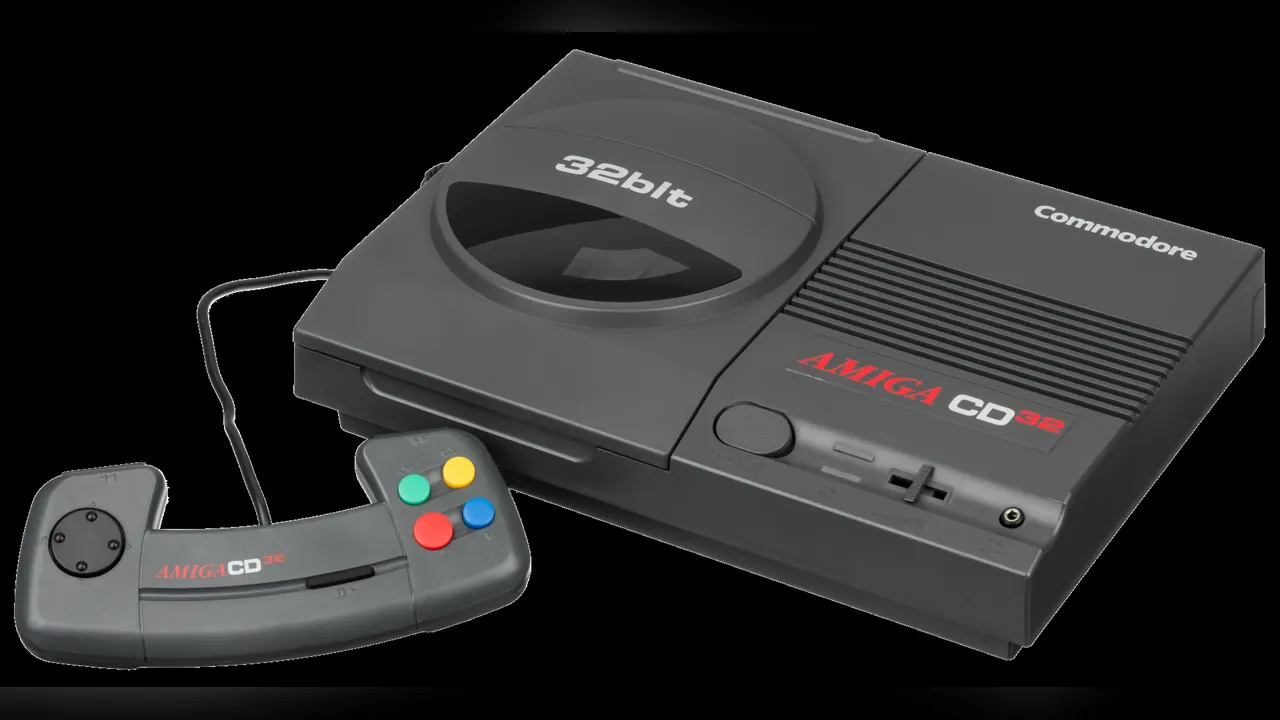
If you are looking for the 50 best games for the Amiga CD32, prepare for a nostalgic journey into the heart of 32-bit computing and entertainment. The Amiga CD32, a console developed by Commodore International, was not just a video game; it was a pioneering machine that promised to bring the experience of classic Amiga titles into an era of advanced graphics and CD-ROM media. Launched on September 17, 1993, it positioned itself as the first 32-bit home console sold in Western Europe and North America, marking a technological turning point that deserves to be revisited.
The relevance of the Amiga CD32 lies in its historical role and robust architecture. It was essentially an Amiga 1200 personal computer, adapted for a gaming focus, and utilized the AGA chipset and CD-ROM as its primary media source. It is notable that, despite being announced with great fanfare, the console had a short lifespan, being discontinued on April 29, 1994, amidst Commodore’s turbulent financial events. Even with its limited lifecycle, the machine solidified Commodore as an innovative force in the early 90s.
In this article, we will dive deep into this legendary machine. You will find not only the list of the 50 most memorable titles but also a detailed analysis of the Amiga CD32’s pioneering architecture, how it worked in practice, and what the gaming experience was like on a system that attempted to redefine the concept of video games. We have prepared a complete guide so you can relive the magic of this 32-bit era and understand the legacy of this console that marked gaming history.
Key Points
- Launched in 1993, the Amiga CD32, codenamed ‘Spellbound’, was positioned as the first 32-bit CD console.
- It featured a Motorola 68EC020 processor and utilized the AGA graphics chip, with support for 4 channels of PCM audio.
- The system operated on AmigaOS 3.1 and was designed to use the CD-ROM as the main storage medium.
- It sold approximately 25,000 units in Germany and about 100,000 in Europe in a short period.
- Production was halted in April 1994 due to the bankruptcy of Commodore International.
Amiga CD32 Summary
| Manufacturer | Commodore International |
|---|---|
| Codename | Spellbound |
| Type | Video Game Console; Game Computer |
| Release | September 17, 1993 |
| Lifespan | 1993–1994 |
| Media | CD-ROM |
| Operating System | AmigaOS 3.1 |
| CPU | Motorola 68EC020 @ 14.18 MHz (PAL), 14.32 MHz (NTSC) |
| RAM Memory | 2 MB Chip RAM |
| Graphics | AGA, Akiko |
| Audio | 4 × 8-bit PCM channels; Stereo (RCA); 28 kHz |
| Controls | Gamepad, mouse |
The Pioneering Architecture of the Amiga CD32

The Amiga CD32, whose codename was “Spellbound,” was not just a new console; it was a declaration of intent from Commodore International in 1993. Launched on July 16, 1993, the device emerged in a delicate financial context for the company, being crucial for reversing the company’s fate. The marketing was aggressive, positioning it as “The World’s First 32-bit CD Game Console.” This technological promise aimed to capitalize on the growing CD-ROM media market, a differential that put it in the spotlight, even though its competitors, like the FM Towns Marty, had already launched 32-bit machines in Japan. For those who want to dive into the system’s history, it is worth checking out the best games for Commodore Amiga 600.
Pioneering Technical Specifications
Technically speaking, the Amiga CD32 maintained the robust foundation of the Amiga 1200. It was equipped with the Motorola 68EC020 processor, operating at 14.18 MHz (PAL) or 14.32 MHz (NTSC), and utilized the AGA graphics chip, with the Akiko chip. The system was designed to support CD-ROM as the primary storage medium, using AmigaOS 3.1. Although the marketing emphasized 32-bit power, the hardware presented specific limitations that are vital to understand. The 2 MB of Chip RAM was shared between the processor and the chipset, which created a bottleneck in memory communication, limiting the processor’s performance, much like the Amiga 1200 without dedicated fast memory.
Despite the memory limitations, the architecture allowed for a range of advanced graphical and sound features for its time. The system offered various video outputs, including S-Video and RF/Composite connections, and rich sound with 4 8-bit PCM channels and a 28 kHz sampling rate. To expand its capabilities, the console was compatible with peripherals such as the ProModule and the MPEG decompression module, which allowed, for example, the inclusion of a 1.5 MB video RAM MPEG decoder. These expansions meant that the Amiga CD32 could indeed be transformed into a system functionally compatible with the Amiga 1200.
The launch was an initial success in some regions. During the Christmas season, the CD32 accounted for 38% of all CD-ROM drive sales in Great Britain. In a short lifespan, the machine sold approximately 25,000 units in Germany and about 100,000 in Europe. However, its future in the U.S. was abruptly cut short. Due to patent issues and debt, Commodore filed for bankruptcy on April 29, 1994, ending console production only eight months after its debut. Despite the corporate collapse, the system’s architecture and flexibility ensured that it could run titles that explored the potential of CD-ROM and the AGA graphics chip, defining the type of gaming experience that enthusiasts relived.
Game Library and Gaming Experience

The gaming experience on the Amiga CD32 was, by nature, a journey of deep nostalgia, but also an exercise in managing expectations. It is crucial to understand that the software catalog did not represent a radical leap in media functionality, but rather a robust bridge to the CD-ROM era. The vast majority of available titles were, in fact, ports of already established games for older Amiga computers, such as the Amiga 1200 or Amiga 500 models. This meant that, although the CD32 was technologically advanced for 1993, many games did not fully utilize the multimedia potential of the disc, such as the inclusion of CD-format soundtracks or high-definition motion videos.
The Library and Gameplay
Despite this reliance on portability, the library was rich and rooted in classic genres. The system launched with an initial package that included titles like Diggers, developed by Millennium Interactive, and Oscar, from Flair Software. At later points, other games came to market, such as the fighting game Dangerous Streets. For the player, the most tangible benefit of this portability was the maintenance of familiarity: many games preserved the ability to be controlled by an Amiga mouse (connected to port 2) or an Amiga keyboard connected to the AUX port, ensuring a smooth learning curve for platform enthusiasts.
In terms of compatibility, the Amiga CD32 was capable of running most releases from the Amiga CDTV multimedia device. However, users needed to be aware of the technical limitations, as differences in processor (CPU) speed and Kickstart operating system versions could prevent the execution of some older CDTV titles. Furthermore, the gaming experience required basic technical knowledge: the system had a hidden startup menu, accessible by connecting an Amiga mouse to port 2 and pressing both buttons while powering on the unit. This menu was vital, as it allowed the user to choose between NTSC or PAL modes, a necessary precaution since many games did not specify the video mode for which they were developed.
To further expand media possibilities, Commodore offered the MPEG decompression module. This accessory allowed the console to support Video CD and CD+G releases, increasing the machine’s multimedia appeal. In summary, the game catalog promised a vibrant experience, a mosaic of Amiga classics that, although occasionally limited by the port format, were sustained by a robust architecture and a compatibility that honored the rich tradition of 32-bit Commodore games. For those who wish to explore this universe, a guide to the best games for the Commodore Amiga 500 is a great starting point.
Selection Criteria: Reliving the Magic of Classics

The curation of this list of 50 titles transcends mere nostalgia. It is an exercise in digital archaeology, an effort to rescue and celebrate the peak of the gaming experience on the Amiga CD32 platform. To elevate this content from a simple catalog to a true specialized guide, we established rigorous selection criteria, ensuring that every listed game represents not just a fun moment, but a technological and cultural milestone. For those who wish to explore other eras of this rich history, it is worth checking out our guide to the best games for Amiga CDTV.
Curation Criteria: The Legacy in Focus
Our selection is based on four interconnected pillars. First, historical relevance is fundamental. Games that defined genres or were crucial to the trajectory of Commodore International, especially regarding its robust base on the Amiga 1200, were prioritized. The Amiga CD32, launched on September 17, 1993, was a complex system that could, through modules like the ProModule or the Paravision SX-1, be transformed into a system factually compatible with the Amiga 1200. Preserving the games that explored this versatility is vital.
Second, we evaluate technical quality, even considering that many titles are ports. A game was included if it could demonstrate the graphical and sound potential of the era. The CD32 architecture, with its Motorola 68EC020 processor and 4-channel PCM audio capacity, required developers to optimize resource usage. Thus, titles that managed to maximize the processing power and AGA or Akiko graphics are considered works of digital engineering.
The third criterion is cultural influence and gameplay. It’s not enough for the game to be beautiful; it must have meaning. We chose titles that set gameplay standards or influenced the development of subsequent games. Furthermore, we recognize the console’s compatibility with classic controllers, such as Atari joysticks from the 80s and 90s, which reinforces the Amiga CD32’s connection to a vast ecosystem of time-tested gameplay.
Finally, the most subjective, but perhaps the most important, criterion is lasting fun. After decades, what keeps these games alive? The gameplay. Therefore, every listed title passed through a timeless gameplay filter. It is the magic of the classics that resists the test of time, proving that despite advances in graphics and memory, the excellence of game design remains the most powerful element of any console. This curation, therefore, is a tribute to software engineering and the mastery of game design that defined an era.
The 17 Best Games for Amiga CD32
1. The Labyrinth of Time
Year: 1994 | Developer: Terra Nova Development | Genre: Adventure
This adventure title captivated players with its complex narrative and immersive atmosphere. Set in a temporal labyrinth, the game requires not only exploration skills but also logical reasoning to unravel the mysteries that await. The experience is marked by puzzles well integrated into the story, which elevates it above mere point-and-click games. What truly distinguishes “The Labyrinth of Time” on the Amiga CD32 platform is its ability to blend the depth of an RPG with the addictive gameplay of a point-and-click, providing hours of immersion.
2. Beneath a Steel Sky
Year: 1994 | Developer: Revolution Software | Genre: Adventure
A landmark in the adventure genre, “Beneath a Steel Sky” transports the player to a post-apocalyptic world rich with detail and mystery. Developed by the renowned Revolution Software, the game is praised for its sophisticated writing and the compelling plot that accompanies it. The gameplay is rich in interactions and exploration, challenging the player to gather information and make crucial decisions for the storyline. Its ability to create a vast and dangerous setting while maintaining focus on the narrative makes it one of the most memorable titles of the Amiga CD32 era.
3. Bubble and Squeak
Year: 1994 | Developer: Fox Williams | Genre: Platformer
“Bubble and Squeak” is a classic platformer, known for its vibrant design and agile gameplay. The game challenges players to jump and navigate colorful environments, requiring precision and timing. It stands out for its perfect combination of classic platforming mechanics with a captivating visual aesthetic typical of the era. Fox Williams managed to create a fun challenge without being frustrating, making it an extremely polished title for the Amiga CD32. It is a perfect example of how platform games could be accessible yet deeply challenging.
4. James Pond 2: Codename RoboCod
Year: 1993 | Developer: Vectordean | Genre: Platformer
A direct sequel and significant improvement, “James Pond 2: Codename RoboCod” raised the standard for platform games on the platform. The title is an action and reasoning challenge, where the player must overcome obstacles and enemies with precision. What makes it exceptional is the improved gameplay compared to the first game, adding more depth and new combat mechanics. Vectordean successfully utilized the power of the Amiga CD32 to create a visually rich and mechanically robust title, maintaining focus on the constant challenge that platform fans love.
5. Now That’s What I Call Games
Year: 1993 | Developer: Multi Media Machine | Genre: Compilation
This game is a compilation of PD games, which gives it nostalgic value and a variety of experiences in a single package. “Now That’s What I Call Games” allows players to explore different genres and mechanics, making it a true treasure for collectors and enthusiasts of the era. The unique selling point lies in the content curation, offering a sample of the quality of games from that time. For those seeking a diverse experience and remembering the richness of independent software development, this compilation is a must-have find on the Amiga CD32.
6. The Seven Gates of Jambala
Year: 1994 | Developer: Thalion Software | Genre: Platform
“The Seven Gates of Jambala” is a platform title that immerses the player in an exotic and challenging setting. The game requires agility and a great sense of timing to overcome the obstacles set by the seven gates. Thalion Software managed to create a visually rich environment that complements the increasing difficulty of the levels. What makes it stand out is the feeling of an epic journey, where each stage feels like a new cultural and physical challenge. It is a work that proves the versatility of the Amiga CD32 in creating challenging and beautiful platform worlds.
7. Deep Core
Year: 1993 | Developer: Dynafield Systems | Genre: Platform
“Deep Core” is a platform title that promises a deep diving experience, both literally and in terms of gameplay challenge. Developed by Dynafield Systems, the game challenges the player to navigate levels that require not only precise jumps but also the solving of small environmental puzzles. It stands out for its gradual progression of difficulty, keeping the player engaged until the end. For platform fans who value technical challenge and the exploration of varied mechanics, “Deep Core” offers a polished and technically impressive journey on the Amiga CD32.
8. International Open Golf Championship
Year: 1993 | Developer: Really Interesting Software Company | Genre: Sports
For sports lovers, “International Open Golf Championship” was a golf simulator that brought realism and playable depth. Developed by Really Interesting Software Company, the game allows the player to experience the challenge of international golf courses. It stands out for its throwing physics and simulation of weather conditions, elements that elevate the experience beyond a simple click-and-play game. It is a title that attracts the player through its fidelity to the real sport, offering a strategic and tactical challenge that solidifies it as one of the best sports simulators for the Amiga CD32.
9. Super League Manager
Year: 1995 | Developer: Audiogenic Software | Genre: Sports
“Super League Manager” is a title that transcends the sports game, positioning itself as a high-level management simulator. Developed by Audiogenic Software, the game places the player in the role of a team manager, requiring strategic decisions regarding transfers, training, and game tactics. What makes it exceptional is the depth of the management system, which simulates the complexity of professional football. It is an educational and addictive title, perfect for those who prefer strategic planning over immediate action, and a milestone for simulation games on the Amiga CD32.
10. The Clue!
Year: 1994 | Developer: Neo Software | Genre: Adventure
“The Clue!” is a digital adaptation of the classic deduction game, transforming the experience of a board game into a captivating electronic adventure. Developed by Neo Software, the title challenges the player to collect evidence, interrogate characters, and eliminate suspects in an engrossing mystery. The game stands out for its impeccable narrative and the clever way it integrates deduction mechanics into the gameplay. It is a brilliant example of how the Amiga CD32 managed to transform a social pastime into a sophisticated and highly fun adventure puzzle.
11. Super Methane Bros
Year: 1994 | Developer: Apache Software | Genre: Platform
Super Methane Bros is a vibrant platformer that captivates players with its agile action and challenging levels. Released in 1994, it set a standard for fun and engaging gameplay on the Amiga CD32 platform. The title stands out for its captivating progression and exploration mechanics, which demand precision and reasoning. It is considered a milestone for balancing the challenge of jumping with resource management, offering a complete and nostalgic experience for fans of adventure games from that era. An essential title for those seeking continuous action.
12. Jetstrike
Year: 1994 | Developer: Shadow Software | Genre: Shooter
Jetstrike is a fast-paced shooter that transports the player into the heat of aerial combat. Developed by Shadow Software and released in 1994, the game is a perfect example of the genre, requiring quick reflexes and precise aiming. What makes Jetstrike notable is its intense gameplay, which places it in direct competition with the era’s major arcade titles, but with a characteristic Amiga CD32 touch. The graphics and soundtrack contribute to total immersion, making this an essential classic for first-person shooting enthusiasts.
13. Dangerous Streets / Wing Commander
Year: 1994 | Developer: Micromania Software, Origin Systems
This title is more than just a game; it is a compilation of experiences, highlighted by the inclusion of the CD32 version of Wing Commander. Released in 1994 by Commodore International, the package offered players rare access to one of the most acclaimed titles in video game history. The presence of Wing Commander, in particular, elevates the value of the package, as it allows users to enjoy a rich space narrative and strategic combat on a different platform. It is a valuable collection that met the demand for major IPs in a single release.
14. Super Skidmarks
Year: 1995 | Developer: Acid Software | Genre: Racing
Super Skidmarks is an electrifying racing title, responsible for bringing adrenaline to Amiga CD32 drivers in 1995. Developed and published by Acid Software, the game is known for its dynamic tracks and visceral sense of speed. It stands out for its focus on intense races, where physics and vehicle control are crucial for victory. For fans of racing simulators, Super Skidmarks offered an addictive and graphical challenge, being one of the highlights of the racing game catalog for the platform, keeping the player on their toes until the finish line.
15. Super Putty
Year: 1994 | Developer: System 3 | Genre: Platform
Super Putty is a platform game that captivates the player with its unique challenges and well-developed movement mechanics. Released in 1994 and developed by System 3, it requires not only precise jumping but also environmental manipulation to progress. What makes it special is its gameplay, which encourages exploration and mastery of controls—characteristics typical of the best platformers of the era. It is a title distinguished by its complex level design and the feeling of mastery over the characters, offering hours of high-quality entertainment.
16. Alien Breed: Tower Assault
Year: 1994 | Developer: Team17 | Genre: Run and gun
Alien Breed: Tower Assault is a classic ‘run and gun’ genre title that places the player at the epicenter of a desperate battle against alien threats. Developed by Team17 and released in 1994, the game is synonymous with relentless action and tactical combat. The title stands out for its intense gameplay and the necessity of teamwork to survive the enemy hordes. The combination of explosive combat with progression through a vertical tower creates constant tension. It is a milestone in the history of shooters, offering robust graphics and a breathtaking survival experience on the Amiga CD32.
17. Sensible Soccer: International Edition
Year: 1994 | Developer: Apache Software | Genre: Sports
Sensible Soccer: International Edition is one of the most beloved sports titles in video game history. Released in 1994, it revolutionized soccer simulation on platforms like the Amiga CD32. The game is praised for its accessible, yet deeply strategic gameplay. It doesn’t just simulate matches; it captures the emotion and fluidity of real soccer. What makes it a classic is the perfect balance between fun gameplay and tactical depth. It is an essential simulator for any sports fan, celebrated for its intuitive and addictive control system.
Frequently Asked Questions
Is the Amiga CD32 truly considered a 32-bit console?
Yes, in terms of architecture, it was an advanced system. Marketing promoted it as the world’s first 32-bit CD console, powered by the Motorola 68EC020 processor. Although the hardware had memory limitations, the 32-bit base was a crucial technological differentiator for the time.
What is the difference between the Amiga CD32 and the Amiga 1200?
The Amiga CD32 retained the robust foundation of the Amiga 1200 but was an upgraded system for the CD-ROM era. It used the CD-ROM as its primary storage medium and was compatible with expansion modules, such as the ProModule, allowing it to support advanced multimedia features.
What are the hardest games to find for the Amiga CD32 today?
The text does not specify hard-to-find titles, but it highlights that the most valuable games are those that explored the multimedia potential of the CD-ROM. Pioneering titles and ports that maximized the graphical power of the AGA and the Motorola 68EC020 processor are considered preservation milestones.
Why did the Amiga CD32 stop being sold after its launch?
Production of the console was abruptly halted in April 1994. The reason was the corporate collapse of Commodore International, which filed for bankruptcy due to financial problems and patent issues, ending the device’s lifecycle in just eight months.
Is it possible to play Amiga CD32 games on modern emulators?
Although the text does not address emulation, it emphasizes the robust architecture and the rich tradition of Commodore’s 32-bit games. The focus on preserving the legacy and the system’s flexibility suggests that the potential to revive these classics through modern methods is a central theme for platform enthusiasts.
Conclusion
The journey through the Amiga CD32 is much more than a simple trip back in time; it is a deep dive into a moment of unprecedented technological ambition. Launched on July 16, 1993, the console represented a bold declaration by Commodore to embrace the future of CD-ROM and 32-bit power, promising to be the first console in this category. Although the hardware reality presented notable limitations, such as memory bottlenecks, the robust architecture, anchored by the Motorola 68EC020 and the AGA graphics chip, allowed developers to explore advanced graphical and sound potential for the time.
The game catalog, although dependent on ports of Amiga 1200 classics, guaranteed a rich gaming experience that honored the platform’s tradition. The curation of these 50 titles transcends mere nostalgia; it is an exercise in digital archaeology that celebrates the system’s engineering and versatility. Even in the face of Commodore’s corporate collapse on April 29, 1994, the CD32 legacy remains alive, a testament to how far innovation can take us.
Recognizing the greatness of the Amiga CD32 therefore requires understanding the complex dance between promising potential and market limitations. Each listed game is a milestone that allows us to revisit the peak of the 32-bit gaming experience. By revisiting these titles, we are not just playing; we are preserving a fundamental chapter in video game history. May this list serve as an invitation for you to delve into the technical and artistic wonders of this pioneering era.