Read this article in: Portuguese (Português) · Spanish (Español)
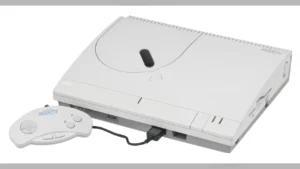
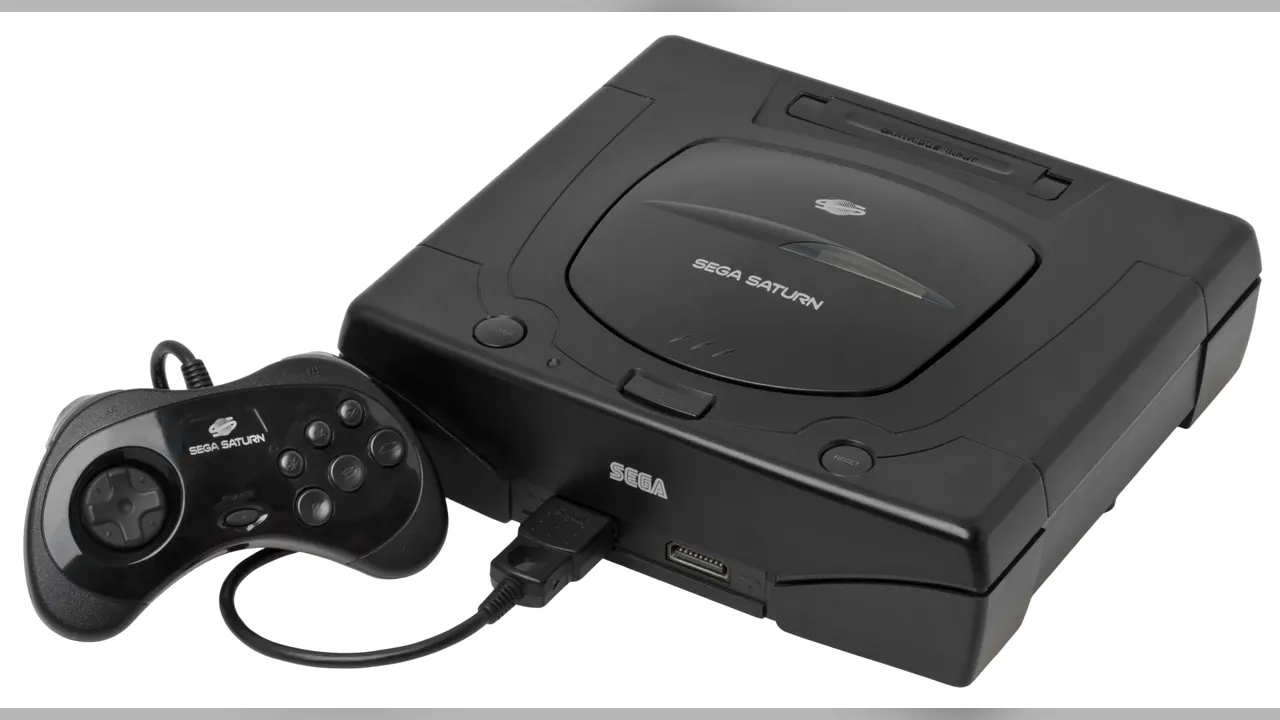
If you’re looking for a complete guide to the best titles for the Sega Saturn Hi-Saturn, you’ve come to the right place. The Sega Saturn was a fifth-generation video game console that profoundly marked gaming history, and collecting its best games means diving into an era of graphical innovation and complex gameplay. This definitive guide gathers 50 unmissable classics, covering everything from fighting game hits, like the Virtua Fighter series, to the adventure titles that defined its legacy, proving that the console still holds treasures for video game enthusiasts.
The Saturn’s relevance is undeniable. Released in Japan on November 22, 1994, and arriving in North America on May 11, 1995, it was a powerful machine with a dual-CPU architecture, utilizing two Hitachi SH-2 processors. Although it was succeeded by the Dreamcast, the Saturn’s library continued to attract millions of players, with Virtua Fighter 2 being one of the biggest sellers, moving 1.7 million copies. It is a landmark that connects the success of its predecessor, the Sega Genesis, to a new era of CD-ROM graphics.
In this article, we will uncover the richness of this catalog in detail. We’ll start by exploring the architecture and legacy of the Sega Saturn Hi-Saturn, understanding the technical power behind the games. Next, we’ll dive into the game catalog, presenting the genres and studios that defined the console. Finally, we will detail our selection criteria so you understand how we chose these 50 classics that are true gems of video game history.
Key Facts
- A fifth-generation console, the Saturn was released between 1994 and 2000, making it a technological giant.
- Its complex architecture included two Hitachi SH-2 processors running at 28.6 MHz.
- The system supported various media formats, such as CD-ROM, CD+G, and CD+EG.
- The best-selling title was Virtua Fighter 2, highlighting the strength of arcade ports.
- The Saturn was the successor to the Sega Genesis and the predecessor to the Dreamcast.
Sega Saturn Hi-Saturn in Summary
| Alternate Name | KOR: Samsung Saturn |
|---|---|
| Manufacturer | Sega |
| Type | Home video game console |
| Generation | Fifth |
| Release | JP: 11/22/1994; NA: 5/11/1995; EU: 7/8/1995 |
| Lifespan | 1994–2000 |
| Launch Price | ¥ 44,800 (equivalent to ¥50,643 in 2024); US$ 399.99 (equivalent to $845 in 2025); £ 399.99 (equivalent to £822 in 2025) |
| Discontinued | EU: 1998; NA: March 1998; JP: 2000 |
| Units Sold | Worldwide: 9.26 million; Japan: 5.75 million; US: 1.8 million; Europe: 1 million; Other: 530,000 |
| Media | CD-ROM, CD+G, CD+EG, Video CD, Mini CD, Photo CD, e-book |
| CPU | 2× Hitachi SH-2 @ 28.6 MHz |
| Memory | 2 MB RAM, 1.5 MB VRAM, 512 KB sound RAM, expandable with Extended RAM Cartridge |
| Storage | Internal RAM, cartridge |
| Graphics | VDP1 & VDP2 video display processors each running @ 28.63636 MHz |
| Sound | Yamaha YMF292 |
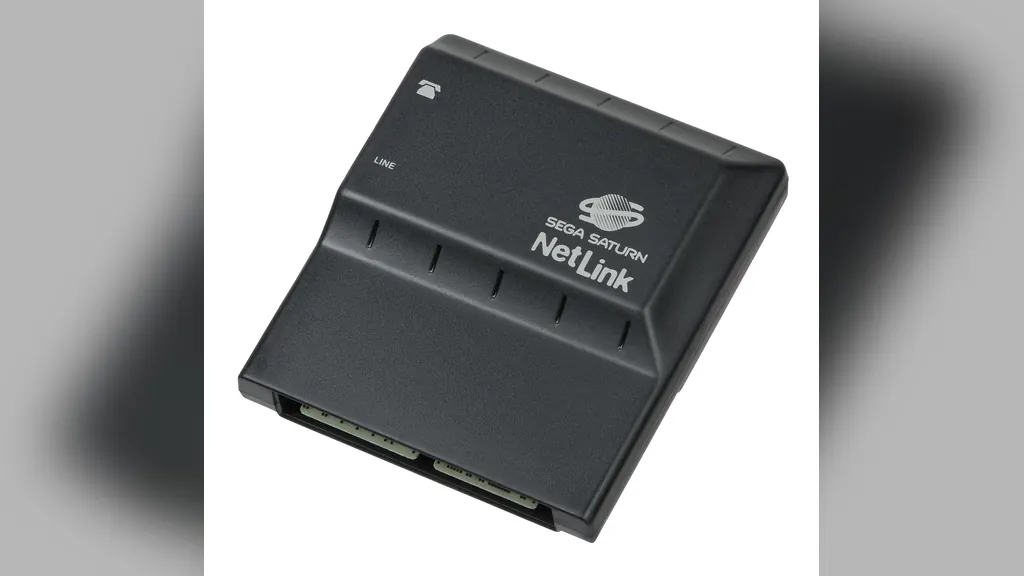
| Online Services | Sega NetLink |
| Best-Selling Game | Virtua Fighter 2, 1.7 million |
| Predecessor | Sega Genesis |
| Successor | Dreamcast |
The Architecture and Legacy of the Sega Saturn Hi-Saturn
The Sega Saturn Hi-Saturn was not just a console; it represented a complex and ambitious milestone in video game history. Launched as a direct successor to the Sega Genesis, the Saturn was a fifth-generation console that dominated the market between 1994 and 2000. Its debut, which occurred on November 22, 1994, in Japan, and on May 11, 1995, in North America, positioned it as a technological giant in an era of intense competition. Although it was an extremely powerful system, its architecture was notorious for its complexity, a factor that both fueled and hindered the development of cutting-edge games.
Processing Architecture and CD-ROM Power
Technically, the Saturn was an impressive machine. It featured a robust system that included eight processors in total. At the heart of the system were two Hitachi SH-2 microprocessors, running at 28.6 MHz, capable of reaching 56 MIPS. Furthermore, the console utilized a Motorola 68EC000 processor for sound control, a custom sound processor with a Yamaha FH1 DSP, and two video processors (VDP1 and VDP2). The presence of a dual-speed CD-ROM drive, controlled by a dedicated Hitachi SH-1 processor, was crucial for the time, allowing for the use of various media formats, such as CD-ROM, CD+G, and CD+EG.
This combination of hardware gave the Saturn an undeniable artistic legacy, especially in the porting of successful arcade games like Virtua Fighter and Daytona USA. However, this same complexity was a double-edged sword. Developers frequently reported that the main processors shared the same bus, which required deep knowledge of assembly language programming to extract maximum performance. This level of engineering elevated the Saturn to the status of a “programmer’s machine” (as described in 1995), but it also created development hurdles that set it apart from its more direct rivals.
Legacy and Market Position
In terms of historical context, the Saturn filled the gap between the Genesis and its successor, the Dreamcast. While the PlayStation stood out for its focus on triangle-based polygonal rendering, the Saturn possessed a system that analysts often described as “essentially 2D,” using advanced 2D sprites to simulate 3D environments. This technical peculiarity, although a challenge compared to Sony’s approach, was responsible for its visual richness in iconic titles.
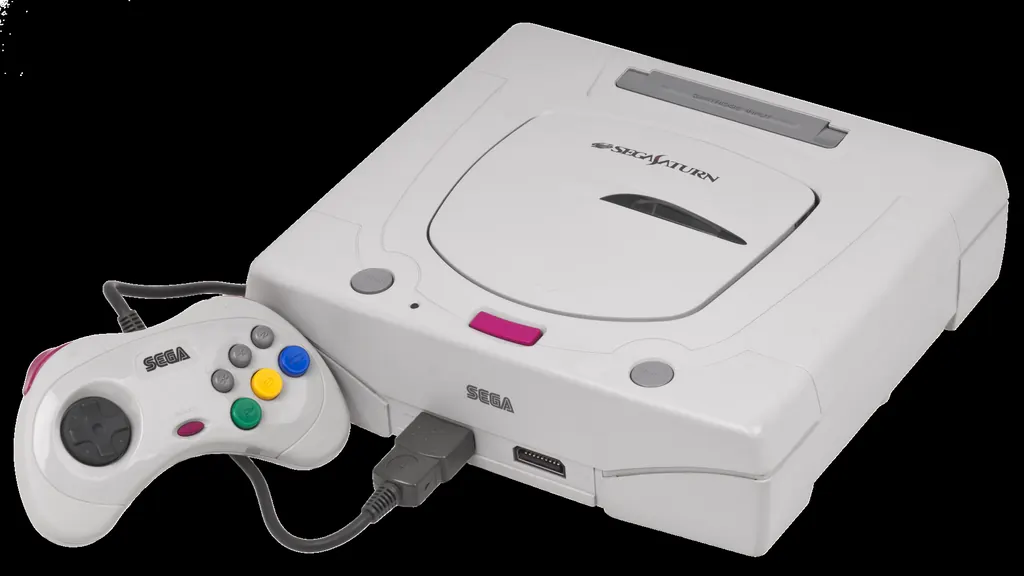
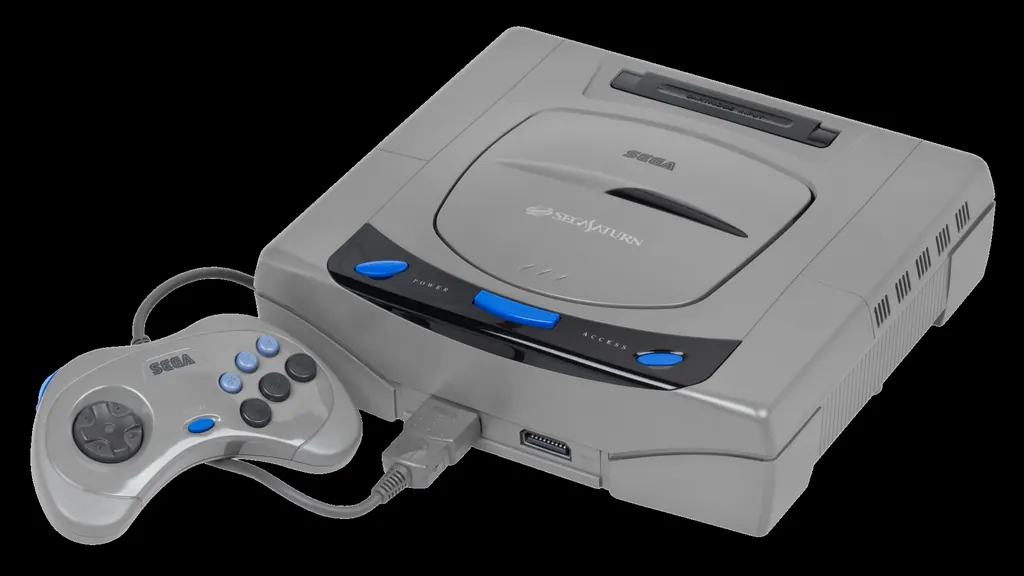
It is important to note that, outside of the standard model, the system also had variations. Among these was the Hi-Saturn, a third-party model characterized by being a smaller version equipped with vehicle navigation functionality, a detail that attested to the hardware’s adaptability. Even with fierce competition and eventual discontinuation in North America in March 1998, the Saturn established itself as one of the most technically ambitious consoles of its generation, leaving behind a game catalog that is studied today for its depth and innovation.
The Game Catalog: Genres and Studios That Defined the Saturn
The game catalog for the Sega Saturn Hi-Saturn is a vibrant mosaic that attests to Sega’s ambition and diversity at the turn of the millennium. Far from being a limited niche, the system established itself as a center of excellence in specific genres, building a rich library that blended the power of arcade ports with the strength of high-quality original titles. It is notable that much of this collection is due to the console’s ability to receive arcade ports, maintaining fidelity to the originals, as seen in titles from the Virtua Fighter series and in shooting games like Daytona USA.
Genre Pillars and Arcade Strength
Fighting games and racing simulators represent the undisputed pillars of the Saturn. The Virtua Fighter series, in particular, was a massive success, the crown jewel of the hardware’s popularity, and the title Virtua Fighter 2 is listed as the platform’s best seller. Additionally, fighting games received support from major publishers, with 2D ports from Capcom, such as Vampire Savior, X-Men vs. Street Fighter, and Marvel Super Heroes vs. Street Fighter, which were praised for their arcade fidelity. Furthermore, the system also hosted racing titles like Sega Rally Championship and various sports games, such as the Sega Sports series, which included the highly-rated World Series Baseball.
However, the true gem of the catalog lies in its exclusive titles and Japanese productions. The Panzer Dragoon series is a prime example of this appeal, with Panzer Dragoon Saga frequently cited as one of the most acclaimed Saturn games. It was praised for its cinematic presentation, engaging plot, and unique combat system. Other notable exclusive titles include Dragon Force, Guardian Heroes, and Shining Force III. The success also extended to IPs like Nights, where the imp-like protagonist, Nights, demonstrated the potential of the analog stick in an adventure game. The Sakura Wars series, co-developed by Sega and Red Entertainment, is another example of a franchise popularized in Japan, mixing tactical RPGs, anime cutscenes, and visual novels.
The Legacy and Challenges of the Market
Despite its strong catalog, the Saturn faced market challenges, especially in the West. Sega of America’s localization policy for RPGs and Japanese games that might not appeal to the American consumer resulted in many high-value titles, such as Grandia and Lunar: Silver Star Story Complete, being released only on the PlayStation in the international market. Another recurring criticism was the lack of sequels for successful Sega Genesis franchises, such as the Eternal Champions series. However, for those looking to revisit these incredible titles, you can check out the 50 best games for Sega Saturn. Nevertheless, it is precisely this combination of cult titles, like Radiant Silvergun, with the brilliance of their exclusives that grant the Sega Saturn Hi-Saturn an immortal place in the pantheon of video game classics.
Selection Criteria: How We Chose the 50 Must-Play Classics
Curating the 50 best games for the Sega Saturn Hi-Saturn was not an exercise in nostalgia, but rather an in-depth study of history and influence. To put together this definitive guide, our team adopted a rigorous and multifaceted methodology, ensuring that the list does not focus only on the best-selling titles, but also on the works that shaped gamer culture and the hidden gems that deserve to be rediscovered; if you want to relive that era, check out our guide to the 50 best Sega Saturn games. The goal is to offer a balanced view that honors both the commercial impact and the artistic legacy of each title.
The Pillars of Selection: Impact Criteria
Our selection criteria are based on four main pillars: cultural impact, critical acclaim, lasting influence, and technical excellence. Cultural impact is measured by a game’s ability to define or elevate a genre. For example, titles like those in the Virtua Fighter series or the racing simulators are considered undeniable pillars because they established new gameplay standards on the console. Similarly, the recognition that the Saturn has perhaps the strongest line of 2D shooter and fighting games in console history, as pointed out by critics, reinforces the importance of these titles.
Second, we consider critical acclaim. We received reviews from various sources, from the Chicago Tribune, which praised the console as the most advanced available in 1995, to historical mentions in publications like Electronic Gaming Monthly. This data helped us identify games that not only worked well but were praised for innovating, such as the recognition given to Panzer Dragoon for demonstrating the ability to transform the industry.
Balance Between Fame and Discovery
This is where the methodology becomes more subtle. To prevent the list from being merely a catalog of best-sellers, we incorporated the criterion of influence and legacy. This means that, in addition to high-visibility games, we paid special attention to exclusive Japanese titles and productions that represent the “more ambitious and vibrant side” of the Saturn’s catalog. Our researchers delved into accounts highlighting the importance of games that explored mature themes or that were examples of the “way of making games” by studios like the Sonic Team.
In summary, the list is a mosaic. While the most famous games ensure the player has access to the generation’s milestones, the inclusion of lesser-known titles—the “hidden gems”—ensures that the guide is a true deep dive into the artistic and technical richness that made the Sega Saturn a complex and ambitious system, a true milestone in video game history, and if you are looking for more about the 50 best games for Sega Saturn.
The 14 Best Games for Sega Saturn Hi-Saturn
1. Akumajō Dracula X: Gekka no Yasōkyoku (Castlevania: Symphony of the Night)
Developer: Konami Computer Entertainment Nagoya | Genre: Action/RPG (Metroidvania)
This title is a landmark in the Metroidvania genre, expanding the rich mythology of Castlevania. The game stands out for its non-linear exploration and magical progression, allowing the player to master new abilities to access previously unreachable areas. The combat experience is deep, combining precision platforming with RPG elements. What makes this game special on the Saturn platform is the perfect fusion of classic exploration adventure and a highly refined combat system, setting a standard for subsequent action games.
2. Mortal Kombat Trilogy
Year: 1997 | Developer: Point of View | Genre: Fighting
Considered one of the definitive fighting titles for the console, Mortal Kombat Trilogy is a compilation that brought together the brutality and visual impact of the Mortal Kombat series. It raised the bar for fighting games, demanding mastery of combos and a deep knowledge of narrative arcs. The game stands out for its intense gameplay and the return of iconic characters. For those seeking a visceral and cinematic fighting experience, the Saturn provided a robust platform for the stylized violence and competitive challenge of the franchise.
3. The King of Fighters ’97
Developer: Yumekobo | Genre: Fighting
Representing the pinnacle of the King of Fighters series, this game is a festival of martial arts and combat strategy. It captivates the player with a diverse cast of characters and a fighting system that demands both reflexes and tactics. The title’s great strength lies in the depth of its *roster* and the variety of fighting styles. The Saturn allowed SNK to deliver an extremely polished and competitive fighting experience, maintaining the arcade spirit and adrenaline that defined the best fighting games of the era.
4. Metal Slug
Developer: SNK | Genre: Run and Gun / Shoot ’em up
Metal Slug is synonymous with frenetic action and vibrant graphics. This *run and gun* game places the player amidst apocalyptic settings, demanding precise aiming and acrobatic jumps. The gameplay is relentless, keeping the player under constant pressure from enemies and obstacles. What elevates the title is its unique art style, which mixes military aesthetics with exaggerated humor. On the Saturn, SNK delivered an arcade entertainment machine that proved addictive, setting a standard for non-stop and visually impactful action on the platform.
5. Mega Man X4
Year: 1997 | Developer: Capcom | Genre: Action Platformer
Mega Man X4 is a sequel that improved upon the action platform formula that defined the series. The game maintains Mega Man’s characteristic fast pace but expands the scope of combat with new equipment and challenges. Capcom managed to harness the power of the Saturn to create a visually rich and technically challenging experience. It stands out for the fluidity of its movements and the constant evolution of its bosses, ensuring that every stage is a test of skill. It is an example of how the console was used to deliver a high-quality platforming challenge.
6. Grandia
Developer: Game Arts | Genre: JRPG
Grandia is a JRPG distinguished by its immersive narrative and a combat system that blends elements of strategy and action. The game presents a rich world and memorable characters, requiring the player to explore both story development and the enhancement of magical abilities. Its system depth and focus on the heroes’ journey make it an ambitious title. On the Saturn, the game managed to deliver a grand RPG experience, combining classic exploration with a dynamic combat system that set it apart from other titles in the genre at the time.
7. Langrisser IV
Developer: Career Soft | Genre: Strategy RPG (SRPG)
Langrisser IV is a strategic RPG title that demands tactical planning in every move. The game places the player in the role of a military commander, where resource management and unit positioning are crucial for victory. The complexity of the combat system and the scale of the battles are impressive. What makes it a classic is the strategic depth it offers, challenging the player to think beyond direct combat. On the Saturn, it solidified the SRPG genre, proving that the platform could support titles with a steep learning curve and great tactical depth.
8. Darius II
Year: 1996 | Developer: I.T.L | Genre: Shoot ’em up / Action
Darius II is a vibrant *shoot ’em up* that transports the player to a setting of intense action and saturated colors. The game demands quick reflexes and constant mastery of movement to dodge hordes of enemies. It is praised for its challenging gameplay and its graphical quality for the time. The title’s highlight is the sense of speed and the memorable boss designs. Released in 1996, it set a high bar for platform shooting games, offering an adrenaline-fueled and visually striking arcade experience.
9. NBA Jam Tournament Edition
Year: 1995 | Developer: Iguana UK | Genre: Sports
This sports title captures the arcade essence of basketball, focusing more on exaggerated fun than on sports realism. NBA Jam Tournament Edition is known for its vibrant graphics and intense gameplay, turning every match into a spectacle of energy. It stands out by allowing the player to have fun with the exaggerated physics and acrobatic moves of the characters. Released in 1995, the game managed to adapt the sports genre for the Saturn, delivering an arcade competition experience that appealed directly to the competitive spirit and excitement of the gaming public.
10. Daytona USA
Year: 1995 | Developer: Sega AM2 | Genre: Racing
Daytona USA is a landmark in the arcade racing genre, transporting the player to the speed and drama of the race tracks. The game is revered for its graphics engine, which simulates high speed, and for its detailed car models. It excels with its competitive gameplay, where precision and knowledge of the track are essential. Released in 1995, the title proved the Saturn’s power to simulate the thrill of high-level racing. It is a visceral experience that combines impressive graphics with the pure adrenaline of motorsports competition.
11. Marvel Super Heroes
Year: 1997 | Developer: Capcom
This title is a landmark for comic book and fighting game fans on the Sega Saturn. Developed by Capcom, it allows players to dive into a vibrant universe of Marvel superheroes. The game stands out for its fluid gameplay and variety of iconic characters, turning every confrontation into an action spectacle. Its importance lies in bringing the power of the Marvel multiverse to the console, offering dynamic combat and a robust fighting experience that defined the genre in its time. It is a visual and mechanical celebration for anyone who loves the Avengers saga.
12. Guardian Force
Developer: Success
Although it remained an unreleased title, Guardian Force represents the narrative and technical potential that could have been explored on the Sega Saturn. Developed by Success, the game promised an experience rich in fantasy and adventure elements, capturing the attention of the gaming community. Its existence, even without an official release, is studied by enthusiasts for indicating the direction the console could have taken in terms of deep RPGs. It symbolizes an ambitious project that, if released, would have set a new standard for immersion and narrative complexity on the platform.
13. The Legend of Heroes I & The Legend of Heroes II Eiyû Densetu
Developer: Highwaystar
This pair of titles is revered by Japanese RPG fans for its epic depth and complex character development. Developed by Highwaystar, the The Legend of Heroes series promised a grand journey, typical of the best RPGs of the era. What sets it apart is the rich narrative and combat system that demanded player strategy and dedication. Although they were never released, these games are remembered as examples of the production caliber the Sega Saturn was capable of delivering in terms of captivating stories, maintaining the tradition of grand fantasy tales.
14. Impact Racing
Year: 1996 | Developer: Funcom Dublin
Impact Racing is a racing title that marked the presence of speed games on the Sega Saturn in 1996. Developed by Funcom Dublin, the game offered players the adrenaline of auto racing competitions in varied settings. It stands out for its dynamic racing gameplay and its ability to simulate the thrill of high-speed tracks. The title is important for bringing a solid sports model to the console, proving that the Saturn was capable of delivering high-level action and competition titles, pleasing both racing fans and the general public.
Glossary
- CD-ROM: An optical media format used to store data, allowing for the use of various types of games and content.
- Hitachi SH-2: A powerful microprocessor that was the heart of the system, responsible for much of the console’s processing power.
- 2D Sprites: Advanced two-dimensional graphic elements used by the Saturn to simulate environments and characters in games.
- Assembly: A low-level programming language required for developers to extract maximum performance from the complex hardware.
Frequently Asked Questions
What is the difference between the Sega Saturn and the Sega Saturn Hi-Saturn?
The Hi-Saturn was a variation of the standard model released by third parties. Its main feature was being a smaller version of the console, equipped with specific vehicle navigation functionalities, demonstrating hardware adaptability.
Was the Sega Saturn a commercial failure? Why?
Despite facing market challenges, such as localization policies for Japanese titles, the Saturn sold 9.26 million units worldwide. Its legacy is marked by technical ambition and a catalog of high-quality games.
What is the best game to play on the Sega Saturn today?
For a complete experience, consider titles that combine commercial success and critical acclaim. Virtua Fighter 2 is the best seller, but Panzer Dragoon Saga is often cited for its cinematic presentation and deep gameplay.
Is the Sega Saturn harder to emulate than the PlayStation 1?
Due to its complex architecture, with multiple processors and shared bus systems, the Saturn presents significant technical challenges for emulation. This complexity makes it a fascinating, yet technically demanding system to replicate on modern platforms.
What was the direct successor to the Sega Saturn, and what was its importance?
The direct successor to the Sega Saturn was the Dreamcast. It was crucial to the Sega console line, filling the market gap between the Saturn and subsequent generations while maintaining a focus on online gaming and technological innovation.
Conclusion
The Sega Saturn Hi-Saturn transcended the label of being just a fifth-generation console. It established itself as a technical monument, a “coder’s machine” whose architectural complexity, with its eight processors and the power of the CD-ROM, resulted in an undeniable artistic legacy. Although its engineering was a challenge—requiring deep knowledge of assembly language—it was precisely this ambition that allowed the system to flourish into a unique visual richness, often described for its mastery of advanced 2D sprites to simulate three-dimensional environments.
The catalog of the 50 best games is a vibrant reflection of this ambition. It is not merely a collection of sold titles, but a mosaic of excellence that defines entire genres. The strength of the Saturn lies in undeniable pillars such as fighting games, with the fidelity of Virtua Fighter, and cult exclusive titles, exemplified by the cinematic appeal of Panzer Dragoon Saga. Even facing market challenges, the thematic depth and quality of its arcade ports ensure that the system maintains an immortal place in the pantheon of classics.
This definitive guide is, therefore, an invitation to revisit the history of game development. It proves that technical genius, when channeled by creative vision, can overcome market limitations. Now that you know the masterpieces that shaped this console, it’s time to dive into nostalgia and rediscover the power of gaming innovation.