Read this article in: Portuguese (Português) · Spanish (Español)
The Analogue Super Nt represents a milestone in the history of video game preservation, being a home emulation console based on FPGA (Field-Programmable Gate Array) designed by Analogue to recreate the experience of playing Super Nintendo Entertainment System titles with fidelity and modernity. Its existence is the result of a deep commitment to overcoming the limitations of traditional emulation methods, offering enthusiasts a machine that not only runs the games but seeks to replicate the original *hardware* in a high-performance format. This development was not limited merely to functionality, but also to refining the visual and sound experience, setting a new standard of quality for the retro market.
The Super Nt’s relevance is proven by its technical development and market reception. Officially launched on February 7, 2018, the console not only guaranteed Super Nintendo compatibility but also incorporated advanced technology, such as the Altera Cyclone V processor and an HDMI output capable of delivering 1080p and 720p video at 60 Hz. This combination of cutting-edge specifications with classic nostalgia was so impactful that, according to publications like Forbes, it was called “the new *benchmark* for all retro consoles,” solidifying the importance of its engineering.
To understand how this technological marvel was conceived and executed, this article will take a complete deep dive into the console’s development. We will explore everything from the vision behind Analogue and the context of the retro market, through the complex engineering and technical architecture challenges—detailing the use of the processor, 16-bit audio, and connectivity. Finally, we will analyze the launch, critical acclaim, and lasting legacy of the Super Nt in the emulation industry, showing why it is an icon of modern collecting.
Key Points
- Uses an FPGA processor (Altera Cyclone V) for high-fidelity emulation, replicating complex analog circuits.
- Offers HDMI video output in 1080p, 720p, and 480p, all running at 60 Hz, for modern TVs.
- The audio is digital, operating at 16-bit and 48kHz, transmitted via HDMI, ensuring superior clarity.
- The connectivity is a modern hub, accepting SNES/SFC cartridges, Micro USB (power only), and SD card for firmware.
- The design combines references from the Super Nintendo and Super Famicom, with an ABS plastic casing, maintaining a classic aesthetic.
Analogue Super Nt Specifications
| Manufacturer | Analogue |
|---|---|
| Type | Home video game console |
| Release Date | February 7, 2018 |
| Launch Price | $190 |
| Media | Game cartridges, SD card |
| CPU | Altera Cyclone V |
| Video Output | HDMI (1080p, 720p, 480p) at 60 Hz |
| Audio | 48kHz, 16-bit, digital via HDMI |
| Connectivity | 2 SNES & SFC controller ports, HDMI, Micro USB (power), SD card (firmware) |
| Dimensions | 6.6 by 5.2 by 1.6 inches (168 mm × 132 mm × 41 mm) |
The Vision Behind Analogue and the Retro Market
To understand the importance of the Super Nt, it is crucial to delve into the market vision that motivated it. Analogue did not aim to be just another emulator; its mission is the preservation of the original video game experience. In a scenario where many products try to replicate nostalgia through software, Analogue opted for an ultra-high-fidelity hardware approach. The goal was to create a console that not only ran classic games but did so with the maximum possible fidelity, maintaining the technical integrity that enthusiasts and collectors demand.
The Inspiration of Classic Accuracy
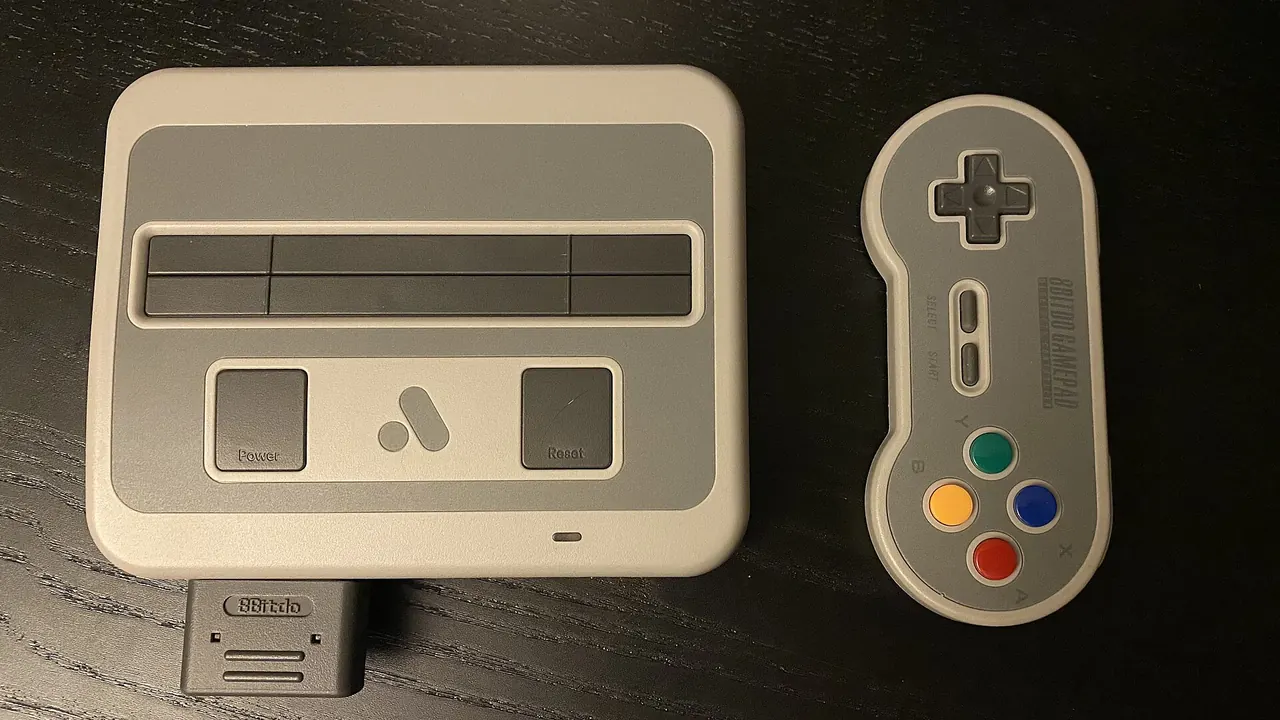
This pursuit of authenticity guided the development of the Super Nt, which drew inspiration not only from the American Super Nintendo (SNES) but also from the Super Famicom, the Japanese console, and European controllers. This combination of references ensured that the design was technically robust and visually familiar to collectors from various regions. The result was a unit that, although modern, carries the DNA of iconic machines. To facilitate large-scale production, Analogue used ABS plastic for the casing, a choice that allowed them to optimize manufacturing and reduce costs without compromising structural quality.
Despite its retro appearance, the Super Nt was designed for the modern home. It incorporates several features that distinguish it from a simple closed-catalogue console. The console features an HDMI video output, allowing players to connect the retro experience to high-definition televisions. Furthermore, it has control ports compatible with SNES accessories and a dedicated SD card slot for firmware updates, ensuring longevity and continuous support.
Engineering Details and Release
In terms of physical design, the Super Nt measures 6.6 by 5.2 by 1.6 inches (168 mm × 132 mm × 41 mm), dimensions that align it with the aesthetics of consoles from its era, but with a modern touch. The initial release featured a variety of aesthetic options, reflecting the desire to cater to different collector niches. Originally, the Super Nt was available in four variants: Black, Classic (modeled after the North American SNES), SF (modeled after the Super Famicom and European SNES), and Transparent. Exclusivity was enhanced with a limited-edition white colorway, a collaboration with Ghostly International, restricted to only 1,000 units and released on December 3, 2018.
In summary, the Super Nt represents more than just a simple gaming console. It is an engineering manifesto dedicated to preservation. The field of retro video games is vast and full of historical milestones, such as the development of classic consoles. By combining the precision of the Super Famicom and SNES designs with modern technology—such as HDMI support and firmware management via SD card—Analogue managed to create a high-fidelity device, setting a new standard for the retro gaming market and for the emulation industry itself.
From Idea to Hardware: Engineering Challenges
From Idea to Hardware: Engineering Challenges
The development of the Super Nt was not merely a nostalgic exercise, but a complex challenge of reverse engineering and digital preservation. The main technical hurdle was replicating the signal precision of the original consoles, which operated on complex analog architectures. To overcome this barrier and ensure impeccable compatibility, Analogue opted to use an FPGA (Field-Programmable Gate Array) processor based on the Altera Cyclone V. This choice was crucial because the FPGA allows the hardware to be programmed to emulate the digital and analog circuits of past consoles with extreme fidelity, ensuring signal integrity in a way that software emulators could not match.
Precision in Every Detail
This pursuit of technical perfection is evident in minute details. The console was designed to support high-definition video outputs, offering 1080p, 720p, and 480p options, all at 60 Hz, along with 16-bit, 48 kHz digital audio via HDMI. Physically, while the Super Nt maintains the aesthetic of classic consoles, it was optimized for the modern market. Its casing, instead of using more expensive materials, is made of ABS plastic, a choice that allowed for optimized manufacturing and reduced costs, while still maintaining dimensions of 6.6 by 5.2 by 1.6 inches (168 mm × 132 mm × 41 mm).
In terms of connectivity, the Super Nt is a hub of modernity and retrocompatibility. It accepts cartridges compatible with both the Super Nintendo (SNES) and the Super Famicom (SFC), and features ports for SNES accessories and controllers. For the user, the experience is complemented by an interface design developed by Phil Fish, known for his work in Fez. Furthermore, the system’s sound component was composed by Squarepusher, lending a modern sonic layer to the startup system.
The Development Ecosystem
The development process also involved creating a modern maintenance ecosystem. It is fascinating to note how the history and development of retro consoles manifest in the Super Nt, which uses a combination of ports: a Micro USB connector, which serves only for power, an SD card slot for firmware updates, and, naturally, HDMI for video output. The console was originally released in four variants—Black, Classic (modeled after the North American Super NES), SF (modeled after the Super Famicom and European Super NES), and Transparent. In a limited edition, a fifth and special white finish was added, released on December 3, 2018, in collaboration with Ghostly International.
In summary, every component, from the precision FPGA processor to the interface design and debut audio, was meticulously planned to ensure that the gaming experience was not only nostalgic but technically indistinguishable from the original, representing a leap in complexity compared to previous Analogue products.
Technical Architecture: CPU, Audio, and Connectivity
The technical architecture of the Analogue Super Nt is a testament to precision engineering, combining the fidelity of an FPGA (Field-Programmable Gate Array) emulation system with the performance and connectivity demands of the modern home. Far from being merely an aesthetic replica, the console is a sophisticated processing hub, capable of executing digital circuits in an almost perfect manner, ensuring that the gaming experience is as authentic as possible.
The Processing Engine and High-Fidelity Audio
At the heart of the Super Nt is the Altera Cyclone V processor. This high-capacity component is responsible for replicating the internal operation of the Super Nintendo and Super Famicom with extreme precision. This hardware choice not only guarantees operational stability but is essential for supporting the complex data flow required by legacy system emulation. Complementing the processing, the Super Nt raises the audio standard for its time. The sound system is digital, operating at 48kHz and with 16-bit depth, transmitted via HDMI. These specifications ensure an audio quality significantly superior to equipment of its era, allowing the sounds of classic games to be reproduced with clarity and tonal richness.
Video Output and Modern Connectivity
To ensure that this audio and processing experience is not limited to an old monitor, the Super Nt was designed to integrate into the contemporary video ecosystem. It offers versatile video outputs via HDMI, supporting 1080p, 720p, and 480p resolutions, all running at a rate of 60 Hz. This flexibility ensures that the console can be connected to any modern television, maintaining fluid gameplay without visual interruptions.
The console’s connectivity is a balance point between the past and the future. The Super Nt incorporates dedicated control ports, compatible with both Super Nintendo (SNES) and Super Famicom (SFC) cartridges. Additionally, it has control ports for accessories and a Micro USB, used only for electrical power. However, the crucial element for the system’s longevity and maintenance is the SD Card slot. This card is not merely a media support; it is the primary communication channel for firmware updates, an essential feature that allows Analogue to keep the console functional and adapted to new standards and technical improvements over time.
In summary, the Super Nt’s design is not limited to its aesthetics, which are similar to the Super Famicom and the European and Korean Super NES. It is a multifunctional device with dimensions of 6.6 by 5.2 by 1.6 inches (168 mm × 132 mm × 41 mm), built from ABS plastic. Every detail, from the Altera Cyclone V to the use of the SD Card, was meticulously planned to transform a retro console into a high-performance digital entertainment hub, ensuring that the legacy of classics is preserved with cutting-edge technology.
Launch and Critical Acclaim: The Retro Benchmark
The official launch of the Analogue Super Nt marked a turning point in the retro console emulation market. On February 7, 2018, the product was presented to the public, and from the first contact with the hardware, it was clear that it was not just another nostalgic device. The Super Nt was meticulously positioned in the market as a premium and definitive product, intended for enthusiasts who demanded maximum technical fidelity without sacrificing classic aesthetics. The introductory price of $190, while representing a considerable investment for the retro gaming consumer, was part of a strategic marketing effort that elevated the console above the collector’s toy category, establishing it as a high-performance audio and video equipment.
Immediate Acclaim and the New Standard
The critical reception to the Super Nt was immediate and overwhelming, cementing its status as a benchmark in the industry. Specialized publications quickly recognized it as a milestone in retro technology. For example, Forbes highlighted it as “the new benchmark for all retro consoles,” a statement that summarized market perception: the Super Nt had raised the standard of quality and authenticity. This recognition was accompanied by important awards from outlets such as Tom’s Guide and PCMag, which granted it the prestigious Editor’s Choice Award, attesting to its technical value and user experience.
The recognition was not limited to awards. Wired Magazine, in turn, not only gave it a score of 9/10 but also the Wired Recommends Award seal, reinforcing its credibility with the most demanding audience. This chorus of praise not only validated consumers’ financial investment but also reinforced the narrative that the Super Nt was the pinnacle of digital preservation engineering. The console was seen not merely as a game player, but as a sophisticated display device, capable of transforming the experience of playing classic titles into something worthy of a modern entertainment system.
The combination of factors—the physical design that aligned the aesthetics of the Super Famicom and the European and Korean Super NES, the technical robustness (such as the HDMI video output, supporting 1080p, 720p, and 480p at 60 Hz), and the 48kHz and 16-bit digital audio—justified the “benchmark” title. The Super Nt achieved the difficult feat of being a portal to the past without ever seeming obsolete. At its launch, it represented the perfect convergence between nostalgia and the connectivity demands of the modern home, solidifying its importance not just as a console, but as a collector’s item highly valued by the enthusiast community.
Iconic Games and Title Catalog
The value of a premium retro console, like the Analogue Super Nt, transcends the mere ability to read cartridges. It establishes itself as a curator of experiences, a portal that not only emulates but revitalizes the title catalog of a golden age. The vast Super Nintendo game library is the heart of the console, promising access to almost all the classics that defined a generation of players. However, the Super Nt elevates this experience to the level of cutting-edge digital preservation, ensuring that gameplay and graphical fidelity are preserved and presented in high definition.
Exclusive Games and the Art of Restoration
A particularly notable aspect of the Super Nt is the way it incorporates exclusive or restored content, a detail that demonstrates Analogue’s commitment to historical integrity and improving the user experience. A striking example of this is the pre-installed inclusion of titles such as Super Turrican – Director’s Cut and the original Super Turrican 2. The inclusion of the Director’s Cut, for example, is not just a remaster; it is a functional expansion. It is a version of the game that managed to include additional content that, in its original Super NES version, would have been limited by the capacity of the Mask ROM available at the time. This ability to enrich and expand the original material, respecting the memory of the players while adding new value, is a testament to the console’s technical and curatorial rigor.
This approach of including enhanced games or those originally restricted by technical limitations is crucial. It transforms the Super Nt from a mere cartridge player into a true cultural preservation center. The console doesn’t just replicate the Super Nintendo; it enhances it, allowing classic titles to be played with the visual and sound fidelity that modern hardware can support, without compromising the authentic feeling of playing on a 16-bit system.
The Promise of a Complete Catalog
The ability to run the extensive Super Nintendo game library is, in itself, an engineering feat and a pillar of appeal. For the player, this means a vast collection of titles from varied genres, from precision platformers to epic RPGs. The Super Nt ensures that, even with the passage of time and storage limitations, access to these universes is flawless. It acts as a true gameplay hub where nostalgia meets cutting-edge technical performance.
In summary, the Super Nt’s title catalog is a carefully curated ecosystem. It embraces the memory of classics, as demonstrated by the inclusion of enhanced versions of games like Super Turrican, while ensuring that the vast and rich Super Nintendo library remains accessible and playable with maximum fidelity. This effort reinforces the console’s status as a landmark in the history of preservation and retro gameplay, a theme that connects directly to the development of consoles and their revolutionary impact.
The Super Nt’s Legacy in the Emulation Industry
The Super Nt cannot be seen merely as a game console; it represents a watershed moment in the retro emulation industry. Its official release on February 7, 2018, was not just a successful product, but the definition of a new standard of quality that redefined the expectations of consumers and industry engineers. Critical reception was immediate and overwhelming, cementing its status as a benchmark. Prestigious publications like Forbes hailed it as “the new benchmark for all retro consoles,” while outlets such as Tom’s Guide and PCMag awarded it Editor’s Choice, and Wired Magazine recognized it with a 9/10 score and the Wired Recommends seal.
Raising the Fidelity Standard
The impact of the Super Nt lies in its ability to prove that high-fidelity emulation and modern usability could coexist in a single device. Before the Super Nt, many retro systems struggled to reconcile the aesthetics of the past with the connectivity of the present. The console, by incorporating high-definition HDMI video outputs, along with the precision FPGA processing board (utilizing the Altera Cyclone V), forced the market to raise the level of expectation. The combination of cutting-edge hardware with emulation accuracy ceased to be a luxury and became the new expected standard.
This raising of expectations served as a driving force for the development of other FPGA devices. By establishing a benchmark of excellence that combined the functionality of a cutting-edge console with the precision of a classic gaming environment, the Super Nt acted as a catalyst. It proved that precision engineering was not only possible but commercially viable, paving the way for other manufacturers and enthusiasts to invest in more sophisticated and robust emulation solutions.
Legacy and Longevity in the Market
The longevity of the Super Nt is a testament to its legacy. Since its launch in 2018, the console has maintained a significant presence in the market, going through design variations that reflected its popularity—from the Black and the Classic (modeled after the Super NES of North America) to the SF (which pays homage to the Super Famicom and the European and Korean Super NES). The fact that the product has maintained its relevance and gone through cycles of availability, such as the 2018–2022 period and its recent return starting in 2026, demonstrates that it transcended the status of a “successful launch” and established itself as a retro engineering icon.
In summary, the value of the Super Nt to the industry is symbolic: it demonstrated that emulation did not have to be a compromise between nostalgic visuals and modern functionality. It established the benchmark that high-end retro consoles must offer not only the game catalog of a past era but also the technical robustness and flawless finish demanded by the 21st-century consumer.
Frequently Asked Questions
What does it mean for the console to be FPGA-based, and why is that important for retro gaming?
FPGA (Field-Programmable Gate Array) is crucial because it allows the hardware to be programmed to emulate the digital and analog circuits of old consoles with extreme fidelity. This ensures signal integrity in a way that software emulators, running on PCs or Raspberry Pi, could not match, preserving the original experience.
What is the difference between the Super Nt and a PC or Raspberry Pi emulator?
The main difference lies in the approach: the Super Nt is an ultra-high fidelity hardware device focused on preserving the original experience. While software emulators replicate functionality through code, the Super Nt uses an FPGA processor to replicate hardware signal precision, setting a new standard for technical authenticity.
Is the Super Nt compatible with all Super Nintendo games, or are there limitations?
The console is designed to accept cartridges compatible with both the Super Nintendo (SNES) and the Super Famicom (SFC). Analogue’s focus is to guarantee maximum technical fidelity, combining the precision of iconic designs with modern technology, making it a high-performance preservation device.
What are the connection requirements, and what is the best way to power the console?
The Super Nt has HDMI for video output, dedicated ports for accessories and SNES/SFC controllers. It uses an SD card slot for firmware updates and a Micro USB connector, which must be used exclusively to provide electrical power to the system.
Is the console still sold today, and what is the updated price for the Brazilian consumer?
The provided text details the launch on February 7, 2018, with an introductory price of $190. However, the content does not provide information regarding the current sales status, stock availability, or the updated price of the product for the Brazilian consumer.
Conclusion
The Super Nt transcends the definition of a simple retro console. It establishes itself as an engineering manifesto, a device that was not content merely to evoke nostalgia, but to preserve the technical experience of classic video games with unprecedented fidelity. By merging the robust design of the Super Nintendo and the Super Famicom with modern technology—such as HDMI video output and SD card firmware support—Analogue created a standard of excellence that redefines the closed-catalog gaming market.
The heart of this revolution lies in the Altera Cyclone V FPGA processor. This advanced processing architecture was crucial for overcoming engineering challenges, allowing the console to accurately emulate the analog and digital circuits of the original systems. The combination of details such as dimensions (168 mm × 132 mm × 41 mm), 16-bit digital audio, and 1080p output support ensures that the experience is technically indistinguishable from the original, while maintaining the aesthetic appeal of its era.
Thus, the Super Nt represents more than the union of four aesthetic variants; it is the result of a dedication to digital preservation. It proves that technology can serve memory, combining the art of the past with the performance of the present. By understanding the Super Nt, we understand that true innovation in the video game world lies in honoring what was done while preparing for what is to come.