Read this article in: Portuguese (Português) · Spanish (Español)
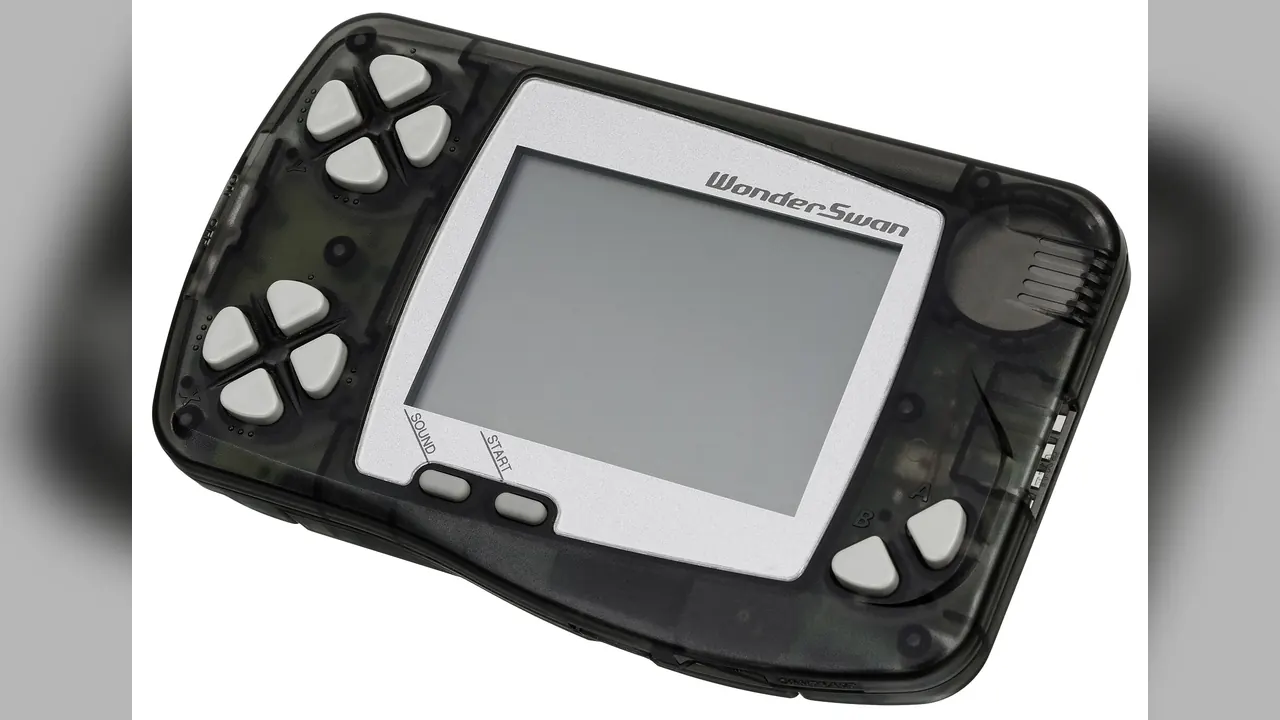
The Bandai WonderSwan is a handheld video game console that marked the sixth generation of electronic devices in Japan and represents a fascinating chapter in the history of mobile gaming. Developed in collaboration with Koto Laboratory, the system launched on March 4, 1999, and its journey spanned years, evolving through successor models like the WonderSwan Color and the SwanCrystal. This console stood out for being a more powerful and affordable hardware alternative compared to its 8-bit competitors of the time, and it pioneered the incorporation of a dual-orientation design, allowing for gameplay in both vertical and horizontal modes. Its history is a case study in innovation, technological ambition, and the complex market dynamics of the entertainment industry.
The significance of the WonderSwan is proven by its longevity and its technical specifications. Featuring a 16-bit NEC V30 MZ processor, the console was designed to deliver a robust visual and gaming experience. Throughout its life cycle, which ran from 1999 to 2003, the unit and its variations combined to achieve an estimated total sales of 3.5 million units. Although it was surpassed by the Game Boy Advance, it managed to capture up to 8% of the Japanese handheld market at its peak, attesting to its impact and the strong appeal of its game catalog, especially those based on anime properties.
In this article, we will dive into the complete journey of this iconic console. We will cover the Origin and the portable market context, understanding the scenario that gave rise to the project. Next, we will explore From concept to design: the technical challenge of the WonderSwan, detailing its Architecture and technical specifications, such as the use of the 16-bit processor. We will analyze the Hardware evolution through the Color and Crystal models, the appeal of its game catalog and anime appeal, and finally, we will take stock of its Sales, competition, and industry legacy, understanding its place in video game history.
Key Points
- The console was active from 1999 to 2003, going through three iterations: WonderSwan, Color, and SwanCrystal.
- It utilized a 16-bit NEC V30 MZ processor, operating at 3.072 MHz, ensuring processing power.
- The screen evolved from FSTN to TFT LCD, improving response time and visual fidelity for gameplay.
- It featured a flexible design with extra buttons, allowing for gameplay in both vertical and horizontal orientations.
- The console sold a combined total of 3.5 million units, with a focus on content from franchises like Digimon.
Bandai WonderSwan Technical Specifications
| Manufacturer | Bandai |
|---|---|
| Type | Handheld game console |
| Generation | Sixth |
| Release | WonderSwan: JP: March 4, 1999; WonderSwan Color: JP: December 9, 2000; SwanCrystal: JP: July 12, 2002 |
| Lifespan | 1999–2003 |
| Initial Price | ¥ 4,800 (WonderSwan); ¥6,800 (WonderSwan Color); ¥7,800 (SwanCrystal) |
| Discontinued | 2003 |
| Units Sold | 3.5 million (combined) |
| Media | ROM Cartridge |
Origin and Context of the Handheld Market

The history of Bandai WonderSwan is intrinsically linked to the evolution of the Bandai conglomerate itself. Founded in 1950 by Naoharu Yamashina, the company started as a manufacturer of toys and plastic models. However, its exponential growth came with the ability to license popular anime characters, such as Tetsuwan Atomu, starting in 1963. Over the decades, Bandai diversified its portfolio, moving on to manufacture LCD games based on television programs and, subsequently, dedicated consoles. A crucial milestone in its trajectory was the release of the virtual pet Tamagotchi in 1996, a success that cemented the company as a giant in the Japanese toy and electronics industry.
The technology landscape in the 1990s, however, was highly competitive. Although Bandai was one of the first third-party companies to license games for the Family Computer in 1985, the group faced corporate turbulence, such as the failure of a planned merger with Sega in 1997. This context of autonomy and the need to reassert itself in the market led to a search for innovation. It was in this environment that engineer Gunpei Yokoi, famous for creating the Game Boy and who had left Nintendo after the failure of the Virtual Boy, established his own company, Koto Laboratory. Bandai recognized an opportunity: to collaborate with Yokoi to create a handheld console that would not only compete directly with the Game Boy but also offer a more accessible 16-bit alternative to the Japanese market.
The Challenge of Competition and the Birth of the WonderSwan
The initial project, which had the Design Master Senshi Mangajukuu as its predecessor, aimed to fill a gap in the market. The WonderSwan was officially unveiled in Tokyo on October 8, 1998, with a name chosen to evoke the image of elegance and power, characteristics of the bird. The launch strategy was clear: to offer a low-cost device with excellent battery life, competing with advanced color consoles like the Game Boy Color and the Neo Geo Pocket Color. When the WonderSwan launched on March 4, 1999, it was priced at a retail cost of ¥ 4,800, significantly lower than its competitors.
The product’s evolution reflected market pressures. In 2000, the WonderSwan Color was released, which incorporated a passive-matrix FSTN color screen while maintaining compatibility with the original model. If you want to learn more about this period, check out the WonderSwan Color and its history. In 2002, the SwanCrystal redesign was launched with an improved TFT LCD screen. Although Bandai showed confidence in its product, keeping a competitive price (¥6,800 for the WonderSwan Color and ¥7,800 for the SwanCrystal), the arrival of competitors with superior hardware, such as the Game Boy Advance, led to the line being gradually discontinued in 2003, closing a significant chapter in the history of Japanese handheld gaming.
🕒 WonderSwan History Milestones
- 1950 — Bandai was founded by Naoharu Yamashina, initially as a toy manufacturer.
- 1963 — Beginning of licensing popular anime characters, such as Tetsuwan Atomu.
- 1985 — Bandai becomes one of the first third-party companies to license games for the Family Computer.
- 1996 — Launch of the virtual pet Tamagotchi, solidifying the company in the market.
- 1998 — Official unveiling of the WonderSwan in Tokyo, with the name chosen to evoke elegance.
- 1999 — WonderSwan launched on March 4th, with a retail price of ¥ 4,800.
- 2000 — Launch of the WonderSwan Color, incorporating a passive-matrix FSTN color screen.
- 2002 — Launch of the SwanCrystal redesign with an improved TFT LCD screen.
From Concept to Design: The Technical Challenge of the WonderSwan
The development of the Bandai WonderSwan was a technical challenge that required a significant leap in processing power and cost efficiency. To meet the demands of a highly competitive portable market, the console incorporated a 16-bit processor, the NEC V30 MZ, operating at 3.072 MHz. This leap in capability was fundamental for Bandai to offer a richer and more sophisticated gaming experience compared to previous devices. In addition to computational power, the hardware design featured a notable innovation: an extra set of buttons that allowed the console to be played in two orientations—vertical and horizontal. This feature, similar to that found on the Atari Lynx, maximized usability and the device’s flexibility, allowing developers to create experiences that adapted to different game formats.
Content Strategy and the Development Ecosystem
To boost the product in the market, Bandai adopted a robust content strategy, which was based on the synergy between its own assets and the strength of major third-party developers. Bandai utilized Banpresto, a subsidiary of the group, to add support through anime licenses and licensed titles. Meanwhile, the console attracted industry giants, such as Namco and Capcom, who developed high-quality titles for the platform. Squaresoft was crucial during this period, contributing remakes of iconic Final Fantasy titles, such as Final Fantasy II and Final Fantasy IV, which later found their way to the Game Boy Advance. Additionally, Taito contributed popular ports, like Space Invaders and Densha de Go!. Bandai supplemented this collection with exclusive games from its own franchises, such as Digimon and Gundam, ensuring a diverse and appealing catalog for the Japanese audience.
The hardware’s evolution kept pace with the growing demand for visual and usability improvements. The first model, the WonderSwan, launched in Japan on March 4, 1999. Later, the WonderSwan Color, released on December 9, 2000, increased the screen size while maintaining backward compatibility with all original titles. The technical improvement was most evident in the SwanCrystal, launched on July 12, 2002. This model advanced to a TFT LCD monitor, which offered superior response time compared to the WonderSwan Color (which used FSTN), resulting in a noticeable reduction in motion blur in the graphics. This progression of models, along with the development of official kits, such as the WonderWitch, which allowed for game creation in C language, demonstrated Bandai’s continuous effort to refine the console; it is worth noting that the rich history of franchises like Gundam, such as Bandai RX-78 and Japanese legends in games, accompanied this trajectory, keeping it technically relevant until its discontinuation in 2003.
📊 WonderSwan Model Evolution
| Model | Release Date (JP) | Screen Technology | Key Observation |
|---|---|---|---|
| WonderSwan | March 4, 1999 | FSTN | Initial console release. |
| WonderSwan Color | December 9, 2000 | FSTN | Increased screen size and maintained backward compatibility. |
| SwanCrystal | July 12, 2002 | TFT LCD | Improved response time, reducing motion blur. |
Architecture and technical specifications

The WonderSwan’s architecture was a testament to the advanced portable engineering of its time. The heart of the system was a 16-bit processor, the NEC V30 MZ, which served as the operational base for the entire console line. The original model utilized this CPU at a frequency of 3.072 MHz, with the system being responsible for processing games stored on ROM-type media cartridges. To support this operation, the console was equipped with 64 KB of RAM, crucial memory for data flow and game execution.
Technical Evolution and Display Features
The hardware’s trajectory was marked by incremental, yet significant, improvements, especially in the area of visual display. The original WonderSwan model, as well as the WonderSwan Color, used the FSTN display. This panel already represented a considerable advance over competitors, capable of displaying up to 16 shades of gray. The WonderSwan Color expanded color support, displaying up to 241 colors from a 4096 palette, while maintaining compatibility with the grayscale titles of the previous model. The peak of this evolution was the SwanCrystal, which replaced the FSTN with a TFT LCD monitor. This change was fundamental because the TFT LCD offered superior response time, minimizing motion blur on the game’s graphics.
In terms of usability, the console was also designed for flexibility, incorporating an extra set of buttons that allowed players to use the device in both portrait and landscape orientations. Beyond the technical specifications, the system boasted robust four-channel PCM audio capabilities, with one channel capable of reproducing 8-bit unsigned PCM samples, a second capable of hardware scanning, and the fourth capable of generating LFSR-based noise.
Power Consumption Analysis and Models
Despite the processing and display improvements, power consumption was a critical factor. All WonderSwan series models were powered by a single AA battery. However, battery efficiency varied drastically between versions. The original model, the WonderSwan, offered an impressive battery life of up to 40 hours. The slightly larger WonderSwan Color reduced this expectation to approximately 20 hours. Finally, the SwanCrystal, with its new TFT LCD monitor, maintained reliability but with a slightly shorter battery life, estimated at 15 hours. These technical specifications demonstrate not only processing power but also Bandai’s commitment to balancing visual advancement with the durability required for portable use.
📌 Display Evolution and Technical Features
- WonderSwan/WonderSwan Color: Used the FSTN display, displaying up to 16 shades of gray.
- WonderSwan Color: Expanded support to 241 colors from a 4096 palette.
- SwanCrystal: Replaced the FSTN with a TFT LCD monitor, improving response time.
- Usability: They featured extra buttons for use in portrait or landscape orientation.
- Audio: They offered robust four-channel PCM sound capabilities.
Hardware Launch and Evolution
The trajectory of the Bandai WonderSwan was not static; it is a case study in technological evolution, driven by the market’s increasing demand for better visual features and performance. The product line underwent three significant iterations, each introducing crucial hardware improvements and reinforcing the console’s longevity, which was active from 1999 to 2003.
The Original Launch and the Leap to Color
The starting point was the WonderSwan, which launched in Japan on March 4, 1999. With an introductory price of ¥4,800, the console established a solid foundation of portable engineering. Technically, it used a 16-bit NEC V30 MZ CPU and featured an FSTN screen capable of displaying up to 16 shades of gray, a notable advancement compared to competitors that displayed only four shades. Beyond the processing specifications, the design already incorporated an extra set of buttons, allowing players to use the device in both portrait and landscape orientations.
The first major upgrade came with the WonderSwan Color, released on December 9, 2000. With a price increase to ¥6,800, the Color not only maintained the processing power of the original model but also drastically elevated the visual fidelity. The new model featured a larger screen and was capable of displaying up to 241 colors from a 4096 palette. Although the WonderSwan Color had a battery life of approximately 20 hours, it ensured compatibility with all cartridges from previous models, keeping original games in grayscale.
Refinement with the SwanCrystal
The peak of this hardware evolution was the SwanCrystal, released on July 12, 2002. This model represented a notable technical refinement, keeping the product line alive while improving the user experience. With an introductory price of ¥7,800, the SwanCrystal made an important transition by incorporating a TFT LCD monitor. This change was crucial because the TFT LCD offered superior response time compared to the FSTN monitor used in the previous generation, resulting in reduced motion blur in graphics. Furthermore, the console case was redesigned for greater durability.
In summary, the WonderSwan line demonstrated a constant and strategic progression. The launch data shows a clear evolution, from the WonderSwan (1999) to the WonderSwan Color (2000) and finally the SwanCrystal (2002). Despite the visual and structural improvements, there was a trend toward reduced battery life with each iteration (from 40 hours to 20 hours, and then to 15 hours). After the release of the SwanCrystal, the console was discontinued in 2003, ending a successful sales journey totaling 3.5 million units combined.
📊 Hardware and Battery Evolution
The Game Library and Anime Appeal

The most tangible advantage of the Bandai WonderSwan, and the pillar of its appeal in the Japanese market, was undoubtedly its vast and strategically curated game catalog. Far from being a void of titles, the console’s library was a direct reflection of the strength of the Japanese intellectual property (IP) ecosystem. Historically, the console showed a notable focus on licensed anime titles, an element that cemented its identity and appeal to young and pop culture-enthusiast audiences.
Content Depth
This depth of content was a crucial marketing pillar for Bandai. Koto Laboratories estimated that the WonderSwan accumulated sales of an impressive 10 million game cartridges. This massive number was not the result of a single supplier, but rather a synergy among various development partners. Bandai itself, through its subsidiary Banpresto, was fundamental in adding massive support from anime licenses and licensed titles, ensuring a constant flow of content that resonated with the public.
The catalog was a mosaic of experiences. On one hand, there were exclusive titles from Bandai’s own franchises, such as Digimon and Gundam. On the other, the console hosted giants from the third-party gaming sector. For example, Namco and Capcom not only developed titles but also brought classics and new experiences to the handheld system. In terms of Western franchises, Squaresoft contributed remakes of iconic Final Fantasy titles, such as Final Fantasy II and Final Fantasy IV, works that would later find a home on the Game Boy Advance.
Beyond the big names, the WonderSwan embraced variety. Taito ensured the presence of well-received ports, such as Space Invaders and Densha de Go!. And to maintain momentum and casual appeal, puzzle games were even created, like Gunpey, paying tribute to Gunpei Yokoi, who even had a launch title for the WonderSwan Color. High-quality titles, such as Judgement Silversword, were developed, for instance, using the WonderWitch kit.
Although some analysts point out that the console’s support was, at times, considered below expectations, the richness of its game catalog—which combined the strength of licensed anime properties with the quality of major third-party developers—established a robust content standard. It is fascinating to note how complex console development was during that era, as seen in the case of the Apple Bandai Pippin development history. This development ecosystem not only kept the console active for years but also ensured that, even after discontinuation in 2003, many of these titles were ported to other platforms, securing the WonderSwan’s library legacy in the history of portable video games.
Sales, Competition, and Industry Legacy
Despite its sophisticated engineering and robust game catalog, the WonderSwan’s market performance revealed significant challenges. Over its lifespan, the console managed to sell a combined total of 3.5 million units in Japan. However, this number represented only an 8% market share, an indicator that points to the difficulty of maintaining dominance in a highly competitive sector. The main obstacle for the WonderSwan was the strength of its direct competitor, the Nintendo Game Boy Advance (GBA). The GBA’s popularity and appeal were determining factors, allowing Nintendo to consolidate an almost monopoly in the Japanese portable console market, a dominance that would only be broken years later with the launch of the Sony PlayStation Portable in 2004.
The market comparison between the two systems is a case study in brand power and timing. Although the WonderSwan was a technically impressive device, with its color screen and advanced features for the time, it could not overcome the GBA’s commercial trajectory. Nintendo’s success was not due only to superior hardware, but to a consolidated market ecosystem and a mass appeal that the WonderSwan, despite its efforts, could not replicate. Even after the WonderSwan Color and the SwanCrystal represented continuous visual improvements, Bandai’s ability to compete with Nintendo’s distribution power and global appeal proved limited.
The Legacy in a Transitioning Market
The WonderSwan’s legacy is complex, viewed both as an engineering triumph and as an example of a missed opportunity. Many enthusiasts consider it an innovative machine that dared to challenge the giant Nintendo at a crucial time. Critics, on the other hand, point out flaws in usability aspects, such as the lack of audio or AC ports, and even in ergonomic aspects, such as the control layout for left-handed users. However, the technical consensus points out that the WonderSwan was a niche device, appealing to a specific audience of gamers, but one that failed to establish itself as a mass consumer phenomenon.
A retrospective analysis suggests that the failure to maintain dominance was not due to inherent hardware design flaws, but rather to external factors. Technology experts point the finger at “poor timing and a strangely timid strategy from Bandai,” rather than any intrinsic defect in the system. Despite these market challenges and the difficulty in retaining developer attention—who, at times, returned to exclusively supporting Nintendo’s systems—the WonderSwan remains in history as a notable example of how a company, even with advanced design, requires perfect alignment among innovation, market strategy, and cultural timing to achieve lasting success.
Glossary
- FSTN: A display technology used in early models, capable of displaying up to 16 shades of gray.
- TFT LCD: A type of liquid crystal screen that offers superior response time, minimizing motion blur.
- NEC V30 MZ: The 16-bit processor that served as the operational core for the entire WonderSwan console line.
- Motion blur: A visual blurring effect that occurs in graphics due to rapid movement, which was improved by the TFT LCD.
Frequently Asked Questions
Was the WonderSwan released in Brazil or in other regions outside of Japan?
All available information regarding the console’s launch and evolution is concentrated on the Japanese market. The WonderSwan launched in Tokyo, and its sales and subsequent versions were marketed exclusively in Japan.
What is the main difference between the WonderSwan, the WonderSwan Color, and the SwanCrystal?
The main difference lies in the display technology. The WonderSwan and Color used FSTN, while the SwanCrystal introduced a TFT LCD monitor. Furthermore, the Color increased color support, and the SwanCrystal improved the response time, reducing motion blur.
What games are considered the most iconic or exclusive to the WonderSwan?
The console was powered by a robust catalog, including original franchise titles like Digimon and Gundam. It also received titles from major developers, such as Final Fantasy remakes from Squaresoft and popular ports from Namco and Capcom.
What does it mean to say that the WonderSwan belongs to the ‘sixth generation’ of consoles?
Although the console is classified as belonging to the sixth generation, the material does not detail the technical meaning of this nomenclature. However, it represents a significant leap in processing power and visual features for its time.
Why was the WonderSwan surpassed by the Game Boy Advance, despite its innovations?
The WonderSwan line was gradually discontinued in 2003 due to the arrival of competitors with superior hardware. The Game Boy Advance, in particular, represented a technical advancement that surpassed the visual and processing capabilities of the WonderSwan series.
Conclusion
The trajectory of the Bandai WonderSwan is a fascinating case study in adaptation and ambition within the dynamic market of portable electronics. Born in a context of intense competition, the console represented an ingenious response from Bandai to the need to reaffirm its presence in the gaming scene. The device managed to combine the power of a 16-bit processor (NEC V30 MZ) with a low-cost strategy, releasing models such as the WonderSwan Color and, later, the SwanCrystal, which incorporated an advanced TFT LCD display.
More than just hardware, the success of the WonderSwan was anchored in a robust content ecosystem. Collaborations with developers like Namco and Capcom, coupled with the inclusion of proprietary franchises such as Digimon and Gundam, ensured a vibrant catalog. This synergy between cutting-edge technology—evidenced by its dual-orientation operation capability—and a rich collection of titles allowed the console to maintain its relevance until its line was discontinued in 2003. Despite being surpassed by competitors with superior hardware, the WonderSwan remains a testament to the advanced portable engineering of its time.
Its history reminds us that innovation lies not just in the raw power of a processor, but in a company’s ability to articulate technology, content, and market strategy. By revisiting this chapter, the enthusiast is invited to reflect on how market pressures sometimes shape the most memorable milestones in video game history.