To dive into the universe of Kingdom Come: Deliverance II, it is essential to know who is behind this epic sequel. The title’s development is the work of Warhorse Studios, and the publishing is done by Deep Silver. Under the direction of Daniel Vávra, the creative team gathered talent from various fields, including designers Viktor Bocan and Prokop Jirsa, and composers Jan Valta and Adam Sporka, ensuring a richly detailed medieval experience. Warhorse Studios is not just a studio, but a guardian of a universe that demands historical accuracy and narrative depth, characteristics that define the series’ DNA.
The relevance of Kingdom Come: Deliverance II is proven by its scope and reception. The game transports players to the year 1403 in the Kingdom of Bohemia, a historical setting that unfolds in a world twice the size of the first title. The official launch for PlayStation 5, Windows, and Xbox Series X/S occurred on February 4, 2025, and the impact was immediate, surpassing 6 million copies in sales by June 2026. This success was corroborated by critics, who gave the game a “generally favorable reviews” rating, cementing it as a milestone in action RPGs.
In this article, we will provide a complete analysis of the medieval saga that is Kingdom Come: Deliverance II. We will explore the team behind the story, from the developers to the artists. We will cover the detailed historical setting and the medieval plot, from the storyline to the development challenges. Furthermore, we will address the immersive first-person gameplay, the release on various platforms, and what professional critics say about the game. Ready to learn about the series’ legacy and the characters’ future plans?
Key Points
- The game is set in 1403 in the Kingdom of Bohemia, during a civil war turmoil.
- The script contains 2.2 million words, setting a record for narrative depth.
- Combat is multifaceted, allowing the use of swords, bows, crossbows, and firearms.
- Immersion is guaranteed by a strict consequence system, where crimes have immediate punishments.
- The development required the team to grow from 131 to approximately 250 employees.
Kingdom Come: Deliverance II in summary
| Developer | Warhorse Studios |
|---|---|
| Publisher | Deep Silver |
| Director | Daniel Vávra |
| Genre | Action role-playing |
| Mode | Single-player |
| Platforms | PlayStation 5; Windows; Xbox Series X/S; Nintendo Switch 2 |
| Release | Windows, PS5, Xbox Series X/S; February 4, 2025; Nintendo Switch 2; 2027 |
| Series | Kingdom Come |
Who created Kingdom Come: Deliverance II? The team behind the story
Creating an epic title like Kingdom Come: Deliverance II is not just an artistic endeavor, but a large-scale industrial and historical undertaking. Behind this medieval saga are Warhorse Studios, the development studio, and Deep Silver, which is handling the publishing. The development journey, which began in July 2019, is marked by exponential growth and a clear ambition: to make this second game the definitive version of the Kingdom Come: Deliverance experience.
Growth and the Creative Team
To make a project of this scope feasible, Warhorse Studios had to expand significantly. While the studio had 131 employees in 2019, it grew to approximately 250 people by the spring of 2024. This increase in personnel was crucial for allocating the necessary resources across all areas, from art design to software engineering. The development team is composed of specialized talents, including Daniel Vávra, who serves as Director and also as the lead writer; Viktor Bocan, Designer; Vojtěch Kovařič, Producer, and other professionals such as Martin Štýs (Programmer) and Viktor Höschl (Artist).
The game’s vision is fueled by a mix of historical references and successful games. The expertise of historians, universities, and museums was mobilized once again to ensure the representation of a “realistic, immersive, and believable” medieval world. In terms of inspiration, Martin Klíma, co-owner of the studio, cited The Elder Scrolls III: Morrowind, while the design director, Viktor Bocan, mentioned the series Dark Souls and Elden Ring. The game uses a heavily customized version of the CryEngine, and the soundtrack was composed by talented Czech composers, Jan Valta and Adam Sporka.
Narrative and Technical Scope
The level of detail and depth in the game is evident in its script. Daniel Vávra himself reported that the game’s script contains an impressive 2.2 million words—a number that surpasses the previous record set by Baldur’s Gate 3. To maintain high visual fidelity and immersion, the development incorporated advanced techniques, such as facial capture, complementing motion capture. Furthermore, the cast of actors, which again features the British Tom McKay in the role of Henry, is supported by stunt performers and acrobats, ensuring the authenticity of the action scenes.
The project reached the public on a tight and ambitious schedule. After being announced and revealed in April 2024, the game launched for PlayStation 5, Windows, and Xbox Series X/S on February 4, 2025. The complexity of the development, combined with the focus on rich narrative and deep gameplay systems, shows that Kingdom Come: Deliverance II is the culmination of a multidisciplinary team’s effort and years of meticulous planning.
📌 Key Collaborators and Influences
- Development Studio: Warhorse Studios
- Publisher: Deep Silver
- Lead Director and Writer: Daniel Vávra
- Game Inspirations: The Elder Scrolls III: Morrowind, Dark Souls, and Elden Ring
- Graphics Engine: CryEngine (customized version)
The Historical Setting and Medieval Plot
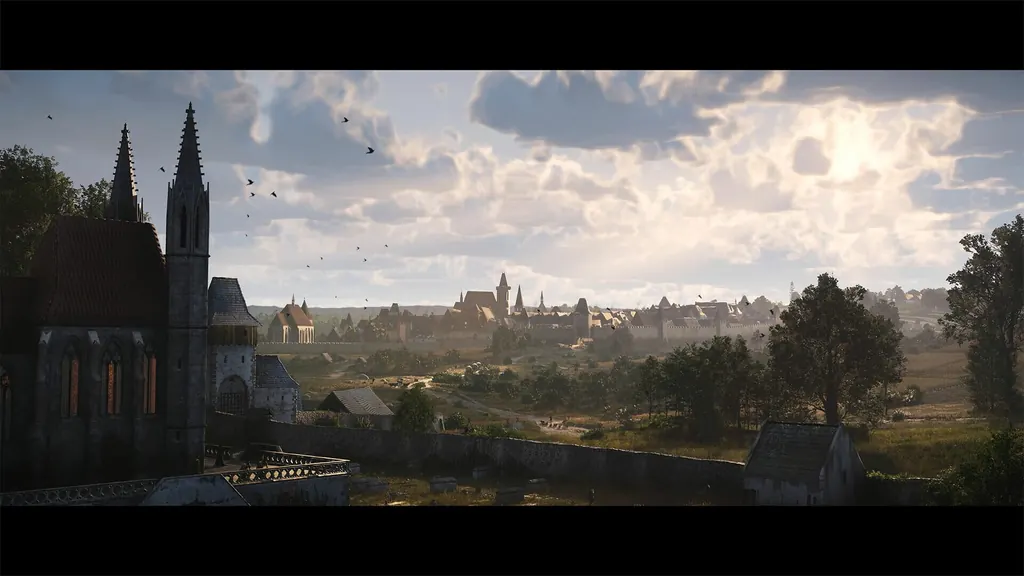
To grasp the depth of Kingdom Come: Deliverance II, one must travel back in time to 1403. The action unfolds in the Kingdom of Bohemia, then a strategic region that was part of the Bohemian Crown Lands and the Holy Roman Empire, located in the modern Czech Republic. This setting is not merely a backdrop; it is a character in itself, reflecting the political turmoil and economic wealth of the era. The region boasts varied landscapes, such as the Bohemian paradise, in addition to vital cities like Kutná Hora. In the latter, the game evokes the status of Bohemia’s second-largest urban center, after Prague, and one of the kingdom’s wealthiest economic hubs, thanks to the trade of silver ores and coin minting.
The Political Landscape in 1403
The year 1403 plunges the player into the “turmoil of a civil war.” The Kingdom of Bohemia is at the epicenter of a monumental conflict: King Wenceslaus IV desperately fights against the invasion by Sigismund, King of Hungary and Croatia, and his allies. This civil war is not just a struggle for thrones, but a brutal test of loyalty and survival. It is within this context of political disintegration that the saga of Henry of Skalitz unfolds, promising to conclude the protagonist’s story.
📘 Holy Roman Empire
It was a large political and cultural entity in Europe, a part of which housed the Kingdom of Bohemia. The setting of 1403 shows the geopolitical complexity of the time.
Henry of Skalitz, the protagonist, is a man-at-arms whose journey is marked by a deep sense of justice and personal vengeance. He is the son of Sir Radzig Kobyla and initially serves under his biological father’s tutelage. The plot places him directly in the middle of the resistance defending King Wenceslaus IV against the usurper Sigismund of Luxembourg. However, Henry’s motivation transcends politics: he seeks personal revenge against Sigismund and his envoys for being responsible for the deaths of his mother and his adoptive father.
The plot, therefore, is a complex tapestry of obligations and passions. In addition to his mission of delivering messages and acting as a political envoy for Radzig, Henry must navigate a feudal society where loyalty is the rarest commodity and danger is constant. Throughout his journey, he joins notable figures, such as the noble Sir Hans Capon of Pirkstein, and confronts persistent figures from the past, like Sir Istvan Toth, the main antagonist of the first game. The game maintains the rich historical setting, citing real figures like Jobst of Moravia and Jan Žižka, reinforcing that the story is a deep dive into the complexity of medieval life in Bohemia.
Development: Technology, Challenges, and Production Time
The development of Kingdom Come: Deliverance II was not merely a continuation, but an endeavor of industrial and academic scale, demanding a significant leap in resources and personnel. The creative journey began in July 2019, following the release of the first title. Warhorse Studios’ ambition was clear: to create the game that the first Kingdom Come: Deliverance should have been, but with enhanced resources and accumulated experience. To support this vision, the developer’s structure needed to grow exponentially. While the team had 131 employees in 2019, that workforce grew to about 250 people by the spring of 2024, demonstrating the vast human effort behind the project.
Technology and the Ambition of a Realistic World
To bring this vast and detailed medieval setting to life, the title uses a highly customized version of the CryEngine. The challenge wasn’t just the size, but the depth of simulation. The project aimed to represent a “realistic, immersive, and believable” medieval world, so the team once again turned to a network of experts, including historians, universities, and museums. This in-depth research ensured that the setting was more than just a mere backdrop; it was a complex narrative element.
The scale of the narrative is colossal. Daniel Vávra, the lead writer, revealed that the game’s script contains an impressive 2.2 million words. This number not only sets a new record for narrative depth—surpassing the script of Baldur’s Gate 3—but also underscores how dense and rich the tapestry of events the player will experience is. To raise the level of immersion, the technical production also evolved, complementing traditional motion capture with facial capture and incorporating the participation of stunt riders.
Influences and the Release Schedule
The game’s design vision drew from rich and influential sources within the RPG genre. Viktor Bocan, the design director, cited FromSoftware’s Dark Souls and Elden Ring series as crucial inspirations, while Martin Klíma, co-owner of Warhorse Studios, pointed to the 2002 The Elder Scrolls III: Morrowind as a major influence on the development. This mix of references ensures that the game maintains historical depth while also having the gameplay appeal of established titles.
After a long period of development, the game was announced and revealed in April 2024. The official launch took place on February 4, 2025, for PlayStation 5, Windows, and Xbox Series X/S. Continued player support was planned in phases: on January 16, 2025, a post-launch content roadmap was revealed, including free upgrades such as a hardcore mode and barber functionality. The game is scheduled to arrive on the Nintendo Switch 2 in 2027, solidifying its presence on multiple platforms and ensuring a legacy of continuous content.
🕒 Kingdom Come: Deliverance II Development Timeline
- July 2019 — Beginning of the creative journey for development, following the release of the first title.
- Spring 2024 — The developer’s workforce grew to about 250 people.
- April 2024 — The game was announced and revealed to the public.
- February 4, 2025 — Official launch for PlayStation 5, Windows, and Xbox Series X/S.
- January 16, 2025 — Revelation of post-launch content, including free upgrades.
- 2027 — Projected arrival of the game for the Nintendo Switch 2 platform.
Gameplay and First-Person Immersion
(Attention: The section title should not be included.)
First-Person Experience and World Depth
Kingdom Come: Deliverance II is a robust action RPG set in a vast open world, where the player controls the protagonist from a strictly first-person perspective. The scale of the setting is one of the most notable aspects: the game world is twice the size of its predecessor, divided into two larger areas completely open for exploration. Far from being mere background scenery, the environment and its inhabitants actively react to the player’s actions. It is this consequence system that sustains the high immersion, as the player character’s (PC) choices and reactions directly influence the daily lives of the non-player characters (NPCs) and the overall development of the world.
Social complexity is managed through a highly detailed dialogue skill system. The three skills present in the first game—Oratory, Charisma, and Intimidation—have been expanded to include Appearance, Coercion, and Domination. Success in interactions with NPCs depends not only on the narrative but also on the proficiency level the player has achieved in the chosen skill, making every conversation a tactical challenge.
Combat System and Daily Life
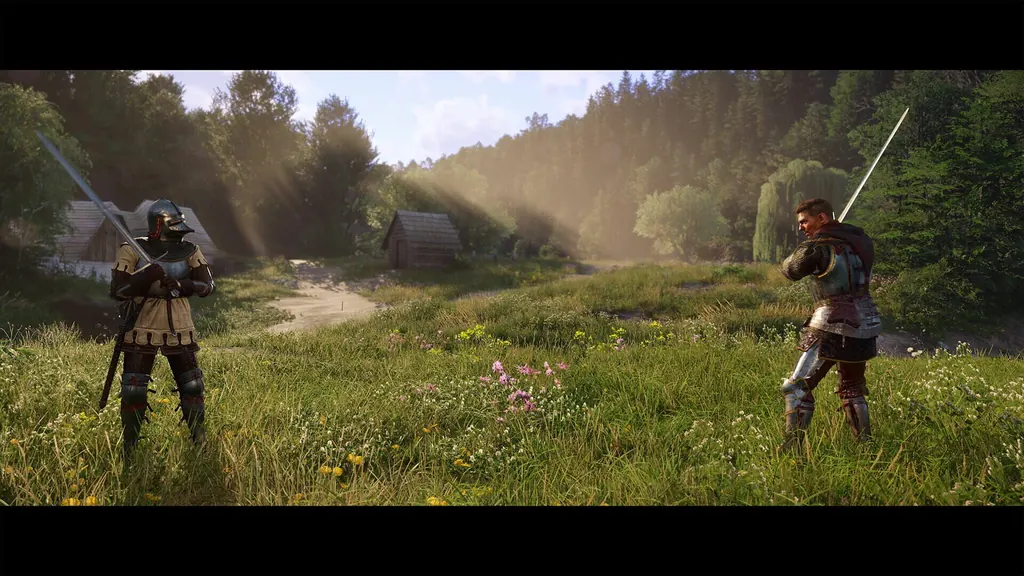
Combat is a multifaceted system that demands preparation and strategy. In terms of weaponry, the player has the freedom to choose between close-quarters and ranged options. In close combat, it is possible to use shortswords, longswords, heavy weapons (such as maces, axes, and hammers), and polearms, some of which can be wielded with a single hand, allowing for the use of shields. For ranged combat, the game incorporates bows and arrows, crossbows, and even early forms of firearms. The combat mechanics are rich, allowing the player to choose the direction of attacks, block blows, and execute special combos and counterattacks, many of which are only unlocked throughout the missions.
Life in Kingdom Come: Deliverance II is intrinsically linked to a rigorous system of crime and punishment. The player can engage in illicit activities, such as stealing items (in lockpicking and pocket-picking minigames), committing assaults, murders, or illegal hunting. The consequences of these actions are immediate: NPCs may notice the crime or even deduce responsibility for missing items from the player’s inventory. Getting caught can result in the possibility of being detained by guards or civilians, forcing the player to choose between fleeing, fighting, or attempting to negotiate.
The punishments are as varied as the crimes. When detained, the player can choose to use dialogue skills to be pardoned, or accept physical and legal sanctions, such as fines, caning, human branding, or spending time in a pillory. Furthermore, exploration and traversal have also been enhanced. Fast travel no longer presents traps, but rather encounters with NPCs, friends, or enemies, where the player must decide whether to interact or attempt to avoid confrontation, calculating the chance of success. For those who desire the ultimate challenge, the game offers a post-launch hardcore mode that disables fast travel, hides health and stamina indicators, and forces the player to choose “debuffs” that decrease leveling capacity.
📊 Interaction and Combat Aspects in KCD II
| System | Primary Focus | Mechanic Examples |
|---|---|---|
| Open World | Immersion and Consequences | The environment and NPCs react actively to the player’s actions. |
| Social Dialogue | Tactical Interaction | Skills (Appearance, Coercion, Domination) determine the success of the conversation. |
| Melee Combat | Strategic Combat | Use of swords, maces, axes, and polearms; blocking and counterattacking. |
| Ranged Combat | Varied Arsenal | Bows and arrows, crossbows, and primitive firearms. |
| Daily Life | Crime and Punishment | Theft, assault, or illegal hunting generate immediate consequences (imprisonment, fines, etc.). |
Launch, platforms, and collector’s editions
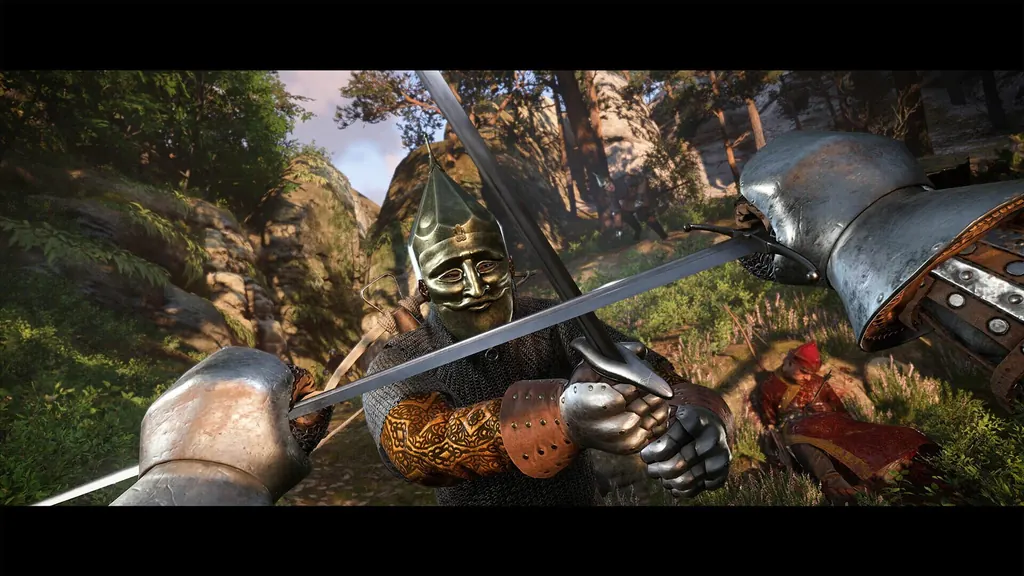
The release of Kingdom Come: Deliverance II represents an ambitious milestone for both Warhorse Studios and the action RPG genre. After a long period of development and anticipation, the title is scheduled to reach players on next-gen platforms with a well-defined release schedule. Players will be able to immerse themselves in the story of Henry of Skalitz on next-gen consoles and PC, with the release date for Windows, PlayStation 5, and Xbox Series X/S set for February 4, 2025. If you want to learn more about the historical context, you can check out the history of the medieval world of Bohemia. However, the medieval journey is not limited to this window. An expansion of the Bohemia universe is also planned for the Nintendo Switch 2, with an estimated release in 2027, ensuring that the saga reaches an even more diverse audience.
Launch Editions: Choosing Your Experience
To cater to different collector and player profiles, the game will be available in three distinct versions at retail: the Standard Edition, the Gold Edition, and the Collector’s Edition. The Standard Edition offers basic access to the vast world of Bohemia, while the Gold Edition elevates the experience with significant additional content. This more complete version includes three DLCs (downloadable content) that will be released later, in addition to exclusive equipment for the protagonist and bonus content called “Shields of Seasons Passing.”
Even those who opt for the Standard Edition will not be without extra content. Buyers can separately and digitally purchase the three expansions and the “Shields of Seasons Passing” bonus content, assembling the ideal package to deepen the immersion in Henry and the historical period. The Collector’s Edition, on the other hand, is the pinnacle of collecting, as it includes all the content from the Gold Edition and complements it with a selection of merchandise items celebrating the saga. Furthermore, it is important to note that all customers who pre-order will receive an exclusive bonus mission titled “The Lion Crest,” which will bring additional equipment for the protagonist.
In summary, the release of Kingdom Come: Deliverance II is not just a date, but a carefully planned content ecosystem. Whether through digital or physical purchase, and whether on the initial release date of 2025 or the future release for the Nintendo Switch 2 in 2027, the player will have access to a robust and detailed universe, with the promise of continuous improvements and expansions that promise to enrich every aspect of life and combat in the region of Bohemia.
Critical Reception, Sales, and Awards
The success of Kingdom Come: Deliverance II was not limited to its historical and mechanical ambition; it resonated deeply in the market, winning over both professional critics and the general public. Critical reception was largely positive, earning a “generally favorable” rating from the Metacritic aggregator. OpenCritic reinforced this consensus by reporting that 95% of critics recommended the title.
Critical Acclaim and Awards
Critics praised the open world’s immersive power, the depth of the RPG system, and the richness of the narrative. Analysts like Joshua Wolens of PC Gamer compared the game to long-standing “system-heavy” titles, praising it as “a ridiculous object of ambition and peculiarity that, somehow, fulfills its ambition and peculiarity.” This praise highlighted the game’s ability to allow the player to act in various social facets, whether as a soldier, spy, player, or blacksmith.
From a technical standpoint, the game was lauded for its optimization performance, showing few noticeable bugs. Brendan Lowry of Windows Central noted that “what Warhorse built here is hardly one of the most visually impressive games ever developed, rich in the finest details, stunning natural lighting, and what appear to be impossible draw distances.” Although some players voiced objections regarding specific narrative elements, the development team maintained its focus on delivering a historically accurate and rich experience.
In terms of prestige, the success was crowned with major accolades. The title won the Best PC Game award at Gamescom 2024 and received the prestigious The Game Award for Game of the Year 2025, solidifying its status as a landmark in the action RPG genre.
Sales and Commercial Impact
The impact of Kingdom Come: Deliverance II was equally monumental in sales. On launch day, the game topped the Steam best-sellers list and achieved immediate financial equilibrium. The title broke records for concurrent players, hitting a peak of 256,206 players on Steam, surpassing the original by more than 60,000 players. The initial success was so massive that it sold over 1 million copies on the first day.
Sales growth maintained an impressive pace: by June 2026, Kingdom Come: Deliverance II had sold over 6 million copies worldwide. Its global appeal was proven by the game being the 15th best-selling title in 2025 in the United States, and the Chinese market was recognized as the second-largest market for the title. The sales strength confirmed that the game is not just a niche success, but a phenomenon of industrial and academic scale, fulfilling the ambitious goal of Warhorse Studios.
The Series Legacy and the Future of the Characters
Since its release, the Kingdom Come saga has set a new standard for the historical RPG genre. Far from being just another fantasy game, the series has established itself as a deep study of medieval life, where historical verisimilitude and social complexity are not mere narrative window dressing, but rather mechanical pillars of the game itself. The focus on a rigorously detailed life system, which covers everything from complex social interactions, managed by an advanced dialogue system, to the severe consequences of crime and punishment, forces the player to inhabit the role of an individual deeply rooted in a specific period of history. Thus, anyone interested in epic narratives and crossovers, like the story of Kingdom Hearts and Disney, can notice the ambition behind major franchises. This level of detail and immersion transforms the experience of Kingdom Come: Deliverance II into more than an action game; it is a dive into a vibrant cultural and political ecosystem, raising the bar for the ambition expected in open-world RPGs.
Commitment to the Saga’s Future
The success and enthusiastic reception of the game have not only ensured continuity but have also reignited interest in new chapters of the saga. Warhorse Studios’ commitment to the Kingdom Come universe is notable and extends beyond the release of Kingdom Come: Deliverance II. In a move that kept the fan community excited, the developer confirmed the development of new projects within the series. In May 2026, during the ChinaJoy 2026 event, communications director Tobias Stolz-Zwilling shared details about the next title. This new project is scheduled for release in the developer’s fiscal year of 2027, a period spanning from April 2027 to March 2028.
This news not only guarantees narrative continuity for fans but also reinforces Kingdom Come‘s identity as a rich and vast universe, capable of sustaining multiple stories and characters over time. The fact that Warhorse Studios continues to invest in the created mythology—which already features notable characters and locations—demonstrates a deep respect for the experience the public had with the game. The focus on longevity and the expansion of the lore suggests that the fate of the protagonists and the kingdom is far from being written.
In summary, the success of Kingdom Come: Deliverance II is not seen as an endpoint, but rather as a robust chapter in an ever-expanding epic saga. The growing anticipation, fueled by future announcements, establishes Kingdom Come not only as a standout title in the RPG genre but as a literary and interactive franchise with deep roots in medieval history; to better understand this trajectory, it is interesting to know its development history. The community can prepare for more challenges, more discoveries, and most importantly, to follow the fate of the characters in a world that promises to be even richer and more detailed.
Glossary
- CryEngine: The graphics engine used to create the game world, responsible for ensuring high visual fidelity and simulation depth.
- RPG: A game genre focused on character progression, story, and complex narrative choices in an open world.
- Facial Capture: A motion capture technique that records and replicates actors’ facial expressions for digital characters.
- Stunt Doubles: Actors hired to perform action scenes or acrobatics on behalf of other participants, ensuring scene authenticity.
- Consequence System: A mechanic that ensures the player’s actions affect the world and NPCs, making the environment highly reactive.
Frequently Asked Questions
What is the release date for Kingdom Come: Deliverance II?
The initial release is scheduled for February 4, 2025, available for PlayStation 5, Windows, and Xbox Series X/S. There is also planned support for the Nintendo Switch 2 in 2027.
In what historical period and location is the game set?
The story unfolds in the year 1403, in the Kingdom of Bohemia. This strategic location was part of the Bohemian Crown Lands and the Holy Roman Empire, in the region that is today the Czech Republic.
Is the protagonist of KCD II the same as in Kingdom Come: Deliverance?
Yes, the protagonist is Henry de Skalitz. His journey continues the plot, acting in the resistance defending King Wenceslaus IV and seeking personal revenge against the usurpers.
What platforms will the game initially launch on?
The initial launch is confirmed for PlayStation 5, Windows, and Xbox Series X/S, with an expected date of February 4, 2025. The game will also have future support for the Nintendo Switch 2.
Is the game focused on combat or narrative choices?
The game balances both aspects. It offers strategic and multifaceted combat, but the immersion is sustained by a rigorous consequence system and detailed dialogue skills, where your choices shape the world.
Conclusion
The creation of Kingdom Come: Deliverance II transcends the concept of a mere video game sequel; it is an undertaking of industrial and academic scale. The success of this medieval saga is sustained by a colossal effort from Warhorse Studios, which not only significantly expanded its workforce—growing from 131 to about 250 employees between 2019 and 2024—but also mobilized high-level historical research. With a script boasting an impressive 2.2 million words, surpassing narrative records, the game promises a depth only possible with the rigor of historians, universities, and museums.
The setting of 1403 in Bohemia, amidst the turbulent context of the civil war between Wenceslaus IV and Sigismund, is not just a backdrop, but a complex narrative engine. It is on this stage of political disintegration that Henry of Skalitz’s journey unfolds, weaving a rich tapestry of personal revenge and feudal obligations. The combination of advanced technology, such as the customized version of the CryEngine, with an immersive focus on medieval life ensures that the title is a deep dive into the complexity of the era.
The development of Kingdom Come: Deliverance II, with its release scheduled for February 4, 2025, is the culmination of years of meticulous planning and artistic ambition. Understanding its origin is understanding that the game is the result of a dedication aimed at redefining the standard of historical simulation in video games. Now that the curtain has been lifted on its creation, all that remains is to experience the journey.