Read this article in: Portuguese (Português) · Spanish (Español)
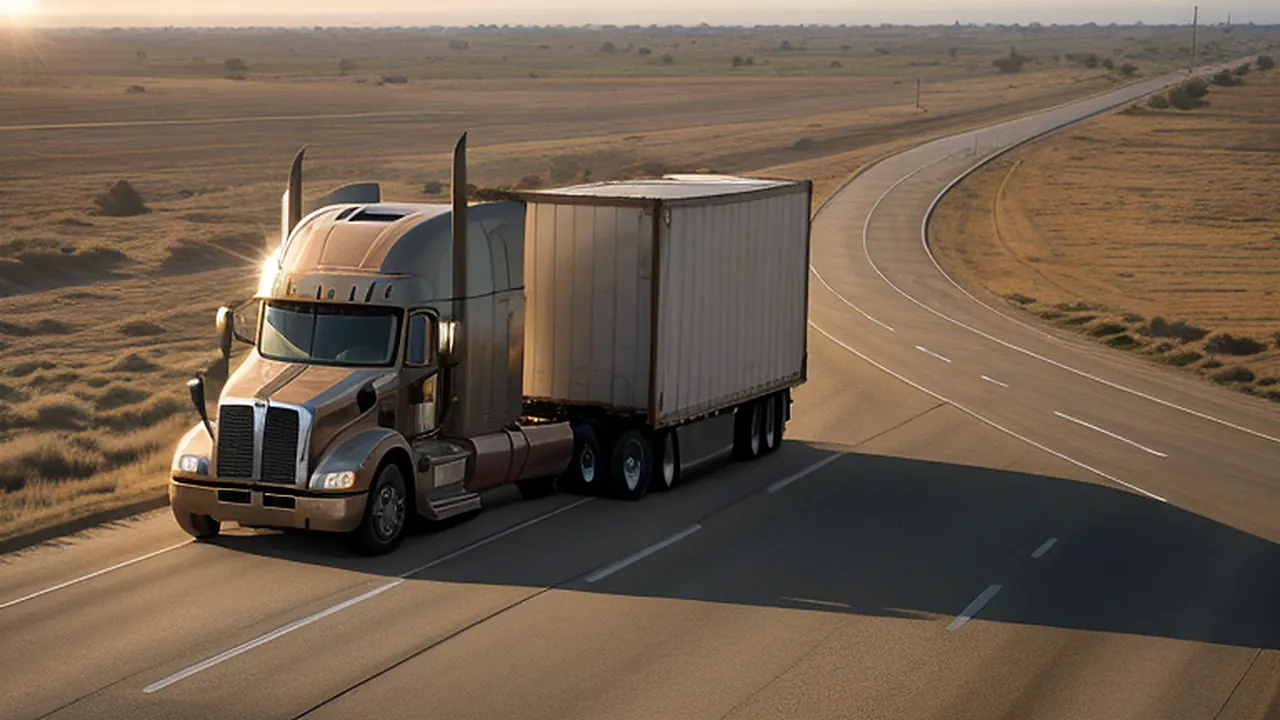
For those who want to know who created American Truck Simulator, the answer lies with the developer SCS Software. This studio, based in Estonia, is responsible for bringing to life the vibrant and detailed universe of trucking simulations. The game is not just a pastime, but a complex experience that demands immersion, knowledge of routes, and handling of heavy vehicles. SCS Software built a virtual world where drivers can simulate the long hauls and logistical challenges of traversing American roads, making truck simulation a niche global phenomenon.
The relevance of American Truck Simulator goes beyond casual entertainment. The franchise’s success reflects the growth of the simulation genre (sim-cade) and the ability to tell stories through gameplay mechanics. SCS Software has shown a constant commitment to the title’s evolution, releasing updates and content that keep the experience fresh and challenging. The studio’s involvement in creating a robust game ecosystem, which ranges from career management to detailed truck maintenance, proves its status as a benchmark in the simulation gaming industry.
In this article, we will dive deep into the story behind the creation of this phenomenon. We will explore everything from the origin of the idea and the inspirations that shaped the game to the development process, analyzing the technologies and challenges the studio overcame. Furthermore, we will address what makes the gameplay so addictive, as well as the franchise’s critical reception and commercial impact, offering a complete overview of American Truck Simulator’s legacy in the world of transport enthusiasts.
Key Points
- The success is credited to SCS Software, which combined complex simulation engineering with vast world design.
- The game simulates the routine of a professional truck driver, requiring fuel management, maintenance, and route planning.
- The technical challenge involves simulating entire road ecosystems, such as signage and terrain variations.
- The gameplay is a combination of advanced physics (weight, wear) and organic, realistic traffic AI.
- Immersion is enhanced by attention to mundane detail, replicating the culture and logistics of American transcontinental transport.
Who created American Truck Simulator: developer and team
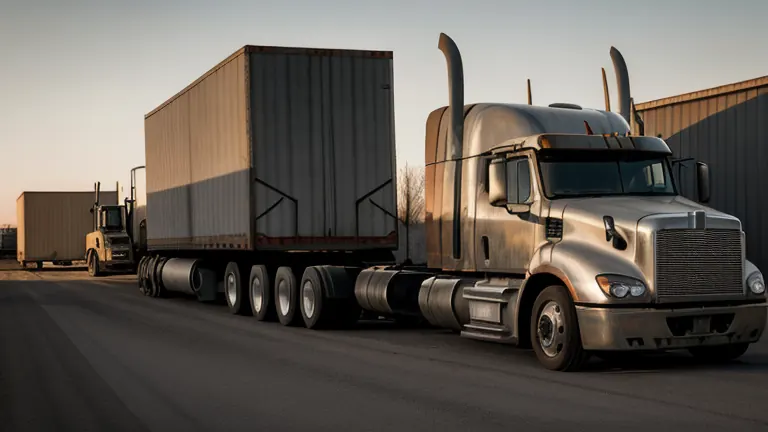
When discussing the creation of a phenomenon like American Truck Simulator, it is essential to focus on SCS Software. More than just a development studio, SCS Software has established itself as a powerhouse in creating realistic simulations, and the title is a milestone in its journey. If you are interested in learning more about the origin of other successes, such as who created Euro Truck Simulator 2, you will see that the game’s success cannot be attributed to a single brilliant idea, but rather to a process of constant evolution—a collaborative effort that combined complex simulation engineering with vast and detailed world design.
The Genesis and Evolution of the Team
The game’s development reflected SCS Software’s ability to transform ambitious concepts into playable and polished products. The team’s growth was gradual, keeping pace with the increasing complexity of the internal systems. The developers were not only responsible for coding the gameplay but were also tasked with building complete virtual ecosystems. This process required the union of experts in vehicle physics, artificial intelligence (AI) for traffic, and, crucially, artists and cartographers dedicated to recreating the geography and culture of the United States and other locations.
What truly distinguishes SCS Software’s work is this alchemy between cutting-edge technology and mundane detail. Truck simulation, by its nature, is extremely demanding. It’s not enough just to make the vehicle move; one must simulate wear and tear, weight physics, weather conditions, and the nuances of driving on different terrains. Every development module, therefore, represented a technical victory in simulation, raising the standard of the genre.
Collaborative Effort in Simulation and Design
The commercial and critical success of American Truck Simulator is largely a testament to teamwork. The team had to master two seemingly separate areas: the physics engine and world design. On one hand, the simulation engine needed to be robust, capable of handling the realistic physics of hundreds of moving vehicles. On the other, world design required deep cultural research so that the cities, roads, and routes felt authentic and alive. This synergy between technical rigor and artistic ambition is the pillar of the franchise.
In summary, the story of American Truck Simulator is the story of SCS Software transforming a niche interest—road transport—into a massive entertainment experience. The result is a product that not only entertains but sets a new standard of realism and depth in simulation games, proving the value of a collective and highly specialized vision.
📌 Pillars of American Truck Simulator’s Success
- Complex and detailed simulation engineering.
- Vast world design, with recreation of geography and culture.
- Realistic physics: wear, weight, and weather conditions.
- Collaborative work between AI and art experts.
The origin of the idea and the inspirations behind the games

The genesis of an ambitious project like American Truck Simulator did not stem from a simple desire to create just another racing game. On the contrary, the initial concept was deeply rooted in an almost nostalgic passion for the long-haul trucking universe. The central idea was to transcend mere driving simulation and delve into the rhythm and atmosphere of a professional trucker’s life. The developers sought to capture the feel of the asphalt under the wheels, the weight of the cargo, and, fundamentally, the vastness of the horizon that defines transcontinental journeys—a feeling comparable to the story of the creator of the Microsoft Flight Simulator.
The calling of the road and the mundane detail
For the team behind the project, the appeal of the truck lies precisely in its character as a robust and essential piece of economic machinery. It’s not just about moving a vehicle from point A to point B; it’s about simulating a work routine that demands planning, endurance, and geographical knowledge. This professional perspective was crucial, as it elevated the game from a casual pastime to an experience that requires immersion and respect for the real travel cycle. Therefore, the journey is as important as the destination.
The visual inspirations were equally vast and complex. The focus was on replicating the magnificence and diversity of the American map, a setting that, in itself, offers an infinite catalog of landscapes and logistical challenges. The developers didn’t just want a set of roads; they aimed to recreate the feeling of traversing distinct states and regions, from bustling urban landscapes to vast desert plains. This richness of scenery is what gives life and purpose to every simulated stretch of travel.
The ultimate goal, and the conceptual engine behind everything, was to create a truly immersive environment. It was essential that the player felt like they were living the experience, not just playing with a vehicle. This involved meticulous attention to detail: from managing rest time to interacting with different types of cargo and delivery points. This holistic approach ensures that the user connects not only with the machine, but with the culture, logistics, and lifestyle that long-haul trucking represents in the United States.
Development: technology, challenges, and evolution
Developing an epic-scale road simulator like American Truck Simulator is not just a matter of 3D modeling; it is a feat of software engineering and complex systems design. The main technical challenge that SCS Software had to overcome was creating a vast virtual environment while maintaining a remarkably high level of cohesion and detail. It isn’t enough to just replicate maps; one must simulate entire road ecosystems, from traffic signals in busy cities to the open landscapes and terrain variations that characterize long, interstate journeys. The geographical accuracy and the ability to integrate multiple points of interest (POIs)—such as gas stations, loading yards, and rest areas—required data planning and refinement time that exceeded the scope of a traditional game.
The Physics and Artificial Intelligence Behind the Simulation
At the heart of any high-quality simulator lies the physics and artificial intelligence (AI). In the case of American Truck Simulator, the vehicle physics had to be meticulously calibrated to reflect the weight, center of gravity, and dynamics of a real truck. This involves not only basic movement (acceleration and braking) but also the simulation of elements like wind drag, tire wear, and suspension behavior under extreme loads. These complex calculations ensure that the gameplay is not only visually pleasing but physically believable.
📘 Polishing
This is the fine-tuning stage of development, where developers refine small variables, such as engine sounds at different RPMs, to ensure the experience is cohesive and flawless.
Parallel to this, the traffic AI represents another pillar of technical challenge. It’s not just about cars driving on predetermined routes. The system must generate traffic that behaves organically, reacting to traffic laws, congestion, and even the most chaotic and realistic driving patterns. Refining this AI so that encounters with other vehicles feel spontaneous and challenging is work that demands exhaustive testing and constant adjustments, raising the simulation standard to an unprecedented level of detail in the genre.
Tools and the Polish Cycle
To support this technological ambition, the development team had to employ a sophisticated set of development tools. The process involved a continuous cycle of iteration, where every feature—be it a new type of cargo, a mechanical maintenance system, or a new toll—had to be integrated without compromising the game’s stability or performance. The time spent on polishing, or polish, is perhaps the most underestimated aspect of development. It is the period where developers fine-tune small variables, refine the engine sounds at different RPMs, and ensure that the user experience, from the first to the last mile, is cohesive and flawless.
In summary, the success of American Truck Simulator is a testament to SCS Software’s ability to transform mundane concepts—like road transport—into a massive and, above all, technically rigorous entertainment experience. The combination of vast cartography with advanced physics and sophisticated AI is what elevates the title from a mere game to a true high-fidelity simulator.
Gameplay and What Makes Truck Simulation So Special
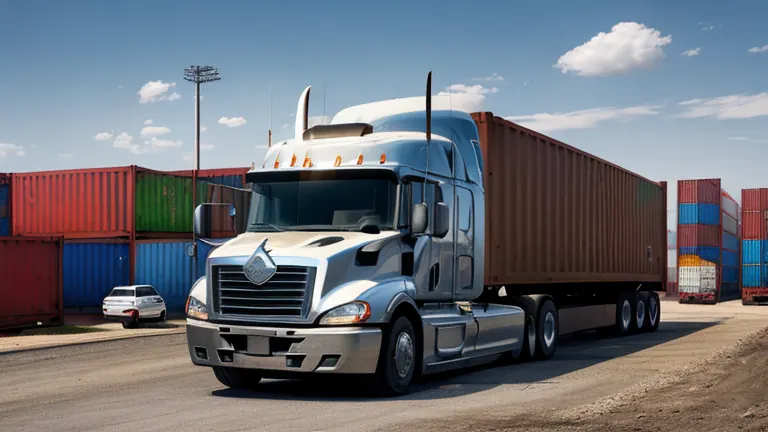
What truly elevates American Truck Simulator above a mere pastime is the depth of its operational systems. The gameplay is designed to replicate the complexity and real rhythm of road transport, turning every journey into a logistical and physical challenge. It’s not enough just to drive; the player takes on the role of a true industry professional, where resource management and strict adherence to rules are as crucial as driving skill.
Managing the Operation
The core of the realism lies in the constant need for attention to operational details. The player must actively manage the vehicle’s economy and their own career. This implies a continuous cycle of planning: calculating fuel consumption over long distances, scheduling periodic maintenance to prevent breakdowns, and, of course, optimizing routes to maximize profit. The game’s economy is not linear; it requires the player to keep the truck in optimal condition to keep working. Ignoring vehicle wear or fuel levels can result in forced downtime, simulating the real pressure and costs of the transport industry.
⚠️ Warning
Be aware: Success in the simulation depends on more than just driving well. It requires strategic thinking that includes managing fuel, performing maintenance, and strictly obeying traffic laws.
Interaction with the world and with non-player characters (NPCs) is equally rich in detail. Customers provide the main motivation, delegating the hauls that drive career progression. However, the world is monitored. The police and inspection system adds a layer of legal challenge; the player must pay attention to traffic laws, as deviations or speeding result not just in warnings, but in consequences that affect the continuity of the journey. This constant surveillance raises the level of tension and requires the player to adopt the posture of a responsible driver.
Career progression is the engine that keeps the player engaged. Success on every delivery not only fills the money tank but also grants access to better equipment, more powerful trucks, and more challenging routes. This sense of evolution, of moving from small local hauls to large interstate transport, is what cements the immersion. The game thus manages to transform the mundane task of “delivering cargo” into an epic journey of professional and geographical achievement.
In short, what makes the simulation so engaging is this alchemy of interconnected systems. The player is constantly reminded that success depends not only on skillful driving but on strategic reasoning that encompasses everything from engine maintenance to compliance with every traffic rule. It is this fidelity to the daily life of a truck driver that transforms the entertainment into a highly plausible and addictive experience.
Critical Reception, Sales, and the Franchise Legacy
The success of American Truck Simulator transcended the mere popularity of a simulation game. It established a new paradigm within the road simulator genre, proving that the operational depth and realism of a niche interest—freight transport—could indeed resonate with a global and extremely vast audience. Critical reception was consistently praised not only for its technical fidelity but for its ability to create a sense of epic scale and continuous journey. Video game analysts and journalists frequently pointed to the work as an immersion milestone, differentiating it from previous titles due to its systemic complexity and the way it integrates the economic aspect of the trucking profession. The game doesn’t just simulate driving; it simulates the life and challenges of a logistics career.
Commercial Impact and Industry Recognition
From a commercial standpoint, the performance of American Truck Simulator is a remarkable testament to the longevity and cultural appeal of the theme. The franchise’s business model, which relies on a constant cycle of expansions and add-on content, has not only guaranteed a robust revenue stream but has also kept the player base engaged for years. Financial success is, therefore, intrinsically linked to its capacity for evolution. Industry recognition was visible in awards and mentions at gaming events, where the title was frequently cited as an example of excellence in physics simulation and mission systems. This recognition established SCS Software not just as a niche developer, but as a powerhouse in large-scale simulation entertainment.
🧪 What Makes the Game More Than Just a Simulator?
American Truck Simulator isn’t just about driving; it simulates the routine and challenges of a logistics career. This systemic depth, which integrates the economic aspect of the profession, gives the player a sense of purpose and emotional weight that few games can replicate.
The legacy of American Truck Simulator lies in how it raised the bar for future simulators. It proved that combining robust physics, sophisticated traffic AI, and a detailed, living map could sustain a high-quality entertainment experience for long periods. The player isn’t just completing a mission; they are living a work routine, which imparts an emotional weight and sense of purpose that few games can replicate.
The Future and Consolidation of the Franchise
The initial success paved the way for the consolidation and expansion of the franchise’s universe. The development of sequels and complementary games, like Euro Truck Simulator: The Story, not only capitalized on the success but also allowed the developers to explore different road geographies and cultures, expanding the scope in an organic and coherent manner. Each new version or expansion is met with the expectation of maintaining the high level of detail and systemic depth that defined the original. This cycle of continuous development is the key to the intellectual property’s sustainability, ensuring that the world of truckers remains a vibrant and constantly evolving theme in the gaming landscape.
In summary, American Truck Simulator is not just a game; it is an entertainment ecosystem that redefined what is possible in terms of professional life simulation. Its commercial impact and accumulation of awards and critical praise have cemented its status as a modern classic, setting a standard of realism and engagement that continues to inspire and challenge the simulation industry to this day.
Glossary
- SCS Software: The developer responsible for creating the simulator, recognized for transforming concepts into highly realistic simulations.
- Vehicle Physics: The system that simulates the truck’s movement, considering weight, center of gravity, and the impact of the terrain.
- Artificial Intelligence (AI): The system that controls the traffic of other vehicles, making them behave in an organic and realistic manner.
- Cartographers: Specialists responsible for recreating the geography and maps of the United States with great detail and accuracy.
Frequently Asked Questions
Is American Truck Simulator realistic? Does it simulate the life of a truck driver?
Yes, the focus is on a high level of realism. The game goes beyond just driving, simulating the professional life of a truck driver. You must manage the vehicle’s economy, plan maintenance, and strictly follow traffic rules, replicating the real pressure and pace of the transportation industry.
What is the difference between American Truck Simulator and Euro Truck Simulator?
American Truck Simulator is notable for its fidelity to the geography and culture of the United States. While other simulators focus on other regions, this title is dedicated to recreating the vastness and diversity of American maps, from the great plains to busy urban centers.
Do I need a powerful computer to run American Truck Simulator?
Yes, it is technically demanding simulator. Simulating vehicles with advanced physics, complex traffic, and a vast virtual environment requires high processing power. Robust hardware is necessary to ensure the experience is smooth and immersive, without performance glitches.
Is the game difficult to learn? Is it possible for beginners?
Although the depth of the systems—such as physics and logistics—can present a learning curve, it is entirely possible for beginners. The game requires you to connect not only with the driving, but with operational responsibility, which ensures that progress is gradual and rewarding.
Are there plans for new expansions or sequels to American Truck Simulator?
The available material focuses on the game’s success story and development systems. There is no specific information regarding future plans, such as new map expansions or direct sequels, contained in this content.
Conclusion
The story of American Truck Simulator transcends mere digital entertainment; it is a case study on how technical dedication and cultural ambition can merge to create a truly immersive experience. The title’s success is a testament to SCS Software’s ability to go beyond 3D modeling, building a virtual ecosystem where realistic vehicle physics, organic traffic AI, and vast American cartography unite. What makes the game remarkable is this alchemy: the simulation is not limited to moving a truck, but to recreating the routine, the weight of the cargo, and the culture of long-haul trucking.
This feat of complex systems engineering elevates the simulation genre to a new level of realism. It is the result of a collaborative effort that required mastery of multiple fields, from suspension physics and wind behavior to deep cultural research to ensure every city and road feels authentic. American Truck Simulator, therefore, is not just a pastime; it is a tribute to the rigor and vastness of the roads that shape the economy and life across the continent.
By understanding its complexity, we realize that the journey is as rich as the destination. We invite you to dive into this experience and rediscover the fascination behind the asphalt, understanding that behind every simulated trip, there is engineering and passion.