Read this article in: Portuguese (Português) · Spanish (Español)
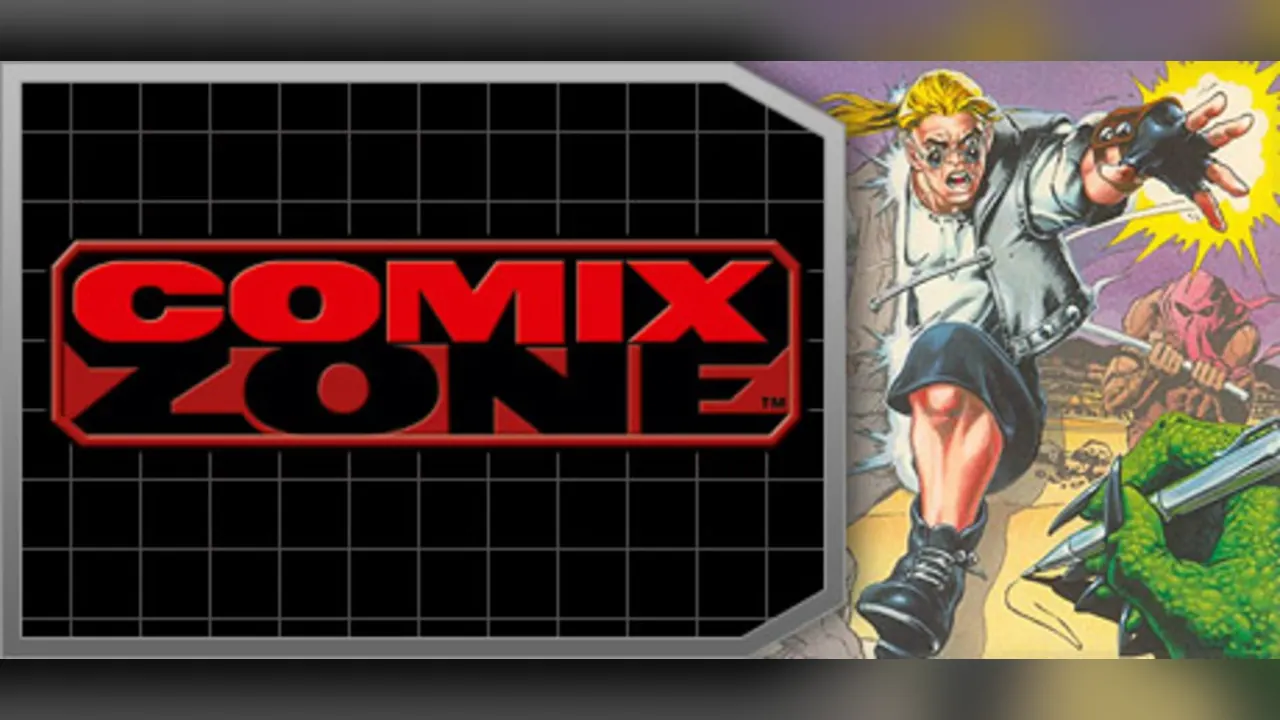
To answer who created Comix Zone, one must delve into the inner workings of the Sega Technical Institute (S.T.I.). The game, a classic beat ’em up title, was developed by S.T.I. and published by Sega. Although the team included talents such as programmer Peter Morawiec, who conceived the idea, and artists like Chris Senn and Tony DeZuniga, the original concept stemmed from Morawiec’s vision. He devised the idea of transporting the action inside the panels of a comic book, a concept first presented in a demonstration video in 1992. Thus, the title is the result of a collaborative effort that transformed the developers’ passion for comics into an interactive experience.
The significance of Comix Zone extends beyond its initial release. The game launched for the Sega Genesis in 1995, marking a golden era for action video games. However, its story didn’t end there. The title demonstrated remarkable longevity: after being ported to platforms like Windows and Game Boy Advance, the game maintained its cultural relevance. Concrete evidence of its status as a timeless classic is the announcement, in August 2022, of a film adaptation, proving that the narrative of Comix Zone resonates to this day and continues to inspire new media.
In this article, we trace the entire journey behind the title. We will detail in specific sections how the game was conceived, from the original idea to the technical implementation. We will explore the narrative universe, set within a post-apocalyptic comic book, and discuss the gameplay, which is a fascinating blend of martial arts combat and puzzles. Finally, we will provide a complete overview of Comix Zone’s reception and legacy, revisiting the details of its production, the creative team, and the technological challenges that made it a 90s icon.
Key Points
- Peter Morawiec conceived the game at the Sega Technical Institute (S.T.I.), inspired by the combination of comics and games.
- The game is unique for simulating the experience of a comic book, using pages and panels as the action setting.
- Adrian Stephens overcame a technical challenge by making the game run on the Genesis with uncompressed graphics in 2MB.
- The soundtrack was created by Howard Drossin in a rock style, showcasing the Genesis’s advanced capabilities.
- Released in 1995 for Genesis, the title had later versions for Windows and Game Boy Advance.
Comix Zone in Summary
| Developer | Sega Technical Institute |
|---|---|
| Publisher | Sega |
| Producer | Mike Wallis |
| Designer | Peter Morawiec |
| Programmers | Stieg Hedlund; Adrian Stephens |
| Artists | Chris Senn; Tony DeZuniga; Alex Niño |
| Writer | Peter Morawiec |
| Composer | Howard Drossin |
| Platforms | Sega Genesis, Windows, Game Boy Advance |
| Release | Genesis NA: July 1995; JP: September 1, 1995; EU: October 6, 1995; Windows NA: November 13, 1995; EU: March 1996; Game Boy Advance EU: September 11, 2002 |
| Genre | Beat ’em up |
| Mode | Single-player |
Who Created Comix Zone: Developers and Team
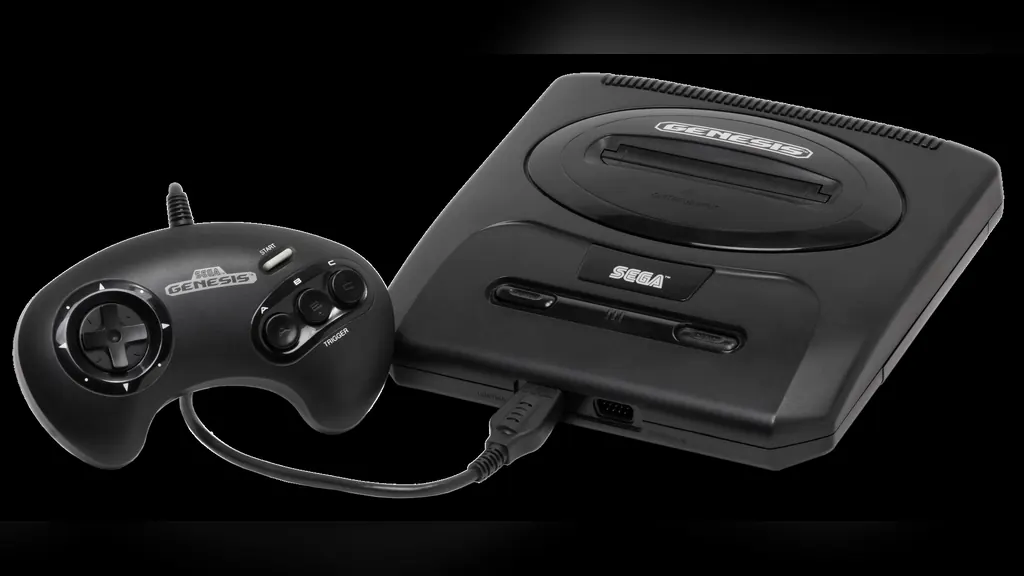
The genesis of Comix Zone is intrinsically linked to the Sega Technical Institute (S.T.I.), where the program was conceived. The visionary behind the idea was Peter Morawiec, an S.T.I. programmer. Morawiec, who was passionate about comics, came up with the concept after visiting a comic book store in Palo Alto, California. He felt that comics and games were complementary and began developing a technological demo for the Amiga. The initial inspiration came from a 1985 music video, “Take On Me,” by A-ha, which showed a race car driver in a comic connecting with a woman in the real world. Morawiec adapted this idea, adding a dystopian setting inspired by his interest in science fiction.
The concept was presented in December 1992 in a video called “Joe Pencil Trapped in the Comix Zone” to Roger Hector, head of the S.T.I., who was immediately captivated. After Hector’s support, the project was taken to Tom Kalinske, CEO of Sega of America, who approved it. Although there was a rush to develop it, the project went through several stages, and the development team grew considerably. Initially, the group consisted of Morawiec, Adrian Stephens, and Dean Lester. Over time, the team expanded to about a dozen people, receiving high priority at the S.T.I.
Creative and Technical Collaboration
The development of Comix Zone required the contribution of several specialists. Peter Morawiec was not only the writer and designer but also the project leader. In the art department, there was the work of Tony DeZuniga, who drew the opening and closing sequences, and Chris Senn, who contributed character animations, background art, and bosses. Alex Niño also worked as an artist. In the programming field, Adrian Stephens was crucial in finding a complex technical solution: making the game run on the Genesis by decompressing large graphic pages, all within a two-megabyte limit—something the console was not designed to do; this engineering showcases the evolution of systems, much like the console’s development history.
Other essential members included executive producer Mike Wallis, who worked on the title, and composer Howard Drossin. Drossin created the rock-style soundtrack using the GEMS sound driver to demonstrate that the Genesis was capable of producing more than simple chiptune. Furthermore, the project underwent significant changes, such as changing the protagonist from “Joe Pencil” to “Sketch Turner,” and adding the companion, Roadkill, a rat, after objections from the marketing department. Morawiec also provided the voice for the villain Gravis.
Despite all of Sega’s support, development was marked by delays and scope changes. The team was pressured to speed up the release due to the arrival of new consoles, such as the 32X and the Sega Saturn. These circumstances caused the scope of Comix Zone to be reduced for a faster launch, and even two levels had to be cut. Despite these challenges, Sega’s publication ensured that the game reached the public on several dates, including the North American launch in 1995 for the Genesis, and later versions for platforms like the Windows and the Game Boy Advance.
🕒 The Comix Zone Development Journey: Milestones
- 1985 — Initial inspiration from the A-ha music video “Take On Me.”
- December 1992 — Presentation of the video concept to Roger Hector, head of S.T.I.
- 1995 — North American launch for the Genesis.
- 1996 — Release in later versions for Windows and other platforms.
The Origin of the Idea: From Demo Video to Comic Book
The creative spark behind Comix Zone didn’t originate in a big studio office, but rather in the heart of the Sega Technical Institute (S.T.I.), Sega’s development facility. Peter Morawiec, a programmer at S.T.I. itself, is credited with conceiving the idea. Morawiec and his colleagues were passionate about comic books, an enthusiasm that shaped the initial concept. This passion was so strong that, during a trip to comic book stores in Palo Alto, California, Morawiec had an epiphany: he felt that the combination of comics and video games would be extremely complementary. Thus, he began to reflect on other major fiction franchises, such as the Assassin’s Creed universe and its creators. This feeling led him to develop an initial technological demonstration on his Amiga.
The concept was deeply influenced by visual references from pop culture. Morawiec was partly inspired by the 1985 music video “Take On Me” by the group A-ha, which depicts a race car driver in a comic connecting with a woman in the real world. However, Morawiec added his own layer of science fiction, creating a dystopian setting for the game. The result was the demo video, titled “Joe Pencil Trapped in the Comix Zone,” which materialized the idea of a world where graphic art and action merged.
📘 Sega Technical Institute (S.T.I.)
It was Sega’s development facility where the creative spark for Comix Zone emerged. It was the environment where Peter Morawiec and his colleagues developed the game’s initial concept.
The Presentation and Approval
In December 1992, Morawiec presented the video to Roger Hector, head of S.T.I. The impact was immediate. According to accounts, Hector was captivated, stating that the moment he saw the project, he knew it would be a success. He encouraged Morawiec to take the concept directly to Tom Kalinske, the C.E.O. of Sega of America, who promptly approved the project. However, the game’s destiny took a detour. Kalinske wanted development to begin immediately, but Comix Zone was temporarily put on hold. Sega’s priority was to release a Sonic the Hedgehog game for the 1993 Christmas season, which consumed S.T.I.’s resources with Sonic Spinball.
After the release of Sonic Spinball, S.T.I. began presenting various concepts to Sega management again. Tom Kalinske, who remembered the Comix Zone proposal, asked that development resume. Morawiec returned to the project, and the team expanded, gathering talent such as executive producer Mike Wallis, artist Tony DeZuniga, and animator Chris Senn. The developers’ passion for comics not only inspired the concept but also ensured that the game was treated with the highest level of support within the studio, despite the inevitable delays and scope changes that marked its development until its 1995 release.
The Game’s Universe: Setting It Within a Comic Book
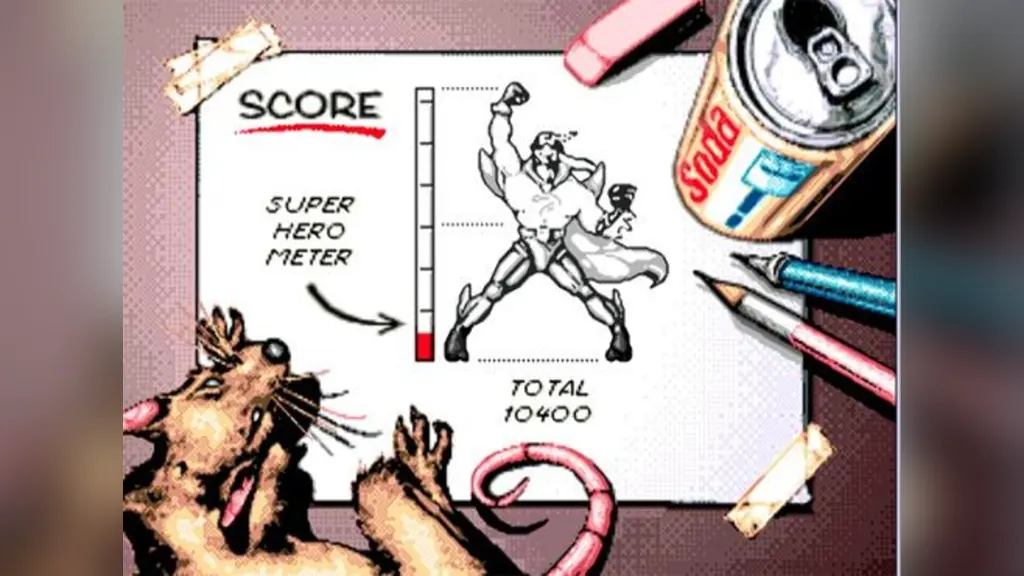
The great thematic differentiator of Comix Zone lies precisely in its setting: the game is not just a superhero backdrop, but the actual universe of a comic book in action. The player is dropped into a world that is, in essence, a comic book story, and this narrative structure shapes every aspect of the gameplay and plot, recalling the depth of narratives like Ori and the Blind Forest.
The Setting in Pages and Panels
The story places us in the shoes of Sketch Turner, a comic book artist working on his comic, The Comix Zone. The setting is a post-apocalyptic Earth, and the plot begins when, during a storm, lightning strikes the comic book, allowing Mortus, the mutant antagonist, to escape its pages. This catastrophic event traps Sketch within his own creation. The game environment is built from the aesthetic of American comics, making each level a page or a set of panels.
The progression within the game mimics reading a comic book. The player must move through a series of panels that can contain both enemies and simple puzzles that must be solved to advance to the next frame. This structure not only defines the game’s rhythm but also incorporates platforming and puzzle elements into the beat ’em up’ genre. The narrative itself is a game mechanic: the dialogue and information are represented visually through speech bubbles, making the text an active part of the gameplay experience.
Sketch’s Journey in the Narrative
Trapped within his own comic book, Sketch teams up with Alissa Cyan, the leader of the resistance against the mutants. The conflict intensifies when Mortus, desiring a physical form in the real world, pursues Sketch through the panels. The protagonist’s central goal is therefore twofold: to survive the threats and, more crucially, to find a way to escape the comic book and return to the real world. Confrontations take place in different locations of a post-apocalyptic world, such as a decapitated New York City or the Zealand atolls.
This thematic setting is rich with concrete details. In addition to fighting Mortus’s henchmen, the player can interact with the comic book material itself—for example, tearing a page to create a paper airplane that serves as an attack. This fusion of physical action and narrative mechanics is what gives the title its unique edge. In short, Comix Zone isn’t just set in a comic book; it makes the player live the experience of being a comic book.
📌 Narrative Structure and Gameplay in Comix Zone
- Setting: A universe that simulates a comic book.
- Progression: Mimics reading a comic book, advancing through panels and frames.
- Mechanics: Combines platforming, puzzle, and beat ’em up elements.
- Interaction: The player can use the comic book material, such as tearing pages.
Development and Challenges: The technology behind the action
The development journey of Comix Zone was a technical and artistic deep dive into the heart of the Sega Technical Institute (S.T.I.). The central challenge for the developers was not just to create an action game, but to simulate the visual and narrative experience of a comic book in motion. This process required intense collaboration among various specialists, including designer Peter Morawiec, programmers Stieg Hedlund and Adrian Stephens, and artists Chris Senn and Tony DeZuniga.
Technically, the project faced significant hurdles. Artists Tony DeZuniga were responsible for the opening and closing sequences, initially drawing the materials with India ink and pencil before digitizing and processing them for the Genesis. The Genesis system itself, by its nature, was not designed for the type of graphic manipulation the game demanded. Adrian Stephens highlighted the challenge of programming the title to fit into just two megabytes while still being able to decompress large pages of graphics during gameplay. The impact of this technical ambition and the constant addition of features led to significant delays in the release schedule.
Refining the Scope and Challenges
Development was not linear. The team struggled with the pressure to add features, and even Sega’s testing department suggested increasing the difficulty level, a recommendation that Morawiec regretted. At a critical point, the game’s scope had to be drastically reduced. This containment came due to market pressure, the arrival of next-generation consoles like the 32X and the Sega Saturn, and even one programmer’s expectation of a child. The result was the removal of two levels to ensure a faster launch.
Technology had to be adapted to reach different audiences and platforms. The title originally launched on the Sega Genesis on September 1, 1995, in Japan, and on October 6, 1995, in Europe. For the PC, Sega adapted the game for Windows 3.1, using the WinG graphics API, with releases scheduled for November 13, 1995, in North America and 1996 in Europe. A clear example of the adaptation challenge is the release for the Game Boy Advance (GBA) on September 11, 2002. Due to the GBA’s smaller screen size, much of the graphic assets had to be altered, which, according to reports, “diminished the illusion of being inside a comic book” and made the game feel more like a “traditional beat-’em-up.”
📊 Platform Adaptations and Technical Challenges
| Platform | Release Date (Example) | Main Technical Challenge |
|---|---|---|
| Sega Genesis | September 1, 1995 (Japan) | Graphic manipulation required, not native to the system. |
| PC (Windows 3.1) | November 13, 1995 (North America) | Adaptation using the WinG graphics API. |
| Game Boy Advance (GBA) | September 11, 2002 | Reduction of graphic assets, diminishing the comic book illusion. |
Gameplay and Mechanics: The Blend of Action and Puzzle Solving
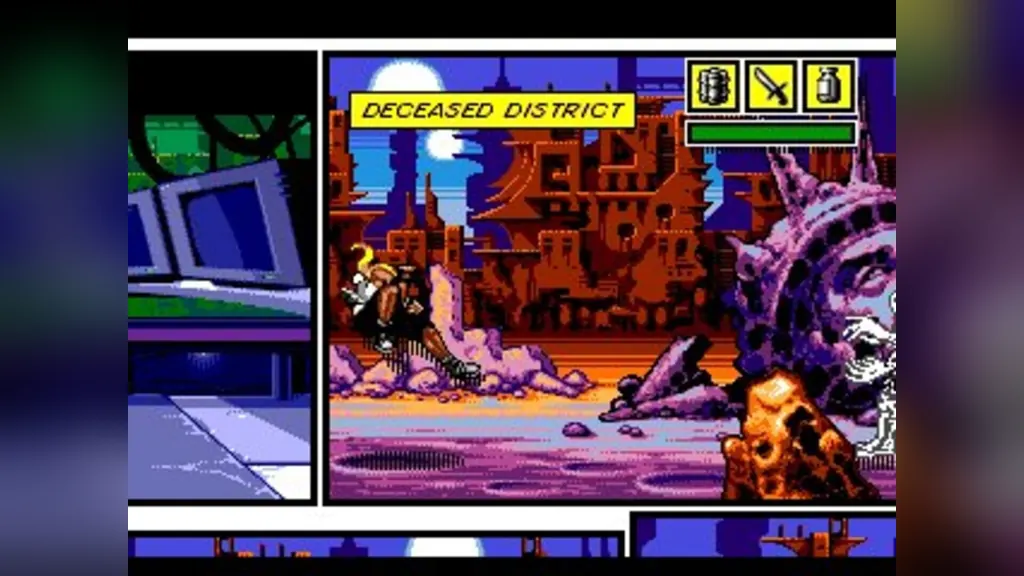
Comix Zone isn’t content to be just a fighting game; it’s a thematic experience that demands complex interaction with the rules of the comic book world. The title is primarily classified as a side-scrolling beat ’em up, but its genius lies precisely in the fusion of close-combat mechanics with platforming elements and, crucially, puzzle-solving. The setting is an American comic book universe itself, with visuals that perfectly replicate the aesthetic of hand-drawn pages, giving the game a unique atmosphere that is, in itself, a narrative mechanic.
Progressing Through Panels
The gameplay is structured to mimic the reading flow of a comic book. The player controls Sketch Turner, and the journey takes place across a total of six levels, or pages. In each level, the player must traverse a series of panels, with each page divided into three thematic “episodes.” What gives Comix Zone depth is that, in every panel, the challenge isn’t solely combat. The player must alternately face enemies or solve a simple riddle to advance to the next panel. This alternation between direct action and logical puzzle-solving ensures the player never feels like they are just in a linear confrontation.
The progression can even become non-linear. On certain occasions, the player has the option to follow a set of branching panels, which, however, always converges to a single continuation panel. Sketch’s life system is managed by a health bar that depletes with every attack taken or obstacle hit. If the health runs out completely, or if the player falls into a pit, the game ends, unless they managed to acquire a continuation resource by completing an episode.
Combat and Limited Resources
The combat aspect is robust, requiring the player to manage resources and interact with the environment. Players can carry up to three items, which are vital for overcoming obstacles or neutralizing enemies. Discovering these items often requires a specific interaction with the scenery: for example, one must use Roadkill, a rat, to detach parts of the page and thus reveal the objects. While many items, like knives, directly assist in combat situations, only one specific item, iced tea, has the function of restoring the character’s health bar.
In summary, mastering Comix Zone lies in the player’s ability to fluidly switch between the role of a superhero fighter and a puzzle solver. The game demands not only quick reflexes to dodge attacks but also the ability to observe the environment and solve the small puzzles that punctuate the narrative, ensuring the experience is as intellectual as it is physical.
Reception and Legacy: From 90s Classic to Modern Adaptations
Comix Zone was never a title that pleased everyone upon its debut, but it is precisely this duality that cemented its status as a timeless classic. At the height of the 90s fighting game scene, the title was widely praised for its visual potential and thematic ambition. Its ability to integrate beat ’em up mechanics with the narrative structure of a comic book was unprecedented in a video game of that era, and was undoubtedly its greatest asset. However, the same system that guaranteed its originality was also a source of criticism. Many players found the gameplay overly difficult and, at times, criticized the repetition of combat patterns, which hindered the fluid experience the setting promised.
Cult Status and Visual Legacy
Despite technical criticisms regarding the learning curve and combat mechanics, the impact of Comix Zone resides, above all, in its artistic vision. It transcended the category of a mere fighting game to become an immersive experience, a testament to the fusion of sequential art and electronic entertainment. This recognition of its aesthetic and conceptual value quickly established the title as a true cult favorite. It is revered not only by Sega Genesis fans but by the entire community of comic book and video game enthusiasts who value thematic innovation.
The true test of a classic, however, is its resilience over time. And it is in this regard that the legacy of Comix Zone finds a new and significant modern chapter. In August 2022, Sega made an announcement that reignited the fervor around the game: a partnership with Picturestart to develop a cinematic adaptation. This announcement was not just a commercial revival, but a validation of the original concept.
The details of the adaptation confirmed the title’s thematic appeal. The production involves prominent figures such as Royce Reeves-Darby, Erik Feig, and Samie Kim Falvey, alongside members of Sega itself, like Toru Nakahara and Kagasei Shimomura. The script is being written by Mae Catt, a writer known for her work on Young Justice. The cinematic project’s synopsis reinforces the game’s essence: the story revolves around a disillusioned comic book creator and a queer, POC writer who become trapped inside a comic book universe, forced to collaborate to stop a supervillain. This narrative focus proves that the central idea of Comix Zone—a character trapped within their own medium of creation—is a theme with timeless narrative appeal.
The 2022 film news not only secures the title’s preservation but elevates it to a widely influential intellectual property. From a 1995 beat ’em up game that required players to master switching between combat and puzzles, Comix Zone has evolved into a modern cinematic concept, undoubtedly solidifying itself as a timeless classic that continues to inspire new generations of creators and fans.
Glossary
- Sega Technical Institute (S.T.I.): Sega’s development facility where the game was conceived and where the development team worked.
- Beat ’em up: An action game genre where the player fights waves of enemies in a specific environment.
- Chiptune: A simple style of electronic music characteristic of 1980s and 1990s video game consoles.
- GEMS sound driver: An audio driver used to allow the Genesis to produce richer, rock-style soundtracks.
- WinG graphics API: A programming interface used by Sega to adapt the game and make it run on the Windows operating system.
- Genesis: Sega’s video game console, the original platform for the game’s 1995 release.
Frequently Asked Questions
Who is the main creator of Comix Zone, and what was the role of the Sega Technical Institute?
Peter Morawiec is the main creator, a programmer at S.T.I. The Sega Technical Institute was the location where the idea was developed and conceived. S.T.I. provided the technical support and the necessary team to transform Morawiec’s passion for comics into an action game.
What is the difference between Comix Zone and other superhero games of the era?
The big difference is the thematic setting. Instead of just taking place in a world of superheroes, the player is literally inside a comic book. The setting is composed of pages and panels, and the gameplay incorporates puzzle elements, simulating the reading of a comic book story.
On which platforms was Comix Zone originally released, and what are the most recent versions?
The game was originally released on the Sega Genesis in 1995, with subsequent versions for PC (Windows) and later for the Game Boy Advance. The adaptation for the GBA, however, required graphical changes due to the reduced screen size.
Is the game difficult? Is it worth playing today?
The game is a complex beat ’em up that requires interaction with the narrative and puzzle mechanics. Its value lies in the unique thematic experience of living inside an action comic book, making it a niche title for comic and classic game enthusiasts.
Has Comix Zone had any adaptations for films or modern media?
There is no available information regarding adaptations of Comix Zone for films or other modern media. The project’s focus remained on its execution as a video game, maintaining the experience of being a moving comic book.
Conclusion
The story of Comix Zone is a fascinating testament to how a passion for art can shape technology. It wasn’t a project born in a large studio, but rather at the Sega Technical Institute (S.T.I.), where Peter Morawiec’s vision blossomed. The idea of merging the visual narrative of comic books with the interactivity of video games stemmed from Morawiec’s enthusiasm, as he recognized the complementary potential between the two media. This concept, inspired by pop culture references, led to the creation of a setting where the comic book universe itself becomes the battleground.
The game’s development was an achievement of engineering and art, requiring the collaboration of diverse talents. From Tony DeZuniga’s artwork to Adrian Stephens’ complex technical solution for running the game on the Genesis with a two-megabyte limit, every stage was marked by challenges. Most notable, however, is the thematic structure: the player doesn’t just play in a dystopian world, but rather inside a storybook made of panels. This progression, which mimics reading a comic book, ensured that the gameplay was intrinsically linked to the aesthetic of American comics.
Despite delays and constant scope changes imposed by the industry, Sega’s support ensured that this artistic fusion reached the public. Comix Zone remains a landmark that proved that innovation lies not just in hardware, but in the ability to tell stories through new media. Revisiting this journey makes it clear that creativity, when paired with dedication, has the power to transcend technical and narrative limitations.