Read this article in: Portuguese (Português) · Spanish (Español)
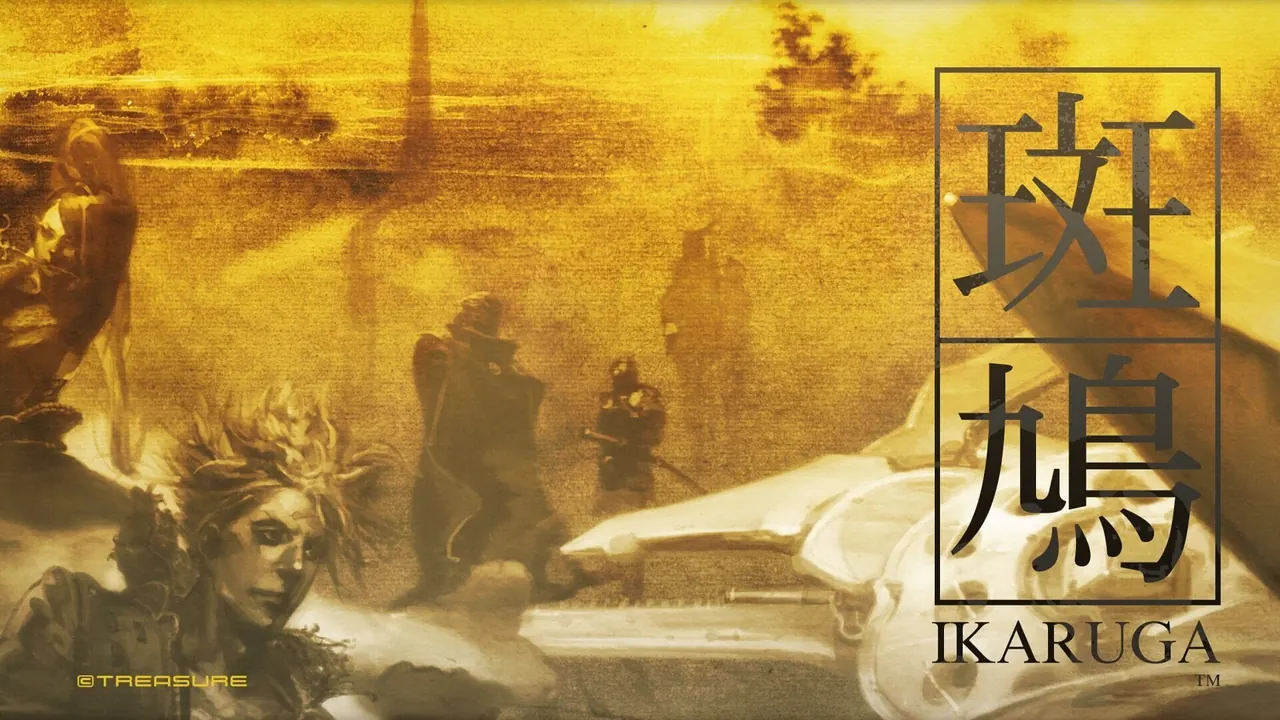
For those wondering who created Ikaruga, the answer points directly to the renowned development studio Treasure. The game, a landmark in the bullet hell genre, is the work of the vision of directors like Hiroshi Iuchi and the design of Yasushi Suzuki. More than just a simple shooter, Ikaruga is a design study that challenged the genre’s conventions, being a project that required the fusion of shooting mechanics with almost puzzle-like elements. Its creation was no accident; it was the result of a rigorous design philosophy aimed at taking the player to a new level of challenge.
The journey of Ikaruga is rich in technical and historical details. Its development began in parallel with the work on Sin and Punishment (2000) and was originally conceived as a spiritual successor to Radiant Silvergun (1998). The game premiered in Japanese arcades on December 20, 2001, and its core mechanic—the ability to absorb bullets based on polarity (black or white)—became its signature. This complexity and focus on art and sound were elements that ensured its growth and subsequent porting to global platforms, including the Dreamcast and GameCube.
In this article, we will dive into the fascinating history behind Ikaruga’s success. We will analyze the architects behind the game, from the origin of the idea to the inspirations that shaped its gameplay. We will delve deeply into the polar bullet absorption mechanic, trace the global journey of releases and platforms, and finally, discuss the critical reception that established Ikaruga not just as a game, but as a timeless icon of the bullet hell genre.
Key Points
- Development was a collaborative effort by Treasure, led by Hiroshi Iuchi, in his spare time.
- Ikaruga is a shoot ’em up that defies conventions, focusing on polarity puzzle elements.
- The game was self-funded and self-published, attesting to the creators’ deep artistic vision.
- The core mechanic requires the player to absorb bullets of the corresponding polarity (black or white) to survive.
- The design was refined so that difficulty did not depend on obvious routes, focusing instead on color and energy management.
Ikaruga in summary
| Developer | Treasure |
|---|---|
| Director | Hiroshi Iuchi |
| Platforms | Arcade, Dreamcast, GameCube, Xbox 360, Windows, Nintendo Switch, PlayStation 4 |
| Genre | Shoot ’em up |
| Modes | Single-player, multiplayer |
| Release (Arcade JP) | December 20, 2001 |
The Architects Behind Ikaruga
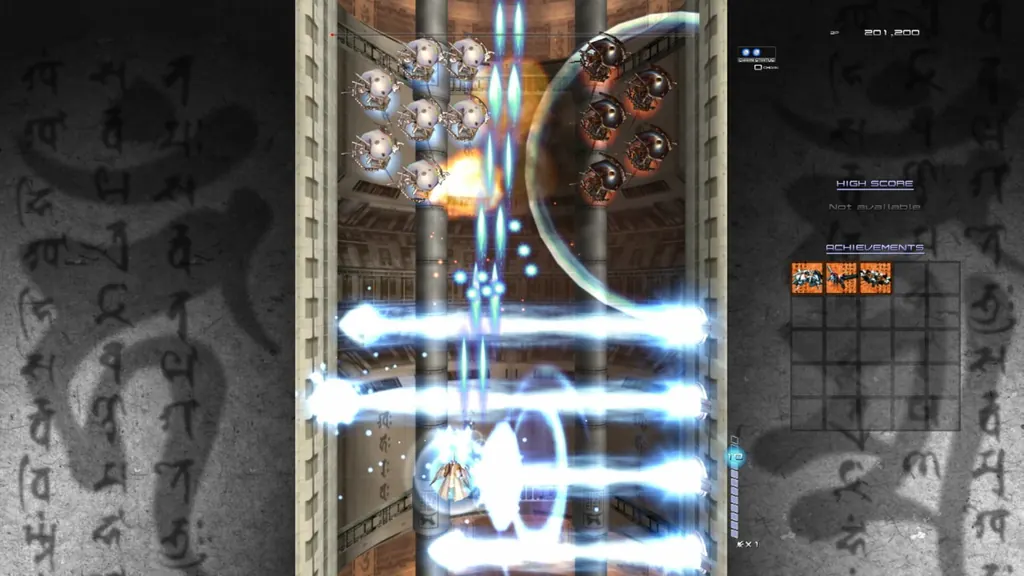
The architects behind Ikaruga are not defined by a single isolated genius, but rather by the highly dedicated, collaborative effort of the studio Treasure. The game’s development is a remarkable example of how passion for a genre can overcome resource limitations. Even understanding the creation of perfect bread, as in uncovering the history of the Bun, shows that great projects require dedication. The Ikaruga project began while Treasure was immersed in developing another major title, Sin and Punishment (2000). Given the company’s resource allocation, director Hiroshi Iuchi took the lead, dedicating his free time to work on Ikaruga and develop an initial prototype with direct assistance from programmer Atsutomo Nakagawa.
The game’s success lies in the synergy of several specialized roles. In addition to Hiroshi Iuchi, who also served as the composer, the team included designer Yasushi Suzuki and producer Masato Maegawa. The fact that the game was self-funded and later self-published attests not only to the group’s artistic vision but also to the deep commitment of every member. The development team, by the end of the process, was composed of five staff members from Treasure and three support members from G.rev, a number that reflects the technical and creative complexity required to bring such a refined work to life.
Concept Evolution and Challenging the Norm
Ikaruga’s trajectory was not a linear unfolding. The game shares basic gameplay elements with previous Treasure titles, such as Radiant Silvergun (1998), and its polarity elements are reminiscent of Silhouette Mirage (1997). Initially, Ikaruga was conceived as a direct sequel, even receiving the codename “Project RS-2,” following the “World” theme of its predecessor. However, the team quickly elevated the conceptual level. While the initial technical focus was on the prototype, Treasure’s design philosophy dictated that the game should challenge the conventions of the standard shoot ’em up.
One of the most important aspects of this refinement process was the change in the gameplay itself. In early stages, the scoring system and the focus on combos could make the ideal path too obvious. Realizing this would compromise the challenge, the team redesigned the levels and enemies. This decision increased the difficulty, shifting the focus from mere bullet dodging to quasi-puzzle elements, such as polarity switching. The goal was to create an experience appealing to both high-scoring players and those who appreciate purely mechanical challenge. This dedication to perfecting the gameplay system, rather than just replicating successful formulas, is what defines the technical legacy of the architects behind Ikaruga.
📌 The Collaborative Strength Behind Ikaruga
- Direction by Hiroshi Iuchi, who also composed the game.
- Design by Yasushi Suzuki and production by Masato Maegawa.
- Initial programming with the help of Atsutomo Nakagawa.
- Success proven by the title’s self-financing and self-publishing.
The Origin of the Idea and Initial Inspirations
The creation of Ikaruga was not an isolated event, but rather a side project that emerged during the intense development of another Treasure title: Sin and Punishment (2000). Due to the company’s resource allocation for this larger project, director Hiroshi Iuchi had to begin developing Ikaruga at home, using his free time. With the help of programmer Atsutomo Nakagawa, Iuchi managed to create a functional prototype. It is important to note that the game was self-financed and subsequently self-published, reflecting the creators’ dedication to bringing a personal vision to life.
Mechanical Roots and Inspiration
The gameplay architecture of Ikaruga drew from several historical sources within the genre. The game shares basic shooting elements with an earlier Treasure title, Radiant Silvergun (1998). Originally, Ikaruga was conceived as a direct and spiritual continuation of Radiant Silvergun, even being codenamed “Project RS-2.” While the thematic concept of Radiant Silvergun was “World,” that of Ikaruga was “Will.” Furthermore, the fundamental mechanic of polarity—the ability to absorb bullets depending on their electrical charge—has direct similarities to the previous game, Silhouette Mirage (1997). Another crucial source of inspiration came from the defense system found in Shinrei Jusatsushi Taromaru (1997) for the Sega Saturn.
In the early stages, the prototype featured a unique design element: a limited ammunition supply. The player’s firing power regenerated by absorbing enemy bullets. However, this initial mechanic was deemed weak by the team because it created gaps in the game’s action when the player could not shoot. These earlier gameplay ideas, however, were not discarded; they were later incorporated into a special bonus mode in the final version of the title.
Design Refinement and Gameplay Philosophy
The design of Ikaruga was intentionally created to challenge the conventions of standard shoot ’em up games, aligning with Treasure’s design philosophy. Instead of focusing solely on dodging bullets, the game’s difficulty is anchored in puzzle elements, such as the constant change of polarity. The team also worked to ensure that the scoring system was not directly tied to the gameplay, a departure from Radiant Silvergun. To appeal to both score-focused players and those who prioritized the gameplay experience, the stages were redesigned so that the ideal path was not obvious.
The gameplay experience was shaped to follow a dynamic rhythm, described as analogous to a “mountain” and a “valley.” In this pattern, the music and action reach peaks of intensity (the climax), followed by a more melancholic atmosphere, before restarting the cycle. This refinement process ensured that, after detailed testing and consultation among the team members, the final gameplay system was implemented, giving rise to the Ikaruga we know today.
📊 Ikaruga’s Inspirations and Roots
| Source of Inspiration | Related Game/Concept | Shared Element |
|---|---|---|
| Radiant Silvergun (1998) | Spiritual Successor | Basic shooting elements and initial codename (‘Project RS-2’) |
| Silhouette Mirage (1997) | Polarity Mechanic | Bullet absorption based on electrical charge |
| Shinrei Jusatsushi Taromaru (1997) | Defense System | Inspiration for the game’s defense mechanics |
The challenging development and focus on art
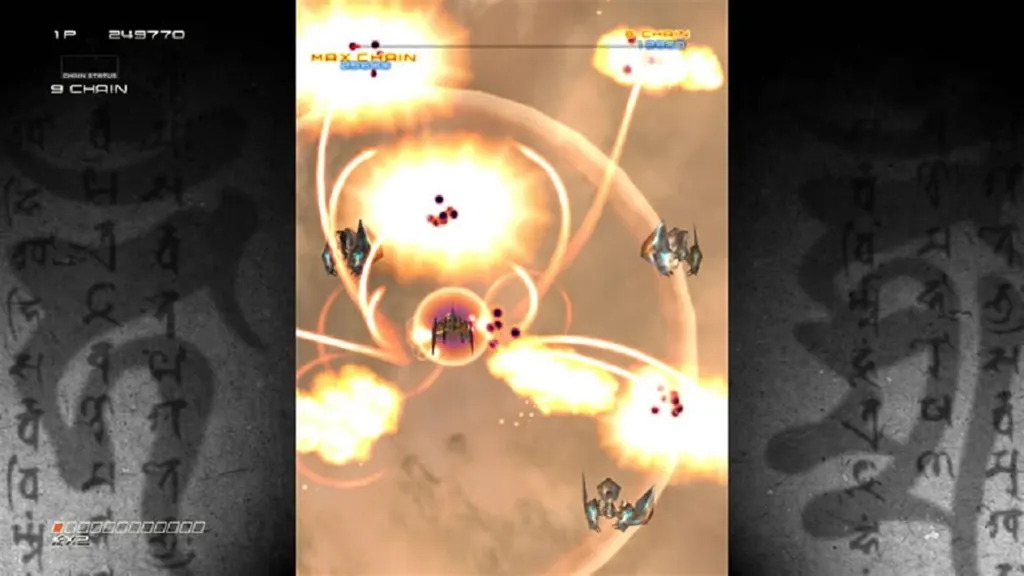
The development of Ikaruga is a testament to resilience and artistic vision, a project that was born under conditions of limited resources. The title emerged during a period of intense work for the Treasure studio, as the company’s resources were entirely allocated to the development of Sin and Punishment (2000). Faced with this scenario, director Hiroshi Iuchi took on the challenge of creating Ikaruga in his free time, working from home and relying on the support of programmers like Atsutomo Nakagawa to develop the prototype. This effort not only demonstrates the team’s dedication but also the strength of the idea itself, which was self-funded and later self-published.
The genesis of Ikaruga was not merely a shooting exercise, but a conceptual challenge. Although the game shared basic elements with previous Treasure titles, such as Radiant Silvergun (1998) and Silhouette Mirage (1997), the project’s ambition was much greater. Treasure’s design philosophy dictated that Ikaruga should challenge the conventions of standard shoot ’em ups, aiming to develop a new type of experience. The difficulty, therefore, was not primarily in dodging bullets—which is expected in a shoot ’em up—but rather in the puzzle elements, specifically in managing and switching polarity.
📘 Polarity
In Ikaruga, polarity refers to the ability to absorb bullets of opposite colors. The challenge is not just to dodge, but to manage and switch this polarity to absorb enemy projectiles.
Refining the gameplay challenge
The refinement process involved crucial adjustments. The original prototype featured a limited ammunition mechanic, where the supply was replenished by absorbing enemy bullets. However, this feature was deemed weak because it created pauses and gaps in the game’s action when the player couldn’t fire. After thorough testing and consultation, the gameplay system was completely restructured. Furthermore, the team addressed the scoring system: unlike Radiant Silvergun, Ikaruga’s scoring system did not directly tie points to gameplay, ensuring the game appealed to both high-score focused players and those who valued the pure gameplay experience.
The level design also underwent a significant metamorphosis. Initially, the areas were conceived around a combo system that made the optimal path too obvious. To raise the level of challenge and unpredictability, the team redesigned the stages and enemies, making it difficult to determine a single route to achieve the highest score. The game’s rhythm was meticulously planned to follow an emotional curve: the concept of “mountain and valley.” The game reaches peaks of action and music, followed by a more melancholic atmosphere, before building the rhythm again. This dynamic cycle shows that Ikaruga is, above all, an artistic work that uses the shooting genre as its vehicle for expression.
The Polar Bullet Absorption Mechanic
The polar bullet absorption mechanic is the conceptual pillar and greatest differentiator of Ikaruga, elevating the shoot ’em up game from a mere dodging challenge to a complex puzzle of strategy and resource management. The game revolves around the concept of polarity, where the player pilots the starfighter Ikaruga, whose ship can instantly switch between two polarities: black and white. This alternation is not merely aesthetic; it defines the player’s survival and attack, something that in other survival games, like discovering wild survival games, the complexity of life systems is a central focus.
The Absorption and Survival System
The basic gameplay principle is simple yet profound: the player’s ship must absorb bullets matching its current polarity. If the fighter is set to white, it will absorb and store white bullets fired by enemies. This absorption is vital because it not only helps keep the player active but also charges the special attack. On the other hand, the mechanic imposes a constant risk: if the player is white and hit by black bullets, they are destroyed, and the same occurs if they are black and hit by white bullets. This color dependency creates constant tension that underpins the entire stage design.
🧪 How Polarity Defines Combat
If the player is white and the enemy fires black bullets, the damage dealt by the player will be doubled. This interdependence of colors and energy forces the player to think strategically, as the correct color not only ensures absorption but also maximizes damage.
This complexity extends to the adversaries. The enemy ships also display distinct polarities. Color interaction is crucial for combat. For example, if the player’s fighter is white and the enemy fires black bullets, the damage dealt by the player’s bullets will be doubled compared to the scenario where the player was in the opposite polarity. Furthermore, destroying an enemy with the same polarity as the player causes the player’s ship to expel energy, a resource that can be absorbed or, if the player changes polarity too rapidly, can become a fatal hazard. This interdependence of colors and energy is what makes the game a conceptual challenge.
Resource Management and Advanced Combat
In Ikaruga, there are no power-ups or collectible items; the player relies exclusively on their standard firing and a powerful guided laser. Absorbed bullets are the engine for this attack. The laser’s power increases in progressive levels, with every 10 absorbed bullets charging a level, up to a maximum of 12 levels. This laser is ten times more potent than the standard fire, forcing the player to carefully manage absorbed energy for the ultimate attack.
Beyond absorption, the scoring system introduces a layer of combat strategy. The player is rewarded with a combo bonus for destroying three enemy fighters of the same color simultaneously. The scoring system starts with 100 points for the first bonus, and each subsequent bonus doubles that amount. This bonus can be multiplied up to a maximum of 25,600 points, but it must be maintained through the continuous destruction of enemies in the correct sequence. The rhythm of the game, meanwhile, is artistically designed to mimic the cycle of a “mountain” and a “valley,” where the action reaches its peak and is followed by a calmer atmosphere, preparing the player for the next strategic challenge.
Shoots, Platforms, and the Global Journey
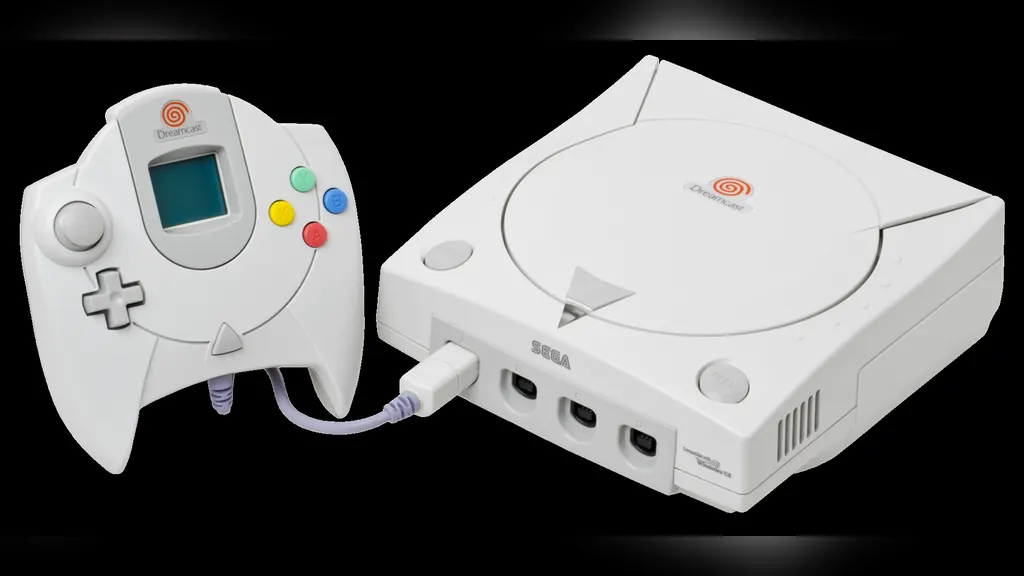
The journey of Ikaruga is a fascinating case study on how a niche title can transcend geographical borders and hardware generations. The development, led by Treasure, initially targeted the fanbase of Japanese arcade games. The title first launched for the Sega NAOMI platform and made its official debut in Japanese arcades on December 20, 2001. It is worth noting that, since NAOMI games were commonly adapted for the Dreamcast, the development team was already planning this transition, which facilitated the port. The Dreamcast, in turn, received the game exclusively in Japan on September 5, 2002. Although not yet released in the West, the game quickly began building a fan cult in North America through imports, signaling the title’s global potential.
Expansion to Consoles
The true global growth began with the migration to consoles. On August 15, 2002, it was announced that Infogrames’ Japanese division would assume publishing rights for a GameCube version. The title arrived in Japan on January 16, 2003. Although Infogrames’ North American and European divisions initially had no plans for a large-scale release, the popularity in Tokyo and the growing fan fervor led to a change of plans. Thus, the international release was announced for January 28, 2003, culminating with its arrival on the GameCube in North America on April 15 and in Europe on May 9, under the Atari brand.
The following decades saw Ikaruga adapt to every new generation of hardware. A significant milestone was the announcement of its release for the Xbox 360 on September 12, 2007. The Xbox Live Arcade (XBLA) version arrived on April 9, 2008, and not only maintained the gameplay but incorporated modern features, such as leaderboards and achievements, keeping the game relevant to the digital audience. Later, the work was brought to the PC environment, launching on the Steam platform on February 18, 2014, based on the Xbox 360 version.
The game’s life cycle continued to evolve. On August 8, 2013, Treasure brought the title back to arcades through the NESiCAxLive platform. In the modern era, Ikaruga secured its presence on more platforms, arriving on the Nintendo Switch on May 29, 2018, with notable support for both horizontal and vertical screen orientations. In June 2018, the game was also released for the PlayStation 4. This multiplicity of releases, spanning from the 2001 arcade to next-gen consoles, not only proved the title’s conceptual durability but also allowed the gameplay experience to adapt to different gameplay expectations in each era, solidifying Ikaruga as a true icon of the bullet hell genre, as we can see in the history of Exit the Gungeon’s creator.
Critical Reception and the Legacy in the Bullet Hell Genre
The initial critical reception of Ikaruga was not unanimous, but rather a point of contrast that defined much of its legacy. While the Japanese public expected a more traditional arcade shooter—something “more exciting and fast”—the developers, such as director Hiroshi Iuchi and producer Masato Maegawa, were aware that the title represented something unprecedented in the genre. They understood that the mechanical depth and design would not follow the conventions of a standard shooting game. Despite this initial expectation, the success and recognition of its potential were evident, such as when Game Machine listed the title as one of the five most popular arcade games in Japan in February 2002.
Praise came in waves, solidifying the game as a work of art. Portability to consoles was crucial for its global validation. The Dreamcast release was well-received by critics like Greg Kasavin, who praised it for reviving a struggling genre, stating that it “takes 20 years of great ideas in game design and somehow manages to give it a completely new touch… just to make a game that is familiar and absolutely unique.” The GameCube reinforced this narrative, receiving universally glowing reviews for its art and sound. Although some critics pointed to the short playtime as a weakness, the consensus was that the design of Ikaruga was “innovative,” “clever,” and “unique.”
The player community, in particular, embraced the title. Tyrone Rodriguez of IGN rated it as “a shooter made for shoot ’em up fans,” and Corbie Dillard of Nintendo Life recommended that any genre fan should “absolutely own at least one version of this masterpiece.” This recognition was formalized with Ikaruga being included in the IGN Game of the Month list in April 2003 and winning GameSpot’s GameCube Game of the Month award that same month. Even on more recent platforms, the acclaim persisted; Topher Cantler of Destructoid awarded a perfect score, calling it a “masterpiece.”
Cult Legacy and Lasting Influence
The impact of Ikaruga transcended immediate success, cementing it as a cult classic. The game not only maintained its relevance but also influenced the future of the genre. In 2020, Slant ranked it on their “100 Best Video Games of All Time” list, specifically praising the polarity gameplay for “revitalizing the genre in a stylish way.” Beyond critical acclaim, the global commercial success is notable: the Dreamcast and GameCube versions sold 33,860 physical units in Japan, while the Xbox Live Arcade release sold 137,088 digital units on the Xbox 360 in 2011, and the PC version sold 128,543 digital units on Steam on July 1, 2018.
Glossary
- Shoot ’em up: A game genre where the player controls a spaceship or character and must shoot hordes of enemies.
- Polarity: The game’s core mechanic, which requires the player to switch between black and white to absorb corresponding bullets.
- Prototype: An initial, functional version of the game, used to test and refine the gameplay and basic concepts.
- Combo: A sequence of actions or attacks performed in quick succession, usually rewarded with higher points.
Frequently Asked Questions
What is a ‘bullet hell’ and why is Ikaruga considered one?
A ‘bullet hell’ is a subgenre of shooting games characterized by the extreme density and complexity of bullet patterns. Ikaruga fits this concept because combat is not limited to dodging bullets but demands constant, strategic management of the colors and polarities of enemy attacks.
What is the polarity mechanic and how does it work in Ikaruga?
Polarity is the pillar of the game, where the ship must alternate between black and white. The player absorbs bullets that match their current polarity, which is vital for attacking. Attempting to absorb or being hit by a different color results in damage or destruction, creating constant tension.
Who is Treasure and why is it so important to the game’s development?
Treasure is the developer studio, known for its passion for elevating the shooting genre. Its importance lies in the design philosophy that dictated that Ikaruga should challenge conventions. The studio fostered a highly collaborative effort, overcoming resource limitations.
Was Ikaruga a commercial success at launch or did it receive mixed reviews?
The project’s focus was always on challenging the genre’s standard, rather than simply replicating successful formulas.
Are there any sequels or games that continue the Ikaruga legacy?
The game shares elements with previous Treasure titles, such as Radiant Silvergun and Silhouette Mirage.
Conclusion
The story of Ikaruga is a powerful testament not to a single genius, but to resilient collaboration and an unwavering artistic vision. The title was born under conditions of limited resources, emerging as a side project during the intense development of Sin and Punishment (2000). Led by Hiroshi Iuchi and with the support of Atsutomo Nakagawa, the architects’ commitment was so profound that the game was self-funded and later self-published, attesting to the strength of its idea. This genesis, far from being a mere echo of previous Treasure titles, like Radiant Silvergun (1998) and Silhouette Mirage (1997), already pointed toward something greater.
Ikaruga’s true genius lies in its deviation from genre conventions. The team understood that simply replicating successful formulas was not enough; the goal was to create a conceptual challenge. Thus, the focus of the difficulty was intentionally shifted from mere bullet dodging to puzzle elements, such as polarity management and switching. This refinement of the gameplay system, which aimed to appeal to both high-score chasers and those who value purely mechanical challenge, defines Treasure Studio’s technical legacy.
Ikaruga, therefore, transcended the status of a mere shoot ’em up; it established itself as a manifesto on the synergy between passion, persistence, and design innovation. It is at this intersection of resource constraint and conceptual ambition that lies the proof that a game’s art can indeed redefine an entire genre. May the journey of Ikaruga inspire every new project to challenge the status quo and strive for mechanical perfection.