Read this article in: Portuguese (Português) · Spanish (Español)
The epic saga of Shenmue is a milestone in video game history, and its creation is intrinsically linked to the visionary Yu Suzuki. He not only conceived it but also produced and directed the series, transforming the concept of a simple fighting game into a complex experience of life simulation and adventure. The narrative follows Ryo Hazuki, a young martial artist who travels through settings inspired by 1980s Japan and China, in an intense search for the truth behind his father’s murder. The title is synonymous with ambition in open worlds, blending martial arts battles with social simulation elements that defined a generation of gamers.
The relevance of Shenmue is proven by its turbulent journey and the scale of its development. The original game debuted on December 29, 1999, and the estimated production and marketing cost at the time was between US$47 million and US$70 million. The series spanned decades and different developers, such as Sega AM2 and Ys Net, and its lifecycle was extended until the release of Shenmue III on November 19, 2019. This longevity, combined with its hybrid genre—which mixes action-adventure, simulation, and RPG elements—attests to the cultural impact and technical challenge the franchise represents.
In this article, we will dive deep into the origins of this masterpiece. We will explore everything from Yu Suzuki and the genesis of the idea, through the inspirations that shaped the open-world concept and the technological challenges of its development. We will analyze the immersive gameplay, which balances daily life and martial arts, and take stock of the releases, commercial failures, and lasting legacy of the saga. We will conclude with an analysis of the cultural impact and hopes for the future of Ryo Hazuki.
Key Points
- The saga was created by Yu Suzuki, who began his career at Sega in 1983, making him a video game pioneer.
- The game is a pioneer in life simulation, mixing action-adventure, interactive cinema, and social simulation.
- The narrative unfolds in culturally rich locations, such as Yokosuka (Japan), Hong Kong, and Guilin (China).
- The development was ambitious, aiming to overcome the limitations of short arcade sessions, making it a large-scale project.
- The franchise has shown resilience, being ported to various platforms, including PS4, Xbox One, and PS5.
Shenmue in summary
| Genres | Action-adventure; Interactive cinema; Life simulation; Social simulation |
|---|---|
| Creator | Yu Suzuki |
| Developers | Sega AM2 (1999–2002); Microsoft Game Studios Japan (2002); Ys Net (2010–2019); D3T (2018); Shibuya Productions (2019) |
| Publishers | Sega (1999–present); Deep Silver (2019) |
| Platforms | Dreamcast; Xbox; Xbox 360; Mobile phones; Windows; Xbox One; PlayStation 4; Nintendo Switch 2; PlayStation 5; Xbox Series X/S |
| Original Release | Shenmue; December 29, 1999 |
| Latest Release | Shenmue III; November 19, 2019 |
Yu Suzuki and the genesis of the idea

The genesis of Shenmue is intrinsically linked to the career of Yu Suzuki, an emblematic name in video game history. Suzuki began his career at Sega in 1983, a period when the industry was still establishing itself. His ability to transition between technical innovation and commercial appeal was demonstrated through a series of arcade hits. Among the titles that defined his reputation are Hang-On (1985), Out Run (1986), and later, Virtua Fighter (1993). These games not only set new standards for graphics and gameplay but also established Suzuki as one of Sega’s leading visionaries.
The Ambition to Go Beyond Arcades
Despite the success in arcades, where the ideal experience was limited to a few minutes, Suzuki harbored an ambition that surpassed the short-session format. He wanted to create a narrative of unprecedented depth and length. This quest for a longer and more immersive experience was the driving force behind the conception of Shenmue. In 1996, he and the Sega AM2 division began developing an RPG for the Sega Saturn, initially based on the Virtua Fighter franchise.
However, the project underwent a significant shift. In 1997, development was moved to Sega’s next-generation console, the Dreamcast, and the connection to Virtua Fighter was dropped. When the Dreamcast launched in Japan in November 1998, the title had been renamed Shenmue. Sega marketed the game as belonging to a genre it coined “full reactive eyes entertainment,” or “FREE.”
The scope of the work was monumental. Development was considered the most expensive of its time, with a reported cost of US$70 million; in 2011, Suzuki adjusted the figure to something closer to $47 million, including marketing. The ambition was so great that the development even covered parts of what would become Shenmue II (2001) and possibly sketches for future titles.
The result of this ambitious journey was the release of Shenmue on December 29, 1999, in Japan, followed by releases on November 8, 2000, in North America, and December 1, 2000, in Europe. Shenmue II was released for Dreamcast in 2001 in Japan and Europe, and later received a port for Xbox in 2002. Despite receiving positive reviews and building a fervent fan cult, the games did not achieve the expected commercial success.
🕒 The Evolution of Shenmue: Milestones in Development
- 1983 — Yu Suzuki begins his career at Sega.
- 1985 — Release of Hang-On, one of Suzuki’s hits.
- 1986 — Release of Out Run, solidifying Suzuki’s reputation.
- 1993 — Release of Virtua Fighter, another landmark title.
- 1996 — Development begins on an RPG for the Sega Saturn, based on Virtua Fighter.
- 1997 — Development moves to the Dreamcast, abandoning the connection to Virtua Fighter.
- 1998 — The Dreamcast launches in Japan, and the title is renamed Shenmue.
- 1999 — Shenmue launches in Japan (December 29).
Inspirations and the Open-World Concept
The open-world concept in Shenmue transcended mere geographical exploration; it aimed to be a true simulation of life. Far from being just a fighting game, the work established itself as a genre blending action-adventure, interactive cinema, and social simulation. Yu Suzuki’s goal was precisely to overcome the limitation of short gameplay sessions typical of arcades, seeking a narrative and immersive experience that would last for long periods, allowing the player to live the routine and mystery of a character.
Cultural Roots: Japan and China
The setting and rich cast of characters in Shenmue are deeply rooted in Asian culture, mixing historical and geographical elements. The initial narrative unfolds in Yokosuka, Japan, where the protagonist, Ryo Hazuki, returns to his family’s dojo. The plot quickly expands, leading Ryo to interact with vibrant environments like Hong Kong and, later, traveling to historical sites in China, such as Guilin. This geographical transition is not accidental; it serves to broaden the scope of the investigation, moving from a family conflict in Yokosuka to an epic quest crossing different cultures and eras.
The Ambition of “Full Reactive Eyes Entertainment”
In its conception, Shenmue was announced by Sega as belonging to a novel genre, which the studio called “full reactive eyes entertainment” (or FREE). This nomenclature reflected the ambition to create an experience that was highly responsive and engaging, simulating the complexity of real life. The focus of the gameplay was not limited to combat, which was inspired by the Virtua Fighter series and required mastery of advanced fighting techniques. Instead, the player was encouraged to explore the open worlds, investigating clues, examining objects, and building relationships with non-player characters. Ryo’s journey, for example, requires him to talk with residents of Kowloon Walled City and find allies in different Chinese ports and cities, participating in a complex web of mysteries involving legendary artifacts, such as the dragon mirror and the phoenix mirror.
This multifaceted approach—blending the investigation of a personal mystery with experiences in major urban centers like Hong Kong and the cultural magnitude of the Yangtze River Valley—elevated the game from a simple fighting title to an epic simulation. Players were not just combatants, but detectives in a richly cultural setting, living through a cycle of searching, unraveling, and confronting; after all, understanding the origin of complex sagas like this can be fascinating, much like the creation of Phantasy Star. This solidified Shenmue as an ambitious milestone in video game history.
📌 Pillars of the Shenmue Experience
- Action-Adventure: Combat and mystery exploration.
- Interactive Cinema: Immersive narrative simulating life.
- Social Simulation: Building relationships with NPCs.
- Cultural Setting: A blend of Japanese and Chinese locales.
The Epic Development and Technological Challenges

The development of Shenmue was not just about creating a game, but a technological and financial saga that shaped Sega’s own trajectory. Yu Suzuki’s initial ambition was enormous. In 1996, the focus was on an RPG for the Sega Saturn, inspired by the Virtua Fighter series. However, the project’s scope quickly surpassed the capabilities of a mere fighting sequel. In 1997, development migrated to the Sega Dreamcast console, and the direct connection to Virtua Fighter was dropped, giving rise to the title Shenmue.
The technological challenge was monumental. Creating such a vast and detailed 3D environment, capable of simulating life in major urban centers like Hong Kong, required unprecedented resources for the time. The scale of the work led to Shenmue becoming the most expensive game ever developed up to that point, with reports reaching US$70 million. In later analyses, in 2011, Suzuki refined this figure, indicating the cost was closer to $47 million, including marketing. This record investment reflected the attempt to create a life simulation experience, far beyond the format of short arcade rounds.
Changes in Guard and Platforms
The development journey was marked by turbulence and transitions. After the original release in Japan on December 29, 1999, and in other regions in 2000, the project continued to evolve, even while facing commercial hurdles. Sega AM2 was involved in the development between 1999 and 2002. Subsequently, the project was absorbed by different teams, including Microsoft Game Studios Japan in 2002. The saga did not stop with the original consoles: in 2002, a port for Xbox was released, and the title reached various platforms over the years, including the Xbox 360, Xbox One, PlayStation 4, and more recently, the PlayStation 5 and Xbox Series X/S.
The persistence in revitalizing the franchise is a testament to its legacy. Even after remastering attempts, such as the cancellation of the D3T projects in 2017, the interest remained. In 2018, Sega released high-definition versions for Windows, PlayStation 4, and Xbox One, updating graphics and interfaces. More recently, the franchise demonstrated its resilience with releases like Shenmue III, which launched on November 19, 2019, solidifying the epic and technologically challenging life cycle of a work that has endured for decades.
Immersive Gameplay: Life and Martial Arts
Ryo Hazuki’s journey in Shenmue transcends the limits of a simple fighting game. The title is a pioneer in the life simulation and adventure genre, proposing an experience that, in its original conception, was defined as “full reactive eyes entertainment” (FREE). Far from being just a brawler, the gameplay is a complex social simulation, where the protagonist must not only become a martial arts master but also a functional resident of major urban centers like Yokosuka, Hong Kong, and Guilin.
Simulating Daily Life
The level of detail in Shenmue I and Shenmue II set an unprecedented standard for its time. The game operates with a persistent clock, lending an almost palpable sense of reality. Stores don’t just exist; they open and close, and buses run on fixed schedules. Ryo receives a daily allowance, a resource that must be spent on a variety of items, such as food, raffle tickets, audio tapes, and capsule toys. This micro-management of resources and time forces the player to live the rhythm of daily life, blending the investigation of a family mystery with the obligations of a young adult.
📘 FREE
FREE stands for “full reactive eyes entertainment.” It is the term used to describe the gameplay experience that goes beyond simple combat, focusing on life simulation.
To pass the time and earn income, the player is constantly invited to interact with various mini-games. Activities range from gambling and arm wrestling to fishing, operating forklifts, and participating in full versions of Sega arcade games. These elements are not mere pastimes; they are progression mechanics that anchor the player in the social fabric of the city.
Combat and Immersive Progression
The combat system, inspired by the Virtua Fighter series, is robust and multifaceted. Ryo is capable of facing multiple opponents simultaneously and must practice movements to increase the power of his techniques. Success in confrontations often requires executing button sequences at precise moments, through quick-time events. Furthermore, the game tracks the character’s physical and emotional progress. In Shenmue III, a stamina system was introduced, causing Ryo’s hit points (HP) to gradually deplete with exploration. If the HP dropped too low, the ability to run would be lost, forcing the player to manage fatigue through sleep and eating.
This fusion of elements—from managing an allowance to the tactical rigor of a fight—is what defines the Shenmue gameplay. The player is not merely an observer of a revenge saga, but an active participant in a life simulation that demands dedication, whether mastering a new martial arts move or simply buying a candy from the street. This depth, which reminds us of the complexity of narratives like those of its creator of Xenosaga, elevates the work from a simple action game to an epic of life simulation and mystery.
Releases, Commercial Failures, and Legacy
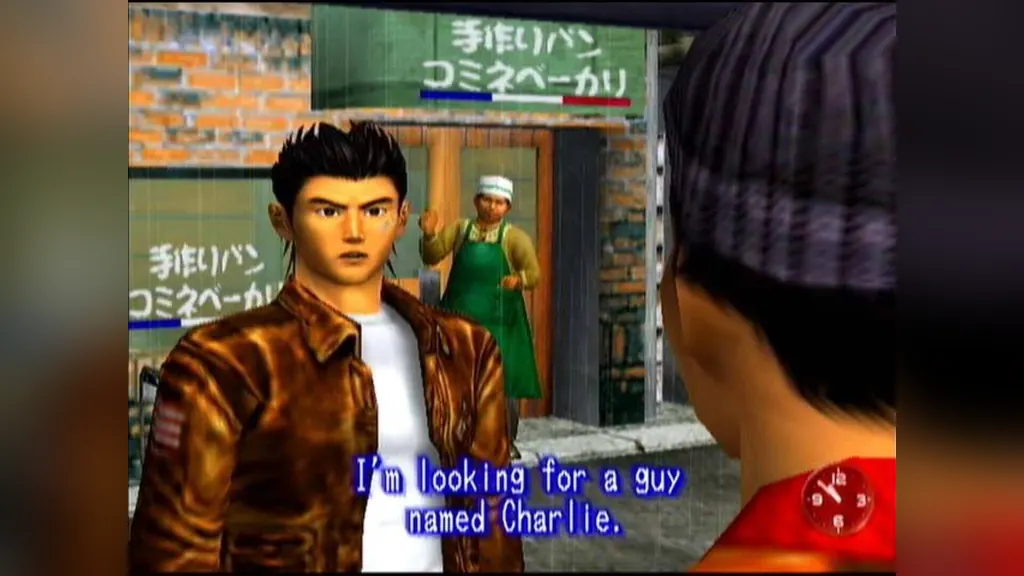
The trajectory of Shenmue, although marked by epic and ambitious development, is a study in contrast between critical acclaim and commercial challenges. After the release of Shenmue I on December 29, 1999, in Japan, followed by releases on November 8, 2000, in North America and December 1, 2000, in Europe, the saga continued with Shenmue II, released for Dreamcast in 2001 in Japan and Europe, and later ported to Xbox in 2002. Despite attracting a dedicated fanbase and receiving reviews that placed it on lists of the greatest video games of all time, both titles were considered commercial failures. This initial scenario established the franchise’s legacy: a technologically advanced work of art, but financially challenging.
The Challenge of Continuity
Despite its success in building a detailed open world and a deep narrative, the continuation of the saga faced monumental obstacles. The title Shenmue III, which was awaited for nearly two decades, went through a long period of uncertainty. However, the persistence in revitalizing the franchise is a testament to its cultural power. For fans of grand strategy sagas, it is worth noting that developing games like this requires extensive planning, as seen in the history of Total War: Warhammer. The turnaround came on June 15, 2015, when Yu Suzuki announced a crowdfunding project for Shenmue III. Suzuki had licensed the series from Sega, and the project became the fastest and highest-funded video game title in Kickstarter history. The campaign reached its initial goal of US$ 2 million in just over nine hours, accumulating a total of US$ 6.3 million.
The Reception of Shenmue III
The series’ return culminated in Shenmue III, which was released on November 19, 2019, for PlayStation 4 and Windows. Compared to the level of detail and reception of Shenmue I and Shenmue II, Shenmue III received more mixed reviews. While some critics praised its fidelity to the franchise, others pointed out similarities to previous games, even describing it as dated. The saga, overall, is praised for its graphics, soundtrack, ambition, and focus on mundane details, but it has historically also received criticism for its controls and slow pacing. The journey of Shenmue, therefore, is not just an action-adventure story, but a tale of resilience, where artistic appeal and the desire for an immersive experience overcome the ups and downs of the commercial market.
✅ Strengths
- Built a detailed open world and a deep narrative.
- Praised for its graphics, soundtrack, ambition, and focus on mundane details.
- Represents a tale of resilience and artistic appeal.
❌ Weaknesses
- The titles were considered commercial failures.
- Shenmue III received mixed reviews, with criticism of seeming dated.
- Historically received criticism for its controls and slow pacing.
The cultural impact and future of the saga
The cultural impact of Shenmue transcends sales metrics, establishing itself as a cult saga in the video game landscape. For a generation of players, Ryo Hazuki’s journey is not just a series of adventures, but an immersive experience that shaped expectations for what a game could be. Its cult status is kept alive through various media and the community’s continued interest. An example of this is the anime adaptation, Shenmue: The Animation, which premiered on February 6, 2022. This project, directed by Sakurai Chikara and produced by Yu Suzuki, adapted the first two games and was shown on platforms like Crunchyroll and the Adult Swim’s Toonami block.
The Creator’s Persistence
The bond between the creator, Yu Suzuki, and the franchise is a testament to his passion for long-form narrative. Even after years of commercial challenges, Suzuki consistently demonstrated a desire to move the story forward. A milestone of this commitment was the announcement of a crowdfunding campaign (Kickstarter) for Shenmue III. On June 15, 2015, during E3, Suzuki licensed the series from Sega and boosted the project. The result was historic: Shenmue III became the fastest and most funded video game project in Kickstarter history, raising a total of $6.3 million. This success not only secured the title but also reaffirmed the lasting power of the Ryo Hazuki myth for a global fanbase.
Shenmue’s legacy is, first and foremost, its pioneering nature across genres. When announced by Sega, the title was marketed as belonging to a novel genre that the studio dubbed “full reactive eyes entertainment” (or FREE). This category was not just a label; it was a proposal for an experience. Shenmue was not limited to a martial arts combat system, like the robust system inspired by Virtua Fighter; it was, at its core, a life simulation and an interactive cinema. The fusion of elements—from managing an allowance to investigating a mysterious artifact—elevates the series to the level of a complex narrative work of art.
The Life Simulation Model
The depth of the setting and the rich tapestry of characters, deeply rooted in Asian culture, solidified the open-world model of the franchise. Details in locations like Hong Kong and the Yangtze River Valley were not merely pretty backdrops, but active elements in the plot. Ryo Hazuki’s journey, unfolding from the dojo in Yokosuka to the vast Chinese landscapes, set an unprecedented standard for its time. By blending the pursuit of personal revenge with living in major urban centers and managing social interactions, Shenmue paved the way for the social and life simulation genre, which would become a pillar of the industry, ensuring its influence remains palpable even in titles from other franchises.
Frequently Asked Questions
Is Shenmue a difficult game to play, or is it too slow?
The experience is deeply immersive and requires dedication, balancing action with routine. The combat is tactical, inspired by martial arts, but the game also requires you to manage daily time and resources. Therefore, it rewards patience and constant engagement, making it more of a simulation challenge than just a test of quick reflexes.
What is the best game in the Shenmue series: I, II, or III?
Each title contributed uniquely to the franchise’s legacy. Shenmue I established the epic scope and life simulation. Shenmue II deepened the narrative and the complexity of the open worlds. Shenmue III, in turn, evolved the gameplay, introducing resistance systems and improving the protagonist’s physical progression.
Is the life simulation system in Shenmue really functional?
Yes, it is extremely detailed. You aren’t just fighting; you have to live the routine of a young adult. The system includes managing a daily allowance, spending money on basic items, and interacting with various mini-games to progress, giving a sense of real life and responsibility.
Is Shenmue being released on any platform nowadays?
The franchise has a legacy of portability, having been released on multiple platforms over the years, including modern consoles like the PlayStation 4, Xbox One, and more recently, the PlayStation 5. Its persistence across different hardware generations is a testament to its lasting appeal.
Who is Ryo Hazuki and what is his mission in the story?
Ryo Hazuki is the protagonist, a young man who returns to his family’s dojo. His mission transcends simple martial combat. He must unravel a complex personal mystery, which leads him to travel through various cultures and cities, transforming him into a detective searching for answers and his destiny.
Conclusion
The genesis of Shenmue is, above all, a chronicle of boundless ambition. Driven by Yu Suzuki, who sought to transcend the limitations of quick arcade sessions, the project was born from the need to create a deep and enduring narrative. This vision culminated in the concept of “full reactive eyes entertainment” (FREE), an unprecedented genre that promised more than combat: it promised a life simulation. From the initial RPG for the Sega Saturn, to the migration to the Dreamcast, and the colossal investment of up to US$70 million, every step was a technological and artistic challenge to establish an open world that was as vast as it was complex.
The result was a masterful fusion of action-adventure, investigation, and social simulation. Ryo Hazuki’s journey is not merely a martial arts duel; it is a cultural expedition that takes him from Yokosuka, Japan, through Hong Kong, and into the historical settings of China. This geographical and narrative richness cemented Shenmue as an ambitious milestone, an experiment that challenged the boundaries of what a video game could be. Its development history, marked by platform changes and perseverance, is a testament to the power of artistic vision in the face of commercial obstacles.
More than a game, Shenmue is a saga about the pursuit of total immersion. It invites us to experience not just the mystery of a protagonist, but the very flow of life in major urban centers. By diving into its universe, the player is prompted to reflect on what truly defines an epic experience in a medium as dynamic as video games.