Read this article in: Portuguese (Português) · Spanish (Español)
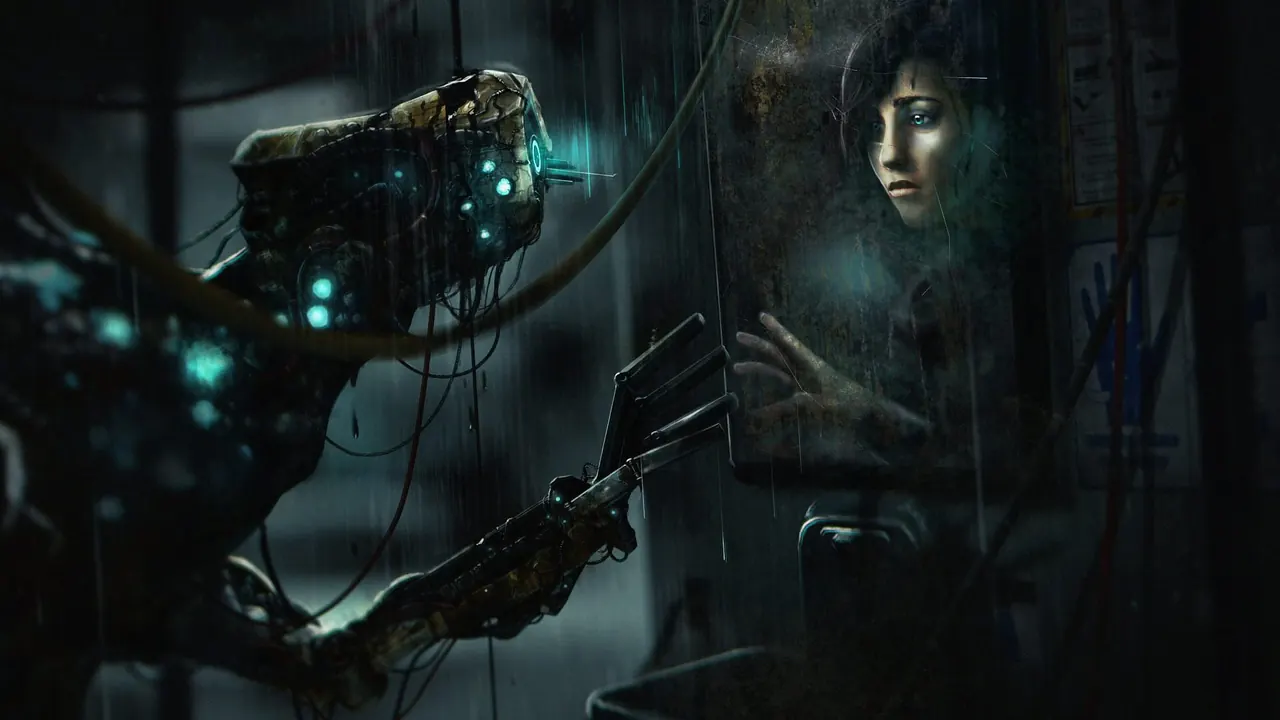
The creation of SOMA is intrinsically linked to the studio Frictional Games. This game, acclaimed in the survival horror genre, is not merely a scare tactic, but a deep meditation on what it means to be conscious in a body, in a mind, and in a constantly deteriorating universe. Developed by the talents of Thomas Grip and Mikael Hedberg, SOMA plunges us into a psychological terror that transcends genre clichés, establishing a complex dialogue between technology, humanity, and the labyrinth of existence itself. The result is an immersive experience that forces the player to question their own limits of reality.
SOMA’s relevance is anchored in the precise details of its setting and development. The plot unfolds in the year 2104, within the PATHOS-II facility, a sophisticated underwater research station located in the North Atlantic Ocean, which has fallen into oblivion and collapse. The title was initially released on September 22, 2015, marking a milestone for Frictional Games and sci-fi horror. This setting is not just a narrative backdrop; it is an active character, filled with machines that exhibit human characteristics, forcing the protagonist, Simon Jarrett, to deal not only with physical dangers but with the enigma of consciousness itself.
In this article, we will explore the totality of this horror masterpiece. We will begin with the genesis of the idea and the creators behind this underwater terror, diving into the setting of PATHOS-II, the collapsing laboratory. We will cover the technical development and production timeline, understand how the gameplay breaks with traditional genre standards, and finally, follow Simon Jarrett’s journey to unravel the profound mystery of consciousness and the lasting legacy of a game that remains in the collective memory of horror lovers.
Key Points
- SOMA is a psychological survival horror focused on consciousness and human free will.
- The setting is PATHOS-II, a collapsing underwater facility in the North Atlantic Ocean.
- The gameplay demands intelligence and stealth, as the protagonist is unarmed.
- Development began in 2010 by Frictional Games, utilizing the HPL Engine 3.
- Immersion is enhanced by an audio system that captured over 2,000 footsteps sounds.
SOMA in Summary
| Developers | Frictional Games; Abylight Studios (Switch) |
|---|---|
| Publishers | Frictional Games; Abylight Studios (Switch) |
| Director | Thomas Grip |
| Writer | Mikael Hedberg |
| Composer | Mikko Tarmia |
| Engine | HPL Engine 3 |
| Platforms | Linux; macOS; PlayStation 4; Windows; Xbox One; Nintendo Switch |
| Release | Linux, macOS, PS4, Windows; September 22, 2015; Xbox One; December 1, 2017; Nintendo Switch; July 24, 2025 |
| Genre | Survival horror |
| Mode | Single-player |
The Genesis of the Idea and the Creators Behind the Terror
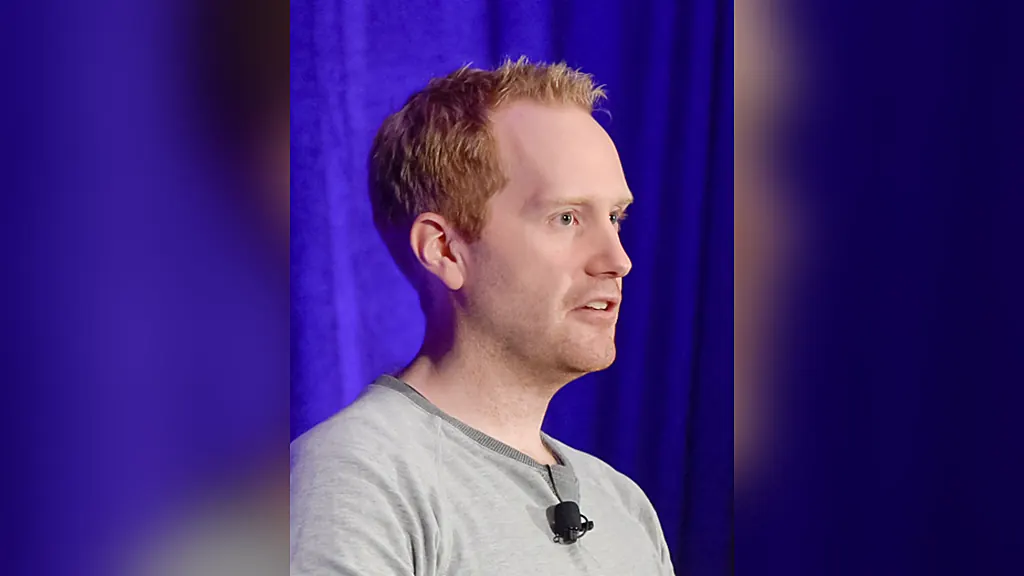
The journey of SOMA, the title that redefined modern underwater horror, began long before players dove into the depths of PATHOS-II. Its genesis is intrinsically linked to the studio Frictional Games. The game’s development was a long and meticulous process, initiated in 2010, a period when the team was focused on refining new technologies for their game engine. If you are interested in other horror narratives, such as Outlast 2 and its creators, you will see that mastering atmosphere is crucial. Behind this work is a team of remarkable talent: Thomas Grip took over the direction, while Mikael Hedberg was responsible for the writing. This trio, along with composer Mikko Tarmia, was responsible for shaping an experience that not only scared but also made one question the very nature of human existence.
The initial context of the project reveals a moment of pure creative inspiration. According to the co-founders, the decision to set the narrative on the floor of the Atlantic Ocean was, in essence, a “whim” or a creative impulse. Thomas Grip reported that they had long wanted to explore this setting. Although the game was announced in 2010, the focus on the oceanic environment was formalized in April 2014. This choice was not merely aesthetic; it allowed the creators to dive into a rich and claustrophobic thematic field, where technology and biology meet under immense pressure.
Diving into Consciousness and the Central Theme
More than just a survival horror title, SOMA was conceived as a profound philosophical exploration. The underlying theme is consciousness, the nature of free will, and the very definition of the “self.” To enrich this existential layer, the atmosphere and script were inspired by the works of intellectual and fictional giants, such as Philip K. Dick, China Miéville, and Greg Egan. Unlike many horror games that guide the player with explanatory notes or diaries, the narrative of SOMA was designed to depend on player action. This meant that the plot advanced organically, allowing players to follow the story even if they ignored exposition materials, such as audio logs and notes.
To ensure the environment felt viscerally real, the sound design was crucial. The audio director, Samuel Justice, used a system called the “room size system.” Instead of just creating sound effects, he captured recordings of environments that complemented the sense of space, such as the reverberation of a large hall. This technical attention resulted in the capture of over 2,000 footstep sounds, ensuring that every step taken in the PATHOS-II laboratory had a sonic weight that heightened the suspense. This dedication to technical detail and philosophical depth is what gives SOMA the status of a spiritual successor to previous titles in the genre, solidifying it as a masterpiece of psychological horror.
📌 SOMA’s Pillars: What Makes the Experience Unique?
- Philosophical Exploration: Questioning consciousness and the ‘self’.
- Organic Narrative: Advances through player action, without relying on text.
- Sound Immersion: Use of reverberation systems for visceral realism.
- Rich Thematics: Combines technology, biology, and the claustrophobic ocean environment.
The PATHOS-II Setting: A Collapsing Laboratory
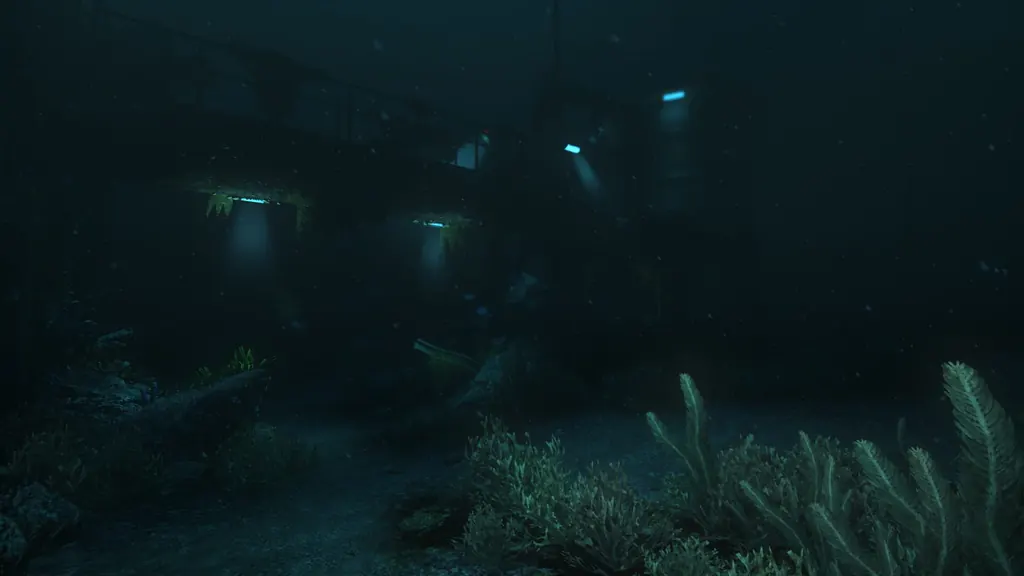
The setting of SOMA is not merely a backdrop, but a character in its own right: PATHOS-II. Located in the depths of the North Atlantic Ocean, this facility represents a technological colossus and a monument to human decay. The history of PATHOS-II is marked by a complex evolution. Originally, in the 21st century, the structure was established in the 2060s. At that time, it operated primarily as a thermal mining outpost, an endeavor commanded by powerful conglomerates like Haimatsu and Carthage Industries. The initial function, focused on resource extraction, established the physical foundation for what would become one of the most sophisticated underwater research centers ever built.
Transformation and Collapse
Over the years, the facility’s purpose underwent a radical change. PATHOS-II became a high-tech research center, dedicated primarily to the development of space propulsion. Its main focus centered on operating the Omega Space Gun, a powerful electromagnetic catapult capable of launching satellites and other equipment into orbit without the risks and costs of traditional rockets. All operations and the complex maintenance of the entire infrastructure were supervised by the Warden Unit (WAU), a General Artificial Intelligence (AGI) that integrated with all the base’s computer systems. This technological integration was the peak of human engineering capability.
However, the fate of humanity changed abruptly. In a cataclysmic event caused by the impact of a comet, Earth suffered a mass extinction. The crew of PATHOS-II, who somehow survived, found themselves isolated, becoming the last vestiges of civilization. This catastrophe led PATHOS-II into a state of deep decay and disuse, making it the last known site of human resistance.
A Laboratory Between Advanced and Decay
It is in this scenario of deterioration that the mystery of SOMA blossoms. PATHOS-II is, therefore, a stage of visceral contrasts: on one hand, there is cutting-edge technology—advanced AGI and the ability to reconstruct minds; on the other, there is abandonment, system leakage, and the abyssal pressure of the North Atlantic. The decaying underwater environment is not merely a geographical setting, but a reflection of humanity’s own existential crisis.
In this collapsing laboratory, the central question shifts from physical survival to consciousness. The survivors and the artificial intelligence systems, like WAU, struggle to define what it means to be human. The robots inhabiting the complex, some passive and others hostile, frequently believe themselves to be human, forcing the explorers to confront the thin line between machine and soul. The environment itself, with its abandoned corridors and failing life support systems, serves to intensify the paranoia and philosophical reflection on the nature of existence in a disintegrating world.
Technical Development and Production Timeline
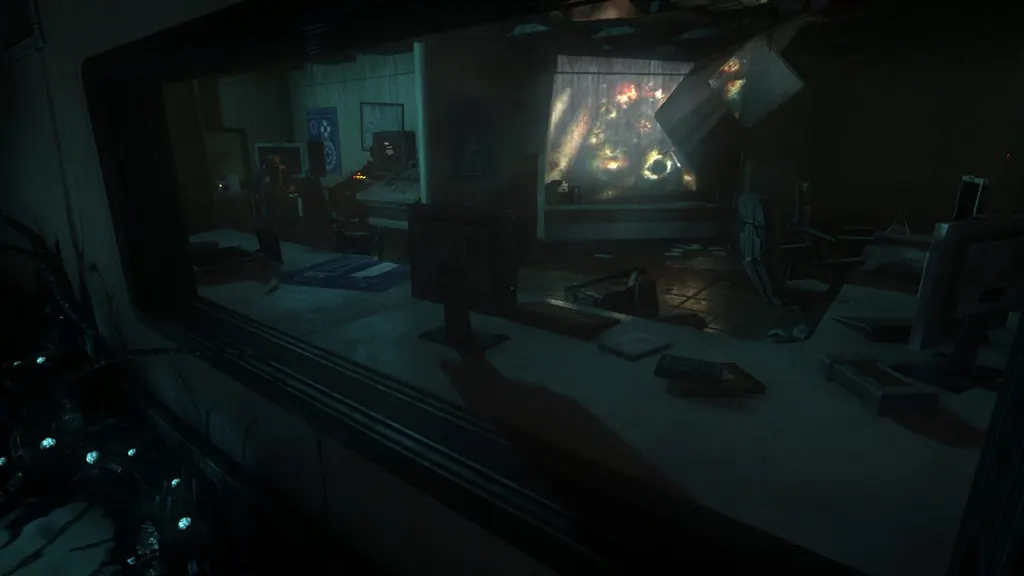
The development of SOMA was a marathon of years, a technical and creative process that began long before the public had access to the depths of PATHOS-II. Since 2010, Frictional Games has been working on the title, a period that allowed the game to evolve from an initial concept into a high-fidelity underwater horror experience. Initially, the idea of setting the story at the bottom of the Atlantic Ocean came from a creative impulse, or a “whim,” of co-founders Thomas Grip and Jens Nilsson. This decision not only shaped the setting but also required a significant technological leap, driving the advancement of the HPL Engine 3 graphics engine, an achievement comparable to the narrative of games like Sally Face: Story and Stuff.
Technical Challenges and Underwater Immersion
The central challenge for the developers was creating an atmosphere that was not only frightening but viscerally realistic, simulating the pressure and isolation of the deep sea. The focus was not merely on jump scares, but on the philosophical exploration of consciousness and free will. Achieving this level of immersion required the sound work to be crucial. The audio director, Samuel Justice, implemented what he called a “room size system.” Instead of simply processing sounds to create effects, the sound engineers captured real environments, such as the reverberation of a large hall. This meticulous method resulted in the capture of over 2,000 footstep sounds, ensuring that every noise in the PATHOS-II laboratory complemented the sense of claustrophobia and oceanic scale.
The production schedule was marked by significant narrative changes, but also by a progressive marketing strategy that kept the title in the spotlight. Fans were gradually introduced to the SOMA universe through multiple channels. On October 11, 2013, an initial gameplay trailer was released. Later, in April 2014, another trailer was unveiled, heightening the mystery. Alongside the gameplay announcements, Frictional Games produced live-action short films, such as “Vivarium” and “Mockingbird,” in partnership with Imagos Films. These videos, along with the film “DEPTH” (under the code “Project Apophis”), served as pre-history and marketing material, culminating in the “SOMA – Transmission #1” clip series, released on September 28, shortly after the game’s launch.
The title’s life cycle shows a continuous commitment to the player experience. After the initial release on platforms like Linux, macOS, Windows, and PS4 on September 22, 2015, and on Xbox One on December 1, 2017, the game solidified its legacy. More recently, the collaboration with Abylight Studios guaranteed portability to the Nintendo Switch, with an announcement in January 2025, proving the resilience and lasting relevance of SOMA in the interactive horror scene.
🕒 SOMA Development and Release Timeline
- Since 2010 — Frictional Games begins development of the work.
- October 11, 2013 — Release of the first gameplay trailer.
- April 2014 — Release of a second trailer, reinforcing the game’s mystery.
- September 22, 2015 — Initial game release on platforms such as Linux, macOS, Windows, and PS4.
- December 1, 2017 — Game release on the Xbox One platform.
- September 28 — Release of the ‘SOMA – Transmission #1’ clip series, after the game.
- January 2025 — Announcement of the game’s port to the Nintendo Switch.
Gameplay and the break from traditional horror
The genre of SOMA is firmly established in the niche of first-person psychological survival horror. Unlike many horror titles that rely on the threat of armed encounters, the gameplay of SOMA forces the player to shed any sense of military power. The central premise is simple, yet revolutionary: the protagonist has no weapons. His only tools for survival are intelligence, caution, and the ability to adapt to constantly mutating biological and environmental threats.
The Mechanics of Evasion and Intellect
The break from traditional horror is palpable in the core mechanics. Instead of managing an ammunition inventory or searching for the most powerful weapon, the player is constantly directed toward solving puzzles and engaging in stealth exploration. Progress in the narrative and setting is built through these pillars: solving complex enigmas, navigating claustrophobic environments, and strategically utilizing stealth. The player must adapt to a variety of creatures, each representing a thematic aspect of the game. The title’s life cycle, including the addition of “Safe Mode” years after its release, reinforced this trend, allowing the narrative to remain the focus, rather than constant pursuit panic.
📘 Psychological Survival Horror
A genre that focuses on mental tension and character vulnerability, rather than depending solely on armed confrontations or jump scares.
This emphasis on evasion over combat has a profound thematic impact. Critics have noted that the game is not about “obfuscation”-based terror—the sudden, disorganized scare—but rather the “process of dealing with the horror of reality.” Instead of a direct confrontation, the tension is maintained by anticipation, the need to plan escape routes, and the character’s constant vulnerability. The game requires the player to use logical reasoning to survive, transforming physical dread into a mental challenge.
Prioritizing the Narrative Experience
This design choice—the denial of weapons and the emphasis on mystery—is what elevates SOMA above mere jump scares. The experience is built by collecting clues, such as notes and audio logs, which are crucial for fueling the atmosphere and the plot’s development. If you are interested in how other titles explore horror, you can check out the story of viral games. The focus remains on the character’s internal journey and the complex philosophy behind consciousness. Thus, the game transforms the dread of physical death into an existential questioning, proving that true terror resides in the uncertainty of identity and the coldness of science.
In short, SOMA redefined survival horror by replacing the adrenaline of combat with the complexity of intellectual survival, making the environment, rather than the player’s arsenal, the true adversary.
Simon Jarrett’s Journey and the Mystery of Consciousness
Simon Jarrett’s journey begins with a traumatic event in 2015. He survives a car accident but suffers severe brain injuries and cranial bleeding, in addition to losing his friend Ashley Hall. Due to his injuries, Simon agrees to participate in a tomography experiment under the supervision of graduate student David Munshi. During this scan, the protagonist passes out and, upon regaining consciousness, finds himself in a state of deep disorientation at Site Upsilon, an underwater and geothermal research facility at PATHOS-II, which appears to be abandoned.
Awakening in 2104
While exploring Upsilon, Simon makes contact with Catherine Chun, a woman who guides him to Site Lambda. It is there that the mystery reveals itself in its most shocking form: he is not just in an abandoned laboratory, but in the year 2104. The world he knew is gone, devastated by a comet. PATHOS-II, therefore, is the last bastion of humanity. His path is to unravel not only the location, but time itself. He encounters robots mimicking human life, but also hostile and mutant threats, forcing him into a constant state of flight.
Simon’s mystery is not just about the physical collapse of the laboratory, but about his own existence. He discovers that Catherine is not human; she is, in fact, a brain scan of a PATHOS-II employee, transferred to a robotic storage unit. The shock is total: Simon learns that he himself died in 2015 after the failure of his brain reconstruction treatment. His neural pattern, however, was vital. It was used as a historical model for AI reconstruction, eventually being uploaded into a body modified by WAU, 89 years after the original accident.
The Quest for Consciousness
The objective of human species survival was encapsulated in the ARK, a black digital box contained within a miniature satellite. This device holds a simulated world that preserves the brain scans of much of the PATHOS-II personnel. To save humanity, Simon must help Catherine recover the ARK, which is located in the abyssal depths of the Atlantic, at Site Tau. Along the way, he goes through an intense identity crisis. He is forced to adapt to new bodies and confront the truth that his perception of himself remains in the pilot’s seat, while his copies are being preserved.
The narrative climax forces Simon to confront the nature of life and mind. At the end of his journey, he is confronted with the fact that the only means of survival is not the biological body, but the conscious copy. After the sacrifice and separation, the cycle closes: Simon’s physical body is left behind, and only the copy of his consciousness, now on the ARK, has a chance to escape into space, leaving the devastated Earth behind.
📊 Simon’s Consciousness Transformation
| Event/Location | Simon’s Status | Nature of Existence |
|---|---|---|
| Car Accident (2015) | Trauma Victim and Cerebral Sequelae | Biological Body at Risk |
| Site Upsilon (Awakening) | Disoriented, in underwater laboratory | Beginning of the Mystery |
| Site Lambda | Discovery of the year 2104 and the global collapse | Post-apocalyptic context |
| Discovery of Catherine | Understanding that she is a brain scan | Challenge to Identity |
| End of the Journey | Sacrifice of the physical body | Consciousness preserved on the ARK |
Launch, platforms, and the game’s legacy
The journey of SOMA to the public was a multifaceted and long-term release process, reflecting the developers at Frictional Games’ commitment to bringing the psychological horror experience to as many platforms as possible. The title made its initial debut on September 22, 2015, available for operating systems such as Linux, macOS, Windows, PS4, and Xbox One. The game’s lifecycle expansion was gradual, with new versions and ports ensuring that the mystery of PATHOS-II reached different audiences and technologies. This portability strategy was marked by key dates, such as the release on December 1, 2017, for Xbox One, and more recently, the announcement of a version for Nintendo Switch on July 24, 2025, solidifying the game as an essential catalog title for multiple console generations.
Critical reception and legacy
In terms of reception, SOMA was acclaimed by critics for its narrative depth and the oppressive atmosphere it manages to build. Many critics considered the game one of the best examples of the survival horror genre, praising the way the story and the concept of consciousness were handled in an underwater collapse setting. The immersive experience, which forces the player to confront complex philosophical questions, is a constant highlight in reviews. Although most praise focuses on the quality of the script and the setting, there were critical points, notably related to the design and functionality of the enemies within the game, suggesting this is the aspect most open to improvement in future iterations.
The success of SOMA not only ensured its longevity in the market but also set a high standard for the genre. The game’s legacy extends beyond its release platforms. Frictional Games, the developer behind the work, demonstrated a commitment to exploring themes of science fiction and existential horror, which is evident in subsequent projects. A notable example of this legacy is Ontos, a spiritual successor that continues the investigation into the nature of consciousness, maintaining the focus on the atmosphere and deep narrative that made SOMA a landmark in modern electronic horror.
Glossary
- PATHOS-II: The underwater facility in the North Atlantic Ocean, a decaying technological colossus and the setting for the action.
- AGI: Artificial General Intelligence; an advanced AI that oversees and integrates all the base’s computational systems.
- HPL Engine 3: The graphics engine used in the game’s development, essential for creating the underwater immersion and realism.
- Room size system: An audio technique that simulates the reverberation of real environments, enhancing the sense of scale and claustrophobia.
Frequently Asked Questions
What is the setting of SOMA and what makes it so scary?
The setting is PATHOS-II, a colossal underwater facility located in the depths of the North Atlantic Ocean. The horror lies in the visceral contrast between cutting-edge technology and abandonment. This decaying environment is not just a location, but a reflection of humanity’s existential crisis.
Is SOMA a shooter game or is the focus on escape?
The main focus is evasion and intellect, not armed combat. The player does not possess weapons, forcing them to solve puzzles and rely on stealth. The tension is built through anticipation and constant vulnerability, transforming physical dread into a mental challenge.
Who are the creators of SOMA and what is the connection to Amnesia?
The creators are Frictional Games, with Thomas Grip directing. The game is recognized as a spiritual successor to previous titles in the genre. The work is praised for its philosophical depth, which questions the nature of human existence.
What is the story of Simon Jarrett and how does he relate to the laboratory?
There is no information on a character named Simon Jarrett in the material. The narrative focus centers on PATHOS-II, a laboratory that was originally a mining outpost and later a space research center, now in collapse.
Is there a sequel or a game related to SOMA?
The title has demonstrated a lasting legacy, maintaining an active life cycle with additions like ‘Safe Mode’. Furthermore, its portability to platforms like the Nintendo Switch proves the relevance and the potential for the SOMA universe to continue being explored.
Conclusion
SOMA’s journey transcends the definition of a mere horror game. It is a complex work that uses the claustrophobic environment of PATHOS-II, deep in the North Atlantic, as a mirror for humanity’s existential crisis. Far from being just a survival horror, the experience is a deep philosophical dive, questioning free will and the very nature of consciousness. The narrative, which unfolds organically and depends on the player’s actions, transforms the decaying setting into a central character, a technological colossus in ruins that forces a confrontation between machine and soul.
SOMA’s success lies precisely in this masterful fusion of visceral terror and high philosophy. Since its early development, Frictional Games has been dedicated to creating unprecedented realism; this is evident in the meticulous sound design, such as the room size system, which gave every step palpable weight and constant suspense. This attention to technical detail, combined with inspiration from intellectual giants, elevates the game to a level of psychological horror masterpiece, where fear is secondary to reflection on what it truly means to be a living being.
SOMA doesn’t just scare us with the depths of the ocean; it forces us to question the depths of our own being. At the end of the journey, what remains is the reflection on the fragility of human identity in the face of technological advancement. We invite you to revisit this work, not just for the adrenaline of suspense, but to revisit the deepest questions about what it means simply to exist.