Read this article in: Portuguese (Português) · Spanish (Español)
The World of Warcraft (WoW) player community was once again stirred up by an exploitation incident within endgame content. A lucrative exploit, discovered in a new dungeon called Blackmaw Hold, allowed some users to perform a massive and artificial collection of gold. Due to the potential economic imbalance caused by the phenomenon, Blizzard Entertainment acted quickly. The developer not only issued an urgent correction (hotfix) for the game but also announced disciplinary measures against accounts that benefited from the resource farming scheme.
The Exploit Leak and Blizzard’s Correction
The discovery of the gold farming method in World of Warcraft: Forever generated significant buzz among dedicated players. The exploit allowed users to obtain amounts of gold far exceeding normal gameplay effort. As soon as the leak was widely publicized, Blizzard was forced to intervene. The studio reacted quickly, implementing a “hotfix” to correct the game’s vulnerability.
In addition to the technical correction, the company also signaled that it will take action against accounts that managed to accumulate thousands of virtual coins. This stance reinforces Blizzard’s commitment to maintaining economic integrity and a fair experience for all players who invest their time in the world of Azeroth.
Farming Details: How the Gold Mine in Blackmaw Hold Worked
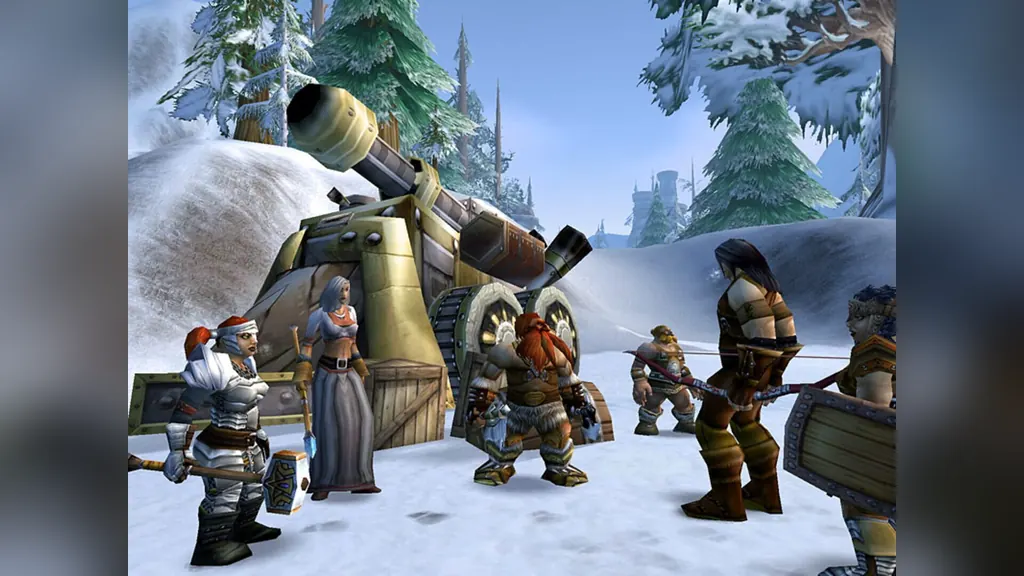
The focal point of the incident was the Blackmaw Hold dungeon, a new piece of endgame content. Players discovered that a specific room, containing a group of 30 non-elite enemies, was the perfect location for an Area of Effect (AoE) gold collection system. The farming mechanic was extremely simple: players only needed to enter the room, eliminate all the monsters, collect the loot, and restart the cycle, repeating the process tirelessly.
The profit didn’t come only from the enemies, but also from the items they dropped. Each monster could grant between 25 and 50 silver, a value that could be converted into gold. Furthermore, the obtained equipment and materials were valuable and could be sold both to vendors and, even more lucratively, in the auction house. The process became a vicious cycle of repetition and gain.
The impact of the exploit was evident during the game’s second weekend of early access. A notorious streamer, Ziqo, who had previously faced controversies related to illegal gold in beta versions, exposed the method during his broadcast. He reported accumulating about 4,000 gold solely from exploring the dungeon, and even took care to name other content creators who replicated the same success.
Game Context: World of Warcraft: Forever and the 2026 Release
For those unfamiliar, World of Warcraft: Forever is the newest title in the franchise. Blizzard Entertainment is developing this adventure RPG for PC (Microsoft Windows) and Mac platforms. The official release is scheduled for November 4, 2026.
The game promises to be a deep immersion into a world of untamed frontiers, warring factions, and untold mysteries. World of Warcraft: Forever is presented as an invitation for players to relive and explore an Azeroth that develops from the roots of WoW’s first era. The developer indicated that the title will be a constantly evolving experience, receiving regular patches and content to ensure an endless adventure.
This context of continuous development and the promise of always updated endgame content make any systemic failure, such as the Blackmaw Hold exploit, even more critical to the player experience.
Blizzard’s Actions and the Impact on the Future of Endgame
The incident with the gold farming in Blackmaw Hold raises important questions about the virtual economy and maintaining balance in large-scale games. Player concern, evident in forums like the WoW: Forever subreddit, related to the impact that such a gigantic amount of gold, obtained questionably, could have on the game’s stability.
Blizzard’s response was clear: the integrity of the game must come first. By correcting the exploit and applying measures against users, the company attempts to mitigate the risk of inflation and the devaluation of legitimate players’ effort. The incident serves as a reminder that, despite initial enthusiasm for new content, the system needs to be constantly audited.
The episode, although controversial, reinforces the development cycle of a modern MMORPG: the discovery of flaws, the urgent correction by developers, and the impact of these flaws on the game’s narrative and economy. For players, the challenge now is to adapt to the corrected content, focusing on natural progression and the story Blizzard is building for the 2026 launch.