Read this article in: Portuguese (Português) · Spanish (Español)
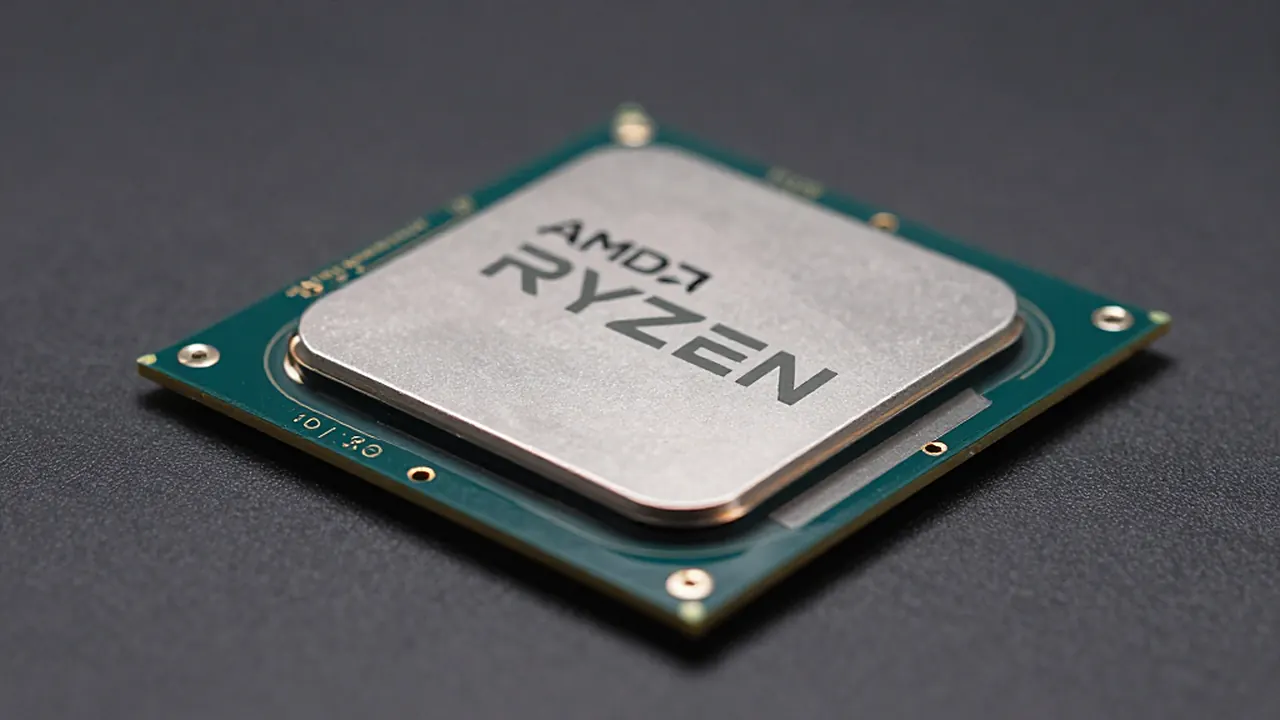
The AMD Ryzen 5 3400G is a Ryzen series processor designed to offer an excellent balance between central processing and integrated graphics capability, making it a classic example of an APU (Accelerated Processing Unit). Released in 2019, this model features an architecture based on Zen/GCN5, offering 4 cores and 8 threads, with a base clock frequency of 3.7 GHz and a boost capability of up to 4.2 GHz. Its specifications are complemented by the integrated Radeon RX Vega 11 graphics card, which gives the chip robust graphical power, ideal for users who do not wish to invest in a dedicated video card immediately.
The significance of the 3400G lies precisely in its ability to combine the CPU and GPU into a single package, a feature that positioned it as an attractive choice in the entry-level and mid-range computer market. Its debut in 2019 placed it within the Ryzen 2000 series with Radeon Graphics, a generation that popularized the APU concept for desktops. With a TDP of 65 W and a total L3 Cache of 4 MB, the processor delivered solid performance for its time, maintaining an attractive cost-to-performance ratio, especially for those looking to build a functional PC without major graphical demands.
In this article, we will take a complete dive into the specifications of the AMD Ryzen 5 3400G. We will cover everything from a detailed analysis of its Zen+ architecture and manufacturing process to the performance of its integrated graphics engine, the Radeon Vega 11. You will discover how it performs in real-world usage scenarios, such as gaming and daily productivity, and we will provide a technical comparison with competitors and more recent generations, ensuring you have all the necessary information to make a well-founded purchasing decision.
Key Points
- It is an APU (Accelerated Processing Unit), unifying the CPU and GPU into a single physical package.
- It has 4 cores and 8 threads, with a total L3 Cache of 4 MB for balanced processing.
- It operates with a 3.7 GHz base clock and can reach up to 4.2 GHz in boost mode.
- It incorporates the Radeon RX Vega 11 graphics, ensuring visual capability without a dedicated card.
- It is ideal for home use, productivity, and light gaming or eSports, without major graphical demands.
AMD Ryzen 5 3400G Overview: What Is It and Who Is It For?

The AMD Ryzen 5 3400G represents an important milestone in the Ryzen processor line, serving as a classic and robust example of an APU (Accelerated Processing Unit). Simply put, it is a processor that unifies central processing (CPU) and the graphics unit (GPU) into a single physical package. This architecture is fundamental because it eliminates the need for the motherboard to have a dedicated PCIe slot for a separate video card, making it a complete and highly efficient solution for building entry-level and mid-range computers.
Specifications and Architecture in Detail
The 3400G was designed to deliver balanced performance. In terms of central processing, it features 4 cores and 8 threads, operating with a total L3 cache of 4 MB. Its clock specifications are defined by a base frequency of 3.7 GHz and can reach up to 4.2 GHz in boost mode. Complementing this computing power, the processor incorporates the integrated Radeon RX Vega 11 graphics. This graphics chip, with 11 Compute Units (CU), is the visual engine that allows the system to run without relying on a dedicated graphics card.
📘 APU
APU stands for Accelerated Processing Unit. It is a processor that combines the central processing unit (CPU) and the graphics unit (GPU) into a single physical package, simplifying PC builds.
Technically, the 3400G was released in 2019, a period that solidified the use of APUs in the AM4 market. Beyond its processing capabilities, it aligns with modern standards, such as support for 20 lines of PCIe 3.0. If you want to better understand the potential of high-performance processors, it is worth checking out the full specifications of the AMD Ryzen Threadripper 1900X. To ensure maximum performance, the Ryzen 3000 series models, including the 3400G, were optimized to run with DDR4-2933 RAM in dual-channel mode, a crucial detail for integrated graphics performance.
Who is the AMD Ryzen 5 3400G for?
The positioning of this processor is extremely clear: it is ideal for the user who needs a functional computer without major graphics demands, but who still requires performance superior to a basic processor. It is perfect for those building a home PC, for productivity tasks (browsing, spreadsheets, video conferencing), or for those who want to experiment with the world of light gaming. The combination of the 4-core processor with the robust graphics of the Radeon Vega 11 allows running older titles or indie games in adequate settings, all without the added cost of a dedicated graphics card. In summary, the 3400G is the perfect bridge between simplicity and performance capability.
Zen+ Architecture and Manufacturing Process
The technical foundation of the AMD Ryzen 5 3400G is intrinsically linked to the Zen+ architecture, an evolutionary advancement of the Zen line. This processor is a clear example of the 3000 series, which utilizes the Picasso architecture (also known as Pinnacle Ridge), marking a significant optimization over its predecessors. For those seeking greater power, it is worth checking out the guide on the AMD Ryzen Threadripper 2970WX for professional workstations. The goal of Zen+ was to refine overall performance while maintaining the necessary compatibility and stability for the desktop market.
The Technical Foundation and the “G” Factor
The fact that the 3400G belongs to the ‘G’ series is technically crucial because it guarantees the inclusion of an integrated Graphics Processing Unit (GPU). This feature classifies it as an APU (Accelerated Processing Unit). In terms of connectivity and support, the processor operates on the popular AM4 socket and was designed to support DDR4-2933 memory in dual-channel mode. The Picasso architecture, from which the 3400G derives, has a set of features that distinguish it from previous generations:
- PCIe Lanes: The chip provides 20 PCIe 3.0 lanes, 4 of which are reserved for communication with the chipset.
- Integrated Graphics: It includes a fifth-generation GCN GPU, which is responsible for its graphical capability without the need for a dedicated card.
Performance and Manufacturing Details
Regarding physical and performance specifications, the 3400G was released on July 7, 2019, with a Manufacturer’s Suggested Retail Price (MSRP) of US $149. It is equipped with 4 cores and 8 threads, and has a total L3 cache of 4 MB. In terms of clock performance, it features a base frequency of 3.7 GHz and can reach up to 4.2 GHz in its boost clock.
Power efficiency is monitored through its 65 W TDP (Thermal Design Power). In terms of manufacturing, the processor uses the GlobalFoundries 12LP (14LP+) process. This process specification is what allows AMD to consolidate a powerful and compact chip, combining central processing with integrated graphics capability in a single package, ensuring the balance that makes it so attractive for users seeking a functional system without major graphics demands.
📊 Key Specifications Summary for the Ryzen 5 3400G
| Feature | Detail | Value |
|---|---|---|
| Architecture | Base | Zen+ |
| Manufacturing Process | Process | GlobalFoundries 12LP (14LP+) |
| Cores and Threads | Configuration | 4 cores and 8 threads |
| L3 Cache | Size | 4 MB |
| Base / Boost Frequency | Clock | 3.7 GHz / 4.2 GHz |
| GPU Type | Integration | Fifth-generation GCN GPU (APU) |
| Connectivity | Socket and Memory | AM4 / DDR4-2933 (dual-channel) |
| Power Consumption | TDP | 65 W |
Analyzing Technical Specifications: Cores, Cache, and Clock

| Model | Ryzen 5 PRO 3400G |
|---|---|
| Cores / Threads | 4 (8) |
| GPU | Radeon RX Vega 11 |
| TDP | 65 W |
| Release Date | September 30, 2019 |
| MSRP | OEM |
| Base Clock | 3.7 GHz |
| Boost Clock | 4.2 GHz |
| L3 Cache (total) | 4 MB |
| Processing Power (GFLOPS) | 1971.2 |
| Other Model | 3400G |
| Other Release Date | July 7, 2019 |
| Other MSRP | US $149 |
Analyzing Technical Specifications: Cores, Cache, and Clock
To understand the performance of the AMD Ryzen 5 3400G, it is essential to break down the numbers that make up its technical specifications. In terms of central processing, the chip is equipped with 4 physical cores. Although the number of cores is a primary indicator of processing capacity, the perceived performance by the end-user is enhanced by SMT (Simultaneous Multi-Threading) technology. This architecture allows the processor to operate with 8 threads, meaning it can manage and process eight simultaneous workflows, optimizing resource usage and ensuring superior fluidity in multitasking tasks, such as running an operating system and a productivity application in parallel; for those seeking top-tier equipment, it is worth checking out the definitive guide for professional workstations.
Clock and Cache: The Basis of Performance
A processor’s performance is directly linked to its operating speed. The Ryzen 5 3400G operates with a base clock of 3.7 GHz, ensuring stable and reliable performance in most daily workloads. When the system demands more power, the processor engages boost mode, raising the maximum frequency to 4.2 GHz. This variation between the base clock and the boost clock is crucial, as it indicates the processor’s ability to dynamically increase its speed to respond to peaks in demand, whether in a game or a video render.
Beyond frequency, the cache is a vital component that acts as ultra-fast memory, directly accessible by the cores. The 3400G has a total L3 cache of 4 MB. In practical terms, the L3 cache functions as a “meeting point” for data the processor uses most often. The larger and faster the access to this cache, the less time the processor loses waiting for data from the main RAM. Therefore, cache size is a determining factor for frame rates in games and for processing speed in complex tasks.
Energy Efficiency and Consumption
Another technically significant aspect is power consumption, measured by the TDP (Thermal Design Power). The Ryzen 5 3400G has a TDP of 65 W. This value not only reports the maximum power consumption the system expects but is also an indicator of thermal efficiency. For a desktop that integrates a powerful graphics unit (the Radeon Vega 11) into a single package, maintaining power consumption at 65W is a highlight, as it allows the processor to deliver robust performance without requiring an excessively complex cooling system or disproportionate power draw, making it an efficient choice for various desktop setups.
📌 Key Specifications Summary for the Ryzen 5 3400G
- Cores and Threads: 4 physical cores with 8 threads via SMT technology.
- Clock: Operates at 3.7 GHz (base) and can reach 4.2 GHz (boost).
- L3 Cache: It has a total cache of 4 MB, ultra-fast memory for the cores.
- Power Consumption (TDP): The thermal consumption is 65 W, indicating good energy efficiency.
- Integrated GPU: It includes the Radeon Vega 11 graphics unit in a single package.
Integrated Graphics Power: Radeon Vega 11 in action
Integrated Graphics Power: Radeon Vega 11 in action
The most striking feature of the AMD Ryzen 5 3400G, and the main reason for the ‘G’ in its name, is undoubtedly its powerful integrated Graphics Processing Unit (GPU). The ‘G’ in the 3400G model is not just a marketing flourish; it indicates the inclusion of a high-performance GPU directly on the chip, transforming the processor into a true APU (Accelerated Processing Unit). In this line, the component responsible for all visual power is the Radeon RX Vega 11.
The Vega 11 is a fifth-generation GCN graphics unit, giving the 3400G robust graphics capability for a processor that does not have a dedicated card. With an architecture that can be analyzed by its 11 Compute Units (CU), it was designed to deliver surprising graphics performance in its category. In practice, this power allows the user to run older games or eSports titles with medium graphical settings, ensuring a functional gaming experience without the need for an initial investment in a separate video card.
However, when analyzing graphics performance, it is essential to understand that the integrated GPU is not an isolated component. It shares vital resources with the main processor, and the most critical factor for the Vega 11’s performance is the RAM installed in the system. The speed and amount of memory form the GPU’s “communication channel.” Therefore, the 3400G’s maximum performance is achieved when the system operates in Dual-Channel, meaning with two memory modules. Configuring the system with Dual-Channel RAM not only increases the bandwidth but is the decisive factor for the Radeon Vega 11 to operate at its maximum potential, preventing data bottlenecks.
In summary, the 3400G is a complete and balanced solution. It offers the processing performance of the Zen+ core combined with the graphics capability of the Vega 11. For the user looking to build a functional computer, capable of running productive tasks and light or eSports games without major demands, the 3400G establishes itself as an extremely attractive and high value-added choice in the entry-level and mid-range computer market.
Real Performance: Gaming, Productivity, and Daily Use

The real performance of the AMD Ryzen 5 3400G is the meeting point between processing power and practicality, making it an extremely balanced solution for the home user and professional who does not want to invest in multiple pieces of hardware. When evaluating the 3400G in practical scenarios, it is crucial to understand that the combination of its 4 cores and 8 threads with the powerful integrated Radeon RX Vega 11 Graphics Processing Unit (GPU) redefines the concept of a “complete and balanced” computer. The processor not only handles daily tasks but also offers notable graphics capability without relying on a dedicated video card.
Gaming and Entertainment Performance
For those looking for home entertainment, the 3400G acts as a reliable partner for casual gaming and competitive titles. While it is not a high-performance processor for modern AAA games, it demonstrates excellent capability in eSports environments. Titles like League of Legends (LoL) and Counter-Strike: Global Offensive (CS:GO) run satisfactorily at 1080p resolutions, provided the user keeps the graphics settings at low or medium levels. This performance is directly attributed to the robust architecture of the Vega 11, which allows the PC to be built and used immediately, without the need to look for or purchase a separate graphics card.
Productivity and Daily Multitasking
In the professional and productivity sphere, the 3400G stands out for its multitasking efficiency. If you are a student or professional who deals with heavy browsing—meaning many tabs open simultaneously—or who needs to switch between various applications without stuttering, the 4 cores and 8 threads ensure fluidity. Furthermore, it is more than capable of supporting light creative tasks, such as photo editing in programs like Adobe Photoshop or editing short videos. For these activities, the processor ensures that the workflow is maintained, without the processing bottlenecks that typically affect less robust CPUs.
The APU Advantage: Convenience and Savings
The most tangible advantage of the 3400G is its role as an APU (Accelerated Processing Unit). Comparatively, it offers a much superior user experience compared to a desktop processor without integrated graphics. While processors without a dedicated GPU require the immediate purchase of a video card, the 3400G comes with the Radeon Vega 11 built-in. This not only represents significant initial cost savings but also drastically simplifies the building process. In summary, the 3400G is the definition of convenience: it provides a functional operating system, capable of running from basic browsing to light gaming and editing, all in one balanced, ready-to-use package.
✅ Advantages
- Excellent balance between processing power and practicality for home and professional use.
- The integrated Radeon RX Vega 11 GPU offers notable graphics capability without a dedicated card.
- The 4 cores and 8 threads ensure smooth multitasking for tasks like heavy browsing and light editing.
- It is an APU, which saves on initial cost and simplifies PC assembly.
❌ Disadvantages
- It is not a high-performance processor for modern AAA gaming.
- For gaming, it is recommended to keep graphics settings at low or medium in 1080p.
Comparison: 3400G versus competitors and newer generations
The AMD Ryzen 5 3400G occupies a strategic position in the market, and understanding its value requires comparing it not only to models of its own generation but also to the complete landscape of the Ryzen line. The most crucial differentiator, which justifies the ‘G’ suffix in its name and distinguishes it from purely computing processors, is the integrated Graphics Processing Unit (GPU), the Radeon Vega 11. In a direct comparison with similar models that lack this integrated GPU, the 3400G offers a more immediate “all-in-one” solution. For the user building a PC without the intention of adding a dedicated video card, the presence of the Vega 11 eliminates the complexity of acquiring and installing an extra component, making the system functional and ready to use right out of the box.
Comparing with pure computing architectures
When looking at the broader architectural context, the 3400G stands out for its balanced proposition. While platforms focused exclusively on processing, like the Ryzen 1000 series (based on Zen), supported the AM4 socket and, for example, operated with DDR4-2666 memory speeds and 24 PCIe 3.0 lanes, the 3400G adds a layer of robust graphics capability. This ability to be an APU (Accelerated Processing Unit) is what makes it extremely attractive to the home user seeking solid performance without the need for a high initial investment in graphics hardware.
Positioning relative to newer and higher-performance generations
To situate the 3400G relative to more advanced generations, it is useful to observe high-performance platforms. For instance, in workstation systems (like the Threadripper series), we see a significant leap in features and complexity. Architectures like Storm Peak (based on Zen 4), for example, use the sTR5 socket, support DDR5-5200 memory, and feature a massive number of PCIe 5.0 lanes. Similarly, the Threadripper 1000 (Whitehaven) or Summit Ridge (1000 series) platforms are designed for intensive workloads, requiring high connectivity and multiple PCIe lanes. The 3400G, on the other hand, operates with a 65W TDP and is anchored in an architecture more geared toward efficiency and general use. It does not compete with the raw power of a Threadripper 7000, but rather with the need for a functional, economical, and low-power machine.
In summary, the AMD Ryzen 5 3400G is a processor designed for the cost-effective and convenient niche. It offers a powerful starting point, equipped with the Radeon Vega 11, making it ideal for users who prioritize easy assembly and controlled power consumption. It represents a balanced solution for the user who needs adequate graphics performance for casual gaming and productivity tasks without the initial investment in a dedicated graphics card, ensuring that processing power and graphics are in harmony within a tighter budget.
Glossary
- APU (Accelerated Processing Unit): A processor that unifies the central processing unit (CPU) and the graphics unit (GPU) into a single physical package.
- TDP (Thermal Design Power): Measures the maximum power consumption the system expects, indicating the processor’s thermal efficiency.
- Dual-Channel: An RAM configuration that uses two modules simultaneously, increasing data bandwidth.
- Threads: Represents the processor’s ability to manage and process multiple workflows concurrently.
- Compute Units (CU): Graphics processing units that make up the integrated GPU, determining the chip’s visual power.
Frequently Asked Questions
Is the Ryzen 5 3400G still good for gaming in 2024?
Yes, it is excellent for casual gaming and eSports titles, like LoL and CS:GO, running at 1080p with medium settings. While it isn’t designed for demanding modern AAA games, its combination of 4 cores and the Vega 11 ensures a functional and reliable experience for home entertainment.
What is the performance difference between the 3400G and the 3400 (without the G)?
The main difference is the integrated Graphics Processing Unit (GPU). The 3400G model has the Radeon RX Vega 11, which classifies it as an APU. The 3400, by lacking the ‘G’, does not have this integrated GPU, limiting it to relying exclusively on an external graphics card for any graphical capability.
Do I need a dedicated graphics card if I use the 3400G?
It is not mandatory. The 3400G is designed to be a complete solution because its integrated GPU (Vega 11) allows the system to function without a dedicated graphics card. However, if you are looking for maximum performance in gaming or heavy graphical tasks, a dedicated card will always optimize overall performance.
What is the best RAM for optimizing the 3400G’s performance?
To optimize the Vega 11’s performance, it is crucial that the system operates in Dual-Channel, meaning it uses two memory modules. Furthermore, the ideal support is for DDR4-2933 memory, as both the speed and the Dual-Channel configuration are decisive factors for the integrated GPU to reach its maximum potential.
Is the 3400G suitable for professional video editing?
It is very suitable for amateur or intermediate-level productivity and video editing tasks, thanks to its 4 cores and 8 threads. However, if your routine involves heavy professional editing that requires complex and constant rendering, you might notice limitations compared to processors from more recent generations or models with more cores.
Conclusion
The AMD Ryzen 5 3400G thus establishes itself as a masterful example of an APU (Accelerated Processing Unit). Its main strength lies in its ability to unify central processing and the graphics unit into a single package, eliminating the immediate dependence on a dedicated graphics card. Equipped with 4 cores and 8 threads, and complemented by the robust Radeon RX Vega 11, the processor delivers balanced performance, operating with a 4 MB L3 cache and a frequency that ranges from 3.7 GHz to 4.2 GHz in boost mode.
This technical profile positions it ideally for the user seeking a functional and efficient system, whether for advanced productivity tasks, browsing, or playing light titles. The Zen+ architecture and support for the AM4 socket, combined with the low 65W TDP, ensure that the 3400G offers power without excessive cooling complexity. It represents the perfect bridge between ease of assembly and the processing capability needed for modern daily life.
Understanding these specifications is not just about knowing numbers; it is about understanding the value proposition of a complete system. When considering the 3400G, the focus must always be on the synergy between the processor and the DDR4-2933 memory in dual-channel. Analyzing these technical details is the first step toward building a PC that perfectly meets your needs without compromising the budget.