Read this article in: Portuguese (Português) · Spanish (Español)
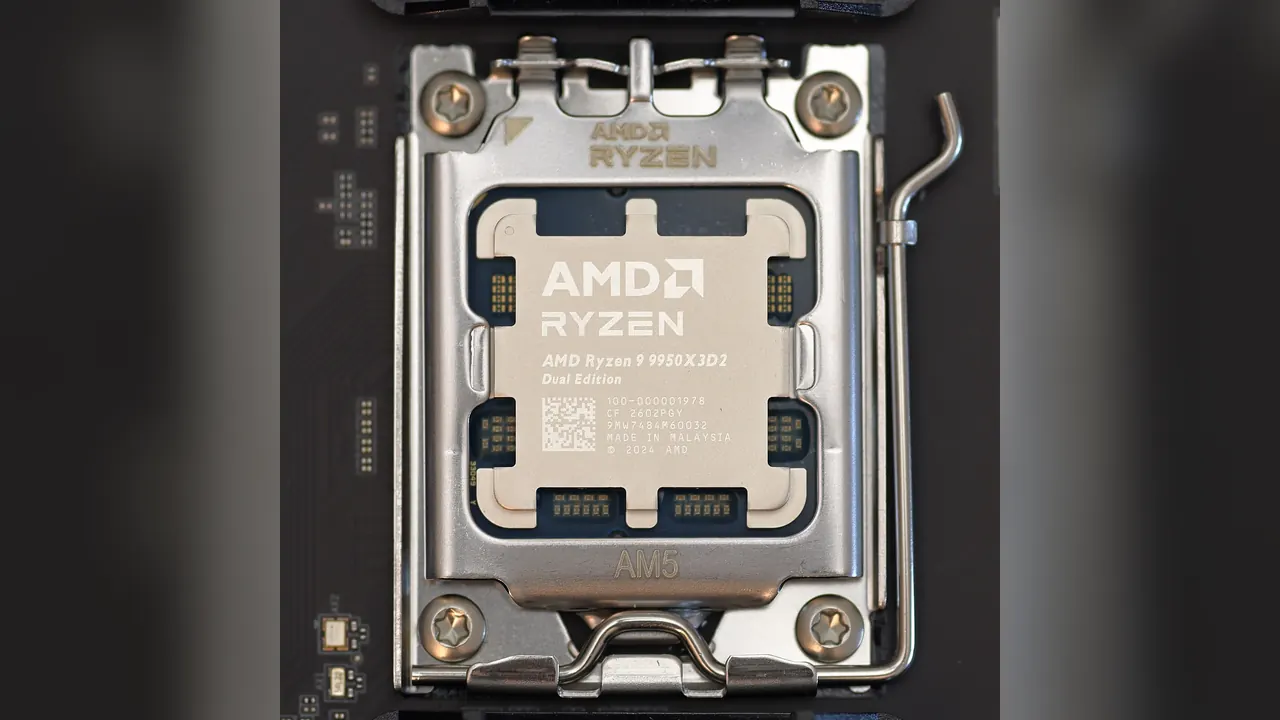
The AMD Ryzen 9 9950X is AMD’s flagship processor, engineered to meet the most demanding computing needs, whether for high-performance gaming or intensive content creation workloads. Equipped with the Zen 5 architecture and the Granite Ridge code, this processor features 16 cores, a maximum clock speed ranging from 4.3 GHz to an impressive 5.7 GHz, and a robust 128MB L3 cache, enhanced by 3D V-Cache technology. It represents a significant leap over its predecessor, the Ryzen 9 7950X3D, redefining standards of power and efficiency in the desktop computing segment.
The relevance of the 9950X in the high-performance market is undeniable, marking a crucial moment in the evolution of personal computing. Its launch is scheduled for March 12, 2025, as part of the new and powerful Ryzen 9000 series. The adoption of the Zen 5 architecture and the use of the Granite Ridge code solidify AMD’s position in the race for dominance, offering a performance boost that caters to everyone from the most avid gamer to the professional relying on 3D rendering and video editing. This combination of top-tier specifications ensures the processor maintains leadership across various applications.
In this article, we will provide a complete and detailed analysis of the AMD Ryzen 9 9950X. We will go beyond basic specifications, diving into the Zen 5 architecture and the significance of Granite Ridge for the future of processors. We will cover everything from the technical configuration of cores and cache to performance benchmarks in gaming and productivity, along with a rigorous comparison to its predecessors and top competitors, providing all the necessary information for you to make the best purchasing decision.
Key Highlights
- It is a Zen 5 flagship processor (Granite Ridge) with 16 cores and 32 threads.
- It features a massive 128 MB L3 cache, enhanced by 3D V-Cache.
- It offers base clocks of 4.3 GHz up to 5.7 GHz in boost mode.
- The AM5 platform supports DDR5 and 28 lanes of PCIe 5.0 for maximum connectivity.
- It is designed for hybrid performance, making it ideal for both gaming and professional creation.
Overview of the Ryzen 9 9950X and Market Positioning
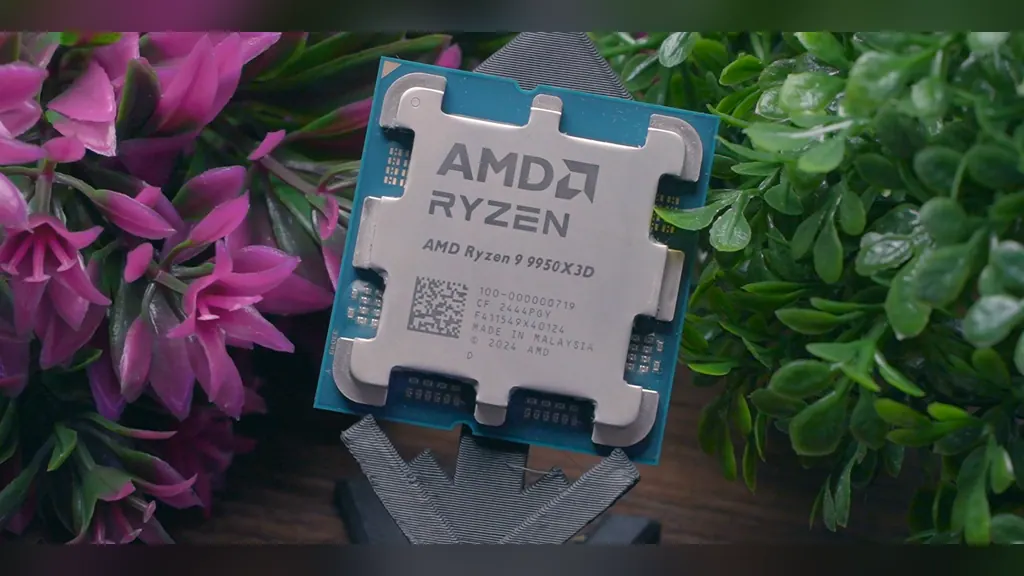
The AMD Ryzen 9 9950X stands at the forefront of AMD’s performance, establishing itself as the flagship processor of the highly anticipated Ryzen 9000 series. Based on the Zen 5 architecture, nicknamed “Granite Ridge,” this chip was developed to redefine the limits of personal computing. For those seeking even more power in workstations, it is worth checking out the specifications of the Threadripper 1900X. Its market positioning is strategic: it is not limited to a niche but was meticulously designed to deliver top-tier performance for both the most demanding gaming enthusiasts and professionals who rely on intensive content creation workloads, such as 8K video editing and 3D rendering.
Zen 5 Architecture and Power
The engine behind the 9950X is Zen 5, and it elevates the performance standard through a robust set of specifications. The processor features 16 cores and 32 threads, ensuring massive parallel processing capability. In terms of speed, it offers a base clock of 4.3 GHz, capable of reaching impressive boost frequencies of up to 5.7 GHz. One of its most notable differentiators is the use of 3D V-Cache, which results in a total L3 cache of approximately 128 MB. This cache volume, combined with the TSMC N4 FinFET manufacturing process, ensures that the processor maintains an extremely fast data flow, minimizing performance bottlenecks in extreme use scenarios.
The platform supporting the 9950X is the modern and advanced AM5 socket family. This architecture not only guarantees compatibility with the latest technologies but also imposes very high performance requirements. To keep up with the chip’s power, the platform supports DDR5-5600 memory in dual-channel mode and, crucially, offers 28 PCIe 5.0 lanes. This support for multiple generations of connectivity is vital, as it allows the 9950X to power next-generation graphics cards and high-speed peripherals without compromising data throughput.
End-User Performance
The Ryzen 9 9950X is not just a number jump, but a systemic improvement in efficiency and power. It represents the convergence of an advanced architectural design with a cutting-edge platform support. For the gamer, the expanded cache and high clocks mean more stable and responsive frame rates. For the content creator, the 16 cores and 32 threads ensure that complex multitasking tasks are processed with maximum efficiency. The combination of all these features solidifies the 9950X as a benchmark machine in the high-performance computing market, setting the standard for years of use to come.
📌 Key Specifications Summary for the Ryzen 9 9950X
- Architecture: Zen 5 (codenamed “Granite Ridge”)
- Cores and Threads: 16 cores and 32 threads
- Clock: 4.3 GHz base, up to 5.7 GHz boost
- L3 Cache: Approximately 128 MB (with 3D V-Cache)
- Manufacturing Process: TSMC N4 FinFET
- Platform: Supports AM5 sockets, DDR5-5600, and 28 PCIe 5.0 lanes
Architecture and Zen 5 Innovation: What to Expect from Granite Ridge
The evolution of high-performance processing is measured by the architecture that supports it. In the case of the AMD Ryzen 9 9950X3D, the engine behind this leap is Zen 5, codenamed Granite Ridge. This new iteration represents more than just a simple increase in numbers; it is a deep reengineering that significantly raises the performance bar for the personal computing market. For those seeking even more power, it is worth checking the specifications for AMD Ryzen Threadripper for Professional Workstations. The processor is built with a robust structure, incorporating 16 cores and 32 threads, ensuring massive parallel processing capability for the most demanding workloads.
Cache and Core Vanguard
The main architectural differentiator of the 9950X3D lies in its cache implementation and technological integration. One of the processor’s core complexes (CCD) utilizes AMD’s advanced 3D V-Cache. This innovation results in a total L3 cache of an impressive 128 MB, a volume that drastically boosts speed and efficiency in applications requiring fast access to large amounts of data. In terms of clock speed, the processor is capable of operating at a base frequency of approximately 4.3 GHz, boosting up to 5.7 GHz, features that position it as a powerhouse in terms of raw power and reduced latency.
This improvement is even more evident when comparing the underlying technology. While previous generations, such as the Ryzen 1000 series (based on Zen), operated on platforms with older architectures—like the AM4 socket and the GlobalFoundries 14LP manufacturing process, supporting up to DDR4-2666 and 24 lanes of PCIe 3.0—the 9950X3D is a cutting-edge product. It is built on the TSMC N4 FinFET process (and N6 FinFET for the I/O die), ensuring an efficiency and performance that place it in another league.
This platform change brings with it unparalleled connectivity and memory support. The processor is designed for the AM5 socket family, supporting DDR5 memory up to 256 GB and, crucially, 28 lanes of PCIe 5.0, a leap that ensures the system can communicate with peripherals and graphics cards at the maximum speed available on the market. Furthermore, the Zen 5 architecture also integrates an RDNA 2 GPU, with base and boost clock speeds of 0.4 GHz and 2.2 GHz, respectively, offering advanced graphics capabilities directly on the chip.
In summary, the 9950X3D is not just a clock speed bump, but a convergence of advancements in cache (128 MB L3), silicon foundation (TSMC N4 FinFET), and connectivity (PCIe 5.0), establishing it as a reference processor for users seeking the peak of performance in their high-computing machines.
📊 Architecture Comparison: AMD Processor Generations
| Feature | Ryzen 9 9950X3D (Zen 5) | Previous Generations (e.g., Ryzen 1000) |
|---|---|---|
| Manufacturing Process | TSMC N4 FinFET (and N6 FinFET for I/O) | GlobalFoundries 14LP |
| Supported Socket | AM5 | AM4 |
| Supported Memory | DDR5 up to 256 GB | DDR4-2666 |
Detailed technical specifications: cores, clocks, and cache
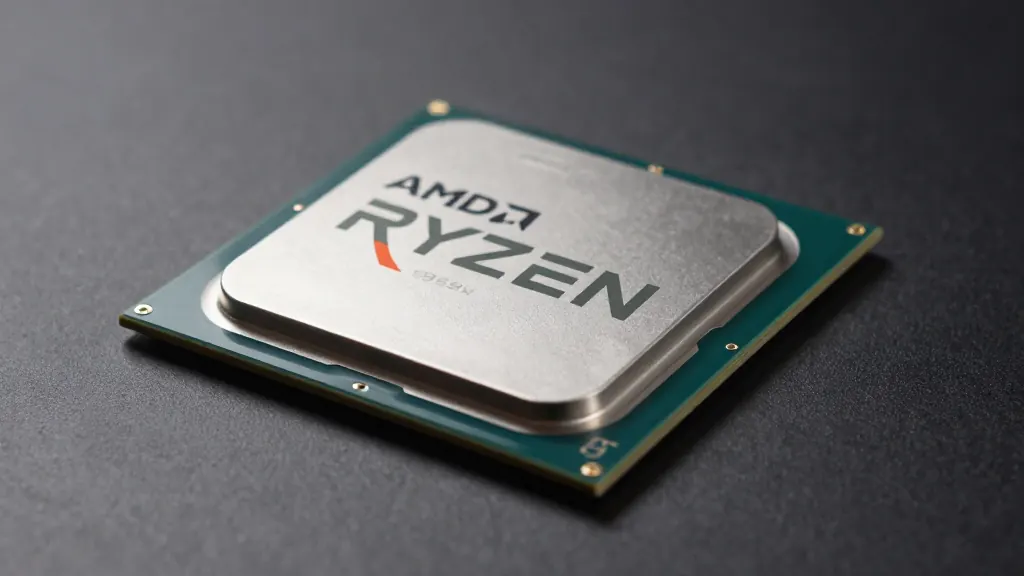
| Model | AMD Ryzen 9 9950X |
|---|---|
| Product Code | Granite Ridge |
| Architecture | Zen 5 |
| Cores | 16 |
| Socket | AM5 |
| L3 Cache | 128MB (with 3D V-Cache) |
| Clock Speed (GHz) | 4.3 to 5.7 |
| Predecessor | Ryzen 9 7950X3D |
| Release Date | March 12, 2025 |
| MSRP Launch | US $649 |
The technical analysis of the AMD Ryzen 9 9950X3D reveals a significant leap in raw capacity and efficiency, establishing the processor as a performance powerhouse for extreme workloads. Its engine is the Zen 5 architecture, based on the “Granite Ridge” codenamed chiplet. In terms of cores and threads, the 9950X3D is equipped with 16 cores and 32 threads, a configuration ideal for heavy multitasking and video rendering. If you want to better understand the maximum potential in workstations, it is worth checking out the AMD Ryzen Threadripper 7960X for workstations. Regarding frequency performance, the processor operates with a base clock speed of 4.3 GHz, capable of reaching an impressive 5.7 GHz in boost mode, ensuring it maintains high performance in scenarios that demand maximum processing speed.
Cache and high-speed memory
One of the most notable differentiators of this generation is cache management. The processor integrates a massive 128MB L3 cache, resulting from the incorporation of the advanced 3D V-Cache. This gigantic cache volume is crucial because it allows the processor to access frequently used data with extremely low latency, drastically optimizing performance in gaming and applications that rely on fast memory access. In addition to the L3 cache, the architecture totals 145 MB of CPU cache, a number that reinforces the 9950X3D’s ability to process large volumes of information without data bottlenecks.
Power consumption and technological foundation
It is essential to understand that this power comes with high thermal demands. The processor has a standard Thermal Design Power (TDP) of 170 W, but can consume up to 230 W at peak performance. This signals the critical need for robust, high-performance cooling solutions to maintain the stability and boost potential of the chip. In terms of platform, it is built on the AM5 socket, which is the foundation for supporting DDR5 memory, ensuring compatibility with the latest standards for connectivity and data speed. The manufacturing uses the TSMC N4 FinFET process, and the I/O core uses N6 FinFET, highlighting the complexity and cutting-edge engineering behind the component.
In summary, the Ryzen 9 9950X3D is not just a number increase; it is a convergence of advancements in cache (128 MB L3), clock frequency (up to 5.7 GHz), and architecture (Zen 5 on Granite Ridge), establishing it as a high-end piece of equipment, launched on March 12, 2025.
Gaming Performance and Productivity: Benchmarks and Practical Use
AMD positioned the Ryzen 9 9950X3D as a processor capable of meeting the most extreme demands of two distinct worlds: high-performance gaming and professional content creation. This hybrid performance capability is its main differentiator, allowing users not to have to choose between being a top-tier gamer or a productivity professional. In terms of performance, the combination of a high core count and L3 cache optimization places it in a leading position in the market.
Gaming Performance: Elite Performance
In the gaming world, the 9950X3D delivers results comparable to models focused exclusively on gaming, such as the Ryzen 7 9800X3D. In benchmarks conducted by specialized publications, the processor proved to be consistently one of the fastest, often surpassing even the specialized Ryzen 7 9800X3D in gameplay tests. This ensures a fluid visual experience and high frame rates, even for gamers who demand the maximum FPS.
Productivity and Heavy Multitasking
However, it is in productivity scenarios that the 9950X3D’s architecture reveals its raw power. While gaming is great, tasks like 3D rendering, complex video editing, and code compilation depend directly on the high number of available cores. This is where the 9950X3D’s advantage becomes most evident. It is ideal for heavy multitasking because its high core count ensures that multiple intensive processes can run simultaneously without performance bottlenecks. Market analysts, such as Heise Online, noted that the 9950X is for those seeking maximum multithreading power, establishing itself as the processor that combines the best of both worlds.
Usage Considerations and Power Consumption
It is important to note that this power comes with demands. Users who run the processor under extremely heavy workloads should be aware that the 9950X3D has high power consumption and thermal dissipation. For those who use the computer exclusively for gaming and do not require maximum rendering performance, lower-cost X3D models, such as the Ryzen 7 9800X3D, may offer comparable gaming performance but with a lower acquisition cost. However, for the professional who demands the ultimate balance between creation and entertainment, the 9950X3D is pointed to as a top-tier solution with excellent added value.
✅ Advantages
- Excellent hybrid performance, catering to both gaming and productivity.
- High core count and L3 cache optimization guarantee raw power for multitasking.
- Delivers top-tier results in gameplay benchmarks.
❌ Disadvantages
- Has high power consumption and thermal dissipation under heavy loads.
- For gaming use only, lower-cost X3D models may be more economical.
Comparison with predecessors and top competition

The positioning of the AMD Ryzen 9 9950X in the high-performance processor market is ambitious, and AMD itself describes it as “the best processor in the world for gamers and creators.” With a suggested retail price (MSRP) of US$649, it establishes itself in a premium category, targeting the user who demands the utmost in both areas: gaming and heavy multitasking. To understand this justification of price and power, it is crucial to compare it both with its direct predecessor, the Ryzen 9 7950X3D, and with the competition leaders, such as Intel’s Core Ultra 9 285K.
Architectural and performance comparison
The 9950X is a significant leap forward from its predecessor. While previous models introduced 3D V-Cache, the second generation of 3D V-Cache technology in the 9950X has been redesigned, repositioning the cache die beneath one of the core complex dies (CCDs). This innovation is not just a cache increase, but an improvement in thermal management, allowing the processor to maintain higher boost clocks for longer under intense load. It retains raw processing power, but with superior thermodynamic efficiency.
The 9950X, with its 16 cores, remarkably manages to combine what were once separate focuses: peak gaming performance and processing power for productivity workloads. This combination is its main differentiator. Although gaming focus is a pillar, market analyses indicate that it offers exceptional balance, being considered by some publications as the best all-around performance processor available on the market.
Facing top competition
When looking at the competition, the 9950X positions itself above Intel’s Core Ultra 9 285K. Several lab tests have claimed that the 9950X is capable of surpassing both the Core Ultra 9 285K and the older Core i9-14900K(S) in terms of overall performance. This superiority is particularly evident in scenarios requiring the simultaneous use of high cache capacity and many cores. However, it is important to note that the niche processor ecosystem also offers alternatives. For example, for users who do not require maximum productivity performance, the Ryzen 7 9800X3D is pointed out as a more economical option that, in some cases, may be more efficient in gaming, while also avoiding potential task scheduling issues.
In summary, the US$649 price for the Ryzen 9 9950X is justified by the convergence of advancements: the Zen 5 architecture in Granite Ridge, the 128MB L3 cache with 3D V-Cache, and the ability to deliver top-tier performance across a very wide range of use, solidifying it as a true engine for the user who does not want to compromise between gaming experience and professional productivity.
Platform Requirements and Power Consumption Considerations
The AMD Ryzen 9 9950X is, without a doubt, a high-performance processor. With its 16 cores and the ability to reach clock speeds of up to 5.7 GHz, it is designed to meet the most extreme demands of productivity and cutting-edge gaming. However, this combination of raw power and high frequency is not without operational challenges. It is crucial that the full potential of the 9950X is not limited by peripheral components. Due to its performance delivery capability, the 9950X requires professional-grade thermal and electrical management, and neglecting this aspect can result in thermal throttling, drastically limiting the system’s performance and cost-effectiveness.
Cooling and Power Considerations
Power consumption is the most critical point when building a system around this processor. Maximum performance in heavy-load scenarios, such as 3D rendering or 4K video editing, generates significant heat. Therefore, the choice of cooling solution cannot be treated as a secondary item. The use of a high-performance water cooler is strongly recommended. More basic air coolers or entry-level coolers simply will not be sufficient to keep the processor operating at its maximum boost level in a stable and continuous manner. Investing in a robust cooling system is the first step to ensuring that the 16 cores of the Ryzen 9 9950X can deliver their promised performance.
📘 Thermal Throttling
It is a safety mechanism where the processor drastically reduces its performance to prevent overheating. Neglecting proper cooling can cause this effect, limiting the potential of the 9950X.
In addition to cooling, stability and electrical power delivery are vital. The processor’s ability to operate at high frequencies requires that the motherboard be capable of supplying clean and abundant power to all cores. Therefore, it is essential to select motherboards that feature an extremely robust power delivery system (VRMs). A quality VRM ensures that even under peaks of power consumption, the voltage supplied to the cores remains stable, preventing performance dips and guaranteeing the system’s operational longevity. In summary, the combination of a top-tier cooler and a high-caliber motherboard is what transforms the theoretical potential of the 9950X into real and consistent performance.
In conclusion, when planning a PC with the Ryzen 9 9950X, the focus must always be on balancing the processor with the physical support. The system should be built in layers of high quality: a cutting-edge processor, top-tier cooling, and a platform (motherboard) that can support and power this performance without compromising stability. Following these guidelines not only ensures the system runs, but that it operates at its peak efficiency and performance, justifying the investment in such an advanced component.
Glossary
- Zen 5: AMD’s fifth-generation processing architecture, which powers the 9950X and is codenamed Granite Ridge.
- 3D V-Cache: A massive L3 cache technology that drastically increases speed and efficiency in gaming and data-intensive applications.
- AM5: AMD’s modern socket that supports the latest technologies, such as DDR5 and PCIe 5.0.
- TDP: Thermal Design Power. Indicates the maximum thermal dissipation the system must handle to keep the processor stable.
- PCIe 5.0: The fifth generation of the high-speed connection standard, vital for cutting-edge graphics cards and peripherals.
- Granite Ridge: The codename given to the Zen 5 architecture, representing the processor’s performance engine.
Frequently Asked Questions
What is the performance difference between the Ryzen 9 9950X and the 7950X3D?
The 9950X represents a significant architectural leap with Zen 5 and the Granite Ridge codename. It raises the performance bar compared to previous generations, combining the optimization of 3D V-Cache with deep improvements in the silicon foundation, ensuring superior raw power for extreme workloads.
Is the Ryzen 9 9950X good only for gaming, or also for professional work?
It was meticulously designed to be a hybrid processor. For gamers, the expanded cache and high clocks ensure stable frame rates. For professionals, the 16 cores and 32 threads ensure that complex tasks like 3D rendering and video editing are processed with maximum efficiency.
What is the power consumption (TDP) and what type of cooler is recommended for this processor?
The processor has a standard TDP of 170 W but can reach peak consumption of up to 230 W. Due to this high power, it is essential to use robust, high-performance cooling solutions to maintain the chip’s stability and maximum boost potential.
Do I need a special motherboard to run the 9950X on the AM5 socket?
Yes, you must use a motherboard compatible with the AM5 socket. This platform is crucial because it guarantees support for the latest standards, such as DDR5 memory and support for 28 lanes of PCIe 5.0, which are essential for powering high-speed peripherals.
Is the US$649 price competitive compared to top-tier Intel processors?
At US$649, it places itself in a premium category, justifying the price with its hybrid capability. It is designed to offer a maximum balance between top-tier gaming performance and the multithreading power required for professionals, establishing it as a benchmark solution in the market.
Conclusion
The AMD Ryzen 9 9950X, especially in its 3D variant, is not just a frequency jump, but a complete reengineering of personal processing power. Powered by the Zen 5 architecture and built on the TSMC N4 FinFET process, it establishes itself as a reference processor. With 16 cores and 32 threads, it ensures the massive capacity needed for 3D rendering and 8K video editing. The major differentiator lies in the massive 128 MB L3 cache, enhanced by 3D V-Cache, which drastically reduces latency and optimizes performance in scenarios requiring ultra-fast access to large volumes of data.
Beyond its raw power, the AM5 platform supports the most advanced market standards, including DDR5 memory and, crucially, 28 lanes of PCIe 5.0. This cutting-edge connectivity support ensures that the 9950X can power graphics cards and peripherals without bottlenecks, keeping the data transfer rate at its peak. However, it is vital to note that this performance demands a robust cooling system, capable of managing power consumption that can peak at up to 230 W.
Essentially, the 9950X represents the perfect convergence of a cutting-edge architectural design and an unparalleled support infrastructure. It sets a new standard for high-performance computing, making it ideal for both the gamer seeking stable frame rates and the professional relying on heavy multitasking. To take full advantage of this giant’s potential, the next step is to plan a complete platform that harmonizes this power with extreme-level cooling.
Sources and References
- List of AMD Ryzen processors — Wikipedia
- AMD Ryzen 9 9950X3D — Wikipedia (in English)
- Official Site — amd.com