Read this article in: Portuguese (Português) · Spanish (Español)
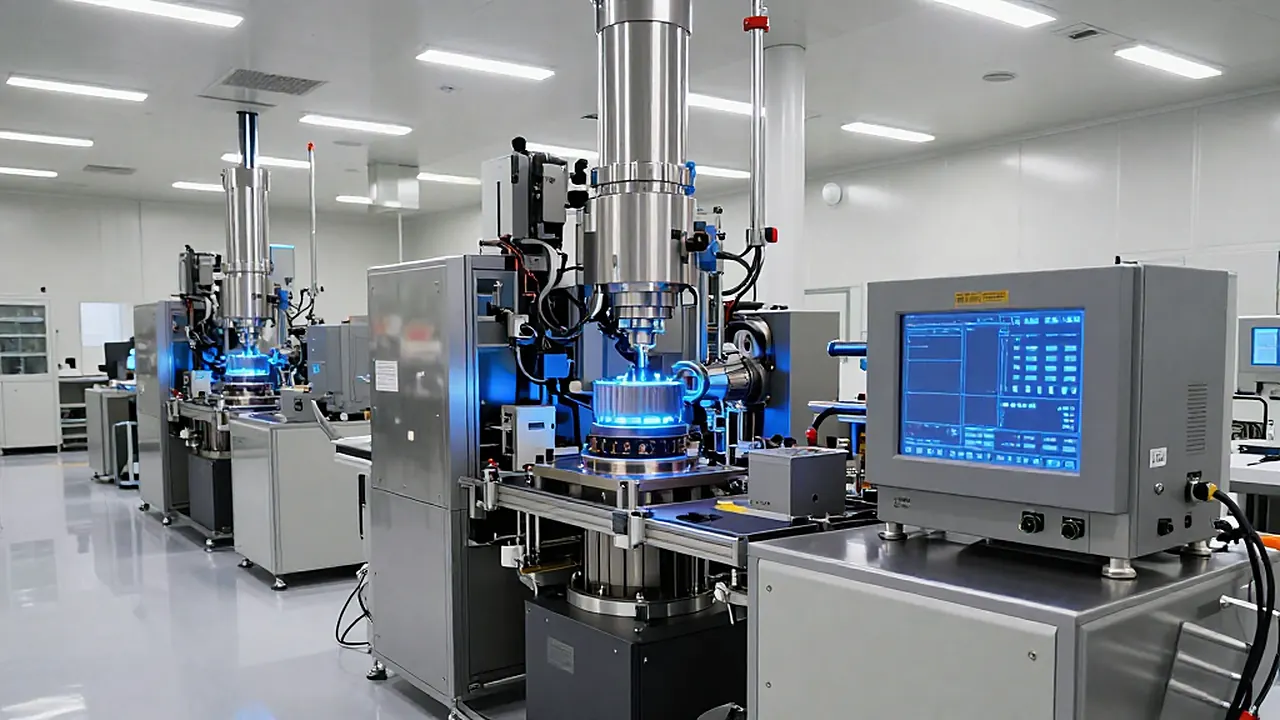
The intense technological rivalry between the United States and China has reached a new level of tension, with the focus on controlling cutting-edge semiconductor equipment. The epicenter of this conflict is ASML Holding N.V., the Dutch company that holds the global monopoly on extreme ultraviolet (EUV) lithography machines. Recently, statements from the company’s CEO, Christophe Fouquet, warned that a total block of Chinese access to these advanced technologies could have the opposite effect of what is desired, forcing China to drastically accelerate the development of its own domestic solutions.
ASML’s Warning: Total Blockade Is Not the Solution
ASML is globally recognized as the sole commercial manufacturer of EUV machines, a technology indispensable for the stable production of chips at 5 nanometers and smaller nodes. The situation is worsened by export restrictions imposed by the U.S., which limit Chinese access to this essential machinery. However, CEO Christophe Fouquet publicly argued that while it is crucial to protect the most sophisticated technological advances, trade sanctions should not result in the country’s complete isolation.
In an interview, Fouquet emphasized that it is possible and necessary to use export controls to defend cutting-edge technologies, but this must be done in a way that does not completely frustrate the market. According to him, this extreme approach risks being counterproductive, as it encourages the country to invest even more in developing chip manufacturing tools that he already possesses. He suggested that the goal should be to protect the advancement without stifling local development.
The Generation Strategy: Protecting Advancement Without Stifling
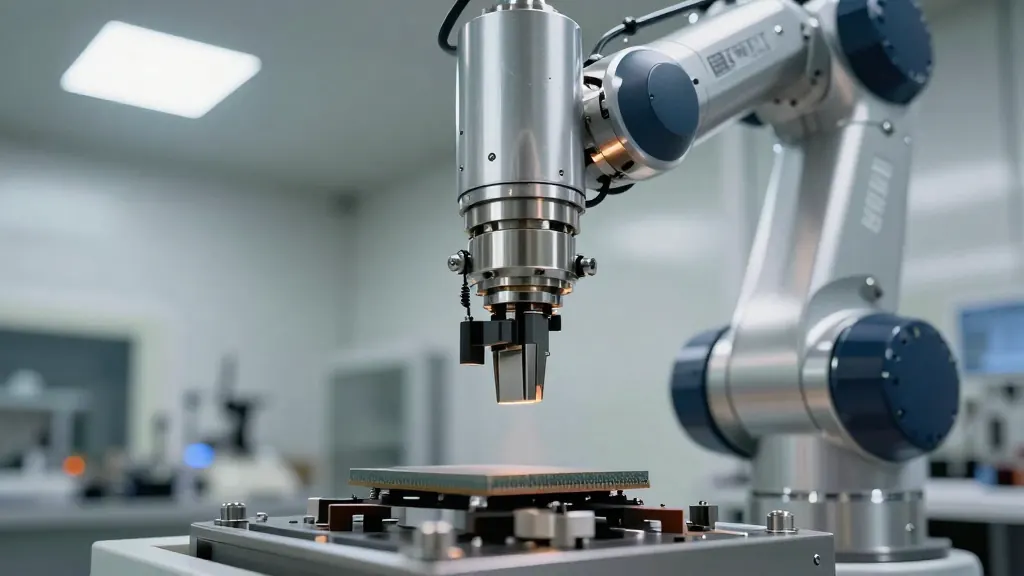
The Dutch company, which has a market capitalization of approximately US$ 515 billion, is at the center of the geopolitical debate regarding the degree of technological restriction. Although ASML has already been prevented from sending its latest equipment to China, the CEO suggested that maintaining the supply of older equipment—those that are over a decade in development—would be a strategic tactic. This policy would preserve a deliberate “generational gap.”
The purpose, according to the presented view, would be to discourage foreign companies from building competing tools from scratch. By maintaining the supply of mature machinery, the company seeks to balance the protection of cutting-edge technology while avoiding a global race that would dilute Western leadership in older semiconductor nodes. Experts, such as Frank Rohmund of Zeiss, agree that EUV equipment remains crucial, as multi-patterning techniques on older DUV hardware present unviable yields and costs.
Market Dominance: China’s Historical Dependence
ASML has historically maintained extremely high market penetration in China, reaching levels close to 100% over a period of nearly 30 years. Fouquet attributed this success to the easy access Chinese manufacturers had to Dutch equipment, which allowed them to adopt the technology without facing significant trade barriers.
The high degree of dependence suggests that the decisive factor was not merely technical superiority, but facilitated access. ASML views the continuation of this dependence on mature lithography equipment, rather than forcing complete self-sufficiency, as a way to safeguard advanced global AI capabilities without triggering uncontrolled competition in older semiconductor nodes.
The Risk of Blockade: The Push for Chinese Self-Sufficiency
The technology community and analysts point out that an attempt at a total blockade could paradoxically be the biggest catalyst for Chinese technological sovereignty. The ASML CEO warned that any additional restrictions could lead China to accelerate and intensify the development of its own chip manufacturing machines.
Historically, restriction attempts can generate an even greater desire to obtain. Furthermore, recent history has shown that even with a total embargo in place, the country can find sophisticated and creative ways to import EUV machinery from ASML, directing it to local manufacturers. For these reasons, the ASML warning suggests that trade policy must be carefully calibrated to protect progress without simultaneously stifling the industrial ambition of the Asian giant.