---
title: "Who Created Apache Ant? The History of Java Build Automation - Cibersistemas.pt"
description: "Discover the journey of Apache Ant, the essential Java build automation tool."
url: "https://cibersistemas.pt/en/technology/who-created-apache-ant/"
language: "en-US"
published: "2026-11-24T20:21:00+00:00"
modified: "2026-11-24T20:22:13+00:00"
image: "https://cibersistemas.pt/en/wp-content/uploads/2026/11/apache-ant-051725.webp"
alternates:
en: "https://cibersistemas.pt/en/technology/who-created-apache-ant/?format=markdown"
pt-BR: "https://cibersistemas.pt/tecnologia/quem-criou-o-apache-ant-a-historia-por-tras-do-framework-de-build-mais-influente-do-java/?format=markdown"
es: "https://cibersistemas.pt/es/tecnologia/quien-creo-apache-ant/?format=markdown"
x-default: "https://cibersistemas.pt/tecnologia/quem-criou-o-apache-ant-a-historia-por-tras-do-framework-de-build-mais-influente-do-java/?format=markdown"
content_signal: "search=yes, ai-input=yes, ai-train=yes"
---
# Who Created Apache Ant? The History of Java Build Automation - Cibersistemas.pt
Read this article in: [Portuguese (Português)](https://cibersistemas.pt/tecnologia/quem-criou-o-apache-ant-a-historia-por-tras-do-framework-de-build-mais-influente-do-java/) · [Spanish (Español)](https://cibersistemas.pt/es/tecnologia/quien-creo-apache-ant/)
**Apache Ant** is a fundamental tool for automating the compilation (build) processes of Java applications, and its creation is directly linked to the advancements in the open-source software ecosystem. The project was conceived by James Duncan Davidson while he was preparing the reference engine for JSP and Servlet at Sun Microsystems for the open-source model, a product that would become known as Apache Tomcat. Born out of the need to manage and compile a complex project, Ant emerged as a robust, native solution for the Java language, marking a turning point in how developers structured their large projects.
The historical significance of Apache Ant is evident when considering its context and release. The project was designed by James Duncan Davidson and had its official release on July 19, 2000. Before Ant, tools like Make, while effective, presented portability limitations and used distinct file formats, such as Makefiles. Ant, in turn, resolved this dilemma by adopting XML format to describe not only the build process but also all its dependencies. This architectural choice not only guaranteed portability across different operating systems but also solidified Ant as a pillar of Java development.
In this article, we will dive into the fascinating history behind Apache Ant. We will cover everything from the project’s origin, linking it to Sun Microsystems’ context, to understanding the portability problem that necessitated it. We will explore Ant’s architecture and functionality, detailing how XML acts as a build language, and how the concepts of **targets** , dependencies, and tasks work. Finally, we will trace Ant’s legacy in the Java ecosystem, showing its evolution and its importance to this day.
**Key Points**
- Ant was created to solve the dependency on proprietary and platform-specific build tools.
- It uses XML configuration files, defining the compilation process in an abstract and universal way.
- It ensures portability by abstracting operating system commands, working on various platforms (Windows, Linux).
- Organize the build using *targets* and *tasks*, controlling execution via dependencies.
- It was crucial for the Java ecosystem, facilitating the integration of JUnit tests and rigorous development models.
## Apache Ant in summary
| Creator | James Duncan Davidson |
| --- | --- |
| Developer | Apache Software Foundation |
| Release | July 19, 2000 |
| Stable Version | 1.10.16 / April 1, 2026 |
| Language | Java |
| Platform | Java SE |
| Type | Build tool |
| License | Apache License 2.0 |
| Repository | Ant Repository |
## The Origin: James Duncan Davidson and the Sun Microsystems Context

*New version of the Image:Question_book-3.svg, sent by user AzaToth. Image: [Wikipedia](https://en.wikipedia.org/wiki/File:Question_book-new.svg)*
The genesis of Apache Ant is intrinsically linked to the context of transforming the proprietary software ecosystem into the open-source world. The project was conceived by James Duncan Davidson, an author whose work was crucial for the transition away from a reference product of Sun Microsystems. Davidson’s initial focus was on a JSP/Servlet engine, which would later become Apache Tomcat. This engine represented the reference implementation for the JSP/Servlet standard, a vital component for Java web development. See also: Who created the Apache HTTP Server.
### The Challenge of Portability in Free Software
At the time, the software build process was often dependent on proprietary and platform-specific tools. Davidson initially used a proprietary version of the `Make` tool to build the engine in a Solaris environment. However, the open-source movement presented a fundamental challenge: in a free environment, it was impossible to guarantee that the compilation process would work on only one specific platform. There was an urgent need for a build system that was completely independent of the target platform.
This technical limitation was the driving force behind the creation of Ant. The tool was designed to be a simple yet robust system that utilized a build file written in XML. This format allowed the Tomcat compilation process to be defined by logical directives contained within a build file, without making reference to the underlying operating system or hardware architecture. Thus, Ant provided the necessary level of abstraction for the success of the free software model.
### Launch and Initial Impact
From this context, Ant was officially launched as an independent product on July 19, 2000, in its 1.1 version. Although Tomcat itself was the central project, Ant ended up being a successful tool in its own right, quickly becoming the foundation for numerous open-source projects written in Java.
Ant’s impact was deeply felt in the development methodology. One of the most determining factors was the ease with which the tool allowed the integration of JUnit-written tests directly into the build process. This integration not only simplified the development cycle but also served as a catalyst for developers to adopt more rigorous models, such as Test-Driven Development and Extreme Programming. Although other names were proposed for successors to Ant, such as AntEater (also by James Duncan Davidson), Myrmidon, or Mutant, it was Ant that established the standard for build automation through XML files, setting the stage for future tools like Maven and Gradle.
## The Portability Problem: Why Was Ant Necessary?
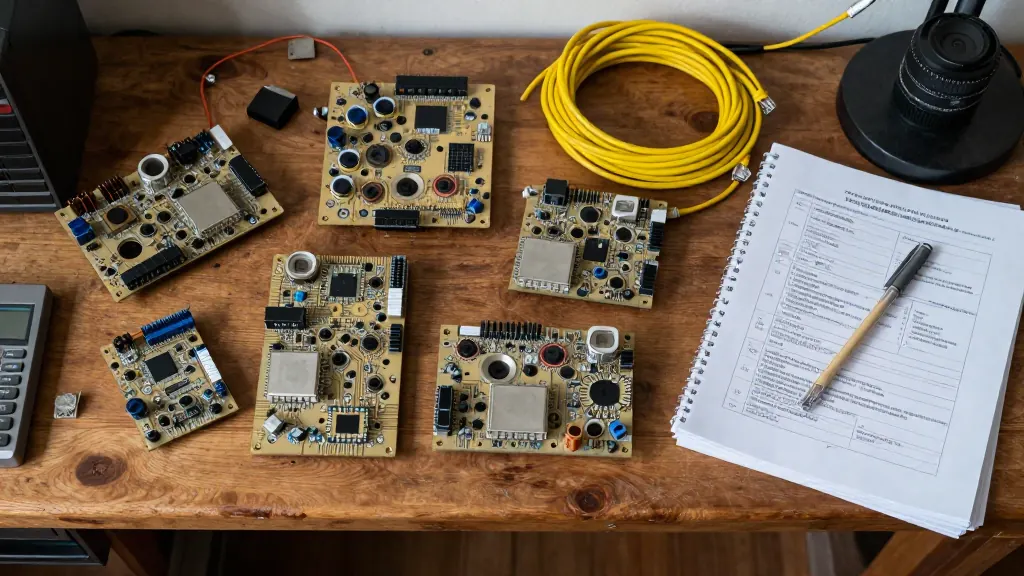
The first major challenge faced by software developers, especially in the Java ecosystem which aimed for universality, was the issue of portability. Before Apache Ant, the primary build automation tool used was `make`, which generated files called `Makefile`. Although `make` was revolutionary for automating processes, it carried a critical limitation: its actions were intrinsically tied to the operating system’s commands (or, more precisely, its `shell`). This meant that a `Makefile` that worked perfectly in a Linux environment would not run without modifications on a Windows system, or vice versa.
### The Fragility of Operating System Commands
The reliance on native OS commands created an extremely fragmented development experience. A classic example of this portability failure is the directory cleanup command. Suppose a project needs to remove the compiled class directory. On a Unix or Linux system, the standard command for this task would be `rm -rf classes/`. However, if the developer tried to run the same `Makefile` in a Microsoft Windows environment, the `rm` command would not be recognized or would exhibit unexpected behavior. On Windows, a completely different command would be necessary, such as `rmdir /S /Q classes`. This discrepancy was not merely a syntactic detail; it required the developer to rewrite and adapt the build script for every platform they wished to support, undermining the main benefit of any automation tool.
In addition to deletion commands, portability was compromised by the path manipulation syntax itself. Unix systems traditionally use the forward slash (`/`) as a directory separator, while Windows uses the backslash (`\`). Furthermore, the way multiple paths are separated in an environment variable varies: on Unix, the colon (`:`) is used; on Windows, the semicolon (`;`) is used. Manually dealing with these variations in every `Makefile` was tedious and error-prone.
### Ant’s Abstraction Solution
Apache Ant was therefore born with the primary goal of resolving this complex web of inconsistencies. Instead of depending on specific `shell` commands, Ant was designed to offer a robust set of internal functionalities. It acts as an abstraction layer that allows the developer to write the build script in a universal way. For example, to perform the same directory cleanup task that required `rm -rf` on Unix and `rmdir` on Windows, Ant uses an internal and standardized command: ``. This command is interpreted by Ant, which in turn ensures that the operation is executed using the correct and native method of the operating system it is running on, whether it is Windows, Linux, or macOS.
More notably, Ant eliminates the developer’s concern with path separators. It is capable of automatically converting any path specification—whether it is the use of slashes or backslashes for directories, or the use of semicolons or colons for path separators—to the format appropriate for the platform where the build is running. This ability to abstract and standardize the build process is what gave Apache Ant its enormous relevance, allowing developers to focus on the software logic, and not on the peculiarities of each operating system.
**📊 Comparativo de Problemas de Portabilidade**
| Aspect | Native Command/Syntax (Example) | Portability Problem |
| --- | --- | --- |
| Cleanup Command (Unix/Linux) | rm -rf classes/ | Does not work directly on Windows. |
| Cleanup Command (Windows) | rmdir /S /Q classes | Different from the Unix command, requiring adaptation. |
| Directory Separator | Slash (/) vs Backslash (\) | Different operating systems use different separators. |
| Environment Variable Separator | Colon (:) vs Semicolon (;) | The syntax for listing paths varies between platforms. |
## Architecture and Functioning: XML as a Build Language
### Architecture and Functioning: XML as a Build Language
Unlike older automation systems, such as `Makefile`, which depend directly on native operating system commands to execute their actions, Apache Ant operates at a much higher level of abstraction. Its core architecture is built in Java, and therefore, it runs on the Java Virtual Machine (JVM). Instead of writing shell commands, the developer uses an XML-structured configuration file, usually named `build.xml`, to meticulously describe the entire compilation process, the tasks, and, crucially, their dependencies. If you are interested in more modern build tools, you can check out the history of Apache Maven.
This XML approach resolves the chronic portability problem inherent in `Makefile`s. In a typical `Makefile`, the action of cleaning a directory, for example, requires a specific operating system command, such as `rm -rf classes/`. This command, `rm`, is specific to the Unix environment and would not work natively on platforms like Microsoft Windows, which would require a different command, such as `rmdir /S /Q classes`. Ant, however, encapsulates this logic in internal functionalities, presenting a universal directive. Thus, the same cleaning operation is performed in a `build.xml` file using the tag ``, ensuring that the behavior is identical across various platforms.
**📘 Java Virtual Machine (JVM)**
It is the environment where Apache Ant is executed. Since Ant is built in Java, its execution on the JVM ensures that the automation logic remains consistent across different operating systems.
### Path and system abstraction
Ant’s major strength, and what makes it more portable than `make`, is its ability to abstract file system peculiarities. Unix systems use the slash (/) as a directory separator, while Windows uses the backslash (\). Furthermore, path separators can be specified by semicolon or comma. Ant does not force the developer to choose a standard; it simply converts the provided path to the appropriate symbol for the platform on which it is running. This universality makes the `build.xml` a document that can be read and executed on virtually any operating system where the Java Runtime is available.
While this flexibility is a strength, the hierarchical and interconnected nature of Ant files in XML can make them complex and verbose. On the other hand, this separation between process description (the XML) and execution (the underlying Java code) gives Ant an architectural robustness that makes it a powerful tool for build automation in the Java ecosystem. Being written in Java and running on the JVM ensures that the automation logic remains consistent, regardless of the operating system layer.
## Project Structure: Targets, Dependencies, and Tasks

The backbone of any Ant project resides in the `build.xml` configuration file, which is written in XML. This file not only lists the build steps but also defines the logic of how those steps must be executed. At the center of this model are the **targets** , which represent the main goals of the build. A target is essentially a label that describes a complete action, such as cleaning up intermediate files (`clean`), compiling source code (`compile`), or packaging the final application into a JAR file (`jar`). Each target receives a description and contains a sequence of actions that Ant must perform.
### Dependencies and Execution Order
Ant’s power is amplified by the concept of **dependencies** . A target can be configured to depend on the successful completion of another target. This is crucial because it ensures that the build steps are executed in the correct and logical order. For example, for the `jar` target to create the final file, it must, by necessity, first ensure that the code has been compiled. By declaring that the `jar` target *depends=”compile”* , Ant ensures that the compilation process will be finished before packaging can begin. This dependency management makes the workflow predictable and robust.
### Tasks and Action Execution
Within each target, actions are executed through **tasks** (tasks). Tasks are the building blocks that perform the actual work. They can be built-in tasks or tasks that delegate their work to external programs, whether they are native to the operating system or written in Java. For instance, to compile the code, the `compile` target uses the `mkdir` task (to create the output directory, such as `classes`) and the `javac` task (to invoke the Java compiler). The `jar` task, in turn, not only packages but also allows defining the file’s *, a vital detail for application execution. Ant uses tasks like `` and `` to orchestrate the execution of external commands, thus abstracting the peculiarities of the operating system.*
Beyond the standard tasks, Ant’s flexibility allows for the use of **task libraries** . If a developer needs functionality that is not native to Ant, they can create or incorporate an extension. These extensions are typically installed by copying their .jar files into Ant’s `lib` directory. This allows build.xml to utilize specific functionalities, such as those provided by Antcontrib (which adds tasks for conditional commands or property operations) or other extensions for systems like Perforce and file system manipulation.
**📌 Fundamental Ant Components**
- build.xml: Main XML configuration file.
- Targets: Labels that define complete build objectives (e.g., clean, compile).
- Dependencies: Ensure the correct execution order between targets.
- Tasks: Building blocks that execute practical actions (e.g., javac, mkdir).
## Evolution and Legacy in the Java Ecosystem
Apache Ant has established itself as a fundamental pillar in the open-source Java ecosystem. Since its creation and development by the Apache Software Foundation, the tool has proven to be a robust and stable automation engine. Its nature was formalized under the Apache License 2.0, a seal that guarantees its adoption in large-scale projects and contributes to its longevity. Ant’s stability is a critical factor, with versions like 1.10.16, dated April 1, 2026, attesting to the continuous commitment to maintaining a reliable build system. Despite the time elapsed since its initial release on July 19, 2000, Ant has maintained its relevance by providing a powerful abstraction for the software build process.
### Complexity and the Challenge of XML
The essence of Ant lies in the use of build files written in XML. While XML has allowed for an effective abstraction of operating system peculiarities, this very characteristic poses challenges in large-scale projects. Ant build files are inherently hierarchical, partially ordered, and transversally interconnected, which can generate notable complexity. This verbosity in XML files can, in some cases, become a learning barrier for novice users or lead to configuration files that become unnecessarily large and difficult to maintain. Although good design and modularization are crucial for improving readability, they do not guarantee a significant reduction in code size.
Technically, Ant’s maturity reveals points of attention that developers must consider. For example, some older “tasks,” such as ``, `` and ``, use default values that are not entirely consistent with the most recent task versions. Changing these defaults without caution can compromise the functionality of existing scripts. Furthermore, property handling in XML has its particularities: when a property is not defined during string expansion, Ant does not throw an error but rather retains the unexpanded reference (example: ${unassigned.property}).
### Limitations and the Support Ecosystem
Ant also has limitations in areas such as exception handling and state persistence, which makes it less suitable for scenarios requiring the management of multiple constructions throughout a day. To mitigate complexity and fill functional gaps, the ecosystem has developed robust solutions. The community has created third-party extensions, known as emantlibs, that add advanced functionality. Furthermore, to better understand the context of development tools, it is interesting to know who created OpenJDK. Moreover, the use of popular Integrated Development Environments (IDEs), such as Eclipse and NetBeans, has drastically simplified the user experience, allowing Ant to be run and managed within more user-friendly platforms. This combination of tools and extensions ensures that, despite its structural limitations, Apache Ant maintains its historical and current role as a fundamental build automation tool in Java development.
**✅ Advantages**
- It has established itself as a fundamental pillar in the open-source Java ecosystem.
- It offers a powerful abstraction for the software build process.
- Its license (Apache License 2.0) ensures adoption in large-scale projects.
- Integration with popular IDEs (Eclipse, NetBeans) has simplified the user experience.
**❌ Disadvantages**
- The use of XML makes build files inherently hierarchical and complex.
- The verbosity of XML can be a learning curve for beginners.
- Handling of undefined properties does not throw an error but keeps the reference unexpanded.
- The tool has limitations in areas such as exception handling and state persistence.
## Glossary
- **JSP/Servlet** : A standard of vital components for web development in Java, used to process and display dynamic content.
- **XML** : A markup language used by Ant to structure and describe the build process in a configuration file.
- **Target** : A label or main objective within the build that describes a complete action, such as ‘clean’ or ‘compile’.
- **Task** : The practical building blocks that perform the actual work, such as creating a directory or invoking a compiler.
- **JVM** : Java Virtual Machine; a runtime environment that ensures the automation logic is consistent across any operating system.
## Frequently Asked Questions
### What is Apache Ant and what is it used for in practice?
Ant is a build automation tool for the Java ecosystem. It allows developers to define the entire lifecycle of a project—from compilation to packaging—using an XML configuration file. Its main goal is to ensure that the build process is consistent and works on any operating system.
### What is the main difference between Apache Ant and Make (Makefile)?
The crucial difference is portability. Make depends directly on the native commands of the operating system, making it fragile. Ant, on the other hand, acts as an abstraction layer. It uses standardized internal directives, ensuring that the action is executed correctly, regardless of the target platform.
### Is Ant compatible with different operating systems (Windows, Linux, etc.)?
Yes, it was designed to be highly portable. Because it is written in Java and runs on the Java Virtual Machine (JVM), it abstracts away file system peculiarities. This capability allows it to automatically convert path separators and commands, ensuring a universal build.
### Is it possible to use Ant without knowing XML?
It is not possible. Apache Ant requires that you describe the build process in an XML-structured configuration file. This format is fundamental because it defines the *targets* and *tasks* that the system must execute, with XML being the language for describing the workflow.
### Is Ant still used in modern Java projects or has it been replaced?
Although more recent tools, such as Maven and Gradle, have emerged and become popular, Ant remains a robust and widely used tool. Its XML-based architecture and its ability to abstract systems keep it relevant for many Java projects that require granular and specific control over the build process.
## Conclusion
The history of Apache Ant is, above all, the narrative of the search for universality in software development. It emerged as an elegant and necessary response to the fragility of previous build systems, like make, which trapped project logic in specific operating system commands. By adopting XML as the configuration language, Ant elevated the compilation process to an unprecedented level of abstraction. This architecture allowed developers to write build scripts that were inherently portable, eliminating the tedious need to adapt commands, such as directory cleanup, between Unix and Windows environments.
This abstraction capability not only solved a crucial technical challenge but also redefined the way of working in the Java ecosystem. Ant established the standard for build automation based on XML files, providing the necessary structure for the rigorous integration of tests, such as those written in JUnit, and catalyzing the adoption of more robust development models. Although more recent tools have emerged, it is undeniable that Ant paved the way, proving that standardization and platform independence are fundamental pillars for open-source success.
Understanding the genesis of Apache Ant is understanding the moment Java development embraced true portability. Analyzing how this tool resolved operating system inconsistencies makes it clear that architectural abstraction is the engine behind any successful software ecosystem. This lesson in decoupling should guide every new engineering challenge you encounter.
## Sources and References
- [Apache Ant — Wikipedia](https://en.wikipedia.org/wiki/Apache_Ant)
## Related articles
[Who Invented the HTTP Protocol? The Story Behind the World Wide Web](https://cibersistemas.pt/en/technology/who-invented-http-protocol/)[Chinese Company Boosts EUV Source, Seeks Chip Autonomy: Tech Details](https://cibersistemas.pt/en/technology/chinese-company-boosts-euv-source-seeks-chip-autonomy-tech-details/)[Who is Leslie Valiant? The Architect of Complexity Theory](https://cibersistemas.pt/en/technology/who-is-leslie-valiant/)[How to Configure Apache? A Complete Guide for Beginners and Professionals](https://cibersistemas.pt/en/technology/how-to-configure-apache/)
```json
{"@context":"https:\/\/schema.org","@graph":[{"@type":"Article","@id":"https:\/\/cibersistemas.pt\/en\/technology\/who-created-apache-ant\/#article","isPartOf":{"@id":"https:\/\/cibersistemas.pt\/en\/technology\/who-created-apache-ant\/"},"author":{"name":"António César de Andrade","@id":"https:\/\/cibersistemas.pt\/en\/#\/schema\/person\/ea20c50a8d8bdbbb01ccc60e371a27b8"},"headline":"Who Created Apache Ant? The History of Java Build Automation","datePublished":"2026-11-24T20:21:00+00:00","dateModified":"2026-11-24T20:22:13+00:00","mainEntityOfPage":{"@id":"https:\/\/cibersistemas.pt\/en\/technology\/who-created-apache-ant\/"},"wordCount":2063,"publisher":{"@id":"https:\/\/cibersistemas.pt\/en\/#organization"},"image":{"@id":"https:\/\/cibersistemas.pt\/en\/technology\/who-created-apache-ant\/#primaryimage"},"thumbnailUrl":"https:\/\/cibersistemas.pt\/en\/wp-content\/uploads\/2026\/11\/apache-ant-051725.webp","articleSection":["Technology"],"inLanguage":"en-US"},{"@type":"WebPage","@id":"https:\/\/cibersistemas.pt\/en\/technology\/who-created-apache-ant\/","url":"https:\/\/cibersistemas.pt\/en\/technology\/who-created-apache-ant\/","name":"Who Created Apache Ant? The History of Java Build Automation - Cibersistemas.pt","isPartOf":{"@id":"https:\/\/cibersistemas.pt\/en\/#website"},"primaryImageOfPage":{"@id":"https:\/\/cibersistemas.pt\/en\/technology\/who-created-apache-ant\/#primaryimage"},"image":{"@id":"https:\/\/cibersistemas.pt\/en\/technology\/who-created-apache-ant\/#primaryimage"},"thumbnailUrl":"https:\/\/cibersistemas.pt\/en\/wp-content\/uploads\/2026\/11\/apache-ant-051725.webp","datePublished":"2026-11-24T20:21:00+00:00","dateModified":"2026-11-24T20:22:13+00:00","description":"Discover the journey of Apache Ant, the essential Java build automation tool.","breadcrumb":{"@id":"https:\/\/cibersistemas.pt\/en\/technology\/who-created-apache-ant\/#breadcrumb"},"inLanguage":"en-US","potentialAction":[{"@type":"ReadAction","target":["https:\/\/cibersistemas.pt\/en\/technology\/who-created-apache-ant\/"]}]},{"@type":"ImageObject","inLanguage":"en-US","@id":"https:\/\/cibersistemas.pt\/en\/technology\/who-created-apache-ant\/#primaryimage","url":"https:\/\/cibersistemas.pt\/en\/wp-content\/uploads\/2026\/11\/apache-ant-051725.webp","contentUrl":"https:\/\/cibersistemas.pt\/en\/wp-content\/uploads\/2026\/11\/apache-ant-051725.webp","width":1280,"height":720,"caption":"Apache Ant"},{"@type":"BreadcrumbList","@id":"https:\/\/cibersistemas.pt\/en\/technology\/who-created-apache-ant\/#breadcrumb","itemListElement":[{"@type":"ListItem","position":1,"name":"Home","item":"https:\/\/cibersistemas.pt\/en\/"},{"@type":"ListItem","position":2,"name":"Who Created Apache Ant? The History of Java Build Automation"}]},{"@type":"WebSite","@id":"https:\/\/cibersistemas.pt\/en\/#website","url":"https:\/\/cibersistemas.pt\/en\/","name":"Cibersistemas.pt","description":"Cibersistemas.pt is a news portal about gaming and technology, with dozens of quality articles every day, in English.","publisher":{"@id":"https:\/\/cibersistemas.pt\/en\/#organization"},"potentialAction":[{"@type":"SearchAction","target":{"@type":"EntryPoint","urlTemplate":"https:\/\/cibersistemas.pt\/en\/?s={search_term_string}"},"query-input":{"@type":"PropertyValueSpecification","valueRequired":true,"valueName":"search_term_string"}}],"inLanguage":"en-US"},{"@type":"Organization","@id":"https:\/\/cibersistemas.pt\/en\/#organization","name":"Cibersistemas.pt","url":"https:\/\/cibersistemas.pt\/en\/","logo":{"@type":"ImageObject","inLanguage":"en-US","@id":"https:\/\/cibersistemas.pt\/en\/#\/schema\/logo\/image\/","url":"https:\/\/cibersistemas.pt\/en\/wp-content\/uploads\/2026\/11\/Logo-Cibersistemas.jpg","contentUrl":"https:\/\/cibersistemas.pt\/en\/wp-content\/uploads\/2026\/11\/Logo-Cibersistemas.jpg","width":400,"height":400,"caption":"Cibersistemas.pt"},"image":{"@id":"https:\/\/cibersistemas.pt\/en\/#\/schema\/logo\/image\/"},"sameAs":["https:\/\/www.facebook.com\/cibersistemas.pt","https:\/\/www.youtube.com\/channel\/UCcWHF3Q9kv7IXgdFuy1LB9A"]},{"@type":"Person","@id":"https:\/\/cibersistemas.pt\/en\/#\/schema\/person\/ea20c50a8d8bdbbb01ccc60e371a27b8","name":"António César de Andrade","image":{"@type":"ImageObject","inLanguage":"en-US","@id":"https:\/\/cibersistemas.pt\/wp-content\/uploads\/2026\/11\/antonio-cesar-de-andrade.jpg","url":"https:\/\/cibersistemas.pt\/wp-content\/uploads\/2026\/11\/antonio-cesar-de-andrade.jpg","contentUrl":"https:\/\/cibersistemas.pt\/wp-content\/uploads\/2026\/11\/antonio-cesar-de-andrade.jpg","caption":"António César de Andrade"},"description":"A Portuguese professional with more than 20 years of experience in the technology world, he is the editor-in-chief of Cibersistemas PT, leading its editorial strategy and content production. A technology specialist and enthusiast, he follows trends in Artificial Intelligence, programming, software development, hardware, digital design and video games, with a focus on quality, credibility and the sharing of knowledge. Follow: LinkedIn · Facebook · Instagram · YouTube · Pinterest. Email: antonio.cesar@cibersistemas.pt","sameAs":["https:\/\/cibersistemas.pt\/en\/","https:\/\/www.facebook.com\/cibersistemas.pt","https:\/\/www.instagram.com\/cibersistemas","https:\/\/www.linkedin.com\/in\/ant%C3%B3nio-c%C3%A9sar-andrade-a19063450\/","https:\/\/pt.pinterest.com\/cibersistemas\/","https:\/\/www.youtube.com\/channel\/UCcWHF3Q9kv7IXgdFuy1LB9A\/"],"url":"https:\/\/cibersistemas.pt\/en\/author\/antonio-cesar-de-andrade\/"}]}
```