Read this article in: Portuguese (Português) · Spanish (Español)
The creation of the MediaTek Dimensity line is a direct product of MediaTek itself, a company that has established itself in the mobile semiconductor market. Dimensity represents a significant leap in processing capability, as it is a System-on-Chip (SoC) architecture designed to meet the growing demands of modern devices. Far from being an isolated product, it is the peak of constant evolution, reflecting MediaTek’s ability to integrate multiple functions—from graphics processing to the latest connectivity technologies—into a single, high-performance chip.
To understand the impact of Dimensity, it is crucial to revisit the company’s history. Founded in 2003, MediaTek accompanied the mobility boom, continuously adapting to technological changes. This evolution is evident in the transition from architectures that used instruction sets like ARMv6 to more robust and efficient ones, such as ARMv8-A and the Cortex-A73 cores. A recent milestone in this history was the announcement of the Dimensity 1100 and 1200 series on December 1, 2020, solidifying the company as a powerhouse in SoC solutions for smartphones and IoT devices.
In this article, we will dive deep into the history behind this high-performance SoC. We will analyze everything from MediaTek’s early days and the challenge of mobility to the emergence of the Dimensity architecture and the performance leap it provided. We will cover the complex architecture and manufacturing process of these chips, explore the evolution and diversification across connectivity platforms (such as wireless access SoCs), and finally, trace Dimensity’s impact on the market and what to expect from the future of mobile SoCs.
Key Points
- MediaTek started in 2003, focusing on SoCs for the mobile market, overcoming the challenges of miniaturization and power.
- Developing SoCs requires a technical balancing act between boosting processing power and maintaining energy efficiency.
- The Dimensity line, launched in 2020, marked the full adoption of modern architectures, such as ARMv8-A and ARMv9-A.
- An SoC is a modular chip that integrates the CPU, GPU, and connectivity into a single system, optimizing power consumption.
- The technology is versatile, serving everything from high-performance smartphones to Internet of Things (IoT) devices and routers.
MediaTek Dimensity in Summary
| Developer | MediaTek |
|---|---|
| Launch | 2003 |
| Application | Mobile SoC |
| Supported Cores | 1, 2, 4, 6, 8 or 10 |
| Architectures (Microarchitecture) | ARM11, Cortex-A5, Cortex-A7, Cortex-A53, Cortex-A55, Cortex-A57, Cortex-A72, Cortex-A73, Cortex-A75, Cortex-A76, Cortex-A77, Cortex-A78, Cortex-A510, Cortex-A710, Cortex-A715, Cortex-A720, Cortex-A725, C1-Pro, Cortex-X2, |
| Instruction Set | ARMv6, ARMv7-A, ARMv8-A, ARMv9-A |
The Origin of MediaTek and the Mobility Challenge
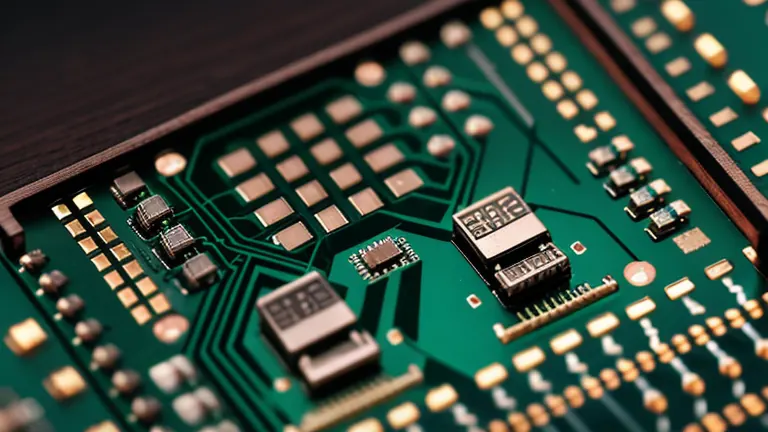
MediaTek’s journey began in 2003. Since its inception, the company has built a reputation with a strategic and highly specialized focus: developing System-on-Chips (SoCs) for the mobile market. At that time, the electronics sector was in a state of effervescence, and the growing demand for smaller and more powerful devices required highly integrated semiconductor solutions. MediaTek’s role, from the outset, was to be a processing provider that covered not just the computing core, but an entire ecosystem of functionalities—something that requires knowledge of search technologies, such as the history of the Elasticsearch search engine.
The Dilemma of Miniaturization and Power Consumption
The major challenge that shaped MediaTek’s development, and consequently, the entire mobile semiconductor industry, is the conflict between performance and energy efficiency. As electronic devices—whether smartphones, tablets, or Internet of Things (IoT) systems—got smaller, the required processing power increased exponentially. The technical goal thus became a complex balancing act: how to boost processing capability (whether with 1, 2, 4, 6, 8, or even 10 cores) without draining the battery in a matter of hours. To solve this puzzle, MediaTek had to master the art of integration, combining multiple functions into a single chip.
This need for integration led to a continuous expansion of SoC capabilities. A central processor alone was not enough; advanced connectivity had to be added. A clear example of this complexity is the MT6630, launched in 2014. This chip was a five-in-one wireless combo that not only incorporated dual-band connectivity (802.11a/b/g/n/ac) but also supported Wi-Fi Direct and Miracast, Bluetooth 4.1, ANT+, tri-band GPS, and an FM transceiver. It was designed to work alongside smartphone processors, such as the MT6595, which already included a 4G modem but lacked these additional connectivity features on its own. This synergy shows how the SoC evolved from a mere processor to a multifunctional brain.
This trajectory of integration was reflected in the evolution of platforms, such as the MediaTek Genio. From platforms like the Genio 350 (MT8365), based on an ARM Cortex-A53 quad-core processor, to more advanced models like the Genio 700 (MT8390), which combined 2x ARM Cortex-A78 with 6x ARM Cortex-A55, and the Genio 1200 (MT8395), with its architecture of 4x ARM Cortex-A78 and 4x ARM Cortex-A55, MediaTek demonstrated its ability to keep pace with the industry. Support for multiple instruction sets, ranging from ARMv6 and ARMv7-A to the latest versions like ARMv8-A and ARMv9-A, attests to the company’s commitment to remaining at the forefront of technology, always balancing processing power with the energy efficiency required for modern connected life.
The Emergence of Dimensity Architecture and the Performance Leap
The evolution of systems in a mobile device is never linear; it is driven by market needs that demand more than just processing power. In the early 2000s, the challenge was balancing performance and energy efficiency, a constant tension that defined the industry. Over time, this demand intensified exponentially. Starting with the Genio architecture, the challenge was no longer just processing, but integrating a complex web of functionalities: from ultra-high-speed communication to advanced graphics processing.
The Birth of the Smart Connectivity Era
This need to unify advanced processing with cutting-edge connectivity standards, such as 5G and Wi-Fi 6, required a robust architectural response. It was in this scenario that MediaTek launched the Dimensity line. The milestone for this leap was the announcement of the Dimensity 1100 and Dimensity 1200 chipsets on December 1, 2020. These models were not just a performance upgrade; they represented a complete overhaul of MediaTek’s approach to high-performance SoCs, an advancement that, in terms of fun and simulation, is reminiscent of the curiosity surrounding the creator of PowerWash Simulator.
The heart of this transformation was the architectural migration. Older platforms relied on instruction sets like ARMv6 and ARMv7-A. While effective in their time, these architectures began to show limitations with the increasing complexity of software and the need for greater efficiency. Dimensity marked the full adoption of modern architectures, such as ARMv8-A and ARMv9-A. This transition was not merely nominal; it signified a leap in efficiency and processing capability, allowing SoCs to support the task density required by 5G.
The versatility of the Dimensity line is a reflection of this architectural ambition. MediaTek consolidated a range of cores, spanning from a few units to 10-core configurations, utilizing cutting-edge microarchitectures (such as Cortex-A78 and Cortex-A73, among others). This flexibility allowed the company to cater to different market niches, offering everything from entry-level processors to the most powerful models, without compromising connectivity integration. The ability to combine advanced multi-core processing with the latest network standards is what defines, to this day, the performance leap that the Dimensity family provided to the global mobile device market.
SoC Architecture and Manufacturing Process
The backbone of any modern device is the System on a Chip (SoC). Simply put, an SoC is an integrated circuit that consolidates multiple functions and processors—such as the Central Processing Unit (CPU), the Graphics Processing Unit (GPU), and connectivity modules (modems)—onto a single physical chip. This integration is crucial because it ensures not only a massive boost in performance but also unparalleled energy efficiency, which is fundamental for mobility. Instead of using several separate chips, the SoC allows all components to work in synergy, optimizing both power consumption and physical space.
Multicore Architecture and Instruction Sets
What makes an SoC so powerful is its flexible architecture and the use of multiple cores. MediaTek processors, for example, do not use a single type of core; they combine different microarchitectures to meet specific processing demands. It is common to find combinations of high-performance cores, such as the Cortex-A78 or Cortex-A73, working alongside efficiency cores, like the Cortex-A55. This approach is what we call big.LITTLE architecture, where heavy processing is delegated to the most powerful cores and background tasks are managed by the most economical ones.
📘 SoC
System on a Chip is an integrated circuit that combines various functions and processors (such as CPU, GPU, and modems) onto a single physical chip, ensuring efficiency and performance.
This versatility is supported by increasingly advanced Instruction Sets. Over time, the architecture has evolved from standards like ARMv6 and ARMv7-A to more modern versions, such as ARMv8-A and ARMv9-A. These instruction sets define the “language” that the cores understand, determining the level of processing and the available resources. The ability to configure the SoC with different core counts—be it 2, 4, 6, 8, or even 10—allows MediaTek to tailor the chip for everything from simple Internet of Things (IoT) applications to high-performance flagship processors.
The technical complexity is best illustrated by examples of developed platforms. For instance, the Genio 510 (MT8370) line demonstrates this combination, utilizing an architecture that blends 2x ARM Cortex-A78 with 4x ARM Cortex-A55. Another example is the MT6630 connectivity SoC (2014), which is a five-in-one combo, integrating features like dual-band Wi-Fi (802.11a/b/g/n/ac), Bluetooth 4.1, and tri-band GPS onto a single chip, which must then be paired with a 4G main processor, such as the MT6595. This capability to unify advanced processing with cutting-edge connectivity is the true architectural differentiator of the modern SoC.
In summary, the strength of an SoC lies in its modularity. MediaTek leverages this capability by building platforms like the Genio 700 (MT8390), which combines 2x ARM Cortex-A78 and 6x ARM Cortex-A55, or the Genio 1200 (MT8395), which uses 4x ARM Cortex-A78 and 4x ARM Cortex-A55. This precision engineering, combining different cores and microarchitectural versions, ensures that the SoC is not just a processor, but an autonomous system capable of managing the entire operation of a mobile device.
Evolution and Diversification in Connectivity Platforms

The power of a modern System on a Chip (SoC) goes beyond the raw processing capability found in flagship smartphones. For MediaTek, the SoC is fundamentally a modular system. The company’s evolution shows that the Dimensity, while a high-performance product for mobile devices, is merely one piece of a vast and extremely diversified ecosystem. This progression in capability and functionality has led MediaTek to operate in highly specialized niches, from low-power microcontrollers to next-generation routers and access points, as well as in areas requiring a specific focus, such as understanding the history behind high-pressure cleaning.
Expansion into the Internet of Things (IoT)
Diversification into the Internet of Things (IoT) market required platforms that not only processed data but also guaranteed ultra-low latency and energy efficiency. The Genio portfolio is a clear example of this. Platforms like the Genio 130 (MT7931) and the Genio 130A (MT7933) demonstrate this specialization, integrating a Cortex-M33 Microcontroller (MCU) with modern connectivity standards like Wi-Fi 6 and BLE 5. The 130A model, in particular, added a HiFi4 DSP processor, optimizing audio and sensor processing.
Even more advanced are the i-series chips, intended for more robust IoT and industrial applications. The i300A (MT8362A) and i300B (MT8362B) models, for example, use ARMv8-A architecture with a quad-core ARM Cortex-A35, operating at frequencies of 1.5 GHz and 1.3 GHz, respectively. Meanwhile, the i500 (MT8385) raises the bar with a quad-core ARM Cortex-A73 at 2.0 GHz, providing superior processing power for devices that require more than just basic connectivity. In parallel, the Genio 500 (MT8385) offers an alternative with a quad-core ARM Cortex-A53 at 2.0 GHz, demonstrating core flexibility to meet different performance requirements.
Connectivity Chips and Advanced Networks
MediaTek’s scope is not limited to local processing; it is a critical wireless communication provider. For the market of networks and devices requiring multiple connectivity features, the MT6630 chip, launched in 2014, is an exemplary case. This SoC combines five functionalities into a single package, making it ideal for coupling with processors that have modems (like the MT6595, which has 4G but not Wi-Fi or Bluetooth). The MT6630 integrates 802.11a/b/g/n/ac dual-band communication, advanced support for Wi-Fi Direct and Miracast, Bluetooth 4.1, ANT+, tri-band GPS, and an FM transmitter.
Furthermore, MediaTek serves the router and access point segment by dedicating chips like the RT3883, which incorporates a MIPS 74KEc CPU and an IEEE 802.11n WNIC (Network Interface Card), and the RT6856, which uses MIPS 34KEc and an IEEE 802.11ac WNIC. These examples demonstrate that, even outside the context of a smartphone, the company ensures the integration of dedicated CPUs and cutting-edge communication standards, solidifying the SoC not just as a processing center, but as a complete connectivity hub.
📊 Connectivity and Processing Platform Comparison
| Model/Chip | Primary Focus | Technical Highlights |
|---|---|---|
| Genio 130 (MT7931) | IoT/Connectivity | Integrates Cortex-M33 MCU, Wi-Fi 6, and BLE 5 |
| Genio 130A (MT7933) | IoT/Advanced Audio | Adds HiFi4 DSP, optimizing audio and sensors |
| i300A (MT8362A) | IoT/Industrial | ARMv8-A with quad-core ARM Cortex-A35 (1.5 GHz) |
| i500 (MT8385) | High Performance IoT | Quad-core ARM Cortex-A73 up to 2.0 GHz |
| MT6630 | Wireless Connectivity | Combines 5 functionalities: Wi-Fi, Bluetooth, GPS, etc. |
| RT3883 | Networks/Routers | MIPS 74KEc CPU and IEEE 802.11n WNIC |
Impact on the market and the future of mobile SoCs
MediaTek’s legacy in the mobile System on a Chip (SoC) market is a testament to its ability to transform the challenge of performance into a universal connectivity platform. The Dimensity line, in particular, has solidified the company not only as a provider of raw processing power, but as a global player in high-performance integrated solutions. MediaTek’s success lies in its ability to orchestrate technical complexities, uniting multiple communication and processing standards into a single chip.
The revolution of connectivity integration
The most evident impact of the modern SoC is the elimination of communication gaps. Previously, every wireless functionality required a separate chip. MediaTek inverted this logic. A notable example is the MT6630, launched in 2014. This chip is a “five-in-one” wireless SoC that solved the problem of integrating multiple cutting-edge technologies into a single package. It incorporates dual-band support for the 802.11a/b/g/n/ac standards, in addition to advanced features like Wi-Fi Direct and Miracast. Furthermore, it unifies Bluetooth 4.1, ANT+, and a tri-band GPS receiver, along with an FM transceiver. This integration was crucial for pairing with smartphone processors, such as the octa-core MT6595, which on its own possessed a 4G modem but lacked native Wi-Fi, Bluetooth, or GPS functionality. The MT6630, therefore, was not just a connectivity chip; it was the agent that made the device complete and functional.
This integration architecture is not limited to connectivity. MediaTek’s constant advancement, reflected in the evolution of its microarchitectures—from ARM11 to modern architectures like Cortex-A78 and Cortex-X2, and instruction sets like ARMv8-A and ARMv9-A—ensures that the SoC is not just a processor, but an orchestrator of capabilities.
The Future: AI and Specialized Processing
Looking ahead, the SoC is moving away from the concept of purely sequential processing. The next frontier is artificial intelligence (AI) and extreme energy efficiency. To meet this demand, next-generation SoCs are integrating advanced Digital Signal Processors (DSPs) and dedicated AI processing units. This specialization allows the device to execute complex tasks—such as AI image processing or voice recognition—without overloading the main CPU, while maintaining unprecedented energy efficiency.
In summary, the strength of MediaTek and its Dimensity line lies in its architectural modularity. It allows the modern SoC to transcend raw processing, acting as a hub that unites cutting-edge connectivity (whether 5G or the 802.11a/b/g/n/ac standards), multi-core processing (with options from 1 to 10 cores), and AI acceleration. This adaptability is what cements MediaTek’s position as a critical supplier for the next generation of mobile devices and Internet of Things (IoT) systems.
📌 Pillars of the Modern SoC Architecture
- Cutting-edge Connectivity (5G or 802.11 standards)
- Multi-core Processing (1 to 10 cores)
- AI Acceleration and Dedicated Units (DSPs)
- Orchestration of Multiple Communication Standards
Frequently Asked Questions
What is an SoC and why is it important for a smartphone?
A System on a Chip (SoC) is an integrated circuit that consolidates multiple functions—such as CPU, GPU, and modems—onto a single chip. Its importance lies in ensuring not only massive performance but also unparalleled energy efficiency, allowing all components to work in synergy.
What is the difference between Dimensity processors and older MediaTek processors?
The main difference is the architecture. While older platforms used instruction sets like ARMv6 and ARMv7-A, the Dimensity line marked a migration to modern architectures, such as ARMv8-A and ARMv9-A. This represented a leap in efficiency and processing capability for complex tasks.
Does Dimensity support 5G? How does it compare to direct competitors?
Yes, the Dimensity line was designed to support the latest network standards, such as 5G. This ability to combine advanced multi-core processing with cutting-edge network standards defines the performance leap that the Dimensity family provided to the global mobile device market.
What does the ARMv8-A architecture mean, and how does it affect cell phone performance?
ARMv8-A is an advanced instruction set that defines the ‘language’ that the cores understand. Its adoption is crucial because it determines the level of processing and the available resources. It allows SoCs to achieve greater efficiency and processing power, which are essential for modern operating systems.
Is MediaTek Dimensity only for smartphones, or can it be used in other devices?
No. Although it is a high-performance product for smartphones, MediaTek operates in a vast ecosystem. The technology is used in specialized niches, such as routers and next-generation access points, and in Internet of Things (IoT) devices, ensuring processing in diverse contexts.
Conclusion
MediaTek’s journey, since its roots in 2003, is a fascinating case study on how semiconductor engineering adapts to human needs. The company not only kept pace with the miniaturization of mobile devices but was fundamental in redefining the very concept of the System on a Chip (SoC). The constant challenge of balancing exponential performance with energy efficiency was the driving force that fueled the evolution, transforming the processor from an isolated core into a multifunctional brain, capable of integrating the modem, connectivity, and graphics processing into a single synergistic package.
This peak of integration was fully achieved with the Dimensity line. The Dimensity models represented more than just a simple number upgrade; they symbolized a fundamental architectural migration. By fully adopting modern instruction sets, such as ARMv8-A and ARMv9-A, MediaTek was able to provide the necessary robustness to support ultra-high-speed standards, like 5G. This ability to combine advanced multi-core processing, using big.LITTLE architectures, with cutting-edge network standards solidified the company as a vital force in the high-performance market.
Ultimately, the success of MediaTek and the entire SoC industry lies in the ability to transform technological tensions into cohesive solutions. Dimensity proves that the future of mobile computing is not just in increasing cores, but in mastering the integration of processing power with maximum energy efficiency. Staying at the forefront requires the engineer’s focus to always be on the next connectivity challenge the world will demand.
Sources and References
- List of MediaTek systems on chips — Wikipedia (in English)
- MediaTek scales the mobile market with Mali™-T720