

Read this article in: Portuguese (Português) · Spanish (Español)
Who is Bjarne Stroustrup? He is a distinguished Danish computer scientist, best known globally for developing the C++ programming language. Born on 30 December 1950, Stroustrup has maintained a profound influence on computer science through his work in programming languages and informatics. His career has seen him transition across some of the most influential institutions in technology, including Bell Labs, Texas A&M University, and Columbia University. His work laid foundational groundwork for modern software development.
Stroustrup’s impact on the technology world is monumental, largely due to the creation of C++. His career milestones speak to a deep commitment to the field: he led the Large-scale Programming Research department at Bell Labs, and later spent time at Texas A&M University from 2002 to 2014. His professional life has spanned academia and industry, notably including a tenure at Morgan Stanley (2014–2022) and his current role as a full professor at Columbia University since 2022. These roles, combined with his continuous work in the field, solidify his place as a pivotal figure in computing history.
This feature explores the full breadth of his career, tracing his journey from Aarhus to Bell Labs in the section “From Aarhus to Bell Labs: Early Life and Education.” We will delve into “The Genesis of C++ at Bell Labs,” examine the technical breakthrough in “Inventing C++: Object-Oriented Programming for C,” follow his professional path in “A Career Across Academia and Industry,” and conclude by surveying his “Global Recognition and Technical Honors” and lasting “Legacy and Influence on Modern Computing.”
Key Takeaways
- Stroustrup began his academic journey at Aarhus University (1969–1975), specializing in mathematics and computer science.
- He developed C++ starting in 1979 while working at Bell Labs, initially calling it “C with Classes.”
- C++ was designed to merge low-level system control (like C) with the robust tools of object-oriented programming.
- His career spanned major institutions, including Texas A&M University (2002–2014) and Morgan Stanley (2014–2022).
- His foundational work has been recognized with numerous awards, including the Grace Murray Hopper Award (1993) and the William Procter Prize (2005).
Bjarne Stroustrup at a Glance
| Born | 30 December 1950; Aarhus, Denmark |
|---|---|
| Education | Aarhus University (Cand.scient.); University of Cambridge (PhD) |
| Known for | C++ |
| Spouse | Marian Tinson (m. 1975) |
| Children | 2 |
| Awards | Grace Murray Hopper Award (1993); ACM Fellow (1994); IEEE Fellow (1994); NAE Member (2004); William Procter Prize for Scientific Achievement (2005); Dr. Dobb’s Excellence Award (2008); Dahl–Nygaard Prize (2015); CHM Fellow (2015); IET… |
| Workplaces | Aarhus University; University of Cambridge; Texas A&M University; Bell Labs; Morgan Stanley; Columbia University; Susquehanna International Group |
| Thesis | Communication and control in distributed computer systems (1979) |
| Doctoral advisor | David Wheeler |
| Citizenship | Kingdom of Denmark; United States |
| Academic degree | doctorate (1979) |
| Occupation | Computer scientist; Engineer; Programmer; Writer; University teacher |
| Employer | Morgan Stanley (2014–2022); Bell Labs (1979–2002); Texas A&M University (2002–2014); AT&T; Columbia University (2022–present) |
| Field of work | Programming language; C++; Programmer; Informatics; Computer science |
| Notable work | C++ |
| Member of | Institute of Electrical and Electronics Engineers; National Academy of Engineering; Association for Computing Machinery (1994–present) |
From Aarhus to Bell Labs: Early Life and Education

Bjarne Stroustrup began his journey into the demanding world of computer science in Aarhus, Denmark. His origins were rooted in a working-class family, and his early education took place within the local school system of the city. This foundational grounding in Denmark provided the initial academic environment for a mind that would eventually shape some of the most powerful languages used in modern computing.
Aarhus and the Architecture of Thought
His formal university studies began at Aarhus University, where he enrolled from 1969 to 1975. During these years, he immersed himself in the rigorous discipline of mathematics, culminating in a Candidatus Scientiarum degree specializing in mathematics with computer science. It was here that his core technical interests solidified, focusing intensely on the mechanics of computation: specifically, microprogramming and machine architecture. While deep in the fundamentals of how machines operated, Stroustrup also encountered the burgeoning field of object-oriented programming. He gained foundational knowledge of these concepts from Kristen Nygaard, one of the field’s inventors, who frequently visited the university, providing him with an early, crucial exposure to modern programming paradigms.
This early academic period provided the bedrock for his technical curiosity. By the time he transitioned to graduate studies, his focus had broadened from pure machine mechanics to complex, interconnected systems. This drive for scalable, sophisticated systems propelled him across the North Sea to the United Kingdom.
The Distributed Frontier at Cambridge
Stroustrup continued his academic ascent, earning his PhD in computer science from the University of Cambridge in 1979. For his doctoral research, he worked under the supervision of David Wheeler. His academic focus during this period was highly advanced, concentrating on the challenges inherent in distributed computing. His specific thesis addressed the complex interactions and control mechanisms within distributed computer systems, titled “Communication and control in distributed computer systems.”
The combination of his foundational work in machine architecture from Aarhus and his advanced research into distributed systems at Cambridge equipped him with a unique, high-level understanding of both low-level resource management and high-level system coordination. This comprehensive academic background set the stage for his subsequent career, leading him to the groundbreaking work that would define a new generation of programming languages.
The Genesis of C++ at Bell Labs
The trajectory of Bjarne Stroustrup’s career found a critical inflection point in 1979 when he joined the Computer Science Research Center at Bell Labs in Murray Hill, New Jersey. This move placed him at the heart of massive-scale computing research, where he quickly assumed the role of head of AT&T Bell Labs’ Large-scale Programming Research department—a position he held from its inception until late 2002. It was within this demanding industrial environment that the foundational work on what would become C++ began. The technical demands of the time required a significant evolution of existing programming tools, and Stroustrup set his sights on creating a language that could bridge the gap between low-level system control and the emerging paradigms of object-oriented design.
The initial iteration of the language was not called C++, but rather “C with Classes.” This early design was conceived as a powerful extension of the C language, embedding object-oriented programming capabilities directly into its syntax. Stroustrup was deeply involved in every phase of this creation: he “invented C++, wrote its early definitions, and produced its first implementation.” To achieve this, he had to formulate not just the language structure, but the entire design philosophy, choosing the criteria and designing all the major facilities. The resulting language addressed complex technical needs, including supporting a static type system that handled both built-in and user-defined types, and providing rigorous control over the construction, destruction, copying, and movement of objects. He also designed key features like value and reference semantics, and the systematic resource management model known as RAII, which relies on destructors and exceptions.
To support efficient object-oriented programming, the design drew inspiration from the Simula model, incorporating features such as multiple inheritance and efficient implementation through virtual function tables. Furthermore, Stroustrup anticipated the need for adaptability, building in support for generic programming via templates, and even mechanisms for compile-time processing through template metaprogramming and “constexpr functions.” By the time C++ was made generally available in 1985, the language was already a robust tool capable of direct use of machine and operating system resources, while also providing necessary concurrency support through specialized libraries.
Recognizing that such a revolutionary tool required formal governance, Stroustrup played a pivotal role in standardizing the language. He became a founding member of the C++ standards committee, which evolved from an ANSI committee in 1989 to an ISO committee in 1991. His commitment was profound; for twenty-four years, he chaired the subgroup responsible for handling proposals for language extensions. This dual role—as the primary architect of the language and its staunchest advocate within the standards body—solidified C++’s place as one of the most influential programming languages of the modern era.
Inventing C++: Object-Oriented Programming for C

The evolution of C++ represents one of the most significant leaps in systems programming, fundamentally reshaping how large-scale, complex software is conceived and built. Emerging from the foundational language of C, C++ was not merely a minor tweak but a deliberate, powerful extension designed to weave the principles of object-oriented programming (OOP) directly into a low-level, performance-oriented structure. In 1979, Stroustrup began this pioneering work, initially calling the language “C with Classes.” This early design was a direct effort to solve the growing structural challenges faced by programmers who needed the efficiency and direct machine access offered by C, but who also required the robust organizational tools provided by object-oriented paradigms.
Stroustrup’s role in establishing this language was comprehensive and foundational. He did not just suggest an addition; he effectively “invented C++, wrote its early definitions, and produced its first implementation” using the compiler known as Cfront. His contributions extended far beyond initial coding; he was responsible for choosing and formulating the core design criteria, designing all of its major facilities, and guiding the processing of extension proposals within the standards committee. This rigorous control over the language’s architecture ensured that C++ retained its ability to provide direct use of machine and operating system resources while simultaneously adopting the abstract power of OOP.
The resulting language was a marvel of technical synthesis. To support efficient OOP, the design drew key inspiration from the Simula model, incorporating features like multiple inheritance and efficient implementation through virtual function tables. Technically, C++ established a static type system that offered equal support for both built-in and user-defined types, allowing for deep control over the construction, destruction, copying, and movement of objects, alongside operator overloading. Moreover, it pioneered systematic resource management, a concept known as RAII, which relies on constructors, destructors, and exceptions for reliable resource cleanup. Later enhancements cemented its place as a modern powerhouse, including support for flexible generic programming through templates—with specialization and concepts—and advanced compile-time programming via template metaprogramming and “constexpr functions.”
As the language matured, Stroustrup provided the necessary academic and industrial structure for its widespread adoption. Recognizing that such a revolutionary tool required formal governance, he became a founding member of the C++ standards committee (which began as an ANSI committee from 1989 and later became an ISO committee). He authored the seminal textbook, The C++ Programming Language, in 1985, and later documented his guiding principles in The Design and Evolution of C++ in 1994. For 24 years, he chaired the subgroup chartered to handle proposals for language extensions, ensuring that C++ could continue to evolve while maintaining its identity as a powerful, high-performance extension of C.
A Career Across Academia and Industry
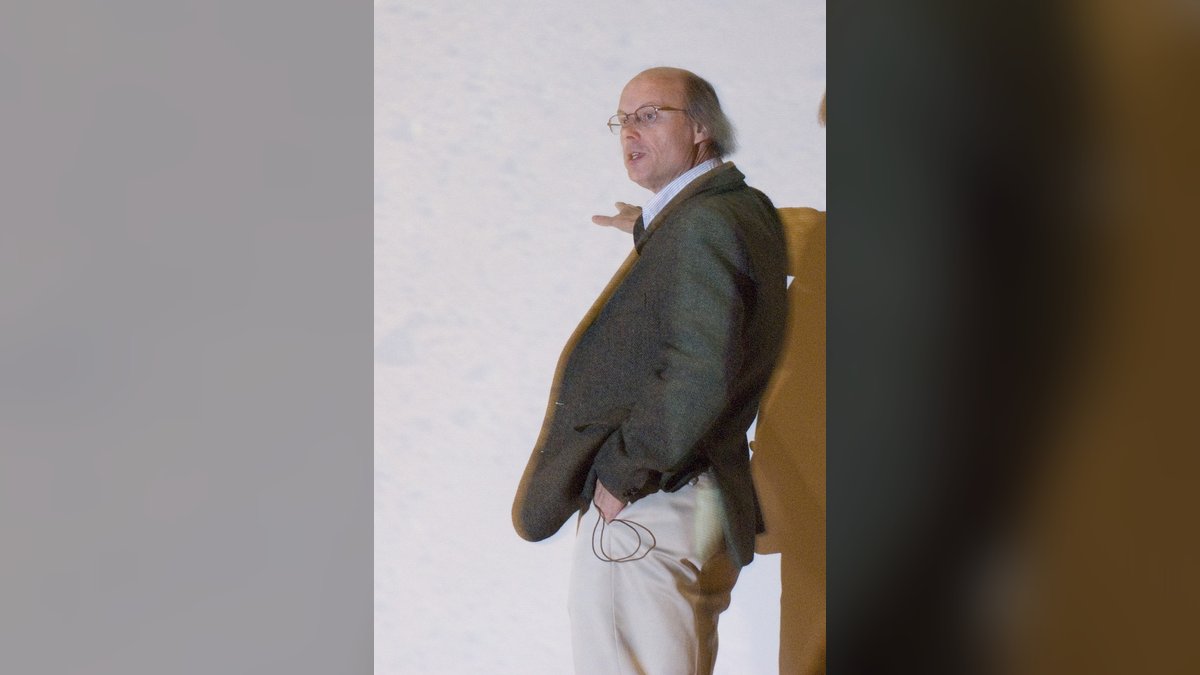
Even after establishing the core language, Stroustrup’s commitment to C++ extended far beyond its initial design. He became not only its architect but also its steward. Recognizing that such a revolutionary tool required formal governance, he played a pivotal role in standardizing the language. He was a founding member of the C++ standards committee, which began in 1989 and evolved from an ANSI committee to an ISO committee in 1991. For a sustained period, he chaired the subgroup chartered to handle proposals for language extensions, a role he held for 24 years. This dedication to the language’s structure was documented in his 1994 book,The Design and Evolution of C++, and several papers for ACM’s History of Programming Languages conferences. His continued involvement ensured that the language remained a subject of rigorous technical development.
A Professional Life Across Disciplines
Following his foundational work at Bell Labs, Stroustrup’s career trajectory showcased a remarkable blend of deep academic scholarship and high-level industry application. His academic tenure took him to Texas A&M University, where he served from 2002 to 2014. This period allowed him to continue his role as a professor while maintaining influence over the evolving field of computer science.
The following decade saw him transition into the demanding corporate environment of finance. From 2014 to 2022, Stroustrup was employed by Morgan Stanley, bringing his expertise in systems programming to a major financial institution. This movement highlighted the industry’s reliance on his unique blend of theoretical knowledge and practical implementation skills. Most recently, his professional journey brought him to Columbia University, where he has been affiliated since 2022, continuing his role as an academic leader.
Across these varied institutions—from the ranks of the academic professor to the technical fellow advising global corporations—Stroustrup maintained a consistent thread of influence. His ongoing contributions are not limited to teaching; they involve the continuous technical refinement of the language itself. He remains deeply involved in the formal development process, providing the necessary academic and industrial structure for C++’s widespread and continued adoption in complex, large-scale software systems.
Global Recognition and Technical Honors
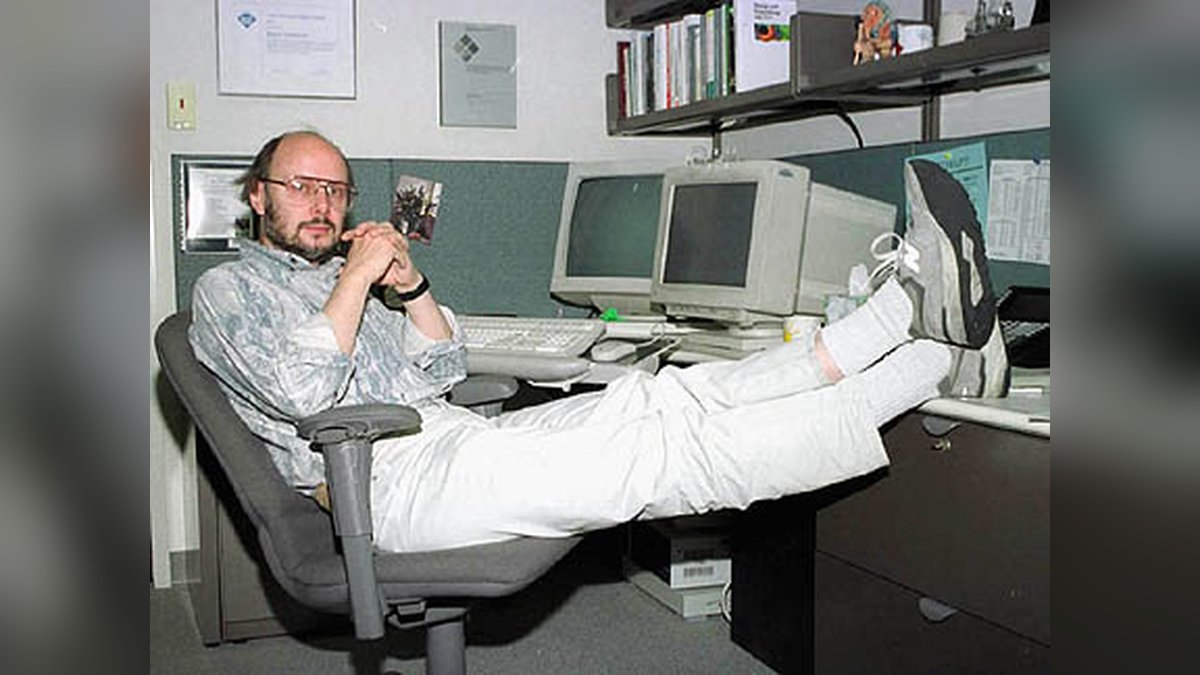
The depth and breadth of Bjarne Stroustrup’s contributions to computing have been formally recognized by the highest echelons of the engineering and scientific community. These honors do not merely acknowledge his participation in the field; they validate his foundational role in creating a language that fundamentally reshaped systems programming. Among the most significant accolades is the 2018 Charles Stark Draper Prize from The US National Academy of Engineering, awarded specifically for conceptualizing and developing the C++ programming language. This prize cemented his status as a pioneer whose work had a tangible, transformative impact on how complex software is built.
Further underscoring this technical mastery is the 2018 Computer Pioneer Award from The IEEE Computer Society. This recognition highlighted his achievement in bringing both object-oriented programming and generic programming to the mainstream. His design and implementation of C++ were deemed critical to this shift. The industry’s appreciation for his work is also evident in the 2017 Faraday Medal from the IET (Institute of Engineering Technology), which recognized his pioneering efforts in the C++ programming language for its significant contributions to the history of computing. These prizes illustrate a consensus among technical peers that his language provided the necessary structure for modern, large-scale software development.
Beyond these major prizes, Stroustrup’s standing is confirmed through prestigious fellowships and academic recognitions. He has been a Fellow of the Association for Computing Machinery (ACM) since 1994 and a Fellow of the Institute of Electrical and Electronics Engineers (IEEE) since the same year, marking his sustained influence on the field. His academic recognition includes being named a Member of the National Academy of Engineering in 2004. Furthermore, his scholarly impact was honored with the 2005 William Procter Prize for Scientific Achievement from Sigma Xi, making him the first computer scientist ever to receive this award.
The recognition is global and continuous, extending from the early 1990s through to the present. His early work laying the groundwork for the language was acknowledged with the 1993 ACM Grace Murray Hopper award. This foundational work, which evolved into one of the most influential programming languages in the history of computing, was later honored by the Computer History Museum in 2015. In addition to these technical accolades, his scholarly contributions have earned him numerous honorary titles, including the Honorary Fellow of Churchill College, Cambridge in 2017, and an honorary doctorate from the University Carlos III, Spain in 2019.
Legacy and Influence on Modern Computing
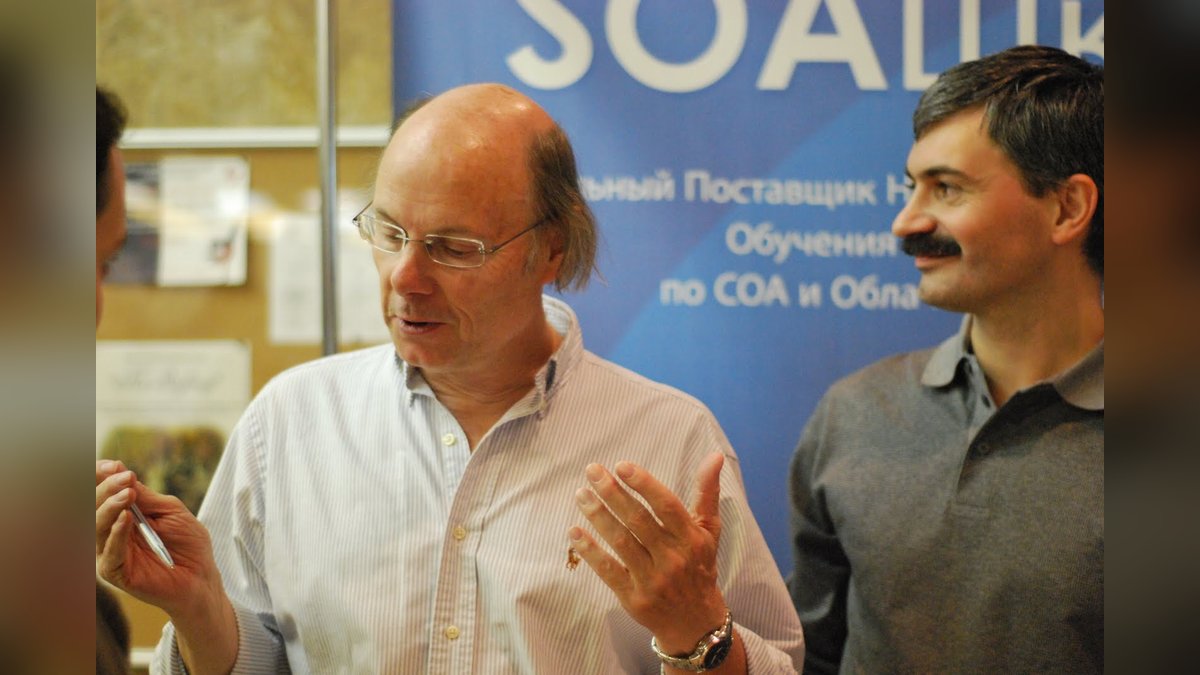
The lasting influence of C++ is deeply rooted in its capacity to bridge the gap between high-level abstraction and bare-metal performance. Far beyond its initial design, the language matured into a powerful tool for systems programming, giving developers granular control over machine and operating system resources. Its technical architecture is marked by sophisticated features that became cornerstones of modern large-scale computing. Key among these are value and reference semantics, coupled with systematic and general resource management (RAII)—a pattern relying on constructors, destructors, and exceptions to ensure deterministic cleanup. Furthermore, the language provides robust support for efficient object-oriented programming, drawing inspiration from the Simula model with features like statically checked interfaces and virtual function tables. For developers tackling the immense complexity of modern software, C++ also offers powerful mechanisms for generic programming through templates, including specialization and concepts, and supports compile-time execution via template metaprogramming and “constexpr functions,” ensuring that much of the heavy lifting occurs before the program even runs.
This combination of performance control and advanced features has made C++ indispensable in domains demanding minimal latency, such as high-performance computing and financial technology, where quantitative trading relies on absolute speed. The language’s capability to handle concurrency through libraries, even when implemented using intrinsics, solidifies its role in mission-critical systems. To support such widespread adoption, the language required rigorous governance. Bjarne Stroustrup has been pivotal not only in its creation but in its continuous technical refinement. He was a founding member of the C++ standards committee, which evolved from an ANSI committee in 1989 to an ISO committee in 1991. His commitment to this stewardship has been profound; for 24 years, he chaired the subgroup chartered to handle proposals for language extensions, ensuring the language remained adaptable and relevant.
The academic and industrial recognition of this depth of contribution is substantial. Stroustrup documented his guiding principles in his 1994 book, The Design and Evolution of C++, and contributed three papers to ACM’s History of Programming Languages conferences. Beyond the code itself, his ongoing role as a thought leader ensures the language’s continued evolution. His career has seen him advise global corporations, including Morgan Stanley (2014–2022) and his current position at Columbia University (2022–present), maintaining a deep connection between academic theory and industrial practice. The recognition of this mastery is underscored by numerous accolades, including the Grace Murray Hopper Award in 1993, and the William Procter Prize for Scientific Achievement in 2005.
Frequently Asked Questions About Bjarne Stroustrup
What is Bjarne Stroustrup best known for?
He is best known for creating the C++ programming language. He designed it to bridge the gap between low-level system control and the robust organizational tools of object-oriented programming. His comprehensive work fundamentally shaped modern systems programming and computer science.
When did Bjarne Stroustrup begin developing C++?
Stroustrup began this pioneering work in 1979 while working at the Computer Science Research Center at Bell Labs. The initial design was called “C with Classes,” conceived as a powerful extension of the C language. He was responsible for its early definitions and first implementation.
What are Bjarne Stroustrup’s primary academic and professional affiliations?
His affiliations include Aarhus University, the University of Cambridge, Texas A&M University, and Morgan Stanley. He is currently affiliated with Columbia University since 2022, and also joined Susquehanna International Group in 2026.
What major awards has Bjarne Stroustrup received for his work?
He has received numerous accolades, including the Grace Murray Hopper Award (1993) and the William Procter Prize for Scientific Achievement (2005). Other significant honors include the ACM Fellow (1994) and the IEEE Fellow (1994).
What is Bjarne Stroustrup’s current role as of 2022?
As of 2022, he has been a full professor at Columbia University. Furthermore, the Wikipedia summary notes that he joined the quantitative trading firm Susquehanna International Group as a part-time technical fellow in 2026.
Final Thoughts: The Legacy of Bjarne Stroustrup
Bjarne Stroustrup’s lasting impact on computer science is defined by his ability to synthesize disparate technical domains into a single, powerful language. His pioneering work on C++ was not a simple addition to C, but a deliberate extension designed to weave the principles of object-oriented programming directly into a low-level, performance-oriented structure. By formulating the core design criteria and producing the initial implementation, Stroustrup created a robust system that retained direct control over machine and operating system resources while adopting the abstract power of OOP. Key architectural features, including the systematic resource management model known as RAII and support for generic programming via templates, cemented C++’s status as a marvel of technical synthesis.
Beyond the initial invention, his commitment to the language’s longevity—serving for twenty-four years as the chair of the standards committee—ensured that C++ became a globally governed standard. From his foundational studies in machine architecture at Aarhus to his advanced research in distributed systems at Cambridge, his academic rigor provided the necessary foundation for this monumental project. Stroustrup’s career, spanning roles at institutions like Bell Labs, Columbia University, and Morgan Stanley, demonstrates a sustained influence that continues to shape how complex, large-scale software is conceived and executed. The architecture he helped build remains a foundational pillar, proving that even the most sophisticated modern systems are built upon the careful evolution of powerful, enduring tools.
Sources and Further Reading
- Bjarne Stroustrup — Wikipedia (text available under CC BY-SA 4.0)
- Communication and control in distributed computer systems — idiscover.lib.cam.ac.uk
- Election to National Academy of Engineering, USA 2004 — nae.edu
- Bjarne Stroustrup — engineering.columbia.edu
- Faculty – People – Computer Science & Engineering – College of Engineering — cse.tamu.edu
- Official website