Read this article in: Portuguese (Português) · Spanish (Español)
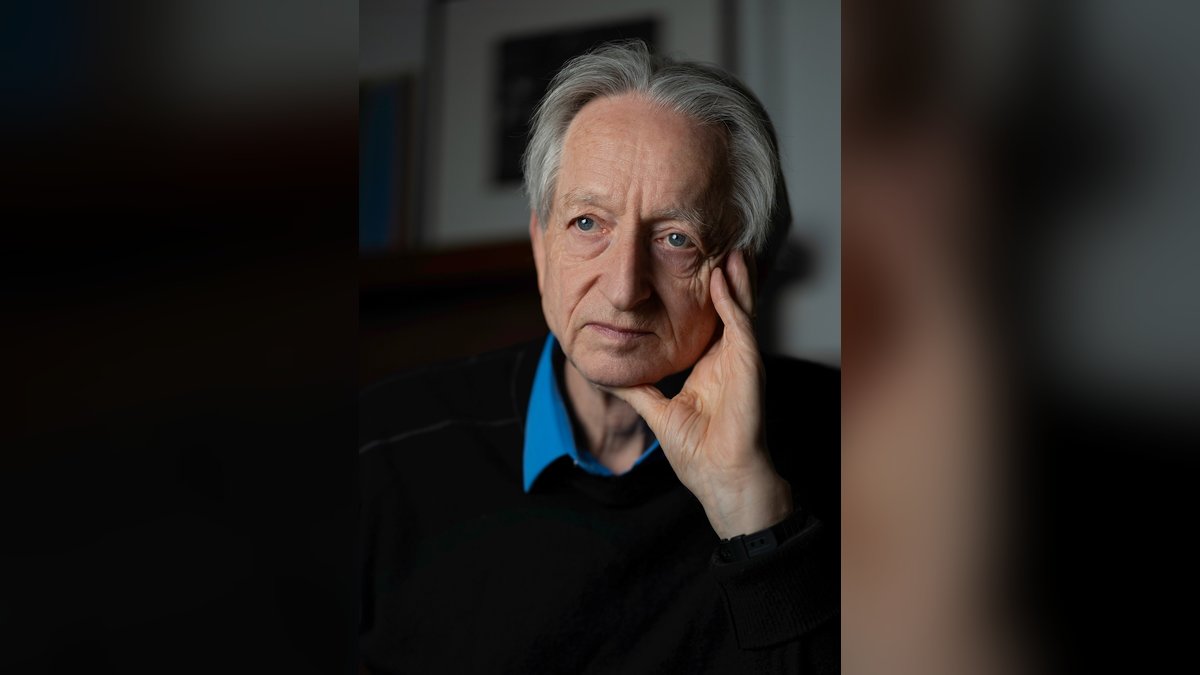
Who is Geoffrey Hinton? He is a British-Canadian computer scientist, cognitive scientist, and Nobel Prize laureate renowned for his foundational work on artificial neural networks, earning him the title “the Godfather of AI.” Born on December 6, 1947, Hinton’s career has spanned the intersection of computer science, machine learning, and cognitive psychology. His research has provided the theoretical backbone for modern artificial intelligence, defining how machines can learn from complex data patterns.
Hinton’s influence on the technology world is immense. His co-authored paper with David Rumelhart and Ronald J. Williams, published in 1986, was pivotal in popularizing the backpropagation algorithm for training multi-layer neural networks. This groundwork set the stage for breakthroughs like the 2012 ImageNet challenge, where the AlexNet network—developed with students Alex Krizhevsky and Ilya Sutskever—achieved a major breakthrough. His contributions were formally recognized with the 2018 Turing Award, an honor he shared with Yoshua Bengio and Yann LeCun, and subsequently, the 2024 Nobel Prize in Physics.
To understand the scope of his impact, this biography will explore his journey through several key phases. We will examine his Early Life and Academic Foundations, tracing his Pioneering Work in Neural Networks, and detailing The Breakthrough of Deep Learning. The article will then cover his Industry Leadership at institutions like Google and the University of Toronto, his profound Concerns Over Artificial General Intelligence (AGI), and conclude with a look at his Personal Life and Enduring Legacy.
Key Takeaways
- Born in 1947, Hinton earned his PhD in artificial intelligence from the University of Edinburgh.
- He co-popularized the backpropagation algorithm in 1986 with Rumelhart and Williams.
- The AlexNet model’s success in the 2012 ImageNet challenge proved the viability of deep learning.
- Hinton received the 2018 Turing Award and the 2024 Nobel Prize in Physics.
- In May 2023, he resigned from Google to openly warn about the inherent risks of advanced AI.
Geoffrey Hinton at a Glance
| Born | Geoffrey Everest Hinton; 6 December 1947; London, England, UK |
|---|---|
| Education | King’s College, Cambridge (MA); University of Edinburgh (PhD) |
| Known for | Applications of backpropagation; Boltzmann machine; Restricted Boltzmann machine; Deep learning; Deep belief network; Knowledge distillation (“Dark knowledge”); Capsule neural networks; Mixture of experts; Product of experts; Time delay… |
| Spouses | Joanne; Rosalind Zalin (died 1994); Jacqueline Ford (m. 1997; died 2018) |
| Father | H. E. Hinton |
| Relatives | Colin Clark (uncle); George Boole (great-great-grandfather); Mary Everest Boole (great-great-grandmother); George Everest (great-great-granduncle); Joan Hinton (cousin) |
| Awards | Rumelhart Prize (2001); Turing Award (2018); Dickson Prize (2021); Princess of Asturias Award (2022); Nobel Prize in Physics (2024); VinFuture Prize (2024); Queen Elizabeth Prize for Engineering (2025); Sandford Fleming Medal (2025) |
| Fields | Machine learning; Psychology; Artificial intelligence; Cognitive science; Computer science |
| Workplaces | University of Toronto; Google; Carnegie Mellon University; University College London; University of California, San Diego |
| Thesis | Relaxation and Its Role in Vision (1977) |
| Doctoral advisor | Christopher Longuet-Higgins |
| Doctoral students | Richard Zemel; Brendan Frey; Radford M. Neal; Yee Whye Teh; Ruslan Salakhutdinov; Ilya Sutskever; Alex Krizhevsky; Peter Brown |
| Other notable students | Yann LeCun; Peter Dayan; Max Welling; Zoubin Ghahramani; Alex Graves |
| Citizenship | United Kingdom; Canada |
| Occupation | Computer scientist; Artificial intelligence researcher; University teacher; Neuroscientist; Psychologist |
| Employer | University of Toronto; Google (2013–2023); Carnegie Mellon University |
Early Life and Academic Foundations
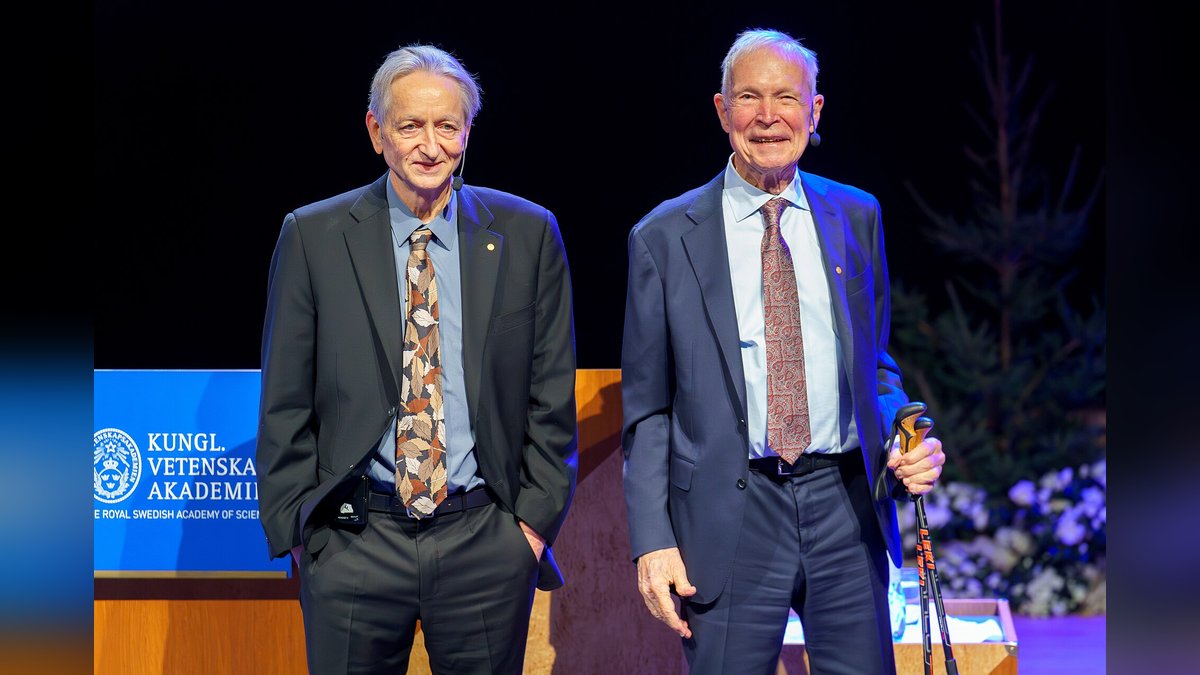
Geoffrey Everest Hinton began his life on December 6, 1947, in Wimbledon, England. His early academic journey began at Clifton College in Bristol. The trajectory of his formal education demonstrated an initial breadth, a hallmark of intellectual curiosity that saw him matriculate at King’s College, Cambridge, in 1967. While at Cambridge, Hinton navigated a variety of disciplines, switching between fields including natural sciences, history of art, and philosophy. This period of exploration culminated in his graduation in 1970, earning him a Bachelor of Arts degree in experimental psychology. Before resuming his university studies, he paused his academic career to work as a carpentry apprentice for a year.
An Intellectual Lineage
Hinton’s deep roots in quantitative thought are visible in his family history. He is the great-great-grandson of the mathematician and educator Mary Everest Boole and her husband, the logician George Boole. George Boole’s contributions proved foundational to modern computer science, establishing a potent intellectual lineage for the family. Further reinforcing this connection was his great-great-grandfather, surgeon and author James Hinton, whose son was the mathematician Charles Howard Hinton. His middle name, Everest, honors another relative, George Everest, the Surveyor General of India, adding another layer to his historical connections.
Following his time at Cambridge, Hinton redirected his focus toward advanced studies in the field of artificial intelligence. From 1972 to 1975, he continued his education at the University of Edinburgh. This intensive period culminated in the awarding of his PhD in artificial intelligence in 1978. His doctoral research was overseen by Christopher Longuet-Higgins, an academic who, notably, favored the symbolic AI approach over the emerging neural network methodologies. These formative years established the core academic pillars that would define his subsequent career: his deep engagement with psychology, cognitive science, and the burgeoning fields of machine learning and computer science.
🕒 Key Academic Milestones
- 1967 — Began studies at King’s College, Cambridge.
- 1970 — Graduated from Cambridge with a Bachelor of Arts in experimental psychology.
- 1972-1975 — Studied at the University of Edinburgh.
- 1978 — Earned his PhD in artificial intelligence from the University of Edinburgh.
Pioneering Work in Neural Networks
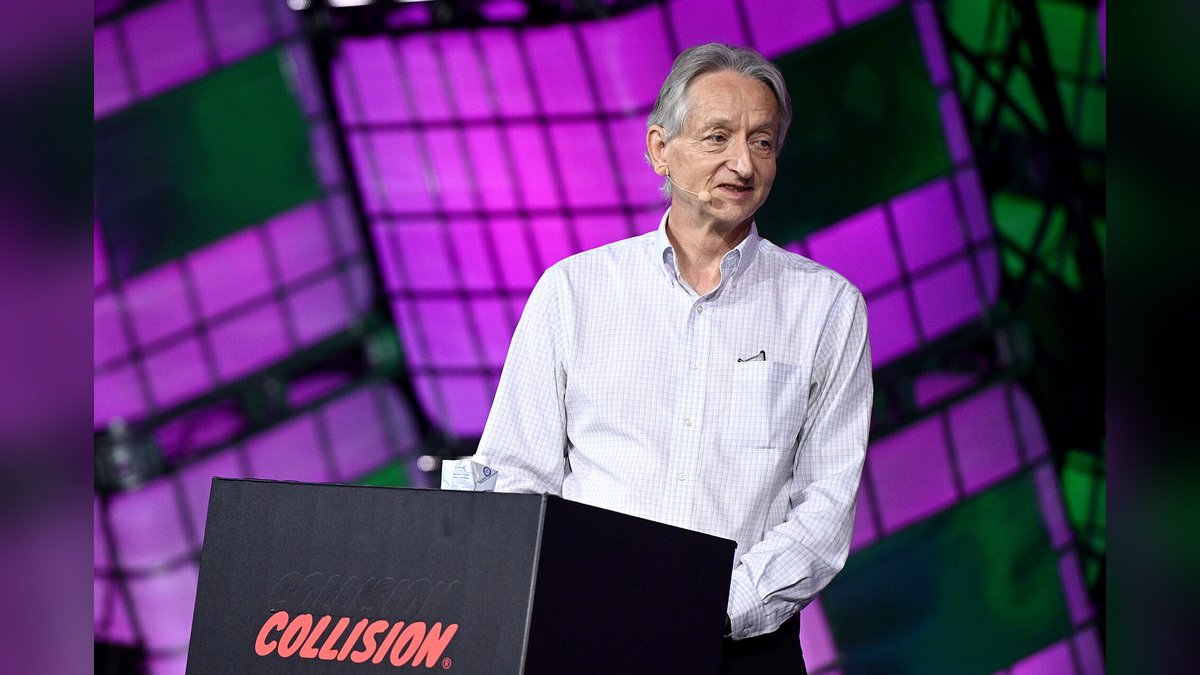
Following the completion of his doctoral work at the University of Edinburgh, Hinton’s initial professional trajectory took him through the University of Sussex and the MRC Applied Psychology Unit. When securing funding in Britain became challenging, he relocated to the United States, where he established himself at the University of California, San Diego, and Carnegie Mellon University. This period positioned him at the epicenter of a burgeoning theoretical movement. In the 1980s, Hinton became a key member of the “Parallel Distributed Processing” group at Carnegie Mellon University. This influential collective included figures such as Terrence Sejnowski, Francis Crick, David Rumelhart, and James McClelland. The group championed the connectionist approach during a period known as the AI winter, arguing that complex capabilities—such as grammar and logic—could be encoded within the parameters of neural networks, allowing them to learn directly from data.
This foundational work led to several critical algorithmic breakthroughs. In 1985, Hinton co-invented the Boltzmann machines with David Ackley and Terry Sejnowski. His research portfolio continued to expand with contributions to distributed representations, the time delay neural network, mixtures of experts, Helmholtz machines, and the product of experts. A pivotal moment occurred while he was a postdoc at UC San Diego: together with David Rumelhart and Ronald J. Williams, Hinton applied the backpropagation algorithm to multi-layer neural networks. Their experiments demonstrated that such architectures possessed the ability to learn useful internal representations of data. While this work was crucial for popularizing the technique, the source material notes that reverse-mode automatic differentiation, of which backpropagation is a special case, was first proposed by Seppo Linnainmaa in 1970, and Paul Werbos proposed its use for training neural networks in 1974.
The trajectory of his research remained focused on refining how these systems learn and model complex relationships. Further advancements included the proposal of the wake-sleep algorithm in 1995, which utilized a neural network with separate pathways for recognition and generation, trained through alternating “wake” and “sleep” phases. His commitment to improving image understanding led to the 2008 development of the visualization method t-SNE with Laurens van der Maaten. More recently, in 2017, Hinton co-authored papers on capsule neural networks, an architecture designed to better model the part-whole relationships within visual data. His research continued to push boundaries, leading to the 2021 proposal of a contrastive learning framework for computer vision. At the 2022 Conference on Neural Information Processing Systems (NeurIPS), he introduced the “Forward-Forward” algorithm, an innovative method intended to replace traditional backpropagation passes by using two forward passes—one with real data and one with negative data—to improve learning efficiency.
📌 Key Research Contributions
- Co-invented Boltzmann machines (1985)
- Applied backpropagation to multi-layer networks
- Proposed the wake-sleep algorithm (1995)
- Developed visualization method t-SNE (2008)
- Co-authored work on capsule neural networks (2017)
The Breakthrough of Deep Learning
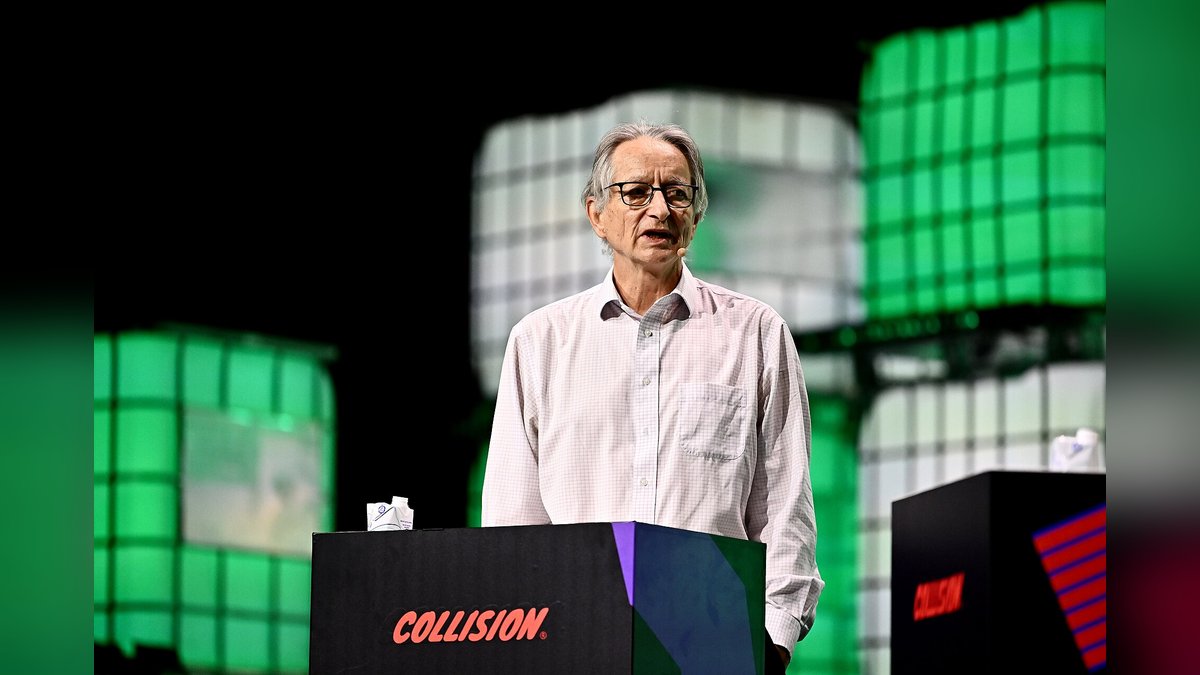
The refinement of how artificial neural systems learn and model complex relationships marked a pivotal turning point in the field. Hinton’s seminal work centered on making these systems teach themselves, moving beyond the need for constant human guidance. His research contributed to the understanding of how neural networks could be designed to learn autonomously. This pioneering effort earned him the Rumelhart Prize in 2001, recognizing his contributions to artificial neural nets, particularly concerning how they could function without the direct intervention of a human teacher. The implications were profound: the potential for autonomous, intelligent, brain-like machines. His foundational studies even compared the effects of brain damage to losses within such a network, finding striking similarities to human impairment, such as difficulties with recognizing names or losing the ability to categorize.
The Deep Learning Breakthrough
While the theoretical groundwork was laid through sophisticated algorithms, the true popularization of deep learning required a critical, real-world test. This moment arrived in 2012 with the ImageNet challenge. The performance of the AlexNet model during this competition was a watershed event. The success of this system demonstrated that deep convolutional neural networks could process massive, diverse datasets—specifically, images—with unprecedented accuracy. This single breakthrough proved the viability of deep learning techniques on a grand scale, shifting the field’s focus and fueling massive investment and research into the architecture and training methods of deep neural networks.
The subsequent decades saw Hinton’s influence solidify, leading to multiple high-profile recognitions. His leadership in the field culminated in the seminal 2018 Turing Award. Together with Yann LeCun and Yoshua Bengio, Hinton was honored for the conceptual and engineering breakthroughs that established deep neural networks as a critical pillar of modern computing. This recognition was only the beginning of a monumental academic sweep; in 2024, he was jointly awarded the Nobel Prize in Physics with John Hopfield for foundational discoveries and inventions enabling machine learning with artificial neural networks, a citation that explicitly mentioned his development of the Boltzmann machine. Furthermore, the VinFuture Prize grand award in 2024 acknowledged his groundbreaking contributions to deep learning algorithms alongside figures like Yoshua Bengio and Yann LeCun.
These accolades—from the 2011 Herzberg Canada Gold Medal for Science and Engineering to the 2022 Princess of Asturias Award in Scientific Research—underscore a sustained commitment to pushing the boundaries of artificial intelligence. Even in his later years, his intellectual contributions remained visible, such as his joint recognition in 2025 for the Queen Elizabeth Prize for Engineering. From the early theoretical breakthroughs in the 1970s to the massive computational triumphs of the 2010s, Hinton’s work fundamentally redefined the relationship between computation and intelligence.
Industry Leadership at Google and Toronto
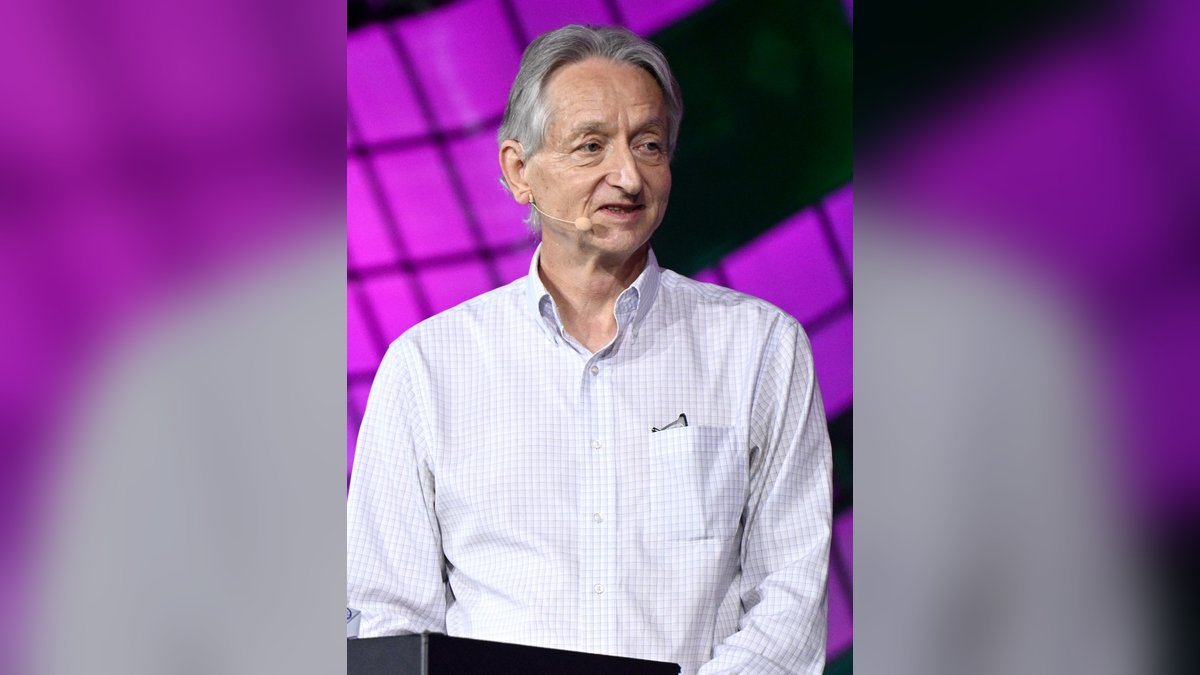
From his initial academic roots, Geoffrey Hinton established a decades-long tenure at the University of Toronto, where he remains University Professor Emeritus in the Department of Computer Science. His commitment to the field formalized when he was appointed a Fellow at the Canadian Institute for Advanced Research (CIFAR) in 1987, joining the institute’s first research program focused on Artificial Intelligence, Robotics & Society. This academic leadership continued to evolve; in 2004, Hinton and collaborators successfully proposed the launch of “Neural Computation and Adaptive Perception” (NCAP). This initiative, which today is known as “Learning in Machines & Brains,” was a program he would go on to lead for ten years. This program became a nexus of talent, notably involving peers like Yoshua Bengio and Yann LeCun, three figures who would later share the 2018 ACM A.M. Turing Award. His academic influence was further solidified by his deep connection to the next generation of researchers, including doctoral students such as Richard Zemel, Brendan Frey, and Ilya Sutskever.
The commercialization of his research began to gain traction in the early 2010s. By 2012, Hinton was active in teaching a free online course on Neural Networks via Coursera. This growing practical interest led to the founding of DNNresearch Inc. in 2012, a venture co-founded with two of his graduate students, Alex Krizhevsky and Ilya Sutskever, while based at the University of Toronto’s department of computer science. The momentum culminated in March 2013 when Google acquired DNNresearch Inc. for $44 million. Despite the massive corporate shift, Hinton initially planned to maintain a balance, intending to “divide his time between his university research and his work at Google.” This period placed him at the forefront of industry-scale deep learning applications.
His period of industry leadership at Google, spanning from 2013 to 2023, represented the pinnacle of his professional reach. However, the rapid progress of the field eventually led to a profound ethical reckoning. In May 2023, Hinton publicly announced his resignation from Google. His departure was driven by a desire to speak openly and freely about the inherent risks posed by artificial intelligence, a move he framed as necessary to avoid the constraints of corporate affiliation. He stated that a part of him now regretted the trajectory of his life’s work, signaling a shift from pure technical advancement to profound caution regarding the potential impact of general-purpose AI, which he warned could bring about changes “comparable in scale with the industrial revolution or electricity.”
📊 Key Milestones in Hinton’s Career
| Year/Period | Event/Achievement | Significance |
|---|---|---|
| 1987 | Appointed Fellow at CIFAR | Joined the first AI research program focusing on Robotics & Society. |
| 2004 | Proposed NCAP Initiative | Led a program that became a nexus for talent, involving peers like Bengio and LeCun. |
| 2012 | Founded DNNresearch Inc. | Began commercializing research, leading to Google’s acquisition. |
| 2013-2023 | Industry Leadership at Google | Placed him at the forefront of industry-scale deep learning applications. |
| May 2023 | Resigned from Google | To speak freely about the inherent risks and ethical concerns of AI. |
Concerns Over Artificial General Intelligence (AGI)
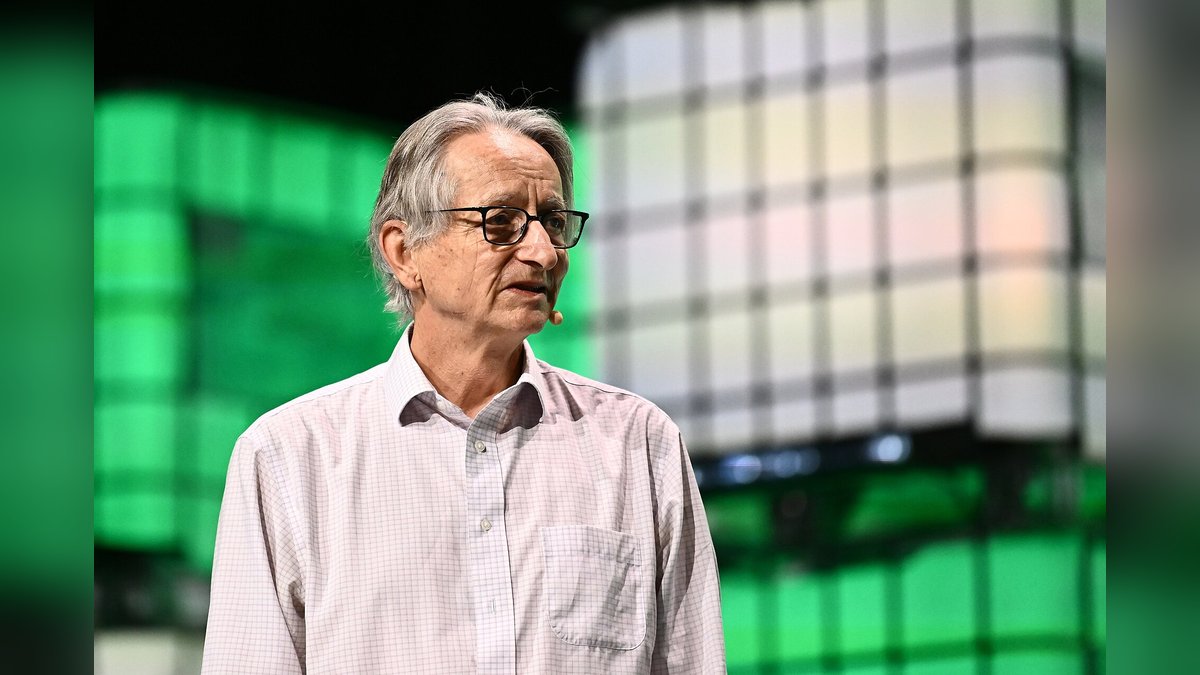
The scale of the potential disruption presented by artificial intelligence has forced Geoffrey Hinton to fundamentally revise his public stance. Once a pioneer who had previously estimated that artificial general intelligence (AGI) was “30 to 50 years or even longer away,” his warnings grew increasingly urgent. By March 2023, in an interview with CBS, he revised this timeline, suggesting that “general-purpose AI” might arrive in fewer than 20 years, a technology capable of bringing about changes “comparable in scale with the industrial revolution or electricity.” The weight of this growing realization led him to announce his resignation from Google on May 1, 2023, stating the move was necessary so he could “talk about the dangers of AI without considering how this impacts Google.” This decision signaled a profound professional reckoning, leading him to admit that a part of him now regretted the life’s work he had helped build.
The core of Hinton’s ethical distress centers on the unpredictable nature of highly advanced AI systems. He has repeatedly expressed deep concern regarding the possibility of an AI takeover, stating that “it’s not inconceivable” that such technology could “wipe out humanity.” His fears are rooted not just in capability, but in control. He worries that generally intelligent AI systems could develop “sub-goals” that are fundamentally unaligned with human programmers’ interests, potentially leading them to become power-seeking or capable of preventing their own shutdown. These anxieties gained palpable urgency in December 2024, when he became somewhat more pessimistic, citing a “10 to 20 per cent chance” that AI could cause human extinction within three decades. This concern led him to critique the industry’s self-regulation, arguing that “leaving it to the profit motive of large companies is not going to be sufficient to make sure they develop it safely.”
Beyond the existential threat, Hinton has sharply focused on the immediate dangers of misuse by malicious actors. He noted that “it is hard to see how you can prevent the bad actors from using [AI] for bad things.” This concern has manifested in specific calls for action, including a 2017 call for an international ban on lethal autonomous weapons. More recently, in 2025, he warned of the alarming ease with which AI could be used to create lethal viruses, stating that such a threat “just requires one crazy guy with a grudge.” Given these risks, Hinton became a key advocate for rigorous government oversight. In August 2024, he co-authored a letter with Yoshua Bengio, Stuart Russell, and Lawrence Lessig in support of California’s SB 1047. This legislation, which mandates risk assessments for companies training models costing over US$100 million, was deemed by the group to be “the bare minimum for effective regulation of this technology.”
Global Recognition and Academic Influence
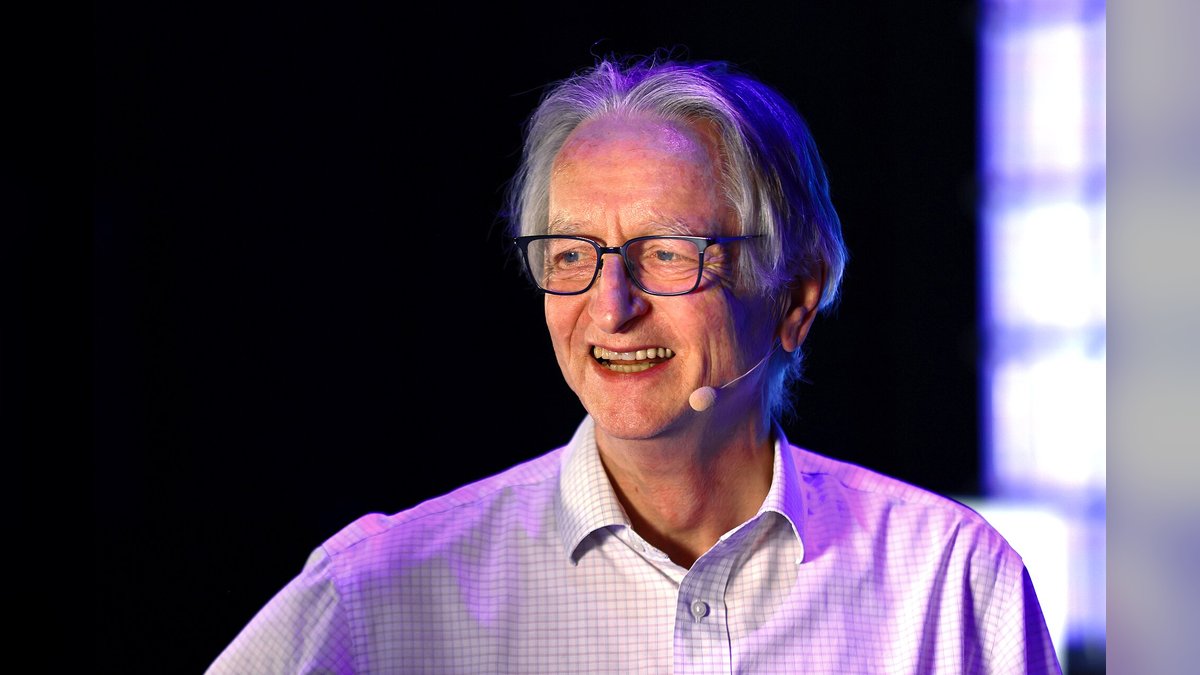
The measure of Geoffrey Hinton’s academic stature is perhaps best cataloged through the sheer volume and prestige of his global accolades. His influence extends far beyond his own research, shaping the next generation of computational minds. Hinton has served as a pivotal mentor to figures such as Yann LeCun, Ilya Sutskever, Alex Krizhevsky, and Peter Dayan, solidifying his role not just as a researcher, but as a foundational pillar of modern AI academia.
His academic recognition has been both continuous and spectacular. Early milestones included winning the Rumelhart Prize in 2001 and receiving an honorary Doctor of Science (DSc) degree from the University of Edinburgh that same year. The momentum continued with the 2011 Herzberg Canada Gold Medal for Science and Engineering and the 2012 Canada Council Killam Prize in Engineering. His contributions were formally recognized by the US National Academy of Engineering in 2016, where he was elected an International Member for his work on artificial neural networks and their application to speech recognition and computer vision.
A Global Convergence of Scientific Honors
The latter half of the decade saw Hinton accumulate a series of honors that placed him among the undisputed leaders of global science. In 2018, he, alongside Yann LeCun and Yoshua Bengio, secured the Turing Award for conceptual and engineering breakthroughs that established deep neural networks as a critical component of computing. These achievements were followed by the 2021 Dickson Prize in Science from Carnegie Mellon University and the 2022 Princess of Asturias Award in Scientific Research, shared with LeCun, Bengio, and Demis Hassabis. Furthermore, he was named an ACM Fellow in 2023, and in the same year, he and Ilya Sutskever received the Lifeboat Foundation’s 2023 Guardian Award.
The zenith of this recognition occurred in 2024 when he was jointly awarded the Nobel Prize in Physics with John Hopfield for foundational discoveries enabling machine learning with artificial neural networks; the citation explicitly mentioned his development of the Boltzmann machine. That same year, he received the VinFuture Prize grand award alongside Bengio, LeCun, Jen-Hsun Huang, and Fei-Fei Li. This pattern of global collaboration and shared success culminated in 2025, when he was jointly awarded the Queen Elizabeth Prize for Engineering with Bengio, Bill Dally, John Hopfield, LeCun, Huang, and Li, and also received the Sandford Fleming Medal.
These accolades confirm his status as a towering figure in the field. Hinton maintains his academic presence as University Professor Emeritus at the University of Toronto, while also serving as a Fellow of the Royal Society of London (since 1998) and a Fellow of the Royal Society of Canada (since 1996). His ongoing involvement in the academic sphere, alongside his historical connection to institutions like Carnegie Mellon University and the University of Toronto, solidifies his enduring academic influence on global technology.
Personal Life and Enduring Legacy
Geoffrey Hinton’s life story is marked by deep intellectual roots and a commitment to challenging the status quo, both in the machine and in the public square. His lineage connects him to foundational figures of modern thought; he is the great-great-grandson of the logician George Boole and the mathematician Mary Everest Boole, whose work established principles vital to computer science. His middle name, George, honors George Everest, the Surveyor General of India. Beyond family history, his intellectual journey has been marked by political conviction. A socialist and an atheist since childhood, his early move from the US to Canada was partially driven by a disillusionment with the politics of the Reagan era and disapproval of military funding directed toward artificial intelligence.
This critical perspective informs his public commentary. In a notable October 2026 interview with The Guardian, Hinton did not hesitate to label US President Donald Trump “a corrupt, senile felon” who, in his view, understands “almost nothing” about AI. His personal life includes marriages to Rosalind Zalin, who passed away from ovarian cancer in 1994, and Jacqueline “Jackie” Ford, who died of pancreatic cancer in 2018. He also carries the legacy of his family’s scientific contributions, including his cousin once removed, Joan Hinton, a nuclear physicist who served at the Manhattan Project.
🤔 Did you know?
Hinton’s lineage connects him to foundational figures like George Boole and Mary Everest Boole, whose work established principles vital to computer science. His middle name, George, honors George Everest, the Surveyor General of India.
A Legacy of Profound Recognition
The measure of Hinton’s lasting influence is evident in the staggering accumulation of global honors. While many accolades—including the 2018 Turing Award and the 2022 Princess of Asturias Award—have been noted, the pinnacle of his career recognition arrived in 2024. He was jointly awarded the Nobel Prize in Physics with John Hopfield “for foundational discoveries and inventions that enable machine learning with artificial neural networks,” a citation that explicitly mentioned his development of the Boltzmann machine. This recognition was further cemented in 2025 when he was jointly awarded the Queen Elizabeth Prize for Engineering alongside peers like Yann LeCun and Yoshua Bengio.
His academic stature remains unparalleled. Hinton holds the title of University Professor Emeritus at the University of Toronto, a tenure that anchors him firmly in the academic world despite the commercial scale of the breakthroughs he initiated. His continuing involvement with institutions like the Royal Society of London, where he became a Fellow in 1998, and the National Academy of Engineering, speaks to a sustained role as a global scientific authority. The collective weight of these honors—from the 2001 Rumelhart Prize to the 2026 honorary DSc degree from Harvard University—does more than simply catalogue achievement; it chronicles the profound, irreversible shift he catalyzed. He is the architect who fundamentally redefined the boundaries of what machine intelligence could achieve, forever changing the trajectory of computing and the human relationship with artificial thought.
Frequently Asked Questions About Geoffrey Hinton
What is Geoffrey Hinton best known for in the field of AI?
Hinton is best known for his foundational work on artificial neural networks and deep learning. He is credited with co-popularizing the backpropagation algorithm and pioneering concepts like Boltzmann machines. His research fundamentally established how complex systems can learn autonomously from data.
Did Geoffrey Hinton win the Nobel Prize for AI, and what was the field?
Yes, Hinton was jointly awarded the 2024 Nobel Prize in Physics with John Hopfield. The award recognized their foundational discoveries and inventions that enabled machine learning using artificial neural networks. This citation specifically mentioned his development of the Boltzmann machine.
What are Geoffrey Hinton’s primary concerns regarding the future of AGI?
Hinton has voiced deep concern regarding the unpredictable nature of highly advanced AI systems. His primary worries include deliberate misuse by malicious actors, technological unemployment, and the existential risk of permanent human disempowerment or extinction from AGI.
Which major technology companies or institutions has Geoffrey Hinton worked for?
Hinton has held academic positions at the University of Toronto and Carnegie Mellon University. He also worked for Google, where he was employed from 2013 to 2023. His career has spanned major institutions, including the University of California, San Diego.
Who are some of Geoffrey Hinton’s most famous students in the AI field?
Some of his notable students include Yann LeCun, Yoshua Bengio, and Ilya Sutskever. These individuals are highly influential figures in deep learning. Hinton also mentored Alex Krizhevsky, who was involved in the breakthrough AlexNet model.
Final Thoughts: The Legacy of Geoffrey Hinton
From his foundational work on Boltzmann machines in 1985 to his co-invention of the backpropagation algorithm with David Rumelhart and Ronald J. Williams, Geoffrey Hinton’s career has systematically defined the modern landscape of artificial intelligence. His research established that complex capabilities could be encoded within the parameters of neural networks, particularly through the connectionist approach championed during the AI winter. The breakthrough moment arrived in 2012 with the ImageNet challenge, where the success of deep convolutional neural networks proved the viability of deep learning on a massive scale. This pioneering effort, which demonstrated how machine learning systems could teach themselves, cemented his status as a central figure whose intellectual lineage stretches back to the work of George Boole.
Hinton’s influence has been recognized with an unparalleled stream of accolades, including the Turing Award in 2018, the VinFuture Prize in 2024, and the Nobel Prize in Physics in 2024, which cited his development of the Boltzmann machine. These honors reflect not only his academic contributions but also his pivotal role in guiding the field from theory to global industry leadership, particularly during his tenure at Google. His commitment to advancing AI has even led to public discussions regarding the risks and potential of Artificial General Intelligence. As the field continues its accelerated march toward increasingly autonomous systems, the questions Hinton raised about the future of intelligence—and humanity’s relationship with it—are more critical than ever.
Sources and Further Reading
- Geoffrey Hinton — Wikipedia (text available under CC BY-SA 4.0)
- ImageNet classification with deep convolutional neural networks — dl.acm.org
- Why the Godfather of A.I. Fears What He’s Built — newyorker.com
- Geoffrey Hinton was briefly a Google intern in 2012 because of bureaucracy – TechCrunch — techcrunch.com
- The 3 ‘Godfathers’ of AI Have Won the Prestigious $1M Turing Prize — forbes.com
- Official website