Read this article in: Portuguese (Português) · Spanish (Español)
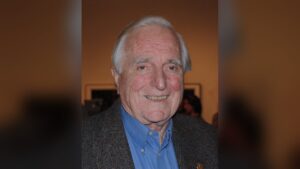
Who is Jim Kimsey? He was a pioneering American entrepreneur, best known as the co-founder of America Online (AOL). Born on September 15, 1939, in Washington, D.C., Kimsey’s career spanned founding and leading AOL, where he served as the first chairman and CEO until 1995. Beyond his seminal role in the digital age, his life encompassed numerous endeavors, including business, military, and philanthropic pursuits.
Kimsey’s impact on the technology landscape is profound. He was instrumental in the founding of AOL in 1983. While his work at AOL is his most recognized achievement, his life record also details various other business and civic leadership roles, demonstrating a broad scope of influence that extended far beyond the realm of online services.
This biography traces the extensive life of James Verlin Kimsey, examining his academic foundations at institutions like Georgetown University and the United States Military Academy. The article will cover his service in the U.S. Army, his early career building in Washington D.C., the critical period of co-founding America Online, and his continued commitment to global causes and civic leadership.
Key Takeaways
- Co-founder of America Online (AOL) in 1983, Kimsey served as the first Chairman and CEO until 1995.
- His education included Georgetown University and the United States Military Academy, where he graduated in 1962.
- Kimsey served in the U.S. Army as an Airborne Ranger, participating in combat tours in Vietnam and the Dominican Republic.
- He established the Kimsey Athletic Center at West Point in 1995 and funded the Kimsey Scholarship.
- Kimsey served as Chairman of the International Commission on Missing Persons in 2001, focusing on identifying missing persons.
Jim Kimsey at a Glance
| Born | September 15, 1939; Washington, D.C., U.S. |
|---|---|
| Died | March 1, 2016 (aged 76); McLean, Virginia, U.S. |
| Education | Georgetown University; United States Military Academy |
| Occupations | Founder, Chairman / CEO of America Online (AOL) |
| Citizenship | United States |
| Employer | AOL |
| Founded | AOL (1983) |
Early Life and Academic Foundations
James Verlin Kimsey arrived in the world on September 15, 1939, in Washington D.C., making his roots firmly planted in the nation’s capital. Though his early life began in the bustling environment of the District, his formative years unfolded in Arlington, Virginia. The path through his secondary education was marked by a period of academic transition. After receiving a dismissal from Gonzaga College High School, Kimsey subsequently enrolled at St. John’s College High School. This initial academic journey established a trajectory that would eventually lead him to some of the most prestigious institutions in American higher education.
The Pursuit of Elite Education
His academic ambitions next brought him to Georgetown University. At this institution, he earned a spot on an honors scholarship, a mark of early academic distinction. While his time at Georgetown represented a significant step toward elite academic circles, his educational journey did not conclude there. The path soon shifted toward the rigorous discipline and intellectual demands of military service, leading him to the United States Military Academy at West Point in New York.
The time spent at West Point proved to be a defining chapter in his preparation. The United States Military Academy is known for its intense curriculum and focus on leadership, preparing officers for service. Kimsey successfully navigated this demanding environment, ultimately graduating from the academy in 1962. This graduation marked the formal conclusion of his foundational educational period, equipping him with both a deep academic grounding from Georgetown and the structured discipline instilled by the U.S. Military Academy.
These early years—from the initial steps through St. John’s to the final graduation from West Point—laid the complex groundwork for the man who would later become a central figure in the burgeoning world of digital technology. The blend of academic scholarship, evidenced by his time on an honors scholarship at Georgetown, and the rigorous, structured training received at the United States Military Academy provided a unique intellectual and operational foundation that would prove critical as the American technological landscape began its dramatic transformation.
Service and Valor in the U.S. Army
The rigorous discipline demanded by military service formed a foundational chapter in James Verlin Kimsey’s life. Following his initial education, Kimsey entered the ranks of the U.S. Army, rising to the rank of lieutenant. His service was not confined to garrison duty; rather, it positioned him in active, often dangerous, operational theaters. Becoming an Airborne Ranger was a commitment that placed him among the most elite units of the American military, requiring exceptional physical and mental fortitude. This experience in highly demanding environments provided a crucible of leadership and tactical knowledge that would inform his later career building out the nascent internet space.
Combat Tours and Global Interventions
Kimsey’s operational record includes participation in several significant U.S. interventions abroad. He saw active duty in both the Vietnam War and subsequent U.S. deployments to the Dominican Republic. His combat experience was marked by a profound level of commitment, during which he served three total combat tours as an Airborne Ranger. Of these, two tours were specifically within the context of the Vietnam War. These deployments were not mere historical footnotes; they represented direct participation in modern military conflicts, earning Kimsey various awards recognizing both his service and his valor under fire. The experience of operating in these diverse and challenging geographical settings—from the jungles of Vietnam to the Caribbean—forged a resilience that few civilians ever encounter.
The recognition of this demanding service continued well into the later decades of his life. The dedication shown during his time in uniform culminated in significant institutional honors. In July 2005, Kimsey was formally inducted into the U.S. Army Rangers Hall of Fame, an acknowledgment reserved for the nation’s most extraordinary Rangers. Furthermore, his commitment to duty, even after his service period, was recognized by his alma mater. In 2008, he received the Distinguished Graduate Award for Outstanding Service to the Nation from the U.S. Military Academy at West Point. These accolades underscore a career defined by exceptional service, translating battlefield valor into enduring historical recognition.
📌 Key Military Achievements and Recognition
- Served in the U.S. Army, rising to the rank of lieutenant.
- Completed training as an Airborne Ranger, an elite unit.
- Participated in deployments to the Dominican Republic.
- Served three total combat tours as an Airborne Ranger.
- Inducted into the U.S. Army Rangers Hall of Fame (2005).
Building a Career in Washington D.C. Before AOL
The transition from military service to the civilian world required a new kind of enterprise. After completing eight years of service, Jim Kimsey planted his roots in the commercial heart of the nation’s capital. In 1970, he purchased a building in downtown Washington, D.C. This real estate venture allowed him to establish a foothold in the city’s nightlife and business scene. On the ground floor, he opened a bar named The Exchange. The success of this initial establishment proved to be more than a single venture; throughout the 1970s, Kimsey built a reputation for entrepreneurial acumen, successfully opening and managing other bars across the city.
While the bar ownership provided a steady stream of capital and experience in managing physical businesses, the trajectory of his career was set to shift dramatically toward the nascent world of computing. By 1983, Kimsey was brought into the corporate tech sphere through a connection forged at West Point. His friend, Frank Caufield, an investor, brought Kimsey in as a manufacturing consultant for Control Video Corporation (CVC). CVC, founded by William von Meister, was focused on a specific, emerging digital market: marketing an online service called GameLine for the Atari 2600 video game console. The company’s origins were already intertwined with tech industry heavyweights, having previously hired Steve Case as a marketing consultant, a recommendation stemming from Case’s brother, investment banker Dan Case.
The corporate landscape surrounding CVC proved volatile. When William von Meister quietly left the company in early 1985, the structure needed immediate reinvention. CVC was subsequently reorganized into Quantum Computer Services. This transition marked a critical moment for Kimsey, who took the reins as the company’s Chief Executive Officer. He was joined by Marc Seriff as Chief Technology Officer, and Steve Case was named a co-founder of the newly structured entity. This evolution was not merely a name change; it was a strategic consolidation that paved the way for what would become one of the internet’s foundational pillars.
Over the next decade, the company continued to evolve, eventually reorganizing itself into America Online, or AOL. Kimsey remained at the helm as CEO until 1995, a period that saw the company mature from a specialized service into a major commercial entity. His tenure as CEO was a defining chapter, setting the stage for the next generation of technology leaders, most notably when Steve Case eventually took the reins. Beyond his deep involvement with the tech sector, Kimsey also maintained interests in the defense industry, serving as a key investor and a director for Triple Canopy, a private military contractor.
🕒 Kimsey’s Early Career Milestones
- 1970 — Purchased a building in downtown Washington, D.C., opening The Exchange bar.
- Throughout the 1970s — Built a reputation by successfully opening and managing other bars across the city.
- 1983 — Brought into the corporate tech sphere as a manufacturing consultant for Control Video Corporation (CVC).
- Early 1985 — CVC reorganized into Quantum Computer Services, and Kimsey became CEO.
- 1995 — Stepped down as CEO of the entity that evolved into America Online (AOL).
Co-Founding America Online (AOL)
The trajectory of Jim Kimsey’s career, while rooted in the discipline of military service and early success running physical businesses—like the bar he opened in downtown Washington, D.C., and others throughout the 1970s—was set for a dramatic pivot toward the burgeoning world of computing. By the early 1980s, the corporate landscape was shifting, and Kimsey found himself at the epicenter of this technological upheaval. His entry into the digital economy was marked by a specific moment in May 1983. At this time, Kimsey was brought into the fold of Control Video Corporation (CVC). He was brought on by his West Point friend, Frank Caufield, who was himself an investor in the company.
The Genesis of Online Service
CVC, which was founded by William von Meister, was tasked with a specific mission: to market an online service called GameLine. This service was designed to run on the popular Atari 2600 video game console. The company’s structure was already attracting talent; Von Meister had previously recruited Steve Case as a marketing consultant, a move facilitated by Case’s brother, investment banker Dan Case. However, the corporate environment was volatile, and Von Meister eventually left the company quietly in early 1985.
This period of flux was critical. The company underwent a significant transformation, reorganizing itself. First, CVC was restructured into Quantum Computer Services. This new entity brought together a core group of leaders: Kimsey, who assumed the role of Chief Executive Officer (CEO); Marc Seriff, who served as Chief Technology Officer (CTO); and Steve Case. The subsequent evolution of this enterprise—the transition from Quantum Computer Services to the massive entity known as America Online (AOL)—cemented Kimsey’s place at the helm of a rapidly expanding industry.
Kimsey’s leadership spanned years of intense growth. He served as CEO of the company until 1995, a tenure during which the company grew into a major force in the technology sector. While his focus was on building the infrastructure and reputation of the emerging online giant, his interests remained diverse. Beyond the digital realm, Kimsey also maintained a significant investment role, serving as a director and key investor in Triple Canopy, a private military contractor, demonstrating a commitment to both the technological and security aspects of the modern world.
📊 Evolution of the Online Service Entity
| Entity Name | Key Personnel Involved | Key Function/Focus |
|---|---|---|
| Control Video Corporation (CVC) | William von Meister, Jim Kimsey | Marketing the GameLine service on the Atari 2600 |
| Quantum Computer Services | Kimsey (CEO), Marc Seriff (CTO), Steve Case | Restructured entity leading to AOL |
| America Online (AOL) | Jim Kimsey | Rapidly expanding online giant |
Commitment to Global Causes and Civic Leadership
Beyond the transformative years spent co-founding America Online, Jim Kimsey cultivated a deep and enduring commitment to global causes and civic leadership. His philanthropic endeavors demonstrated a dedication to preserving life, history, and institutional integrity. In the realm of humanitarian advocacy, Kimsey served as Chairman Emeritus of Refugees International, an independent advocacy group focused on protecting refugees and combating the root causes of displacement. His commitment to service was also reflected in his membership on the board of the Vietnam Veterans Memorial Fund and his role as a Senior Fellow to the Department of Defense Business Board. A monumental example of his commitment to international justice came in 2001, when Secretary of State Colin Powell named him Chairman of the International Commission on Missing Persons. This organization dedicated itself to identifying hundreds of thousands of individuals missing from conflicts and natural disasters around the world through the rigorous process of DNA research.
Kimsey’s influence was equally broad within the halls of American governance and culture. He received multiple presidential appointments, including to the Kennedy Center Board of Trustees and the West Point Board of Visitors. His involvement with the Library of Congress was significant; he served as a member of the James Madison Council and, in 2010, was appointed by Speaker Nancy Pelosi to the Library of Congress Trust Fund Board, a position overseeing the vital investment of all gifts benefiting the Library’s collection and services. Furthermore, his appreciation for the arts was evident through his service on the Executive Committee of the National Symphony Orchestra.
🧪 International Commission on Missing Persons
In 2001, Jim Kimsey served as Chairman of this organization. Its mission was to identify hundreds of thousands of individuals missing from conflicts and natural disasters globally using rigorous DNA research.
His impact on the next generation of leaders was particularly tangible through his dedication to West Point. In 1995, he established the Kimsey Athletic Center, a lasting physical tribute to the academy. More profoundly, he funded internships for military academy students through the Kimsey Scholarship. This scholarship was designed to provide competitively selected cadets and midshipmen from West Point, the Air Force Academy, and the Naval Academy the unique opportunity to serve in significant federal offices, including the Supreme Court, the State Department, and Congress. This dedication to mentorship cemented a legacy that spanned both the corporate and civic spheres. The breadth of his service culminated in a lasting recognition of his contributions, when one of the office buildings on the former AOL Campus in Ashburn, Virginia, was named The James Kimsey Center in his honor.
Personal Life and Enduring Legacy
While his professional life saw him co-founding a technological giant and shaping the digital landscape, Jim Kimsey maintained a profound and active commitment to civic life and philanthropy. After his career, Kimsey established his residence in McLean, Virginia, where he lived with his three grown sons: Mike, Mark, and Ray. His philanthropic vision solidified in 1995 with the creation of The Kimsey Foundation. His commitment to preserving American history and culture was evident in his acquisition of Marden House, a structure designed by Frank Lloyd Wright, which he purchased in 2000 for $2.5 million.
A Legacy of Service and Education
Kimsey’s dedication to the next generation of leaders was particularly visible through his deep involvement with the United States Military Academy. In 1995, he established the Kimsey Athletic Center at West Point. Beyond the physical facility, he funded crucial internships through the Kimsey Scholarship. This scholarship was instrumental in allowing cadets and midshipmen from West Point, the Air Force Academy, and the Naval Academy to compete for and serve in significant federal offices, including the Supreme Court, the State Department, and Congress.
His influence expanded across numerous national and international boards. He served as Chairman Emeritus of Refugees International, an independent advocacy group dedicated to protecting refugees and ending displacement. His service roster included board membership on the Vietnam Veterans Memorial Fund and appointments as a Senior Fellow to the Department of Defense Business Board. On a cultural level, he served on the Executive Committee of the National Symphony Orchestra. His deep ties to Washington D.C. governance were further cemented when, in 2010, Speaker Nancy Pelosi appointed him to the Library of Congress Trust Fund Board, the body responsible for overseeing the investment of all gifts benefiting the Library’s collections and services. Earlier in his civic life, Colin Powell appointed him Chairman of the International Commission on Missing Persons in Bosnia in 2001, and President George W. Bush appointed him to the board of trustees of the John F. Kennedy Center for the Performing Arts on October 30, 2006.
Kimsey’s enduring personal impact was marked by this continuous dedication to public service, often bridging the worlds of technology, military history, and cultural preservation. He passed away in McLean, Virginia, on March 1, 2016, at the age of 76, due to cancer. His life’s estate continued to reflect his connection to high culture, as his McLean residence was listed for sale in May 2018 for $62.95 million.
Frequently Asked Questions About Jim Kimsey
When was Jim Kimsey born and when did he pass away?
Jim Kimsey was born on September 15, 1939, in Washington, D.C. He passed away on March 1, 2016, at the age of 76, in McLean, Virginia. His life spanned decades of significant technological and global change.
What is Jim Kimsey best known for in the technology industry?
He is best known for co-founding America Online (AOL) in 1983. He held the roles of first Chairman and CEO of the company until 1995, guiding it through its critical growth phase in the emerging digital economy.
What was Jim Kimsey’s initial career path after his military service?
After his military service, Kimsey began an entrepreneurial career in 1970. He purchased a bar named The Exchange in downtown Washington, D.C., and successfully built a reputation by opening and managing other bars throughout the 1970s.
What organizations did Jim Kimsey contribute to through his philanthropy?
Kimsey was deeply involved in civic leadership, serving as Chairman Emeritus of Refugees International. He also chaired the International Commission on Missing Persons in 2001 and held board positions with the Library of Congress.
What were some of Jim Kimsey’s military roles and deployments?
Kimsey served in the U.S. Army, achieving the rank of lieutenant. He was an Airborne Ranger and participated in three total combat tours. His deployments included the Vietnam War (two tours) and subsequent service in the Dominican Republic.
Final Thoughts: The Legacy of Jim Kimsey
The journey from the rigorous discipline of the U.S. Army, where Kimsey served as an Airborne Ranger, to the volatile, emerging world of digital communication was nothing short of a pivot. His career established a unique foundation, blending the operational excellence learned in combat zones like Vietnam with the sharp entrepreneurial acumen first honed through running bars and real estate ventures in downtown Washington, D.C. By co-founding America Online in 1983, Kimsey placed himself at the epicenter of the technological upheaval, guiding the company through its maturation from a specialized service into a major commercial entity. His leadership was integral in building one of the internet’s foundational pillars.
Kimsey’s enduring legacy is not defined by a single invention, but by his ability to translate deep-seated institutional discipline and relentless commercial drive into a public-facing digital utility. From his early academic distinction at Georgetown to his eventual role as AOL’s CEO, his life demonstrated a profound capacity for adaptation—a rare skill set that allowed him to navigate everything from global military interventions to the nascent digital economy. He proved that the foundational principles of service and rigorous structure could power the most innovative, borderless industries.
The story of Jim Kimsey is a testament to how the ambition of a pioneer, built on diverse experiences across military valor and commercial grit, can fundamentally rewire the way humanity connects. As the digital world continues its relentless evolution, the foundational structures he helped erect remain critical touchstones for every connection made.
Sources and Further Reading
- Jim Kimsey — Wikipedia (text available under CC BY-SA 4.0)
- Jim Kimsey Dies at 76; AOL Co-Founder Influenced Generation of Net Providers — nytimes.com
- AOL.COM — archive.nytimes.com
- Jim Kimsey, co-founder of AOL, dies at 76 — theguardian.com
- MEMORANDUM FOR INTERNSHIP, SUMMER 2012 — usna.edu
- Official website