

Read this article in: Portuguese (Português) · Spanish (Español)
Who is John Lasseter? He is an influential American filmmaker, animator, director, and producer, best known for his foundational role in establishing the modern computer animation industry. A veteran of the animation world, Lasseter’s career spans decades of technological change, seeing him serve as the chief creative officer for major studios including Pixar Animation Studios and Walt Disney Animation Studios. His work helped define the visual language of modern animated storytelling, most notably through his direction of films like Toy Story.
Lasseter’s impact on the technology world is immense, marking a pivotal transition from traditional animation to digital storytelling. After leaving the Walt Disney Company for promoting computer animation, he joined Lucasfilm, where he collaborated on groundbreaking CGI usage. This expertise led to the founding of Pixar in 1986, which he oversaw. During his tenure, his films and associated projects generated box office revenues exceeding US$19 billion, cementing his status as a highly successful figure in cinematic history.
This biography will trace the arc of his storied career. We will explore his early life and education, detailing his initial years at Disney and his crucial move to Lucasfilm. The article will then examine his pioneering work at Pixar, his later efforts revitalizing Disney Animation Studios, the period surrounding his departure, and finally, his current leadership role at Skydance Animation.
John Lasseter at a Glance
| Born | John Alan Lasseter; January 12, 1957; Los Angeles, California, U.S. |
|---|---|
| Education | California Institute of the Arts (BFA) |
| Occupations | Film director; producer; screenwriter; animator; voice actor |
| Years active | 1978–present |
| Employers | Walt Disney Animation Studios (1979–1983, 2006–2018); Lucasfilm (1983–1986); Pixar Animation Studios (1986–2018); Skydance Animation (2019–present) |
| Title | Head of Skydance Animation |
| Spouse | Nancy Lasseter (m. 1988) |
| Children | 5 |
| Awards | Academy Award (1989, 1996); Golden Globe Award (2007); Inkpot Award (2009); Emmy Award (2010–2011) |
| Citizenship | United States |
| Notable work | Emperor Zurg |
| Member of | American Academy of Arts and Sciences |
From Los Angeles to Animation: Early Life and Education
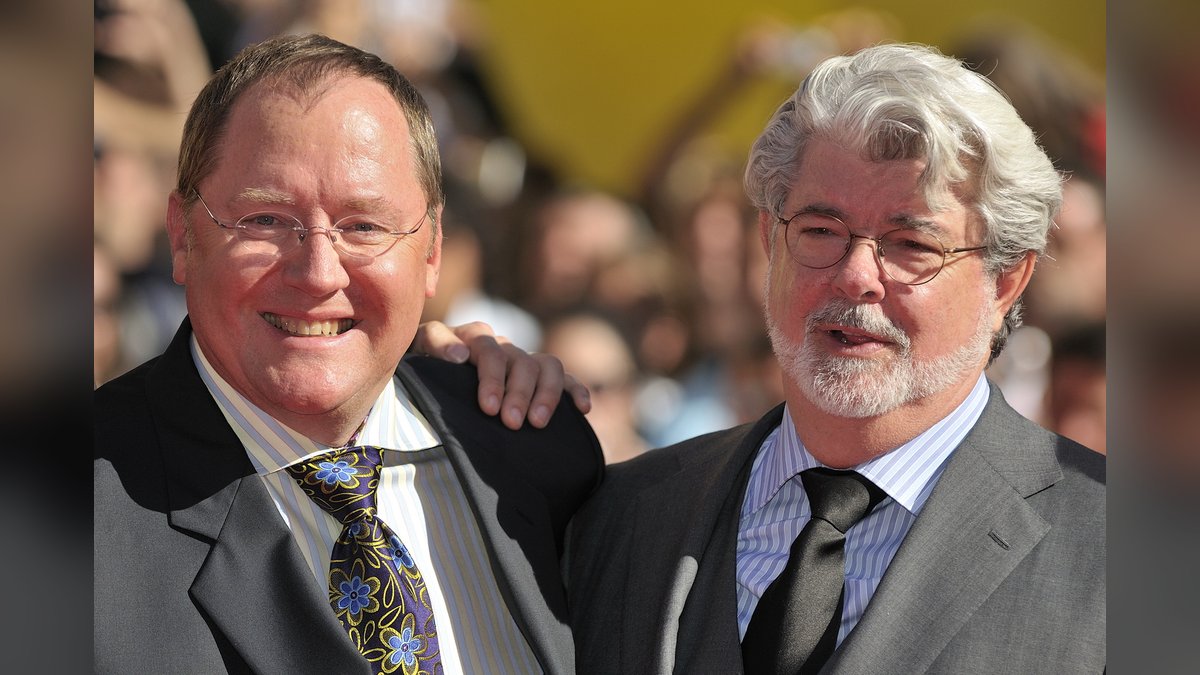
John Alan Lasseter arrived on the scene on January 12, 1957, in Los Angeles, California. While the city would become synonymous with the golden age of American animation, Lasseter’s early life unfolded in the suburb of Whittier. His roots were set by a family deeply involved in the creative and commercial worlds of the mid-century American Dream. His father, Paul Eual Lasseter, worked as a parts manager at a Chevrolet dealership, while his mother, Jewell Mae Risley, was an art teacher at Bell Gardens High School. This early exposure to artistic craft, particularly through his mother’s profession, fueled an intense, lifelong preoccupation with the art of movement and storytelling.
Even before formal training, the pull of animation was undeniable. Lasseter frequently drew cartoons during services at the Church of Christ, and as a child, he would race home from school just to watch the work of animators like Chuck Jones on television. His academic curiosity deepened through reading; in high school, he devoured The Art of Animation by Bob Thomas, a book that chronicled the history of Disney animation and explored the making of Disney’s 1959 film, Sleeping Beauty. This deep dive into Disney’s mechanics, coupled with seeing a screening of the 1963 film The Sword in the Stone, solidified a singular ambition: he wanted to be an animator.
The Apprenticeship Begins
His initial attempts at animation were self-taught and hands-on. After reading Preston Blair’s book on the subject, Lasseter began creating flipbooks based on Blair’s walk cycles. He even utilized a friend’s Super 8 camera to capture single frames for some of his earliest, rudimentary animation efforts. However, the professional trajectory required more than sheer willpower; it required specialized instruction. Upon hearing of a new character animation program at the California Institute of the Arts, or CalArts, Lasseter immediately set his sights on the dream, an ambition further encouraged by his mother.
After graduating from Whittier High School in 1975, Lasseter enrolled at CalArts, becoming the second student—following Jerry Rees—in the specialized Character Animation program, a pioneering venture created by Disney animators Jack Hannah and T. Hee. His education was steeped in the legacy of Disney’s masters, as he was taught by three members of the legendary “Nine Old Men” team: Eric Larson, Frank Thomas, and Ollie Johnston. His cohort was a gathering of future industry titans, including Brad Bird, John Musker, Henry Selick, Tim Burton, and Chris Buck. During his time at CalArts, he honed his craft to a professional level, producing two animated shorts—Lady and the Lamp in 1979 and Nitemare in 1980—both of which garnered the student Academy Award for Animation.
Even before his professional career officially launched, Lasseter gained essential on-the-job experience. During summer breaks, he began working for the Walt Disney Company at Disneyland in Anaheim, taking a role as a Jungle Cruise skipper. This seemingly simple job proved invaluable, teaching him the foundational principles of comedy and comic timing necessary to entertain captive audiences.
Early Career at Disney and the Move to Lucasfilm
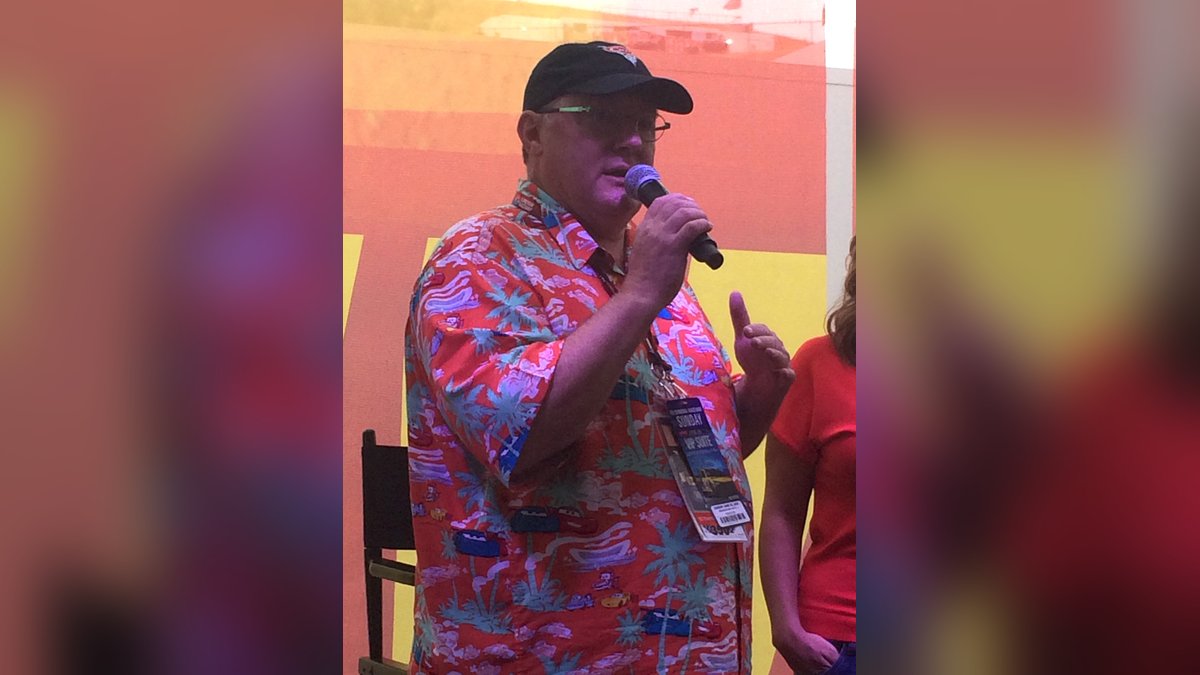
Upon graduating from CalArts in 1979, John Lasseter quickly landed a position as an animator at Walt Disney Productions. His initial success was built on his student project, Lady and the Lamp, prompting Disney animator Mel Shaw to praise his “instinctive feel for character and movement.” Lasseter continued his work within the studio, contributing to projects like “The Emperor and the Nightingale” for Musicana, a film that would eventually inform the development of Fantasia 2000. However, Lasseter grew increasingly dissatisfied with the studio’s trajectory. Believing that Disney had peaked after One Hundred and One Dalmatians (1961), he felt the studio was stagnating by repeating itself. The seeds of his technological revolution were sown between 1980 and 1981, when he encountered early video tapes showcasing rudimentary computer animation, such as floating spheres—a revelation for him.
The potential of digital media crystallized into a concrete vision shortly after. While working on Mickey’s Christmas Carol (1983), Lasseter attended a screening of Tron (1982), which featured state-of-the-art computer-generated imagery (CGI). This exposure was transformative. Lasseter realized that computers offered a way to create three-dimensional backgrounds where traditionally animated characters could interact, achieving a level of visual depth previously unattainable. He collaborated with Glen Keane, and together they developed a short test film based on Where the Wild Things Are. This project was revolutionary, but its ambition proved too great for the existing structure. The initiative was ultimately canceled by supervisors, including animation administrator Ed Hansen and head of Disney Studios Ron W. Miller, who deemed the mix of traditional and computer animation too costly. Shortly after the meeting, Lasseter was informed that his employment with the Disney Studios was terminated.
The abrupt departure forced Lasseter to seek new professional avenues. Amidst his disillusionment, he attended a computer graphics conference in Long Beach in November 1983, where he reconnected with Ed Catmull and Alvy Ray Smith at Lucasfilm. Catmull, upon learning Lasseter was not with Disney, immediately instructed Smith to hire him. Lasseter began working freelance with Catmull and his colleagues in December 1983, a period that marked his true pivot into the digital age. Their goal was to prove that character animation could be achieved entirely on a computer, resulting in the groundbreaking short, The Adventures of André & Wally B. Lasseter’s original vision had been limited to computer-generated backgrounds, but the final short featured everything—including the characters—being computer-animated. This demonstration proved that the revolutionary promise of CGI was not just for scenery, but for the entire cinematic experience.
Following the success of the test, Lasseter had hoped to direct The Brave Little Toaster at Hyperion Pictures. When funding fell through, Catmull reached out with a permanent opportunity. Lasseter joined Lucasfilm as a full-time employee in October 1984, relocating to the Bay Area. There, he spent time working closely with Catmull and the computer science researchers. Crucially, Lasseter did not just learn the software; he taught the computer scientists about art, filmmaking, and animation, thereby bridging the gap between advanced technology and the creative demands of the art form.
Pioneering CGI at Pixar Animation Studios
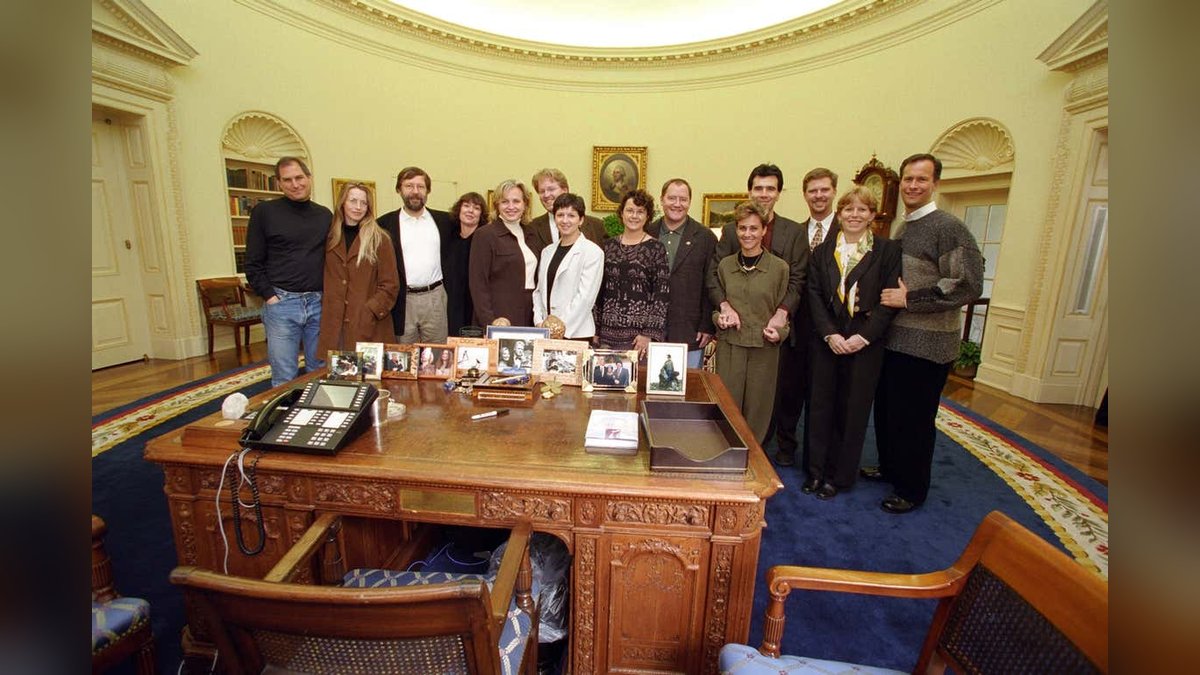
The trajectory of Lasseter’s career led him from the realm of traditional animation into the rapidly evolving world of computer graphics. His early contacts in this new domain included Alvy Ray Smith and Ed Catmull at the Lucasfilm Computer Graphics Group. A critical turning point occurred in November 1983, when Lasseter attended a computer graphics conference at the Queen Mary in Long Beach. It was there he reconnected with Catmull, who inquired about the shelved project, The Brave Little Toaster. Though Lasseter was technically fired from Disney, he was unable to disclose this fact to Catmull. Prompted by Smith, Catmull quickly arranged for Lasseter to join the group, initially for a week in December 1983.
This initial collaboration resulted in The Adventures of André & Wally B., a groundbreaking short film designed to prove the viability of character animation using computers. Lasseter’s initial vision suggested that combining hand-drawn characters with a CGI environment would suffice, but Catmull insisted that the entire experience could be digitized—a revolutionary concept nobody had attempted before. Because Catmull could not officially hire animators, he bestowed the title “Interface Designer” upon Lasseter. Throughout the spring of 1984, Lasseter spent significant time in the San Francisco Bay Area, working closely with Catmull and the team of computer science researchers. Here, he not only learned the group’s software but also taught the computer scientists the principles of filmmaking, animation, and art. The resulting short was far more comprehensive than Lasseter had anticipated, featuring entirely computer-animated characters and backgrounds.
Following the success of this short at SIGGRAPH in the summer of 1984, Lasseter joined Lucasfilm full-time in October 1984. He soon applied these new techniques working with ILM on special effects for Young Sherlock Holmes, where he created the first fully computer-generated photorealistic animated character: a knight composed of elements from a stained glass window, scanned and painted directly onto film using a laser. These early achievements laid the groundwork for the eventual creation of Toy Story (1995), the first computer-animated feature film. Eventually, due to George Lucas’s financially crippling divorce, Lucasfilm sold its computer graphics division, renaming it the Pixar Graphics Group. Smith and Catmull founded the company, with Lasseter among the founding employees, and it was spun off as a separate corporation in 1986, with Apple co-founder Steve Jobs as its majority shareholder.
Over the next decade, Pixar transformed itself from a side-project computer company into a major animation studio. Lasseter quickly ascended to oversee all of Pixar’s films and associated projects as executive producer. His directorial contributions spanned decades, including A Bug’s Life (1998), the sequel Toy Story 2 (1999), Cars (2006), and its sequel Cars 2 (2011). This era marked a profound shift in the industry, establishing CGI as the dominant force in cinematic storytelling. His pioneering work earned him an Academy Award for Animated Short Film (Tin Toy) and a Special Achievement Award (Toy Story).
Revitalizing Disney Animation Studios

When Disney announced its purchase of Pixar in January 2006, the structural power and creative mandate surrounding John Lasseter expanded dramatically. He was elevated to Chief Creative Officer for both Pixar and Walt Disney Feature Animation, the latter of which he immediately renamed Walt Disney Animation Studios. His influence did not remain confined to film; Lasseter also assumed the role of Principal Creative Adviser at Walt Disney Imagineering, where he contributed to the design of various attractions for the Disney Parks. Crucially, Lasseter’s operational authority granted him a unique reporting structure, allowing him to report directly to Disney Chairman and CEO Bob Iger, thereby bypassing traditional studio and theme park executives. This elevated position provided him with significant “green-light power” on films, pending the consent of Roy E. Disney.
The scope of his revitalization efforts was immediately apparent. In December 2006, Lasseter announced a new initiative for Disney Animation: the production of animated shorts. These shorts, which could be 2D, CGI, or a combination of both, were slated for theatrical release. He viewed this medium as a powerful tool, serving both as a testing ground for innovative techniques and a mechanism for training and discovering new talent within the company.
By June 2007, Lasseter, alongside Catmull, took control of Disneytoon Studios, a division of Walt Disney Animation Studios housed in a separate facility in Glendale. Together, they supervised three distinct production pipelines: Pixar, Disney Animation, and Disneytoon. While Disney Animation and Disneytoon were located in the Los Angeles area, Pixar maintained its separate base over 350 miles (563 kilometers) northwest in the Bay Area. To manage this sprawling, multi-site operation, the executives appointed a general manager for each studio, establishing a routine of spending at least two days per week—typically Tuesdays and Wednesdays—in Southern California.
Beyond his corporate duties, Lasseter maintained deep artistic connections. He was a longtime admirer of Japanese animator Hayao Miyazaki, having first encountered his work in 1981. After achieving success as a director and producer at Pixar, he went on to serve as executive producer on several of Miyazaki’s films for their U.S. release, overseeing the translation and dubbing of the English language soundtracks. The influence of this global cinematic admiration was visible in the canon of his work; for instance, the forest spirit Totoro from My Neighbor Totoro makes an appearance as a plush toy in the film Toy Story 3 (2010). Furthermore, his industry stature was recognized through his service on the board of governors for the Academy of Motion Picture Arts and Sciences, where he served nine consecutive years from 2005 to 2014, culminating in the role of first vice president.
Allegations, Sabbatical, and Departure from Disney
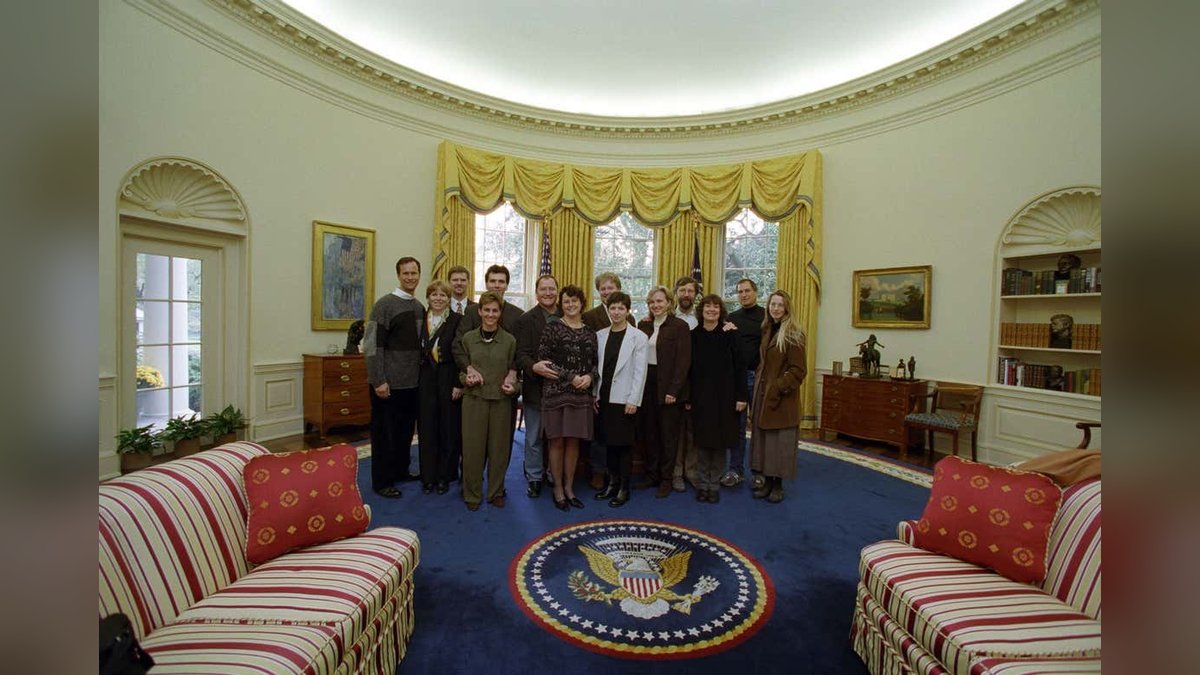
The zenith of his creative power, the period where John Lasseter was integral to revitalizing both Pixar Animation Studios and Walt Disney Animation Studios, met a sudden and profound reckoning in 2017. The narrative of the industry titan was dramatically altered by allegations of sexual misconduct. In November 2017, Lasseter was placed on a six-month leave of absence following the surfacing of claims regarding his interactions with employees. The misconduct allegations were serious, detailing behavior that included “grabbing, kissing, [and] making comments about physical attributes,” actions that reportedly made multiple employees feel uncomfortable.
The scope of the alleged behavior was described as having been widely known within the studio environment. Sources reported that, at various times, Pixar had deployed “minders who were tasked with reining in his impulses,” a detail that speaks to the systemic nature of the professional challenges Lasseter faced. In response to the mounting internal pressure, Lasseter issued a memo to staff, acknowledging the gravity of the situation. In the communication, he stated, “It’s been brought to my attention that I have made some of you feel disrespected or uncomfortable. That was never my intent. Collectively, you mean the world to me, and I deeply apologize if I have let you down.” He concluded by emphasizing his commitment to correcting his missteps, a statement that sought to reaffirm his place within the company culture.
The Departure from the Core Structure
While the immediate crisis led to a leave of absence, the separation from the corporate structure proved to be permanent. By June 2018, Disney, Pixar, and Lasseter jointly announced that he would be leaving the company entirely at the conclusion of that year. This announcement signaled a definitive end to his tenure within the core Disney/Pixar operational framework, although he would initially transition into a consulting role until the end of 2018. The sequence of these events marked a sharp and public conclusion to the chapter of his career that had seen him exert such immense creative and managerial influence over decades.
Leading the Next Generation at Skydance Animation
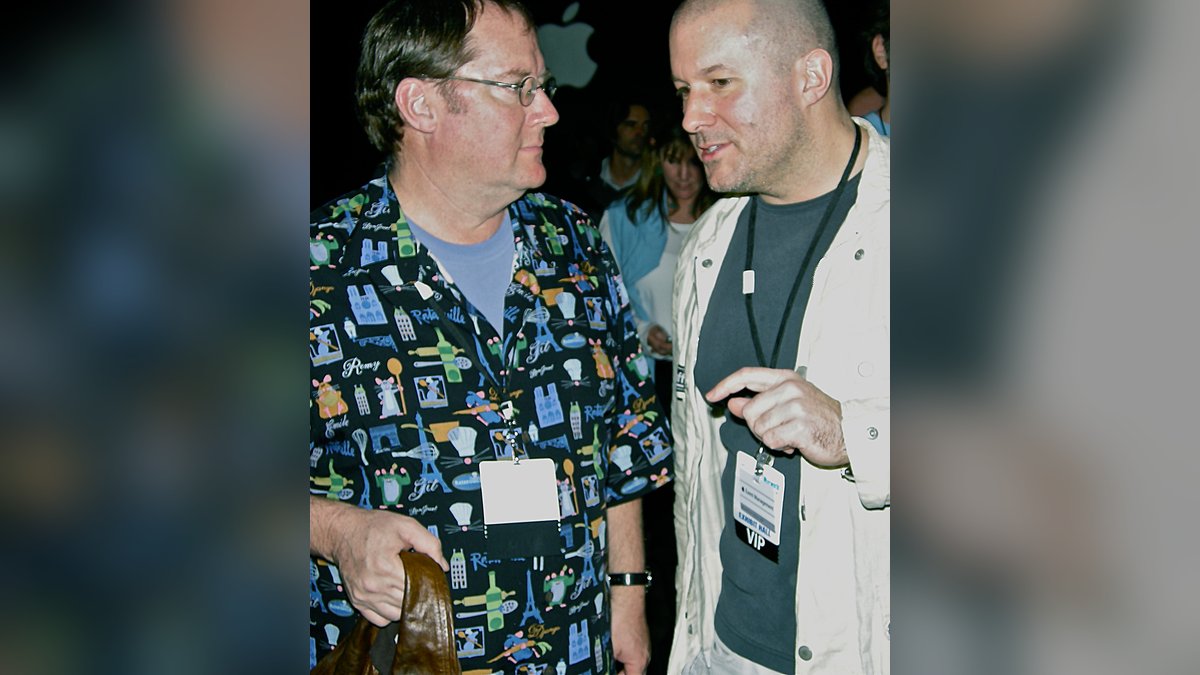
Following his departure from the Disney corporate structure, John Lasseter found a new creative home in Skydance Animation. His return to the industry was formalized on January 9, 2019, when he was hired to head the studio, which was a new animation division of Skydance Media, formed in 2017. In a statement accompanying his hiring, Lasseter addressed the past, noting that he had spent the preceding year away from the industry in “deep reflection.” He expressed deep regret for how his actions had unintentionally made colleagues uncomfortable, stating that he believed this period of introspection would make him a better leader.
The path to his leadership role was marked by a specific corporate investigation. It was reported that this inquiry found no previous claims of sexual assault, propositioning, or harassment had been filed against Lasseter. Furthermore, the investigation revealed no findings of secret settlements by either Disney or Lasseter to any parties seeking a settlement.
In his capacity at Skydance Animation, Lasseter’s mandate is vast and highly visible. He serves as producer on all feature films and executive producer on all series, a role that places him alongside Skydance Media CEO David Ellison at the helm of the company’s creative output. The studio quickly established a major streaming presence, first entering into a multiyear partnership with Apple TV in January 2021. This strategic move immediately defined the studio’s direction, leading to the release of the short film Blush in 2021, followed by the feature film Luck in 2022, and the Emmy Award-winning series WondLa spanning 2024–2025.
The studio’s global distribution strategy deepened with a multiyear deal signed with Netflix in October 2023. Under Lasseter’s oversight, the animation slate continued to expand across streaming platforms. He was responsible for overseeing the films Spellbound (2024) and Swapped (2026) for Apple TV, while simultaneously guiding the development of Ray Gunn (2026) and an untitled Jack and the Beanstalk project for Netflix. This period established Lasseter as the primary creative force navigating the complex relationship between traditional animation storytelling and modern digital distribution channels.
The culmination of this strategic planning is set for 2026. In September of that year, Lasseter was revealed as the director of Cosmic Motors, a film set to be released by Paramount Pictures. This theatrical outing marks the studio’s first wide theatrically released film following its major distribution deals with Apple TV and Netflix, solidifying his role not just as a producer, but as the chief architect of Skydance Animation’s multifaceted future.
Legacy: Financial Success and Industry Influence
John Lasseter’s professional footprint spans decades, anchoring his career in the evolution of digital storytelling. An animator and director whose active career spans from 1978 to the present, his influence has touched some of the largest cinematic enterprises in history. His professional journey has seen him contribute to major institutions, including Walt Disney Studios (spanning 1979–1983 and 2006–2018), Lucasfilm (1983–1986), Pixar Animation Studios (1986–2018), and most recently, Skydance Animation (2019–present). These roles establish him not merely as a creator, but as a foundational figure in the modern animation industry.
The measurable success accompanying Lasseter’s creative vision is staggering. His body of work has contributed to films that have grossed over $19 billion, cementing his status as a major commercial force in global entertainment. Beyond the box office receipts, his artistic contributions have been repeatedly recognized by the industry’s most prestigious bodies. His accolades include multiple Academy Awards, notably in 1989 and 1996, alongside Golden Globe Awards received in 2007. Further cementing his standing among industry titans are the Inkpot Award (2009) and Emmy Award recognition spanning 2010–2011.
A Career Defined by Innovation
From his academic roots—graduating with a BFA from the California Institute of the Arts—Lasseter has demonstrated a career marked by adaptability. His expertise spans multiple roles, including film director, producer, screenwriter, animator, and voice actor. His sustained involvement with major studios and his continued membership in the American Academy of Arts and Sciences validate his place at the apex of the creative technology sector. The totality of his work represents a critical chapter in the transition from traditional animation techniques to the advanced, photorealistic capabilities of modern computer graphics.
Final Thoughts: The Legacy of John Lasseter
John Lasseter’s career represents a profound narrative arc, tracking the evolution of visual storytelling from the hand-drawn artistry of classic Disney animation to the limitless potential of computer-generated imagery. His journey established him as a pivotal figure who not only mastered animation but also successfully bridged the chasm between advanced technology and the emotional demands of cinematic art. Key to his legacy is the pioneering work done at Lucasfilm, which culminated in the groundbreaking short, The Adventures of André & Wally B, proving that character animation could be entirely achieved using computers. Later, at Pixar Animation Studios, he guided the industry through a period of massive technological and creative expansion, earning multiple accolades, including an Academy Award in 1996.
Throughout his professional life with employers ranging from Walt Disney Animation Studios to Skydance Animation, Lasseter consistently demonstrated a refusal to accept technological limits. His ability to teach computer scientists about art and filmmaking, thereby translating creative vision into digital reality, defined an entire generation of animators and filmmakers. From his early work as a Jungle Cruise skipper teaching comic timing to leading the development of CGI blockbusters, his influence remains indelible. As the medium of animation continues its relentless march toward photorealism and immersive digital worlds, the blueprint for blending technical innovation with narrative heart, laid down by Lasseter, will continue to shape the stories of tomorrow.
Sources and Further Reading
- John Lasseter — Wikipedia (text available under CC BY-SA 4.0)
- How to tell a great toy story — theguardian.com
- John Lasseter: American Animator — britannica.com
- Pixar co-founder to leave Disney after ‘missteps — cnbc.com
- Lunch with the FT: John Lasseter — ft.com