Read this article in: Portuguese (Português) · Spanish (Español)
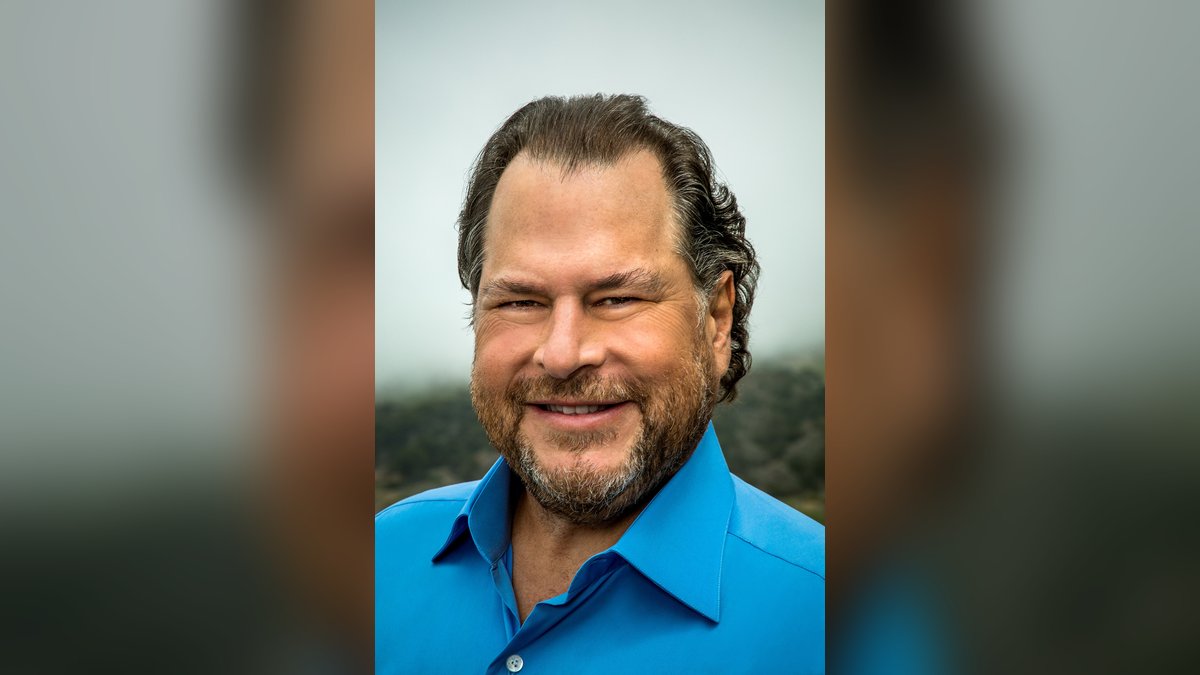
Who is Marc Benioff? Marc Russell Benioff is an American internet entrepreneur and philanthropist best known for his role as the co-founder, chairman, and CEO of the software giant Salesforce. Born on September 25, 1964, Benioff’s career trajectory spans major shifts in technology, culminating in his ownership of Time magazine starting in 2018. As a respected businessperson and technology leader, he has built a presence that extends far beyond the realm of enterprise software.
His impact on the modern technology world is profound, rooted first in his tenure at Oracle Corporation between 1986 and 1999. This foundational experience paved the way for the creation of Salesforce in 1999, a company he has led as CEO ever since. The continued growth and expansion of Salesforce have cemented Benioff’s status as a defining figure in cloud computing. His influence is further recognized by global accolades, including receiving the Knight of the Legion of Honour in 2022.
This biography will trace the arc of his remarkable career, exploring everything from his Early Life and Foundational Entrepreneurship to the defining moments of The Rise of Salesforce. We will examine his commitment to Championing Social Change through philanthropy, how he is Expanding Influence Through Investment and Thought Leadership, and what it means for a figure navigating controversy, political views, and global recognition.
Key Takeaways
- Co-founded Salesforce in 1999, revolutionizing enterprise computing by pioneering web-based CRM solutions.
- His early entrepreneurial career began in 1979, when he sold Atari games such as Flapper and King Arthur’s Heir.
- Marc Benioff established the ‘1-1-1’ model of corporate giving, dedicating one percent of time, product, and revenue to charity.
- He has been a member of the American Academy of Arts and Sciences since 2018 and serves on the Business Roundtable.
- In 2025, the Benioffs contributed an additional $100 million to support STEM education and AI literacy in the Bay Area.
Marc Benioff at a Glance
| Born | Marc Russell Benioff; September 25, 1964; San Francisco, California, U.S. |
|---|---|
| Education | University of Southern California (BS) |
| Known for | Founder, chairman and CEO, Salesforce; Co-chair and owner, Time |
| Children | 2 |
| Citizenship | United States |
| Occupation | Businessperson; Chief executive officer of Salesforce (1999–present); Chairperson; Internet entrepreneur of Salesforce; Philanthropist |
| Employer | Oracle Corporation (1986–1999); Salesforce (1999–present) |
| Positions held | Chief executive officer (1999–present) |
| Awards | Knight of the Legion of Honour (2022) |
| Owner of | Time (2018–present) |
| Net worth | $9.1 billion (2025) |
| Member of | American Academy of Arts and Sciences (2018–present) |
Early Life and Foundational Entrepreneurship
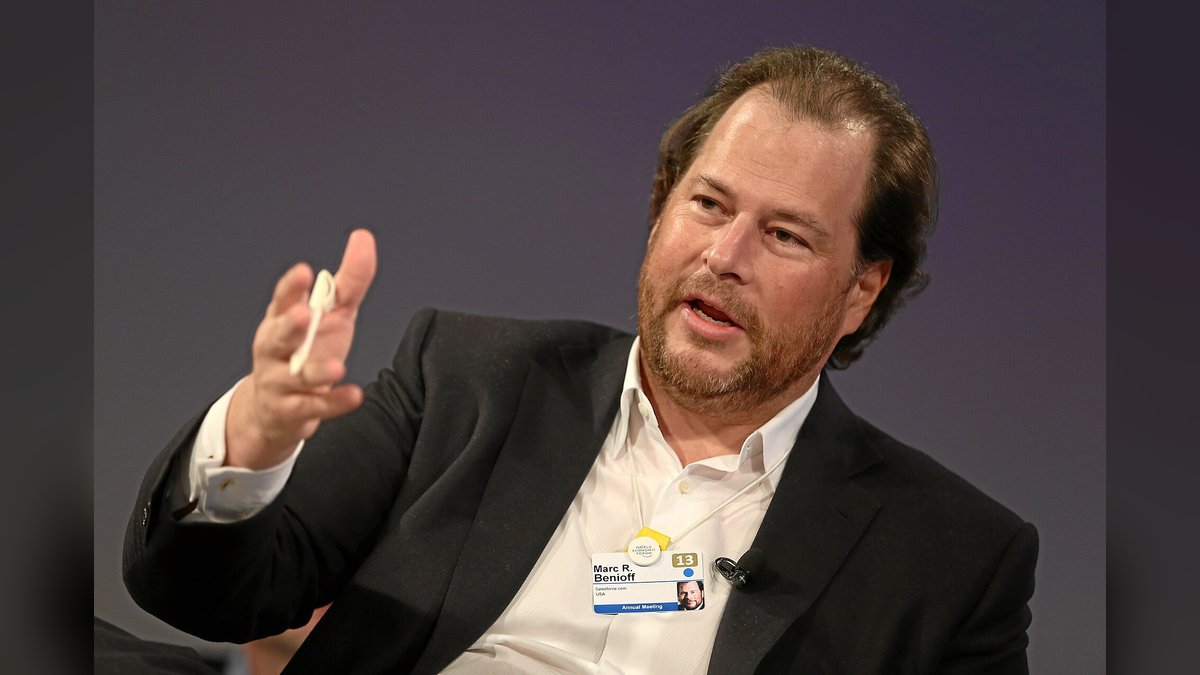
Marc Russell Benioff’s journey into the technology world began in the vibrant landscape of San Francisco, California. Born on September 25, 1964, he grew up in Hillsborough, a background rooted in a family connected to the city’s civic infrastructure; his grandfather, Marvin Lewis, was a California trial attorney and member of the San Francisco Board of Supervisors who was instrumental in championing the creation of the Bay Area Rapid Transit (BART) system. Academically, Benioff graduated from Burlingame High School in 1982 before earning his Bachelor of Science in business administration from the University of Southern California in 1986, where he was a member of the Tau Kappa Epsilon fraternity.
Even before formal college studies, Benioff displayed an early knack for entrepreneurship. While still in high school, he sold his first application, titled How to Juggle, for $75. His foundational forays into software development were cemented in 1979, when he was just fifteen years old. This led him to found Liberty Software, a venture where he created and sold games such as Flapper and King Arthur’s Heir designed for the Atari 8-bit. The royalties generated from these early titles were significant enough to help fund his college education.
The Corporate Launchpad
His technical acumen continued to develop during his university years. While at USC, he secured an internship as a programmer at Apple, where he gained practical experience writing assembly code for the Macintosh. Upon graduating, Benioff began his professional career at Oracle Corporation, initially starting in a customer-service capacity. Over the next thirteen years, he worked within Oracle across a variety of roles, gaining experience in sales, marketing, and product development. His rapid ascent within the massive corporation was marked by several accolades: at the age of 23, he was named Oracle’s Rookie of the Year, and he eventually became the youngest vice president the company had ever seen.
These early experiences—from the independent hustle of selling Atari games to the structured, large-scale environment of Oracle—forged the foundational understanding of software and business mechanics that would define the trajectory of his career.
🕒 Marc Benioff’s Early Career Milestones
- 1979 — At age fifteen, founded Liberty Software and sold Atari games like Flapper.
- 1982 — Graduated from Burlingame High School.
- 1986 — Earned a Bachelor of Science in business administration from USC.
- 1986-1999 — Worked at Oracle Corporation, gaining experience in sales, marketing, and product development.
- Age 23 — Received the Rookie of the Year award at Oracle.
Defining the Future: The Rise of Salesforce
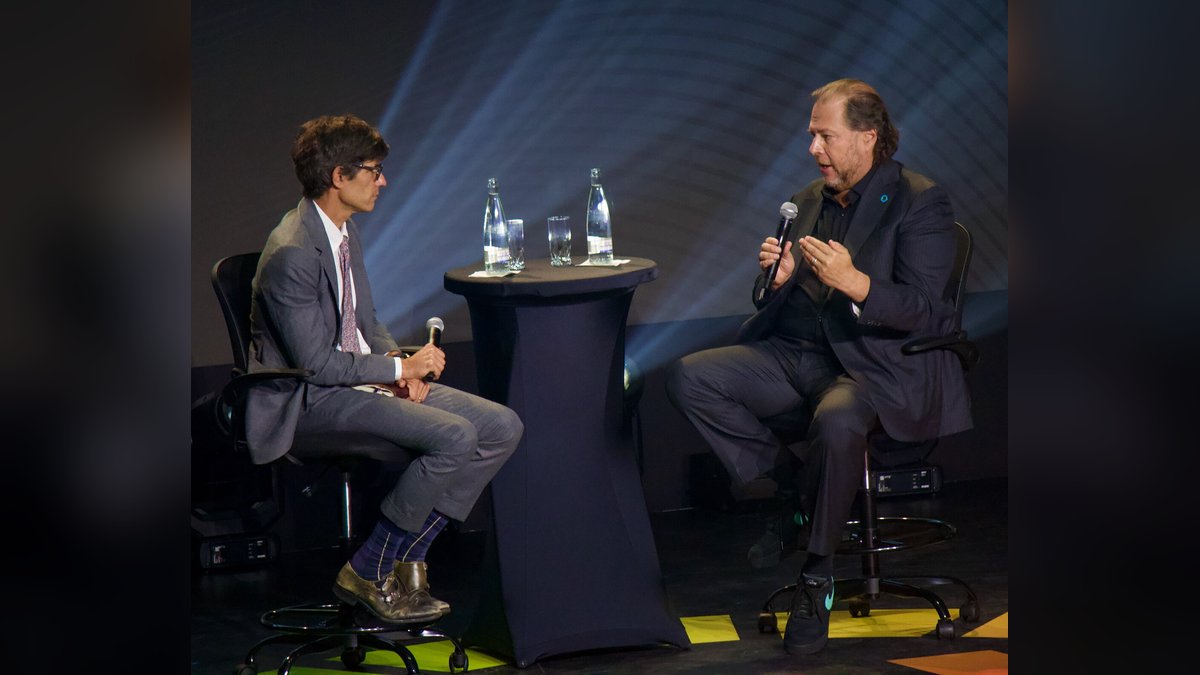
The true crucible of Marc Benioff’s entrepreneurial vision came in 1999. Working from a modest San Francisco apartment, he established Salesforce. This was not merely the launch of another software company; it was a deliberate, conceptual challenge to the existing paradigm of enterprise computing. Benioff immediately defined the company’s mission through a powerful, almost provocative marketing statement: “The End of Software.”
This slogan quickly became more than just a catchy phrase; it functioned as a guerilla marketing tactic. In the late 1990s, the market for Customer Relationship Management (CRM) software was largely dominated by solutions delivered on physical media—specifically, expensive, cumbersome CD-ROM packages. Benioff targeted this entrenched industry giant, the dominant CD-ROM-based provider, Siebel, by pointing to a fundamentally different way of doing business. He argued that the future of enterprise tools could not be bound to physical discs or outdated architecture.
In positioning Salesforce, Benioff was staking a claim on the nascent web itself. He was preaching a future where software was accessed over a network, radically changing the economics and accessibility of business tools. This early focus on the web was the foundational intellectual pillar of the company, allowing it to bypass the costly distribution and deployment headaches associated with traditional, on-premises software installations.
Pioneering the Platform Economy
As the early 2000s dawned, Benioff extended Salesforce’s scope beyond simple cloud access. He began to articulate a vision for a platform—a technology layer that would not only provide applications but would actively allow other developers to build new ones upon it. This recognition of the platform economy, where the infrastructure itself becomes the primary product, cemented Salesforce’s role as a disruptive force. By encouraging third-party development, Benioff transformed the company from a mere software vendor into an ecosystem builder, redefining what was possible in enterprise technology.
The founding of Salesforce, therefore, was less about writing code and more about selling a revolutionary concept: that software, once confined to the local machine or the physical CD-ROM, was destined for the limitless, scalable frontier of the web. This mission—”The End of Software”—provided the philosophical blueprint for the company’s explosive growth and its ability to redefine the relationship between business processes and digital technology.
📊 Salesforce’s Disruptive Shift
| Old Paradigm | Benioff’s Vision | Impact |
|---|---|---|
| Physical CD-ROM packages | Web-based access | Bypassed costly distribution |
| On-premises software | Cloud access | Changed business tool economics |
Championing Social Change: Philanthropy and Activism
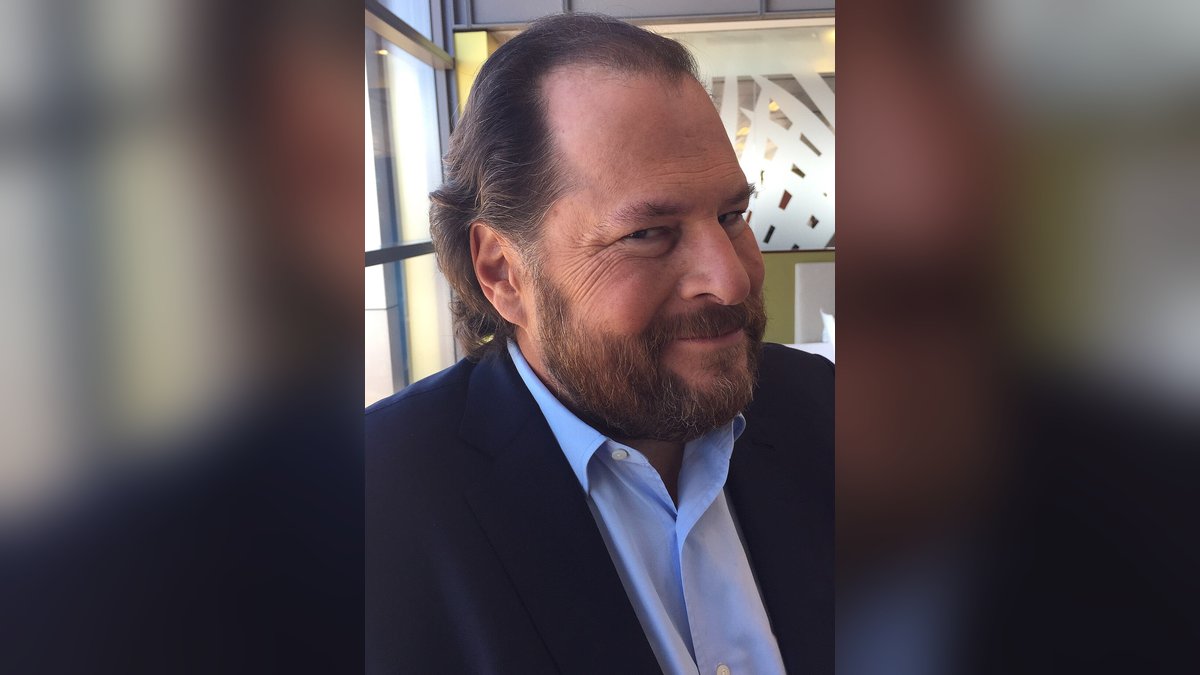
Benioff’s commitment to social change extends far beyond the architecture of enterprise software. His philanthropic efforts are marked by a structural, measurable approach, most notably through the Salesforce Foundation. This foundation formalized the “1-1-1” model of corporate giving: dedicating one percent of employee time to volunteer hours, one percent of product, and one percent of revenue to charitable causes. This concept was further popularized by the founding of Pledge 1% in San Francisco with Scott Farquhar. His giving has been both massive and highly focused. Between 2010 and 2019, the Benioffs donated a total of $275 million to UCSF Children’s Hospital, funding research and establishing the UCSF Benioff Center for Microbiome Medicine. More recently, in 2025, they contributed an additional $100 million to support facility expansion and modernization in Oakland, California, as part of a larger $139 million effort aimed at boosting STEM education and AI literacy across the San Francisco Bay Area.
When addressing systemic inequalities, Benioff has used the corporate platform to enforce change. In 2015, after the issue was raised by Salesforce chief personnel officer Cindy Robbins, he announced a review of company salaries, dedicating $8 million between 2015 and 2017 to “correct compensation differences by gender, race, and ethnicity across the company.” This proactive stance signaled that social equity was a core operational metric for the tech giant. On the front lines of civil rights, his actions were swift and decisive. In March 2015, Benioff announced that Salesforce would cancel all employee programs and travel in Indiana following the passage of the Religious Freedom Restoration Act, leading to a revised bill that prohibited businesses from denying services based on sexual orientation or gender identity. A second public challenge came in February 2016 when he announced that Salesforce would reduce investments in Georgia and cancel a conference if HB 757, a bill allowing businesses to decline services to same-sex couples, was passed.
Addressing Local Crises and Global Challenges
Benioff’s focus has also turned intensely toward community welfare and environmental preservation. His commitment to housing stability became public in 2018, when in an interview with The Guardian, he criticized other technology industry executives for “hoarding” their wealth while ignoring the plight of the homeless in the San Francisco Bay Area. Building on this concern, the Benioffs donated $30 million in 2019 to the Center for Vulnerable Populations to establish the Benioff Homelessness and Housing Initiative, a fund designed to study the complex interplay between homelessness, housing, and health. Globally, his initiatives have ranged from pledging financial backing for 1t.org to plant and conserve one trillion trees to procuring 50 million pieces of personal protective equipment for first responders during the COVID-19 pandemic. These actions demonstrate a pattern of using his platform—whether corporate, financial, or personal—to mandate systemic improvement in areas ranging from gender pay to planetary health.
📌 Key Areas of Benioff’s Philanthropic Focus
- Funding medical research, such as the UCSF Benioff Center.
- Boosting STEM education and AI literacy in the Bay Area.
- Addressing housing stability and homelessness in local communities.
- Pledging support for global environmental efforts like 1t.org.
- Championing systemic change in areas like gender pay equity.
Expanding Influence Through Investment and Thought Leadership
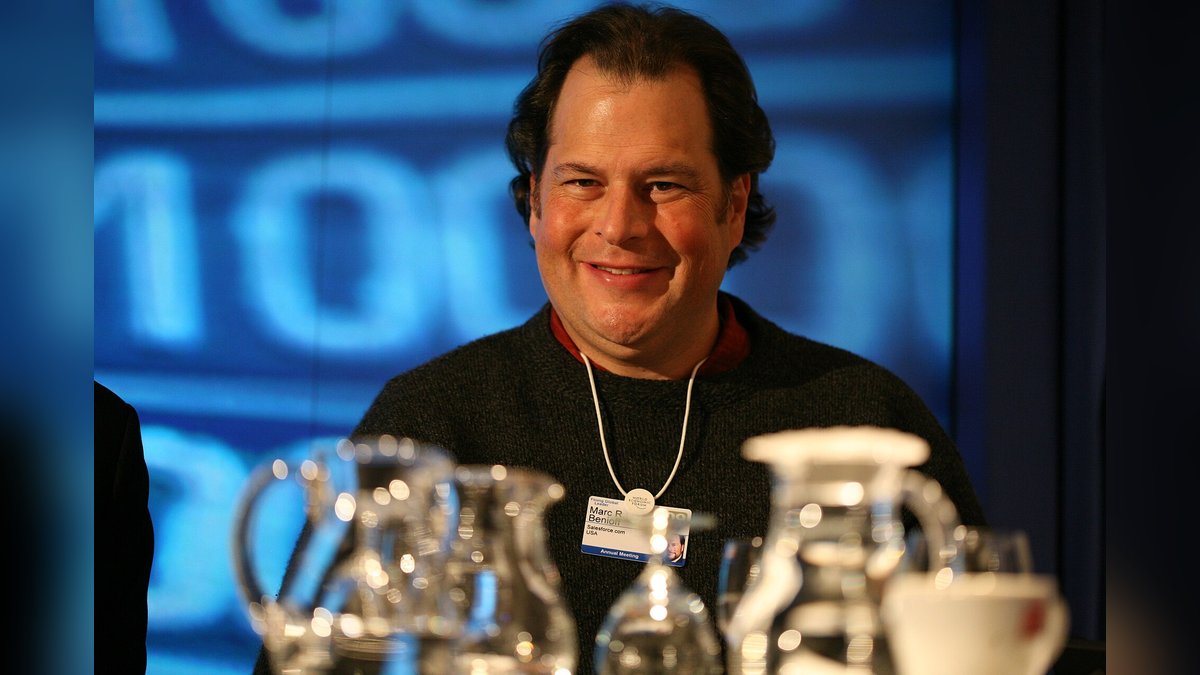
While the title of Chief Executive Officer of Salesforce remains central to his public identity, Marc Benioff’s influence has matured far beyond the operational scope of the company he founded. His commitment to shaping the technological and economic landscape of the future has manifested through strategic investments, intellectual contributions, and deep involvement in global governance structures. A key pillar of this expanded influence is his role in venture capital, most notably through Time Ventures. Established in 2019, this venture capital fund has become a vehicle for backing transformative technologies, having invested in companies such as Commonwealth Fusion Systems, Universal Hydrogen, and NCX. The fund’s reach was highlighted in 2021 when it backed two companies, Planet Labs and IonQ, to go public.
Intellectualizing Capitalism and Change
Benioff has consistently leveraged his platform to argue for a new model of corporate responsibility, a theme he has codified through his work as a co-author. His literary contributions span nearly two decades, providing a documented history of his evolving thoughts on the intersection of profit and purpose. In 2004, he co-wrote Compassionate Capitalism: How Corporations Can Make Doing Good an Integral Part of Doing Well with Karen Southwick. This was followed by a work in 2006, The Business of Changing the World: 20 Great Leaders on Strategic Corporate Philanthropy, co-written with Carlye Adler. His narrative around the company’s growth was captured in 2009 with Behind the Cloud: The Untold Story of How Salesforce.com Went from Idea to Billion-Dollar Company and Revolutionized an Industry, again alongside Carlye Adler. Most recently, in 2019, he co-authored Trailblazer: The Power of Business as the Greatest Platform for Change with Monica Langley, a book that achieved New York Times bestseller status.
📘 Venture Capital
Venture capital is a form of private equity financing provided by firms or funds to early-stage, high-potential companies. It is used to fund rapid growth and technological transformation.
Governance and Global Strategy
Beyond the confines of publishing and investment, Benioff has embedded himself within the highest echelons of global commerce and thought leadership. He serves on the board of trustees at prestigious institutions, including the World Economic Forum and USC. His active membership extends to the Business Roundtable, an influential advocacy group composed of CEOs, and The Business Council. Furthermore, his recognition within the broader intellectual community is underscored by his membership in the American Academy of Arts and Sciences, a position he has held since 2018.
His personal economic footprint reflects this sustained influence. As of February 2022, Bloomberg reported his estimated net worth at US$8.31 billion, a figure that stood at $9.1 billion in 2025. Coupled with his ownership stake in Time, which he has owned since 2018, these roles cement his status not merely as a technology founder, but as a powerful architect of modern business philosophy and capital deployment.
Navigating Controversy: Political Views and Land Ownership
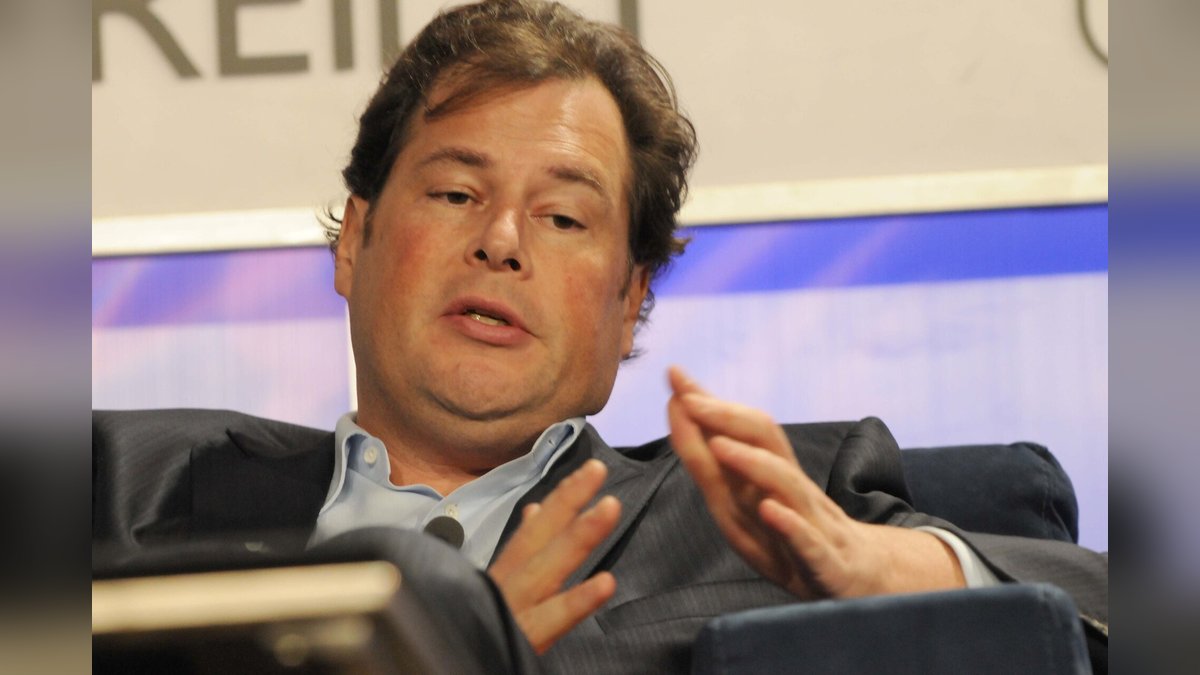
Marc Benioff’s public life is characterized by a sustained, often polarizing, engagement with civic and political issues, extending far beyond the operational scope of Salesforce. His political affiliations have been varied, including registration as both a Republican and an independent, yet he has also supported Democrats, notably hosting a fundraiser for Hillary Clinton’s 2016 presidential campaign. This fluidity was evident in 2025, when he became a visible supporter of Donald Trump. Concerns over crime in his hometown of San Francisco led him to call on Trump in October 2025 to deploy the National Guard. These statements generated significant controversy, drawing push-back from figures such as San Francisco Mayor Daniel Lurie and District Attorney Brooke Jenkins, and contributing to the resignation of Ron Conway from the Salesforce philanthropic division board. Following the uproar, Benioff issued an apology, explaining his comments stemmed from a sense of caution as the city prepared for the annual Dreamforce conference. The tension was palpable enough that Trump ultimately rescinded plans to send federal agents after Benioff and Nvidia CEO Jensen Huang requested that they not be sent.
This engagement with societal structures also extends to the digital realm. Benioff has repeatedly used his platform to critique the evolving landscape of technology and social media. In 2018, he delivered a pointed critique, stating that “Facebook is the new cigarettes,” and advocating for increased regulation. More recently, his concerns have focused on artificial intelligence. In 2026, he issued a warning about AI risks, declaring that “we cannot let AI be social media 2.0.” These statements position him not merely as an enterprise software founder, but as a persistent, vocal commentator on the ethical and societal impact of the modern digital infrastructure.
A far more tangible manifestation of his wealth and influence has been his involvement in land ownership in Hawaii. Beginning in 2022, Benioff and his wife Lynne purchased a 160-acre plot of undeveloped land. By 2024, reports indicated that his purchases had grown to exceed 600 acres, sparking local concern among Waimea residents regarding escalating housing prices. However, his actions have also included substantial philanthropic commitments. As of March 2024, a spokesperson noted that the Benioffs had donated nearly 75 percent of the land they acquired in Hawaii, including a total of 440 acres given to the non-profit Hawaii Island Community Development Corporation. Demonstrating a continued commitment to the region, in March 2025, Benioff donated $150 million to various Hawaii medical organizations, aimed at building additional facilities and linking the Hawaii Pacific Health system with other local hospitals.
Global Recognition and Personal Life
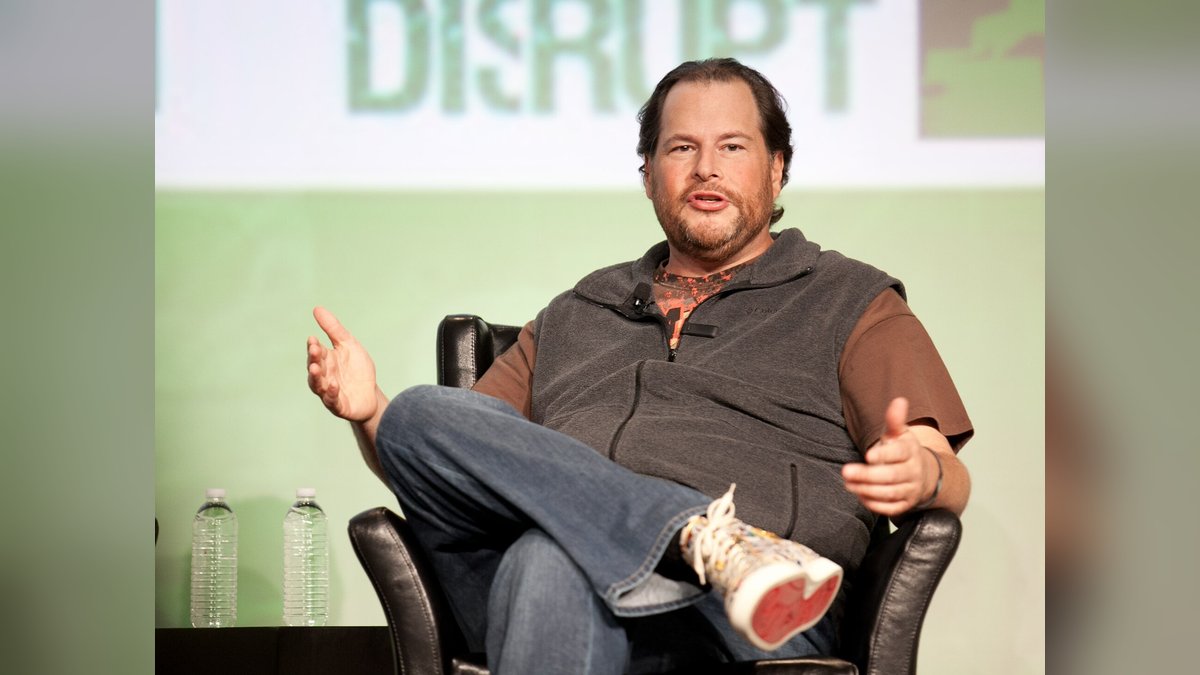
Marc Benioff’s influence extends far beyond the operational scope of the company he founded; his public life is characterized by a sustained, often polarizing, engagement with global commerce and civic structures. His recognition has been methodical and profound, accumulating accolades that span government service, global thought leadership, and industry praise. His journey began with early civic recognition, including a 2003 appointment by President George W. Bush as co-chair of the President’s Information Technology Advisory Committee. This trajectory of influence saw him named a Young Global Leader by the World Economic Forum in 2009, securing a seat on its board of trustees.
The awards following this period cemented his status as a generational leader. In 2012, he garnered attention from multiple sources, being named one of the “Best CEOs in the World” by Barron’s and receiving The Economist’s Innovation Award. This momentum continued, leading to Fortune readers voting him “Businessperson of the Year” in 2014, and later being named one of the “World’s 50 Greatest Leaders” by the same publication in 2016. His professional excellence was further validated in 2019 when he was recognized as one of the 10 Best-Performing CEOs by Harvard Business Review, and elected as a member of the National Academy of Engineering. The accolades continued through the 2020s, including the CNN Business CEO of 2020 award, and in 2022, he was appointed a Knight of the Legion of Honour by the French government and named Chief Executive’s CEO of the Year. Even into the future, in 2026, he was named to The Chronicles of Philanthropy’s Top 50 list for the 11th time, alongside receiving Yale School of Management’s Legend in Leadership award.
A Life Rooted in Community and Conscience
While his professional footprint defines his economic power, his personal life has increasingly centered on deep, tangible commitments to community welfare. Benioff and his wife, Lynne Benioff, have built a life that transitioned from San Francisco to Hawaii, where they now own several parcels of land. This ownership has drawn significant attention, particularly after reports found that he had purchased more than 600 acres in Hawaii by 2024. Recognizing the potential impact of his purchases on local housing prices, the Benioffs have acted with notable generosity. As of March 2024, a spokesperson noted that they had given away nearly 75 percent of the land purchased, including a total of 440 acres donated to the non-profit Hawaii Island Community Development Corporation. This commitment to the region culminated in a $150 million donation in March 2025 to Hawaii medical organizations, intended to build additional facilities and link the Hawaii Pacific Health system with other local hospitals.
Beyond these global and civic achievements, Benioff’s personal life is marked by a private observance of his Jewish faith, which he has publicly discussed through his practice of wearing tefillin. The accumulation of these elements—the pioneering software vision, the relentless civic advocacy, and the deep, costly commitment to land stewardship—defines a public figure whose influence successfully transcends the metrics of quarterly earnings, embedding itself instead into the fabric of global society and local community resilience.
Frequently Asked Questions About Marc Benioff
What company is Marc Benioff best known for founding?
He is best known as the co-founder, chairman, and CEO of Salesforce. The company is recognized for its disruptive approach to enterprise tools, initially challenging the physical CD-ROM market by focusing on web-based, cloud-accessed software.
What is Marc Benioff’s approach to corporate philanthropy?
His approach is structural and measurable, formalized through the ‘1-1-1’ model. This model commits one percent of employee time, one percent of product, and one percent of revenue to charitable causes. His giving has included major donations, such as $275 million to UCSF Children’s Hospital.
What are some of the major controversies or criticisms surrounding Marc Benioff?
His public engagement has been polarizing, particularly regarding civic and political issues. Controversy arose in 2025 when he called on Donald Trump to deploy the National Guard in San Francisco, leading to significant public push-back and subsequent apologies.
Where does Marc Benioff and his family primarily reside now?
However, his professional life and early background are strongly connected to the San Francisco Bay Area, where he founded Salesforce and made major philanthropic contributions.
Final Thoughts: The Legacy of Marc Benioff
Marc Benioff’s career is defined not just by the creation of a market leader, but by a persistent reframing of what technology can achieve. From his early forays selling Atari games to establishing Salesforce, he pioneered the shift away from physical media, staking a claim on the web itself by conceptualizing the cloud-based platform economy. This intellectual leap, encapsulated by the mission “The End of Software,” allowed Salesforce to redefine enterprise computing by building an ecosystem that encouraged third-party development. His influence, however, extends far beyond the architecture of business software. His commitment to social change, formalized through the 1-1-1 model, has demonstrated a pattern of using corporate platforms to mandate systemic improvement, leading to actions like dedicating millions to correct compensation differences based on gender, race, and ethnicity.
The trajectory from a programmer at Oracle Corporation to the architect of a global tech giant, and simultaneously to a major philanthropic force, solidifies a unique legacy. Benioff’s tenure has repeatedly shown that the most powerful technology is not merely code, but the mechanism for driving societal change, whether through funding STEM literacy in Oakland or advocating for civil rights. His continued work as a philanthropist and his role as a leader on the American Academy of Arts and Sciences underscore a belief that the responsibility of the tech titan extends far beyond shareholder value. As the next wave of global challenges—from climate change to AI ethics—emerge, Benioff’s model suggests that the future of technology will be defined less by its capabilities and more by the moral framework of its deployment.
Sources and Further Reading
- Marc Benioff — Wikipedia (text available under CC BY-SA 4.0)
- The Enduring Hope of Jane Goodall — time.com
- Marc Benioff — forbes.com
- Time Magazine Is Bought by Marc Benioff, Salesforce Billionaire — nytimes.com
- The rise of Marc Benioff, the bombastic owner of Time Magazine who just became Salesforce’s sole CEO, has an $8 billion — businessinsider.com