

Read this article in: Portuguese (Português) · Spanish (Español)
Who is Tobias Lütke? He is a German-Canadian entrepreneur, software developer, and racing driver best known as the co-founder and CEO of Shopify, the global e-commerce powerhouse based in Ottawa, Ontario. Born in Koblenz, West Germany, in 1980, Lütke has built a career that spans the intensely technical world of open-source software and the high-octane demands of professional motorsports. His professional life has seen him hold roles at companies such as Amazon and Shopify, establishing him as a major figure in digital commerce.
Lütke’s impact on the technology world is defined by both his commercial success and his deep commitment to open standards. He co-founded Shopify in 2006 and has been instrumental in the core development of the Ruby on Rails framework, even creating open-source libraries like Active Merchant. His financial success is notable; as of August 2025, his net worth was reported at US$12.3 billion, and in 2022, he was recognized as the 11th richest Canadian.
This biography traces the full arc of his influence, exploring his journey from his early life in Koblenz to his founding of Shopify and the Omacom Foundation. We will examine his technical foundations, his leadership defining modern digital commerce, his philosophy around free and open-source technology, and the diverse pursuits that define him today, from the racetrack to his family life.
Key Takeaways
- Lütke began his technical career in 1980 in Koblenz, Germany, with early exposure to computing hardware.
- He launched Snowdevil, an online snowboard shop, in 2004, which served as a critical proving ground for e-commerce mechanics.
- He co-founded Shopify in 2006, building a platform that fundamentally reshaped global digital commerce.
- Lütke controls a substantial 40% voting interest in Shopify despite owning only a minority of the economic shares.
- In 2026, he advocated for voting rights proportional to a citizen’s income tax payments, sparking public controversy.
Tobias Lütke at a Glance
| Born | 1980 (age 45 – 46); Koblenz, West Germany |
|---|---|
| Other name | Tobi Lütke |
| Citizenship | Canadian; German |
| Occupation | Businessman |
| Title | CEO of Shopify |
| Board member of | Coinbase |
| Spouse | Fiona McKean |
| Children | 3 |
| Awards | Meritorious Service Cross (2018) |
| Categorisation | FIA Bronze |
| Employer | Amazon; Shopify |
| Founded | Shopify (2006), Omacom Foundation (2026) |
From Koblenz to E-Commerce: Early Life and Technical Foundations

Tobias Lütke’s earliest technical exposure began far from the digital storefronts of modern e-commerce. Born in 1980 in Koblenz, Rhineland-Palatinate, Germany, his initial connection to computing arrived at a remarkably young age. At the age of six, his parents presented him with a Schneider CPC, a German brand iteration of the Amstrad Colour Personal Computer. This early hardware introduction set the stage for a rigorous technical education; after graduating from school, Lütke entered an apprenticeship program at the Carl-Benz-School in Koblenz with the goal of becoming a computer programmer. Even before the professional demands of the internet era, his interests were deeply technical, notably citing John Carmack’s .plan-files from the mid-1990s as a moment that made a “huge impression,” describing them as “a master class in systems design.”
The trajectory of his career required a significant geographic shift, moving from Germany to Canada in 2003. This move positioned him in a new professional environment, one that also provided crucial early support. Lütke came to live in the Ottawa home of his parents-in-law, Bruce and Dale McKean, retired federal public servants. This connection not only provided a low-cost living situation for the couple for approximately a decade but also supplied early seed capital to fund nascent ventures. The initial commercial application of his skills emerged in 2004 when, alongside partners Daniel Weinand and Scott Lake, Lütke launched Snowdevil, an online snowboard shop.
The Snowdevil venture served as a critical proving ground for e-commerce mechanics. For the site, Lütke was responsible for building a new e-commerce platform, developing it using Ruby on Rails. This experience proved foundational, as the founders soon pivoted their entire focus away from the physical product—snowboards—and toward the underlying mechanics of digital commerce itself. This strategic shift culminated in the launch of Shopify in 2006. The early years of building the platform demanded immense personal sacrifice; Lütke did not collect a salary from the business venture during its launch phase, relying instead on the low-cost living situation provided by his girlfriend, Fiona McKean, and her parents.
Building the Platform: The Genesis of Shopify
The path to Shopify was paved by a significant technical undertaking that solidified Tobias Lütke’s credentials as a builder. In 2004, Lütke, alongside partners Daniel Weinand and Scott Lake, launched Snowdevil, an online snowboard shop. Crucially, Lütke was not merely an administrator; he was the architect of the site’s backbone. He built a brand-new e-commerce platform for the venture, utilizing the Ruby on Rails framework. This period of deep, hands-on development established a foundational technical credibility, demonstrating his ability to translate a commercial need into a robust, scalable digital system.
The lessons learned from building the Snowdevil platform proved catalytic. Soon after the initial launch, the founding team made a strategic pivot, shifting their focus entirely from the seasonality of snowboards to the mechanics of e-commerce itself, culminating in the launch of Shopify in 2006. The commitment required for this endeavor was profound. During the critical launch phase, Lütke maintained a singular focus on the business, notably foregoing a personal salary. This dedication allowed him to live at low cost for approximately a decade while residing with his girlfriend, Fiona McKean, in her parents’ home—a testament to the early, quasi-startup sacrifices required to build a global platform.
The early success and the inherent structure of the company were carefully managed. While Shopify went public in 2015, Lütke’s involvement remained deeply structural. He currently owns 7% of the company. More telling of his enduring influence, however, is the voting structure: despite controlling a minority of the shares outstanding, he controls a substantial 40% voting interest in Shopify. This dual reality—owning a minority of shares yet commanding a majority of the voting power—underscores the foundational role he played in establishing the company’s governance and enduring technical vision.
Defining Digital Commerce: Leadership at Shopify
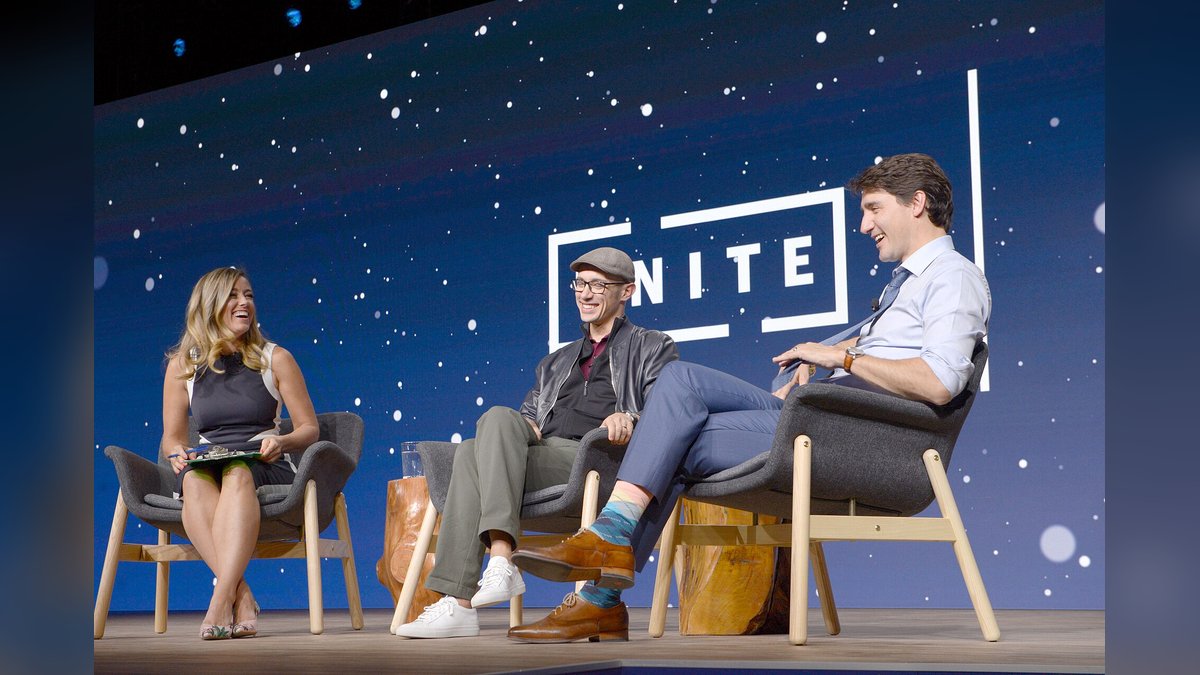
Tobias Lütke is the co-founder and current CEO of Shopify, a title that positions him at the epicenter of modern digital commerce. Having built the initial platform following the early experience of the Snowdevil online snowboard shop, the company officially launched in 2006. The platform did not merely adapt existing retail models; it fundamentally reshaped how global businesses could interact with consumers, allowing merchants to establish an online presence without needing deep technical expertise. During the critical launch phase, Lütke and his partners managed the venture while living at the low-cost home of his girlfriend, Fiona McKean, providing a foundation of stability that allowed the company to grow from its initial stages.
The scale and structure of this commercial success are defined by specific corporate milestones. After Shopify went public in 2015, Lütke retained a significant stake, currently owning 7% of the company. More telling of his structural control is the two-class voting system, which allows him to control a 40% voting interest despite holding only a minority of the economic shares outstanding. This dedication to the platform’s growth was recognized publicly; in November 2014, <The Globe and Mail> named him “CEO of the Year,” and he was later presented with the Meritorious Service Cross on November 5, 2018, acknowledging his role in supporting the growth of the Canadian technology industry.
Expanding Influence and Capitalizing on Success
Lütke’s commitment to the ecosystem extends far beyond the daily operations of the storefront. In a demonstration of both financial and personal commitment, he donated over $1 million to Team Trees in October 2019, making him the largest donor in the project’s history. His influence continues to grow through strategic investments; on September 8, 2021, he, alongside former and current Shopify top executives and Celtic House Venture Partners, invested $3 million in Creative Layer, a specialized print-on-demand platform designed to manage Shopify orders, proofs, and fulfillment. Further cementing his place in the financial elite, he joined the board of directors for the cryptocurrency exchange Coinbase on January 31, 2022.
His involvement in the tech governance sphere occasionally draws scrutiny. In July 2026, Lütke publicly advocated for a system where voting rights were proportional to the income tax paid by a citizen, proposing that those paying no tax could lose their voting rights while others could gain additional votes for every $100,000 paid in income tax. These remarks sparked widespread public controversy, particularly when the Canadian Civil Liberties Association noted the proposal could violate Section 3 of the Charter. This public stance sharply contrasted with the corporate governance structure he himself helped establish at Shopify—a 2022 “founder share” structure which grants him 40% of the company’s voting power despite his 6% economic stake.
Philosophy of Free Commerce and Open Source Tech
At the heart of Tobias Lütke’s professional ethos lies a profound and often contentious commitment to the principles of free speech within the digital marketplace. For Lütke, the infrastructure of modern e-commerce must operate as an open frontier, one where the commercial transaction takes precedence over self-appointed moral governance. This philosophical stance dictates that the tools and platforms built must serve as neutral conduits for trade, regardless of the content or political slant of the merchants operating within them.
This commitment has placed him at the center of heated industry debates regarding content moderation and platform policy. His philosophy was starkly tested in the context of Shopify’s platform content policies. Lütke has faced criticism regarding the enforcement and application of these rules, particularly when the policies were used to restrict access for specific types of merchants. He has, historically, defended the right to operate even for controversial clients, most notably hosting the far-right online tabloid Breitbart in 2017. This instance became a flashpoint, illustrating the tension between corporate responsibility and the fundamental right to commerce.
Lütke’s defense of such controversial merchants was not merely a defense of individual businesses, but a defense of the platform’s integrity against subjective censorship. When questioned about the potential removal of a merchant, he argued that such an action constituted the enforcement of a moral code. His challenge was aimed at the very definition of that code, questioning both what constituted objectionable content and, crucially, who held the authority to define it. This rigorous defense positioned him as a guardian of market freedom against what he perceived as overly zealous or ideologically driven platform governance.
This dedication to open standards and free commerce extends beyond the immediate operational policies of the storefront itself. As a co-founder of Shopify (2006) and the founder of the Omacom Foundation (2026), his career has been characterized by building systems that empower decentralized growth. While his involvement in the governance sphere occasionally draws scrutiny, his foundational belief remains that the digital economy—whether through the structures of e-commerce or the principles of open software—must remain maximally accessible and minimally dictated by centralized authority.
Navigating Controversy: From Tariffs to AI Mandates

Tobias Lütke’s professional life has been punctuated by moments where his views—whether geopolitical, corporate, or civic—have placed him at the center of intense public scrutiny. His willingness to challenge established norms has defined a controversial arc, extending far beyond the mechanics of digital commerce. One such challenge arose in 2025 concerning international trade. When President Donald Trump enacted 25% tariffs on Canadian goods, Lütke criticized the Canadian federal government’s decision to impose retaliatory tariffs on the United States. He expressed apprehension regarding escalation, noting that “hitting back will not lead to anything good. America will shrug it off.” Regarding Trump’s original move, Lütke softly described the rationale, stating that Trump believed Canada had not upheld its end of a bargain, and that the stated terms for continued cooperation included government efforts to “get the borders under control and crack down on fentanyl dens.”
The Internal Mandate and the Algorithm
If the border disputes tested his political judgment, the corporate memo of April 2025 tested his operational mandate. A memo from Lütke was leaked, revealing his demand that new hires at Shopify would only be justified if employees could demonstrate why Artificial Intelligence could not perform the tasks instead. This highly publicized, efficiency-focused declaration immediately fueled speculation among commentators. Many observers suggested that the leaked memo was less about optimizing staffing and more about addressing concerns regarding Shopify’s rapidly dropping share price. The financial pressure was palpable, and the company continued to lay off staff in the months that followed, even as share prices continued to struggle.
Challenging the Civic Structure
The most significant public controversy detailed in the sources emerged in July 2026, when Lütke ventured into the realm of civic governance. He publicly supported a proposal for setting voting rights proportional to a citizen’s income tax payments. This proposal included stipulations that individuals paying no income tax would lose their voting rights, while others could gain an additional vote for every $100,000 paid in income tax, up to a maximum of five votes per person. The remarks immediately triggered widespread public controversy. The Canadian Civil Liberties Association noted that this proposal would violate Section 3 of the Charter, which guarantees all adult Canadian citizens the right to vote. Furthermore, governance experts highlighted the stark contrast between his proposals to restrict public voting rights and his own corporate structure at Shopify. That corporate structure, established in 2022, grants him 40% of the company’s voting power through a “founder share” structure, despite him holding only a 6% economic stake.
These disparate challenges—from international trade disputes to workforce restructuring and fundamental civic rights—reveal a pattern of Lütke positioning himself as a relentless challenger of the status quo. Whether advocating for radical efficiency within a major tech platform or proposing sweeping changes to the franchise, his actions have ensured that his influence remains deeply entangled with the most contentious debates of modern American and Canadian life.
Life Beyond Code: Racing, Resorts, and Family
While the global attention often centers on the architecture of digital commerce, the life of Tobias Lütke is anchored by a steadfast commitment to physical pursuits—from the family life he built in Canada to the high-octane world of motorsports and the restoration of historic Canadian resorts. His early professional years were subsidized by a stable domestic life; during the critical launch phase of his e-commerce ventures, Lütke and his wife, Fiona McKean, resided at her parents’ home, allowing the couple to maintain a low-cost existence for roughly a decade.
This foundation of stability has allowed him to build a life rich with contrasting interests. He and McKean, a former Canadian diplomat, are parents to three children. In 2015, they channeled their efforts into restoring a piece of Ontario’s heritage: the classic summer resort lodge named Opinicon. This relaunch effort, situated near Chaffey’s Locks on the Rideau River, demonstrates a dedication to preserving tangible, physical experiences—a sharp contrast to the purely digital realm of Shopify.
The Speed and the Stability
This duality finds an exhilarating expression in his passion for racing. The thrill of competition became a significant focus, culminating in his participation in the 2025 IMSA SportsCar Championship. For the 2025 season, Lütke entered the LMP2 class, driving for Era Motorsport. His crew included co-drivers Paul-Loup Chatin, Ryan Dalziel, and David Heinemeier Hansson. This commitment to the grueling, precise demands of professional racing speaks to a disciplined focus that parallels the rigor of building a global platform.
Beyond the mechanical and the luxurious, Lütke has also demonstrated a profound sense of civic responsibility. His commitment to environmental stewardship was highlighted in October 2019, when he made a donation exceeding $1 million to Team Trees, a figure that established him as the largest donor in the project’s history. These diverse interests—the diplomatic history of the Opinicon, the competitive fire of the IMSA circuit, and the deep roots of his family life—paint a portrait of an entrepreneur whose influence extends far beyond the transactional logic of the online storefront.
Wealth, Influence, and Future Endeavors
The culmination of his entrepreneurial efforts is reflected in a financial structure that grants him significant, highly concentrated control over the digital commerce platform he helped build. While Tobias Lütke currently owns 7% of Shopify, the valuation of the company following its 2015 public listing is secondary to the unique voting power he maintains. Through the company’s two-class voting structure, Lütke controls a substantial 40% of the total voting interest. This arrangement means that even with a minority stake in the outstanding shares, his influence over the company’s strategic direction remains disproportionately powerful, cementing his position not merely as a co-founder, but as a foundational pillar of modern digital commerce infrastructure.
Beyond the balance sheet, Lütke’s impact on the industry has been repeatedly recognized by major institutions. His vision earned him accolades such as being named “CEO of the Year” by The Globe and Mail in November 2014. His commitment to the Canadian technology sector was formally acknowledged on November 5, 2018, when he was presented with the Meritorious Service Cross. His dedication to broader civic and environmental stewardship has also been highly visible. In October 2019, his philanthropic commitment reached a peak when he donated over $1 million to Team Trees, an amount that established him as the largest donor in the project’s history.
Expanding Influence and Governance
Lütke has systematically expanded his sphere of influence by engaging with the broader financial and technological governance landscape. This expansion included a major investment in 2021; on September 8, 2021, he, alongside former and current Shopify top executives and Celtic House Venture Partners, jointly invested $3 million in Creative Layer. This investment targeted the creation of a global personalized print-on-demand platform designed to manage everything from Shopify orders and proofs to fulfillment processes. Further solidifying his role as a key figure in the digital economy, on January 31, 2022, Coinbase, the cryptocurrency exchange, announced his appointment to its board of directors.
Looking toward his enduring legacy, Lütke’s profile is defined by a sustained commitment to both market leadership and global betterment. The formal establishment of the Omacom Foundation in 2026 illustrates his intent to shape his influence beyond commercial success. His life trajectory—from the initial launch of Snowdevil in 2004 to his current role as CEO of Shopify—paints the picture of a figure whose impact extends far beyond the code. His accumulated recognition, coupled with his active board seats and philanthropic endeavors, solidifies his status as a major, multi-faceted global figure in the technological age.
Frequently Asked Questions About Tobias Lütke
What is Tobias Lütke’s primary role and what company is he associated with?
Tobias Lütke is a German-Canadian entrepreneur and businessman. He serves as the co-founder and current CEO of Shopify, a major e-commerce company based in Ottawa, Ontario, Canada. He also holds a board membership with the cryptocurrency exchange Coinbase.
How did Tobias Lütke begin his career in e-commerce?
Lütke began his e-commerce career in 2004 by launching Snowdevil, an online snowboard shop. He was responsible for building the entire e-commerce platform using the Ruby on Rails framework. This foundational experience led the founders to pivot their focus entirely to digital commerce.
What are some of the major controversies or policy debates Tobias Lütke has been involved in?
He has been involved in debates regarding platform policy, defending free commerce by hosting controversial merchants. More recently, in 2026, he publicly supported a proposal making voting rights proportional to a citizen’s income tax payments, which drew widespread criticism.
Does Tobias Lütke have any interests outside of technology and business?
Yes, Lütke is a racing driver, competing in the 2025 IMSA SportsCar Championship. His philanthropic interests include donating over $1 million to Team Trees in October 2019. He is also married to Fiona McKean and has three children.
What is Tobias Lütke’s estimated net worth as of 2025?
As of August 2025, Tobias Lütke’s estimated net worth was US$12.3 billion. This figure reflects his significant financial influence and ownership stake in technology and e-commerce ventures, particularly his foundational role at Shopify.
Final Thoughts: The Legacy of Tobias Lütke
Tobias Lütke’s career trajectory maps the evolution of digital trade itself. From building the initial e-commerce platform for Snowdevil—a foundational exercise in Ruby on Rails—to co-founding Shopify in 2006, his influence has been defining. He did not just build a successful marketplace; he architected the infrastructure that allowed global commerce to operate outside the confines of traditional brick-and-mortar retail. His dedication to the open nature of the platform is crystallized in his structural control, where he commands a 40% voting interest despite owning only a minority of the economic shares, underscoring his enduring technical and philosophical stewardship over the company’s destiny.
This commitment to free commerce—the idea that the marketplace must be a neutral conduit—has placed him at the heart of modern debates surrounding platform governance, drawing him into the financial elite through roles like his board membership at Coinbase. Whether through donating over $1 million to Team Trees or guiding strategic investments, Lütke’s footprint extends far beyond the code. He has proven himself not merely a visionary founder, but a foundational figure whose principles continue to dictate the rules of engagement for every merchant worldwide.
As the digital economy continues to mature, the central tension between open access and centralized control remains the defining challenge, ensuring that the architecture Lütke helped build will continue to shape how human commerce unfolds in the decades to come.
Sources and Further Reading
- Tobias Lütke — Wikipedia (text available under CC BY-SA 4.0)
- Tobi Lutke — forbes.com
- Shopify employees found a noose emoji uploaded to Slack. Its CEO then silenced internal discussions — businessinsider.com
- Shopify CEO defends hosting Breitbart in the name of free speech — techcrunch.com
- Tobias Lutke, CEO, Shopify at Business of Software 2011 — businessofsoftware.org
- Official website