Read this article in: Portuguese (Português) · Spanish (Español)
If you’re looking for a deep dive into the history and most memorable titles of the handheld universe, this article is the ultimate guide to the 50 best games for Nintendo Game & Watch. The Game & Watch series wasn’t just a console; it was a cultural phenomenon that revolutionized the concept of pocket electronic entertainment. Launched by Nintendo R&D1, this pioneering line of games captured the imagination of generations, turning spare time into pure digital fun. Get ready to revisit the classics that defined the genre and that remain milestones in video game history even today.
The relevance of the Game & Watch is undeniable and monumental. The series, which first launched on April 28, 1980, was a massive success, selling a total of 43.4 million units globally. The devices, which used liquid crystal displays and were manufactured until 1991, not only popularized portable gaming but also established design standards that influenced future generations. The success was so great that the game Donkey Kong, one of the most acclaimed titles, sold 8 million copies alone, a number that attests to the cultural impact and technical sophistication of the era.
Throughout the following pages, we will take a nostalgic and educational journey through the games that defined the era. We will explore the architecture and engineering behind these devices, analyze the vast diversity of genres—from platformers to puzzles—and, most importantly, detail the rigorous selection criteria that made these 50 titles the best. It is a complete tribute for anyone who wants to understand the legacy and magic of Nintendo’s portable classics.
Key Facts
- Sold a monumental total of 43.4 million units globally, establishing Nintendo in the portable market.
- The series’ best-seller was Donkey Kong, which achieved sales of 8 million units on its own.
- Launched on April 28, 1980, the device utilized low-cost liquid crystal displays (LCD).
- The invention of the D-pad (directional pad) was crucial, influencing the design of iconic consoles.
- The design philosophy was ‘lateral thinking with aging technology,’ reusing mature components.
Nintendo Game & Watch in summary
| Alternate Name | Tricotronic (West Germany, Austria); Time-Out (North America) |
|---|---|
| Developer | Nintendo R&D1 |
| Manufacturer | Nintendo |
| Type | Portable video games |
| Generation | Second |
| Release Date | April 28, 1980 |
| Introductory Price | ¥5,800 (equivalent to ¥8,595 in 2024) |
| Discontinued | 1991 |
| Units Sold | 43.4 million |
| Best Seller | Donkey Kong (8 million) |
| Successor | Game Boy |
| Manufactured In | Japan |
The History and Architecture of Game & Watch

The history of the Game & Watch is a fascinating case study in reverse engineering and creativity, stemming directly from Gunpei Yokoi’s design philosophy. The designer, who worked at Nintendo Research & Development 1 (R&D1), conceived the revolutionary idea during a high-speed train ride on the Shinkansen. He observed a bored businessman in a public place using a small, discreet pocket device to pass the time. This observation sparked the concept of a compact and elegant toy for adults that could be used anywhere without drawing attention.
At the time, Nintendo was facing financial difficulties, and Yokoi and his team encountered advanced but expensive technologies, such as VFD or LED displays, which were too large for the desired form factor. The major breakthrough came with the realization that liquid crystal displays (LCDs), popular in calculators, were small, efficient, and low-cost. This finding gave rise to Yokoi’s philosophy: “lateral thinking with withered technology.” Instead of inventing technology from scratch, he repurposed mature and accessible components, such as the SM5xx family of microcontrollers from Sharp, to create portable gaming devices the size of a calculator.
The Evolution of Portable Architecture
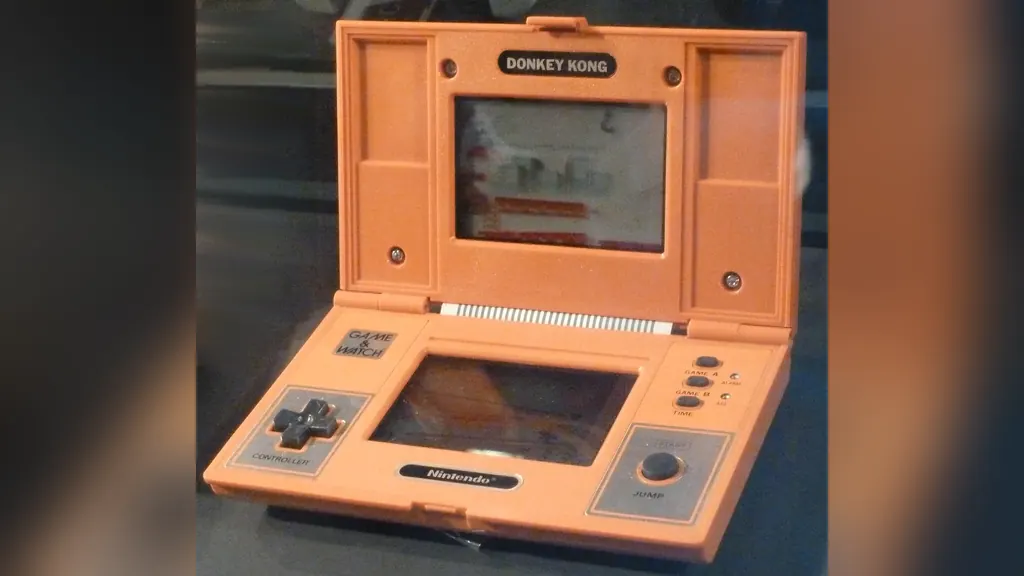
The launch on April 28, 1980, with the Silver model, marked the beginning of an unprecedented successful line. The Game & Watch architecture rapidly evolved to accommodate more complex games. Initially, the Gold models (1981) added an alarm clock function, making the device practical. Over time, the challenge of adapting arcade games demanded major innovations. The transition to the Multi Screen format, which used up to two LCD panels (as in the Vertical and Horizontal Multi Screen series), allowed for the creation of richer experiences. It was in this context that adapting the popular game Donkey Kong forced the invention of a control that had previously been unfeasible in a pocket format: the famous D-pad. This simple and discreet cross directional pad became a design standard that would directly influence the development of iconic consoles, such as the NES and the Game Boy.
Global Impact and Legacy
The commercial impact of Game & Watch was monumental. Although Yokoi initially had sales targets of 100,000 units, global demand was overwhelming, resulting in the sale of 43.4 million units. This success not only catapulted Nintendo, helping the company pay off debts that, before the launch, totaled between 7 and 8 billion yen, but also established the company’s first major global hit with a video game product. The line, which produced over 60 titles over its eleven years of existence, paved the way for its more famous successor: the Game Boy. If you’re looking to relive the magic of portable systems, it’s worth checking out the Game Boy Advance SP classics. Game & Watch wasn’t just a series of games; it was an innovation laboratory that defined the format of portable entertainment for decades to come.
The Diversity and Genres of the Game Catalog

The Game & Watch catalog was a true ecosystem of portable entertainment, demonstrating surprising adaptability for such a technologically restricted device. Over its nearly two decades of existence, Nintendo produced more than 60 distinct titles, spanning a vast range of genres, from frantic action and clever puzzles to rhythm games and sports simulators. The richness of the catalog was not limited to quantity, but to how the games incorporated characters from other franchises—such as those from The Legend of Zelda and Mario Bros—and even licensed external brands, like Mickey Mouse, ensuring the platform was a cultural and playful meeting point.
The Evolution of Formats and Genres
To support this diversity, the Game & Watch hardware underwent constant evolution in both its physical form and functionality. Early models, such as the Silver (1980), were followed by refinements like the Gold (1981), which added features like an alarm clock and colored static backgrounds. Starting in 1982, the catalog expanded drastically with new formats that allowed for richer visual experiences. The Wide Screen emerged, and later, multi-screen models, such as the Vertical Multi Screen (1982–1989) and the Horizontal Multi Screen (1983). These structural advances allowed developers to create more complex games, like the titles for Super Color (1984), which used long LCD panels with color overlays, or the Micro Vs. System, which even supported two-player games with external controllers.
The Game & Watch didn’t limit itself to simple arcade remakes. While some titles were tributes to classics, many were original creations that demanded unique mechanics. The platform was a design laboratory, adapting itself to be a device for action, strategy, and quick thinking, proving that technological limitation actually fostered creativity.
Gameplay Depth: Game A and Game B
One of the most fascinating aspects of the gaming experience was the dual mechanic present in many titles, represented by the “GAME A” and “GAME B” buttons. Most often, “GAME B” offered a significantly more challenging and faster version of “GAME A.” The goal was to increase difficulty and speed progressively. However, this rule was not absolute, and developers created unique variations to maintain novelty. For example, in Squish, “GAME B” was not just harder, but radically different, requiring the player to touch aliens to eliminate them, rather than just dodging walls. In Flagman, “GAME B” transformed the game into a quick reaction mode, demanding the pressing of a specific button within a given time limit.
Furthermore, the platform was extremely adaptable for multiplayer mode. Several titles, such as Judge, Boxing, Donkey Kong 3, and Donkey Kong Hockey, used “GAME B” to transform the experience into a competitive two-player showdown; for those looking to relive this era, checking out the best games for Game Boy Advance is worthwhile, showing that the nostalgia for classic portable games came accompanied by rich and multifaceted gameplay.
Selection Criteria: Why These 50 Games Are the Best
The selection of the 50 best games for Nintendo Game & Watch was not an exercise in mere nostalgia, but rather a rigorous editorial curation, based on criteria that validate cultural relevance, design engineering, and catalog longevity. For this list to establish itself as a definitive guide, it was necessary to analyze the lasting impact of each title, from the 1980s classics to modern re-releases, such as the best games for Game Boy Advance SP.
Cultural Influence and Commercial Appeal
The first pillar of our analysis lies in cultural influence and commercial success. Many of the listed titles not only entertained but defined entire genres in the handheld universe. Proof of this impact is visible in the sales data: the Game & Watch achieved a monumental total of 43.4 million units sold. Within this success, titles like Donkey Kong stand out as true sales phenomena, being the best-seller with 8 million units. These numbers not only attest to the popularity but confirm the role of these games as milestones in a market that was being redefined.
Mechanical Innovation and Adaptability
Another fundamental criterion is innovation. Due to its restricted architecture, the Game & Watch was forced to be a laboratory of creative solutions. This is evident in the dual button mechanism, the “GAME A” and “GAME B.” In many cases, GAME B featured a more difficult or faster version of GAME A, such as in Donkey Kong 3, or, in exceptions like Squish, it was radically different, requiring the player to touch aliens instead of just dodging walls. This mechanical complexity, combined with the hardware’s ability to evolve—as seen in re-releases for the Nintendo DS, with compilations like Game & Watch Collection (2006-2010) and games for the DSi Ware—demonstrates the platform’s ingenious adaptability.
Replayability and Timelessness
Finally, the list values replayability and fun that have stood the test of time. A game’s ability to remain fun decades after its release is the ultimate test for any classic. The recognition of this is proven by re-releases celebrating major franchises. Nintendo, for example, celebrated the 35th anniversary of iconic titles with limited editions and modern versions. We see this clearly with the announcement of Game & Watch: Super Mario Bros. in 2020 and the release of Game & Watch: The Legend of Zelda in 2021. These concrete examples prove that the mechanics and magic of the original games possess an undeniable timelessness, ensuring that the 50 selected titles remain relevant and fun for the modern audience.
The 39 Best Games for Nintendo Game & Watch
1. Ball (NA: Toss-Up )
Year: 1980 | Genre: Action
Released on April 28, 1980, Ball is a title from the Silver series that marked the evolution of portable games of the time. This game is a classic that captures the essence of arcades on a compact screen, demanding precision and quick reflexes from its players. Although its sales fell below 250,000 units, it stands out for its minimalist design and addictive gameplay. It established a standard of gameplay that would be replicated by many successors, making it an important milestone for the Nintendo Game & Watch.
2. Flagman (NA: Flag Man )
Year: 1980 | Genre: Sports/Action
Flagman, released on June 5, 1980, belongs to the Silver series and offers a different gaming experience, focused on action and strategy. Although its sales were modest, falling short of 250,000 units, it is revered for its unique mechanics. The game is an excellent example of how Nintendo adapted arcade experiences for the portable format. It stands out for its gameplay, which demands more planning than mere reflexes, offering a more tactical challenge to players of the time.
3. Vermin (NA: The Exterminator)
Year: 1980 | Genre: Action/Survival
A true sales success, Vermin was released on July 10, 1980, and belongs to the Silver series. This title is one of the bestsellers, with estimated sales exceeding 1,000,000 units, which attests to its commercial appeal and gameplay. The game is distinguished by its intense atmosphere, placing the player in the role of an exterminator. Its popularity is due not only to its addictive gameplay but also to its robust design, making it one of the cornerstones of the Game & Watch’s initial catalog.
4. Fire (NA: Fireman Fireman)
Year: 1980 | Genre: Action/Rescue
Released on July 31, 1980, Fire is a Silver series title that captivates the player with a rescue theme. With estimated sales between 250,000 and 1,000,000 units, it demonstrates the public’s great interest in the “save the day” mechanic. What makes Fire special is the combination of fast action with the satisfaction of solving a complex problem. It is a perfect example of how Nintendo managed to translate the emotion of a major event into a portable format, marking a success milestone for the platform.
5. Judge
Year: 1980 | Genre: Action/Crime
Judge, released on October 4, 1980, belongs to the Silver series and features a theme of justice and confrontation. Despite having sales below 250,000 units, it is valued for its graphic style and gameplay that requires quick thinking. It represents a different facet within the initial catalog, moving away from more purely physical themes. The game is an example of how Nintendo explored different action genres while maintaining a focus on the compact and engaging experience typical of the Game & Watch.
6. Manhole
Year: 1981 | Genre: Puzzle/Action
A huge success, Manhole was released on January 29, 1981, and is part of the Gold series. With estimated sales of over 1,000,000 units, it established itself as one of the platform’s most popular titles. The game is an excellent action puzzle, requiring the player to explore and manipulate the sewer environment. What sets Manhole apart is its intelligent gameplay and its ability to hook the player in an engaging mystery, proving the versatility of the Nintendo Gold series.
7. Helmet (UK: Headache)
Year: 1981 | Genre: Action/Puzzle
Released on February 21, 1981, Helmet belongs to the Gold series and was a sales phenomenon, surpassing one million units. This title is a classic due to its simultaneous puzzle and action gameplay. It requires the player to use the central object (the helmet) in creative ways to advance. Helmet is one of the best examples of how Nintendo combined a strong theme with challenging mechanics, keeping the player engaged in a constant and addictive challenge.
8. Lion
Year: 1981 | Genre: Adventure/Action
Lion, released on April 29, 1981, is a Gold series title that transports the player to a wild adventure setting. Although its sales were lower, falling below 250,000 units, it is valued for its design and the powerful theme of the lion. The game stands out for its epic atmosphere and gameplay that simulates hunting and survival. It represents the Game & Watch’s ability to create immersive experiences, even in such a small and portable format.
9. Parachute
Year: 1981 | Genre: Platformer/Action
Released on June 19, 1981, Parachute is a Wide Screen series title, notable for its wider screen format. With estimated sales between 250,000 and 1,000,000 units, it is a milestone for its enhanced platforming gameplay. The game is challenging, requiring the player to master parachute physics and precise movement. Parachute is a notable example of how Nintendo expanded the platform’s visual capabilities, offering a richer and more visually impactful experience.
10. Octopus
Year: 1981 | Genre: Puzzle/Action
Octopus, released on July 16, 1981, belongs to the Wide Screen series and shares sales success with Parachute, with estimates between 250,000 and 1,000,000 units. This title is an action puzzle that plays with the multifaceted nature of the octopus. It stands out for its engaging gameplay, which requires the player to use the tentacles strategically to solve mysteries. It was one of the successes of the Wide Screen series, proving Nintendo’s versatility in creating complex and highly playable titles.
11. Popeye
Year: 1981 | Genre: Action/Arcade
Released on August 5, 1981, Popeye is a milestone in the Wide Screen series. The game allows players to relive the sailor’s adventure, using the character’s characteristic powers in a portable arcade format. With estimated sales between 250,000 and 1 million units, it demonstrates the lasting appeal of the comic book universe. The highlight of this title is the faithful adaptation of Popeye’s classic action for an electronic device, making it one of the platform’s first large-scale successes.
12. Chef
Year: 1981 | Genre: Simulation/Cooking
Chef, released on September 8, 1981, was a massive success, selling over 1 million units. Part of the Wide Screen series, this title moved away from the action genre, immersing the player in the delicate simulation of a professional kitchen. Players must prepare dishes in sequence, managing both time and food quality. What makes Chef special is its ability to attract a wider audience, showing that the Game & Watch could be more than just combat, but also a laboratory of creative entertainment.
13. Mickey Mouse
Year: 1981 | Genre: Platformer/Adventure
With its release on October 9, 1981, Mickey Mouse capitalized on the appeal of one of pop culture’s most recognizable characters. Part of the Wide Screen series, this game places the iconic character in a platform adventure, requiring jumps and the overcoming of obstacles. Sales, estimated between 250,000 and 1 million units, attest to its commercial success. The title is an excellent example of how Nintendo managed to combine nostalgia with refined gameplay, ensuring that the character’s classic charm was the main driver of the game.
14. Egg
Year: 1981 | Genre: Puzzle/Arcade
Released on October 14, 1981, Egg is a Wide Screen series title that challenges players with a format more focused on puzzles and simple mechanics. Although its sales were lower than 250,000 units, it is valued for its captivating and accessible gameplay. The game requires quick thinking to manipulate the screen elements and achieve specific objectives. Its highlight lies in proving that the depth of the Game & Watch was not only in action, but also in the ability to create compact and addictive intellectual challenges.
15. Fire
Year: 1981 | Genre: Action/Arcade
The game Fire, released on December 4, 1981, is a Wide Screen series classic, focused on direct action and combat. It places the player on a journey where they must use fire to defeat enemies in a constantly challenging setting. With estimated sales between 250,000 and 1 million units, the title maintained the standard of arcade excellence of the time. What sets it apart is its fluid and balanced difficulty, offering players an intense and addictive experience that became synonymous with Nintendo’s portable fun.
16. Turtle Bridge
Year: 1982 | Genre: Puzzle/Platformer
Released on February 1, 1982, Turtle Bridge was a sales success, surpassing the 1 million unit mark. This Wide Screen series title is an engaging puzzle where the objective is to guide turtles across moving bridges. The game demands planning and observation of the obstacles’ rhythm. Its major selling point is the combination of platform mechanics with puzzle logic. It is a title that proves the versatility of the Game & Watch, being fun and challenging for all ages.
17. Fire Attack
Year: 1982 | Genre: Action/Arcade
On March 26, 1982, Fire Attack hit the market, reinforcing the success of the Wide Screen series with an intense action game. This title, with sales exceeding 1 million units, places the player in thrilling confrontations, using fire attacks to survive. It is acclaimed for its fast gameplay and vibrant graphics, maintaining the fast pace that arcade fans love. The highlight of this game is its ability to maintain tension from start to finish, making it a perfect test of reflexes and coordination in a compact format.
18. Snoopy Tennis
Year: 1982 | Genre: Sports
Snoopy Tennis, released on April 28, 1982, is a Wide Screen series sports title that pays tribute to Snoopy in a competitive setting. The game allows players to simulate tennis matches, requiring precision in positioning and reaction time. With sales between 250,000 and 1 million units, it was a niche success. What makes it special is its lightness and nostalgia. It proves that the Game & Watch could be a great vehicle for sports fun, being accessible and extremely fun to play anywhere.
19. Oil Panic
Year: 1982 | Genre: Puzzle/Strategy
Released on May 28, 1982, Oil Panic is a notable title for belonging to the Vertical Multi Screen series. This puzzle and strategy game requires the player to manage the flow of oil in a complex environment. With sales between 250,000 and 1 million units, it demonstrates the platform’s technical sophistication. Its major selling point is the combination of strategic elements with an extended vertical screen format. It is a game that stimulates logical reasoning, marking a milestone in the genre diversity of the Game & Watch.
20. Donkey Kong
Year: 1982 | Genre: Platform/Action
Donkey Kong, released on June 3, 1982, is the pinnacle of the Vertical Multi Screen series and a sales phenomenon, reaching 8 million units. This platform game places the player in an exciting race to save Pauline from Donkey Kong. Its highlight lies in the grandeur of the gameplay and the enormous commercial success. The jumping and dodging mechanic, combined with the challenge of multiple levels, set a standard of excellence. It is one of the best-selling and most iconic titles in the history of the Game & Watch.
21. Mickey & Donald
Year: 1982
Released on November 12, 1982, Mickey & Donald is a milestone in the history of portable games. Belonging to the Vertical Multi Screen series, this title captivated millions of players, registering estimated sales between 250,000 and 1,000,000 units. The game is a fun tribute to the iconic duo, combining Disney nostalgia with the challenging gameplay typical of the Game & Watch. What sets it apart is its ability to integrate popular characters into an innovative and portable format, setting a standard of success for the platform and making it an essential collector’s item.
22. Green House
Year: 1982
Green House, released on December 6, 1982, is part of the Vertical Multi Screen series and achieved significant sales success, with estimates between 250,000 and 1,000,000 units. This game not only maintained Nintendo’s technical quality but also presented an engaging concept of management and exploration. Its gameplay is praised for its depth and the atmosphere it manages to create in such a compact format. It stands out as one of the best-selling titles of the period, proving that Nintendo could adapt rich experiences in a minimalist and highly addictive way.
23. Donkey Kong II
Year: 1983
With its release on March 7, 1983, Donkey Kong II is a fundamental title in the Vertical Multi Screen series, reaching sales levels between 250,000 and 1,000,000. The game is a direct continuation of the success of Donkey Kong, improving the challenges and character interaction. It is considered one of the best examples of how Nintendo managed to bring arcade action to the portable format. What truly sets it apart is the constant challenge and refinement of the gameplay, maintaining adrenaline and fun in every gaming session, solidifying its importance in the gaming collection.
24. Pinball
Year: 1983
Pinball, released on December 5, 1983, is a classic of the Vertical Multi Screen series. Although its sales were lower than the most popular titles, it remains a milestone for bringing the vibrant experience of pinball machines into the player’s pocket. The game’s mechanics are simple to understand but extremely difficult to master, requiring precision and strategy. This title stands out for successfully simulating the physics and frantic rhythm of an arcade flipper in a small device. It is a perfect example of Nintendo’s ability to adapt complex genres for the portable format.
25. Black Jack
Year: 1985
Released on February 15, 1985, Black Jack is a title that brought card strategy to Game & Watch enthusiasts. Part of the Vertical Multi Screen series, it challenges players to balance luck and calculation in a virtual betting environment. Although its sales were more modest, the game is praised for its clever gameplay and the immersion it provides in a genre that demands quick thinking. What makes it special is the way it transforms a casino game into a highly addictive portable experience, keeping the player constantly alert.
26. Squish
Year: 1986
Released on April 17, 1986, Squish is a vibrant title from the Vertical Multi Screen series. This game captivates the player with colorful and highly addictive gameplay, focusing on a challenge of precision and reflexes. Although its sales did not reach the highest levels, it is revered for its fluid gameplay and visual appeal. It stands out on the platform as an example of how Nintendo managed to create a fun and addictive game without relying on overly complex graphics. It is pure fun in a compact format.
27. Bomb Sweeper
Year: 1987
Released on June 15, 1987, Bomb Sweeper is a title that challenges the player with elimination mechanics and strategy. It is part of the Vertical Multi Screen series and requires constant attention to anticipate movements and disarm threats. The game is a great example of how Nintendo explored tension and rhythm in its portable titles. It stands out for its intense gameplay, which keeps the player under pressure, but in a controlled way. It is a game that proves that strategic depth does not depend on grand graphics, but rather on intelligent gameplay design.
28. Safebuster
Year: 1988
Safebuster, released on January 12, 1988, is a massive hit from the Vertical Multi Screen series, with estimated sales of over 1,000,000 units. This game is a classic of puzzle and action, where the player must decipher codes and escape dangers from a safe. Its massive popularity makes it one of the most important titles of the Game & Watch era. What sets it apart is the perfect combination of the excitement of an adventure game and the simplicity of a portable device, guaranteeing hours of engaging entertainment.
29. Gold Cliff
Year: 1988
Released on October 19, 1988, Gold Cliff belongs to the Vertical Multi Screen series and brings an adventure experience that places the player in a setting of discovery and challenge. This title is an example of Nintendo’s ability to create rich and mysterious environments in a minimalist format. Although its sales were lower, it is valued for its atmosphere and gameplay that requires exploration and reasoning. It stands out for managing to transport the feeling of epic adventure to a handheld device, maintaining the player’s professionalism and engagement.
30. Zelda
Year: 1989
The Zelda, released on August 26, 1989, is a title that marks the presence of one of Nintendo’s biggest names on the handheld. Belonging to the Vertical Multi Screen series, it captures the essence of epic adventure in a compact format. This game is highly praised for its gameplay, which mixes exploration, combat, and puzzles—elements that defined the franchise. What makes it special is its ability to convey the feeling of a vast and mysterious world on a small device, making it a milestone in the history of portable games and a favorite among collectors.
31. Mario the Juggler
Year: 1991
This title marks an evolution in the Game & Watch line, introducing the New Wide Screen series, which allowed for a broader visual experience. The game places the iconic Mario in a juggling activity, demanding precision and rhythm from the player. Although sales data points to a niche audience, the title stands out for modernizing classic Nintendo gameplay. The juggling mechanic added a unique coordination challenge to the platform, maintaining the magic of the characters in an engaging, portable game format.
32. Snoopy
Year: 1983
The Snoopy game belongs to the Table Top series and captures the timeless charm of the popular character. Released in 1983, it offered fans a nostalgic way to interact with Snoopy’s universe in an electronic game format. The Table Top series was known for its designs more focused on setting and casual interaction. The title is an example of how Nintendo knew how to adapt characters with great cultural appeal for its hardware, providing a fun and accessible experience to a wide audience, solidifying the brand’s retro appeal.
33. Mario’s Bombs Away
Year: 1983
Belonging to the Panorama Screen series, this game takes Mario on an explosive and action-packed adventure. Released in 1983, the title uses a wider screen, which enriched the visual experience of portable games of the time. ‘Mario’s Bombs Away’ challenges the player with mechanics involving bomb handling and combat in various settings. The highlight lies in its ability to mix Mario’s charisma with more dynamic and explosive gameplay, marking a milestone in the graphic and gameplay evolution of the Game & Watch line.
34. Donkey Kong Circus
Year: 1984
Donkey Kong Circus, from the Panorama Screen series, transports the player to the circus with the famous ape. Released in 1984, this game is a great example of Nintendo’s ability to adapt popular franchises for the portable format. The circus setting adds a touch of spectacle and fun, while the gameplay demands agility and timing. The title stands out for its ability to create a playful and vibrant scene, maintaining the quality of entertainment that was synonymous with Game & Watch games, despite its smaller dimensions.
35. Spitball Sparky
Year: 1984
This title is part of the Super Color series, a significant advancement in the platform’s color palette. Released in 1984, Spitball Sparky offers a rich and colorful visual experience. The game focuses on aiming and action mechanics, requiring the player to utilize the enhanced visual resources of the Super Color series. What makes it special is the combination of a vibrant action theme with the portability of the Game & Watch. It represents the technical and visual peak of the line, offering a colorful and engaging challenge for retro video game enthusiasts.
36. Crab Grab
Year: 1984
Part of the Super Color series, Crab Grab is a title that demonstrates Nintendo’s graphical evolution and visual appeal in 1984. The game focuses on capture mechanics and environmental interaction, utilizing the vibrant color scheme that characterized the series. The highlight of this game is its ability to create a tactile and visually stimulating challenge. It is an excellent example of how Nintendo explored the potential of color in its portable devices, offering captivating gameplay and a visual that marked the transition to a new era of color on the Game & Watch platform.
37. Boxing Punch Out (NA)
Year: 1984
This game is a milestone in the Micro VS. System series, which represented greater sophistication in terms of gameplay and visuals. Released in 1984, ‘Boxing Punch Out’ takes the player to the boxing ring, requiring strategy and timing for punches. The title stands out for simulating a competitive challenge, raising the level of engagement. The Micro VS. System series allowed for more complex games, and this title is a great example of that, offering an immersive and highly playable combat experience in a compact, portable format.
38. Donkey Kong 3
Year: 1984
Belonging to the Micro VS. System series, Donkey Kong 3 is a title that reinforces the popularity of the Donkey Kong franchise in a more advanced format. Released in 1984, the game elevates the gameplay experience, demanding more from the player than previous titles in the series. The highlight of this game is its ability to maintain the essence of the Donkey Kong challenge, but with superior technical and visual complexity. It represents the peak of the Game & Watch line’s evolution, proving that the portable format could support robust and engaging gameplay.
39. Donkey Kong Hockey
Year: 1984
This title is part of the Micro VS. System series, bringing the energy of hockey to the portable format. Released in 1984, ‘Donkey Kong Hockey’ is an example of how Nintendo adapted popular sports for its audience. The game requires quick thinking and coordination, maintaining the competitive spirit of the Donkey Kong franchise. What makes it special is the combination of a dynamic sports theme with the advanced technology of the Micro VS. System series. It provided a complete and exciting gaming experience, solidifying the platform’s sporting appeal.
Frequently Asked Questions
Was the Game & Watch a console or a device dedicated to a single game?
It was a game platform, not a device dedicated to a single title. The series produced over 60 distinct games and evolved in formats, such as the Multi Screen models, proving its ability to be a portable entertainment ecosystem.
What was the biggest influence of the Game & Watch on the design of modern consoles?
The biggest influence was the development of the D-pad, the cross-shaped directional control. This simple and discreet control became a fundamental design standard that directly influenced the development of legendary consoles, such as the NES and the Game Boy.
Why is the Game & Watch considered Nintendo’s first major portable success?
Its commercial success was monumental, totaling 43.4 million units sold. This success not only helped the company overcome financial difficulties but also established the company’s first major global hit in the video game sector.
Are there modern versions or collections of Game & Watch games to play today?
Yes, the series’ legacy has been maintained through re-releases and collections. Nintendo celebrated the platform’s longevity with compilations and games for more modern systems, ensuring that the classics remain accessible.
Who was the designer responsible for creating the Game & Watch series?
The designer responsible was Gunpei Yokoi. He conceived the revolutionary idea while observing the use of small pocket devices in public, creating a compact and elegant toy that adapted perfectly to the portable format.
Conclusion
The journey through the 50 best Game & Watch games reveals much more than just a collection of nostalgic titles; it exposes the Game & Watch as a true laboratory of innovation. More than a simple toy, it was the stage where Gunpei Yokoi’s genius and the philosophy of “lateral thinking with obsolete technology” transformed accessible components into a cultural phenomenon. From the adaptation of the discreet LCD to the invention of the D-pad, a component that would shape future consoles like the NES, the line demonstrated an unprecedented capacity for technological adaptation.
The platform’s legacy is monumental, both in terms of engineering and commercial impact. With over 60 titles, the catalog offered a fascinating depth of gameplay, evident in the dynamic between the “GAME A” and “GAME B” modes, and the rich multiplayer experience. The success was overwhelming, resulting in the sale of 43.4 million units and saving Nintendo from significant debt. The Game & Watch not only entertained but paved the way for the Game Boy itself, solidifying itself as the company’s first major global hit.
Therefore, by revisiting these classic handhelds, we understand that the true magic lay not just in the liquid crystal display, but in the audacity to transform technological limitations into a creative engine. The collection is a tribute to the resilience of design and the power of compact entertainment. For those looking to dive into this history, the next step is to revisit the hardware and rediscover the ingenuity behind every pixel.