Read this article in: Portuguese (Português) · Spanish (Español)
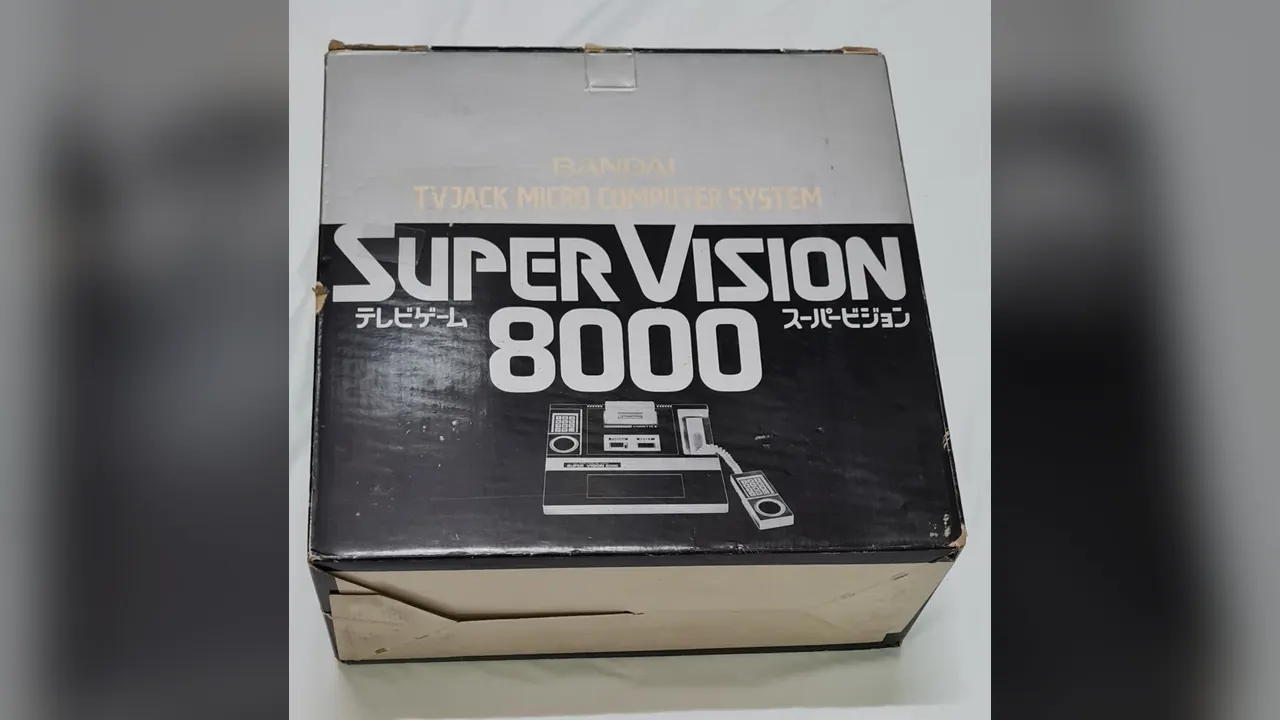
The Bandai Super Vision 8000, released in December 1979, represents a crucial milestone in the history of video games because it marked the transition from purely mechanical consoles to microprocessor-based platforms. Although it was the last model in the Bandai TV Jack series, it was radically different from its predecessors. While first-generation consoles operated with discrete logic circuits based on state machines without code, the Super Vision 8000 incorporated a central processor. This technological leap not only modernized the gaming experience but also established a new standard of complexity and computational power for the time.
The significance of the Super Vision 8000 is evident when analyzing its internal architecture. Its heart was the NEC D780C-1 processor, a Z80 clone, capable of operating at a maximum speed of 3.58 MHz. This processing power was complemented by an AY-3-8910 audio chip and advanced graphics, allowing for resolutions such as 256×192. Its 1979 release, and initial catalog of seven games developed by Bandai Electronics itself, solidify it as a technologically advanced and impressive piece of equipment for the Brazilian and Japanese video game markets of the era.
In this article, we will dive into the complete history of this innovative console. We will cover the Origins and Technological Leap of Bandai, detail the Architecture and Power of the Z80 Processor, and explore the Graphics Specifications and Gaming Experience it provided. Furthermore, we will analyze the Release and Initial Game Catalog, the Critical Reception, Competition, and Decline of the Platform, concluding with a look at its Legacy and Influence on Video Game History.
Key Points
- Released in December 1979, the console marked the transition from logic circuits to microprocessors.
- It utilized the NEC D780C-1 processor, an 8-bit chip operating at 3.58 MHz, ensuring unprecedented power.
- The game media was the ROM cartridge, allowing for a programmable and flexible architecture.
- The graphics system used the Ami S68047, supporting resolutions such as 256×192 and 128×92.
- Audio was supported by the AY-3-8910 chip, an advancement that allowed for three sound channels.
Bandai Super Vision 8000 Technical Specifications
| Manufacturer | Bandai |
|---|---|
| Type | Home video game console |
| Generation | Second generation |
| Release | December 1979 |
| Launch Price | 59,800 Yen (Japan) |
| Discontinued | 1982 |
| Media | ROM Cartridge |
| CPU | NEC D780C-1 @ 3.58 MHz |
| Display | TV, 256×192 |
| Graphics | Ami S68047 (Motorola 6847 clone) |
| Sound | AY-3-8910 |
| Predecessor | Bandai TV Jack 5000 |
| Successor | Bandai Arcadia |
Origins and the Technological Leap of Bandai
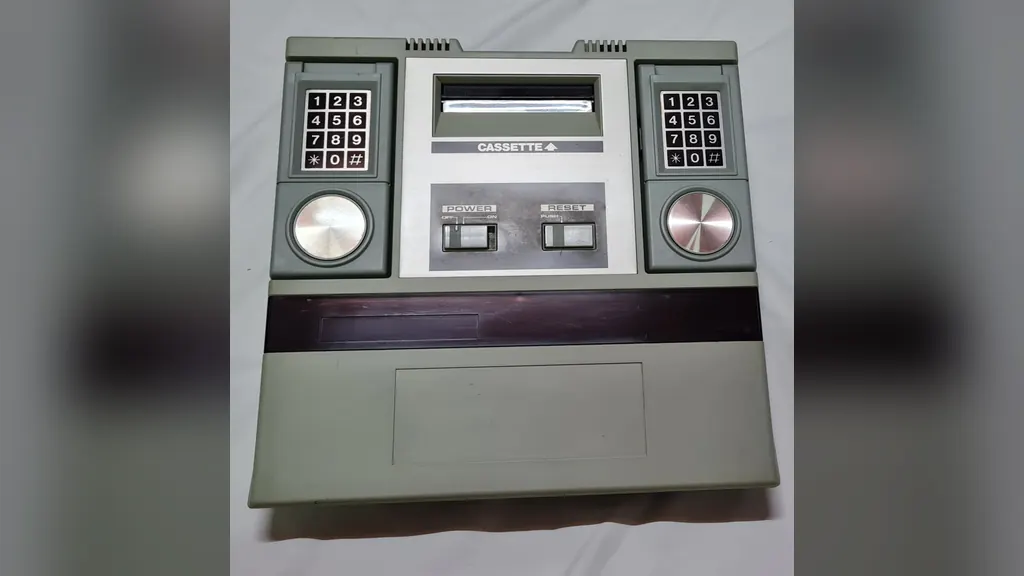
To understand the magnitude of the leap that the Bandai Super Vision 8000 represented, it is crucial to contextualize the video game landscape in the late 1970s. The console market at the time was predominantly dominated by machines operating on a discrete circuit logic. This model, popularized by Pong-style consoles, was ingenious but structurally limited. Early console generations, including predecessors to the Super Vision 8000, were based on custom “state machines,” composed of logic circuits that mapped every element of the game. While effective for simple titles, this architecture imposed a severe technological ceiling, drastically restricting game complexity and hardware flexibility.
The Transition to the Microprocessor Era
The Super Vision 8000, released in December 1979, was the inflection point that broke with this tradition. It wasn’t just another console in the Bandai TV Jack line; it represented a fundamental break. While previous models operated purely on discrete circuit logic, the Super Vision 8000 incorporated a central processing unit (CPU). This element allowed Bandai to make a generational leap, moving the paradigm from dedicated calculation to a programmable and flexible architecture. To better understand this technological transition, it is interesting to look into the history of the Super Vision 8000. This change was not merely aesthetic, but an operational leap that paved the way for much richer and more complex gaming systems.
The technological heart of this revolution was the NEC D780C-1 processor, an 8-bit chip that functioned as a clone of the Z80 and achieved an impressive maximum speed of 3.58 MHz. The presence of a dedicated processor meant the console could execute complex programs and not just follow a fixed set of circuit states. In addition to the CPU, the Super Vision 8000 also featured an advanced audio chip, the AY-3-8910, capable of supporting three sound channels, a considerable advance for the time. These components, along with the use of ROM cartridges as game media, ensured unprecedented expansion capability and computing power for the Bandai line.
In summary, the Super Vision 8000 not only inherited the tradition of the TV Jack line but redefined it. By integrating these cutting-edge components—the NEC D780C-1 processor, the AY-3-8910 sound chip, and the ROM cartridge format—Bandai established a new market standard. It demonstrated that video game consoles no longer needed to be mere assemblages of logic circuits, but rather dedicated computing platforms, a characteristic that would become the industry standard in the following years.
📌 Technological Differences: Before and After the Super Vision 8000
- Previous models: based on discrete circuits and state machines.
- Super Vision 8000: incorporated a programmable central processing unit (CPU).
- Processor: Utilized the NEC D780C-1, an 8-bit chip.
- Audio: Featured the AY-3-8910 chip, supporting three sound channels.
Architecture and the Power of the Z80 Processor
The true revolution of the Bandai Super Vision 8000 lies in its technical architecture, a set of components that, in 1979, positioned it as an extremely advanced platform. The heart of this power was the NEC D780C-1 processor. This 8-bit chip, a direct clone of the renowned Z80, was capable of operating at an impressive 3.58 MHz. This frequency and the processor’s architecture guaranteed robust processing power, essential for running complex games and dynamic graphics, marking a significant leap over previous generations of consoles based on purely mechanical circuits.
Technological Pillars
The console’s performance did not depend solely on the processor’s speed. It was supported by an ecosystem of dedicated chips that ensured the multimedia experience. For graphics, the Super Vision 8000 utilized the Ami S68047, a clone of the Motorola 6847, responsible for image rendering. This combination was capable of offering various resolutions, such as the 128×192 pixel, 2-color Bitmap mode, or even the 128×96 pixel, 4-color mode. For audio, the General Instrument AY-3-8910 provided a three-channel sound system, complemented by a noise generator, adding sonic depth to the titles.
In terms of memory, the system featured 1 KB of RAM, supplemented by 3 KB of VRAM (Video RAM). Although memory was a scarce resource compared to modern standards, the way the chips were orchestrated allowed the console to deliver a rich visual and auditory experience for its time. The ability to combine a fast processor with such a detailed graphics and sound system was what elevated the Super Vision 8000 above many of its direct competitors.
When comparing the power of the Super Vision 8000 to other machines of its era, such as the Amstrad GX4000 or MSX systems, it is clear that the Bandai component set represented a highly optimized, integrated solution. The combination of a fast CPU, a dedicated graphics processor, and a three-channel audio chip allowed for a gaming experience that, for 1979, was synonymous with high technology. This technical arsenal not only maintained the tradition of the TV Jack line but redefined it, setting a new standard of complexity and quality for the second generation of video game consoles.
Graphics Specifications and Gaming Experience

Playing on the Bandai Super Vision 8000 was defined by a set of robust technical specifications for its time. The console, released in December 1979, was not merely an entertainment device but an advanced engineering platform. Its core was powered by the NEC D780C-1 processor, an 8-bit chip operating at an impressive speed of 3.58 MHz. This processing power was complemented by a well-defined memory architecture: 1 KB of RAM and 3 KB of VRAM (Video RAM), allowing for real-time processing of graphics and data, which set it apart from simpler machines.
Video Output and Graphics Capability
The Super Vision 8000 was designed to connect directly to a television (TV), ensuring a stable analog video output. Graphically, the system utilized the Ami S68047 processor, a clone of the Motorola 6847, which was responsible for rendering images. This graphics capability was flexible, supporting different resolutions and color modes, adapting to the needs of various games. Primary resolutions included 256×192, in addition to secondary modes of 128×192 and 128×96. The ability to switch between these resolutions demonstrates the level of hardware sophistication, allowing Bandai to optimize the visual presentation of different titles.
Game Interaction and Multimedia
Interaction with the console was achieved through ROM (Read-Only Memory) cartridges. This storage medium was crucial, as each cartridge contained the specific code and data for a game, ensuring portability and a vast library of titles. In terms of audio, the system used the AY-3-8910 chip, which was responsible for generating the soundtrack and sound effects, adding a layer of immersion that was vital for the gaming experience of the era.
To receive player commands, the console featured dedicated control ports, in addition to parallel Input/Output (I/O) ports. These parallel ports not only connected physical controllers but also allowed integration with additional peripherals, expanding gameplay possibilities. In summary, the combination of components—a powerful CPU, dedicated VRAM, and the ROM cartridge structure—positioned the Bandai Super Vision 8000 as an extremely complete and technologically advanced platform upon its 1979 release.
📊 Super Vision 8000 Technical Specifications Summary
| Component | Key Specification | Function |
|---|---|---|
| Processor (CPU) | NEC D780C-1 @ 3.58 MHz | Data processing core |
| Memory | 1 KB RAM and 3 KB VRAM | Real-time data and graphics processing |
| Graphics | Ami S68047 (Motorola 6847 clone) | Image rendering with resolutions such as 256×192 |
| Audio | AY-3-8910 | Soundtrack and sound effect generation |
| Game Media | ROM Cartridges | Storage of specific game code and data |
Release and initial game catalog
The official launch of the Bandai Super Vision 8000 occurred in December 1979, a moment that not only marked Bandai’s sales calendar but also redefined the technological landscape of video games in Japan. The Japanese market at the time was in a state of full effervescence, eager for a definitive transition from purely mechanical consoles to microprocessor-based platforms. For the consumer, the Super Vision 8000 represented a considerable leap in capability and sophistication. Its introductory price, set at 59,800 Yen in Japan, positioned the unit as a high-tech product, accessible only to enthusiasts and consumers willing to embrace the forefront of home electronics.
The Initial Catalog and Creative Control
One of the most notable aspects of the Super Vision 8000 was the strict control that Bandai Electronics maintained over the entire lifecycle of the console, from hardware to software. The initial catalog, released in 1979, was composed entirely of titles developed by Bandai itself. This vertical integration of development not only guaranteed a perfect synergy between hardware and content but also ensured a cohesive and high-quality gaming experience for users. The use of ROM (Read-Only Memory) cartridges solidified this strategy, defining the media format that would become the platform’s standard.
📘 ROM Cartridges (Read-Only Memory)
They were the media format used by the console. They ensured that the game was loaded from read-only memory, setting the standard for the platform’s content.
The inaugural catalog was robust and diverse, presenting a mix of genres that appealed to different tastes. The games released in 1979 included iconic titles that helped establish the system’s reputation. Among the most notable were:
- Missile Vader: A title that explored space action.
- Space Fire: Pointing to the theme of shooting and futuristic combat.
- Othello: Demonstrating the console’s ability to run slower and more complex strategy games.
- Gun Professional: A title that reinforced the focus on shooting mechanics.
- PacPacBird: Indicating adaptation to platforming and action games.
- Submarine: Offering a gameplay experience in a marine environment.
- Beam Galaxian: A game that stood out for its space shooter genre.
This collection of seven titles not only filled the initial catalog but also served as a powerful demonstration of the Super Vision 8000’s potential. By launching the console with such a cohesive and technically varied assortment, Bandai was not just selling a device, but an entire entertainment ecosystem, paving the way for the line’s subsequent successes.
Critical Reception, Competition, and the Platform’s Decline
Despite its undeniable technical power, which positioned it as a generational leap over its predecessor, the Bandai Super Vision 8000 faced an insurmountable obstacle: cost. Although the console featured robust hardware and a promising initial catalog, the high barrier to entry for consumers was the decisive factor that undermined its critical and commercial enthusiasm. The public recognized the system’s sophistication, but the price set by Bandai made it inaccessible to the mass market, limiting its growth potential.
The Turning Point and Platform Abandonment
The fate of the Super Vision 8000 was sealed not only by cost but by a moment of stagnation in content development. The cancellation of the eighth scheduled title was the catalyst that led Bandai Electronics to make a drastic decision: completely abandon the platform. This setback signaled the end of the line for the console, despite its technical potential; to better understand this trajectory, it is interesting to look into the history of the Super Vision 8000. Bandai’s failure to maintain a steady stream of games and support was the final blow, turning a promising system into a museum piece of video game history.
It is crucial to understand this console’s life cycle by comparing it to its lineage. The Super Vision 8000 represented a significant evolution from its predecessor, the Bandai TV Jack 5000, inheriting and improving many of its capabilities. However, the video game market is a constant cycle of innovation. Although the Super Vision 8000 was technically advanced for 1979, it was quickly overshadowed by the development of new technologies. Its successor, the Bandai Arcadia, represented a new phase, but the decline of the original platform shows that, in the consumer electronics sector, success depends not only on processing power but also on economic sustainability and continuous manufacturer support.
In summary, the Super Vision 8000 is a classic example of a technologically superior but commercially flawed product. The combination of a prohibitive cost and the interruption of the production cycle, symbolized by the cancellation of the eighth game, prevented the console from reaching its full potential. It remains, thus, a fascinating landmark illustrating how critical reception can be overshadowed by financial realities and the relentless dynamic of technological competition.
✅ Advantages
- Undeniable technical power, representing a generational leap.
- Robust hardware and a promising initial catalog.
- Significant evolution from its predecessor, the Bandai TV Jack 5000.
❌ Disadvantages
- High cost, creating an entry barrier for the mass market.
- Stagnation in content development, culminating in the cancellation of the eighth title.
- Success was limited by financial realities and the dynamics of competition.
Legacy and influence on video game history
Despite its brilliant set of technical specifications, the commercial fate of the Bandai Super Vision 8000 was unfortunately marked by failure. The combination of a high launch cost of 59,800 Yen in Japan and the eventual cancellation of the eighth title led Bandai Electronics to abandon the platform in 1982. It is undeniable that the console was a classic example of a technologically superior, yet commercially unviable product in its market context. However, it is precisely in this point of failure that its deepest and most crucial legacy resides.
The Leap to Microcomputer Processing
The true historical value of the Super Vision 8000 lies not in its sales, but in its architecture. It represented a fundamental generational leap for the video game industry in Japan. By incorporating a powerful NEC D780C-1 processor running at 3.58 MHz, the console transcended the limits of previous generations. This integration of microprocessors into a consumer console established a new standard of complexity and processing power for the home entertainment market.
The use of advanced graphics chips, such as the Ami S68047 (a clone of the Motorola 6847), and the AY-3-8910 sound chip demonstrated that video games were no longer mere simple logic circuits, but rather dedicated computing systems. This technological advance was a pioneering milestone in Japanese electronics, proving that the home consumer was ready to consume advanced processing hardware.
Lasting Influence on the Market
Although the Super Vision 8000 was discontinued, the technology it popularized did not disappear. It directly paved the way for future generations of game hardware. The demonstration that a console could run sophisticated graphics and sounds, controlled by a robust central processor, was an achievement that influenced the development of successors, such as the Bandai Arcadia itself. This know-how established Bandai Electronics as a powerhouse in video game engineering in Japan. See also: Super Vision 8000.
In summary, the Super Vision 8000 should be studied not as a sales success, but as a technological catalyst. It was the laboratory where the Japanese video game industry made its definitive transition from simple logic-controlled systems to the era of digital processing. Its impact lies in solidifying the viability of the microprocessor as the central engine of home electronic entertainment, an achievement that has shaped the video game landscape to this day.
Glossary
- Discrete Circuit: Older hardware that used separate logic circuits, limiting the complexity and flexibility of games.
- Microprocessor: A central chip (CPU) that allows for the execution of complex and flexible programs, marking a technological leap at the time.
- State Machines: The architecture of older consoles that mapped each game using fixed and dedicated logic circuits.
- ROM Cartridges: Game media that stores a title’s code and data in read-only memory, ensuring portability.
- AY-3-8910: An advanced audio chip that allowed for the simultaneous generation of three sound channels, enhancing sonic immersion.
Frequently Asked Questions
Was the Super Vision 8000 better than the previous console, the TV Jack 5000?
Yes, it represented a fundamental technological leap. While previous consoles operated under the limitations of discrete circuits and fixed state machines, the Super Vision 8000 incorporated a microprocessor. This allowed for a programmable and flexible architecture, drastically raising the complexity and richness of possible games.
What is the Z80 processor, and what was its importance to the console?
The Z80 is an 8-bit processor, a very robust architectural standard for the time. The Super Vision 8000 used a clone of it, the NEC D780C-1. Its importance was providing the necessary processing power to run complex programs and dynamic graphics, something impossible for systems based only on circuit logic.
Why was the Super Vision 8000 not a sales success despite its advanced hardware?
The main obstacle was the high cost, which created an entry barrier for the mass consumer. Furthermore, the console’s fate was sealed by the lack of a steady stream of content. The cancellation of scheduled titles caused Bandai to abandon the platform, undermining commercial enthusiasm.
What are the hardest games to find for the Super Vision 8000?
The console launched with a robust initial catalog, including titles like Missile Vader and Space Fire.
Was the Super Vision 8000 a first or second-generation video game console?
It is classified as a second-generation console. This classification is due to its crucial technological transition. It moved away from the era of fixed logic circuits (first generation) and adopted a programmable and flexible microprocessor-based architecture, setting a new standard for the industry.
Conclusion
The Bandai Super Vision 8000 was not just another console in the TV Jack line; it represented an architectural leap that redefined the potential of electronic entertainment. By integrating a central processor, the NEC D780C-1, operating at 3.58 MHz, the system transcended the limits of old “state machines” based on discrete circuits. The combination of this powerful CPU with the Ami S68047 processor for graphics and the AY-3-8910 chip for three-channel audio transformed the console into a dedicated computing platform. This technological synergy, anchored by ROM cartridges, established a new level of complexity and multimedia richness for its time.
This set of components—a fast CPU, flexible graphics capability, and an advanced sound system—not only maintained Bandai’s tradition but elevated it to an industry standard. The Super Vision 8000 demonstrated that video games could be programmable and highly optimized systems, paving the way for future generations of consoles. It proved that the power of gaming lay in intelligent architecture, not just in the complexity of logic circuits.
With this understanding of its technological foundation, it is clear that the Super Vision 8000 is a crucial milestone. Studying its engineering is understanding the exact moment the video game stopped being an electronic toy and became a true computing platform.