Read this article in: Portuguese (Português) · Spanish (Español)
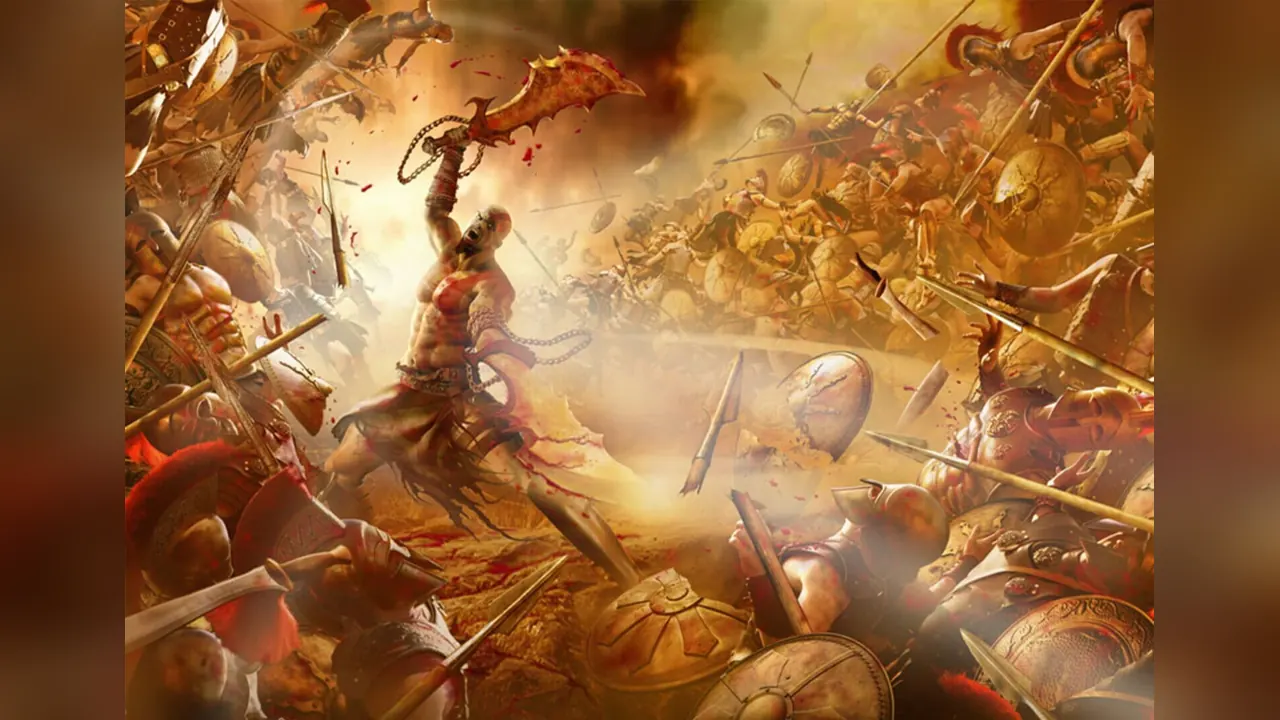
Defeating the Colossus of Rhodes in God of War II requires more than brute strength; it’s a matter of combat management and tactical patience. To overcome this colossal threat, Kratos must use prolonged combat to drain the giant’s energy, which was animated by Zeus. The fundamental strategy is to keep the confrontation active until the Colossus enters a moment of momentary rest, which is when the decisive attack must be launched. Remember that the Colossus, a 32-meter-tall bronze statue, possesses immense powers, such as Superhuman Strength, Electrokinesis, and Energokinesis, requiring the player to utilize every learned ability to exploit its weaknesses and survive its devastating attacks.
The confrontation is not just a video game challenge, but a crucial point in Kratos’s revenge narrative. The game, God of War II, is a title of great significance in the action-adventure gaming scene, having been originally released on March 13, 2007, for the PlayStation 2. The title’s popularity is proven by its success, such as the fact that it sold 4.24 million units by June 2012. This storyline, set in Greek mythology, established a standard of visceral combat that influenced generations of players and secured the game a prominent place in video game history.
In this comprehensive guide, we will delve into every aspect of the battle to ensure you avoid unnecessary defeats. You will learn in detail who the Colossus of Rhodes is and what its role is in mythology, in addition to understanding the context of the confrontation in God of War II. We will cover everything from ideal preparation equipment and tactics to the Colossus’s specific attack patterns and weaknesses. We will conclude with a step-by-step strategy for victory, advanced tips to avoid common mistakes, and, of course, the rewards awaiting Kratos after the triumph.
Key Points
- Monumentally, it was a bronze statue representing the god of the Sun, Helios, in Ancient Greece.
- It stood for 56 years, but its fate was sealed by an earthquake in 226 BC.
- In God of War II, Zeus revived it to make it a central obstacle and tool of vengeance.
- It possesses Super Strength, Durability, and energy abilities like Electrokinesis and Terrakinesis.
- Victory demands tactical mastery and the correct sequence of attacks, not just brute force.
Who is the Colossus of Rhodes and its role in mythology
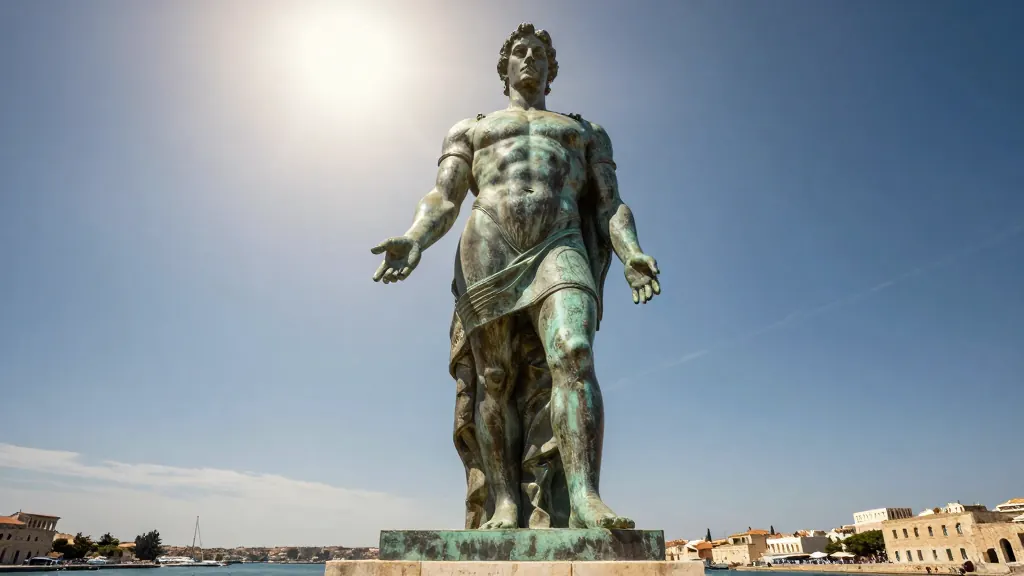
The Colossus of Rhodes is a figure of immense historical and mythical magnitude, with origins tracing back to Ancient Greece. It was not merely a statue, but a grand bronze monument representing the god of the Sun, Helios. This gigantic colossus stood over the port of Rhodes and was celebrated as one of the Seven Wonders of the Ancient World. Its construction, notably, was made from recycled pieces of captured siege towers. Through its sheer imposing presence, the Colossus stood for a significant period of 56 years before its fate was sealed by an earthquake in 226 BC.
The colossus in god of war ii
The significance of the Colossus of Rhodes transcends its ancient history, becoming a central obstacle in the narrative of God of War II. In the game’s plot, the Colossus is dramatically resurrected by Zeus, the King of the Gods, in a calculated maneuver to weaken and pursue Kratos. In a power play, Zeus drains almost all of Kratos’ divine energy and transfers it to the statue itself, animating it. This act transforms the historical monument into a formidable adversary, which soon breaks free from its bonds and marches through the city of Rhodes, becoming the game’s first major challenge—a type of combat reminiscent of the most epic challenges, such as knowing Thor’s weaknesses in God of War Ragnarök.
As Kratos tries to resist the threat, the Colossus confronts him amidst the devastated city. The battle is a clash of titans: Kratos manages to attack the statue multiple times, injuring its right eye, its jaws, and causing its left arm to detach. However, Zeus’s narrative is one of manipulation and control. After draining Kratos’ powers with the Olympian Blade, the god of the sky ensures the colossus remains alive long enough to inflict maximum damage. The confrontation culminates when Kratos, after advancing and using the Olympian Blade to drain all the divine energy animating the figure, causes the Colossus to begin crumbling.
The role of the Colossus, therefore, is twofold: it is a symbol of ancient power and, within the context of the game, a tool of divine vengeance. The ending is ironic: the colossus only fulfills its purpose in its final moments. As it falls, its crushing arm strikes Kratos, weakening him enough for Zeus to actually kill him with the Olympian Blade. This sequence not only establishes a turning point in Kratos’ journey but also marks it as one of the greatest and most dangerous narrative obstacles the god of war had to face.
📌 The Colossus of Rhodes: An Icon of Power and Destruction
- Origin: Bronze monument in Ancient Greece, representing Helios.
- Construction: Made from recycled pieces of siege towers.
- Historical Significance: It was one of the Seven Wonders of the Ancient World.
- Role in GoW II: Used by Zeus as a tool of vengeance against Kratos.
Location and context of the confrontation in God of War II
The confrontation with the Colossus of Rhodes is not just a combat challenge in God of War II; it is the turning point that forces Kratos to fight in a narrative context of profound disadvantage. The battle unfolds in the city of Rhodes, a setting that transforms from a place of civilization into a stage of chaos and destruction. The devastated urban environment is crucial, as the Colossus, a living statue 32 meters tall, not only threatens Kratos but also the very structure of the city, forcing the fight amidst the rubble.
The Context of Divine Loss
The most determining factor for the difficulty of this first major challenge of the campaign is Kratos’s power level. Before the fight, Zeus, the King of the Gods, drains almost all of Kratos’s divine power and transfers it to the statue. Thus, the Colossus is animated, and the confrontation is, from the start, a battle of endurance against divine magical power. The narrative details that, although Kratos initially feels confident, he soon realizes that he is “rusty and unprepared” to fight without the fullness of his Olympian power. The Colossus, meanwhile, is described as a growing opponent, becoming increasingly powerful and cunning by absorbing the divine energy Zeus infused into the statue.
⚠️ Warning
Victory in God of War II comes at a very high cost: even after defeating the Colossus, Kratos is weakened and, ironically, ends up being killed by Zeus in the chaotic setting of Rhodes.
The fight, which takes place amidst Rhodes, is a test of combat management and tactical patience. The defenders of Rhodes prove resilient, managing to push the invading Spartan army back to the margins. The Colossus, therefore, is not just an isolated monster, but a symbol of ancient power and a tool of divine vengeance manifesting in the middle of a war-torn city. Kratos must not only fight the brute force of the stone machine but also the despair of a retreating army.
Tactical Progression in the Urban Setting
The physical combat is marked by a strategic progression that unfolds throughout the devastated city. Initially, Kratos manages to inflict significant damage on the Colossus, in combat acts that include wounding its right eye, cutting its cheeks, and causing its left arm to detach. However, the Colossus relentlessly continues to pursue him. The combat strategy, both in the game and the narrative, requires Kratos to use the environment and his tools in a coordinated way. He is forced to attack the Colossus while it is at rest, and at crucial moments, he manages to pierce the statue’s flank and attack from within.
The confrontation concludes with Kratos needing to drain the divine power animating the statue using the Blade of Olympus. After the Colossus is overloaded and deactivated, Kratos escapes the scene, but not without suffering consequences. Ironically, the Colossus achieves its goal in its final moments: its falling arm crushes Kratos, weakening him enough for Zeus to kill him with the Blade of Olympus itself. This ending, which takes place in the chaotic setting of Rhodes, reinforces that victory in God of War II always comes with a very high cost. Also see: How to defeat Gná in God of War Ragnarök.
Ideal Preparation: Gear and Tactics Before the Battle
Defeating the Colossus of Rhodes is not a test of physical endurance, but rather a complex exercise in resource management and tactical mastery. To face an opponent of such magnitude, whose abilities include super strength, durability, and electrokinesis, the player must approach the fight with a cool head and a well-prepared arsenal. Ideal preparation requires shifting focus from mere brute force to precise combat control, understanding every move of the giant and knowing exactly when and how to counterattack.
Upgrading Equipment and Consumables
It is essential that the upgrades for your main weapons are at adequate levels. The Blades of Athena, which are Kratos’s primary weapons, must be optimized, as they are the first to be weakened during combat. In addition to equipment, managing energy consumables is vital. Since the fight demands the coordination of several magical abilities, it is crucial to keep the energy meters full to ensure you can execute defensive and offensive maneuvers without unnecessary interruptions.
💡 Tip
Remember that combat is a dance of attack and defense; every move must be calculated to drain the Colossus’s power and force it into moments of rest.
Knowing the Colossus’s attack patterns is your greatest asset. The giant is constantly aware of Kratos’s location and will continue to pursue him. Therefore, anticipating the attacks—whether an electrokinesis strike or a terrakinesis tremor—will allow you to position yourself to attack during moments of low guard. Remember that combat is a dance of attack and defense, and every move must be calculated to drain the Colossus’s power and force it into moments of rest.
The Tactical Attack Sequence
The key to defeating the Colossus lies in the correct order of power application. The game’s knowledge source suggests a tactical attack sequence that must be strictly followed:
- Blades of Athena: Begin the confrontation using the Blades of Athena, as they are the first resource to be compromised when pouring your power into the Blade of Olympus.
- Poseidon’s Rage: After weakening the Colossus, use Poseidon’s magic to stun him. It is essential to take advantage of the moment when this magic is weakest.
- The Broken Hand: The third tactical strike must be using the statue’s broken hand to ensure a final stun.
- The Finishing Blow: Only after landing these three successive blows should you channel the remainder of your energy and HP into the Blade of Olympus, concluding the confrontation.
Mastering this progression not only guarantees success in combat but also reinforces the idea that strategy is more powerful than any brute force. Stay calm, manage your energy, and execute the blows in the correct order to bring down the millennia-old symbol of power from Rhodes.
Colossus Attack Patterns and Weaknesses
The Colossus of Rhodes is not just a bronze statue; it is a manifestation of divine power and an unrelenting fighting force. To survive against it, Kratos cannot rely solely on his brute strength. The giant, standing 32 meters tall with a “Living Statue” constitution, exhibits an arsenal of abilities that make him an opponent of extremely high difficulty. Its capabilities go beyond mere physical strength: the Colossus possesses Superhuman Strength and Superhuman Durability, allowing it to deliver devastating blows capable of crushing entire buildings and inflicting immense damage on Kratos with powerful impact “pounding” and whips. Mastering these attack patterns is the first step toward any successful combat strategy.
Attack Patterns and Energy Usage
The Colossus’s threat is amplified by a set of advanced energy powers. It is not limited to physical attacks; it channels divine energy, manifesting Electrokinesis and Energokinesis. This energy can be used in various dangerous ways: it can create waves of divine energy shock, generate cracks in the ground that erupt in blue flames, and channel power through its own broken sections for scorching attacks. The Colossus is an adapting combatant that becomes more cunning throughout the battle, draining Kratos’s own Olympian power. It is crucial to understand that despite Kratos landing significant blows, the Colossus does not show fatigue, maintaining constant pressure on the protagonist.
The Tactical Weakness: The Moment of Rest
The most determining aspect that defines victory is not the Colossus’s endurance, but its pursuit pattern. The giant is relentless; it is always aware of Kratos’s location, forcing the confrontation to be a test of combat management and tactical patience. The Colossus’s main weakness is not a specific physical point, but rather the moment of rest. The strategy requires Kratos to fight enough to exhaust the combat machine, forcing the Colossus into a moment of tactical vulnerability. It is in this pause interval that the accumulated power must be applied with precision and sequence.
Mastering the attack order is the greatest asset. The confrontation is an exercise in tactical mastery that demands the correct application of resources. The ideal attack sequence must be planned to maximize stun and damage. First, the Blades of Athena must be used, as they are the resource that will be depleted when channeling power into the Blade of Olympus. Next, Poseidon’s magic must be used to stun the giant. Finally, the third tactical strike must be using the statue’s broken hand, ensuring a final stun that sets the stage for the decisive blow: channeling all remaining HP into the Blade of Olympus. If you want to better understand combat tactics in epic games, check out how to defeat Persephone in God of War. This tactical progression proves that, in this fight, strategy is infinitely more powerful than any brute force.
🔢 Tactical Sequence for the Decisive Blow
- Use the Blades of Athena first, as they will be depleted when channeling power into the Blade of Olympus.
- Next, use Poseidon’s magic to stun the giant.
- The third tactical strike must be using the statue’s broken hand, ensuring a final stun.
- Finally, channel all remaining HP into the Blade of Olympus for the decisive blow.
Step-by-Step Strategy to Defeat the Colossus of Rhodes

Defeating the Colossus of Rhodes is not a challenge of pure brute force; it is, above all, a complex exercise in tactical mastery and resource management. The battle, which took place in the city of Rhodes, requires Kratos to understand the statue’s pursuit pattern and know exactly when and how to apply his power. The Colossus, a manifestation of divine power, is a relentless force, and the key to its fall lies in exploiting its physical and energetic vulnerability.
The Strategic Combat Cycle
Combat against the bronze giant cannot be approached randomly. It is necessary to force the Colossus to expend its immense energy in continuous attacks, creating windows of opportunity. The winning strategy unfolds in a cycle of attrition, where every blow must be applied at the exact moment the Colossus is slowing down or in a moment of apparent rest. This tactical knowledge is what differentiates a survival encounter from a definitive victory.
To execute the final attack and drain the power animating the statue, follow this attack progression, which must be repeated until the Colossus is completely drained:
- Maintain Distance and Dodge Energy Attacks: Use Kratos’s mobility to evade the Colossus’s energy attacks. The initial goal is to survive the continuous assault, forcing it to expend its power in a cycle of relentless pursuit.
- Allow for Energy Depletion: Do not attack frantically. Let the Colossus expend its divine resistance in continuous attack patterns. This depletion is the first step to identifying its weakness.
- Identify the ‘Rest’ Moment: This is the most crucial step. One must observe the Colossus until it stops or slows down significantly. This “rest” interval is the moment of maximum vulnerability.
- Concentrate Maximum Attack on the Vulnerability: As soon as the window of opportunity arises, channel a coordinated attack. The first blow must be delivered with the Blades of Athena, as they are the first resources to be weakened when pouring power into the Blade of Olympus.
- Finalize the Attack Progression: Immediately after the first blow, use Poseidon’s magic to stun it. Then, the third and final tactical blow must be using the statue’s broken hand to ensure a final stun.
Only after delivering this sequence of three tactical blows should Kratos’s remaining power be channeled into the Blade of Olympus. It is this correct order of power application and mastery of the depletion cycle that allows Kratos to completely drain the divine energy keeping the bronze statue animated. Mastering this progression is not just a combat trick, but proof that strategy is the power superior to brute force.
Advanced Tips and Common Mistakes to Avoid
Avoiding Arrogance: The Most Common Mistake
One of the biggest tactical pitfalls players make when facing the Colossus of Rhodes is the temptation to confront it directly at its peak power. The sheer magnitude of the statue—with its 32-meter height, bronze composition, and powers like electrokinesis and shockwaves—is intimidating, and the natural reaction is excessive aggression. However, combat against this manifestation of divine power is not a test of brute strength, but rather a complex exercise in resource management and patience. Attempting to maintain a constant attack, without tactical pauses, inevitably leads to player exhaustion and, worse, Kratos’s energy overload, which is the most valuable resource on the battlefield.
The Colossus is an implacable force, and the most determining factor for victory is not the statue’s physical resistance, but its pattern of pursuit and your ability to force unpredictability. The player must understand that excessive aggression only feeds the cycle of area attacks that the Colossus is capable of generating. Tactical mastery requires you to treat the fight like a dance of attrition, not a contest of strength.
The Art of Using the Environment to Your Advantage
The advanced tip that separates the average player from the tactical master is the utilization of the environment. The Colossus of Rhodes is a setting rich with debris, columns, and stone structures. Instead of confronting the giant in the open, you must incorporate these elements into your combat plan. Use the columns and debris not just for physical cover, but as strategic tools to break lines of sight and disorient the creature.
By forcing the Colossus to move among these obstacles, you compel the giant to expend its energy on area attacks (like electrokinesis pulses or shockwaves) in more confined spaces. This energy expenditure is not only defensive for you, but it is a catalyst for your strategy. Every time it diverts an area attack to shield a pillar, you gain a critical window of opportunity. It is in this interval of “forced rest” that you must position yourself to channel the maximum possible damage, maximizing the impact of every tactical blow.
In summary, remember: the goal is not to attack the Colossus of Rhodes when it is at its peak of power. The goal is to force it to diminish its power and spend its energy in a controlled environment. Patience, observation of attack patterns, and intelligent use of the scenery are the true trump cards that will guarantee victory, turning the combat into a choreography of dodges and calculated strikes.
Rewards and Progression After Victory
The victory over the Colossus of Rhodes, while representing a monumental tactical triumph for Kratos, does not end the cycle of divine violence, but rather catalyzes it into a tragic and epic escalation. The confrontation with the bronze giant serves as a crucial narrative turning point, because what Kratos gains is not merely combat experience, but confirmation of his vulnerability and, paradoxically, the map to his revenge.
The Consequences of the Fall
After landing the final blow, Kratos is confronted with the most painful truth: Zeus was the one who stripped him of his divine powers and deposited them in the statue. At that moment, he is brutally disarmed, and when the Colossus’s hand strikes him, his armor is shattered, forcing him to recognize that he has become mortal again. This setback is the engine of the subsequent narrative. The fall of the Colossus is not the end of his journey, but the catalyst for an even more dangerous encounter: the direct confrontation with the gods of Olympus.
Kratos’s fate is sealed by Zeus, who, in an act of apparent generosity, steals the Blade of Olympus and kills him. The Spartan’s body is then carried by the infernal hands of Hades into the depths of the underworld. It is in this dark environment that Kratos’s true advancement begins. Amidst the hallucinations, he is confronted by Gaia, a mysterious voice that guides him and ignites the flame of vengeance. Gaia promises to reveal the path to the Fates, whose power, he believes, will allow him to overthrow Zeus.
The Rise of New Power
This awakening toward vengeance leads Kratos out of Hades, supported by the help of the Titans, beginning the journey toward the Temple of the Fates. It is amidst this pursuit that Kratos acquires a fundamental power: the Wrath of the Titans. This new power is derived from the ashes of Prometheus, after the Spartan manages to rip the Bow of Typhon from one of the titan’s eyes. The acquisition of the Wrath of the Titans is not merely a new magic meter; it represents mastery over a power older and more primal than what he previously possessed.
In terms of resource and skill progression, the post-Colossus period and the subsequent journey to the temple are vital for Kratos’s development. He begins to accumulate new relics essential for the journey, such as the Amulet of the Fates, which alters the flow of time, and the Wings of Icarus, which allow passage across abysses. In short, the confrontation with the Colossus of Rhodes is the moment Kratos transitions from a divine warrior seeking validation to a mortal avenger, guided by Gaia’s promise and equipped with ancestral powers, setting the stage for the final confrontation with the ultimate power of Olympus.
Glossary
- Electrokinesis: The ability to manipulate and project electricity or electrical energy in attacks.
- Energokinesis: The ability to manipulate and channel pure energy, manifesting divine shockwaves.
- Terrakinesis: The power to control and manipulate the earth, causing tremors or cracks in the environment.
- Blade of Olympus: A divine weapon used to drain the energy and magical power of powerful adversaries.
Frequently Asked Questions
What is the goal of the Colossus of Rhodes in God of War II?
Its main objective in the narrative is to serve as a tool of divine vengeance. Zeus animates and uses it to hunt and weaken Kratos, transforming the historical monument into a powerful obstacle. It is a manifestation of divine power, forcing Kratos into a titan-level confrontation.
Is it possible to defeat the Colossus of Rhodes without upgrading the Blades of Athena?
Although the combat demands tactical mastery, preparation is crucial. To face an opponent of such magnitude, it is essential that your primary weapons are optimized. The combat strategy must focus on precise control, as the proper equipment enhances the ability to drain the giant’s power.
Where exactly do I find the Colossus of Rhodes in the campaign?
The confrontation takes place in the city of Rhodes. This location is a stage of chaos and destruction, where the urban setting and debris are crucial for the development of the battle. You must fight amidst the rubble, in a context of war and desperation.
What attack patterns should I expect from the Colossus?
Expect devastating physical attacks, such as powerful impact blows and whips, combined with energy abilities. It manifests Electrokinesis and Energokinesis, creating shockwaves and cracks in the ground. Remember that it is a growing opponent and always aware of its location.
Is the Colossus of Rhodes the first boss of God of War II?
Yes, it is established as the first major and most dangerous narrative obstacle that Kratos must face. This confrontation is not just a combat challenge, but a turning point that forces the protagonist to fight in a context of deep disadvantage, setting the tone for the campaign.
Conclusion
The confrontation with the Colossus of Rhodes transcends a mere combat challenge in God of War II; it is a complex narrative turning point, orchestrated by the divine vengeance of Zeus. Far from being just a war machine, the colossus represents a symbol of ancient power transformed into a tool of manipulation. From the beginning, Kratos faces a battle of critical disadvantage, as Zeus drains almost all of the protagonist’s divine power and transfers it to the statue. Thus, the player must see that victory is not just about brute strength, but about resource management and understanding the chaotic context of the city of Rhodes.
To triumph, the focus must shift from blind force to tactical mastery. Success requires the player to optimize the use of equipment, such as the Blades of Athena, and to maintain precise control of combat, anticipating the electrokinetic attacks and the giant’s movements. It is in the coordination between the devastated environment and the calculated attacks that Kratos manages to drain the energy animating the statue. However, the narrative is relentless: even in victory, the colossus fulfills its role by striking Kratos, reinforcing that every great triumph in the god of war’s journey comes with an extremely high cost. To master subsequent challenges, always remember that tactical preparation is your greatest power.