
Read this article in: Portuguese (Português) · Spanish (Español)
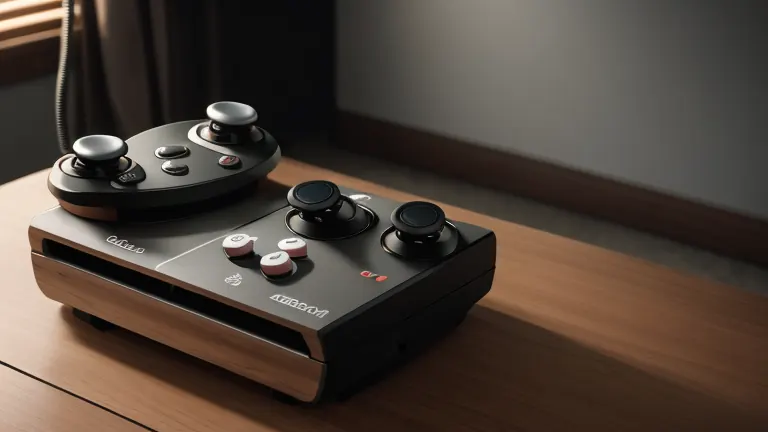
The Odyssey 5000 is a name that resonates in video game history, marking a crucial inflection point in the development of home entertainment. The story of this console’s development is not merely a report on hardware, but a narrative of innovation that successfully adapted the experience of arcade machines for the comfort of the home. This revolutionary device not only introduced interactive graphics and gameplay on a new scale but also established the conceptual foundations for all subsequent generations of consoles. Exploring this trajectory means understanding how the technological limits of the time were overcome to create a platform that permanently changed the culture of leisure and the electronics market.
The Odyssey 5000’s relevance lies in its pioneering ability to transform digital entertainment from an expensive arcade attraction into a mass-market consumer item. Its emergence represented a paradigm shift in the industry, showing that processing power and visual appeal could be miniaturized and sold in homes. Analyzing this historical milestone requires understanding the economic and technological context of its era—a period of intense experimentation where engineers and designers had to reconcile technological vanguard with accessibility to the average consumer, paving the way for the gaming industry we know today.
In this article, we will delve deeply into the trajectory of the Odyssey 5000. We will cover everything from the market context that inspired its conception to the engineering challenges that led to its prototype. We will analyze its internal technical architecture, the strategic impact of its launch, and, of course, the defining titles that solidified its gameplay. We will conclude by tracing the console’s lasting legacy, showing how it not only sold games but shaped the competitive and creative structure of the modern video game industry.
Key Points
- The Odyssey 5000 filled the gap between the high technology of arcades and the practicality of domestic family consumption.
- The system pioneered the miniaturization and cost reduction of arcade graphical complexity for the residential environment.
- Technically, it overcame challenges such as generating vibrant colors and controlling heat in a compact home format.
- Its architecture focused on data economy, utilizing logic circuits and wave generators, rather than advanced 3D processing.
- The marketing strategy repositioned the console as a catalyst for family leisure, not merely an arcade substitute.
The Market Context and Conception of the Odyssey 5000
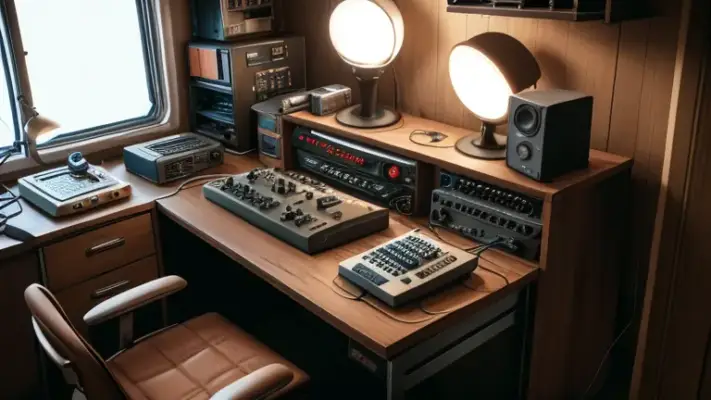
Before the arrival of systems like the Odyssey 5000, the landscape of electronic entertainment was deeply fragmented. Digital gaming, when it existed, was confined to two distinct models: arcades and basic consumer electronic toys. Arcade machines represented the peak of accessible technology, offering immersive experiences and sophisticated graphics that required a public setting and payment per play. On the other hand, home toys, although popular, were limited in functionality, usually reproducing simple mechanisms or memory games without the complexity of a full interactive system.
In this context, the founding company’s vision was not merely to replicate a game, but to create an entirely new product category. The economic and cultural landscape of the time pointed to a growing disposable income among the middle class. Families were looking for forms of leisure that could be enjoyed in the comfort of home, without depending on costly and complex outings. There was a latent desire to bring the brilliance and magic of arcade machines into the living room.
The Conception of Home Entertainment
The major market gap that the Odyssey 5000 aimed to fill was the distance between the high technology of arcades and the practicality of family consumption. The engineers and visionaries realized that for electronic games to have a massive impact, they needed to be a domestic consumer item, not just an amusement park attraction. The challenge, therefore, was both technical and economic: how to miniaturize and afford a system that could offer complex graphics and gameplay while maintaining the high-quality experience the public was already associated with large arcades.
The concept, therefore, transcended that of a mere “electronic game.” It was an entertainment ecosystem. The need to bring the high-tech gaming experience into the home required not only robust hardware but also a business model that allowed for continuous content expansion. It was this realization—that the console should be the center of a new type of accessible and evolving family leisure—that shaped the revolutionary design of the Odyssey 5000, paving the way for the video game industry as we know it today.
From Idea to Prototype: Engineering and Design Challenges
The transition from artistic vision to the physical reality of the Odyssey 5000 represented one of the most challenging chapters in the history of consumer engineering. The development process was an intense journey, taking the founders’ conceptual sketches to a functional prototype capable of operating in domestic environments. Far from being a simple adjustment of an existing system, the Odyssey 5000 required unprecedented solutions for problems that were previously considered insurmountable barriers to mass entertainment.
The Pioneering Technical Challenges
The main technical obstacle was the nature of the product itself: how to bring the graphic complexity and visual appeal of arcade pinball machines into the comfort of the living room without compromising usability or stability. One of the most notable challenges was generating colored graphics. In the 1970s, home video technology was still in its embryonic stages, and creating vibrant, defined colors, rather than mere monochromatic outlines, required the development of revolutionary signal processing circuits. Furthermore, miniaturization was a critical factor. Engineers had to condense a complex system, previously restricted to gigantic arcade machines, into a relatively compact cabinet, which imposed severe limitations on space and thermal management.
Heat management, in particular, emerged as a crucial engineering problem. High-density, continuously operating electronic circuits, especially those responsible for processing color images, generated considerable heat. The engineering team had to design efficient dissipation systems, ensuring that the console could operate for long periods without overheating or failing—a requirement that was entirely new to the home entertainment category. These decisions were not merely design choices, but rather matters of applied physics, determining the operational viability of the system.
Crucial Design Decisions
The success of the prototype depended on extremely precise architectural and engineering design decisions. The engineering team not only adapted existing technologies but fused and optimized them for a new purpose. A delicate balance between processing power and energy efficiency was required. The ability to create a modular system that could accept cartridges and be easily integrated into a residential environment was a usability milestone that differentiated the Odyssey 5000 from any direct competitor of the time.
These challenges—from generating stable colors to thermal control in a home format—were not merely overcome; they redefined what was technically possible in the consumer electronics market. The functional prototype, therefore, was not just a game; it was a demonstration that the high technology of arcades could, in fact, be domesticated and transformed into a mass-market consumer product, paving the way for the entire modern video game industry.
Technical Architecture: CPU, Memory, and Graphics Capabilities
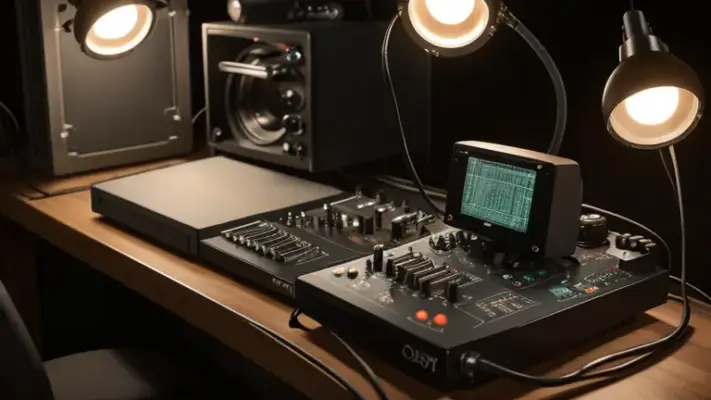
The technical architecture of the Odyssey 5000 was a triumph of consumer engineering during a period of rapid technological evolution. Far from today’s complex processors, the console operated with an architecture that, while primitive by modern standards, was revolutionary in its time. The heart of the system was its Central Processing Unit (CPU), a component that dictated the pace and complexity of the games. Instead of dedicated advanced graphics processing, the system utilized processors and logic circuits that managed data flow efficiently, focusing more on game logic and event timing than on rendering three-dimensional images. This limitation forced engineers to be extremely creative, optimizing every clock cycle to maximize the visual and sound experience within restricted energy and processing consumption.
Memory and Storage Media
Memory management was one of the most critical aspects. The console did not have the vast amount of RAM we consider standard today, requiring developers and hardware engineers to be masters of data efficiency. Memory was used to store not only the current game state (character positions, scores) but also graphic and sound data. The storage media, whether via cartridges or tapes, was the vehicle that carried these instructions. This dependence on physical media, and its limited capacity, determined the size and complexity of the games. Every bit of information was precious, and this restriction was not just a bottleneck, but a motor of innovation, forcing the creation of minimalist yet deeply engaging games.
The graphics capabilities, in turn, were remarkable for the 1970s, but they operated under visible restrictions. Color and shape generation was handled by dedicated circuits, and the system lacked the real-time image processing capacity of more advanced arcade machines. The result was vector graphics and simple sprites, but which, when combined with perfect *timing*, gave the illusion of depth and movement. Sound followed a similar logic: instead of complex digital audio, the system used wave generators and oscillators, creating soundtracks and effects that, although limited in spectrum, were incredibly effective in establishing the atmosphere and rhythm of the games.
In summary, the Odyssey 5000 operated under constant tension: between the limitations of its components—the CPU, memory, and sound and image generators—and the ambition to deliver an entertainment experience comparable to large arcade halls. This technical dichotomy not only defined the product but established a paradigm for the entire subsequent industry: proving that innovation did not solely depend on more processing power, but above all, on the ingenuity of using existing power in ways never before imagined, paving the way for the video game to be recognized not just as an electronic toy, but as a legitimate form of digital art.
Launch Strategy and Initial Market Impact
The launch of the Odyssey 5000 was not a single event, but a meticulously orchestrated campaign designed to penetrate different geographical markets. The distribution strategy was adapted to the specificities of each region. In North America, the console made its initial debut in 1972, setting the market standard that would be followed. Subsequently, expansion into Europe, particularly the British and German markets, occurred in distinct phases, allowing the company to adjust its marketing and sales logistics to meet local cultures and consumption habits. This regional planning ensured that the product was available at strategic moments, maximizing initial impact and brand visibility.
Marketing Strategy and Family Appeal
Instead of being sold merely as an expensive substitute for arcades, the great marketing breakthrough of the Odyssey 5000 was repositioning it at the core of family entertainment. The advertising campaign did not focus on technical complexity, but rather on the experience of leisure at home. The message was clear: the Odyssey 5000 transformed the living room into an accessible center of fun, something previously restricted to expensive public venues. The console was sold as a catalyst for family moments, appealing directly to the desire to create fun, interactive memories right at home. This paradigm shift—from public attraction to domestic consumer item—was crucial for commercial success and for the product’s acceptance by the non-gamer public.
The initial game catalog played a fundamental role in this strategy. The titles were not merely demonstrations of technical capability; they were narrative pieces that reinforced the concept of family entertainment. The launch games were carefully selected to be intuitive and engaging for all age groups, ensuring that the appeal was broad and not limited to a niche of electronics enthusiasts. The inclusion of iconic games from the start helped build an immediate user base and demonstrate the system’s versatility.
Price and Initial Economic Impact
The retail price of the Odyssey 5000 was a determining factor in its market penetration. Although it was a considerable investment for a family at the time, the cost was justified by the promise of continuous and lasting entertainment. The business model was built around the sale of the main console and, subsequently, the recurring sales of game cartridges. This combination of a high entry cost with an accessible, complementary revenue stream (the games) established an important precedent for the video game industry. The low cost of producing and distributing cartridges, compared to the complexity of the hardware, ensured that the content always kept pace with demand, keeping the console relevant for years.
In summary, the combination of well-planned regional releases, marketing communication focused on the warmth of home, and a smart economic model based on complementary games allowed the Odyssey 5000 not only to compete but to redefine the market. It proved that digital entertainment could be an essential consumer good, paving the way for subsequent generations of video game consoles.
The Defining Titles: Exclusive Games and Gameplay Milestones

The titles available for the Odyssey 5000 were much more than mere accompaniments to its launch; they were cultural catalysts and genre definers. In an era when the concept of the “video game” was maturing, these exclusive and ported games not only entertained families but, crucially, established the grammar of gameplay for future console generations. The initial catalog therefore functioned as a laboratory of experimentation, where the technical limitations of the machine were transformed into unique stylistic and mechanical features.
The Consolidation of Genres and Gameplay
The Odyssey 5000’s approach was remarkably eclectic, ranging from sports simulation to quick-reaction challenges. Sports games, for example, established the first standards of home-based simulation. Titles like Tennis were fundamental in demonstrating that the gaming experience could replicate the dynamics of a real sport, requiring the player not only to react but also to understand rules and positioning. This simulation capability was a milestone that elevated the console from a passing toy to a structured entertainment tool.
In parallel, the console excelled at porting and adapting arcade hits, but the impact of these games was recontextualized for the home. The success of adaptations referencing action and shooting games established the “reaction game” genre in the domestic format. These titles forced developers to optimize gameplay for smaller screens and simpler controls, an exercise in conciseness that would become a pillar of subsequent game development. The challenges of precision and timing, inherent to these portable games, shaped consumer expectations about what a “video game” should be: engaging, challenging, and instantly understandable.
Milestones That Redefined the Player Experience
The true power of the catalog lay in its ability to create puzzle and adventure experiences that required reasoning beyond pure reflex. Although graphical resources were limited by the Odyssey 5000’s architecture, developers were masters at using level design and difficulty progression to maintain engagement. These games taught the player the importance of mastery and the command of specific mechanics. They solidified the idea that the value of entertainment was not just in high-definition graphics—something still far off—but in the depth of interaction and the learning curve the game offered.
In summary, the Odyssey 5000 games pioneered the definition of a market niche: interactive home entertainment. They didn’t just entertain; they educated the consumer about the potential of video games. By consolidating genres such as sports, action, and puzzle within the living room format, the catalog of defining titles ensured that the next generation of consoles would not have to start from scratch. The legacy lies not only in the names of these games but in the foundation of gameplay expectations that have shaped the industry to this day.
Sales, Reviews, and the Competitive Landscape of the Time
The initial reception of the Odyssey 5000 was a complex mosaic of cautious enthusiasm and technical skepticism. On one hand, the console was praised for its ability to bring the electronic gaming experience into the home environment, partially replicating the magic of the arcade. On the other hand, critics and enthusiasts pointed out the limitations inherent in 1970s technology. Success, therefore, was not unanimous. Many critics classified it as a niche device, a sophisticated technological toy, but not a true robust competitor to arcade halls. However, in terms of sales, the product positioning strategy was crucial. The console didn’t just compete with other electronics; it redefined the concept of family entertainment, a differential that the market quickly absorbed.
The Competitive Landscape and Market Differentiation
To understand the impact of the Odyssey 5000, it is essential to analyze the technological battlefield of the era. The market was boiling, with major rivals attempting to capture consumer attention. Models like the Magnavox Odyssey, a direct precursor, had already established the concept of the home video game, but the Odyssey 5000 sought to differentiate itself not only through technology but through the user experience. It operated under constant tension between the need to be an accessible product and the desire to offer graphics and gameplay that seemed advanced. Competition forced the Odyssey 5000 to always be one step ahead in terms of game catalog, and not just hardware.
Sales analysis shows that success was not immediate, but rather a steady upward curve supported by a game ecosystem. While some rivals focused on replicating specific arcade machines, the Odyssey 5000 adopted a more eclectic approach. This allowed it to establish itself as a platform for *experiences*, and not merely a game player. This adaptability and focus on family entertainment, rather than mere arcade emulation, was the major differentiator that allowed it to overcome criticism of being only a niche product.
In summary, the commercial performance of the Odyssey 5000 was a success in market penetration. It didn’t just sell consoles; it sold the *idea* of the modern home video game. Sales data, although subject to economic fluctuations and the arrival of new technologies, confirms that the console paved a path of consumption that would be replicated and amplified by future generations. The lasting success of the Odyssey 5000 resides precisely in its ability to transform a technical limitation—the hardware of the 1970s—into a culturally relevant platform, defining interactive entertainment as a pillar of the modern home.
The Lasting Legacy and Influence on the Modern Industry
The legacy of the Odyssey 5000 transcends a mere chronology of releases; it represents the zero point of a new entertainment category: the home gaming platform. Before its success, the electronic game was often viewed as an arcade pastime, an ephemeral consumption in public spaces. The Odyssey, by demonstrating that interactive entertainment could be encapsulated in a residential consumer appliance with economic viability, solidified the idea that the home could be a dedicated leisure center. This conceptual transition was the masterstroke that redefined the market, proving that the gaming experience did not have to be tied to a physical consumption location.
The Genesis of the Entertainment Ecosystem
The console’s most lasting impact, from the perspective of technology history, lies in the creation of the ecosystem concept. The Odyssey 5000 was not just hardware; it established the fundamental business model that sustains the industry to this day: the interdependence between the console (the hardware), the games (the content), and the accessories. By creating the need for a growing catalog of complementary titles, the company didn’t just sell a product, but rather an evolving entertainment service. This “open platform” model—where value increases exponentially with every new game released—is the backbone of all subsequent major entertainment technology companies.
For media and technology historians, the Odyssey 5000 is studied as a pioneering case study in convergence. It forced the convergence between computing engineering and family leisure. The technical limitations of the time—such as the use of specific image and sound generators—were not seen merely as restrictions, but as the first *industry standards* that competitors and successors had to follow or surpass. It proved the concept that processing power was no longer an academic luxury, but an accessible tool for mass entertainment.
The Timeline and Ongoing Influence
Observing the Odyssey’s trajectory allows us to trace a clear industrial timeline. Although subsequent consoles advanced drastically in terms of graphical power and memory processing, they did not reinvent the concept of “platform gaming.” They merely elevated the fidelity and complexity. The Odyssey 5000 demonstrated that the public was willing to pay for a continuous and varied gaming experience at home, a fact that guided decades of investment. It paved the way for video games to be accepted not as a technological toy, but as a legitimate and profitable form of art and entertainment in itself.
In summary, the true triumph of the Odyssey 5000 was not the graphical quality of its games, but the validation of a market. It transformed the video game from a technical curiosity into a cultural and economic pillar, setting the pace and ambition that would shape the electronic gaming industry to this day.
Frequently Asked Questions
What was the real impact of the Odyssey 5000 on the early video game industry?
The Odyssey 5000 was crucial for transforming electronic entertainment from a public event into a domestic consumer item. It established a new paradigm, paving the way for the modern video game industry as an evolving family leisure ecosystem.
How did the Odyssey 5000 compare to arcade consoles of the same era?
While arcade machines represented the pinnacle of technology in public settings, requiring payment per play, the Odyssey 5000 aimed to bring that experience into the comfort of the living room. It was a system designed to be a domestic consumer item, miniaturizing high-tech arcade gaming.
What were the best-selling and most influential games for the Odyssey 5000?
The text mentions that the initial game catalog was fundamental to the marketing strategy, having been carefully selected to be intuitive and engaging for all age groups. However, the article does not specify which titles were the best-selling or most influential.
Was the console expensive? What were the costs of maintenance and games?
The retail price was a considerable investment for the time. The business model was built on the sale of the main console and, subsequently, on the recurring sales of game cartridges, ensuring continuous and lasting entertainment.
Was the Odyssey 5000 a global sales success or more of a niche success?
The launch was a meticulously orchestrated campaign to penetrate different geographic markets. The company adapted its distribution strategy for North America (debut in 1972) and for Europe, ensuring the product had a wide initial impact and market visibility.
Conclusion
The trajectory of the Odyssey 5000 transcends the history of a mere electronic console; it represents the birth of a new entertainment paradigm. By identifying the gap between the complexity of arcade machines and the simplicity of household toys, the pioneers did not just create a product, but a family leisure ecosystem. They proved that it was possible to bring the brilliance and magic of arcade machines into the comfort of the living room, transforming game consumption from an expensive public experience into an accessible domestic consumer item.
This achievement required a triumph of consumer engineering. Overcoming challenges such as generating stable color graphics in the 1970s, miniaturizing gigantic systems, and, crucially, thermal control in a domestic format, were not mere adjustments, but unprecedented solutions in applied physics. The console’s architecture, which optimized every processing cycle and managed memory with maximum efficiency, established a new standard of usability and technical viability, paving the way for high technology to be truly “domesticated.”
Ultimately, the Odyssey 5000 was not just a game; it was proof that consumer electronics could become a cultural engine. It redefined what was technically possible, transforming conceptual sketches into a global market. Revisiting this history, it is essential that we understand that the true legacy of the Odyssey 5000 lies in how it taught us to value continuous innovation, prompting us to reflect on how yesterday’s technical challenges shape tomorrow’s immersive technology.