
Read this article in: Portuguese (Português) · Spanish (Español)
The story of Fahrenheit: Indigo Prophecy is a deep dive into the art of interactive narrative, and the studio responsible for bringing this experience to life was Quantic Dream. The game, an action-adventure title, was developed by Quantic Dream and published by Atari. The creative heart behind the work is strongly linked to director and writer David Cage, who not only supervised the artistic vision but also wrote the 2,000-page script. Thus, the title is not just a product, but the result of a monumental narrative effort focused on exploring the complexity of human choices.
The relevance of Fahrenheit: Indigo Prophecy in the video game landscape is undeniable. The game was originally released on platforms such as PlayStation 2, Xbox, and Windows in 2005. It not only achieved sales success, selling over a million copies, but also set a standard of excellence in terms of writing and acting. The development of the title, which took about two years with nearly eighty people working at Quantic Dream, and the work of David Cage, who served as writer and director, attest to the ambition and technical depth behind this work.
In this article, we will uncover all the behind-the-scenes details that made Fahrenheit: Indigo Prophecy a landmark. We will explore the creators and the team behind the project, the origin of the mystery surrounding Lucas Kane, the challenges and time invested in the art of interactive narrative, the power of narrative choices in gameplay, as well as the game’s releases and modern legacy, which was remastered for various platforms in 2015.
Key Points
- Developed by Quantic Dream, the game is an action-adventure set in New York in 2009.
- The narrative revolves around Lucas Kane, a mysterious crime and supernatural powers.
- The plot expands from a police crime to a mystical conspiracy involving Mayan rituals.
- Initially released in 2005, the title was ported to multiple platforms, including mobile devices.
- The game emphasizes player agency, allowing choices to shape the story without losing coherence.
Fahrenheit: Indigo Prophecy in summary
| Developer | Quantic Dream |
|---|---|
| Publisher | Atari |
| Directors | David Cage; Steve Kniebihly; Jérôme Britneff-Bondy |
| Writers | David Cage; Elisabeth Fournier |
| Platforms | PlayStation 2; Windows; Xbox; Android; iOS; Linux; macOS |
| Genre | Action-adventure |
| Mode | Single-player |
| Release (PAL) | September 16, 2005 |
The Creators and Team Behind Fahrenheit
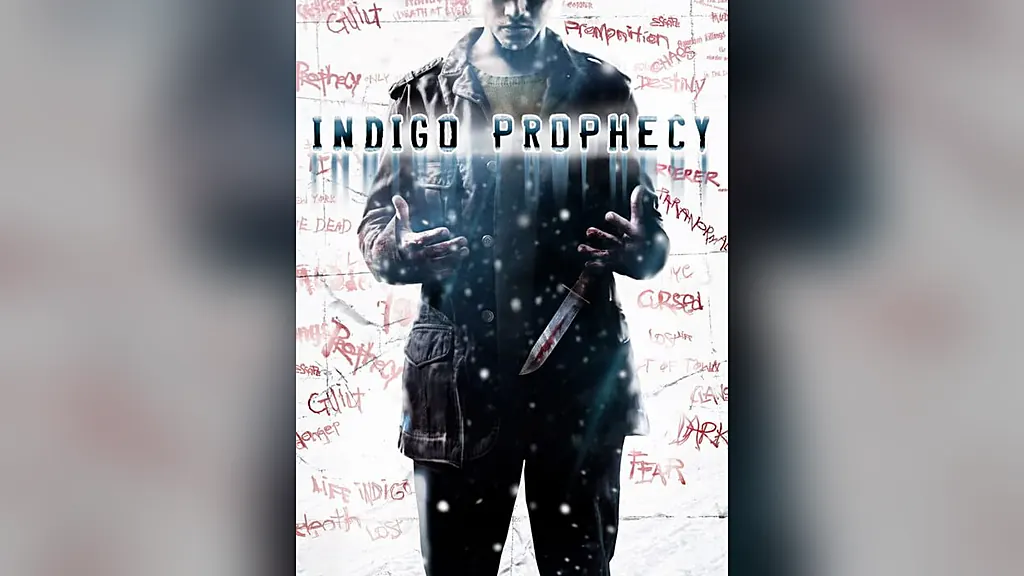
The driving force behind Fahrenheit: Indigo Prophecy is undoubtedly the studio Quantic Dream. Founded by David Cage, the game was not merely a development project, but the materialization of a deep and ambitious creative vision. If you are interested in details about game creation, you can check out the history of Fahrenheit Indigo Prophecy. Initially, development faced support challenges with the first publisher, Vivendi Games. This transition was crucial, as the project was eventually handed over to Atari, which boosted the budget and scale of production, allowing the team to pursue a high-caliber narrative.
David Cage’s Narrative Vision
David Cage’s role transcended that of a mere writer and director; he was the conceptual architect of the game. Originally, the title could have been planned as a twelve-part episodic series, but Cage abandoned that format. His intention was to create an experience that was accessible, appealing to both hardcore gamers and a broader audience outside the gaming universe. He articulated his design philosophy with the metaphor of a rubber band: “the player can stretch or deform the rubber band through their actions, but whatever they do, the backbone of my story will always be there.” This structure ensured that the narrative remained cohesive, even in the face of player choice.
The title’s artistic ambition was colossal. The design of the concept document took a year to finalize and contained an impressive 2,000 pages, requiring extremely rigorous guidelines to prevent any deviation. The team had to incorporate vast cinematic influences, from the visual and interactive potential of 24 (which inspired the use of split-screen) to classics such as Seven (1995), Jacob’s Ladder (1990), Fight Club (1999), and Dune (1984). The soundtrack was composed by Angelo Badalamenti, under the supervision of Normand Corbeil, and was conceived with the goal of sounding like a major motion picture.
The technical and artistic execution was massive. Development involved nearly eighty in-house employees, plus about sixty voice actors and extras. The capture of facial and movement animation exceeded twelve hours of content, completed in just three months, in addition to three hours dedicated solely to voice work. To enhance the atmosphere, blue color filters, high dynamic range effects, and film grain were used. The game was released in phases: Atari published the title for Windows, PlayStation 2, and Xbox in September 2005 (NA: September 20; PAL: September 16). The title was changed to Indigo Prophecy in North America to avoid confusion with the film Fahrenheit 9/11.
The game’s longevity and legacy were secured by its multiple platforms. Following the initial releases, the title came to the Xbox 360 in 2007 and was later ported to the PlayStation 4 in 2016. A crucial point in its history was the release of Fahrenheit: Indigo Prophecy Remastered in 2015, which reached mobile platforms such as Android, iOS, Linux, and macOS. This remastered version not only expanded the game’s reach but also restored sex scenes that had been omitted in the original 2005 North American version.
The Origin of the Story and the Mystery of Lucas Kane

The narrative of Fahrenheit: Indigo Prophecy transports us to the vibrant and mysterious landscape of New York City in 2009. The starting point is a shocking crime that throws the player directly into the whirlwind of the action-adventure genre with a strong mystery element. The story revolves around Lucas Kane, a man whose life disintegrates in an act of inexplicable violence: he is caught stabbing a man in a restaurant bathroom and then flees the scene. The case is immediately taken up by the authorities, investigated by detective Carla Valenti and her partner, Tyler Miles. Initially, the mystery unfolds around almost supernatural phenomena, such as Lucas’s encounter with Agatha, a spiritual medium who puts him into a trance, seeking to unravel the events that led him to this point.
As the investigation progresses, the nature of the crime becomes increasingly complex. Lucas begins to suspect that it was not a purely irrational act; he realizes he was influenced by a strange man who seemed to be controlling his movements. When he returns to the crime scene the next day, he finds Agatha dead, which raises the level of danger and puts him under intense police suspicion. The game is built on this growing tension: while the police try to corner Lucas with a trap, he demonstrates superhuman strength, overpowering agents and escaping on a moving train. These events force the player to question reality and the protagonist’s own sanity.
The Cosmic Mystery Behind the Crime
The initial mystery of a crime in New York quickly expands into a mystical and conspiracy-laden plot. Guided by what appears to be the spirit of Agatha, Lucas discovers that the restaurant incident was not a simple crime, but rather a Mayan sacrifice ritual performed to open a portal to the “Other World.” This revelation transforms the game from a mere police procedural into an epic saga of power. The stage is occupied by secret factions, such as the Orange Clan, and a central figure: the Mayan Oracle. If you are interested in how these elements intertwine, you can check out the story of survival games. This group seeks immortality, and the focus of the entire plot rests on the Indigo Child, a young woman who carries a secret capable of granting unlimited power to whomever hears her message.
Carla Valenti’s investigation becomes a crucial thread for the player. She interviews a convict whose modus operandi mirrors Lucas’s, and it is through him that the mystery is linked to the Oracle. The danger intensifies when Lucas’s ex-girlfriend is kidnapped by the Oracle himself, forcing him into a desperate race to rescue her. In a highly dramatic narrative arc, the protagonist is revived by an artificial intelligence (AI) group that guides him to an old military barracks, a place where he was exposed to Chroma. This mysterious force grants Lucas the resistance needed to resist the Oracle’s attempts to make him commit suicide. The climax culminates in a final battle, leaving Lucas and Carla together, three months later, in a new chapter of life, with Carla pregnant, sealing the mystery with a touch of redemption and future.
Development: Challenges, Time, and the Art of Interactive Narrative
The ambition behind Fahrenheit: Indigo Prophecy was never just about telling a story; it was about building a narrative engine where the player was the primary agent of change. Originally, the project was conceived as a twelve-part episodic series, but David Cage quickly redefined the scope. His frustration with the repetitive nature of the video game industry led him to a radical concept: the main focus should be the narrative, and it should be shaped by user choices. Cage developed a powerful metaphor to explain this challenge: the story would be like a rubber band. “The player can stretch or deform this rubber band through their actions, but whatever they do, the backbone of my story will always be there,” he explained, ensuring both freedom and narrative coherence, a theme that reminds us of the complexity of narratives like those in multiplayer horror games.
The Colossal Creative Effort
To sustain this complex interplay between choice and plot, the development process was monumental. The design document alone took a year to complete and contained an impressive 2,000 pages, requiring extremely detailed guidelines to prevent any deviation in production. The full development of the title spanned two years and mobilized a team of nearly eighty internal staff, in addition to a vast cast of extras and actors. The technical work was equally massive: over twelve hours of motion and facial capture animation were completed in just three months, supplemented by three hours of voice recording. It is this scale of production that elevates the game from a simple pastime to an interactive work of art.
From Concept to Platform
Maintaining pace and quality in a constantly changing plot presented a challenge that required innovative solutions, such as implementing a character mental health meter and a context-sensitive user interface system. The cinematic influences were vast, encompassing titles like Seven, Fight Club, and Dune, which shaped both the story and the audio. The soundtrack was composed by Angelo Badalamenti, under the supervision of Normand Corbeil, with the directive that the sound be conceived as if it were for a film. The title was even changed from Fahrenheit to Indigo Prophecy in North America to avoid confusion with the 2004 film.
After two years of development, the game was released on September 16, 2005, in America and on September 20, 2005, in North America, for the PlayStation 2, Windows, and Xbox platforms. Its adaptability and longevity were confirmed with later releases for mobile platforms like Android and iOS, and even for more modern systems like the PlayStation 4 in 2016. This entire process—from the 2,000-page script in one year to the collaboration of dozens of specialists—is what established Fahrenheit: Indigo Prophecy as a milestone in interactive narrative in video games.
📌 Monumental Development Scope
- 2,000-page design document, taking one year to complete.
- Total development extended over two years, mobilizing nearly eighty staff members.
- Over twelve hours of motion capture animation in just three months.
- Vast cinematic influences, such as Seven, Fight Club, and Dune.
Gameplay and the Power of Narrative Choices

Fahrenheit: Indigo Prophecy is a masterful example of how video game technology can transcend mere action entertainment, establishing itself as a robust vehicle for exploring narrative and the human psyche. Classified as an action-adventure game, the title offers the player a cinematic experience that nonetheless demands active participation. The gameplay is characterized by fluid perspectives, alternating between third-person and, at crucial moments, first-person view, ensuring the player’s involvement remains constant regardless of the character controlled.
The player takes control of complex protagonists, such as Lucas Kane, a supernaturally possessed man, and the New York police detectives, Carla Valenti and Tyler Miles. Additionally, Lucas’s brother, Markus, also has moments of gameplay. However, the focus of Indigo Prophecy is never solely on combat or escape. Instead, the game establishes a system where physical action is intrinsically linked to the characters’ emotional and mental state. To simulate physical exertion or tension, the player must rapidly press the trigger buttons, transforming a simple command into a reflection of exhaustion or internal struggle.
📘 Player Agency
Refers to the degree of control and influence the player has over the unfolding narrative. In Indigo Prophecy, this means the player doesn’t just watch, but actively shapes the plot through their choices.
The Power of Player Agency
The most revolutionary and noteworthy aspect of Fahrenheit: Indigo Prophecy is its commitment to player agency. The title refuses to be linear. The plot is an entanglement of mysteries, conspiracies, and sacrifices, and how the player interacts with the events—from dialogue choices to managing the protagonists’ psychological state—determines the story’s course.
This narrative branching is the beating heart of the game. Plot details, especially the endings, can change drastically based on the player’s decisions. It is estimated that there are at least three distinct endings possible, each unlocked by a specific set of choices and actions. Furthermore, the system requires the player not only to react but to actively manage the characters’ mental state, using on-screen commands to guide their decisions and influence the plot’s outcome.
This mechanic elevates the gaming experience from a simple “following the story” to an exercise in “shaping the story.” The player is not a passive observer; they are the primary agent of change. They must use the left analog stick for movement and the right analog stick to perform actions, whether conversing, picking up objects, or, in moments of high tension, invoking Lucas’s paranormal abilities. It is this synergy between control complexity and freedom of choice that makes Indigo Prophecy not just an action-adventure game, but a profound study of the weight of decisions and the power of interactive narrative.
Releases, Platforms, and Modern Legacy
Releases, Platforms, and Modern Legacy
The technological and narrative ambition of Fahrenheit: Indigo Prophecy ensured it a rarity of longevity and market reach for its time. The title was not confined to a single console generation, launching across a vast array of platforms. Initially, the game arrived on PlayStation 2, Windows, and Xbox. Regional release dates were meticulously observed: in the PAL region, the game debuted on September 16, 2005, while in North America, the launch occurred on September 20, 2005. Later, the title was adapted for other regions and systems, such as the worldwide release on December 5, 2007. The game’s legacy, however, extended to the mobile scene. On January 29, 2015, it was ported to Android, iOS, Linux, and macOS, solidifying its status as an interactive work of art across multiple screens.
The game’s commercial success was notable. Although critics pointed out technical flaws, the title was recognized as a sales success, surpassing the one million copies sold mark. Critical reception, compiled by sources like Metacritic, was generally favorable, validating the strength of its narrative. Critics praised the depth and emotional impact of the story, describing it as “profound and captivating” and even “disturbing.” Many highlighted the character development and the game’s ability to create a cinematic experience. For instance, GameSpy declared the game was so good it “could save a dying genre.”
However, the consensus was not unanimous. Criticisms frequently focused on technical and gameplay aspects. Some critics pointed out flaws in the implementation of stealth sequences, while others complained about “awkward” camera angles and “stiff” animations. There were also isolated criticisms regarding the PC version, which was considered inferior to its console counterparts in certain aspects. Even with these reservations, the title’s impact was undeniable. Fahrenheit: Indigo Prophecy was named the best adventure game of 2005 by publications such as Computer Games Magazine, GameSpy, PC Gamer, and IGN, cementing its place in the history of narrative games.
Its multi-platform reach and the praise for its narrative have given it a modern legacy. The 2015 adaptation for mobile devices, for example, ensured that the story experience of Lucas Kane remained accessible to new generations of players, proving the durability of the narrative engine created by Quantic Dream and the strength of its story.
🕒 Evolution and Releases of Fahrenheit: Indigo Prophecy
- September 16, 2005 — Release in the PAL region.
- September 20, 2005 — Release in North America (NA).
- December 5, 2007 — Subsequent worldwide release.
- January 29, 2015 — Port to mobile platforms (Android, iOS, Linux, and macOS).
Glossary
- Quantic Dream: A development studio known for creating complex, choice-driven interactive narratives.
- Action-adventure: A game genre that combines elements of physical combat with exploration and mystery-solving.
- Mayan Oracle: A central figure in the plot, associated with mystical power and the secrets of ancient civilizations.
- Motion capture: A technique that records an actor’s movements to digitally transfer them to a virtual character.
- Player agency: The degree of freedom the player has to influence and shape the story’s development.
- High dynamic range effects: Visual filters that increase the contrast and detail of light and shadow in digital images.
Frequently Asked Questions
Is Fahrenheit: Indigo Prophecy the same game as Fahrenheit?
Yes, the work is the same. The title was changed to *Indigo Prophecy* specifically in North America to avoid any confusion with the film *Fahrenheit 9/11*. This change ensured that the focus remained on the interactive experience and the mystery narrative.
What is the main plot of Fahrenheit: Indigo Prophecy?
The plot begins with a shocking crime in New York, where the protagonist, Lucas Kane, is caught in an act of violence. The police investigation, led by Carla Valenti, uncovers a mystery that quickly expands into mystical conspiracies, involving Mayan rituals and the search for limitless power.
What platforms is the game currently available on?
The game has remarkable longevity, having been released on various platforms. It is available on console systems like the PlayStation 2 and Xbox, and was later ported to the PlayStation 4. Additionally, it was released for mobile and desktop operating systems, including Android, iOS, Linux, and macOS.
What does it mean to say the game has ‘non-deterministic choices’?
This means the game is not linear. While your dialogue choices and actions shape the story’s path and the player’s experience, the main plot and central events are maintained. The narrative has a cohesive ‘backbone’ that ensures the story moves forward, regardless of your decisions.
Who is David Cage and what was his contribution to the game?
David Cage is the founder of the studio Quantic Dream and served as the game’s conceptual architect. His main contribution was redefining the scope of the project, moving away from an episodic format. He ensured that the narrative was shaped by player agency while maintaining plot coherence.
Conclusion
The driving force behind Fahrenheit: Indigo Prophecy is a testament to creative ambition. David Cage elevated the project from a simple video game to a high-level cinematic experience, using the metaphor of a rubber band to ensure the narrative remained cohesive, even given the freedom of player choices. With influences ranging from classics like Fight Club to cutting-edge visual techniques, the development required colossal conceptual rigor. The result was a title that not only told a story but built a narrative engine where the player was the primary agent of change, raising the bar for interactive immersion.
Narratively, the game drops us into New York in 2009, following Lucas Kane after a violent crime. The initial police mystery quickly expands into an epic saga of conspiracy and mysticism, involving the Mayan Oracle and the search for a portal to the “Other World.” The plot’s complexity, which requires the player to question the protagonist’s own sanity, was kept alive by multiple platforms and the Remastered version. The legacy of Indigo Prophecy thus lies in how it balances the suspense of an action-adventure police procedural with the weight of a cosmic destiny.
By understanding the engineering behind its narrative, we realize that the true magic of the title lies at the intersection of player freedom and the inevitability of fate. It is this fusion of choices and consequences that makes it a landmark of interactivity, and it is an invitation for players to revisit the power of emergent narrative.