Read this article in: Portuguese (Português) · Spanish (Español)
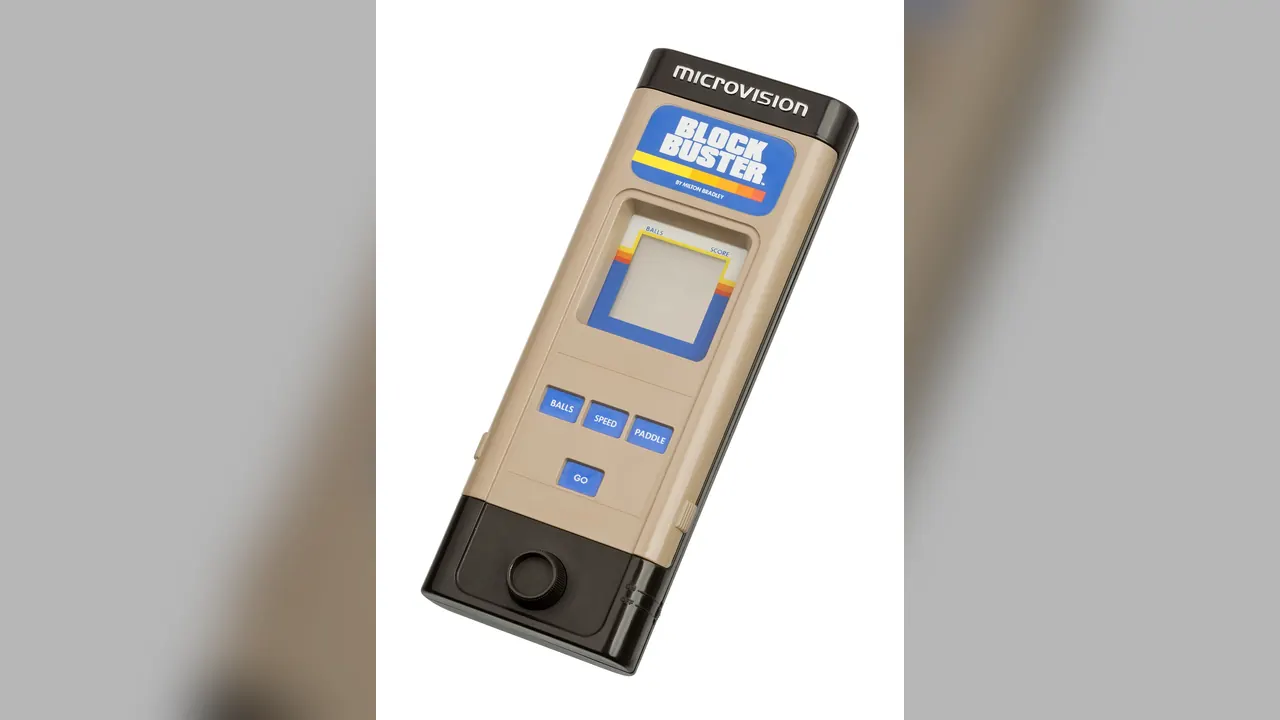
The Milton Bradley Microvision was a fundamental milestone in the history of portable video games, recognized as the first handheld game console to use interchangeable cartridges, giving it an unprecedented reprogrammable nature. Launched by the Milton Bradley Company in November 1979, the device revolutionized portability by combining electronic gameplay with a modular system. Although it achieved moderate success, generating $15 million in revenue for Smith Engineering in its first year, the Microvision set a market standard that, despite facing technical limitations, directly influenced the next generation of consoles. Its short lifespan, which ended in 1981, only accentuated its pioneering legacy.
The relevance of the Microvision transcends its commercial life cycle. The console was conceived by Jay Smith, the engineer responsible for its design, a professional who later developed the Vectrex console. Technically speaking, the system featured notable specifications for its time, such as a 16 × 16 pixel LCD display and the use of processors like the Intel 8021 or the TI TMS1100, which were housed in each removable cartridge. These characteristics position it not only as an entertainment product but as a fascinating object of study on first-generation engineering, especially considering the durability issues that still affect preserved units, such as the so-called “screen rot.”
In this article, we will delve deeply into the trajectory of the Microvision, exploring everything from its origins at the Milton Bradley Company to the technical challenges of its architecture. We will analyze in detail the engineering behind the console, the hardware specifications that made it unique, the context of its launch in the portable game market, and finally, we will discuss the design limitations and durability problems that marked its era. We will conclude with an analysis of its lasting legacy and influence on the video game industry.
Key Points
- Launched in November 1979, the Microvision was a second-generation portable console, succeeding Milton Bradley’s board game expertise.
- Its innovative architecture concentrated processing in removable ROM cartridges, rather than on the main console board.
- The system used a 16 × 16 pixel LCD display and was powered by 9V batteries.
- Processing operated at 100 kHz, utilizing processors such as the Intel 8021 and the TI TMS1100.
- The console launched for US$49.99 and had its life cycle ended in 1981.
Milton Bradley Microvision Technical Specifications
| Alternate Name | MB Microvision |
|---|---|
| Manufacturer | Milton Bradley Company |
| Type | Portable game console |
| Generation | Second generation |
| Release Date | November 1979 |
| Launch Price | US$49.99 (equivalent to about $222 in 2025) |
| Discontinued | 1981 |
| Media | ROM Cartridges |
| CPU | Intel 8021 / TI TMS1100 (in cartridge) with 100 kHz clock |
| Memory | 64 bytes RAM, 2K ROM |
| Display | 16 × 16 pixel resolution |
| Power Source | 1 × 9V battery (TMS1100 processors), 2 × 9V battery (Intel 8021 processors) |
The Origins and Context of Milton Bradley
The trajectory of the Milton Bradley Company, now part of the Hasbro conglomerate, is intrinsically linked to the evolution of play-based entertainment. Founded in 1860, the company began operations in Springfield, Massachusetts, where it established the state’s first color lithography shop. Initially, the company’s success was anchored in graphic products; one of the best-selling items was Abraham Lincoln’s portrait. However, commercial success is not static. As time passed, the president’s appearance changed, and the graphic design became outdated, forcing the company to seek new sources of revenue and innovation.
Reinvention Through Board Games
Faced with a creative challenge, the company sought new applications for its lithography machine. This period of searching for a new niche led Milton Bradley to visit a friend, George Tapley. Tapley proposed a challenge that inspired the company: to create an entirely American game. From this inspiration came “The Chequered Game of Life.” The game represented a journey of life, moving players along a track that simulates the passage from childhood to a happy old age. The spaces were marked with various moral positions, ranging from honor and bravery to disgrace and ruin. An important design detail was the use of a spinner instead of traditional dice, a choice intended to avoid negative association with the game.
Success with board games established Milton Bradley as a powerhouse in creating play experiences. However, the 20th century brought with it a radical shift in media and entertainment consumption. The company, a steward of a vast catalog of physical games, realized that the market was at an inflection point. Entertainment was moving from the board to the electronic. The challenge was no longer just about creating rules; it was about incorporating technology into a portable and accessible format.
It is in this context of transition, where board game design met the growing, yet still nascent, potential of portable electronics, that the Microvision emerges. Launched in November 1979, the console represented a paradigm leap for Milton Bradley. It was not just a new toy, but an industrial response to the demand for on-the-go entertainment. The Microvision, which used interchangeable ROM cartridges and featured technical specifications such as an Intel 8021 processor (or TI TMS1100 on the cartridge) and a 16 × 16 pixel resolution, was the direct result of the company’s ambition to maintain its relevance and market leadership, translating centuries of expertise in game design for the new digital age.
The Engineering Behind the Console and Technical Challenges
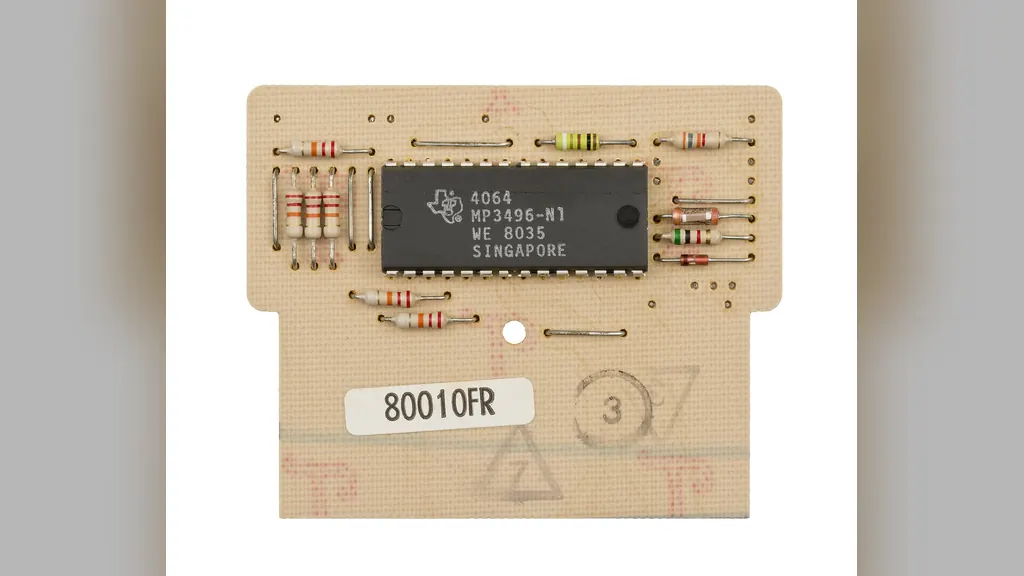
The engineering behind the Microvision represents one of the most sophisticated and unique leaps in the history of portable consoles. Unlike most systems that would appear later, the Microvision did not contain a central processing unit (CPU) on its main board. This technical decision—revolutionary and fundamental—concentrated the processing power in each removable cartridge. Consequently, the console itself was reduced to an intelligent system composed only of the controls, the LCD panel, and the LCD controller. This architecture not only ensured exceptional portability but also provided an unprecedented level of reprogrammability for its time, allowing the base hardware to remain relatively stable while the game content was fully modularized, a concept that echoes the legacy of devices like the Nokia N-Gage and mobile evolution.
The Electronic Heart of the Cartridges
The processing system was determined by the ROM Media cartridges. Initially, the cartridges used processors such as the Intel 8021 (licensed by Signetics) and the Texas Instruments TMS1100. Due to component sourcing issues, Milton Bradley Company made a critical switch: it began using only the TMS1100 processors, which required reprogramming games originally designed for the 8021. Although the TMS1100 was technically a more primitive device, it offered crucial advantages in terms of power consumption and memory capacity, vital aspects for a handheld device. Processing occurred at a speed of 100 kHz, and the system maintained a built-in RAM of 64 bytes, supplemented by 2K of ROM on the TMS1100 processor.
The technical challenges were not limited to processing. Power management was particularly complex. The early revisions of the Microvision, which used the 8021, had high power consumption (1 W), requiring two 9V batteries. Later units, adapted for the TMS1100, drastically reduced this demand to only 110 mW, allowing the use of a single 9V battery. However, the initial battery design created a safety dilemma: the compartment, although designed for two batteries, presented a risk of short circuits and overheating if the batteries were inserted incorrectly. The engineering solution was to remove the terminals from one of the batteries, turning the space into a “spare battery holder,” a detail that demonstrates the depth of the technical rigor of the era.
In summary, the Microvision incorporated a 16 x 16 pixel display and an input system combining a 12-button keypad and a paddle control. The architecture that separated the main processing from the console body, transferring it to the cartridges, was key to its longevity and adaptability. This decision not only set the standard for portability for the generation but also established a business and engineering model that would deeply influence the subsequent development of the video game industry.
📊 Microvision Technical Specification Comparison
| Component | Processor (Initial) | Processor (Later) | Power Consumption |
|---|---|---|---|
| CPU | Intel 8021 (Signetics) | TMS1100 | N/A |
| Batteries (Initial) | 2 x 9V | N/A | 1 W |
| Batteries (Later) | N/A | 1 x 9V | 110 mW |
Architecture and Hardware Specifications
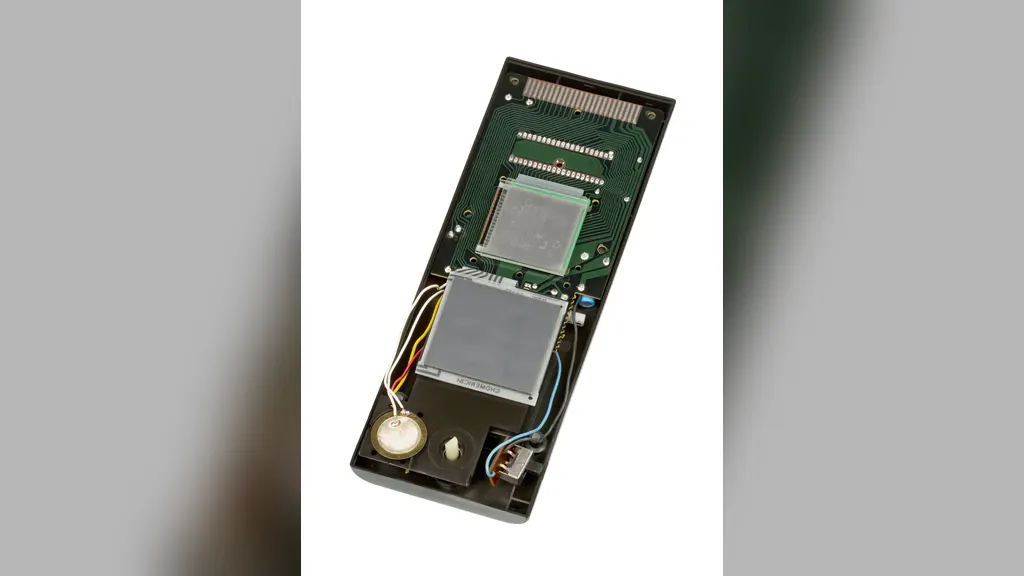
The engineering of the Milton Bradley Microvision is a fascinating case study on how technical innovation developed under the cost and technological constraints of the era. Unlike most later consoles, the Microvision did not have an embedded central processing unit (CPU) in the main unit. Instead, the heart of the processing system was a removable element: the ROM Media cartridge. This unique architecture meant that the console itself was composed primarily of the LCD panel, the screen controller, and, crucially, the control system. Processing was therefore determined by the cartridge’s content, ensuring that each game brought its own processing unit.
Processing and Memory
Early cartridges utilized processors such as the Intel 8021 and the Texas Instruments TMS1100. Initially, the system was designed to support both, but due to acquisition issues, Milton Bradley began using only the TMS1100. Although the TMS1100 was a more primitive device, it offered crucial advantages, such as lower power consumption and greater memory capacity compared to the 8021. In terms of specifications, the system operated at a speed of 100 kHz. The memory architecture was limited, featuring only 64 bytes of RAM and a 2K byte ROM capacity on the cartridge. Data processing and storage were highly compact, a direct reflection of the technological limitations of the second generation of consoles.
Display and Interaction
The visual interface was an LCD display with a resolution of only 16 × 16 pixels. This type of screen, controlled by a LCD Custom Driver developed by Hughes, marked a transition to portable digital displays. The input systems were robust for the time, combining a 12-button keypad and a paddle control, allowing for a variety of gameplay interactions. However, the screen technology presented notable vulnerabilities. The LCD manufacturing process was rudimentary, and the lack of proper sealing, combined with impurities, resulted in a phenomenon known as “screen rot,” where the liquid crystal leaked and permanently darkened, a problem that, even today, affects many collectible units.
In terms of power, the design challenges were evident. Early revisions, especially those with the 8021, required two 9V batteries due to high power consumption (1 W). Later, with the migration to the TMS1100, consumption dropped drastically to about 110 mW, allowing more recent units to operate on just a single 9V battery. This power adaptation, while solving performance issues, demonstrates the technical rigor and miniaturization challenges Milton Bradley faced when trying to bring the complexity of a tabletop console to a portable format.
📌 Microvision Technical Specifications
- Processing via ROM cartridge, no onboard CPU.
- LCD display with a 16 x 16 pixel resolution.
- RAM limited to 64 bytes and 2K bytes of ROM.
- Reduced power consumption with the TMS1100 (110 mW).
Launch and the Portable Gaming Market
The release of the Milton Bradley Microvision marked a turning point both in the history of consumer electronics and the portable entertainment market. In November 1979, the console was introduced to the public, not just as a toy, but as a fully functional handheld electronic game system. The entry price, set at US$49.99, established the Microvision as a sophisticated and high-value product for the time, positioning it at the intersection of luxury toy and cutting-edge electronic device. If we compare this innovation to other milestones, such as the development of portable consoles, we realize that this launch was not merely the arrival of a product, but the consolidation of a new form of entertainment: the portable electronic game with interchangeable cartridges.
The market reception was immediate and thunderous. The commercial success surpassed Milton Bradley’s expectations. In a direct reflection of consumer enthusiasm, the distribution company Smith Engineering generated an impressive US$15 million in sales in the first year alone. This sales volume not only validated the console’s technology but also established the Microvision as a cultural phenomenon. The console came with an initial catalog of games that allowed for a diverse experience, maintaining consumer interest and ensuring the system’s longevity even before its discontinuation in 1981.
The Global Scope of the Launch
The reach of the Microvision was significant, extending beyond American borders. Although the technology and operating system were unified, the visual aspect of the product varied depending on the consumer market. A notable detail, which demonstrates the complexity of global distribution at the time, was the variation in the colors of the game boxes. While the boxes featured one shade in the United States, in Europe, they were marketed in a different color—a small detail that highlights the logistics and cultural adaptation necessary to sustain a world-class product.
In summary, the 1979 launch was not just a sales event; it was the materialization of a new product category. The Microvision proved that the concept of portable electronic games, powered by cartridges and capable of providing complex play experiences, had gigantic market potential. It not only maintained the tradition of board games that Milton Bradley already dominated but also paved the way for the modern portable video game industry we know today.
Design Limitations and Durability Issues

Despite its cultural impact and sophisticated engineering, the Milton Bradley Microvision was not immune to design flaws. When examining units and cartridges today, it is crucial to understand that the product’s fragility is a direct reflection of the technological limitations and manufacturing processes of its time. Microvision devices, being relics of an electronic transition era, are susceptible to durability issues that require in-depth technical knowledge to be understood.
Material and Component Limitations
The conservation issues with the Microvision center on three main points: liquid crystal degradation, electrostatic damage, and the physical vulnerability of the keyboard. The first and most noticeable is what is called “screen rot.” The manufacturing process for the LCD displays of that era was rudimentary by modern standards. Due to inadequate sealing and the presence of impurities during manufacturing, the liquid crystal can leak spontaneously. This leakage causes permanent darkening, compromising the unit’s ability to correctly draw the image, even if the processing system still functions. Although it is possible to prevent damage caused by extreme heat, there is no way to prevent screen rot in most Microvision systems.
📘 Screen Rot
It is the permanent darkening of the LCD display’s liquid crystal, caused by spontaneous liquid crystal leakage due to inadequate sealing or impurities in manufacturing.
Another critical engineering challenge lies in protection against electrostatic discharge (ESD). The microprocessors housed in the top of each cartridge lacked ESD protection and were connected directly to the copper pins that inserted into the main unit. This design created a significant risk: when the user opened the protective sliding door for the pins, the processor was exposed to any electrical charge accumulated on the casing. If the charge was substantial, the discharge could jump across the door’s edge or pass through it itself (dielectric breakdown). This phenomenon was dangerous because the low-voltage integrated circuits were extremely sensitive, potentially being destroyed by an event of only a few tens of volts—a discharge that was often imperceptible to the user. It was John Elder Robison, a former engineer at Milton Bradley, who detailed this risk in his book Look Me in the Eye. He reported that, during the holiday season of 1979 alone, up to 60% of units were returned as defective, forcing extensive modifications to subsequent units and factories.
Finally, the physical input system also presented weaknesses. The 12-button keyboard and the paddle control pin, while essential for gameplay, were subject to wear and structural damage. The cartridge slot mechanism itself, although functional, contributed to the mechanical stress on the components, making the keyboard and contacts a common point of failure in units that saw heavy use over the decades.
Legacy and Influence on the Video Game Industry
The true legacy of the Milton Bradley Microvision lies not just in its technical specifications—such as the 16 × 16 pixel LCD display or the use of processors like the Intel 8021 and TI TMS1100. Its deepest and most lasting impact was conceptual. In an era when portable electronics were still maturing, the Microvision pioneered the architecture of a modular game system. Unlike later consoles that integrated processing centrally, the Microvision revolutionized the concept by having each ROM Media cartridge contain its own processor. If you are interested in how this evolution compares to other machines, check out the legacy of retro arcades. This meant that the base console was essentially just the control unit, the controller, and the LCD panel. This functional separation—where the processing power was transferable and interchangeable—was not just an engineering trick; it was the definition of a new market standard for portable electronic entertainment.
Consolidating the Cartridge as a Power Unit
By encapsulating the processor within the cartridge, Milton Bradley not only reduced the size of the unit but also ensured unprecedented flexibility. This modular architecture proved that the “game” was not just the visual content, but the processing engine itself. Although the Microvision was discontinued in 1981, the business model and technical concept it established were robust enough to withstand the test of time. It demonstrated to the market that the future of portable gaming lay not in monolithic devices, but in open systems where innovation and content were delivered via removable media.
🧪 The Concept of Modularity: The Microvision’s Major Leap
The differentiator of the Microvision was not just the hardware, but the architecture: it moved the processing power to the cartridge. This meant that the base console was only the control and the display, while the game’s ‘brain’ was interchangeable. This cartridge-as-power-unit model was a revolutionary concept for portable entertainment.
This predetermined vision for the portable gaming market is the most crucial aspect of its legacy. The technical challenges and successes of the Microvision paved the way for entire generations of handheld consoles. The commercial success and the portable cartridge model are recognized as direct inspirations for iconic devices that came decades later. The concept of using a small control device connected to an external processing source, as demonstrated by the Microvision in 1979, was fundamental to the development of later consoles, notably the Game Boy. The Game Boy, in essence, is the commercial and refined successor to the modularity model established by Milton Bradley.
In summary, the Microvision was not just a best-selling console, with a US$49.99 launch price and significant reach beyond American borders. It was a laboratory of ideas. It transformed consumer electronics from a luxury item into an accessible and repeatable product category. By materializing the idea that an entertainment device could be as sophisticated as it was portable, the Microvision cemented the conceptual foundation upon which the entire modern portable video game industry was built. Its legacy remains a fascinating case study of how an innovation, even if physically imperfect in its execution, can be perfect in its market vision.
Glossary
- Color Lithography: An early graphic process used by Milton Bradley to create products, such as the design of Abraham Lincoln.
- LCD: Liquid Crystal Display, the console’s visual interface, with a resolution of 16 × 16 pixels.
- Screen rot: A degradation phenomenon of the LCD display, where the liquid crystal leaks and permanently darkens in older units.
Frequently Asked Questions
What was the Microvision’s main innovation that set it apart from other portable consoles?
The main innovation was the processing architecture. Unlike most consoles, the Microvision did not have a central processor in the main unit. It concentrated all processing power in removable cartridges, making the console itself an intelligent and modular system.
Why is the Microvision considered a rare console, and what problems does it have today?
The console is notable for its complex engineering and the way it decoupled processing from the main body. A known technical issue is ‘screen rot,’ a phenomenon where the LCD display’s liquid crystal can leak and permanently darken.
Did the Microvision really influence the Nintendo Game Boy?
There is no available information confirming a direct influence of the Microvision on the Nintendo Game Boy. The Microvision was, in itself, a pioneer in establishing the concept of portable electronic games with interchangeable cartridges, setting a standard for portability for its time.
How did the cartridge processing system (CPU embedded in the game) work?
Processing was determined by the content of the ROM Media cartridge. Each cartridge contained its own processor (like the TMS1100), which performed calculations at 100 kHz. The base console functioned only as the LCD panel, controls, and controller, receiving processing power from the inserted cartridge.
What was the main reason for the Microvision’s decline and discontinuation in 1981?
The Microvision was a transitional product, carrying centuries of board game expertise into the new electronic era, establishing a business model that was eventually surpassed by new consumer technologies.
Conclusion
The trajectory of Milton Bradley, from creating classic board games like “The Chequered Game of Life” to the forefront of electronic entertainment, is a fascinating case study in business resilience. When media consumption shifted from the board to electronic formats, the company didn’t just keep up with the change; it defined it. The Microvision, launched in November 1979, was not just a new toy, but a sophisticated industrial response to the demand for portable leisure, translating centuries of expertise in game design for the digital age.
The true genius of the Microvision lay in its revolutionary architecture. Unlike consoles that integrated the central processing unit (CPU) into their main board, this system concentrated processing power in removable cartridges. This modularity, which utilized processors like the TMS1100, allowed the base console to be reduced to an intelligent system composed only of the LCD panel and controls. This technical decision ensured not only exceptional portability but also an unprecedented level of reprogrammability for the time, establishing an engineering model that would be fundamental to the subsequent industry.
In summary, the Microvision proved that innovation is not just about the latest technology, but about the ability to adapt design principles—such as play experience and portability—to new platforms. It is a testament to how technical rigor, component management, and market vision can shape an entire paradigm. Analyzing the Microvision is understanding that the legacy of a great business lies not just in the product, but in the ability to reinvent itself in the face of every technological challenge.