Read this article in: Portuguese (Português) · Spanish (Español)
Who is Tim Draper? He is an American businessperson and highly influential venture capital investor, best known for his deep involvement in shaping the modern technology landscape, from the nascent days of the internet to the current revolution in decentralized finance. Born Timothy Cook Draper in 1958, his career has been marked by pioneering investments and a persistent advocacy for transformative, disruptive technologies. His firm, Draper Fisher Jurvetson, has been a central engine for funding some of the most ambitious ventures in recent history.
Draper’s significance to the technology world stems from his ability to back groundbreaking ideas across multiple eras. Since founding Draper Fisher Jurvetson in 1985, he has maintained a portfolio that touches nearly every major sector of modern industry. His investment history includes backing industry giants such as Hotmail, Skype, Tesla, and Coinbase. Furthermore, his commitment to decentralized systems was highlighted in 2014 when he gained wide coverage for purchasing seized bitcoins from the Silk Road website, cementing his role as a prominent proponent of bitcoin and decentralization.
This biography will trace the arc of his remarkable career, beginning with his formative years and education at Stanford and Harvard. We will explore the founding of Draper Fisher Jurvetson, examine his pioneering investments across the digital age, and delve into his advocacy for bitcoin and decentralization. The article will also navigate his controversial high-profile failures, his efforts to build the future through education, and his personal and political views.
Key Takeaways
- Tim Draper founded Draper Fisher Jurvetson in 1985, transitioning from investment banking to actively funding tech ventures.
- He is noted for coining the term ‘viral marketing’ following his early support for Hotmail’s advertising model.
- Draper was the first Silicon Valley VC to invest in China, securing a stake in Baidu in 2001.
- His commitment to physical technology is marked by investments in electric vehicle pioneer Tesla in 2006 and 2007.
- He became a prominent Bitcoin speculator by purchasing nearly 30,000 seized bitcoins from the Silk Road auction in 2014.
Tim Draper at a Glance
| Born | Timothy Cook Draper; June 11, 1958; East Chicago, Indiana, U.S. |
|---|---|
| Education | Stanford University (BS); Harvard University (MBA) |
| Spouse | Melissa Parker |
| Children | 4, including Jesse |
| Relatives | William Henry Draper Jr. (grandfather); William Henry Draper III (father); Polly Draper (sister); Nat Wolff (nephew); Alex Wolff (nephew) |
| Citizenship | United States |
| Occupation | Businessperson |
| Owner of | Draper Fisher Jurvetson |
| Founded | Draper Fisher Jurvetson (1985) |
From Family Roots to Stanford Education

Timothy Cook Draper arrived in the world on June 11, 1958, in East Chicago, Indiana. From his earliest years, his life was set against a backdrop of deep financial and governmental influence. He was the third generation to be immersed in the world of venture capital and public service. His lineage was notable: his grandfather, William Henry Draper Jr., had not only founded Draper, Gaither and Anderson in 1958 but had also held the distinguished role of the first ambassador to NATO. This pattern of high-level involvement continued through his father, William Henry Draper III, who founded Draper & Johnson Investment Company and served as a former chairman and president of the Export-Import Bank of the United States. Draper himself was the son of Phyllis (Culbertson) and William Henry Draper III, and he grew up as the younger brother to the actress Polly Draper.
His academic journey began at Phillips Academy Andover, laying the groundwork for a rigorous education that would define his professional trajectory. Upon matriculating to Stanford University, he enrolled in electrical engineering, completing his Bachelor of Science degree in 1980. His time at Stanford was marked by both academic achievement and early entrepreneurial flair. While studying, he interned at Hewlett-Packard, gaining firsthand experience as a marketing engineer. His innovative spirit was showcased when he collaborated with fellow student Heidi Roizen to create the popular campus board game, “Stanford – The Game,” an early display of commercial aptitude that garnered national attention.
The momentum continued shortly after his undergraduate studies. In 1982, he married Melissa Parker. Recognizing the need to deepen his expertise in business strategy, Draper subsequently pursued graduate studies, earning an MBA from Harvard Business School in 1984. This combination of specialized technical education from Stanford and high-level business acumen from Harvard provided the formidable intellectual toolkit that would define his career. The confluence of his family’s deep roots in American finance and his own rigorous, multi-institutional education positioned him uniquely for the rapidly evolving technological landscapes to come.
🕒 Key Milestones in Draper’s Early Life and Education
- 1958 — Timothy Cook Draper arrived in East Chicago, Indiana.
- 1980 — Graduated from Stanford University with a Bachelor of Science in electrical engineering.
- 1982 — Married Melissa Parker.
- 1984 — Earned an MBA from Harvard Business School.
Founding Draper Fisher Jurvetson
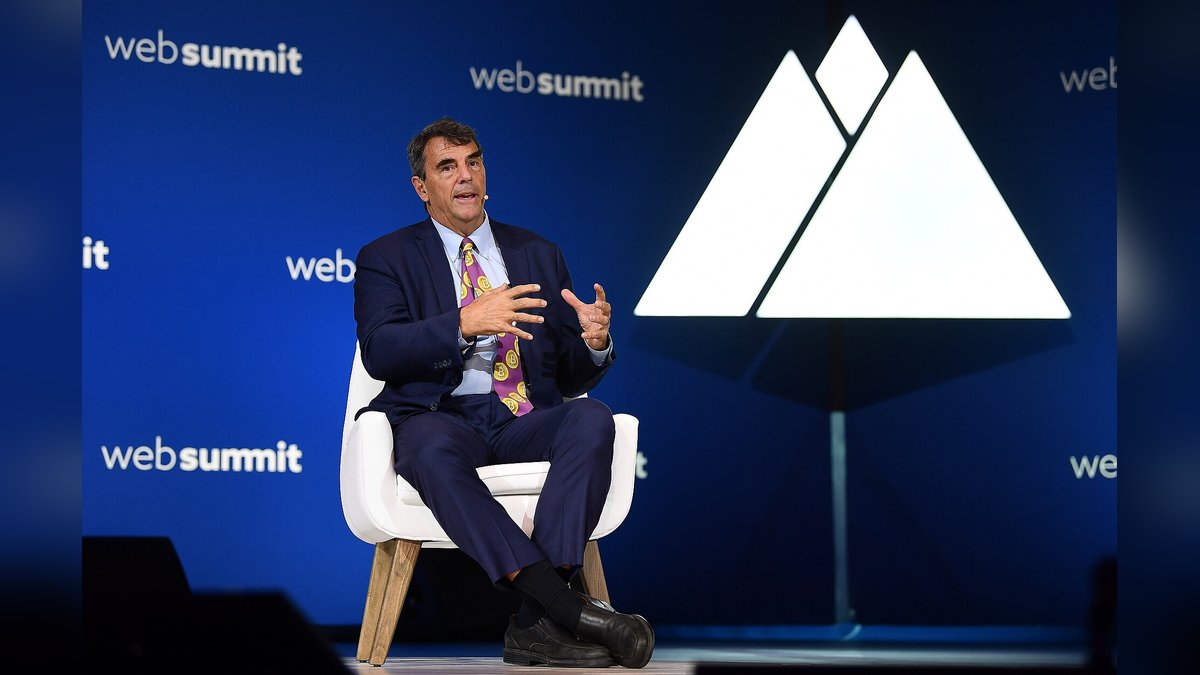
The trajectory of a venture capitalist is often measured by the audacity of their pivots, but for Tim Draper, the defining move was the leap from the established world of investment banking to the raw, volatile frontier of founding his own firm. By 1985, after his early career experiences, Draper made the decisive choice to leave the ranks of the investment bank Alex. Brown & Sons. This transition was not merely a change of employer; it represented a fundamental shift in focus, moving from executing transactions for established financial institutions toward actively funding and nurturing nascent technological ventures. Founding his own venture capital firm marked the beginning of a new era, one where Draper would transition from a participant in finance to an architect of technological growth.
The foundational structure of the firm required more than just Draper’s vision; it demanded a core group of partners who shared his belief in the exponential potential of technology. The initial years were spent cementing this critical infrastructure. The partnership began to solidify with the integration of key figures who brought diverse expertise to the burgeoning operation. A significant milestone occurred in 1991 when former colleague John H.N. Fisher joined the venture, immediately strengthening the firm’s operational capacity and network.
The Formation of a Partnership
The subsequent years saw the firm grow through strategic additions of talent, each partner adding a distinct dimension to the nascent venture capital powerhouse. The commitment to building a robust partnership meant actively recruiting individuals with complementary skills and industry insights. This process culminated in 1994 with the joining of business student Steve Jurvetson, who became the third partner in the firm. These additions—Fisher and Jurvetson—were crucial, transforming a solo venture into a collaborative engine capable of tackling increasingly complex and ambitious investments across the rapidly evolving technology landscape.
The establishment and subsequent expansion of this partnership laid the groundwork for what would become a major player in the capital allocation game. By successfully navigating the transition from a conventional financial role at Alex. Brown & Sons to building a multi-partner entity, Draper positioned himself at the epicenter of the coming digital revolution. The foundation of Draper Fisher Jurvetson in 1985, and its steady build-out through the addition of its key partners, became the launching pad for the groundbreaking investments that would define his subsequent career in the technology sector.
📌 Key Milestones in Draper Fisher Jurvetson’s Formation
- 1985: Draper leaves investment banking to found the firm.
- 1991: John H.N. Fisher joins, strengthening operational capacity.
- 1994: Steve Jurvetson joins as the third partner.
- The firm transitions from solo venture to a multi-partner engine.
Pioneering Investments in the Digital Age
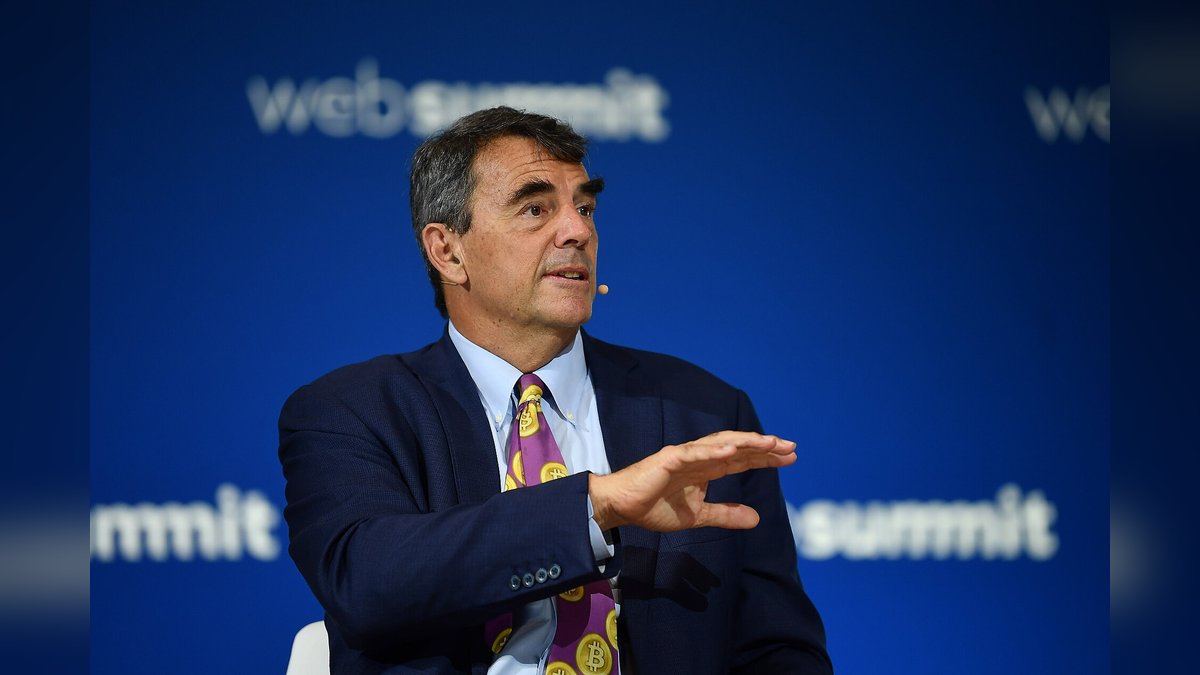
The true measure of a venture capitalist often lies not just in the money they raise, but in the ability to identify the next paradigm shift before the mainstream market catches up. For Tim Draper, this capability defined a career marked by audacious global pivots. His early success in the burgeoning internet age provides a textbook example of this foresight. When Jack Smith and Sabeer Bhatia presented their company, Hotmail, Draper was quick to act. While much popular account suggests he “invented viral marketing” in 1996, his major acclaim stemmed from his early support for the founders and his unique insight: the idea of automatically attaching a brief advertising message to the bottom of every outgoing Hotmail email. It was through this concept that Draper and Jurvetson coined the term “viral marketing,” even though the neologism itself had appeared in a 1989 edition of PC User. This early work demonstrated his knack for monetizing nascent digital network effects.
Crossing Borders: The China Gambit and Global Scale
As the digital frontier expanded beyond the American borders, Draper proved himself a global investor. He was notably the first Silicon Valley venture capitalist to invest in China through his global vehicle, DFJ ePlanet. This move placed him at the center of China’s massive technological awakening. In 2001, he negotiated directly with Robin Li, the CEO of Baidu. On behalf of ePlanet, Draper secured a significant stake, buying 28% of the company for US$9 million (which was roughly $15.6 million in 2025). This investment was not merely financial; it was a strategic bet on the foundational internet infrastructure of a rapidly industrializing nation.
His reach continued to stretch across consumer technology, most visibly with Skype and Tesla. Draper’s father, Bill Draper, had already been an early backer of Skype, and the firm, DFJ, followed suit, backing the company in 2004. The stakes rose dramatically when the company, by 2005, owned 10% of Skype, which was subsequently sold to eBay for US$4.1 billion (or ~$6.49 billion in 2025). The continued association with the platform was visible years later when Draper and Niklas Zennström appeared together for the first Skype video at Stanford University in 2007. The momentum toward physical technology was cemented when Draper first invested in the electric vehicle pioneer. In 2006, through DFJ, he backed the Series C venture round of Tesla. His commitment deepened the following year, in 2007, when he invested again in the Series D round through Draper Associates.
Bitcoin Advocacy and Decentralization

If Draper’s history is marked by identifying paradigm shifts in traditional technology sectors, his deep dive into digital currency marks a pivot toward a fundamentally different frontier: decentralized finance. His belief in Bitcoin was not passive; it was characterized by aggressive, high-stakes investment and public prognostication. The most telling moment of this conviction occurred in 2014 when, on June 27, Draper paid approximately US$19 million—a sum equivalent to about $25.4 million in 2025 dollars—for nearly 30,000 bitcoins. These digital assets had been seized by the US Marshals service and were subsequently auctioned to the public, an event that positioned Draper at the epicenter of early Bitcoin institutional interest.
His support for the underlying technology was quickly followed by a series of highly specific, and increasingly bold, predictions. Just weeks later, on September 23, 2014, Draper advised Fox Business that he foresaw the price of a single bitcoin reaching $10,000 within three years. This early confidence was followed by a direct wager on January 27, 2015. Draper bet approximately $400,000—which represented 2,000 bitcoins at a price of $200—on the currency’s ability to rebound from a recent market plunge. These early actions established him not merely as an observer, but as an active, deeply committed speculator betting on the future of decentralized value.
The Advocacy for a Crypto-First Future
As the cryptocurrency space matured and saw its first major milestones, Draper continued to escalate his forecasts, linking Bitcoin’s growth to the obsolescence of traditional fiat systems. His advocacy became increasingly public and confrontational. During an Intelligence Squared debate on April 21, 2018, he issued a stark warning: “In five years you are going to try to go buy coffee with fiat currency and they are going to laugh at you because you’re not using crypto.”
The trajectory of his predictions continued upward. In December 2019, he predicted that bitcoin would reach US$250,000 by the close of 2022. These predictions, which were followed by the actual price of bitcoin crossing the $10,000 mark on November 29, 2017, served to underscore his belief in the exponential, disruptive power of decentralized ledger technology. For Draper, the narrative shifted from simply identifying a new market to actively predicting the total replacement of existing financial infrastructure with crypto-based alternatives.
Navigating Controversy and High-Profile Failures
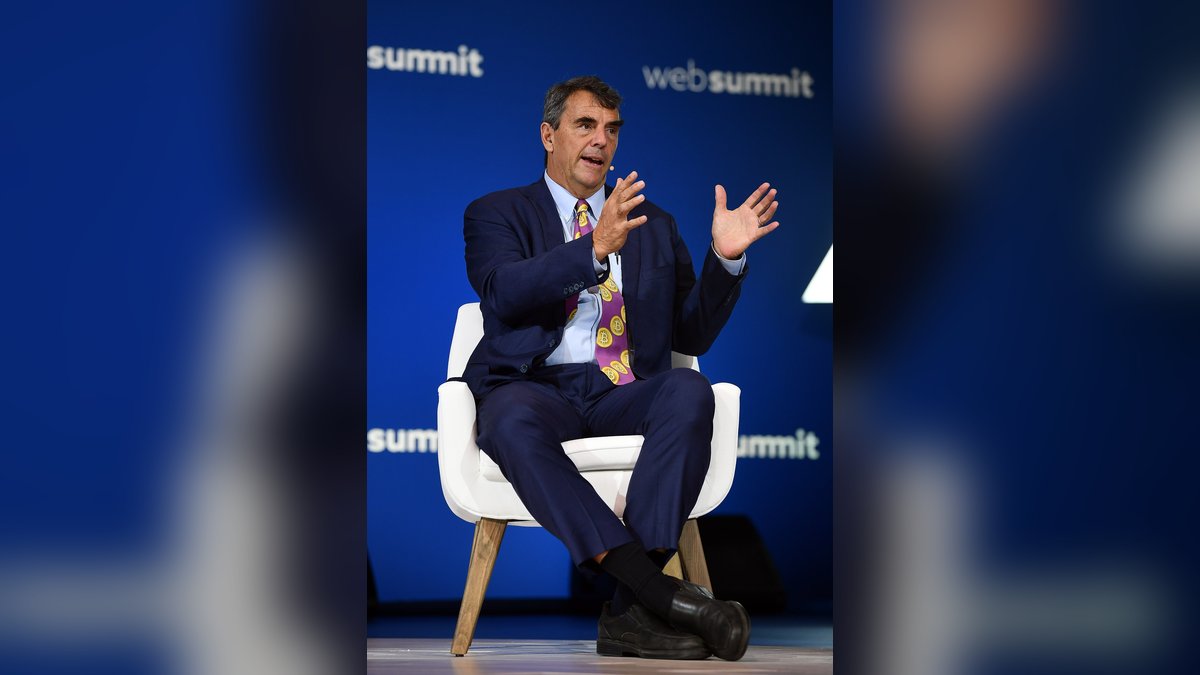
The career of a venture capitalist is often defined by its greatest successes, but for one as prominent as Tim Draper, the arc is equally shaped by controversy and high-profile failures. His willingness to back groundbreaking, often unproven, ideas has placed him at the epicenter of several corporate and political storms, subjecting his judgment—and his capital—to intense public scrutiny.
The Shadow of Failed Unicorns
Perhaps the most scrutinized aspect of his investment history involves the blood testing startup Theranos. Draper was among the early backers of the company, founded by Elizabeth Holmes. The narrative surrounding Theranos quickly devolved from technological promise to outright fraud, culminating in the Securities and Exchange Commission (SEC) charging Holmes with committing massive fraud. Despite the mounting evidence and the formal charges leveled by the SEC, Draper continued to publicly defend Holmes. This defense persisted into 2018, when he stated that she had been “bullied into submission,” a defense that placed him at odds with the legal and financial consensus regarding the company’s operations.
This willingness to maintain support for founders even after significant public and regulatory failure became a defining, and often criticized, element of his professional profile.
Regulatory Battles and Free Market Advocacy
Draper’s controversial streak extends beyond the boardroom and into the realm of public policy. He has long been a vocal advocate for free markets and entrepreneurship on a global stage. This advocacy has manifested in strong opposition to specific federal regulations, most notably the Sarbanes-Oxley regulations. In his view, these rules represented an impediment to the growth of the private sector, limiting the viability of taking companies public. His stance provided a continuous, highly visible critique of established financial governance.
His commitment to these ideological positions was not limited to mere rhetoric. In a specific instance in 2000, Draper expended $20 million—a sum equivalent to approximately $35.5 million in 2025—on a measure intended to support school vouchers, an effort that ultimately failed to pass.
These episodes—the defense of a fraudulent company, the open opposition to major financial regulations, and the massive political expenditures—cement a pattern: Tim Draper operates not merely as a capital allocator, but as a highly visible, and often polarizing, ideological force in the American technology and financial landscape.
📊 Areas of Controversy and Advocacy
| Issue Area | Specific Controversy/Stance | Impact/Action Taken |
|---|---|---|
| Investment Backing | Theranos (Elizabeth Holmes) | Publicly defended Holmes despite SEC fraud charges. |
| Financial Regulation | Sarbanes-Oxley regulations | Vocal opposition, viewing them as an impediment to private sector growth. |
| Political Spending | School vouchers measure (2000) | Expended $20 million on an effort that ultimately failed. |
Building the Future: Education and Modern Tech Focus

Draper’s vision extends beyond merely allocating capital; it involves actively cultivating the talent that will drive the next wave of technological change. Recognizing the critical need for entrepreneurial education in a rapidly evolving digital landscape, he launched the Draper University of Heroes in 2013. This educational initiative was designed to offer an intensive, crash course in entrepreneurship. The program’s residential component is based in San Mateo, California, and the curriculum itself bears his direct design, positioning the venture not just as an investment, but as a mechanism for building future industry leaders.
The Next Frontier of Capital Allocation
Complementing his efforts in education is a highly focused and increasingly bold investment strategy. Draper’s current portfolio is not built on broad technological bets, but rather on specific, transformative digital pillars. His investments are centered around companies that leverage artificial intelligence, bitcoin, blockchain, smart contracts, and computational genomics. This concentrated focus allows him to target sectors undergoing fundamental structural shifts across multiple industries.
📘 Blockchain
Blockchain refers to a decentralized, distributed ledger technology. Draper focuses on investments leveraging this technology for secure record-keeping across various sectors.
The application of these cutting-edge technologies is keenly targeted toward three major pillars of modern society: finance, health care, and government. This approach demonstrates a belief that the most significant value creation will occur where deep technological innovation intersects with critical infrastructure. To date, this strategy has seen him invest in a diverse collection of companies, including Robinhood, Coinbase, and eShares, all of which operate within the financial sector.
Beyond traditional finance, his focus has extended into specialized areas. In the realm of government services, investments like OpenGov point toward digital transformation in public administration. Similarly, the inclusion of companies such as Zagace and OpenGov suggests an interest in applying sophisticated tech solutions to civic needs. Furthermore, the commitment to foundational protocols is evident through investments in Tezos and DefiMoneyMarket, while ventures like eShares and the inclusion of computational genomics signals a deep engagement with both decentralized finance and the future of human health.
By combining the development of entrepreneurial talent through Draper University of Heroes with a highly specific, multi-sector investment thesis—anchored in AI, blockchain, and smart contracts—Tim Draper positions himself not just as a capitalist, but as a pivotal architect of the digital economy.
Political Views and Personal Life
Draper’s influence extends far beyond the allocation of venture capital; his commitment to specific ideological positions has made him a visible, often polarizing, figure in American public life. His political philosophy centers on staunch advocacy for free markets and the entrepreneurial spirit, frequently expressing concern over regulations he believes stifle growth. This skepticism has manifested publicly, notably in his opposition to the Sarbanes-Oxley regulations, which he has criticized for limiting the viability of taking companies public.
His willingness to engage in high-stakes political action was perhaps best exemplified by his sustained campaign to reshape the physical boundaries of California. In early 2014, Draper filed a petition, which was accepted by California’s Secretary of State, Debra Bowen. He argued that the state was becoming “increasingly ungovernable” and initiated the collection of signatures to divide California into six smaller states. While the initial effort stalled, failing to gather the necessary signatures for the 2016 ballot by September 12, 2014, Draper remained committed to the cause. By April 2018, he announced a new collection effort aimed at dividing the state into three new states, gathering “about 600,000” signatures. This renewed momentum culminated in June 2018, when the petition successfully collected enough signatures to qualify as an initiative in the 2018 general election. However, the effort was ultimately blocked by the California Supreme Court on July 18, 2018, just before ballots were scheduled to print.
His political involvement remains active and highly visible. In the 2024 presidential election cycle, Draper confirmed his support for both major candidates, stating that he met with—and donated to—both Donald Trump and Kamala Harris in “roughly equal amounts,” adding that he was “endorsing both candidates.” Furthermore, his ideological commitment is not limited to state lines or presidential races; in 2000, Draper personally spent $20 million (equivalent to approximately $35.5 million in 2025) on a measure that ultimately failed to support school vouchers.
On a personal level, Draper’s roots are in East Chicago, Indiana, where he was born on June 11, 1958. He earned his Bachelor of Science degree from Stanford University, followed by an MBA from Harvard University. He is married to Melissa Parker and they have four children, including Jesse. The family’s connection to venture capital is notable: three of his children—Adam Draper, Jesse Draper, and Billy Draper—have established their own venture funds, serving as the managing director of Boost VC, Halogen VC, and Path Ventures, respectively.
Frequently Asked Questions About Tim Draper
What is Tim Draper’s primary professional focus?
Tim Draper is primarily an American venture capital investor and businessperson. His focus has been identifying and funding paradigm shifts across technology, from early internet platforms like Hotmail to modern decentralized finance through Bitcoin.
What key investments did Tim Draper make in the early days of the internet?
He made prominent early investments in several key internet companies. These include Hotmail, which led to his coining of ‘viral marketing,’ and later invested in global platforms like Skype and the Chinese internet giant, Baidu.
When did Tim Draper purchase the bitcoins seized from the Silk Road?
Draper purchased the seized bitcoins from the US Marshals Service auction in 2014. On June 27, he paid approximately US$19 million for nearly 30,000 bitcoins, positioning himself at the center of early institutional Bitcoin interest.
What is Draper University of Heroes?
The provided fact sheet and articles do not contain specific information regarding an institution named ‘Draper University of Heroes.’ However, the facts confirm that he is associated with founding Draper University and Draper Associates.
What are Tim Draper’s general political stances?
Draper is a vocal advocate for free markets and entrepreneurship. His stances include strong opposition to specific federal regulations, such as the Sarbanes-Oxley regulations, which he views as impediments to private sector growth.
Final Thoughts: The Legacy of Tim Draper
From his lineage steeped in American finance—a background that included his grandfather’s role as the first ambassador to NATO—Tim Draper built a career defined by recognizing the next technological inflection point. His journey, marked by degrees from Stanford University and Harvard Business School, culminated in founding Draper Fisher Jurvetson in 1985. Draper’s early foresight was evident when he was involved in coining the term “viral marketing” through his support of Hotmail, demonstrating an early knack for monetizing digital network effects. His ambition soon scaled beyond American borders, notably when he became one of the first Silicon Valley venture capitalists to invest in China through his vehicle, DFJ ePlanet.
His investments continued to track major global shifts, from backing the electric vehicle pioneer Tesla to deepening his commitment to decentralized finance. The scale of his conviction became clearest in 2014 when he invested approximately US$19 million for nearly 30,000 bitcoins. These defining investments—in viral digital growth, global infrastructure, and decentralized currency—cement his reputation as a visionary who consistently bets on the architecture of the future economy. Draper’s life work suggests that true capital isn’t merely invested in technology, but in the foundational shifts of human connectivity itself.
Sources and Further Reading
- Tim Draper — Wikipedia (text available under CC BY-SA 4.0)
- Exclusive: Tim Draper is leaving DFJ — fortune.com
- Tim Draper’s Los Angeles-based blockchain-focused venture studio adds a venture partner — techcrunch.com
- Venture Capitalist Tim Draper Wins Small Piece of Bitcoin Auction — dealbook.nytimes.com
- Melissa Lee Parker Becomes the Bride Of Timothy Cook Draper in California — nytimes.com