Read this article in: Portuguese (Português) · Spanish (Español)
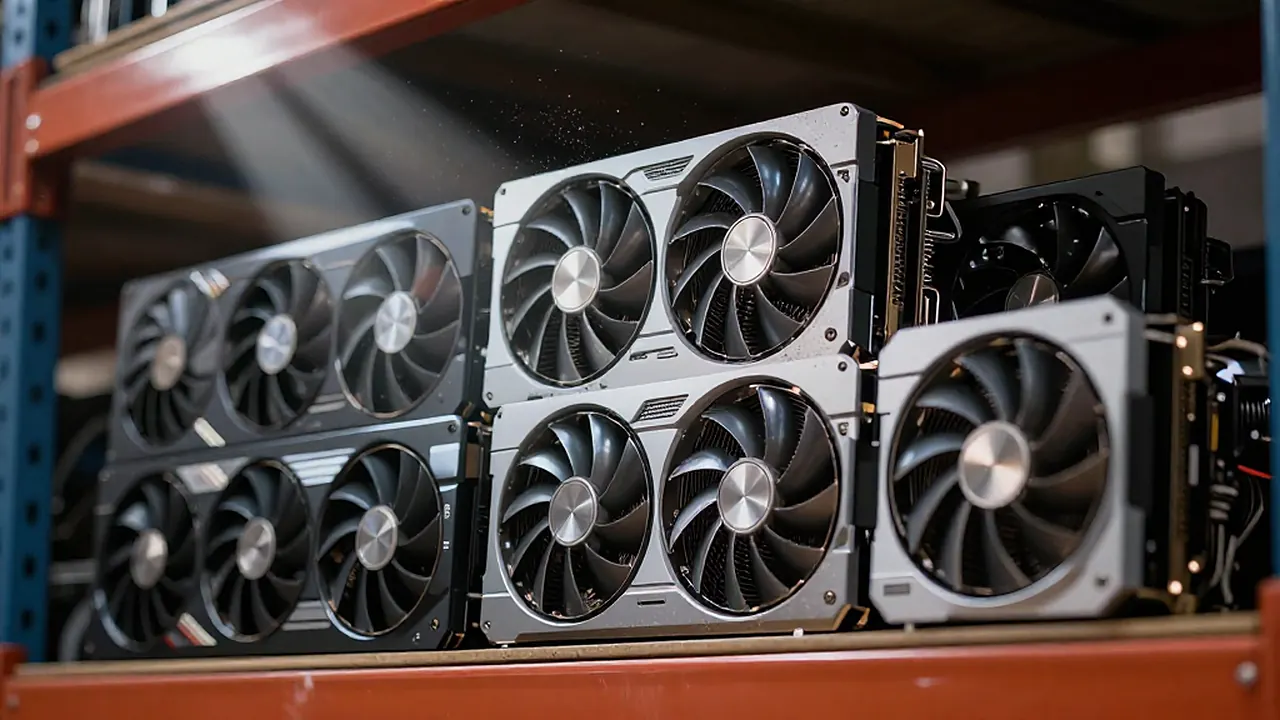
Despite export restrictions imposed by the United States, NVIDIA’s advanced artificial intelligence (AI) chips, such as the B300, continue to find a way into China. The news, reported from Shenzhen’s technology hub, reveals a complex and expensive gray market. For extremely wealthy individuals, access to these cutting-edge accelerators, which should theoretically be banned, has become surprisingly accessible, requiring only local connections and considerable capital.
The Ease of Access: How NVIDIA B300 Chips Reach the Chinese Market
Access to cutting-edge components in Shenzhen, a technology metropolis and special economic zone, is described as a surprisingly simple process, according to local consultants. While the expectation was that U.S. export controls would prevent the arrival of NVIDIA’s AI processors, the Chinese market has shown resilience and adaptability.
For those interested in starting an AI company in China, the process of acquiring high-performance chips would be, according to sources, as straightforward as visiting a local electronics district and negotiating with the right intermediaries. The restricted hardware flow, however, does not happen through official channels, but rather through routes established in the gray market.
Suppliers indicate that the supply of the banned chips arrives in Chinese territory via Hong Kong. The intermediaries, in turn, do not necessarily know the original source of the hardware before it enters the local market, highlighting the complexity and fluidity of the disputed supply chains.
Gray Market Details: Prices and Purchasing Mechanisms in Shenzhen
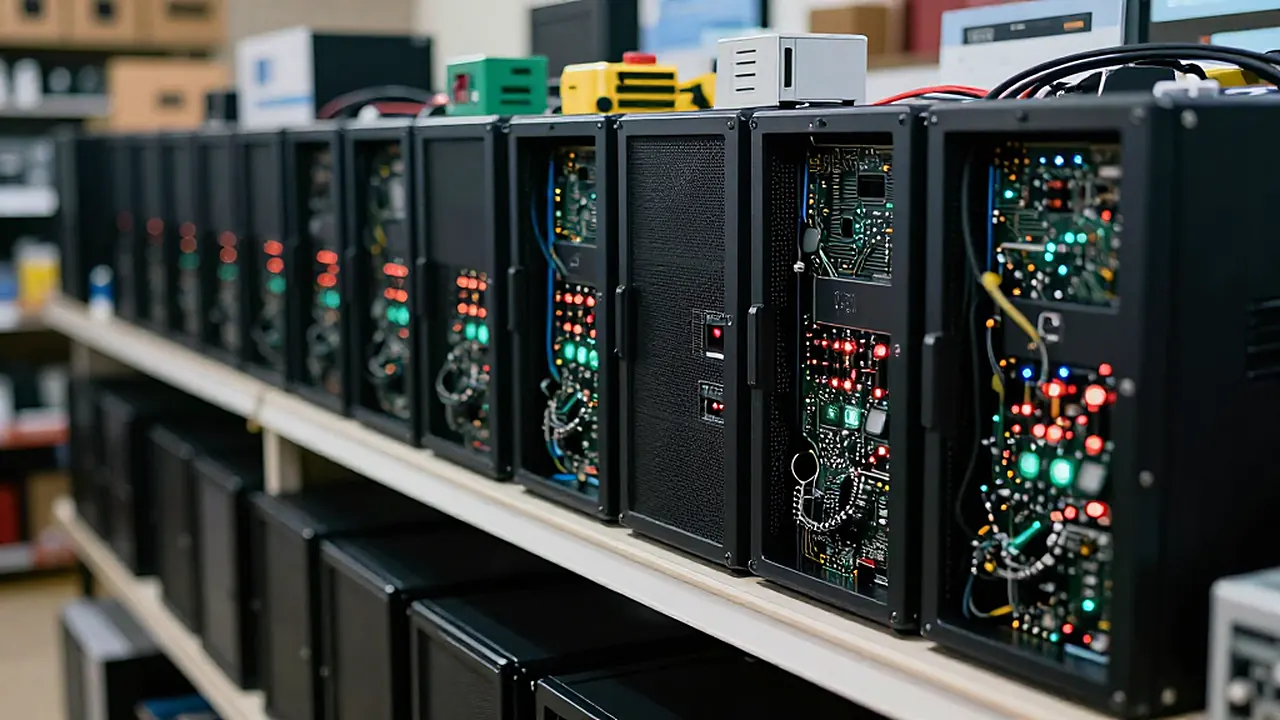
The heart of the purchasing operations is in the Huaqiangbei electronics district in Shenzhen. There, the prices for cutting-edge equipment reflect the high level of demand and the risk of acquisition. A local seller, identified as “Wu,” quoted approximately $3 million for a server with eight GPUs equipped with the B300 chips, NVIDIA’s most advanced model.
Other resellers working with Blackwell rack units listed comparable eight-GPU machines in the range of $3 million to $3.4 million. These figures represent an increase of 5 to 6 times compared to the retail prices practiced in the United States.
The gray market is also accumulating stocks of older models, such as the H200. Previously, this chip was estimated at a cost of $900,000 for an 8-GPU server, which already represented a three-fold premium. The continuous increase in costs reflects the extreme difficulty faced by merchants in obtaining the hardware.
📊 Comparison of GPU Server Prices in Shenzhen
| Chip/Model | Configuration | Estimated Price (USD) | Note |
|---|---|---|---|
| B300 (Most Advanced) | 8 GPUs | Approximately $3 million | Quote from a local seller |
| Blackwell (Rack Units) | 8 GPUs | Between $3 million and $3.4 million | Price range from other resellers |
| H200 (Older Model) | 8 GPUs | Estimated at $900,000 | Represented a three-times premium |
Global Context: The Impact of U.S. Export Restrictions and the Role of Shenzhen
American export restrictions are the engine behind this parallel market. The blockade of cutting-edge AI chips, such as the B300, has forced the creation of alternative supply routes. The Chinese gray market has become so established that buyers from countries like Russia and Iran travel directly to China, seeking to acquire restricted NVIDIA systems with high profit margins.
Shenzhen, as a global port city and economic hub, plays a crucial role in this scenario. Its infrastructure and its position as an international trade center facilitate the diversion and resale of technology that should be contained by geopolitical barriers.
The need to develop frontier AI models in China, which require thousands of B300 servers, explains the high premium paid by customers. These values, however, demonstrate a failure in the effectiveness of American attempts to stop the flow of restricted hardware into the country.
Technological Implications: What the Flow of Restricted Chips Reveals About Border Control
The persistence of chips under U.S. export control lists in the Chinese market raises serious doubts about the effectiveness of sanctions policies. The mere act of placing a product on a restricted list does not prevent its global transit by itself.
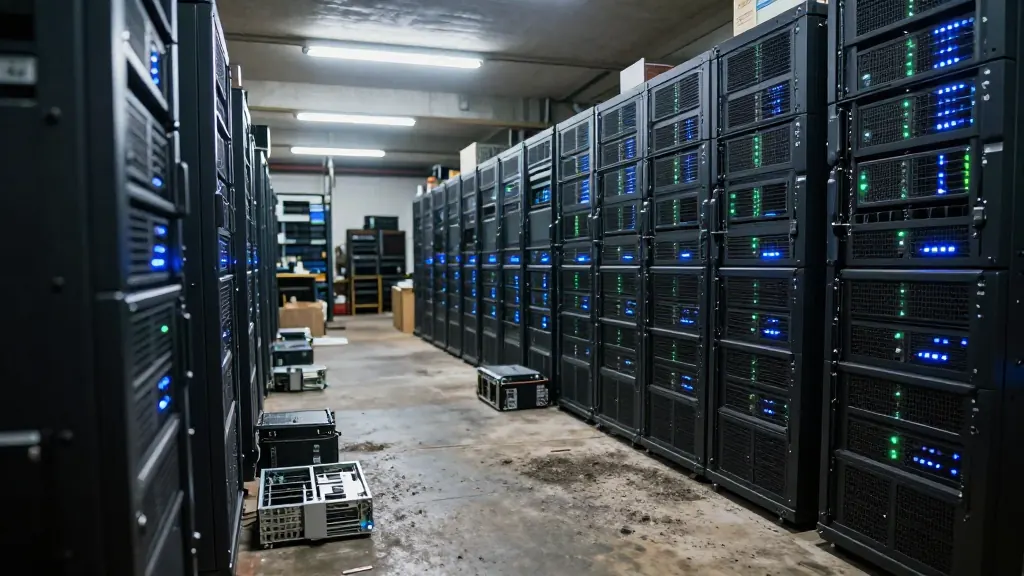
This case is not unprecedented; findings of NVIDIA H200 GPUs have already been reported in the ghost offices of companies with strong Chinese military ties. The ability of large corporations, such as China Telecom, to deploy 32 B300 servers, for example, suggests deep connections and financial resources that surpass paper barriers.
⚠️ Attention
Border control cannot be maintained by bureaucracy alone. To be effective, a trade embargo requires a rigorous and continuous due diligence process across the entire supply chain.
What the success in acquiring B300 chips suggests is that border control cannot be maintained by bureaucracy alone. For a trade embargo to be effective, a rigorous and continuous due diligence process would be necessary at every stage of the supply chain. If China proves to be so adept at acquiring the B300, the market must prepare for the arrival of future and more advanced AI GPUs, such as the NVIDIA Vera Rubin. The challenge of control remains technological and logistical, and not merely regulatory.