Read this article in: Portuguese (Português) · Spanish (Español)
The NVIDIA RTX A6000 is one of the most robust graphics platforms developed for professional workstation environments, designed to support extremely complex workloads in sectors such as architecture, product design, and scientific visualization. This graphics card, based on the Ampere architecture, represents a significant advancement by incorporating advanced features like real-time ray tracing, in addition to supporting artificial intelligence (AI) acceleration. Its primary function is to enable professionals to create large-scale models and photorealistic renderings with maximum fidelity, replacing and modernizing the capabilities of older Quadro lines.
The model’s relevance is marked by its technological transition and its positioning in the professional market. Specifically, the NVIDIA RTX A6000 was announced in October 2020, setting a new standard by succeeding the previous line of professional cards, the Quadro. This transition was not merely nominal; it signaled the full integration of RTX technologies, which combine rasterization (CUDA), AI acceleration, and ray tracing, ensuring that users have access to a complete set of cutting-edge graphics computing tools, essential for modern workflows.
In this article, we will uncover the full power of the NVIDIA RTX A6000. We will begin with an overview of its positioning in the NVIDIA RTX A line, diving into the Ampere architecture and its specialized cores. Next, we will conduct a detailed analysis of the technical specifications, explore its practical performance in professional workflows, and cover the software ecosystem that optimizes the card’s use. Finally, we will compare the model with previous generations and competitors, providing a complete guide for professionals and enthusiasts.
Key Points
- The A6000 marks the transition from the Quadro line to the RTX family, adopting the Ampere architecture.
- It is optimized for complex professional workloads, such as engineering, VFX, and scientific simulations.
- Its performance is defined by specialized cores: CUDA (general processing), Tensor (AI/ML), and RT (Ray Tracing).
- The Ampere architecture, based on 8 nanometers, ensures unprecedented stability and processing power.
- Peak performance depends on the combination of high VRAM, clock frequency, and efficient TDP management.
Overview and Positioning of the NVIDIA RTX A Line
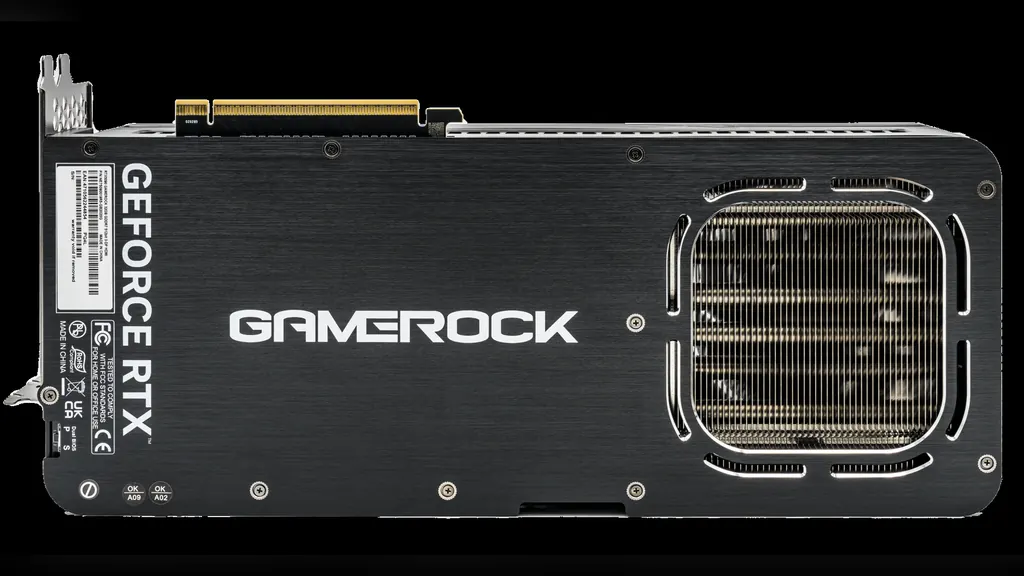
The NVIDIA RTX A6000 is not just another graphics card; it represents a transition milestone and a strategic repositioning in the professional graphics computing market. Its existence marks the end of an era of nomenclature and the beginning of a new generation of computational power. Historically, the professional segment was dominated by the Quadro line. However, with technological advancements and the need for a more universal and powerful name, NVIDIA promoted a significant change. The professional line formally abandoned the Quadro brand, adopting the name and architecture of the NVIDIA RTX family.
The Evolution to Ampere Architecture
This transition was deeply rooted in the adoption of the Ampere microarchitecture. The decisive moment for the professional market came in October 2020, when the company introduced the RTX A6000 as the first professional card based on this cutting-edge architecture. Ampere itself was announced in a broader context of innovations, with the unveiling of the GeForce RTX 30 series, based on Samsung’s 8-nanometer process. This new technological level allowed professionals in studios, engineering, and research to access unprecedented graphics and processing resources.
It is crucial to understand that the focus of the RTX A6000 and the entire RTX A line is not gaming entertainment, but rather the ability to process extremely complex and computationally intensive workloads. It was meticulously designed for engineering environments, high-end 3D rendering, scientific simulations, and multimedia content production in film and architectural studios. This specialization ensures that the hardware operates with optimizations and stability that exceed the demands of recreational use.
Positioning and Breadth of the RTX A Line
The strength of the RTX A line lies in its breadth and scalability. The Ampere family is not limited to just the top-of-the-line model. It covers a vast range of solutions to meet different workflow profiles, from desktop projects to the largest corporate studios. This diversity is crucial because it allows the user to choose the exact level of performance and the ideal cost-benefit ratio for their application. The models that make up this professional line include, but are not limited to: A40, A400, A1000, A2000, A4000, A4500, A5000, A5500, and the robust A6000.
In summary, by migrating to the RTX nomenclature and Ampere architecture, NVIDIA has consolidated an ecosystem that speaks directly to the needs of the professional market. The RTX A6000, as the centerpiece of this line, ensures that engineers and digital artists can rely on a next-generation graphics platform, maintaining superior performance and unmatched stability, establishing itself as the benchmark for the most demanding industrial and creative workflows.
Ampere Architecture and Specialized Cores
The transition to the Ampere microarchitecture represents a quantum leap in professional graphics processing, signaling NVIDIA’s ability to consolidate unprecedented computing power. Unlike previous generations, the Ampere architecture is not merely an incremental improvement; it is a complete re-engineering of processing, designed to support the convergence of various complex workloads. This shift was fundamental to the positioning of the RTX A line, marking the abandonment of the old Quadro nomenclature and embracing a more comprehensive and scalable platform.
Manufacturing Process and Specialized Cores
The power of the RTX A6000 is intrinsically linked to its manufacturing process and its modular composition. The Ampere architecture was initially announced on September 1, 2020, and is manufactured on an 8-nanometer process. This advanced physical foundation allows the chip to host a triad of specialized cores, each optimized for a specific type of calculation. This specialization is what enables the card to execute multiple complex tasks simultaneously, ensuring performance in mixed-use scenarios.
Os três tipos de núcleos – CUDA, Tensor e RT – trabalham em sinergia para otimizar o desempenho em diferentes domínios de aplicação:
- CUDA Cores: These are the general-purpose processing cores, responsible for traditional rasterization and most graphics computation tasks in a workflow.
- Tensor Cores: These cores are dedicated to matrix processing and are the engine behind Artificial Intelligence (AI) and Machine Learning (ML) workloads, accelerating the training and inference of complex models.
- RT Cores: Developed specifically for Ray Tracing, RT Cores dramatically accelerate ray-tracing calculations. They are crucial for ultra-realistic visual simulations, such as lighting and reflections.
This combination of features not only elevates the raw power of the card but also defines its flexibility. While the CUDA Cores and RT Cores ensure visual fidelity and realism in advanced rendering scenarios, the Tensor Cores ensure that the workflow can incorporate data analysis and AI without processing bottlenecks. This modular and specialized architecture is what allowed NVIDIA to present the first Ampere-based professional card, the RTX A6000, in October 2020, solidifying the new standard for professional graphics computing, and it is important to learn more about GPU specifications for AI and rendering.
📊 RTX A6000 Architecture and Specialized Cores (Ampere)
| Core Type | Primary Function | Performance Application |
|---|---|---|
| CUDA Cores | General processing and traditional rasterization | Most graphics computation tasks |
| Tensor Cores | Matrix processing | Artificial Intelligence (AI) and Machine Learning (ML) |
| RT Cores | Acceleration of ray-tracing calculations | Ray Tracing and ultra-realistic visual simulations |
Detailed analysis of technical specifications
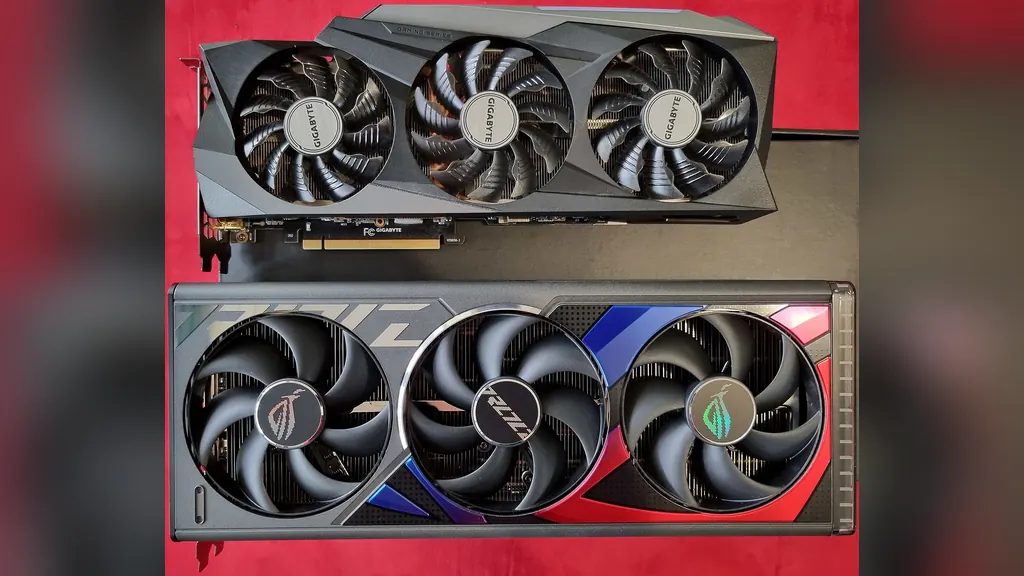
| Section | Nvidia RTX Series A |
|---|---|
| Family | Ampere |
| Architecture | Ampere |
| Launch | 2020 |
| Main Models | RTX A400, A1000, A2000, A4000, A4500, A5000, A5500, and A6000 |
| Predecessor | Quadro |
| Launch Date | September 20, 2018 |
A technical analysis of a professional graphics card like the NVIDIA RTX A6000 requires more than just listing specifications; it requires understanding the practical meaning of each number in a complex rendering or simulation environment. The three pillars that define the computational power of any workstation GPU are video memory (VRAM), clock frequency, and power consumption (TDP). For a more detailed guide on models like the NVIDIA RTX A4000 for professional design, each of these parameters plays a vital and interdependent role in the performance the end-user will experience.
Video Memory (VRAM): Supporting Complexity
VRAM is perhaps the most critical resource for processing massive models. It acts as the card’s “scratchpad,” storing all temporary data, textures, geometry, and the parameters of the Artificial Intelligence (AI) models being processed. In simulation or rendering scenarios with high resolution and many elements, the VRAM capacity determines how complex the project can be without the card freezing or being forced to slow down. Robust memory capacity is what allows the A6000, based on the Ampere architecture, to handle extremely detailed models, such as those used in large-scale architectural visualizations or fluid simulations. Without enough VRAM, the system can fail even if the processing cores are powerful.
Clock and TDP: Speed and Efficiency
Clock frequency, measured in Gigahertz (GHz), indicates the processing speed of the CUDA, Tensor, and RT cores. The higher the frequency, the more calculations per second the card can perform, accelerating tasks that require serial processing, such as rasterization and lighting calculation. TDP (Thermal Design Power) is the maximum power consumption the card can dissipate under normal operating conditions. A well-managed TDP not only ensures system stability but is also crucial for sustained performance, allowing the card to operate at its maximum frequency for long rendering periods without overheating or suffering throttling (forced performance reduction).
In summary, the combination of high VRAM capacity, fast clocks, and efficient TDP allows the RTX A6000 to run professional workflows smoothly. While the CUDA cores handle general processing and rasterization, the Tensor Cores accelerate Machine Learning tasks, and the RT Cores, specialized in ray tracing, ensure that light and reflection simulation is done with near-physical fidelity. The RTX A6000, part of the line that received the Ampere architecture in 2020, consolidated this hardware synergy to meet the most demanding needs of the professional graphics computing market.
📌 The 3 Pillars of GPU Computing Power
- Video Memory (VRAM): The workspace for temporary data and AI models.
- Clock Frequency (GHz): Indicates the processing speed of the CUDA, Tensor, and RT cores.
- TDP (Power Consumption): Ensures stable and sustained performance without overheating.
Professional Workflow Performance
The capability of the NVIDIA RTX A6000 transcends a mere listing of technical specifications; it sets a new performance standard for the most demanding workflows in the professional market. Whether in architectural modeling, scientific simulation, or visual effects (VFX) production, the differentiator is not just raw power, but the architecture that allows the most complex algorithms to run with physical fidelity and unmatched efficiency.
High-Fidelity Modeling and Visualization
In professional visualization scenarios, such as CAD, BIM, and VFX, the goal is maximum realism. This is where ray tracing becomes fundamental. While rasterization prioritizes speed, ray tracing simulates the path of light rays, precisely calculating phenomena like refraction, penumbra, and reflections. RTX GPUs, including the A6000, combine specialized hardware—the RT Cores—to accelerate the calculation of acceleration structures, such as the Bounding Volume Hierarchy (BVH), and intersection tests. Many rendering tools now adopt hybrid approaches, where reflections and occlusion are calculated via ray tracing, and the rest of the scene is rasterized, ensuring both realism and performance.
📘 Ray Tracing
It is a simulation method that calculates the path of light rays to determine phenomena like refraction, penumbra, and reflections with high accuracy, simulating light behavior more realistically than rasterization.
Integration Through Specialized APIs
To ensure the A6000 meets global software standards, NVIDIA has invested in a robust ecosystem of interfaces. Support for APIs like DXR (from DirectX 12) and Vulkan, along with the proprietary OptiX engine, ensures that ray tracing is accessible. OptiX, a programmable ray tracing engine, is a high-level, or “to-the-algorithm,” interface. This means it is not limited to photorealistic rendering but can encapsulate entire algorithms, proving useful in fields as diverse as optical and acoustic design, electromagnetic research, collision detection, and AI queries.
Performance in Simulation and Artificial Intelligence
Beyond visual graphics computing, the A6000 is a powerful workstation for processing complex data. The Tensor cores, specialized units for matrix operations, are the heart of Artificial Intelligence (AI) and Machine Learning (ML) acceleration. They allow the card not only to run DLSS in real time but also to process tasks such as noise reduction in ray-traced images and locally run language models. This versatility is a testament to the Ampere architecture, which allows the CUDA, Tensor, and RT cores to work in synergy to optimize performance across multiple application domains, from physical simulation (using CUDA and PhysX) to computational data analysis.
In summary, the A6000 is not just a graphics card; it is a computing platform that, through standards like Pixar’s Universal Scene Description (USD) format and material languages like MDL, ensures that developers can build coherent and high-performance workflows across various disciplines, consolidating unprecedented computational power for the professional market.
Software Ecosystem and Optimizations
Analyzing the computational power of the NVIDIA RTX A6000 cannot be limited to a simple listing of hardware specifications. For top professionals in sectors like architecture, film, and engineering, the true value of a workstation lies in the robustness and breadth of its software ecosystem. If you want to learn more about this product line, it is worth checking the specifications for the NVIDIA RTX A2000. It is this integration that transforms a high-performance graphics card into a true computing platform, capable of supporting the most complex and demanding workflows in the global market.
Software Ecosystem and Optimizations
At the heart of this ecosystem is CUDA, which, although already discussed in terms of general processing cores, gains an even more sophisticated dimension through high-level APIs, such as OptiX. OptiX is a fundamental component of NVIDIA DesignWorks and represents what we call a high-level API—that is, “for the algorithm.” This means it was designed not only to execute the ray tracing calculation itself but to encapsulate the entire algorithm to which the tracing belongs. This abstraction capability is critical because it allows the OptiX engine to execute the larger workflow without requiring changes to the application’s code.
🧪 How the Ecosystem Turns the Card into a Platform
The power of the RTX A6000 isn’t just in the hardware. It’s the combination of high-level APIs, like OptiX, with support for global formats (USD and MDL) that makes it complete. This ensures that the workflow, whether in film or engineering, is cohesive and interoperable across different software packages.
The impact of OptiX transcends the field of visual computer graphics. Its modular and high-level nature allows it to be applied in various scientific and engineering areas. Beyond rendering graphics, it assists in optical and acoustic design projects, radiation and electromagnetism research, and also in artificial intelligence queries and collision analysis. This versatility ensures that the RTX A6000 is not a niche device, but rather an accelerator for solutions across multiple engineering disciplines.
Another pillar supporting the ecosystem is support for standardized asset formats. For a large-scale project involving multiple software packages and teams to function smoothly, it is essential that the data is consumed by universal standards. The RTX A6000 is optimized to work with formats such as the Universal Scene Description (USD), a Pixar standard, and material languages like MDL (Material Definition Language). Support for these formats guarantees interoperability, allowing complex models and advanced materials to be transferred and rendered with fidelity, regardless of the software’s origin.
In summary, the combination of very high-level APIs, such as OptiX, with support for global asset formats (USD and MDL), establishes the NVIDIA RTX A6000 as a complete computing platform. This software architecture ensures that the card not only achieves impressive raw processing power but does so in a cohesive, efficient, and, above all, interoperable manner with the rest of the professional workflow.
Comparison with previous generations and competitors
Comparison with previous generations and competitors
Analyzing the NVIDIA RTX A6000 cannot be done without understanding the evolutionary context of the professional graphics market. Historically, the workstation segment was represented by the Quadro line, which until the launch of the A6000 in October 2020 was synonymous with robust solutions for engineering and visualization environments. With the arrival of the A6000, based on the Ampere architecture, NVIDIA promoted a significant shift: the professional line abandoned the Quadro brand and began using the unified NVIDIA RTX name. This transition signaled the convergence of cutting-edge features while maintaining the focus on the stability and certification required by the corporate market.
Fundamental Differences Between Market Niches
The most evident contrast lies in the difference of purpose between the market focus of the A6000 and that of consumer cards, such as the GeForce series (example: RTX 2080 or the more recent RTX 4090). While gaming cards are developed to provide immersive, high-frame-rate visual experiences in games (as seen in releases like Battlefield V in 2018), the A6000 is designed for work integrity. The gaming consumer seeks maximum performance in dynamic scenarios, but the CAD, BIM, or VFX professional seeks maximum fidelity and the assurance that the software will run without failures, even during prolonged work sessions.
This is precisely where the value of the A6000 lies. Although GeForce cards, such as those in the 20 series or the more recent ones, boast impressive peak numbers, they are not necessarily accompanied by the rigor of certified driver support. The A6000, on the other hand, is built on a foundation that goes beyond a simple list of specifications. It guarantees that the drivers are optimized and certified for global software standards, a critical differentiator that justifies its positioning in the high-cost market niche.
In summary, while consumer cards prioritize constant advancement in gaming visual features—such as real-time Ray Tracing or Frame Generation—the A6000 emphasizes the stability of the computing platform. It is a complete workstation, capable of supporting everything from complex data processing to the most demanding workflows, ensuring that the user’s workflow is not interrupted by driver incompatibilities or uncontrolled performance variations. The A6000, therefore, is not just a graphics card; it is a reliable computing platform, essential for professionals who depend on precision and continuity in their projects.
Glossary
- Quadro: Was the former line of professional NVIDIA cards, the predecessor to the RTX family, which was formally discontinued.
- Ampere: Is the cutting-edge microarchitecture used by the A6000, representing a quantum leap in graphics processing power.
- Ray Tracing: A simulation technique that calculates the path of light rays to achieve extremely realistic reflections and lighting.
- Tensor Cores: Specialized cores dedicated to matrix processing, accelerating Artificial Intelligence (AI) and Machine Learning (ML) tasks.
- VRAM: Video memory, which acts as the card’s ‘workspace,’ essential for storing complex textures and models.
- TDP: Thermal Design Power. It is the maximum power consumption the card can dissipate, ensuring operational stability.
Frequently Asked Questions
Is the NVIDIA RTX A6000 good for gaming or only for professional work?
The A6000 was meticulously designed for professional work environments, not for gaming entertainment. Its focus is on processing computationally intensive workloads. It ensures superior stability and optimization for 3D rendering, scientific simulations, and high-fidelity multimedia content production.
What is the difference between the RTX A6000 and the RTX A4000?
The A6000 is the flagship model in the RTX A line, designed for the most demanding workflows. While the RTX A line offers scalability, the A6000, with its robust processing power, is ideal for handling extremely detailed models and large-scale simulations, ensuring peak performance in complex scenarios.
What is Ray Tracing and why is it important for architecture?
Ray Tracing is a technique that simulates the real path of light rays, calculating phenomena like reflections, refraction, and occlusion with physical accuracy. For architecture, it is crucial because it elevates visual fidelity, allowing visualizations to achieve near-perfect realism, something simple rasterization cannot achieve.
Does the RTX A6000 require a special cooling system?
Although the cooling system must be appropriate for the card’s power consumption (TDP), the most important thing is ensuring efficient thermal management. A well-controlled TDP is vital for the card to operate at its maximum frequency for long rendering periods, maintaining stability and preventing performance throttling.
What software is optimized to run on the RTX A6000?
The A6000 is optimized for a vast range of professional applications, including architectural modeling (BIM/CAD), scientific simulations, and visual effects (VFX) production. Its support for APIs like DXR and Vulkan, in addition to the Tensor cores, ensures that it accelerates Machine Learning and rendering tasks in various cutting-edge software.
Conclusion
The NVIDIA RTX A6000 is not just a specification upgrade, but the embodiment of a new era in professional graphics processing. By migrating to the Ampere architecture, the company has consolidated a robust and scalable ecosystem that abandons old nomenclature and positions itself directly for the demands of studios, engineering, and research. This transition ensures that the user has access to a platform of extremely high stability, optimized for complex and computationally intensive workloads, moving away from a focus on recreational use.
The true power of the A6000 lies in its modularity and specialization. The synergy between the CUDA, Tensor, and RT cores allows the card to operate in multiple domains simultaneously: from traditional rasterization to processing artificial intelligence (AI) matrices and calculating ultra-realistic lighting via Ray Tracing. Furthermore, the robust video memory (VRAM) capacity is the pillar that allows for the handling of massive-scale data models and architectural scenes, ensuring that project complexity does not limit the hardware’s potential.
Ultimately, the RTX A6000 reaffirms the standard of excellence in cutting-edge graphics computing. It represents the union of an advanced manufacturing process, specialized processing power, and the reliability demanded by the most rigorous industrial workflows. By adopting this technology, the professional is not just buying a graphics card; they are investing in a platform that defines the limit of what is possible to create. It is time to explore how this unprecedented processing capability can revolutionize the next big project of your career.