Read this article in: Portuguese (Português) · Spanish (Español)
Who is Douglas Engelbart? He is an American engineer, inventor, and computer scientist best known as a pioneer in the field of human–computer interaction. Engelbart’s groundbreaking work laid the theoretical and practical groundwork for much of the technology we now consider commonplace, including the computer mouse, hypertext, and the development of graphical user interfaces. His research, particularly while at SRI International, demonstrated foundational concepts that fundamentally changed how humans interact with machines.
Engelbart’s significance to the technology world cannot be overstated. His vision culminated in technologies like the “oN-Line System” (NLS), which included bitmapped screens and word processing, all demonstrated at the seminal 1968 event known as “The Mother of All Demos.” His contributions earned him major recognition, including the 1997 ACM Turing Award and the 2000 National Medal of Technology. These advancements cemented his status as a visionary whose work moved computing beyond mere processing toward genuine augmentation of human capability.
In the following sections, we will explore the breadth of his career, beginning with his Early Life and Education. We will examine his core philosophy in “The Philosophy of Augmentation,” trace his Pioneering Human-Computer Interaction at SRI, and follow his journey through corporate challenges in “Navigating Corporate Shifts: Tymshare and McDonnell Douglas.” Finally, we will explore how he reclaimed his vision with the Bootstrap Institute and assess his lasting Legacy and Recognition in Technology.
Key Takeaways
- He earned his PhD from UC Berkeley in 1955, establishing the foundation for his groundbreaking work in computer science.
- Engelbart is credited with inventing the computer mouse and developing hypertext, technologies demonstrated at ‘The Mother of All Demos’ in 1968.
- He pioneered the field of human–computer interaction, focusing on enhancing human intellect through interactive computing.
- His significant contributions were recognized with the ACM Turing Award in 1997 and the National Medal of Technology in 2000.
- In 1988, he co-founded the Bootstrap Institute with his daughter, Christina Engelbart, to promote his vision.
Douglas Engelbart at a Glance
| Born | Douglas Carl Engelbart; January 30, 1925; Portland, Oregon, U.S. |
|---|---|
| Died | July 2, 2013 (aged 88); Atherton, California, U.S. |
| Education | Oregon State University (BS); University of California, Berkeley (MS, PhD) |
| Known for | Computer mouse; Hypertext; Groupware; Interactive computing |
| Awards | National Medal of Technology (2000); Lemelson–MIT Prize; ACM Turing Award (1997); BCS Lovelace Medal (2001); Norbert Wiener Award for Social and Professional Responsibility; Computer History Museum Fellow Award (2005); NAE Member (1996) |
| Fields | Human–computer interaction; Inventor |
| Workplaces | SRI International; Tymshare; McDonnell Douglas; Bootstrap Institute/Alliance; The Doug Engelbart Institute |
| Thesis | A Study of High-Frequency Gas-Conduction Electronics in Digital Computers (1956) |
| Doctoral advisor | Paul L. Morton; John R. Woodyard |
| Citizenship | United States |
| Occupation | Inventor; Engineer; Professor; Computer scientist; Presenter |
| Employer | Ames Research Center (1948–1951); University of California, Berkeley (1955–1956); SRI International (1957–1977); Tymshare (1977–1984); McDonnell Douglas (1984–1986) |
| Field of work | Informatics; Invention; Electrical engineering |
| Spouse | Ballard Fish; Karen O’Leary Engelbart (2008–present) |
| Notable work | computer mouse (1967); graphical user interface; human–computer interaction (1969) |
| Member of | American Academy of Arts and Sciences (1994–present); National Academy of Engineering (1996–present) |
Early Life and Education
Douglas Carl Engelbart was born on January 30, 1925, in Portland, Oregon. His lineage traced back through ancestors of German, Swedish, and Norwegian descent. He was the middle of three children in the Engelbart family, with an older sister named Dorianne and a brother named David, who was fourteen months younger. The family spent their early years in Portland before moving to the surrounding countryside near Johnson Creek when he was eight years old. His father passed away one year after the family relocation. This early period concluded with his graduation from Portland’s Franklin High School in 1942.
His academic journey first took him to Oregon State University. Midway through his undergraduate studies, Engelbart served for two years in the United States Navy. This period saw him working as a radio and radar technician on the remote island of Leyte in the Philippines. It was during this service, within a small traditional hut built on stilts, that he encountered Vannevar Bush’s seminal article, “As We May Think.” This reading proved to be a profoundly influential moment, shaping the trajectory of his future work in technology. Upon returning to Oregon State, he completed his bachelor’s degree in electrical engineering in 1948, while also being a member of the Sigma Phi Epsilon social fraternity. Initially, he was hired by the National Advisory Committee for Aeronautics at the Ames Research Center, where he was employed in wind tunnel maintenance. It was during this time that he met Ballard Fish, whom he would marry on May 5, 1951, in Portola State Park. Beyond his professional duties, Engelbart maintained interests in activities like hiking, camping, and folk dancing.
The Pursuit of Advanced Knowledge
Following his early career at Ames, Engelbart moved on to pursue advanced graduate studies at the University of California, Berkeley. There, he focused his efforts on electrical engineering with a specialized concentration in computers. His academic success was marked by two milestones: earning his Master of Science (MS) degree in 1953, followed by his Doctor of Philosophy (PhD) degree in 1955. His doctoral research, which was completed in 1956, addressed the topic of “A Study of High-Frequency Gas-Conduction Electronics in Digital Computers.” He was guided through this rigorous process by doctoral advisors Paul L. Morton and John R. Woodyard. The foundation laid during these years at Berkeley—a period of intense intellectual growth—set the stage for his groundbreaking career as an inventor and computer scientist.
🕒 Key Milestones in Engelbart’s Early Life and Education
- 1925 — Born in Portland, Oregon.
- 1942 — Graduated from Portland’s Franklin High School.
- 1948 — Completed bachelor’s degree in electrical engineering from Oregon State University.
- 1951 — Married Ballard Fish.
- 1953 — Earned Master of Science (MS) degree from UC Berkeley.
- 1955 — Earned Doctor of Philosophy (PhD) degree from UC Berkeley.
The Philosophy of Augmentation
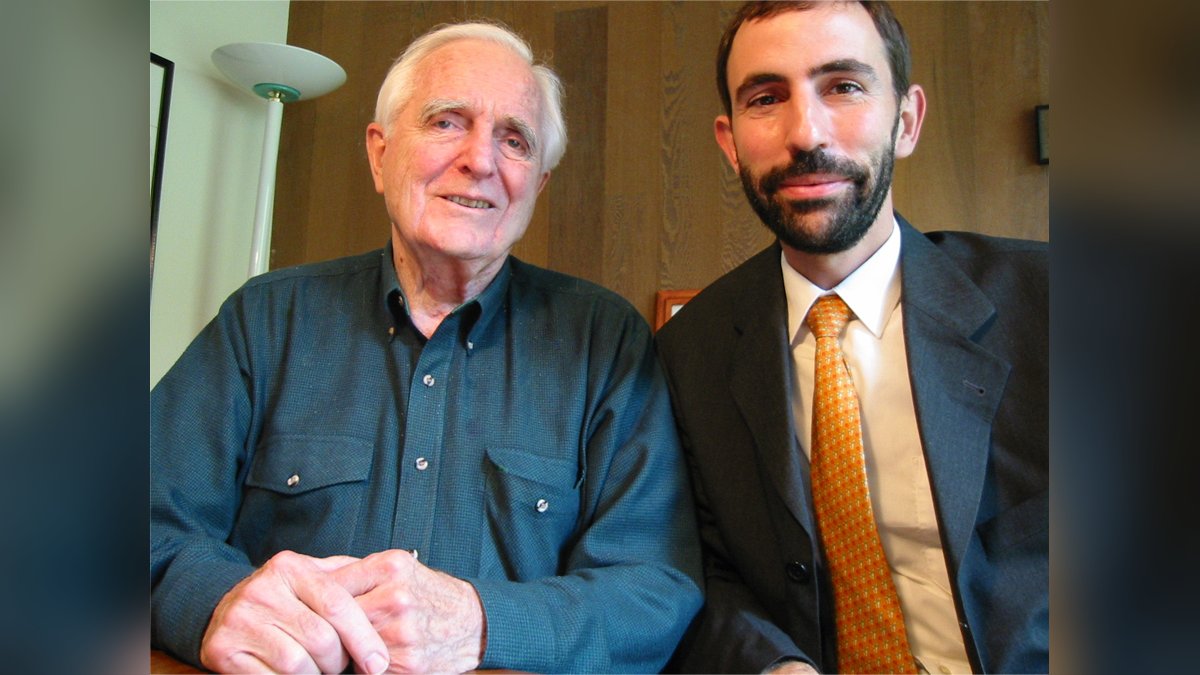
The intellectual trajectory of Douglas Engelbart was not initially drawn toward the revolutionary technology that would define his career. As the sources record, his pivotal realization occurred in December 1950, when he was engaged to be married. At that time, his stated career goals were simple: “a steady job, getting married and living happily ever after.” Yet, this personal reckoning catalyzed a deep, guiding philosophical shift. Engelbart began to reason that any serious, sustained effort to improve the world required a highly organized effort capable of harnessing the collective human intellect of all people to produce effective solutions. In his mind, if one could dramatically improve the mechanism by which humanity solved important problems, that improvement would boost every global effort, making the timing of such a breakthrough a matter of urgency.
This philosophical framework found intellectual scaffolding in the work of others. In 1945, Engelbart had read with interest Vannevar Bush’s article, “As We May Think,” which called for making knowledge widely available as a national peacetime grand challenge. Coupled with his own practical experience as a radar technician, which taught him how information could be analyzed and displayed on a screen, Engelbart began to build a comprehensive vision. He envisioned intellectual workers sitting at display “working stations,” capable of flying through vast information space. This setup promised a way for people to harness their collective intellectual capacity to solve important problems together in ways far more powerful than previously imagined. This vision was a profound departure from the contemporary view of computers, which were largely regarded merely as number crunching tools.
For Engelbart, the answer to humanity’s greatest challenge was not just faster calculation, but a fundamental overhaul of the human-computer interaction itself. Harnessing collective intellect, facilitated by interactive computers, became his life’s mission. The early 1950s were critical to this development; as a graduate student at Berkeley, he assisted in the construction of CALDIC, and his foundational work led to eight patents. Following the completion of his doctorate, Engelbart initially attempted to commercialize his research on storage devices by forming a startup company called Digital Techniques. However, after a year, he recalibrated his focus, recognizing that the core research he had been dreaming of since 1951—the augmentation of the human mind—was the only path forward for his life’s work.
His philosophy, therefore, was rooted in the conviction that technology’s highest calling was not efficiency for its own sake, but enhancement for the sake of humanity. He was building a vehicle—the interactive computer—to dramatically improve the global capacity for organized thought. This commitment to elevating the human condition through interconnected knowledge and collective intelligence defined his professional life, guiding him through subsequent roles and defining the very nature of what interactive computing could achieve.
📌 Engelbart’s Vision for Computing
- Harnessing collective human intellect for problem-solving.
- Improving the mechanism by which humanity solves important problems.
- Envisioning workers at stations to navigate vast information space.
- Focusing on overhauling human-computer interaction, not just calculation.
Pioneering Human-Computer Interaction at SRI
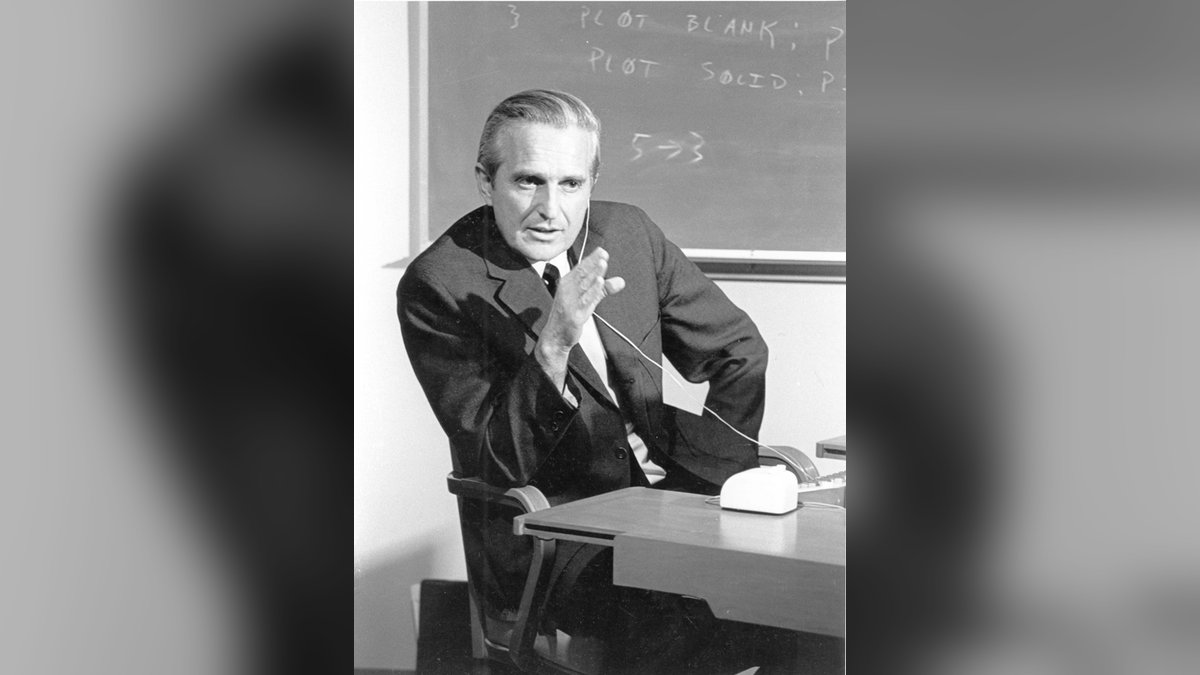
Engelbart arrived at SRI International (then known as Stanford Research Institute) in Menlo Park, California, in 1957. His initial work involved collaborating with Hewitt Crane on magnetic devices and the miniaturization of electronics, a partnership that quickly established a professional bond. By 1962, Engelbart formalized his vision in a report titled Augmenting Human Intellect: A Conceptual Framework. This paper outlined his proposed research agenda and garnered interest from Rowena Swanson, who was actively involved with the Air Force Office of Scientific Research. The research subsequently gained crucial funding from ARPA, enabling Engelbart to recruit a team and establish his own facility, the Augmentation Research Center (ARC), at SRI.
Forging the Infrastructure of Interaction
The ARC became the engine for the design and development of the oN-Line System (NLS). During the mid-1960s, Engelbart and his team conceived and developed several foundational elements of modern computing. These included bitmapped screens, collaborative tools, and the concept of hypertext. These innovations arrived at a time when most computers were inaccessible to the general public, limiting users to batch processing or proprietary vertical applications. Engelbart’s work fundamentally challenged these limitations, proposing mechanisms for direct, interactive access.
📘 Hypertext
A concept developed by Engelbart’s team, hypertext refers to the linking of electronic text to other texts, a foundational element of modern interactive computing.
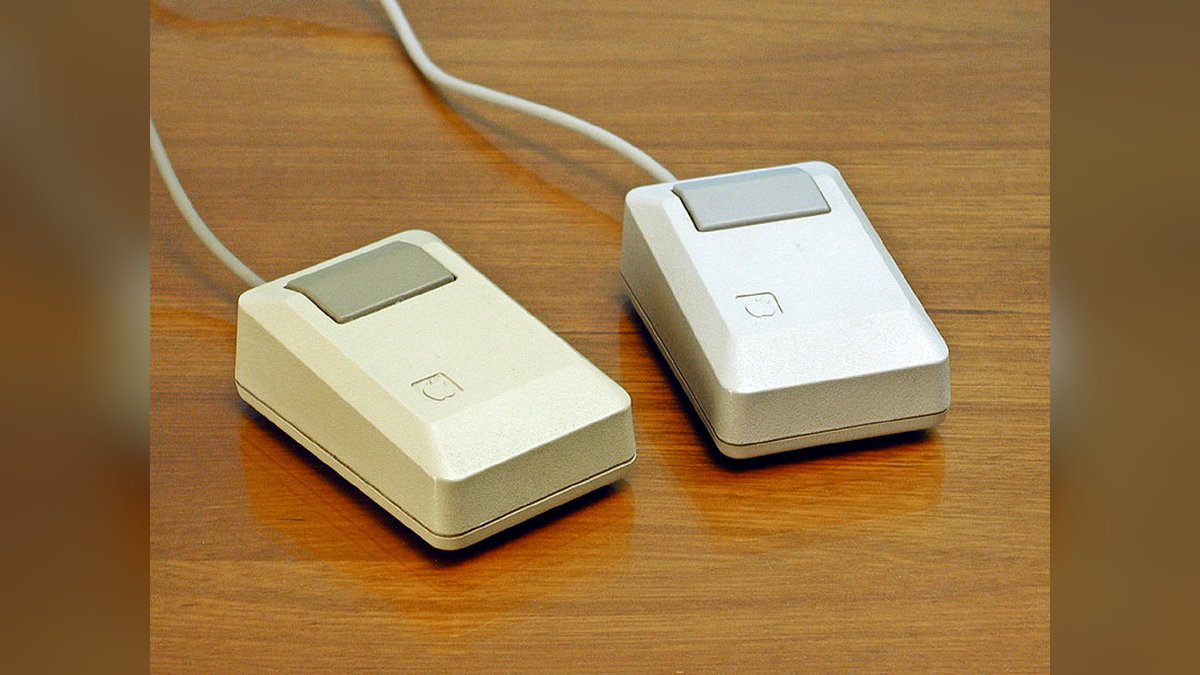
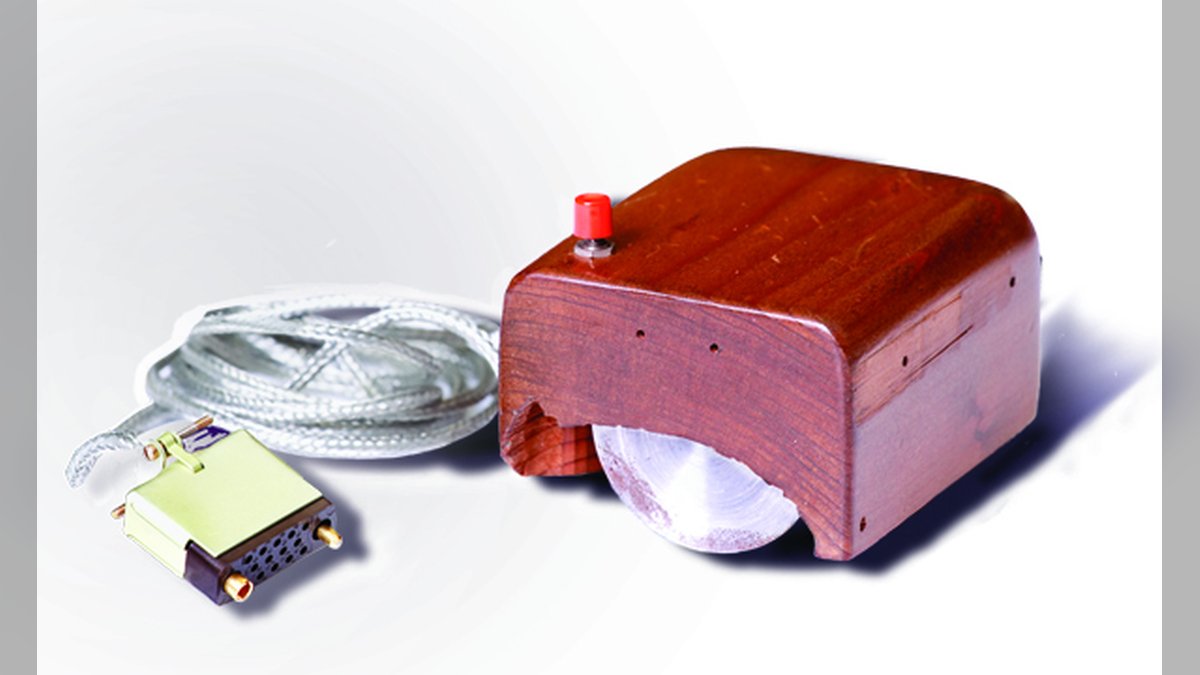
Among the most tangible breakthroughs was the computer mouse. Engelbart applied for a patent in 1967 and secured it in 1970 for the device’s wooden shell with two metal wheels (U.S. patent 3,541,541). He developed this invention with his lead engineer, Bill English, sometime before 1965. The patent application described it simply as an “X-Y position indicator for a display system.” Although his group nicknamed the on-screen cursor a “bug,” the device was later revealed to have been given its common name because of the tail protruding from its end. Furthermore, Engelbart’s original cursor was an upward-pointing arrow, though its deployment on the XEROX PARC machine saw it slanted to the left to better distinguish it from on-screen text.
The culmination of these efforts came in 1968 when Engelbart showcased the chorded keyboard and numerous other inventions from him and ARC at what became known as The Mother of All Demos. These demonstrations provided a public glimpse into the potential of interactive computing, establishing the groundwork for many technologies we now take for granted, from the graphical user interface to hypertext.
Navigating Corporate Shifts: Tymshare and McDonnell Douglas
By the mid-1970s, the trajectory of Engelbart’s groundbreaking research began to veer into a period of relative obscurity. The intellectual climate surrounding advanced computing was shifting rapidly, creating both a technical and ideological gulf between Engelbart’s vision and the prevailing trends. As early as 1970, several of his key researchers grew alienated, leaving his organization for Xerox PARC, a departure fueled by a mix of frustration and differing views on the future of computing. Engelbart remained convinced that the future lay in collaborative, networked, timeshare—or client-server—computers. This belief was sharply at odds with the rising tide of personal computing, a field favored by younger programmers who viewed centralized power with suspicion.
The institutional hurdles were significant. While key personnel at the Augmentation Research Center (ARC) were involved in Erhard Seminars Training (EST) starting in 1972, the controversy surrounding EST and other social experiments ultimately reduced the morale and social cohesion of the entire ARC community. Compounding these internal struggles were external economic pressures: the 1969 Mansfield Amendment, the conclusion of the Vietnam War, and the end of the Apollo program systematically scaled back ARC’s funding from both ARPA and NASA throughout the early 1970s. When SRI’s management grew dissatisfied with Engelbart’s approach to leading the center, they placed the remnants of ARC under the control of artificial intelligence researcher Bertram Raphael. This paved the way for the lab’s transfer to Tymshare in 1976.
The Corporate Labyrinth: Tymshare and McDonnell Douglas
At Tymshare, Engelbart found himself further marginalized. While Tymshare took over the NLS software and the physical laboratory founded by Engelbart, they also hired most of the lab’s staff, including him, as a Senior Scientist. The software was renamed Augment and offered commercially through Tymshare’s new Office Automation Division. It is notable that Tymshare had already engaged with NLS, having previously run a local copy of the software on a minicomputer called OFFICE-1 through a joint project with ARC.
Despite this commercial incorporation, operational concerns at Tymshare quickly overshadowed Engelbart’s desire to conduct ongoing pure research. His subsequent stints with major corporations proved frustratingly cyclical. Various executives, first at Tymshare and later at McDonnell Douglas—which acquired Tymshare in 1984—expressed interest in his conceptual ideas, but critically, they never committed the necessary funds or personnel to facilitate their development. During his tenure at McDonnell Douglas, Engelbart’s focus narrowed to the immense knowledge management and IT requirements inherent in the life cycle of an aerospace program. This environment, rather than stifling him, seemed to strengthen his resolve, fueling his determination to guide the information technology arena toward global interoperability and an open hyperdocument system. Ultimately, Engelbart retired from McDonnell Douglas in 1986, determined to pursue his visionary work entirely free from the constraints of commercial pressure.
Reclaiming the Vision with the Bootstrap Institute
Following years of institutional challenges, Engelbart’s vision required a dedicated organizational structure to ensure its survival and continued evolution. In 1988, he co-founded the Bootstrap Institute with his daughter, Christina Engelbart. This effort was given weight by the Doug Engelbart Institute, of which he served as Founder Emeritus, an entity designed to promote his core philosophy: boosting Collective IQ. This concept centers on the belief that humanity can dramatically improve how it solves complex problems by working together. The Institute achieved this through a strategic bootstrapping approach, culminating in a series of three-day and half-day management seminars held at Stanford University from 1989 through 2000.
The initial success of these seminars proved that the intellectual curiosity surrounding Engelbart’s ideas remained potent. By the early 1990s, there was sufficient interest among his seminar graduates that led to the formation of the Bootstrap Alliance. This new non-profit entity served as a collaborative home base for implementing his foundational work. Despite the turbulence of the era—specifically the invasion of Iraq and the subsequent recession which spawned various reorganizations—the core work persisted. The Alliance continued its mission through management seminars, consulting, and small-scale collaborations, maintaining momentum against significant external headwinds.
The focus of the research gradually shifted from pure theory to modern, implementable technology. In the mid-1990s, the group secured some DARPA funding. This funding allowed them to develop a modern user interface for the system known as Augment, a piece of technology called Visual AugTerm (VAT). This development occurred while the team was participating in a larger program addressing the complex IT requirements of the Joint Task Force, demonstrating the immediate, practical relevance of Engelbart’s concepts.
This commitment to open-source, collaborative advancement continued into the 21st century. In 2005, Engelbart received a National Science Foundation grant that funded the development of the open-source HyperScope project. The team responsible for HyperScope built a browser component utilizing technologies such as Ajax and Dynamic HTML. Its explicit purpose was to replicate the advanced functionality of Augment, particularly its multiple viewing and jumping capabilities, allowing users to link within and across various documents. Through the Bootstrap Institute and its affiliated projects, Engelbart and his family ensured that his vision for interactive, collective computing remained a living, evolving mandate for the technology industry.
Legacy and Recognition in Technology
The sheer weight of recognition for Douglas Engelbart is difficult to quantify, yet it is impossible to overstate the impact of the awards and honors bestowed upon him. His seminal contributions to the nascent fields of human–computer interaction (HCI) and networked computing earned him accolades throughout his later life, solidifying his status as a foundational figure in modern technology. Among the most significant were the ACM Turing Award in 1997 and the $500,000 Lemelson-MIT Prize for invention and innovation, both recognizing the profound scope of his conceptual breakthroughs.
This recognition continued into the new millennium. In December 2000, U.S. President Bill Clinton presented him with the National Medal of Technology, the nation’s highest technology award. Further cementing his standing were the 2001 British Computer Society’s Lovelace Medal and the induction into the CHI Academy by ACM SIGCHI in 2002. In 2005, he was honored by the Computer History Museum as a Fellow, specifically for “advancing the study of human–computer interaction, developing the mouse input device, and for the application of computers to improving organizational efficiency.” His intellectual contributions were further acknowledged with the Benjamin Franklin Medal in 1999 in Computer and Cognitive Science.
Architecting the Future of Intelligence
Beyond the plaques and medals, Engelbart’s most enduring legacy lies in his intellectual framework—the concept of augmenting collective intelligence. His work evolved beyond mere invention; it became a philosophical pursuit. By 1995, this vision was crystallized in Boosting Our Collective IQ, a book that edited three of his key papers. This material was notably presented at the World Wide Web conference in Boston in December 1995, where he received what would become the Yuri Rubinsky Memorial Award. This demonstrated his continuous engagement with the emerging networked world.
His influence persisted through institutional advisory roles, where he served on boards including the Foresight Institute, the University of Santa Clara Center for Science, Technology, and Society, and the Computer Professionals for Social Responsibility. These roles allowed him to guide the conversation around technology’s ethics and its societal impact. In later years, he continued to engage with these ideas, attending the Program for the Future 2010 Conference to continue the dialogue on how to augment collective intelligence. These varied recognitions—from the National Inventors Hall of Fame induction in 1998 to the 2011 induction into IEEE Intelligent Systems’ AI’s Hall of Fame—all testify not merely to his inventions, but to the revolutionary shift in thinking he championed: that technology’s highest calling was enhancement for the sake of humanity.
Frequently Asked Questions About Douglas Engelbart
What is Douglas Engelbart best known for inventing?
He is best known for inventing the computer mouse, developing hypertext, and pioneering the graphical user interface. These foundational elements were developed while at SRI International and were showcased in the oN-Line System (NLS).
When did he demonstrate his groundbreaking work at ‘The Mother of All Demos’?
He showcased his groundbreaking work at ‘The Mother of All Demos’ in 1968. This pivotal demonstration provided the public with a glimpse into interactive computing, featuring the computer mouse, hypertext, and bitmapped screens.
What is the field of study he pioneered?
He pioneered the field of human–computer interaction. His philosophy centered on the idea that technology’s highest calling was not merely efficiency, but the enhancement of the human mind, boosting collective intellectual capacity.
Which major companies did he work for throughout his career?
His career included major roles at several institutions, notably Ames Research Center, SRI International, Tymshare, and McDonnell Douglas. He also founded the Augmentation Research Center and the Bootstrap Institute.
When did Douglas Engelbart pass away?
Douglas Engelbart passed away on July 2, 2013, at the age of 88. He died in Atherton, California, U.S., concluding a life dedicated to advancing computer science and the augmentation of human intellect.
Final Thoughts: The Legacy of Douglas Engelbart
Douglas Engelbart’s career redefined the very relationship between human thought and machine capability. His enduring contribution was not merely a collection of gadgets, but a profound philosophical framework: that technology’s highest calling was the augmentation of the human mind. By championing the concept of interactive computing, he shifted the focus of the field from mere number crunching to enhancing the collective human intellect. This vision, which materialized through the oN-Line System (NLS) developed at SRI International, laid the foundational architecture for modern digital collaboration.
Among his most tangible breakthroughs are the computer mouse, for which he secured a patent in 1970, and the implementation of hypertext. These innovations, alongside the development of collaborative tools, fundamentally challenged the limitations of batch processing, ushering in the era of direct, interactive access. Engelbart’s pioneering work in human–computer interaction secured him major recognition, including the ACM Turing Award in 1997 and the National Medal of Technology in 2000. Even after founding The Doug Engelbart Institute in 1988, his influence continued to shape the trajectory of computing.
From his initial vision to the tools used today, Engelbart proved that the most powerful technology is not the fastest processor, but the one that best facilitates organized thought and shared understanding, suggesting that the next great leap in computing will always be measured by how deeply it connects us to each other.
Sources and Further Reading
- Douglas Engelbart — Wikipedia (text available under CC BY-SA 4.0)
- Turing Award Winners: 1997 — amturing.acm.org
- Douglas Engelbart Interview 1, Stanford and the Silicon Valley: Oral History Interviews — stanford.edu
- The Hut Where the Internet Began — theatlantic.com
- Douglas Engelbart — dl.acm.org
- Official website