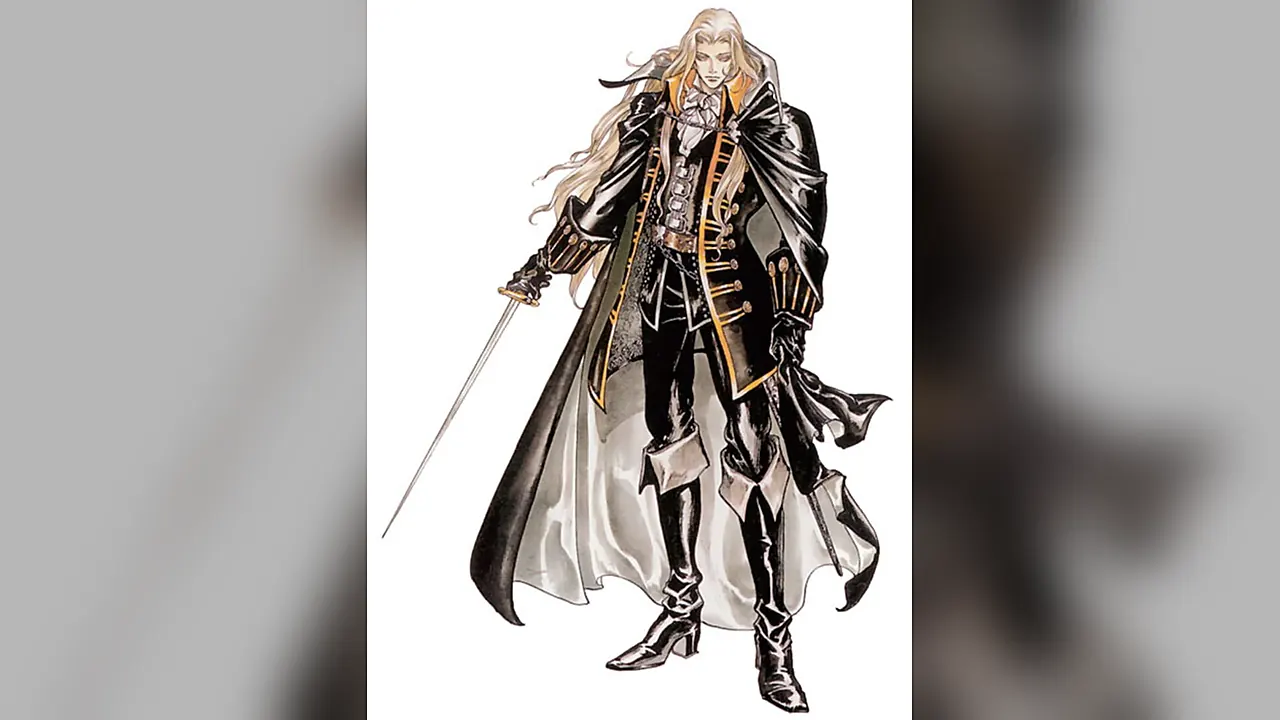
Read this article in: Portuguese (Português) · Spanish (Español)
Defeating Dracula in Castlevania: Symphony of the Night? The key to confronting the Lord of Darkness lies not just in brute force, but in a combination of meticulous preparation, mastery of character abilities, and a deep understanding of the enemy’s attack patterns. As one of the series’ most recurring antagonists, the confrontation requires the player to utilize every acquired resource, from Twilight magic to combat mastery. It is crucial to understand that victory against Count Vlad Țepeș is a test of endurance and strategy, demanding that the player be ready for multiple combat phases and to deal with the vampire’s immortality and infernal powers.
Dracula’s relevance to the Castlevania universe is immense, spanning centuries of mythology. The character, whose original name was Mathias Cronqvist, is an antagonist who has challenged destiny since the 11th century. His appearances are cyclical, with the Belmont lineage remaining in opposition to him, confronting him in various eras. The Count’s trajectory, who was born around 1062 A.D. and was only definitively destroyed in 1999, ensures that he remains a symbol of constant power and challenge for the protagonists, solidifying him as a narrative pillar of the franchise.
In this comprehensive guide, we will unravel all the necessary secrets for you to succeed against the Lord of Darkness. We will start with The Lore Behind the Lord of Darkness, to understand his origin and powers. Next, we will detail Essential Preparation for the Final Confrontation, covering everything from upgrades to ideal equipment. The article will guide you through Battle Location and Timing, Attack Patterns and Combat Phases, presenting a Step-by-Step Strategy for Victory, and we will conclude with Advanced Tips and Common Mistakes to Avoid, ensuring you face this challenge with complete confidence.
Key Points
- Originally Mathias Cronqvist, he was born around 1062 A.D. and served as an alchemist and soldier.
- His transformation into a vampire was motivated by tragedy and revenge against humanity.
- Dracula’s power was amplified by the Crimson Stone, connecting him to the primary power of Chaos.
- He established himself in a magical castle in the province of Wallachia, the stage for his final confrontation.
- The combat demands versatility, dealing with long-range magic and unpredictable physical attacks.
The Lore Behind the Lord of Darkness

The figure of Dracula is much more than a mere vampire; he is the Lord of Darkness, a mythological force that personifies evil and corruption. His story is a journey of disillusionment and power, beginning not as a monster, but as a man of great potential. His original name was Mathias Cronqvist. Around 1062 AD, Mathias Cronqvist served in a knightly company, where he demonstrated brilliant military skills and a deep knowledge of alchemy. He married Elisabetha, and it was this first loss, his wife, that consumed him in such deep despair that it incapacitated him, a fate that, in other narratives, requires strategies like defeating the boss Death.
The Rise of the Lord of Darkness
The end of his human life was marked by new loves and tragedies. During a period of exile, he settled in a magical castle in the province of Wallachia. There, he met Lisa, a woman who deeply reminded him of Elisabetha. Together, they had a son, Adrian Fahrenheit Țepeș, who would later be known as Alucard. However, fate intervened brutally: Lisa’s medical teachings were wrongly labeled as witchcraft. She was captured and crucified, an event that caused Mathias such fury that it led him to plan revenge against all of humanity and even against God.
To channel this rage, he made a pact with the power of an evil God, becoming an immortal vampire. The source of his power, however, was not limited to just the curse. Dracula absorbed the power of a dominant vampire lord, Walter Bernhard, through possession of the legendary Crimson Stone. This event not only gave him vast powers but also connected him to the primary power of Chaos. He ceased to be a noble and became the epitome of evil, the King of Night, a being that not only hunts but manipulates faith and hope itself.
The Inevitable Confrontation
Dracula’s plan for revenge materialized in 1476. He sent his legions against the European continent, destabilizing entire nations. Human resistance, however, was coming from multiple fronts. The Belmont lineage, descended from Leon Belmont, was determined to end the horror. The climax of his curse occurred when he was finally confronted not only by vampire hunters but also by his own son, Alucard. Although he was defeated and killed, the Lord of Darkness left behind a curse that persisted for centuries, ensuring that his legacy of threat remained, echoing through all generations and demanding an eternal confrontation with the Belmont family.
Essential Preparation for the Final Showdown
The final confrontation with the Lord of Darkness is not just a battle of brute force; it is a test of endurance against a mythological force of apocalyptic magnitude. Given Dracula’s nature as a being that manipulates the power of Chaos, any preparation must focus not only on increasing stats but on understanding and mitigating the powers he exhibits in combat. It is crucial for the player to arrive at his encounter with a deep knowledge of his capabilities to survive the initial and intermediate phases of the confrontation.
Analyzing the Lord of Darkness’s Power
Dracula is a master of multiple attack styles and manipulations. He is not limited to a single combat style, which requires the player to be prepared to transition between different strategies. The powers he demonstrates in battle are vast and include, but are not limited to:
💡 Tip
To face the Lord of Darkness, do not only focus on increasing your stats. It is crucial to develop a skill set that covers both ranged combat (against magic) and close-quarters resistance.
- Acid Blood Magic: An arsenal of corrosive attacks that demand distance and constant defense.
- Multiple Energy Forms: From simple fireballs to flaming meteor spheres, demonstrating dangerous elemental control.
- Creature and Dark Magic Manipulation: He controls bats and other nocturnal creatures, in addition to possessing the power of Devil Forging, which creates minions loyal from conjured matter.
- Transformation and Dominance: His ability to transform into a wolf, mist, or bat, coupled with the Power of Dominance, allows him to absorb souls and utilize the abilities of monsters.
Such powers, including the Demonic Megiddo, indicate that preparation must be holistic. The player must seek not only a high level of strength but also a skill set that accounts for both ranged combat (to deal with fire and acid magic) and close-quarters resistance (to face his more physical forms).
The Importance of Experience and Historical Context
Mere strength will not be enough. The historical context of Mathias Cronqvist, the man who became the immortal vampire, and his connection to the power of Chaos, reinforces the idea that this is a god-scale enemy. Remember that, in his origin, he was a brilliant alchemist and a brilliant strategist, and it is this tactical intelligence that makes him so dangerous.
To mitigate the threat of a villain who is, in essence, an entity manifesting in a castle described as a “creature of chaos,” it is vital that the player has maximized their experience. The vast network of information regarding Dracula’s past—from his birth as Mathias Cronqvist in 1062 AD to the period of his revenge plot in 1476—serves to underline that this adversary is a being of unimaginable power. Preparation, therefore, must be viewed as both mental and physical readiness to face an enemy who personifies corruption and evil.
In summary, the focus must be on builds that offer versatility: the ability to evade magical attacks (resistance and defensive magic) and the brute strength to withstand high-damage assaults, such as the Hellfire. Only with this multifaceted preparation will it be possible to face the Lord of Darkness at the peak of his power.
Location and Timing of the Battle
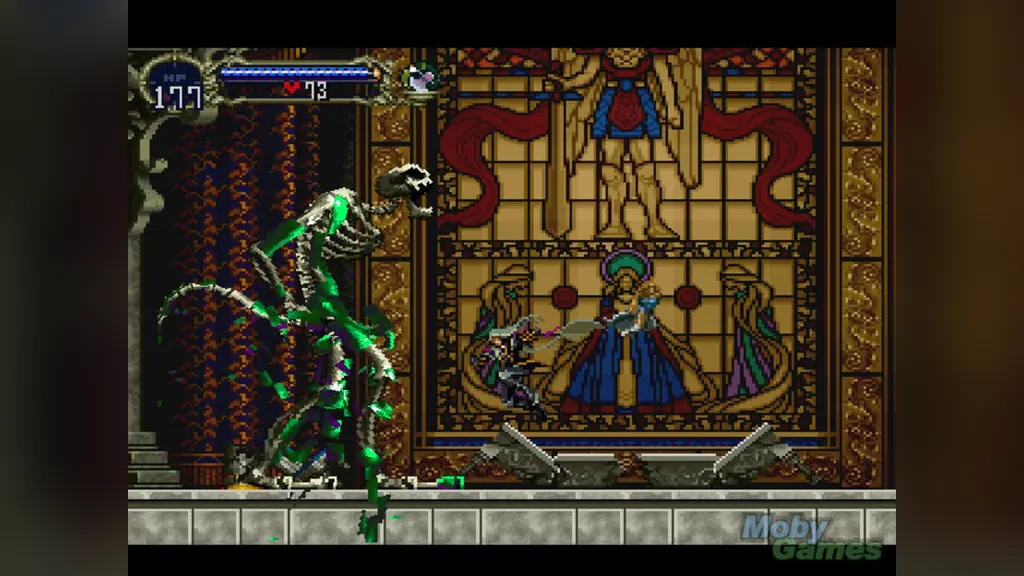
The final confrontation with the Lord of Darkness is the inevitable climax of the protagonist’s entire journey in Castlevania: Symphony of the Night. This is not a battle that can be postponed or faced casually; he is, unequivocally, the final boss of the main campaign, a figure whose presence dominates the fate of all characters and the world itself. Understanding the exact time and place of his encounter is the first step toward mapping victory. See also: How to Defeat Death in Castlevania.
Location of the Confrontation
The threat of Dracula is intrinsically linked to his domain: a magical castle built in the province of Wallachia. This castle is not merely a fortress, but an epicenter of dark magic and despair, a place that, over centuries, has served as a refuge for those who turned against the light. For the player, accessing the Lord of Darkness implies traversing and overcoming all the narrative and combat areas that make up the heart of the plot. The castle, therefore, functions as the final stage, the point of convergence where all skills and knowledge acquired in more distant regions converge for the decisive confrontation.
The Perfect Timing for the Battle
Time is a factor as critical as location. The fight against Dracula should not be approached as a premature challenge. The apocalyptic nature of his existence and powers—which include the manipulation of creatures, Devil Forging, and the ability to transform into different forms, such as wolf, mist, or bat—requires the player to be at the peak of their capability. The ideal time to initiate the confrontation is only after the player has maximized their experience and virtually collected all available resources in the game. This means mastering not only his attack patterns but also having invested in builds that offer versatility: the ability to dodge corrosive magical attacks and, simultaneously, the brute strength to absorb high-damage blows.
Progress through the game should be viewed as a process of continuous preparation. The fact that the Lord of Darkness is a mythological force of almost apocalyptic magnitude means that sheer power will not be enough. The player must ensure that every skill and item acquired has been absorbed and perfected. The victory against Dracula is a test of holistic endurance, requiring the player to be prepared not only physically, but also magically and tactically to face a villain who is, in essence, a force of chaos.
In summary, the encounter takes place in the depths of his castle in Wallachia, the narrative climax. Success depends on strategic timing: the player must arrive at the confrontation only when their arsenal of skills and their knowledge of attack patterns are at their peak potential, ensuring the fight is a test of mastery and not just luck.
📌 Preparation for the Final Confrontation
- Master Dracula’s attack patterns, as he is a complex villain.
- Invest in versatile builds to evade corrosive magical attacks.
- Ensure enough brute strength to absorb high-damage blows.
- Success demands tactical mastery, not just brute force or luck.
- Game progression should be viewed as continuous preparation and refinement.
Attack Patterns and Combat Phases
The final confrontation with the Lord of Darkness is not a simple duel; it is a test of endurance against a millennia-old strategist and an entity of apocalyptic power. Dracula is a master at manipulating the battlefield, combining long-range magic with unpredictable physical attacks. To survive, the player must understand the Lord of Darkness’s attack patterns and anticipate the transitions between his different combat forms.
Attack Patterns and Combat Phases
The fight against Dracula is remarkably fluid, without static battle phases, but rather a succession of attack patterns that demand constant versatility. He operates on three main axes: area magic, transformed physical attacks, and tactical control of minions. Dracula’s command over magic, which includes the use of Hellfire and fiery meteor spheres, requires the player to maintain distance and utilize magical defense. The “Acid Blood Magic” attacks are corrosive, so the dodging timing must be precise, forcing the player to move laterally or jump at the exact moment of impact.
When the distance is closed, Dracula uses his transformations. His Shapeshifting ability is a disorientation tactic: he can manifest as a wolf, a bat, or even mist. The wolf attack is more direct and forces close-quarters combat, while the mist requires the player to move constantly to avoid being cornered. The most devastating and characteristic attack is the Demonic Megiddo, a display of destructive force that must be evaded with a wide dodge, recognizing the magic’s charging pattern.
Furthermore, the Dominus Hatred power and the Power of Dominance allow him to absorb souls and utilize monster abilities. The use of Devil Forging, which creates minions loyal from conjured matter, turns the fight into a crowd control challenge. The player must prioritize eliminating these minions, as they serve as attack platforms and distractions. The confrontation therefore requires the fighter to be prepared to dodge magical projectiles (distance), dodge physical attacks (close range), and manage multiple targets (tactics).
In summary, survival against the Lord of Darkness depends on a constant cycle of anticipation. It is vital to recognize the transition: from a long-range Hellfire attack, the player must prepare for a physical wolf attack, or vice versa. Mastery lies not only in resisting the power, but in anticipating the next attack pattern, turning the confrontation into a test of reaction and tactical versatility.
📊 Combat Axes Against Dracula
| Attack Type | Danger Nature | Survival Strategy |
|---|---|---|
| Area Magic (Hellfire, Orbs) | Long Range | Maintain distance and use magical defense. |
| Physical Attacks (Wolf, Bat) | Close Range | Prepare for melee combat and dodge. |
| Tactical Control (Minions, Mist) | Multiple Targets/Disorientation | Prioritize minion elimination and constant movement. |
Step-by-step strategy for victory

The final confrontation against the Lord of Darkness is not a duel of brute force, but rather a test of age-old strategy. Given Dracula’s nature as an immortal strategist, who possesses abilities like Dominion and the ability to absorb souls, victory depends less on a specific weapon and more on the rigorous application of tactics. It is crucial for the player to view the fight as a cycle of anticipation and reaction, and not as a linear sequence of attacks.
The step-by-step strategy for victory
To survive the fluidity and constant threat of Dracula, the player must follow a tactical cycle that alternates between patient observation and calculated attack. This guide details the essential phases of combat: Also see: How to defeat Death in Castlevania.
⚠️ Caution
Don’t focus on one specific attack; victory against Dracula is a cycle of anticipation and reaction. Prioritize observing his attack patterns to identify windows of opportunity.
- Reconnaissance and Distance Phase: Initially, maintain a safe distance. Do not rush into direct attacks. Use this time to map Dracula’s attack patterns, observing which transformation (bat, wolf, mist) or which type of magic attack (like
HellfireorDark Inferno) has the shortest cooldown or the least residual damage. - Vulnerability Mapping: Identify the exact moment he executes a transition between forms or after a high-energy attack. These “recovery” moments are your windows of opportunity. Focus your attention on predicting the next pattern, not just reacting to the current one.
- Impact Attack During Weakness: When vulnerability is detected—whether after excessive use of
Power of Dominanceor during a transformation that leaves him exposed—use your most powerful attack. The goal is not to deal maximum damage in one blow, but to inflict critical damage at the moment he is most “disarmed” or in the process of magical reconfiguration. - Resource and Buff Management: Never underestimate the power of support items. Use healing potions and buffs not just when your health is low, but preventatively. If you know the next combo will be long, use a magic resistance or life item before entering the combat zone.
- Maintaining Pressure with Area of Effect (AoE) Attacks: In intermediate phases, when the Dark Lord tries to retreat or reposition, do not let the fight cool down. Use area attacks that force him to move or expend energy to defend himself. This will keep him under constant pressure, preventing him from using attrition tactics.
- Life Management and Patience: Remember that survival is more important than offense. If forced into a war of attrition, prioritize attacks that deal damage while you are moving, minimizing the risk of hit-stun or stagger. Patience in waiting for the weakness cycle is what guarantees victory.
By following this methodology—observing, anticipating, and attacking during moments of least guard—the player turns the confrontation into an exercise in risk and resource management. Success against the Dark Lord lies in tactical discipline, ensuring that every blow is strategic and every health potion is a calculated investment.
Advanced Tips and Common Mistakes to Avoid
Advanced Tips and Common Mistakes to Avoid
For the player seeking total mastery over the Lord of Darkness, the confrontation is not merely a sequence of patterns, but a complex exercise in tactical psychology. Instead of following a rigid attack routine, the advanced player must treat the fight like a game of chess, where every move by Dracula—whether it’s using Dominus Hatred or a simple change of posture—is a piece to be analyzed. The key is to understand that Dracula’s strength lies in his adaptability and his vast array of abilities, such as Shapeshifting (which can take forms like a bat, wolf, or mist).
Observation, Anticipation, and Control Tactics
Before thinking about dealing damage, the focus must be on meticulous observation. The most common and fatal mistake is attacking when the Lord of Darkness is in the middle of a form transition or immediately after executing a high-energy attack. These transition moments are windows of critical vulnerability. It is in this instant that the experienced player should apply calculated impact attacks, taking advantage of the brief opening the state change grants. Furthermore, always keep an eye on the lieutenants and minions that accompany him; they are not just obstacles, but indicators. The behavior and attack patterns of these subordinates, which are commanded by him, can predict the next phase of power Dracula will manifest.
Controlling the pace of combat is as vital as the damage. When the Lord of Darkness tries to retreat or reposition, do not let the fight lose momentum. Use Area of Effect (AoE) attacks to maintain constant threat, forcing him to expend resources in a predictable manner. Tactically, the player should wait for the moment he displays his complex superiority, using it to underestimate the player’s ability to respond. This arrogance, mentioned in his confrontation history, is the biggest blind spot to exploit.
In terms of resource management, never underestimate crowd control (CC) or support buffs. If the combat becomes too chaotic, use support items to temporarily nullify his most destructive abilities. Remember that tactical survival is more valuable than impulsive offense. By mastering the art of waiting for the perfect moment—whether after an overuse of Power of Dominance or during a form transition—you transform a brute force confrontation into a strategic mastery of time and risk. This level of precision is what separates the mere survivor from the master of Wallachia.
Glossary
- Lord of Darkness: A title personifying evil and corruption, indicating his mythological nature and apocalyptic power.
- Crimson Stone: A legendary stone that granted Dracula vast powers, connecting him to the primal power of Chaos.
- Shapeshifting: The ability to change form, manifesting as a wolf, mist, or bat to disorient the opponent.
- Devil Forging: An ability to create loyal minions from conjured matter, turning combat into a tactical challenge.
- Power of Dominance: A power that allows him to absorb souls and utilize the abilities of the monsters he encounters.
Frequently Asked Questions
What is the best build (magic or combat) to defeat Dracula in SotN?
You should focus on a versatile build that balances magical resistance and brute strength. It is crucial to have abilities to dodge corrosive projectiles while also sustaining high-damage physical attacks, ensuring you do not rely on a single combat style.
Is it possible to defeat Dracula without using healing items?
While the main focus is on tactical preparation and mastering attack patterns, the apocalyptic nature of his power suggests that endurance is a constant factor. Victory requires you to be at the peak of your capability, minimizing the need for constant recovery.
What should I do if I am dying too quickly in the fight against him?
Prioritize anticipating the attack patterns. Remember that he transitions between area magic, physical attacks, and minion control. Keep moving constantly, using rigorous dodges to avoid the impact of Hellfire and acidic attacks.
What is Dracula’s weakness that I should exploit in combat?
The weakness lies in his power transitions. He is a master at combining magic and physical attacks, so the moment of greatest vulnerability is during the transition between these forms. Study the charging patterns of his most devastating attacks.
What happens after I win Castlevania: Symphony of the Night?
The final confrontation is the climax of the journey. Victory implies that you have overcome the Lord of Darkness, ending the cycle of curse and threat he represented to the world and the Belmont lineage.
Conclusion
The final confrontation with the Lord of Darkness transcends mere battle; it is the climax of a mythological tragedy. Dracula, the being who personifies Chaos, cannot be fought with brute force alone. His existence is an intricate entanglement of power—from Mathias Cronqvist’s alchemy in 1062 AD to the vengeful fury of 1476. To win, the player must understand that the enemy is a brilliant strategist and a master manipulator, a power that manifests in acidic blood magic, elemental control, and the ability to absorb souls.
Preparation, therefore, must be holistic. It is not enough just to raise attribute levels; it is vital to build a repertoire of skills that guarantees versatility. The hunter must be ready to transition between magical resistance, essential against corrosive attacks, and brute physical strength, necessary to withstand high-damage blows. The key to surviving this apocalyptic scenario is depth of knowledge: understanding the Lord of Darkness’s past is the first step to anticipating his moves and neutralizing the power he channels.
The castle in Wallachia, the stage of his dominion, requires the player to bring not only equipment but also the accumulated knowledge of the entire journey. Only with this multifaceted preparation can one face the epitome of evil. Now that you have understood the magnitude of the threat, it is time to hone your skills and face your destiny.