Read this article in: Portuguese (Português) · Spanish (Español)
To understand the trajectory and creation of Street Fighter, it is essential to know that it is a Japanese fighting game franchise, developed and published by Capcom. The series’ pioneering work is credited to Takashi Nishiyama and Hiroshi Matsumoto, who released the first arcade version on August 30, 1987. From the beginning, the series established itself as a cultural phenomenon, with the 1991 title, Street Fighter II, being crucial in establishing many of the conventions of the one-on-one fighting genre. Based on these foundations, the franchise not only reinvented itself but also became one of the biggest successes in video game history.
The relevance of Street Fighter is undeniable and measurable. It is not just a game, but a media empire. The series is considered one of the most successful franchises of all time, with total global sales reaching 60 million units as of July 2026. Its journey of success is marked by technological and artistic leaps, evolving from arcade machines to modern platforms. This adaptability, which saw the creation of titles like Street Fighter III in 1997 and the release of Street Fighter 6 in 2023, attests to its status as an icon that transcends generations of players.
In this article, we will take a complete deep dive into the history of this phenomenon. We will begin with the genesis of an icon, uncovering the creators and the initial inspiration. Next, we will explore the definition of the genre, focusing on the seminal success of Street Fighter II. We will analyze the technological evolution, tracking the transition from arcades to next-generation consoles. Finally, we will address the franchise’s expansion and modern peak, discussing the impact of cross-play and the esports scene, to understand the cultural legacy that remains today.
Key Points
- The original release occurred on August 30, 1987, as an arcade video game.
- The central inspiration is a global martial arts tournament, testing physical skills across five countries.
- Ryu is the protagonist, and the characters Ken Masters and Sagat are central figures in the narrative.
- The game evolved from an initial joystick control to the iconic six-button system.
- Cross-platform gameplay, introduced in SFV, allowed players on different systems to fight online.
Street Fighter in summary
| Genre | Fighting game |
|---|---|
| Developers | Capcom (main series and spin-offs; 1987–present); Dimps (main series; 2008–2016); Arika (Street Fighter EX series) |
| Publisher | Capcom |
| Creators | Takashi Nishiyama; Hiroshi Matsumoto |
| First Release | Street Fighter; August 30, 1987 |
| Latest Release | Street Fighter 6; June 2, 2023 |
| Platforms | List 3DO; Amiga; CD32; Amstrad CPC; Android; Arcade; Atari ST; BlackBerry; Commodore 64; CPS Changer; Dreamcast; Fujitsu FM Towns; Game Boy; Game Boy Advance; Game Boy Color; iOS; Java ME; Master System; Windows; Mobile |
The Genesis of an Icon: The Creators and Initial Inspiration

The story of Street Fighter didn’t begin with a massive success, but rather with an ambitious concept and a group of visionary talents. The game was conceived and developed by Takashi Nishiyama and Hiroshi Matsumoto, with its original release occurring on August 30, 1987, as an arcade video game. The central inspiration for the franchise was a world-class martial arts tournament, a stage where physical skill and martial discipline would be tested across five different countries, and if you are interested in how other game phenomena emerged, you can check out who created Absolute Drift.
The Birth of the Protagonists and the Initial Setting
From the start, the plot focused on the protagonist Ryu, a martial artist whose journey was at the heart of the challenge. Players could control Ryu to compete against a total of ten opponents. Ryu wasn’t the only star; the game also allowed the second player to control Ken Masters, an American rival and friend of Ryu. The combat system was meticulously designed to allow for a variety of attacks: three punches and kicks, each with distinct characteristics of speed and power. Furthermore, the characters were equipped with three iconic special moves.
These special moves, which would become the series’ trademark, included the Hadōken (Hadoken), the Shōryūken (Dragon Uppercut), and the Tatsumaki Senpūkyaku (Hurricane Kick). These moves weren’t triggered by simple buttons but required executing specific combinations of joystick and buttons, adding an unprecedented layer of tactical depth for the time.
The Challenges and Evolution of Controls
It is important to note that the 1987 release faced technical challenges that forced Capcom to rethink the core mechanics. Initially, the control was based on only one joystick and two pneumatic buttons, the force adjustments of which determined the power of the strikes. However, this setup proved to be inefficient for the public. Faced with this, Capcom had to change the control scheme, a crucial change that paved the way for the tradition of six buttons that would become synonymous with the fighting genre.
The initial universe was vast and competitive. The fighters represented different origins, and the final confrontation was led by the character Sagat, a Muay Thai master. The other fighters who made up the inaugural roster were Eagle, Lee, Joe, Gen, Geki, Retsu, Adon, Mike, and Birdie. The resilience of the concept, even after mechanical adjustments and adaptation to other platforms, ensured that the idea of a global martial arts tournament survived and thrived, solidifying Street Fighter as a lasting phenomenon.
📌 Street Fighter Attack Characteristics
- Three punches and kicks, varying in speed and power.
- Three iconic special moves, a hallmark of the series.
- Special moves required specific combinations of joystick and buttons.
- The combat system added unprecedented tactical depth for its time.
Defining the Genre: The Success of Street Fighter II
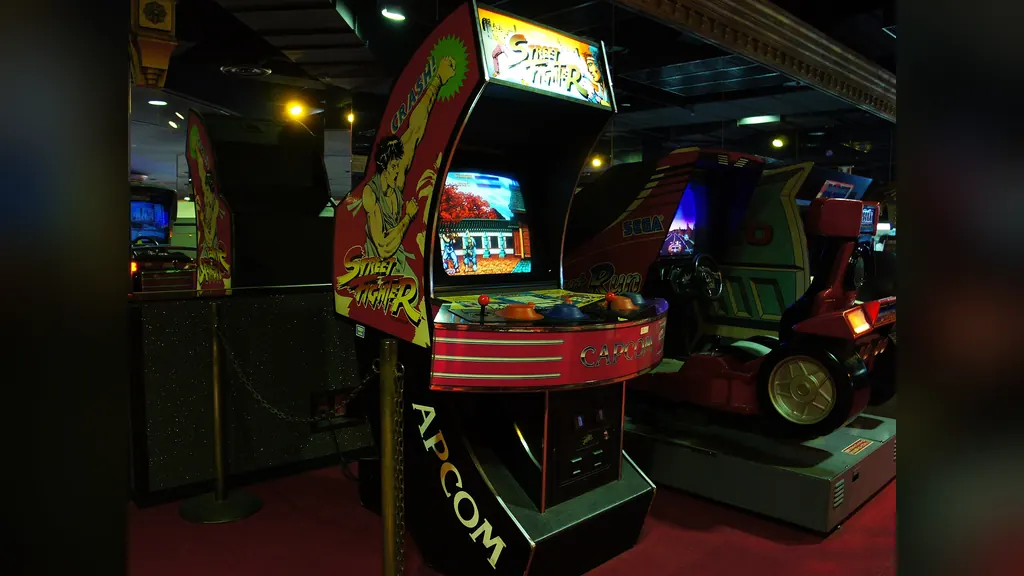
Street Fighter II, released in 1991, was not just a successful sequel, but the catalyst that redefined the fighting game genre. The title emerged after a period of transition, as Capcom had initially tried to associate the franchise with the action game Final Fight. However, it was with Street Fighter II: The World Warrior that the one-on-one fighting concept reached maturity and the format that would define the industry. The game was one of the first major titles for Capcom’s CP System hardware and was developed by Akira Nishitani and Akira Yasuda.
Defining the Fighting Format
The leap in quality and popularity was monumental. Street Fighter II established the basic conventions of the genre: the choice of characters with distinct fighting styles and mechanical depth. Unlike previous titles, the game allowed each player to select a unique character, each boasting a repertoire of varied moves. Each character had approximately 30 or more moves, including new grappling techniques and throws, in addition to two or three signature special moves. This complexity guaranteed increasingly rich and tactically demanding matches.
📘 Fighting Game Genre
It is the video game genre focused on direct one-on-one confrontations. Street Fighter II solidified this format, establishing characters with distinct fighting styles and complex mechanics.
The game structure was also revolutionary. In single-player mode, the player was confronted sequentially by seven main characters, culminating in challenges against four computer-controlled bosses. Simultaneously, the competitive mode allowed a second player to join at any time, raising the level of interaction and competitiveness in arcades. This combination of character variety and combat depth established the 1v1 fighting format as the gold standard of electronic entertainment.
Commercial Impact and Legacy
The success of Street Fighter II eclipsed its predecessor in popularity, transforming the series into a true multimedia franchise. The game’s impact on the gaming universe was unexpectedly phenomenal. In terms of revenue, the title generated over US$10 billion in inflation-adjusted sales by 2017, with the majority of this revenue coming from arcade machines. Furthermore, the game was fundamental to establishing Capcom as a powerhouse in the fighting game genre, solidifying the CP System as a successful platform.
Initial success fueled a series of improvements and revisions that kept the title in the spotlight for decades. Players received updates such as Champion Edition, which made bosses controllable by humans, and Hyper Fighting, which introduced faster gameplay. Later, revisions like Super Street Fighter II: The New Challengers not only modernized graphics and music but also represented the first version of the game for the CP System II arcade hardware, ensuring that the core of the franchise continued to evolve alongside its immense cultural success.
Technological Evolution: From Arcades to Next-Gen Consoles
The evolution of Street Fighter is a testament to the adaptability of a game genre. Following the catalytic success of Street Fighter II, the series not only kept pace but also drastically raised the level of technical and narrative complexity. This enhancement was evident with the release of Street Fighter Alpha: Warriors’ Dreams in 1995. This subseries, which utilized character designs influenced by titles like Darkstalkers and X-Men: Children of the Atom, significantly expanded the combo system. The game introduced the concept of a three-level Super Combo meter and mechanics like Alpha Counters and Chain Combos, allowing players to store super combos, which added an unprecedented strategic layer to the gameplay.
Advancements continued in Street Fighter Alpha 2, which, while retaining many characters, discarded the Chain Combo system in favor of Custom Combos, requiring the use of a portion of the Super Combo meter. In 1998, with Street Fighter Alpha 3, the series solidified the increase in complexity, introducing three selectable fighting styles and expanding the playable roster to 28 characters. Simultaneously, the series underwent major mechanical transformations with Street Fighter III: New Generation, which debuted on CPS3 arcade hardware in 1997. This title not only maintained the focus on Ryu and Ken but also redefined combat by introducing the “Super Arts” system and the parry defense mechanic, raising the tactical level of the genre.
The technical trajectory was also marked by consolidation across multiple platforms. While the Alpha 2 and Alpha 2 Gold games were ported to consoles like the PlayStation and Sega Saturn, the saga was continuously improved. Street Fighter III: 2nd Impact adjusted the gameplay, adding new characters and making Akuma playable. In 1999, Street Fighter III: 3rd Strike brought the return of Chun-Li and four more new characters. The migration to consoles like the Dreamcast and Game Boy Color ensured that the game experience reached different audiences while maintaining the core challenge of combat.
The peak of this technical and scope evolution can be seen in the most recent titles. The modern development cycle culminated in Street Fighter 6, which launched on June 2, 2023. This game represents the technological forefront of the franchise, utilizing the RE Engine to ensure top-tier graphics and gameplay, while maintaining the mechanical depth built from the Super Combo systems of the ’90s up to the Super Arts advancements of the CPS3 generation. This progression shows that the history of Street Fighter is fundamentally a history of combat innovation.
🕒 Milestones of Technological Evolution in Street Fighter
- 1995 — Release of Street Fighter Alpha: Warriors’ Dreams, expanding combos with Super Combo meter across three levels and Alpha Counters.
- 1997 — Street Fighter III: New Generation debuts on arcades (CPS3), introducing Super Arts and the parry defense mechanic.
- 1998 — Street Fighter Alpha 3 solidifies complexity with three selectable fighting styles and 28 playable characters.
- 1999 — Street Fighter III: 3rd Strike brings back Chun-Li and four other new characters.
- 2023 — Release of Street Fighter 6, utilizing the RE Engine for top-tier graphics and gameplay.
Modern expansion and peak: cross-play and esports
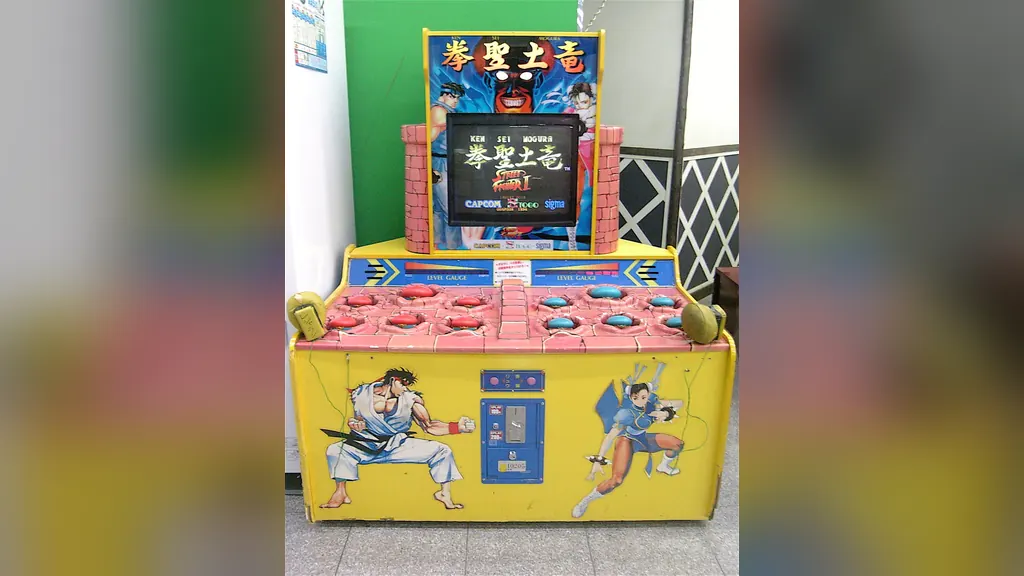
The transition into the 21st century marked a crucial turning point in Street Fighter’s history. The game managed not only to survive but to thrive, adapting to the demands of an increasingly fragmented and technologically advanced video game market. The title demonstrated a remarkable capacity for reinvention, maintaining its high-octane fighting identity while embracing new distribution and gameplay technologies, which reminds us of the trajectory of other games, such as the one that created Brawlhalla.
The modern catalyst: Street Fighter V
This new cycle of relevance was fueled by the release of Street Fighter V in February 2016. The title was originally launched in an exclusive setting, available for the PlayStation 4 and PC via Steam. More important than the initial release was the establishment of cross-platform gameplay, allowing players on different systems to fight online. This feature was vital in keeping the player base connected, overcoming geographical and technological barriers.
🧪 The Impact of Cross-Platform and DLCs
The 2016 release of Street Fighter V was crucial, not only for the cross-platform gameplay but also for its expansion strategy. The progressive addition of content, as seen in Street Fighter V: Champion Edition, allowed the game to grow from 16 to 46 characters, ensuring longevity and depth.
The game’s expansion model also proved revolutionary for the series. Initially, the 2016 version featured a roster of 16 characters, including iconic figures like Ryu, Ken, and Chun-Li. Capcom managed to keep the title fresh and competitive through constant updates and downloadable content (DLC). For example, the arrival of Street Fighter V: Champion Edition in 2020 allowed for the progressive addition of new fighters, raising the total number to an impressive 46 characters, ensuring longevity and depth to the universe.
The Vanguard of Esports
Alongside its commercial success, Street Fighter’s status as an athletic phenomenon (esports) has never been more solidified. The professional player community has elevated the level of competition to stratospheric heights, transforming the game into a global spectacle. Legendary names have set the standard of excellence. A prime example is Daigo Umehara, known worldwide as “The Beast.” He is widely considered one of the greatest players in history and still holds a Guinness World Record in the category of “most victorious player in major Street Fighter tournaments.”
The moment that cemented his legend was the “Evo Moment 37,” which occurred in 2004 during a semi-final at Evolution Championship Series (Evo). In this match, Umehara executed an unexpected parry, defending 15 consecutive super attacks while his character had only one pixel of life remaining. This feat not only secured the victory but is celebrated as one of the most iconic moments in video game history.
The series’ competitive strength is diverse. Besides Umehara, there are cutting-edge players like Hajime “Tokido” Taniguchi, who is frequently ranked as the number one Street Fighter V Esports player in the world. The scene is also marked by the inclusion of talents with diverse abilities, such as Mike “BrolyLegs” Begum, who gained recognition for playing the controller using only his mouth.
Cultural Legacy and Impact Across Various Media
The impact of Street Fighter transcended the arcade screen, establishing itself as a true global cultural phenomenon. Its influence is notable in different spheres, from the universe of combat sports to music and cinema. To better understand the origin of these icons, it is interesting to know who created Mortal Kombat. The first major example of its real-world projection was in the field of martial arts. In 1993, during UFC 1, the promoters of the first Ultimate Fighting Championship (UFC) presented the tournament as if it were a fighting video game, citing Super Street Fighter II and Mortal Kombat II as references. The series’ success paved the way for electronic fiction to be recognized as a source of inspiration for real-life sporting combat.
This cultural resonance was not limited to the ring. In the music scene, Street Fighter became a rich source of inspiration for hip-hop. The influence began notably in 1993, with the release of “Swing’n” by Hi-C and “Track 10” by DJ Qbert, which sampled Street Fighter II. The impact was so profound that the 1994 film Street Fighter is considered the first major cinematic soundtrack composed almost entirely of hip-hop music. The ability to blend competition, bravado, and individualism, characteristics inherent to the series, was noted by critics, such as Vice magazine, which pointed out that this mix translated perfectly into the challenges of rappers. The legacy deepened in the grime genre, where lyrical battles and the 1-on-1 format were easily equated to the confrontations of the franchise, with artists like Dizzee Rascal sampling Street Fighter II in 2002.
The Journey Through Media
The strength of Street Fighter lies in its adaptability, proving that its success was multimedia. The animations and films accompanied the evolution of the games. An early milestone, though unofficial, was the South Korean film Street Outlaw, released in 1992. In Japan, the anime Street Fighter II: The Animated Movie arrived in 1994. Over the years, the franchise generated various productions, including the TV series Street Fighter II V, which premiered on Yomiuri TV in 1995, and OVAs like Street Fighter Alpha: The Movie, released in 1999.
The modern reach of the series is also visible in major science fiction film productions. In 2012, the film Wreck-It Ralph included brief scenes with Street Fighter characters. More recently, in 2018, the film Ready Player One made a point of paying tribute to the franchise, featuring multiple Street Fighter characters as avatars in a virtual reality setting. These appearances confirm that the Street Fighter universe is not just a set of games, but a cultural pillar that continues to converse with pop culture across various platforms, solidifying its status as a timeless icon.
Glossary
- Arcade: Refers to the format of an electronic game machine, where the game is played in a public place.
- Cross-platform Gameplay: Allows players on different systems (consoles, PC, etc.) to play and compete in the same online environment.
- Super Combo Meter: An energy meter used to store and execute supercombos, adding strategic depth to gameplay.
- Parry: A tactical defense mechanic where the player must defend against an enemy attack at the right moment to counterattack.
Frequently Asked Questions
What is the best-selling fighting game in the Street Fighter franchise?
Street Fighter II was the catalyst that redefined the genre and is considered one of the most profitable titles in gaming history. Its success was monumental, generating billions in inflation-adjusted sales, primarily through arcade machines, setting the standard for the industry.
Is Street Fighter an old fighting game? What were the original platforms?
Yes, it is an extremely old franchise, with its first release in 1987. It was initially released in arcades but quickly adapted to various platforms, including MS-DOS, NES, Game Boy, and later, next-generation consoles.
Who is the character Ryu and what is his role in the story?
Ryu is the main protagonist and martial artist whose journey is at the core of the plot. He is the focus of the challenge in a world-scale martial arts tournament. Players take control of Ryu to test his skill in global confrontations.
What does ‘cross-play’ mean in Street Fighter and why is it important?
Cross-play means that players on different systems (like PS4 and PC) can fight together online. This feature is vital because it keeps the player base connected, overcoming technological and geographical barriers, and ensuring the community remains active and engaged.
What is the difference between Street Fighter II and Street Fighter III?
Street Fighter II established the basic conventions of the genre, defining the 1v1 fighting format and character depth. Street Fighter III, on the other hand, redefined combat by introducing the ‘Super Arts’ system and the parry defense mechanic, significantly raising the tactical level of the game.
Conclusion
The trajectory of Street Fighter is a fascinating case study in creative resilience and genre adaptation. What began with the vision of Takashi Nishiyama and Hiroshi Matsumoto in 1987, in an arcade format, was the idea of a global martial arts tournament. Despite initial technical challenges, which forced Capcom to refine the controls, the core of the confrontation between iconic characters like Ryu and Ken was established. The true catalyst, however, was the release of Street Fighter II in 1991. This title not only cemented the one-on-one fighting format as the gold standard but also defined the mechanical conventions that the fighting game genre follows to this day.
The success of Street Fighter II, which generated over US$10 billion in inflation-adjusted sales by 2017, propelled the franchise beyond the arcades. The subsequent evolution, marked by titles like the Alpha series (with the Super Combo meter) and Street Fighter III, demonstrated an incessant quest to increase tactical depth and move set repertoire. Each iteration was not just a sequel, but an enhancement that elevated the complexity of combat while maintaining the core narrative and central challenge: martial supremacy.
Thus, Street Fighter transcended the status of a mere video game to become a cultural phenomenon and an industry pillar. It proved that combining a clear concept—the martial challenge—with constant mechanical evolution is capable of generating a lasting legacy. Analyzing this history is understanding how innovation, even after decades, continues to push the boundaries of electronic entertainment, encouraging us to revisit the classics and admire the art behind every special move.